Blog

  • Anti-itinerary travel: Why Gen Z is changing holiday plans

    Anti-itinerary travel: Why Gen Z is changing holiday plans

    Remember when family holidays required months of planning, multiple spreadsheets and at least one argument over train tickets? Gen Z is taking a very different approach.

    New travel trends show young Indian travellers increasingly moving away from the traditional annual holiday and embracing anti-itinerary travel, a style built around less planning, flexible schedules and leaving room for spontaneous experiences.

    Also Read | Autumn Travel Guide: 10 stunning places to visit in India this festive season

    For a generation increasingly drawn to flexibility and experiences that feel personal, travel is beginning to follow the same pattern.

    Goodbye annual vacation, hello random weekend escape

    For years, holidays followed a familiar formula: save throughout the year, book months ahead and pack as many attractions as possible into one big trip.

    Gen Z is increasingly choosing a different model.

    Gen Z is moving away from heavily planned annual vacations and embracing shorter getaways anti-itinerary travel
    Gen Z is moving away from heavily planned annual vacations and embracing shorter getaways / Pexels

    Rather than taking one long annual holiday, young travellers are opting for multiple shorter escapes throughout the year. These trips may be booked only days before departure and often come without an elaborate schedule.

    The focus is less on ticking destinations off a list and more on taking a break from everyday routines.

    What is anti-itinerary travel?

    Anti-itinerary travel is essentially the rejection of rigid holiday planning. Instead of filling every hour with sightseeing, travellers deliberately leave gaps in their schedules.

    That could mean spending an afternoon at a local café, walking through a neighbourhood, discovering an unexpected spot or simply deciding what to do after reaching the destination.

    Gen Z is ditching rigid holidays for spontaneous escapes.
    Gen Z is ditching rigid holidays for spontaneous escapes. / Pexels

    In this style of travel, getting lost can become part of the plan.

    Young travellers are also increasingly looking beyond destinations that dominate social media. Places that feel quieter, less crowded or less overexposed can offer the sense of discovery they are seeking.

    When travel becomes part of your identity

    For Gen Z, travel is increasingly about more than the destination itself. The way they travel can also reflect their personality and interests.

    A mountain cabin, artistic homestay or secluded beach house may become as important as the location. Accommodation itself becomes part of the experience, and often part of the memories travellers want to take home.

    Less planning, more exploring: Gen Z’s new travel style.
    Less planning, more exploring: Gen Z’s new travel style. / Pexels

    The perfect trip does not necessarily have to be luxurious. It simply needs to feel personal, distinctive and memorable.

    Why are shared homes becoming popular?

    Group travel is another part of this changing approach.

    Young travellers are increasingly choosing large shared homes where friends can stay together rather than booking separate hotel rooms. The focus shifts from simply visiting attractions to spending uninterrupted time together.

    Also Read | Smoking is banned on planes, but why does the bathroom have an ashtray?

    And some of the most memorable parts of these trips may not happen at famous landmarks.

    They can come from late-night conversations, spontaneous detours, unexpected discoveries and the moments that were never part of the original plan.

  • India needs to retain 3 key talent groups to build a stronger AI ecosystem

    India needs to retain 3 key talent groups to build a stronger AI ecosystem

    India’s ambitions of becoming a major artificial intelligence hub could depend not only on creating a large pool of skilled professionals but also on keeping its most experienced technology talent within the country. Salesforce chief digital evangelist Vala Afshar has highlighted talent retention as an important challenge as companies worldwide compete for engineers, researchers and entrepreneurs with expertise in AI.

    Speaking to The Economic Times on the sidelines of Salesforce’s Dreamforce event in San Francisco, Afshar said global technology centres have long competed for highly skilled professionals. The growing investment in artificial intelligence is now intensifying that competition, making India’s AI talent an increasingly important factor in the country’s technology ambitions.

    India already has a large technology workforce and a substantial startup ecosystem. But as AI becomes a bigger part of global business, retaining people capable of developing and scaling advanced technology businesses could become as important as training new workers.

    India's ambitions of becoming a major artificial intelligence hub could depend not only on creating a large pool of skilled professionals but also on keeping its most experienced technology talent within the country. (ANI)
    India’s ambitions of becoming a major artificial intelligence hub could depend not only on creating a large pool of skilled professionals but also on keeping its most experienced technology talent within the country. (ANI)

    India’s AI talent faces growing global competition

    The movement of Indian technology professionals to overseas markets is not new. What has changed, according to Afshar, is the way Indian software companies and startups are building their businesses.

    In the past, Indian founders would often keep most of their teams in India while sending a founder or senior executive to the US to manage sales and business development. That model allowed companies to retain much of their workforce in India while establishing a presence in an important global market.

    Afshar said an increasing number of founders are now choosing to establish themselves in the US much earlier and build teams closer to international customers and investors.

    For India’s AI talent, this shift could have significant implications. As startups become increasingly global from their early stages, highly skilled engineers and researchers may have more opportunities to work directly from overseas technology centres.

    The competition is particularly relevant in areas such as generative AI, AI agents, data infrastructure and automation, where companies are seeking professionals with specialised technical and research skills.

    Also Read | Delhi High Court says POCSO cases cannot be settled by family

    As startups become increasingly global from their early stages, highly skilled engineers and researchers may have more opportunities to work directly from overseas technology centres. (ANI)
    As startups become increasingly global from their early stages, highly skilled engineers and researchers may have more opportunities to work directly from overseas technology centres. (ANI)

    AI skills expansion creates a larger talent pool

    India’s existing technology workforce provides a substantial foundation for expanding its AI capabilities. The country also has a growing startup ecosystem that could support the development of AI products and services for both domestic and international markets.

    However, increasing the number of trained professionals is only one part of the challenge. For India to develop a deeper domestic AI ecosystem, AI talent will also need opportunities to work on ambitious products, build companies, and participate in research.

    Salesforce has been expanding its own focus on AI skills in India. In June, the company said it aimed to equip one million learners in the country with AI skills by 2030 through partnerships involving universities, government bodies and industry.

    Such programmes reflect the growing emphasis on developing AI capabilities beyond a relatively small group of highly specialised professionals.

    Expanding AI skills could also increase the number of workers across sectors capable of adopting the technology. As businesses integrate AI into their operations, demand is expected to extend beyond traditional technology roles.

    Also Read | Amazon joins India’s quick-commerce race with a $3 billion war chest

    Alongside its technology workforce, India is also emerging as a significant market for AI adoption. (ANI)
    Alongside its technology workforce, India is also emerging as a significant market for AI adoption. (ANI)

    India emerges as an important AI adoption market

    Alongside its technology workforce, India is also emerging as a significant market for AI adoption.

    A Salesforce survey released in July found that Indian workers were 45 per cent more likely than the global average to say AI formed part of their core workflow. The finding points to the growing integration of artificial intelligence into everyday professional tasks in India.

    The development of a strong domestic market could create additional opportunities for companies and professionals working in AI. Startups can build products for Indian users while also using the country as a base for global expansion.

    For India’s AI talent, however, the broader question remains whether the country’s growing opportunities will be sufficient to compete with international technology hubs for highly experienced professionals.

    The challenge is therefore twofold. India needs to continue developing new AI skills while creating an environment in which experienced engineers, researchers and founders have strong reasons to build their careers and companies domestically.

    As global investment in artificial intelligence continues to expand, the ability to develop and retain specialised talent could become an increasingly important part of India’s technology story.

  • Delhi High Court says POCSO cases cannot be settled by family

    Delhi High Court says POCSO cases cannot be settled by family

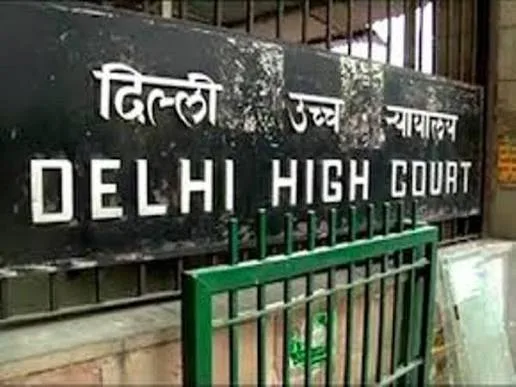
    The Delhi High Court has made it clear that criminal proceedings involving sexual offences against children cannot be brought to an end simply because the survivor or her family has settled with the accused. Justice Sachin Datta passed the order while hearing a petition filed by a 49-year-old accused seeking to quash proceedings under the Protection of Children from Sexual Offences (POCSO) Act following a purported compromise with the minor survivor.

    The Delhi High Court was informed that the trial had already reached the stage of recording prosecution evidence. The accused had approached the court after a settlement was reached with the minor survivor following intervention by her family.

    Justice Datta dismissed the petition on September 22, observing that allowing the proceedings to be quashed based on such a compromise would undermine the purpose of the law and the interests of justice.

    The Delhi High Court has made it clear that criminal proceedings involving sexual offences against children cannot be brought to an end simply because the survivor or her family has reached a settlement with the accused. (ANI)
    The Delhi High Court has made it clear that criminal proceedings involving sexual offences against children cannot be brought to an end simply because the survivor or her family has settled with the accused. (ANI)

    Delhi High Court explains why POCSO settlement cannot end case

    The Delhi High Court said that a child victim or the victim’s family cannot privately compromise an offence registered under the POCSO Act. The court treated the nature of the alleged offence as central to its decision.

    According to the order, the accused was facing allegations of aggravated penetrative sexual assault against a child while allegedly being in a position of trust or authority. The allegations relate to an incident in 2022.

    The court referred to the legal position laid down by the Supreme Court concerning the High Court’s power to quash criminal proceedings. That power, the order noted, cannot ordinarily be used to terminate proceedings involving heinous and serious offences, including sexual offences.

    The Delhi High Court observed that permitting a compromise in such circumstances would give private settlement an effect that the law does not recognise for such offences.

    The court also emphasised the wider implications of offences involving sexual violence against children. Unlike disputes that primarily concern private rights, criminal offences under the POCSO framework are treated as matters carrying consequences beyond the individuals directly involved.

    Also Read | Amazon joins India’s quick-commerce race with a $3 billion war chest

    India Space Force: Why India may need a separate space command? (ANI)
    India Space Force: Why India may need a separate space command? (ANI)

    Accused sought quashing during prosecution evidence

    The petition before the Delhi High Court was filed by the accused while the trial was already underway. The prosecution had reached the stage of recording evidence when the accused sought to have the criminal proceedings quashed based on the settlement.

    The court rejected that request, holding that the stage of the proceedings was another relevant consideration. Quashing the case after the prosecution had begun presenting its evidence, merely because the parties had subsequently reached an agreement, would not be consistent with the purpose of the statute, the court said.

    The case involves allegations under provisions including Section 6 of the POCSO Act. The order also referred to Sections 376 and 506 of the Indian Penal Code in describing the offences alleged in the case.

    The Delhi High Court’s ruling does not amount to a determination of guilt in the underlying criminal trial. The allegations against the accused remain matters for adjudication through the trial process.

    The decision instead addresses whether a settlement between the accused and the child survivor or her family can provide a basis for ending the criminal proceedings.

    Also Read | India Space Force: Why India may need a separate space command?

    The Delhi High Court therefore declined to interfere with the ongoing trial and dismissed the petition seeking quashing of the proceedings. (ANI)
    The Delhi High Court therefore declined to interfere with the ongoing trial and dismissed the petition seeking quashing of the proceedings. (ANI)

    Court stresses wider impact of child sexual offences

    In its order, the Delhi High Court underlined that sexual offences against children are treated differently from disputes that can ordinarily be resolved through compromise between private parties.

    Justice Datta noted that the Supreme Court’s jurisprudence limits the circumstances in which High Courts can exercise their inherent powers to quash criminal proceedings based on settlements.

    The court stated that a settlement between a victim and an offender in cases involving heinous sexual offences has no legal sanction. It also pointed to the alleged position of trust or authority involved in the case while describing the accusations as serious.

    The ruling reinforces the distinction between criminal proceedings that can legally be compounded or quashed in appropriate circumstances and offences where the law attaches wider societal consequences.

    For cases under the POCSO Act, the ruling means that an agreement reached between a survivor’s family and an accused cannot, by itself, provide a legal route to terminate prosecution for serious sexual offences against a child.

    The Delhi High Court therefore declined to interfere with the ongoing trial and dismissed the petition seeking quashing of the proceedings. The case will continue through the criminal justice process, where the evidence and allegations will be examined in accordance with law.

  • No rain, no flowers — until El Niño: Why Atacama is suddenly blooming

    No rain, no flowers — until El Niño: Why Atacama is suddenly blooming

    For much of the year, Chile’s Atacama Desert is defined by cracked ground, bare slopes, and an almost complete absence of rain. This month, parts of that landscape look very different.

    Vast patches of violet and white flowers have appeared after unusually heavy rainfall linked to El Niño, reviving a natural phenomenon known as the “Desierto Florido,” or flowering desert.

    The bloom is already visible in parts of the Atacama region, while Chilean authorities expect the display to reach its peak in October.

    Also Read | Trump’s Board of Peace plans $2.45 billion Gaza recovery plan

    The secret beneath the sand

    Atacama rainfall crossed 180 millimetres in some areas | X (@fascinatingonX)
    Atacama rainfall crossed 180 millimetres in some areas | X (@fascinatingonX)

    The reason lies beneath the desert floor. Seeds and bulbs from roughly 200 plant species can remain dormant for long periods, waiting for enough moisture to return.

    When significant rain finally reaches the soil, some of these plants germinate almost at once.

    This creates the sudden carpets of color that have made the Atacama bloom famous. The Chilean government says more than 200 plant species may emerge during the 2026 season, along with an ecosystem of insects and vertebrates that becomes active around the flowering plants.

    Quite a lot of rain for a desert

    More than 200 plant species can lie dormant beneath the Atacama Desert, waiting for the rare combination of moisture, heat and light | X (@cirosalla)
    More than 200 plant species can lie dormant beneath the Atacama Desert, waiting for the rare combination of moisture, heat and light | X (@cirosalla)

    This year’s trigger has been the extraordinary amount of water reaching northern Chile. In some parts of the region, seasonal rainfall has exceeded 180 millimeters.

    César Pizarro, head of biodiversity in Atacama at Chile’s National Forestry Corporation (CONAF), told AFP that such levels “had never been recorded before.”

    The rain also penetrated deeper into the sand than usual, allowing more vegetation to emerge.

    According to CONAF forecasts cited by Chile’s tourism agency Sernatur, the phenomenon could manifest across an area of up to 15,000 square kilometers, although that is a projection for the potential extent of the phenomenon rather than a claim that the entire area will be covered with flowers at the same time.

    El Niño conundrum

    El Niño is known for reshaping weather far beyond the Pacific | X (@theinformant_x)
    El Niño is known for reshaping weather far beyond the Pacific | X (@theinformant_x)

    This phenomenon raises a question. Why did El Niño bring so much rain to a desert famous for its extreme dryness?

    El Niño is a climate pattern associated with unusually warm surface waters in the central and eastern equatorial Pacific. That warming can alter atmospheric circulation, shifting rainfall and temperature patterns across distant regions.

    The World Meteorological Organization said in September that the 2026 El Niño was strengthening and was expected to become a very strong event. NOAA’s Climate Prediction Center also put the chance of a very strong event above 90% for the Northern Hemisphere autumn and winter.

    Beauty and the beast

    The striking bloom, however, is only one side of this unusual weather.

    The heavy July rains also caused deadly disruption elsewhere in Chile, with at least 13 people killed and around 4,000 homes destroyed or badly damaged.

    In Atacama, the same unusual burst of moisture has instead activated dormant plant life and drawn visitors hoping to see the short-lived spectacle.

    CONAF officials have urged tourists to remain on established paths, avoid stepping on plants, and not remove flowers or seeds.

    This spectacular flowering relies on a combination of factors beyond just rainfall. As Gabriela López of CONAF put it, the flowering desert depends not just on rainfall but also on soil absorption, temperature, and solar exposure.

    Also Read | Jaishankar meets Rubio in New York, raising India’s concerns over Russia sanctions

  • BJP’s Bengal poll bill exceeds Congress’ spend across five polls

    BJP’s Bengal poll bill exceeds Congress’ spend across five polls

    The Bharatiya Janata Party (BJP) spent ₹286.99 crore on the West Bengal Assembly election alone, exceeding the ₹248.55 crore spent by the Congress across five elections, according to expenditure statements filed with the Election Commission.

    The figures cover the Assembly elections held in West Bengal, Assam, Kerala, Tamil Nadu and Puducherry earlier this year. Across the five polls, the BJP’s expenditure through its central office stood at ₹529.38 crore, with West Bengal accounting for more than half of the total.

    Also Read | India Space Force: Why India may need a separate space command?

    In Bengal, the BJP reported ₹217.16 crore on general campaigning and another ₹69.83 crore on candidates and related expenses.

    How much did BJP spend in the Bengal election?

    The BJP’s Bengal expenditure of ₹286.99 crore was divided between party campaigning and candidate-related expenses.

    Of the total, ₹217.16 crore went towards general campaigning, while ₹69.83 crore was spent on candidates. The figures were included in expenditure statements submitted to the Election Commission after the polls.

    Election Commission expenditure statements show the BJP spent ₹286.99 crore on West Bengal
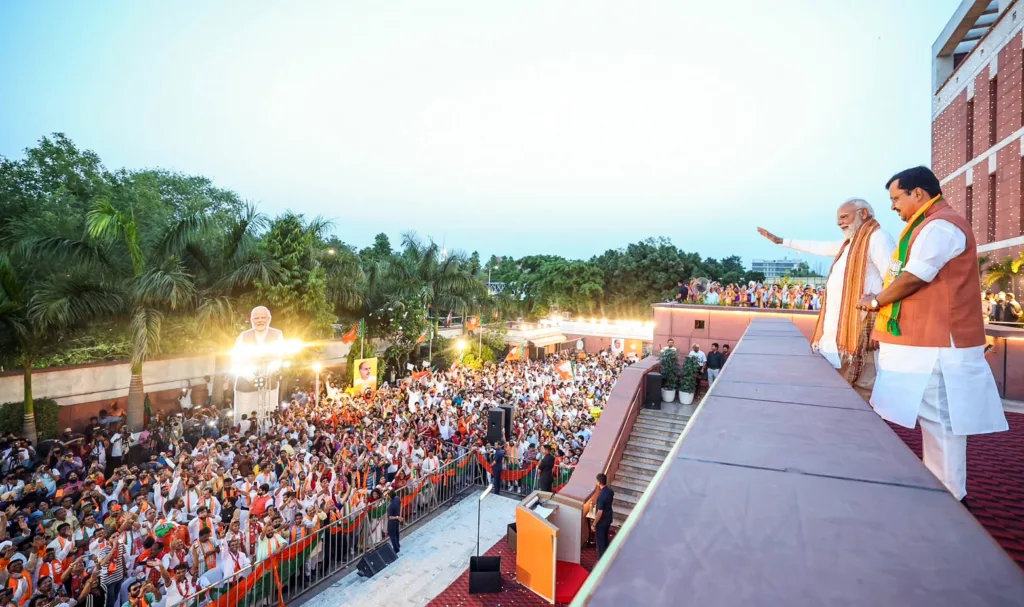
    Prime Minister Narendra Modi and BJP National President Nitin Nabin at BJP headquarters to celebrate victory with BJP supporters / ANI

    The BJP’s expenditure in the other four elections stood at ₹96.27 crore in Assam, ₹82.67 crore in Kerala, ₹51.56 crore in Tamil Nadu and ₹11.90 crore in Puducherry, taking its combined five-election expenditure to ₹529.38 crore.

    Election expenditure statements submitted by recognised political parties include spending on areas such as campaigning, travel, advertisements, rallies and campaign material.

    What was Congress’ total election spending?

    The Congress reported ₹248.55 crore in expenditure across the five elections.

    Of this, ₹143 crore was spent on general campaigning, while ₹105.55 crore went towards candidates and related expenses, according to the filings.

    ECI dissent report sparks Opposition attack as poll panel rejects formal dissent claim. (ANI)
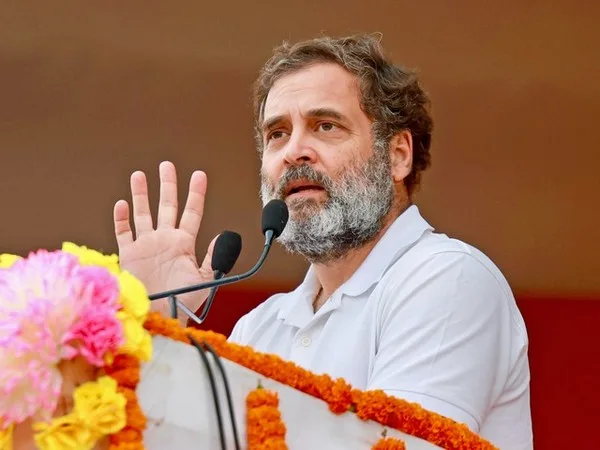
    Congress leader Rahul Gandhi addresses the crowd (ANI)

    West Bengal accounted for ₹42.08 crore of the Congress’ reported expenditure through its central headquarters and state unit. This included ₹12.96 crore on general campaigning and ₹29.12 crore on candidates and related expenses.

    The Congress spent more than the BJP in Kerala, reporting ₹105.34 crore compared with the BJP’s ₹82.67 crore. Of the Congress’ Kerala expenditure, ₹71.30 crore went towards general campaigning and ₹34.05 crore towards candidates.

    How did the BJP’s spending compare across the five states?


    State/UT BJP expenditure


    West Bengal ₹286.99 crore
    Assam ₹96.27 crore
    Kerala ₹82.67 crore
    Tamil Nadu ₹51.56 crore
    Puducherry ₹11.90 crore
    Total ₹529.38 crore

    The Bengal figure alone was about ₹38.44 crore higher than the Congress’ combined ₹248.55 crore expenditure across all five elections.

    BJP spent ₹286.99 crore on Bengal polls, EC data shows.
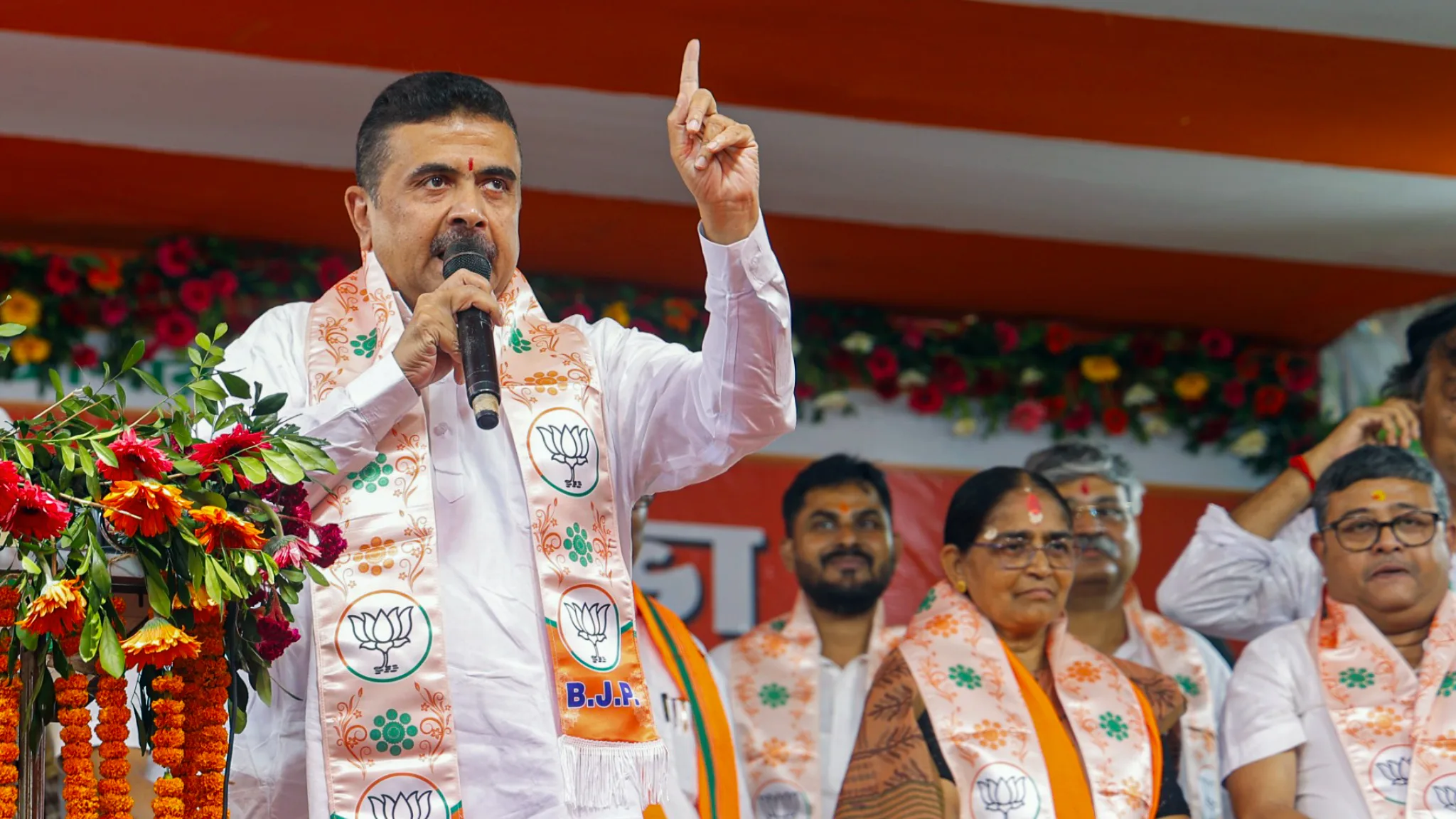
    West Bengal Chief Minister Suvendu Adhikari (ANI Photo)

    The comparison is based on party expenditure statements filed with the Election Commission and reflects reported expenditure, not the total spending by every organisational unit or candidate unless included in the relevant filings.

    What do the filings show about party finances?

    The filings also provide a picture of the parties’ finances during the election period.

    The BJP’s central headquarters received ₹1,472.8 crore during the election period, according to the figures cited by PTI. Its central office reported a closing balance of ₹7,627.2 crore, up from ₹6,722.6 crore when the elections were announced.

    The Congress reported ₹207.17 crore in receipts across its headquarters and five state units. Its combined balance declined from about ₹169.06 crore to ₹103.2 crore during the period, according to the same filings.

    Also Read | Amazon joins India’s quick-commerce race with a $3 billion war chest

    The CPI(M), meanwhile, reported consolidated expenditure of ₹39.04 crore across the five elections. Its Kerala state unit reported ₹28.60 crore, while its West Bengal unit reported ₹8.23 crore.

    The Trinamool Congress’ expenditure statement for the West Bengal election had not been made public in the source data at the time of reporting.

  • Amazon joins India’s quick-commerce race with a $3 billion war chest

    Amazon joins India’s quick-commerce race with a $3 billion war chest

    Amazon plans to invest $3 billion in India’s quick-commerce business by 2030, Reuters reported on Thursday, citing two people with direct knowledge of the plans.

    The proposed spending would be Amazon’s biggest investment yet in India’s fast-delivery segment, where Blinkit, Swiggy and Zepto have built a substantial lead.

    Amazon declined to comment on the planned investment figures. It did say its quick-commerce business had crossed $1 billion in annualised gross sales over the past three months.

    Also Read | ECI dissent report sparks Opposition attack as poll panel rejects formal dissent claim

    Amazon Now prepares to spread its wings

    From roughly 750 stores to about 1,300 by April 2027, Amazon Now is preparing a sharp expansion | X (@wallstengine)
    From roughly 750 stores to about 1,300 by April 2027, Amazon Now is preparing a sharp expansion | X (@wallstengine)

    The plan is split into two stages. Amazon intends to invest $1 billion by the end of 2027 and a further $2 billion by 2030. Much of the money is expected to go into expanding the Amazon Now network.

    The plan would require adding more small neighbourhood warehouses from which orders can be picked and dispatched quickly. One source said Amazon is targeting about 1,300 stores by April 2027, up from roughly 750 now.

    “Expansion needs money,” the source said. The company is also looking at stronger inventory-management software, AI tools to forecast demand and a wider product range.

    A crowded race

    The bigger issue is the race to catch a market that has changed how many urban Indians shop. Quick commerce has grown rapidly since 2022, with customers using apps for everyday needs such as milk and chocolates, as well as some electronics.

    Data Intelligence put the Indian quick-commerce market at $19 billion and said it could more than double to $41 billion by 2030.

    Blinkit, Swiggy and Zepto together control 77% of the market and operate more than 4,500 stores, while Flipkart has more than 1,000 stores and an 11% share.

    Amazon’s share is 6.2%, according to the same data. The gap helps explain why Amazon is now putting more money behind Amazon Now.

    Not every shiny gadget gets a shelf

    Quick commerce has changed how many urban Indians shop, and Amazon is responding with more neighbourhood warehouses and a tighter product strategy | X (@TheIndexMint)
    Quick commerce has changed how many urban Indians shop, and Amazon is responding with more neighbourhood warehouses and a tighter product strategy | X (@TheIndexMint)

    Amazon is taking a narrower approach to what it keeps in stock. One source said, “The focus will be daily essentials. If the order is unlikely to be repeated, Amazon does not plan to stock it right now in quick commerce.”

    That helps explain why Amazon Now it does not currently stock iPhones in the same way some rivals do.

    The economics of the sector remain a challenge. Bernstein said in a July note that groceries alone may not cover the high costs of quick commerce because average order values are low, while non-grocery products tend to have higher prices and margins.

    Satish Meena, founder of Datum Intelligence, said established rivals already have quality service and loyal customers, although Amazon could use its large existing shopping customer base to encourage more people to try faster delivery.

    Hardly a leisurely stroll

    Quick commerce is costly, groceries have low average order values, and regulation has challenged the 10-minute promise | X (@imnotharsh)
    Quick commerce is costly, groceries have low average order values, and regulation has challenged the 10-minute promise | X (@imnotharsh)

    The expansion also comes as the quick-commerce model faces regulatory and safety scrutiny. In January, the Indian government asked companies to stop promoting deliveries as “10-minute” services amid concerns around rider safety.

    The government’s intervention led major platforms to drop the explicit 10-minute delivery branding while the underlying quick-commerce services continued.

    Amazon also faces India’s foreign e-commerce regulations and a pending 2024 antitrust case related to allegations that it gave preference to select sellers.

    Amazon denies those allegations. For now, the company is betting that more stores, better inventory systems and a tighter focus on repeat purchases can help it gain ground in a market where speed has quickly become part of everyday shopping.

    Also Read | India Space Force: Why India may need a separate space command?

  • Narad Muni the first cosmic journalist of Hindu mythology with 11 lesser-known facts

    Narad Muni the first cosmic journalist of Hindu mythology with 11 lesser-known facts

    Narad Muni is one of the most familiar figures in Hindu mythology. The moment people hear “Narayan, Narayan,” they instantly think of a being carrying a veena and travelling freely across the universe. While he is often portrayed as someone who carries news between gods, sages and humans. Beside being a messanger Narad Muni is a scholar, musician, teacher and one of Lord Vishnu’s greatest devotees. Narad Muni appears in the Ramayana, Mahabharata and several Puranas, where his presence often changes the course of important events.

    11 fascinating facts about Narad Muni

    Narad Muni is celebrated on Narad Jayanti His birth anniversary, known as Narad Jayanti, is observed every year and honours his contribution as a divine sage and messenger.

    He is considered the son of Lord Brahma According to Hindu traditions, Narad Muni is the mind-born son of Lord Brahma, symbolising wisdom and spiritual knowledge. Some traditions also associate him with Goddess Saraswati because of his deep connection with learning and music.

    He was Lord Vishnu’s greatest devotee Narad spent his life chanting Lord Vishnu’s name and spreading the message of devotion across the three worlds.

    Also Read | Who was Mata Karma? The forgotten Krishna devotee

    He travelled across heaven, earth and the netherworld Narad could move freely between Swarga, Prithvi and Patal, carrying messages and divine wisdom wherever needed.

    He is often called the first cosmic journalist Because he constantly gathered and shared information across different realms, many modern writers describe Narad Muni as Hindu mythology’s first “cosmic journalist.” This is a symbolic comparison rather than a historical title.

    Narad received Bhuma Vidya Sage Sanatkumara taught Narad the spiritual knowledge known as Bhuma Vidya, which is explained in the Chandogya Upanishad as the path to understanding the Infinite.

    He guided the Pandavas in the Mahabharata Narad advised Yudhishthira on dharma during the Pandavas’ exile and played the role of a spiritual guide in several episodes.

    Also Read | What is a Myth? The deeper meaning behind ancient stories explained

    He is believed to be one of the Chiranjeevis Many Hindu traditions regard Narad Muni as one of the immortal beings who continue to exist for the welfare of the world.

    He mastered 64 forms of knowledge Scriptures describe Narad as a master of 64 vidyas, including music, grammar, philosophy, astrology and the Vedas.

    Narad Bhakti Sutra is linked to his teachings The Narad Bhakti Sutra is one of the most respected texts on devotion and explains the essence of bhakti in simple yet profound terms.

    His words often changed the course of mythology Although Narad is sometimes shown creating conflict, scriptures say his actions ultimately helped restore dharma. One famous example is his role in the story of the demon king Jalandhar, which eventually led to Jalandhar’s downfall.

    Why Narad Muni remains relevant today

    Narad Muni’s stories continue to inspire devotees because they emphasise devotion, wisdom and the importance of speaking truth at the right time. Rather than being a mere messenger, he is remembered as a guide whose actions ultimately served the greater good and upheld dharma.

  • Who was Mata Karma? The forgotten Krishna devotee

    Who was Mata Karma? The forgotten Krishna devotee

    Mata Karma is one of the lesser-known yet deeply revered figures who remembered as a faithful devotee of Lord Krishna and a champion of equality, she is celebrated for her unwavering faith and selfless service towards lord Krishna.

    According to the traditions, her simple offering of khichdi(a masala rice hotchpotch) to Lord Jagannath became part of the temple’s sacred food tradition in Puri. Her legacy was recently recognised by the department of post, which released a commemorative postage stamp on her 1009th birth anniversary.

    Mata Karma’s early life and spiritual journey

    Traditional accounts say Mata Karma was born in 1016 CE in present-day Uttar Pradesh to Ramshah and Leelavati, a family devoted to Lord Krishna. From an early age, she was drawn to prayer, compassion and helping those in need. Even while fulfilling her family responsibilities, her devotion to Krishna remained at the centre of her priorities which proves her faith of service towards Lord Krishna over the decades.

    Also Read | What is a Myth? The deeper meaning behind ancient stories explained

    After her parents passed away, Mata Karma chose a life of pilgrimage and spiritual service. She travelled across the regions, including present-day Chhattisgarh, before reaching the holy city of Jagannath Puri, one of most sacred pilgrimage sites of the Hindus.

    The legend of Mata Karma’s khichdi offering

    The most famous story associated with Mata Karma comes from Jagannath Puri. It is believed that one day, she prepared a meal of khichdi and offered it to Lord Jagannath with her heart full of faith and loyalty. Legend says the deity accepted her offering, proving that a heart full of faith is more important than the traditional elaborate rituals.

    Also Read | How is Goddess Jagadhatri different from Goddess Durga? The similarities, symbolism and story behind the festival

    Over time, this story became closely linked with the Jagannath Temple’s traditions, and khichdi came to be regarded as one of the offerings associated with her devotion. The commemorative postage stamp issued in her honour also depicts Mata Karma presenting khichdi before the Jagannath Temple.

    More than a devotee: A symbol of social reform

    Mata Karma’s legacy extends beyond religious devotion. She is remembered for being not ardent towards social discriminations and dignity. Many communities also regard her as a symbol of women’s strength and spiritual leadership.

    Today, Mata Karma is worshipped and remembered in several parts of India, especially in Chhattisgarh, Odisha and neighbouring regions, because of her stories of faith, loyalty and service towards Lord Krishna.

  • Healthy office snacks: 8 foods to eat when hunger hits at 4pm

    Healthy office snacks: 8 foods to eat when hunger hits at 4pm

    The afternoon slump can make the office pantry look especially appealing. By around 4 pm, lunch may feel like a distant memory, while dinner is still several hours away. Reaching for a snack at this time is not necessarily a bad habit.

    In fact, the reason you feel hungry could have more to do with what you ate at lunch. An early meal, inadequate protein or too many refined carbohydrates can leave you hungry again by late afternoon.

    Ms Charu Dua, HOD, Clinical Nutrition Department, Amrita Hospital, Faridabad, says an afternoon urge to eat may sometimes be genuine hunger.

    “If lunch was early, low in protein or mostly made up of refined carbohydrates, what feels like a snack craving may actually be true hunger,” she explains. Rather than ignoring that hunger, Dua recommends planning a nutritious snack.

    “The key is not fighting it with willpower, but preparing for it with the right food choices.”

    Healthy snacks
    Healthy snacks | Representational Image

    What Should You Look for in an Office Snack?

    A good snack should help you stay satisfied until the next proper meal. According to Dua, protein, fibre and healthy fats are useful nutrients to include.

    “A useful office snack should ideally contain protein, fibre or healthy fats,” she says. “These nutrients digest more slowly than refined carbohydrates and help improve satiety.”

    She adds, “Protein tends to keep you fuller for longer, while fibre helps reduce hunger between meals.”

    8 Healthy Snacks for Your Office Desk

    1. Roasted Chana

    Roasted chana is an easy option to keep at work. It supplies plant protein and fibre without requiring refrigeration. “Roasted chana is a great option because it is rich in plant protein and fibre,” says Dua.

    She also points to its convenience. “It is inexpensive, shelf-stable and far better than fried snacks.” Portion size still matters. “Stick to a small handful of about 25 to 30 grams to avoid excess calorie intake.”

    2. Unsalted Nuts

    Almonds, walnuts, pistachios and peanuts provide a combination of protein, fibre and healthy fats. “They help maintain energy levels without sharp spikes and crashes,” Dua explains. Because nuts are calorie-dense, she recommends limiting the serving to around 20 to 25 grams.

    Unsalted Nuts
    Unsalted Nuts | Representational Image

    3. Whole Fruits

    An apple, orange, pear or banana can make a convenient afternoon snack. “A whole fruit is one of the simplest and most effective snacks,” Dua says.

    Whole fruit also has an advantage over juice. “Whole fruit is always better than fruit juice, which removes fibre and concentrates sugar.” For greater satiety, she suggests pairing fruit with some nuts.

    4. Roasted Makhana

    Makhana can work as a light office snack when prepared without excessive toppings. “Makhana can be a good low-calorie snack when prepared correctly,” she explains. Dua advises avoiding buttered, heavily salted or cheese-coated versions and recommends combining it with peanuts or chana because makhana itself is low in protein.

    5. Seeds

    Pumpkin and sunflower seeds are compact and easy to carry. “Pumpkin and sunflower seeds provide healthy fats, protein and minerals,” Dua says. However, she stresses that portion sizes should still be monitored.

    6. Whole-Grain Crackers With Peanut Butter

    This combination can provide carbohydrates, protein and fat. “This is a balanced combination of carbohydrates, fat and protein when chosen correctly,” she notes.

    Dua recommends checking labels rather than relying on terms such as “multigrain”. She also suggests choosing peanut butter where peanuts are the main ingredient.

    7. High-Protein Snacks

    Protein bars and roasted soy snacks can be useful when lunch or dinner gets delayed. “Be cautious of marketing terms like ‘natural’ or ‘fitness’,” Dua advises. “Some protein bars contain as much sugar as sweets.” Check protein, fibre, added sugar and serving size before buying one.

    8. Dark Chocolate

    For those looking for something sweet, a small portion of dark chocolate can fit into an afternoon snack.

    “Sometimes cravings are emotional rather than physical,” Dua explains. “One or two pieces of dark chocolate can satisfy sweet cravings without turning into a full dessert.” She adds, “Portion control is key, as dark chocolate is still calorie-dense.”

    Dark Chocolate
    Dark Chocolate | Representational Image

    Keep an Emergency Snack Box at Work

    Planning ahead can make healthier choices easier during busy office hours. “A simple office snack box can include roasted chana, nuts, seeds, whole-grain crackers and small portions of dark chocolate,” Dua says.

    She also advises, “Avoid eating directly from packets. Portion your snack and eat slowly.”

    How to Tell Hunger From Habit

    Not every afternoon craving means you need food immediately. “Ask yourself whether you are hungry, thirsty, tired or just bored. Sometimes a glass of water or a short break is enough,” she says. If you are genuinely hungry, having a planned snack can help bridge the gap before dinner.

    A 4 PM Snack Can Be Part of a Healthy Routine

    Dua says afternoon snacking itself is not the issue. What matters is the food choice, portion and frequency.

    “A planned snack at 4 pm is completely fine and can even prevent overeating at dinner,” she says. “The issue is when snacking becomes unplanned, frequent and based on unhealthy foods.” Her advice is simple: “a good snack should bridge the gap between meals, not become another meal itself.”

  • Smoking is banned on planes, but why does the bathroom have an ashtray?

    Smoking is banned on planes, but why does the bathroom have an ashtray?

    If you have ever used an airplane bathroom, you may have noticed a small detail that seems completely out of place: an ashtray. This can be puzzling, especially when passengers are repeatedly told, “smoking is strictly prohibited on the aircraft.” So why do airlines still keep ashtrays inside lavatories when smoking is banned on flights?

    The answer has less to do with allowing passengers to smoke and more to do with preventing a potentially dangerous aircraft fire. The seemingly odd fixture is tied to aviation safety rules and a tragic incident that changed how airlines deal with the risk of in-flight fires.

    Why are ashtrays still fitted inside airplane bathrooms?

    The presence of an ashtray does not mean passengers are permitted to smoke in the aircraft bathroom. Smoking remains prohibited.

    However, aviation safety regulations take into account the possibility that a passenger could ignore the rules and secretly light a cigarette inside the lavatory.

    Smoking is banned on planes
    (Representational Image) Smoking is banned on flights, but this tiny ashtray serves an important purpose | AI Generated

    This creates another potential danger. If a passenger is worried about triggering the smoke detector and throws a still-burning cigarette into the bathroom bin, the consequences could be serious.

    Aircraft lavatory bins can contain tissues, paper and other flammable material. A lit cigarette thrown into such a bin could potentially start a fire.

    Also Read | Do you know why airlines really ask you to put your phone on airplane mode?

    An ashtray provides a designated place to extinguish and dispose of a cigarette if someone illegally smokes inside the bathroom, reducing the risk of a discarded burning cigarette setting fire to the waste bin.

    What does the US aviation rule say?

    The US Federal Aviation Administration (FAA) requires passenger aircraft to have an ashtray in the lavatory.

    The requirement is a safety measure rather than permission to smoke onboard. The underlying idea is straightforward: if someone ignores the smoking ban, a cigarette should not end up burning inside a waste bin.

    plane (1) (1)
    (Representational Image) Aircraft ashtrays are designed to prevent burning cigarette butts from causing fires | AI Generated

    Airlines operating passenger aircraft, including carriers such as IndiGo in India, follow the relevant aviation safety requirements.

    Smoking on a plane is still strictly prohibited

    Seeing an ashtray inside an aircraft bathroom can sometimes create the wrong impression.

    The fixture is not an invitation to smoke. Passengers are still prohibited from smoking inside the aircraft, including the lavatory.

    The ashtray exists as a safety precaution to deal with the consequences of someone breaking that rule.

    The tragic incident that changed aviation safety

    The reason aviation authorities take the risk of lavatory fires so seriously can be traced back to a devastating incident in 1973.

    A Varig Boeing 707 was flying from Rio de Janeiro to Paris when a fire broke out in the aircraft’s lavatory.

    Also Read | Digi Yatra international trial may begin at Delhi, Mumbai, Bengaluru, Hyderabad and Cochin airports

    Smoke spread through the aircraft, and the crew eventually made an emergency landing near Paris. The aircraft crashed during the emergency landing, killing 120 people.

    Smoking is banned on planes, but why does the bathroom have an ashtray
    (Representational Image) The ashtray inside an airplane bathroom is a safety feature, not a smoking permit | AI Generated

    An investigation later determined that an improperly extinguished cigarette had caused the fire.

    Why the ashtray matters even when smoking is banned

    The tragic incident highlighted the danger posed by cigarettes and aircraft waste bins.

    That history helps explain why an ashtray can still be found inside modern airplane lavatories. It is not there because smoking is allowed. It is there as a last line of protection against the much more dangerous possibility of a burning cigarette being thrown into a bin filled with combustible waste.

    So, the next time you notice a small ashtray inside an airplane bathroom, there is no need to wonder whether smoking is secretly permitted there.

    It is a safety feature designed around the possibility that someone might ignore the rules.