Blog

  • Is Arsalan’s food safe to eat? Restaurant clarifies Achari Kebab aroma after West Bengal food safety inspection

    Is Arsalan’s food safe to eat? Restaurant clarifies Achari Kebab aroma after West Bengal food safety inspection

    The Food Safety Department of West Bengal has stepped up inspections at restaurants and eateries across the state to check whether food safety rules and hygiene standards are being followed. The inspections have brought several food establishments under scrutiny, including Kolkata’s popular Arsalan Restaurant and Caterer.

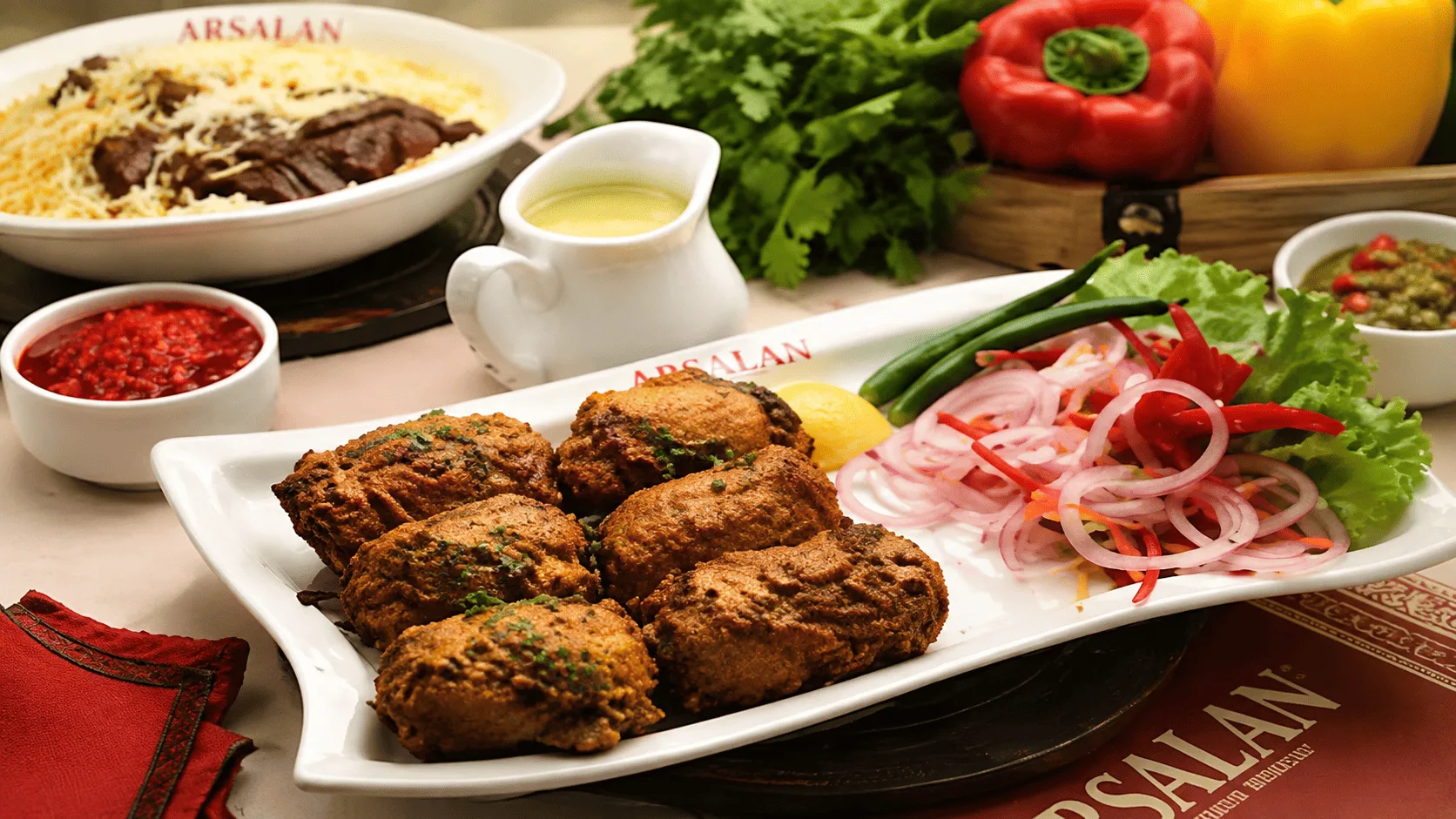
    Following a recent inspection and concerns surrounding its Achari Kebab, the restaurant has now responded to questions over the safety and quality of its food. Arsalan has maintained that the distinctive tangy aroma and taste of the kebab come from its achari-style marinade, while reaffirming its food-safety, hygiene and sourcing practices.

    What did Arsalan say about its Achari Kebab?

    According to Arsalan, the tangy and pickled smell and flavour of the Achari Kebab are part of the recipe. The restaurant said the aroma of the marinade should not be taken as proof that the meat or poultry used in the dish has spoiled.

    Also Read | Kolkata’s Bagbazar Sarbojanin Durga Puja hits legal hurdle after poll ends in tie, HC to decide next

    In a statement addressing the issue, Arsalan COO Hamza Ahsan said food safety and hygiene have always been part of the restaurant’s day-to-day operations, rather than measures introduced only after an inspection.

    Addressing the concerns over the Achari Kebab, Ahsan said, “the tangy and pickled aroma is an inherent characteristic of the achari-style marinade and is reflective of the recipe itself, and should not be misconstrued as an indication of spoilage.” He added that Arsalan regularly procures meat, poultry, fish, dairy and eggs throughout the year, while its spices are sourced from FSSAI-approved companies.
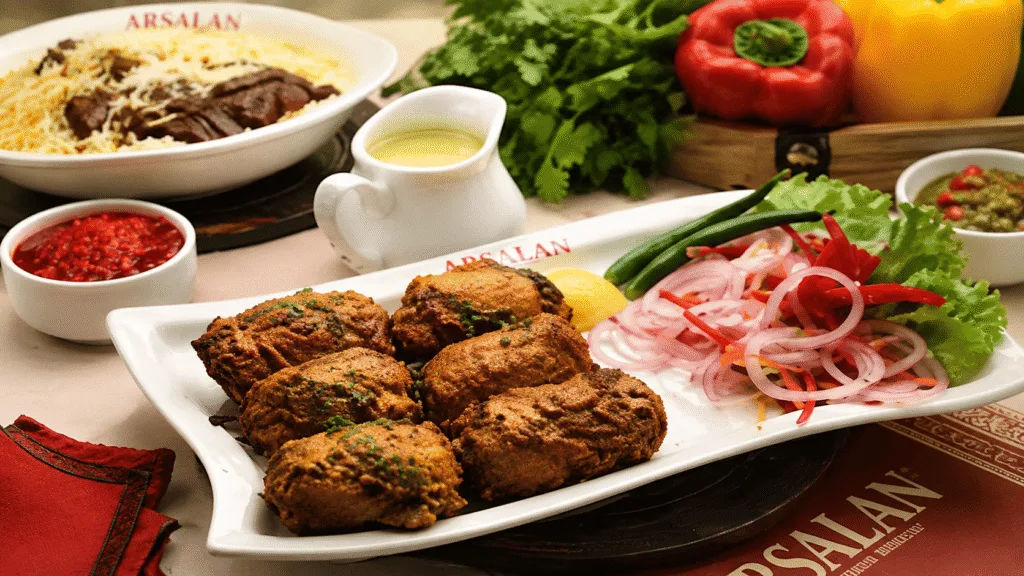
    Arsalan responds to concerns over its Achari Kebab after inspection
    Arsalan explains the distinct aroma and taste of its Achari Kebab | Zomato

    Ahsan further said the restaurant conducts regular food-safety briefings and training for its teams. He noted that Arsalan is now strengthening these systems through enhanced compliance checks, supply-chain audits and mandatory third-party hygiene and quality audits across its kitchens.

    “We value the trust our patrons have placed in Arsalan for over two decades, and we remain committed to serving them the best in food quality, hygiene and safety, every single day,” he said.

    How does Arsalan handle its food supplies?

    The restaurant said that its outlets depend on frequent procurement because of the volume of food prepared and consumed each day. Perishable ingredients are generally used on the same day, while some items may be stored for one to two days when necessary.

    Kolkata’s Arsalan strengthens food safety checks and kitchen audits
    Kolkata’s Arsalan strengthens food safety checks and kitchen audits | Arsalan

    Arsalan also said its staff receive periodic food-safety and hygiene briefings covering proper food handling and related practices.

    What is Arsalan doing after the inspection?

    As part of its efforts to tighten food-safety practices, Arsalan plans to introduce additional compliance checks and supply-chain audits across its outlets. Its kitchens will also undergo mandatory third-party hygiene and quality audits, adding another layer of oversight to its existing processes.

    Also Read | Kolkata parking rules change from Sept 1: Here’s what drivers need to know

    On the inspection itself, the management maintained that it respects the role of regulatory authorities and does not intend to contradict the department’s findings. It will follow instructions issued by the concerned authorities and continue to cooperate with applicable food-safety requirements.

    For customers asking, “Is Arsalan’s food safe to eat?”, the restaurant’s latest statement sets out its position on the Achari Kebab, sourcing practices, food handling and the additional safety measures it plans to introduce.
  • Ganesh Chaturthi was once a private festival: Here’s how it become a mass movement

    Ganesh Chaturthi was once a private festival: Here’s how it become a mass movement

    Every year, Ganesh Chaturthi transforms the streets of Maharashtra into a 10-day celebration of devotion, music, art and community. Homes and neighbourhoods welcome Ganpati Bappa, while elaborate pandals draw thousands of people together.

    But the festival’s journey from a largely private religious observance to the vast public celebration seen today is also closely connected with India’s struggle against British rule.

    In 2026, Ganesh Chaturthi will fall on Monday, September 14, with the celebration running for 10 days until Ganesh Visarjan on Anant Chaturdashi.

    Also Read | Pancha Kedar-Part 3: Tungnath, the highest Shiva temple in the world

    Although the festival is now celebrated all over the country, Maharashtra continues to remain the epicentre of its culture. The evolution of the festival as a major public celebration owes much to Bal Gangadhar Tilak, a freedom fighter and a nationalist leader.

    How did Ganesh Chaturthi evolve into a public celebration?

    For years, Ganesh Chaturthi was celebrated mainly as a private religious ritual, especially by Brahmins and other upper castes, based on the information provided in the source.

    However, the public nature of the celebration emerged in the context of the British colonial rule in India, with the intention to gather people in one place under the pretext of religion.

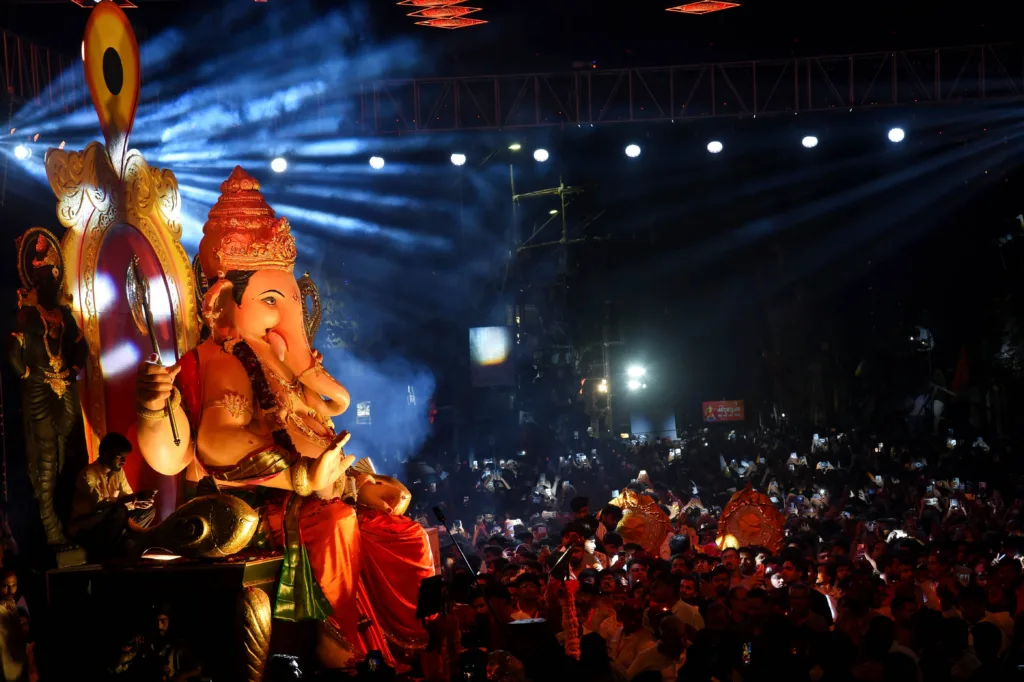
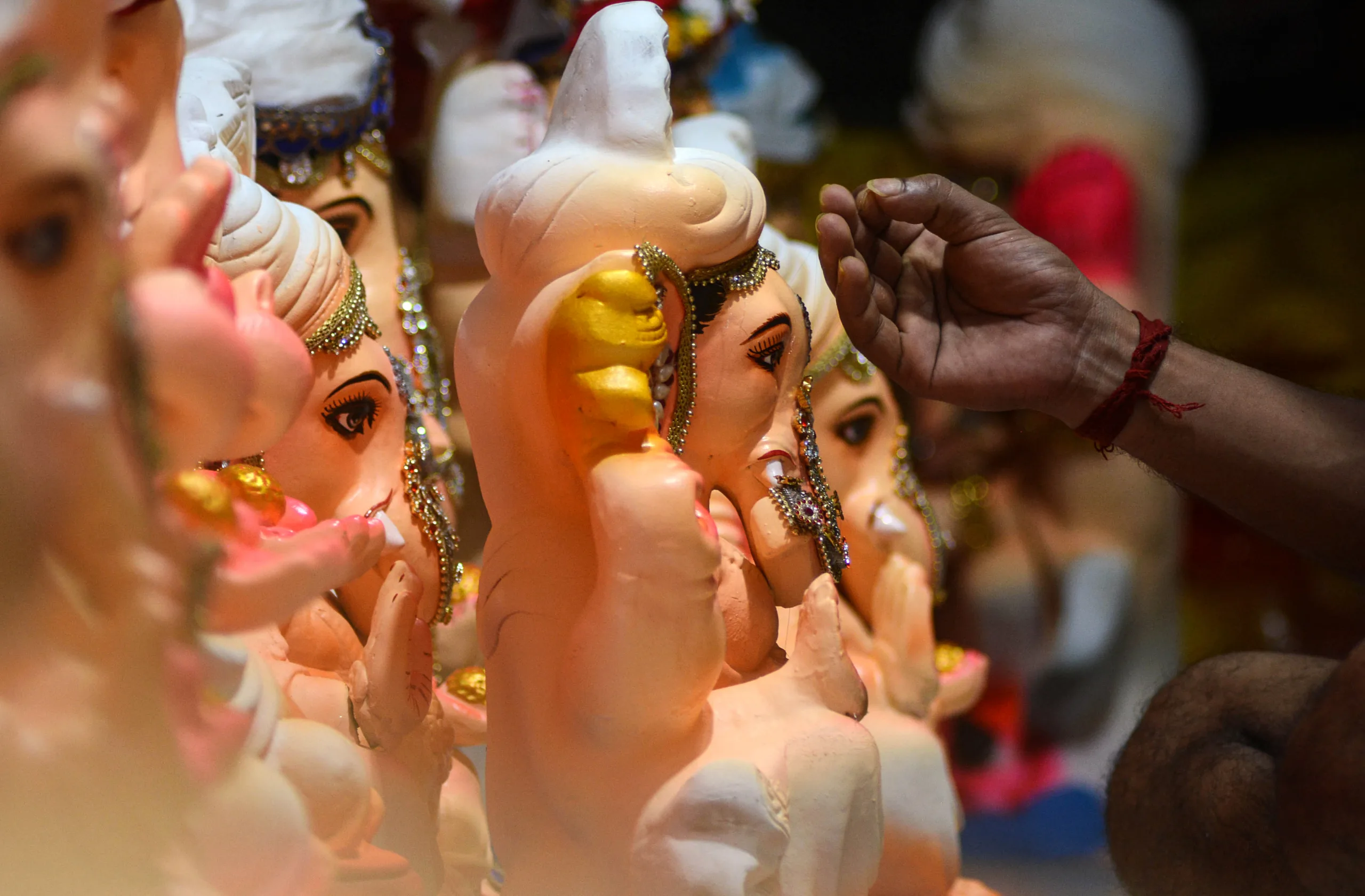
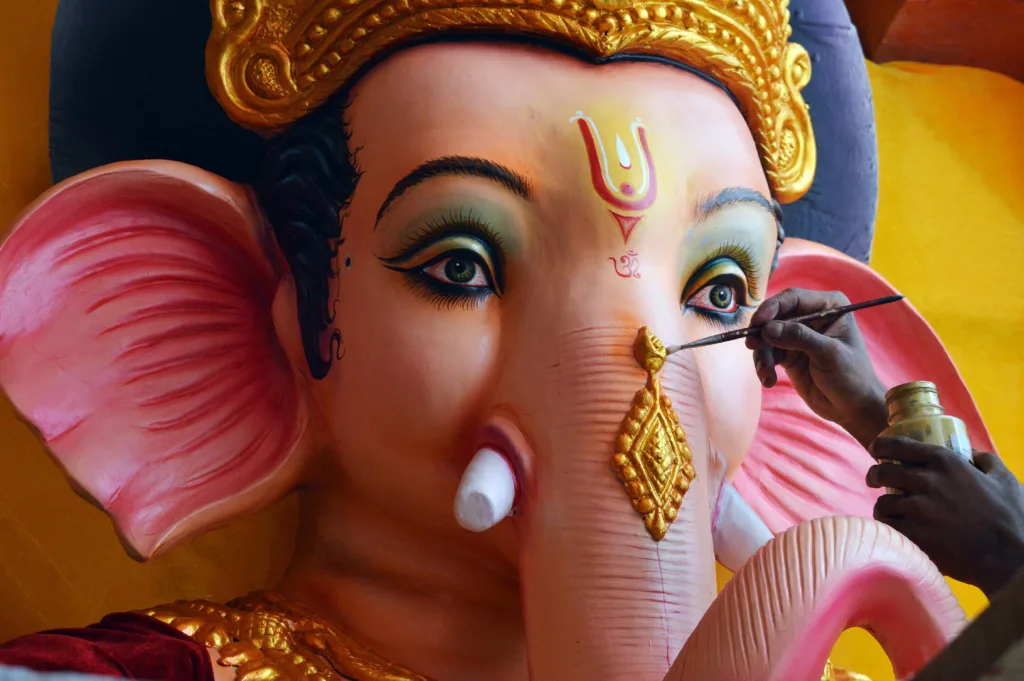
    Ganesh Chaturthi
    Ganesh Chaturthi / ANI

    The public form became known as Sarvajanik Ganeshotsav, with temporary pandals organised by local community groups or mandals. Unlike a private household celebration, these public festivities allowed people from the wider community to participate.

    The transformation is also linked to Maharashtra’s older traditions of using religious and cultural symbols to foster unity. The source notes that Chhatrapati Shivaji Maharaj had encouraged the worship of Ganesha in the 1600s as a means of uniting his people.

    However, it was Tilak who gave the festival a distinctly organised public character in the late 19th century.

    What role did Bal Gangadhar Tilak play?

    In 1893, Tilak helped establish the tradition of public Ganeshotsav in Pune, with celebrations beginning at Kesari Wada.

    Tilak saw religious festivals as an opportunity to bring people together at a time when colonial rule limited avenues for political mobilisation. The festival provided a space where communities could gather publicly under the accepted framework of religious observance.

    Tilak was already an influential journalist, teacher and nationalist. In 1881, he had co-founded Kesari in Marathi and Mahratta in English with G G Agarkar. Both newspapers became associated with the nationalist movement.

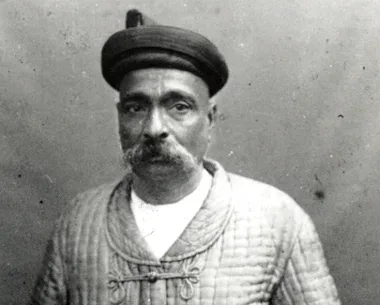
    Bal Gangadhar Tilak transformed Ganesh Chaturthi into a public festival that helped bring communities together during the freedom struggle.
    Bal Gangadhar Tilak transformed Ganesh Chaturthi into a public festival / Wikipedia

    His famous call for self-rule — “Swaraj is my birthright, and I shall have it” — captured his political philosophy that Indians had a right to govern themselves.

    His approach to Ganesh Chaturthi followed the same broader objective: creating spaces where people could gather, organise and develop a shared sense of identity.

    How did a religious celebration help the freedom movement?

    The British government’s approach to religious gatherings created an opening that Tilak was able to exploit.

    According to the source material, British authorities had become cautious about interfering in religious matters after the 1857 uprising. Tilak used that space to turn religious and cultural celebrations into occasions for public mobilisation.

    Ganesh festival societies began appearing across Maharashtra. Young people organised singing groups, gymnastic societies were encouraged, and public speeches became part of the celebrations.

    The surprising history of Ganesh Chaturthi and its link to India's freedom struggle
    The surprising history of Ganesh Chaturthi and its link to India’s freedom struggle / ANI

    Historian Dhananjay Keer, in his 1959 biography Lokmanya Tilak: Father of the Indian Freedom Struggle, described these developments while quoting Tilak’s account of the festival’s growing organisational character.

    The celebrations consequently became more than rituals. They created opportunities for people to meet, participate in collective activities and engage with ideas of courage, self-discipline and national identity.

    Tilak similarly promoted Shivaji Jayanti, using the memory of the Maratha ruler as another means of encouraging public mobilisation.

    From political strategy to cultural tradition

    The political environment which led to the development of public Ganeshotsav has undergone great changes since the colonial period.

    However, the practice of public Ganesh Chaturthi has survived and grown. Something that was started as a tool for uniting people became a part of the cultural heritage of Maharashtra and then spread all around India.

    Also Read | Pancha Kedar–Part 4: Rudranath, where Lord Shiva revealed his face to the world

    Nowadays, big mandals organise impressive pandals, idol shows, cultural programmes and other events. Individuals still celebrate the festival by welcoming an idol into their homes, doing puja and offering typical bhog like modaks and laddus before finally immersing the idol.

    Therefore, the contemporary identity of Ganesh Chaturthi is formed by different periods of time including religious devotion, community involvement, public culture and also the connection with the nationalist movement in the end of the 19th century.

    It can be seen that Ganesh Chaturthi became a perfect example of how the festival, being devoted to the worship of God, turned into a significant form of public event during one of the most important periods in Indian history. The celebration might now be considered rather cultural and religious but its public nature has quite a long history.

  • Kolkata’s Bagbazar Sarbojanin Durga Puja hits legal hurdle after poll ends in tie, HC to decide next

    Kolkata’s Bagbazar Sarbojanin Durga Puja hits legal hurdle after poll ends in tie, HC to decide next

    The fate of Bagbazar Sarbojanin Durga Puja, Kolkata’s oldest community Durga Puja, now lies before the Calcutta High Court after an election for key managing committee posts ended without a clear winner.

    The puja, which is entering its 108th year, saw a deadlock on Sunday as both sides received 33 votes each for the posts of general secretary and four managing committee members. The High Court had earlier appointed two observers to oversee the election.

    Bagbazar Puja election ends in 33-33 tie

    A total of 66 members voted out of the 77 eligible voters. Eleven members, including several prominent members of the organising body, stayed away from the election.

    Goutam Neogi, who is tied for the general secretary’s post, said the committee president, Samar Kumar Pal, should have been allowed to use a casting vote under the organisation’s bylaws when the election ended in a stalemate.

    Also Read | Kolkata parking rules change from Sept 1: Here’s what drivers need to know

    “The observers did not allow the casting vote after an objection from one of the parties. We are now awaiting the court’s decision,” Times of India reported Neogi as saying.

    The observers were appointed by the High Court after a plea was filed by the rival camp.

    Legal wrangle puts preparations for Kolkata’s iconic Bagbazar Puja in focus
    Legal wrangle puts preparations for Kolkata’s iconic Bagbazar Puja in focus | ANI

    Woman alleges assault over voting

    The election was also followed by a police complaint alleging assault and intimidation. A woman resident of Bosepara Lane approached Shyampukur Police Station, alleging that she was heckled, abused and physically assaulted after voting against a particular group.

    Sukumar Mondal, who was named in the complaint, is reportedly aligned with former ward 7 councillor Bapi Ghosh. Ghosh has been seeking control of the puja’s organising committee since last year.

    The dispute has added uncertainty to preparations for one of Kolkata’s most prominent traditional Durga Pujas. Organisers are yet to begin preparations in full swing, raising concern in the locality as the festival approaches.

    Why Bagbazar Sarbojanin is significant

    Bagbazar Sarbojanin began in 1919 at 55 Bagbazar Street as Nebubagan Barowari Durga Puja. After shifting through locations including Pashupati Bose Lane and Bagbazar Kali temple, it eventually moved to its permanent grounds.

    Social worker Nagendra Nath Ghoshal helped formalise the committee and gave it the name Bagbazar Sarbojanin Durgotsav.

    Also Read | Why is Suvendu Adhikari pushing the Saffron Samman Yatra now?

    In 1930, Calcutta Municipal Corporation alderman Durgacharan Bandyopadhyay became president and introduced a Swadeshi exhibition to promote Indian-made products. The venue was also associated with freedom movement activities. Netaji Subhas Chandra Bose served as president in 1938-39, while Chittaranjan Das also used the venue to mobilise support and provide shelter to underground revolutionaries.

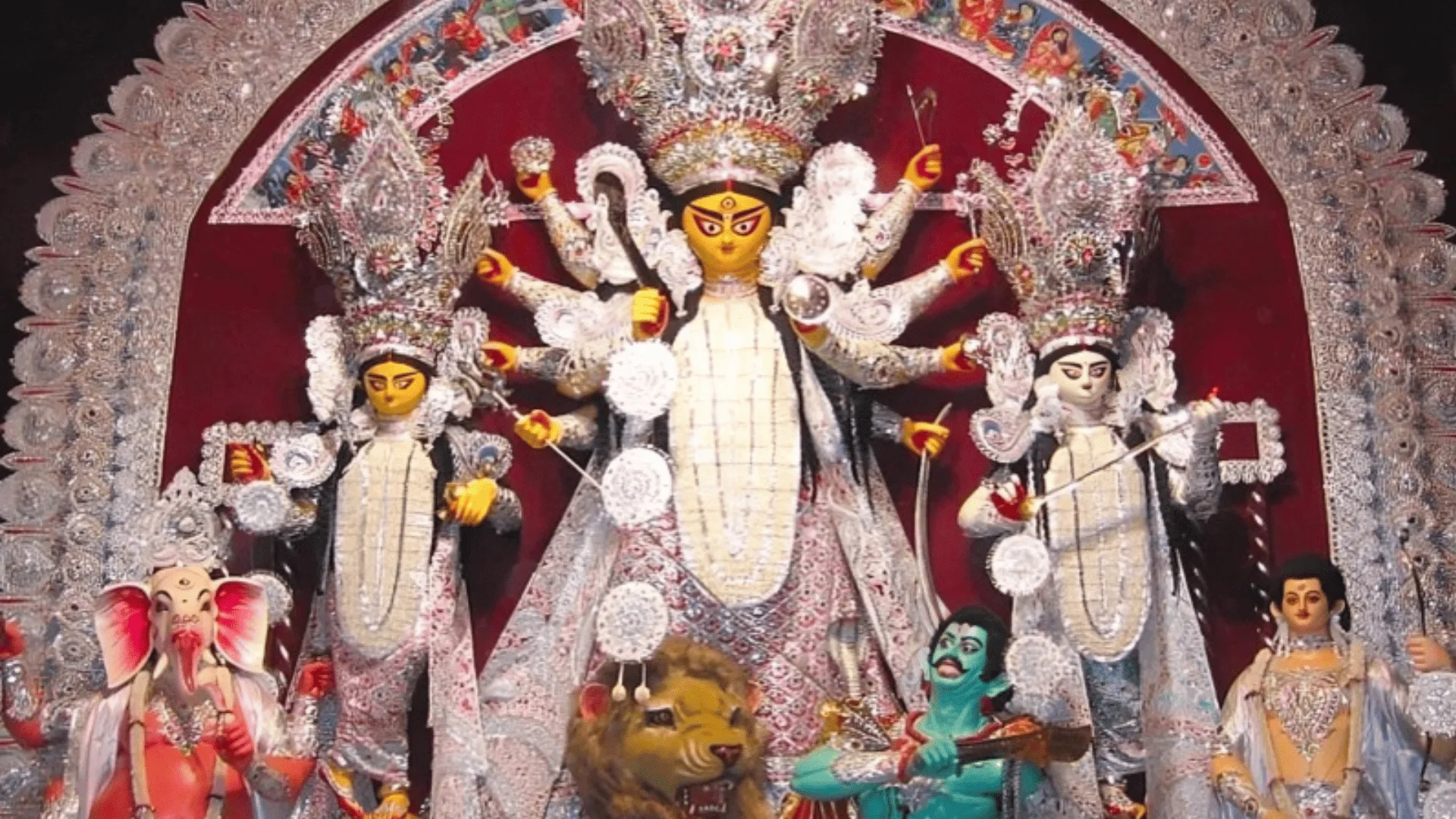
    The puja continues to draw lakhs of devotees every year and retains its traditional format, including its well-known ekchala Durga idol, rather than adopting theme-based presentations.

    Members seeking re-election have said they oppose a minister or councillor becoming the face of the puja. A panel backed by former minister Shashi Panja lost the 2022 election. Ghosh, who was then a councillor, allegedly attempted to take control of the puja last year but did not succeed.

  • Delhi faces some of India’s worst pollution, but ranks above Srinagar and Bengaluru in clean-air survey: Here’s why

    Delhi faces some of India’s worst pollution, but ranks above Srinagar and Bengaluru in clean-air survey: Here’s why

    Delhi has long been associated with some of India’s worst air pollution episodes, particularly during winter. Yet the capital has finished 21st among 48 cities with populations above 10 lakh in the Centre’s Swachh Vayu Sarvekshan 2026, ahead of Srinagar and Bengaluru.

    Delhi scored 172 points, while Srinagar stood at 26th with 162.6 points and Bengaluru at 32nd with 152.6 points.

    The numbers may look surprising at first. But the ranking is not a cleanest-air list. It assesses how cities are addressing pollution, including measures to control road dust, vehicular and industrial emissions, construction waste and solid waste, as well as public awareness initiatives.

    Also Read | Kolkata parking rules change from Sept 1: Here’s what drivers need to know

    That distinction explains why a city battling severe pollution can still perform relatively well in the survey.

    What does the Swachh Vayu Sarvekshan actually measure?

    The survey is conducted under the Centre’s National Clean Air Programme (NCAP) and covers 130 cities across three population categories.

    Rather than relying only on ambient air-quality readings, the assessment looks at the steps cities have taken to tackle pollution and how effectively those measures are being implemented.

    According to the assessment process outlined in the report, cities first conduct self-assessments. These are scrutinised by state-level monitoring committees, followed by evaluation by the Central Pollution Control Board (CPCB) and field verification by independent teams.

    A layer of smog covers the area around India Gate and Kartavya Path as the Air Quality Index (AQI) recorded '281' in the 'Very Poor' category as per the Central Pollution Control Board (CPCB), in New Delhi
    A layer of smog covers the area around India Gate and Kartavya Path as the Air Quality Index (AQI) recorded ‘281’ in the ‘Very Poor’ category as per the Central Pollution Control Board (CPCB), in New Delhi/ ANI

    That means the score reflects a combination of pollution-control action, implementation and measurable progress, rather than the AQI recorded on a particular day.

    Delhi’s position has also improved significantly compared with the previous edition. The capital ranked 32nd in 2025 with 157.3 points. In 2026, it moved up to 21st with 172 points.

    The improvement, therefore, is better understood as a measure of Delhi’s efforts to address pollution than as evidence that the capital’s air has become consistently clean.

    So why is Delhi above Srinagar and Bengaluru?

    Delhi’s higher ranking does not establish that its air is cleaner than Srinagar’s or Bengaluru’s.

    The same principle applies to the two cities. Srinagar’s 26th position and Bengaluru’s 32nd position reflect their scores against the survey’s broader pollution-control parameters, not a direct comparison of which city’s residents are breathing cleaner air every day.

    This is particularly important when rankings are read alongside real-world pollution levels.

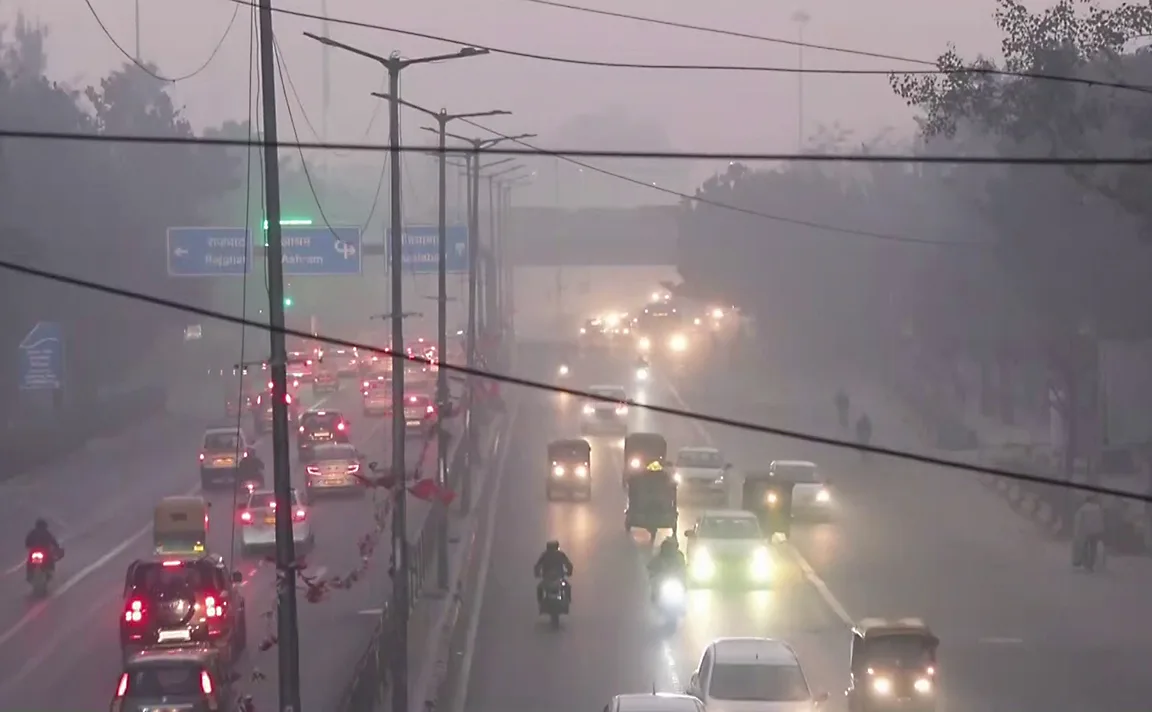
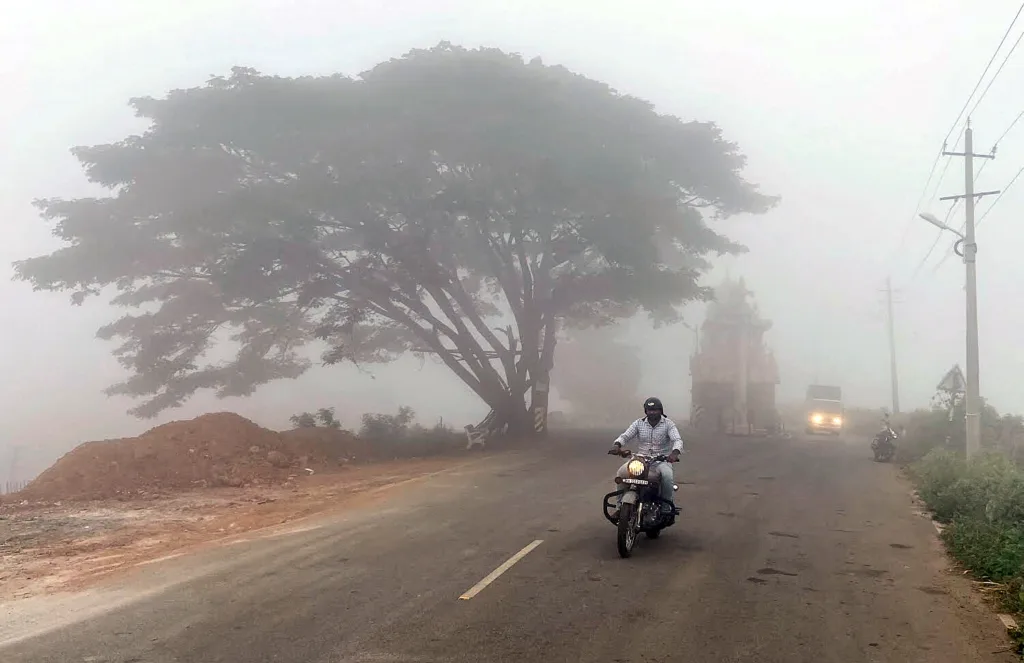
    A thick layer of smog covered all over the area gives a hazy view as air pollution increases, in Bengaluru / ANI
    A thick layer of smog covered all over the area gives a hazy view as air pollution increases, in Bengaluru / ANI

    Delhi continues to experience severe pollution episodes during winter, with its AQI frequently reaching hazardous levels. The report notes that the capital’s AQI has crossed 400 and, at times, 450. In January 2026, authorities invoked Stage IV of the Graded Response Action Plan (GRAP) after pollution reached critical levels.

    So, Delhi’s position should not be interpreted as a clean-air certificate.

    Even the top-ranked city still has pollution problems

    The distinction becomes clearer when looking at the top of the table.

    Lucknow ranked first among million-plus cities with 198 points, followed by Indore with 197 and Jabalpur with 195.

    Yet Lucknow’s first-place ranking does not mean it has eliminated air pollution. Its PM10 levels have reportedly fallen substantially from the 2017-18 baseline, but remained above the national standard of 60 micrograms per cubic metre in 2025-26.

    Lucknow ranked first among million-plus cities with 198 points, followed by Indore with 197 and Jabalpur with 195.
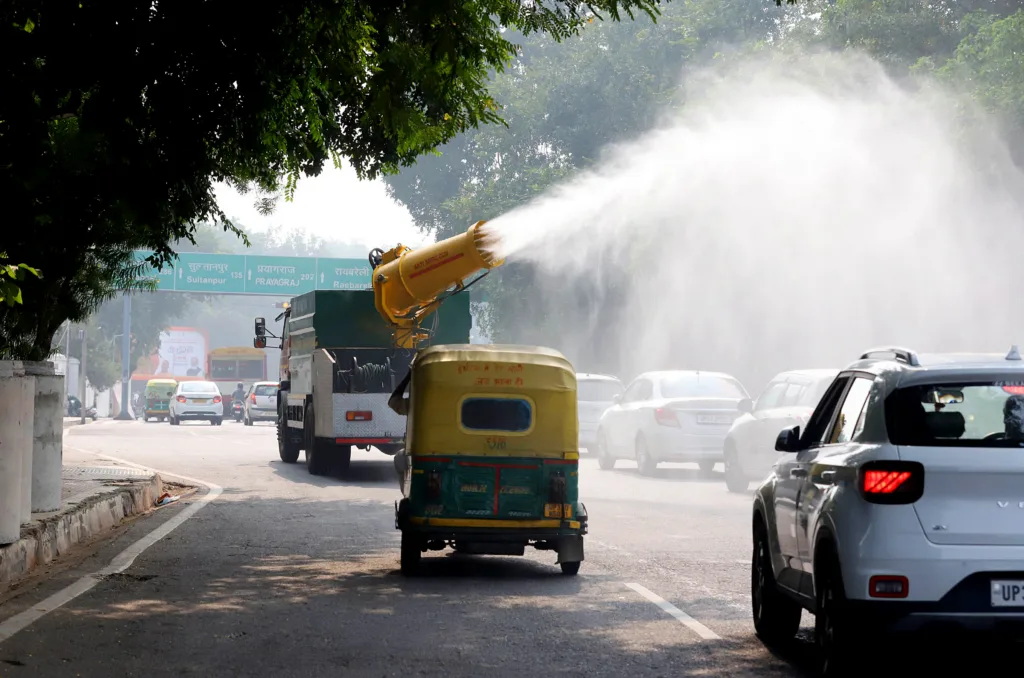
    A Municipal Corporation truck mounted with Anti-Smog Gun sprays water to curb air pollution as smog engulfs the city, in Lucknow /ANI

    Among the measures credited to Lucknow are electric vehicles for waste collection, mechanised road sweeping and improved legacy-waste management.

    The ranking is therefore designed to capture how cities are progressing against pollution, rather than declare which city has the cleanest air.

    Is India’s air quality actually improving?

    While there are indications of progress, the numbers also demonstrate the magnitude of the task at hand.

    As per government data, out of the 130 cities surveyed, 108 of them have recorded lower levels of PM10 than the level registered in their baseline year 2017-18 for the year 2025-26.

    On the other hand, only 14 cities have been found to meet the national PM10 standard.

    This is a substantial gap. While the reduction in pollution levels is positive, low levels do not always mean that the air quality has attained healthy or acceptable levels.

    Also Read | Why is Suvendu Adhikari pushing the Saffron Samman Yatra now?

    In the case of Delhi, what will be a meaningful indicator of progress is whether the pollution control efforts have led to fewer hazardous air days, lower particulate levels and lesser exposure to the populace.

    The Swachh Vayu Sarvekshan 2026 rankings demonstrate Delhi’s improvement in areas covered by the survey. They do not demonstrate that Delhi has solved its air pollution problem.

  • Who is Courtney Reese? 5 things to know about missing Tennessee mom

    Who is Courtney Reese? 5 things to know about missing Tennessee mom

    The search for Courtney Reese, a 36-year-old woman from Lebanon, Tennessee, continues after she was last seen at a laundromat in Nashville’s Donelson area on August 18. Her family is appealing to the public for information that could help locate her.

    According to the Wilson County Sheriff’s Office, Reese was dropped off at the Loads of Clothes laundromat in Donelson at around 1 pm. Authorities and her family are seeking information about what happened after she was last seen.

    Who is Courtney Reese?

    Courtney Reese is a 36-year-old Tennessee woman and mother who was last seen in Nashville’s Donelson area on August 18. Reese lives in Lebanon, Tennessee, and had recently become a mother to a baby boy. Her mother, Bonnie Oliver, has publicly appealed for her daughter to return home and stressed how important her newborn son is to her.

    Also Read | What is dark matter? Everything to know about the universe’s biggest mystery scientists are trying to solve

    Missing Tennessee mom Courtney Reese remains unaccounted for.
    Missing Tennessee mom Courtney Reese remains unaccounted for | (@Courtney Reese)

    5 things to know about Courtney Reese

    Last seen in Donelson: Reese was dropped off outside the Loads of Clothes laundromat at around 1 pm local time on August 18, according to the Wilson County Sheriff’s Office.

    Tried to arrange a ride: After arriving at the laundromat, Reese reportedly contacted people to ask whether someone could pick her up. No one was available at that time, and she has not been seen since.

    Description: Reese has black hair and blue eyes. She was wearing a red T-shirt and jean shorts when she was last seen. She is also the mother of a three-month-old baby.

    Her mother’s last contact: Reese’s mother, Bonnie Oliver, told WKRN that she last heard from her daughter at 5:52 pm on August 18, when Reese asked for a ride home. Oliver said she was unable to pick her up then. “At that moment, I couldn’t [go],” she said, “and I regret it, because I always go. No matter where my kids are, if they need me, I go.”

    Newborn son: Oliver said Reese gave birth to a healthy baby boy on May 23, three months before she disappeared. She also said Reese had suffered three miscarriages and would not willingly leave her baby. “She has to come home,” her mom said. “He’s too important, and I know he’s important to her. I know that without a shadow of a doubt.”

    Latest update in Courtney Reese search

    A volunteer search group checked a wooded area on Sunday, September 6, after receiving a report of a bad odor, WKRN reported. A cadaver dog accompanied the volunteers during the search. Nothing connected to Reese was found, and organizers believe the smell came from an animal.

    Also Read | Waukee High School and Prairieview lockdown: What we know about ‘armed person threat’

    “Every day I wake up and call her phone,” Oliver added. “I always said this has to be the worst thing, not knowing where your child is or family member.”

    A $2,500 reward is available for information that leads to Reese.

    Anyone who knows anything about Courtney Reese’s whereabouts is asked to contact Metro Nashville Police at 615-862-8600.

  • Why is Suvendu Adhikari pushing the Saffron Samman Yatra now?

    Why is Suvendu Adhikari pushing the Saffron Samman Yatra now?

    West Bengal Chief Minister Suvendu Adhikari is set to lead the Saffron Samman Yatra, also referred to as the Gerua Samman Yatra, in Kolkata on Wednesday. The march will begin at Golpark, pass through Dhakuria and end at the 8B bus stand near Jadavpur University, covering roughly three kilometres.

    The BJP has presented the programme as a campaign to promote nationalist thought and highlight the values associated with the colour saffron. The timing, however, gives the march a wider political context.

    Also Read | Why Kolkata Police filed an FIR against Mamata Banerjee? Exploring

    It comes less than a fortnight after a large Vande Mataram mobilisation near Jadavpur University and amid an ongoing battle over political graffiti and slogans on the campus.

    Why is Suvendu Adhikari pushing the saffron theme now?

    The Saffron Samman Yatra follows Adhikari’s appearance at the “Vande Mataram in 10,000 voices” programme around Jadavpur University. At that event, he criticised what he described as anti-national influences on the campus and argued for a stronger emphasis on national and cultural traditions.

    The latest march takes that message further by placing saffron at the centre of the political narrative.

    Suvendu Adhikari's Saffron Samman Yatra puts nationalism, Hindutva and Bengal's cultural identity in focus.
    West Bengal Chief Minister Suvendu Adhikari / ANI

    Organisers have described saffron as a symbol of sacrifice, self-surrender, courage and Sanatan tradition. The BJP has urged people to participate in the procession, framing it as an expression of nationalist thought.

    The political backdrop is significant. Jadavpur University has been witnessing a continuing graffiti battle involving rival student groups, including Left-wing groups and the RSS-affiliated ABVP. Walls have repeatedly been painted over and rewritten with competing political messages.

    How does the march fit into Bengal’s cultural politics?

    The argument behind the Saffron Samman Yatra is broader than the colour saffron itself.

    According to the analysis, BJP leaders and party insiders believe Bengal’s traditional and nationalist cultural identity was weakened during the state’s long Left Front rule and subsequently affected by what they describe as a different form of cultural politics under the Trinamool Congress.

    Suvendu Adhikari's Saffron Samman Yatra from Golpark to the Jadavpur University area
    West Bengal Chief Minister Suvendu Adhikari / ANI

    Some RSS leaders have used the term “cultural Marxism” to describe what they see as the influence of Left-oriented ideas on Bengal’s cultural and political life. These are political and ideological characterisations made by BJP and RSS figures, rather than an established description of Bengal’s cultural history.

    The BJP’s current pitch is that Bengali pluralism and cultural diversity can coexist with a stronger emphasis on Indian nationalism and Hindu cultural traditions.

    What does this mean for Bengal’s pluralist identity?

    This is where the political debate becomes more complicated.

    Bengal has historically had a distinctive cultural mix in which religious traditions, food habits, literature, art and intellectual life have often existed alongside one another. The analysis points to figures such as Rabindranath Tagore, as well as scholars Kshitimohan Sen and Amartya Sen, in discussions around this heterogeneous cultural identity.

    The BJP’s emphasis on a return to traditional heritage is being viewed differently by its political opponents. Critics fear that an aggressive focus on nationalism and Hindutva could weaken Bengal’s pluralistic and inclusive character.

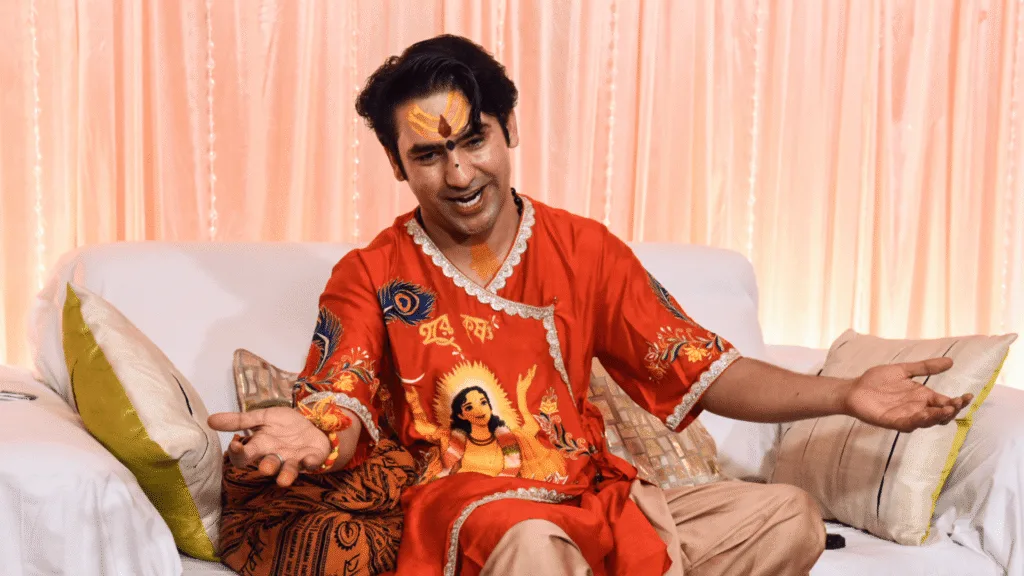
    The debate has also extended to food and religious practices. The recent appeal by self-styled godman Dhirendra Shastri, popularly known as Bageshwar Baba, asking Bengalis to give up non-vegetarian food during Durga Puja triggered discussion because Bengal’s religious and culinary traditions have historically not followed a uniformly vegetarian model.

    Dhirendra Shastri bageshwar baba.
    Dhirendra Shastri aka Bageshwar Baba/ ANI

    RSS chief Mohan Bhagwat, meanwhile, has stressed a less confrontational approach to food habits, saying there should not be negativity around what people eat.

    Is the Saffron Samman Yatra also an election strategy?

    The timing makes the political calculation difficult to ignore.

    West Bengal’s civic polls are expected after Diwali, with elections to the Kolkata Municipal Corporation, Howrah Municipal Corporation and several other municipalities potentially becoming important political battlegrounds.

    The Saffron Samman Yatra therefore gives the BJP a high-visibility platform to take its nationalism and cultural-identity message directly to voters.

    The march also keeps Jadavpur University at the centre of a wider political conversation. From the Vande Mataram event to the graffiti disputes, the campus has become a prominent site for competing arguments over nationalism, student politics and Bengal’s cultural identity.

    Also Read | Kolkata parking rules change from Sept 1: Here’s what drivers need to know

    For the BJP, the saffron campaign can serve as a way to consolidate its ideological message and reach voters beyond conventional party politics. For opponents, it raises questions about whether Bengal’s traditionally heterogeneous cultural identity is being recast through a more explicitly Hindutva-oriented political lens.

    The Saffron Samman Yatra, therefore, is not simply a march about a colour. It is part of a larger contest over nationalism, cultural identity and the political meaning of Bengal’s traditions.

  • Are micro-weddings actually romantic or just recession-coded?

    Are micro-weddings actually romantic or just recession-coded?

    The traditional big wedding is no longer the only way couples want to celebrate getting married. In 2026, micro-weddings are increasingly appearing in conversations around modern wedding planning, with couples choosing smaller guest lists and more intimate celebrations.

    A micro-wedding typically has 50 guests or fewer, compared with an average wedding size of around 117 guests.

    Social media has helped popularise the format, with couples highlighting smaller celebrations as less stressful and more personal. But there is another factor behind the trend which is money.

    Also Read | From ‘you complete me’ to ‘I need my space’: How Gen Z is redefining love and commitment

    For younger couples dealing with an uncertain job market, student debt and ambitions such as buying a home, spending heavily on one day may not always feel worthwhile. That makes micro-weddings an interesting intersection of romance, personal choice and financial practicality.

    Why are micro-weddings becoming a trend in 2026?

    While there is probably no exact data about how many couples choose micro-weddings, they definitely attract attention on social media.

    Clinical psychologist and marital counsellor Brandy Dunn, PsyD, says that people are becoming more thoughtful about choosing the type of wedding and asking themselves what wedding will represent who they really are, rather than what was expected of them.

    Micro-weddings are becoming increasingly popular as couples rethink traditional big-day expectations.
    Micro-weddings are becoming increasingly popular as couples rethink traditional big-day expectations / Pexels

    Gen Z grew up in economically uncertain times and during the pandemic, which might influence their attitude towards finances.

    In addition, couples who are working hard to buy an apartment and pay off student debts do not have much extra money for weddings.

    However, it does not mean that all micro-weddings are just budget weddings.

    Are micro-weddings actually cheaper?

    One of the biggest attractions of a smaller wedding is obvious — fewer guests can potentially mean lower expenses.

    Micro-weddings can reduce some of the costs and pressures associated with large-scale wedding planning while allowing couples to focus on meaningful experiences with the people closest to them.

    A smaller guest list can also change the experience of the wedding itself. Dunn points out that large weddings can become a blur for couples who spend much of the day greeting guests and managing logistics.

    Micro-weddings are everywhere
    Micro-weddings are everywhere / Pexels

    With fewer people around, couples may have more time for conversations, meals and actually experiencing their ceremony.

    But smaller does not automatically mean cheaper.

    Charnas cautions that micro-weddings can come with unexpected expenses, and some costs may not shrink simply because the guest list does. Couples therefore need to look at the entire budget rather than assuming that fewer invitations will automatically translate into major savings.

    What are the downsides of having a micro-wedding?

    The biggest challenge may not be financial at all. It can be deciding who gets invited.

    When a couple limits attendance to a small group, friends and relatives who do not make the cut may feel hurt or disappointed. Charnas says couples choosing this route should be prepared for some backlash, particularly when family members have their own expectations about the wedding.

    Micro-weddings are having a moment in 2026
    Micro-weddings are having a moment in 2026 / Pexels

    The situation can become even more complicated when relatives are contributing financially to the celebration. Financial support may come with expectations about the guest list, venue or overall scale of the event.

    That means couples may need to establish their priorities early and communicate them clearly.

    How do you know if a micro-wedding is right for you?

    Rather than begin by trying to decide how many guests to invite, the advice is to focus first on your own personal values as a couple.

    DeFife advises that determining the top three values and priorities in advance of wedding plans is important to ensure good decisions. Examples may be excellent food, photo-taking, or just an intimate atmosphere.

    Also Read | Would you date someone with completely different political views?

    The priorities will guide other decision-making. If any particular decision seems too stressful, couples can determine if it contributes to the desired experience.

    Budget is definitely one of those priorities. Fewer guests can be helpful for budgeting, but the process of cost evaluation needs to go on.

    In the end, there may not be a single best approach to marriage.

    A micro-wedding can be a romantic choice, a financial necessity, or even both. What counts is if the wedding represents the couple’s style and preferences rather than expectations.

  • Dating a narcissist? 11 subtle signs that may reveal the pattern

    Dating a narcissist? 11 subtle signs that may reveal the pattern

    The word narcissist is everywhere in dating conversations, but being selfish, arrogant or bad at taking criticism does not automatically make someone a narcissist. Narcissistic traits exist on a spectrum, and only a qualified mental health professional can diagnose narcissistic personality disorder.

    What can be useful, however, is looking at patterns of behaviour. Love bombing, a constant need for validation, difficulty taking accountability, blame-shifting and problems with boundaries can all affect a relationship when they occur consistently.

    Also Read | Three Loves Theory explained: The 3 relationships that shape you

    The key is not to diagnose your partner based on one argument or unpleasant interaction. Instead, look at whether a repeated pattern is leaving you feeling dismissed, controlled or increasingly unsure of yourself.

    What does being a narcissist actually mean?

    Narcissism involves more than self-centred behaviour. Psychologist Golee Abrishami describes it as being linked to a fragile sense of self that may be protected through grandiosity, control and a persistent need for admiration.

    11 signs you may be dating someone with narcissistic traits
    Signs you may be dating someone with narcissistic traits / Pexels

    Having narcissistic traits is also not the same as having narcissistic personality disorder (NPD). The distinction depends on factors including how severe, consistent and rigid the behaviour is and how significantly it affects a person’s relationships and everyday life.

    That means one bad argument, an insensitive comment or even several problematic behaviours do not automatically mean someone has NPD.

    11 signs you may be dating someone with narcissistic traits

    1. They come on extremely strong at first

    The relationship can initially feel almost too good to be true. Constant messages, excessive compliments, elaborate dates and declarations about how special the connection is may appear romantic.

    This can sometimes be love bombing, particularly when intense affection forms part of a larger pattern of manipulation or control. However, enthusiasm early in a relationship by itself is not proof of narcissistic behaviour.

    1. Conversations always come back to them

    You might start by talking about your stressful day, an achievement or something important to you, only for the conversation to quickly become about their experiences.

    The issue is not simply that someone likes talking about themselves. The concern is when your feelings and experiences are repeatedly minimised while their achievements, problems or emotions consistently take centre stage.

    1. They treat people differently based on what they can offer

    Pay attention to how your partner treats people they do not need to impress.

    Their behaviour towards waiters, service workers, strangers or people they consider less important can reveal patterns that may not be obvious during the honeymoon phase. Frequent name-dropping or attempts to establish their own importance can also be worth noticing.

    1. They are highly concerned with appearances

    For someone displaying narcissistic traits, how they are perceived by others can become extremely important.

    This may extend to the relationship itself. Your partner could become more concerned about how you make them look publicly than about resolving the actual issue between you.

    The internet’s latest dating trend, pheromone maxxing, is taking natural body odour to a whole new level.
    Representational Image / Pexels
    1. Their affection becomes conditional

    The intense affection at the beginning may eventually feel dependent on whether you are meeting their expectations.

    Warmth and praise can appear when you make them feel good about themselves, while affection may disappear when you disagree, assert your independence or fail to play the role they expect from you.

    1. They struggle to apologise or take responsibility

    Everyone becomes defensive occasionally. The difference can lie in what happens repeatedly.

    An apology may come with a justification or quickly turn into an explanation of why you were supposedly responsible. Instead of taking accountability, your partner may redirect the conversation towards your mistakes.

    1. Arguments somehow become your fault

    You may begin a conversation about something they did and end up defending yourself instead.

    Repeated blame-shifting can leave you questioning whether you were wrong to raise the issue in the first place. Over time, this dynamic can make conflict feel one-sided, with you repeatedly doing the emotional work of repairing the relationship.

    1. They react badly when you set boundaries

    Healthy relationships allow both people to have boundaries. But someone displaying narcissistic traits may interpret a boundary as rejection.

    A simple request for space or a decision to end a conversation when someone starts yelling could trigger guilt, anger or another argument. The important factor is whether your limits are repeatedly challenged rather than respected.

    Love bombing, blame-shifting and conditional affection can be warning signs.
    Representational image / Pexels
    1. Everyone else is always the problem

    If every former partner was supposedly terrible, every friend betrayed them and every colleague is incompetent, pay attention to the pattern.

    Someone who consistently portrays themselves as the victim while refusing to acknowledge their own role in failed relationships may be displaying a concerning behaviour pattern.

    1. They threaten the relationship when they feel rejected

    A partner who repeatedly threatens to leave, flirts with others to provoke a reaction or reminds you that they have other options may be attempting to regain control when they feel insecure.

    Breakup threats and harsh ultimatums can turn ordinary disagreements into emotionally destabilising situations.

    1. You no longer feel like yourself

    Perhaps the biggest warning sign is how the relationship affects you.

    If you constantly second-guess yourself, feel like you are walking on eggshells or find yourself questioning whether you are being too sensitive, the impact deserves attention.

    You may also notice that your confidence has gradually declined or that you have started accepting criticism you would once have recognised as unfair.

    What should you do if you recognise these signs?

    You do not need to determine whether your partner is a narcissist before deciding that a relationship dynamic is unhealthy for you.

    Digital jealousy
    Representational Image / Pexels

    Instead, look at the pattern over time. Be clear about your needs and establish boundaries around what you will do rather than trying to control your partner’s actions. For example, you can decide to leave a conversation when it becomes hostile rather than demanding that the other person never raise their voice.

    Also Read | Would you date someone with completely different political views?

    It can also help to speak with someone outside the relationship, whether that is a trusted friend or a therapist. Unhealthy dynamics can become harder to recognise when you are experiencing them every day.

    Most importantly, you do not need a clinical diagnosis to take your own wellbeing seriously. If a relationship repeatedly leaves you feeling small, anxious, controlled or unlike yourself, that experience matters regardless of what label applies to your partner.

  • Tired voice after teaching? 5 everyday habits teachers should avoid

    Tired voice after teaching? 5 everyday habits teachers should avoid

    For many students, the memory of a teacher with a powerful voice is hard to forget. A single shout could often bring a noisy classroom back under control. But repeatedly speaking over classroom chatter, teaching for hours and dealing with dusty environments can put considerable pressure on the voice.

    For teachers, vocal health is especially important because speaking is central to their daily work. Long teaching hours, loud classrooms and limited opportunities to rest the voice can gradually lead to strain.

    Dr Murarji Ghadge, Senior Consultant ENT Surgeon & Sleep Disorder Specialist, Ruby Hall Clinic, Pune, told News 18 that signs of an overused voice in teachers can include hoarseness, throat pain, frequent throat clearing, a tired voice or trouble speaking at the end of the day.

    Also Read | Do you know why people say ‘Bless you’ after sneezing? 8 surprising facts to know

    Here are five everyday habits teachers should avoid to protect their voices.

    Constantly raising your voice

      Trying to speak louder than classroom noise can place unnecessary pressure on the voice. Teachers can reduce this effort by improving classroom acoustics, using a microphone when possible and getting students’ attention before beginning to speak. Maintaining a comfortable pitch and volume is preferable to repeatedly forcing the voice louder.

      Teacher voice strain
      (Representational Image) Raising your voice over classroom noise can increase vocal stress | AI Generated

      Not drinking enough water

        Teachers often spend hours speaking without taking regular breaks. Staying hydrated can help keep the vocal cords moist and allow them to vibrate more easily. Sipping water throughout the day is better than waiting until the throat becomes dry. Water should remain the preferred drink, particularly when excessive coffee or sugary beverages leave some people feeling dehydrated.

        Repeated throat clearing

          Frequent, forceful throat clearing may provide temporary relief but can increase irritation because it causes the vocal cords to collide forcefully. Teachers can instead take a sip of water or swallow gently when the urge to clear the throat arises.

          Continuing to speak without rest

            The voice also needs recovery time after a long teaching day. Giving it periods of rest can help it recover from the demands of classroom teaching.

            Teacher voice strain
            (Representational Image) Regular hydration helps teachers manage vocal strain through the day | AI Generated

            Whispering when the voice feels strained

              Whispering may seem like an easy way to rest a tired voice, but it can sometimes require more effort. When the voice is strained, proper rest is a better approach than continuing to speak in a whisper.

              Also Read | Three Loves Theory explained: The 3 relationships that shape you

              When should teachers see an ENT specialist?

              Persistent voice problems should not simply be considered part of teaching. If a voice change continues for more than two or three weeks, or is accompanied by pain, difficulty swallowing or breathing, an ENT specialist should examine the voice. Early evaluation can help identify vocal-cord problems and prevent temporary strain from becoming a longer-term issue.

            1. From ‘you complete me’ to ‘I need my space’: How Gen Z is redefining love and commitment

              From ‘you complete me’ to ‘I need my space’: How Gen Z is redefining love and commitment

              For years, popular ideas about romance have centred on becoming one with your partner. Phrases such as “You complete me” and “I can’t live without you” have often presented love as something that requires complete emotional and personal involvement. But relationship expectations are shifting, particularly among Gen Z, who are increasingly placing value on individuality alongside emotional closeness.

              In an interview with Hindustan Times, Chandni Gaglani, EVP and Head of Aisle, explained how younger people are approaching love, commitment and personal freedom differently.

              Gen Z wants love without losing individuality

              According to Chandni, traditional ideas of relationships often placed togetherness at the centre. Couples were expected to spend much of their time together, share friends and social circles, make decisions jointly and allow the relationship to become a major part of their identity.

              Also Read | Would you date someone with completely different political views?

              Gen Z, however, appears more comfortable maintaining the life they had before entering a relationship.

              Gen Z relationships
              (Representational Image) Personal space is becoming an important part of Gen Z relationships | AI Generated

              “For Gen Z, finding a meaningful relationship does not necessarily mean giving up the life that existed before it. They want love, companionship and emotional intimacy, but increasingly, they also want the freedom to remain individuals within the relationship,” highlighted Chandni.

              “Their careers, friendships, interests, ambitions and personal space continue to matter. This isn’t necessarily a rejection of commitment. Instead, it reflects a changing understanding of what commitment can look like: choosing someone without having to lose yourself in the process,” added Chandni.

              Why personal space matters in modern relationships

              Chandni noted that having separate friendships, individual interests, solo travel plans, personal routines or time alone does not necessarily signal emotional distance for Gen Z.

              Gen Z relationships
              (Representational Image) Gen Z is choosing commitment without giving up personal identity | AI Generated

              “Compatibility is no longer just about enjoying the same things or wanting the same future. It can also mean being comfortable with each other’s differences and giving each other the room to explore them,” said Chandni.

              Love can complement identity, not replace it

              The idea of a partner “completing” someone is also giving way to a more individual-centred understanding of love.

              “The idea of a partner completing you is gradually giving way to something more balanced: finding someone who complements the life you are already building. This doesn’t make the relationship less meaningful,” explained Chandni.

              Also Read | From tote bags to therapy talk: Is the ‘performative’ male changing men?

              For Gen Z, commitment can mean sharing a life while continuing to nurture personal ambitions, friendships, hobbies and interests.

              Commitment without losing yourself

              At the heart of this changing approach is the possibility of staying emotionally connected while retaining a sense of self. Separate interests, shared values and time apart can coexist with a committed relationship.

              GenZ relationships
              (Representational Image) Young couples are balancing emotional intimacy with individual lives | AI Generated

              Gen Z may not be seeking less commitment, but a different form of it: companionship without confinement, intimacy without dependence and love that leaves room for individuality.

              “Because perhaps the healthiest version of love isn’t you. It is I know who I am, you know who you are, and we still choose each other,” concluded Chandni.