Blog

  • Man travels 1,200 km from Amritsar to Gaya; ChatGPT helps him find his family

    Man travels 1,200 km from Amritsar to Gaya; ChatGPT helps him find his family

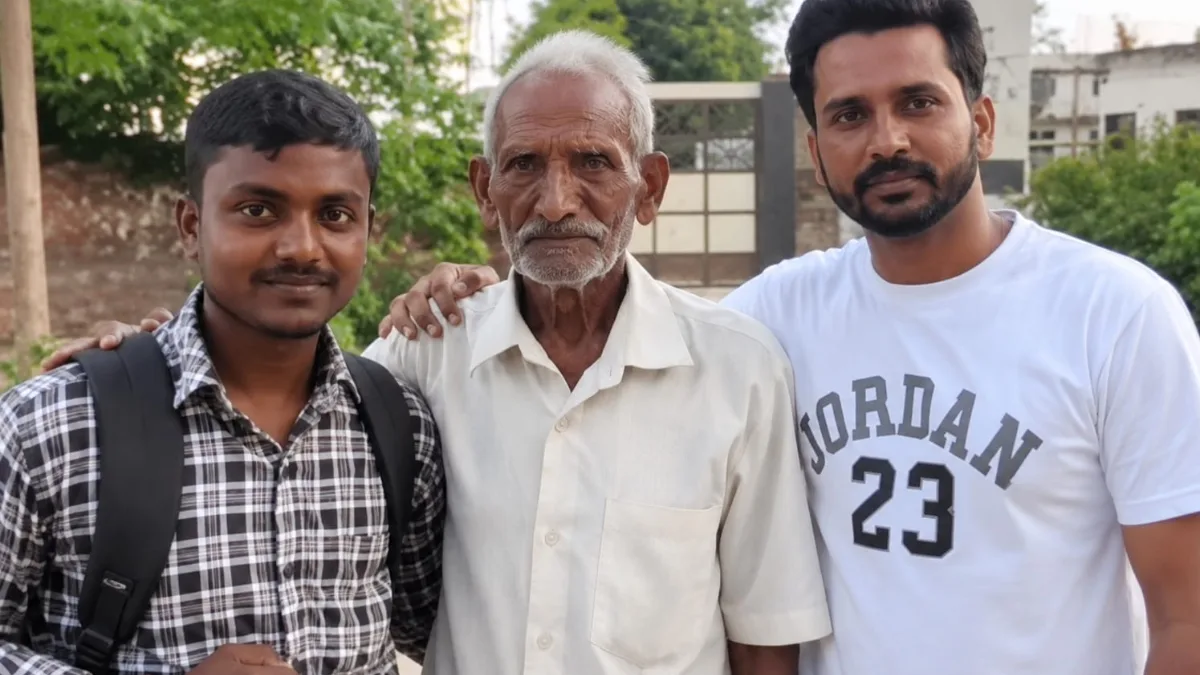
    A missing elderly man from Punjab travelled more than 1,200 kilometres away from home after losing his way during a pilgrimage, before a stranger in Gaya used ChatGPT and online searches to trace his family. Chaman Lal, from Fatehgarh Gujran village in Ludhiana district, had travelled to Amritsar on September 11 to visit the Golden Temple under the Punjab government’s Chief Minister Pilgrimage Scheme. After becoming separated from his group, he eventually boarded a train to Bihar and reached Gaya.

    A missing elderly man from Punjab travelled more than 1,200 kilometres away from home after losing his way during a pilgrimage, before a stranger in Gaya used ChatGPT and online searches to trace his family. (OpenAI)
    A missing elderly man from Punjab travelled more than 1,200 kilometres away from home after losing his way during a pilgrimage, before a stranger in Gaya used ChatGPT and online searches to trace his family. (OpenAI)

    Stranger finds missing man in Gaya

    Chaman Lal was found near a railway station in Gaya by Neeraj, a local construction worker. The elderly man appeared distressed and hungry and struggled to explain where he came from. His family said he has memory-related difficulties.

    The only useful information Chaman Lal could provide was the name of his village, Fatehgarh Gujran. Neeraj took him home, gave him food and shelter and allowed him to stay with his family while he tried to trace his relatives.

    Since Chaman Lal spoke only Punjabi, Neeraj used the village name as his starting point. He searched online and also turned to ChatGPT to identify the location of Fatehgarh Gujran.

    Also Read | Once visited by Christopher Nolan, Matt Damon, and Tom Holland, now facing regulatory action: The story of Olympia Cafe, Mumbai

    Since Chaman Lal spoke only Punjabi, Neeraj used the village name as his starting point. (OpenAI)
    Since Chaman Lal spoke only Punjabi, Neeraj used the village name as his starting point. (OpenAI)

    ChatGPT helps reunite family after a three-day search

    Neeraj’s search continued for three days before he identified a village called Fatehgarh Gujran near Machhiwara Sahib in Ludhiana district.

    Rather than sending Chaman Lal back alone, Neeraj decided to accompany him on the journey from Gaya to Punjab. After reaching the Machhiwara area, he began showing the elderly man’s photograph to residents in the hope that someone would recognise him.

    His efforts eventually paid off when a resident, Master Krishan Lal, identified Chaman Lal. The information quickly reached the family, and Chaman Lal’s grandson, Sukhchain Singh, travelled to Machhiwara to confirm his identity.

    The case shows how ChatGPT helps reunite family members when basic clues such as a village name can be combined with online information. However, it was Neeraj’s intervention, local searches and decision to personally accompany Chaman Lal that ultimately completed the journey home.

    Also Read | IIT Bombay student death: FIR filed after ChatGPT exam row

    Sukhchain Singh said the family had searched extensively for Chaman Lal after he went missing in Amritsar and had also informed the police. (OpenAI)
    Sukhchain Singh said the family had searched extensively for Chaman Lal after he went missing in Amritsar and had also informed the police. (OpenAI)

    Family had already searched for Chaman Lal

    Sukhchain Singh said the family had searched extensively for Chaman Lal after he went missing in Amritsar and had also informed the police. Relatives and villagers had circulated his photograph on social media in the hope that someone would recognise him.

    The family later welcomed Neeraj at their home with garlands and offered him money and clothes as a gesture of gratitude. Sukhchain Singh thanked him for protecting his grandfather and travelling with him all the way from Gaya to Punjab.

    Neeraj said he could not ignore an elderly man who appeared to be in distress. Once he learnt the name of Chaman Lal’s village, he felt responsible for finding his family.

    What began with a chance encounter at a railway station in Gaya ended with an elderly man returning home, helped by a stranger’s persistence and a simple combination of local knowledge, internet searches and AI.

    FAQs

    How did Chaman Lal reach Gaya from Punjab?

    Chaman Lal lost his way in Amritsar, reached a railway station and boarded a train that took him to Gaya in Bihar.

    How did ChatGPT help find Chaman Lal’s family?

    Neeraj used ChatGPT and online searches to trace the village name provided by Chaman Lal, helping identify his home in Ludhiana district.


  • Kolkata Police cracks down on civic volunteers with new SOP

    Kolkata Police cracks down on civic volunteers with new SOP

    Kolkata Police Commissioner Ajay Nand has issued a new standard operating procedure (SOP) for civic volunteers. The new guidelines set out stricter rules on attendance, conduct, and performance. The guidelines, issued on Friday, come amid criticism over alleged lapses in duty by civic volunteers and the recent arrest of a Kolkata Police civic volunteer in connection with a murder case in Jharkhand.

    The new SOP has been circulated to police units across the city and aims to strengthen supervision and accountability among the auxiliary force.

    Strict action over unauthorised absence

    Under the new rules, officers-in-charge and unit heads have been asked to maintain strict discipline and take action against unauthorised absence and misconduct. They will have to send daily reports to the Deputy Commissioner of the Home Guard Organisation (DC, HGO) about civic volunteers who remain absent without permission.

    The SOP sets out a two-stage notice system. If a civic volunteer remains absent without authorisation for seven consecutive days, the person will receive a first notice either electronically via WhatsApp or directly. If the absence continues, a second and final notice will be issued seven days later. The volunteer will then be allowed to explain the reason for the absence.

    If the explanation is not found satisfactory, the volunteer will be permanently demobilised. The process will be initiated by the unit-in-charge and completed with the approval of the DC, HGO.

    The guidelines state that absence will be accepted only in certain circumstances, including verified personal illness or the death of a family member or close relative.

    Performance reports and training made mandatory

    The new SOP also puts greater emphasis on regular assessment of civic volunteers. Unit heads will now have to submit performance and assessment reports twice a year for every volunteer under their jurisdiction. The reports will be used to assess whether their conduct and performance remain satisfactory.

    Attendance at prescribed training programmes will also be monitored strictly. Police orders issued earlier had already made such training mandatory, and the latest guidelines reiterate that requirement.

    Commanding officers of all divisions, traffic guards and specialised units have been directed to circulate the SOP widely and ensure immediate compliance. Both English and Bengali versions of the guidelines have been issued.

    FAQs

    Q: What is the new Kolkata Police SOP for civic volunteers?


    It is a set of guidelines covering civic volunteers’ attendance, conduct, performance, discipline, and training.

    Q: What happens if a civic volunteer is absent without permission?


    A first notice is issued after seven consecutive days of unauthorised absence. If the absence continues, a second and final notice is issued seven days later.

  • What is a Myth? The deeper meaning behind ancient stories explained

    What is a Myth? The deeper meaning behind ancient stories explained

    The word “myth” is often used to describe something false or imaginary. But in mythology and history, it has a very different meaning. Myths are something that communities have carried from one generation to the next generation to explain the world, human life, nature and the divine. The myths are part of a culture’s memory and identity, whether they are written down or passed on through oral tradition.

    Every civilisation has myths. From the stories of the Ramayana and Mahabharata in India to the tales of Zeus and Athena in Greece, myths have helped people make sense of questions that had no simple answers.

    Looking at myths through archaeomythology

    Archaeomythology studies myths alongside archaeology, history, language and folklore. Instead of reading an ancient story on its own, it asks what that story can tell us about the people who created it.

    The field was developed by archaeologist Marija Gimbutas, who believed ancient symbols, temples, artefacts and myths should be studied together. Pottery, cave paintings, burial sites and religious symbols can all add context to stories that have survived for centuries.

    Do myths contain history?

    Not every myth is a historical account. At the same time, many researchers believe myths can serve as the preserved memories of real events, places and traditions.

    As stories travel across generations to generations, details often change. Gods, heroes and magical elements may become part of the oral tradition and the older customs, rituals and social beliefs can remain hidden within those stories. Archaeomythology tries to identify those traces without treating every myth as literal history.

    Also Read | How is Goddess Jagadhatri different from Goddess Durga? The similarities, symbolism and story behind the festival

    A well-known example is Ariadne from Greek mythology. She is usually remembered for helping Theseus escape the Labyrinth. Some archaeomythologists argue that older traditions point to Ariadne as an important Minoan goddess connected with fertility and renewal before her story changed over time.

    Why myths still matter today

    Myths continue to influence festivals, literature, art and everyday traditions. They tell us how ancient civilisations understood life, death, nature and the relationship between humans and the sacred. Even today, many rituals and cultural practices draw from the ancient stories that have existed for hundreds or even thousands of years.

    Also Read | Greek and Roman nymphs: The forgotten guardians of nature in ancient mythology

    Reading myths this way is less about asking whether every event happened exactly as described and more about understanding what those stories meant to the people who narrated them.

  • How is Goddess Jagadhatri different from Goddess Durga? The similarities, symbolism and story behind the festival

    How is Goddess Jagadhatri different from Goddess Durga? The similarities, symbolism and story behind the festival

    From the beautifully lit streets of Chandannagar to the traditional celebrations in Krishnanagar, Jagadhatri puja has become an important part of Bengal’s festive calendar.

    Many people often wonder whether Goddess Jagadhatri is another form of Goddess Durga. The answer is yes, but the two are not worshipped in exactly the same way.

    In the Hindu scriptures the people used to believe that Ma Jagadhatri as a form of Adi Shakti, the divine feminine power who protects and sustains the world. As per the scriptures ma Jagadhatri shares several characteristics with devi Durga, her appearance, symbolism and the story behind her worship are different.

    The similarities between Goddess Jagadhatri and Goddess Durga

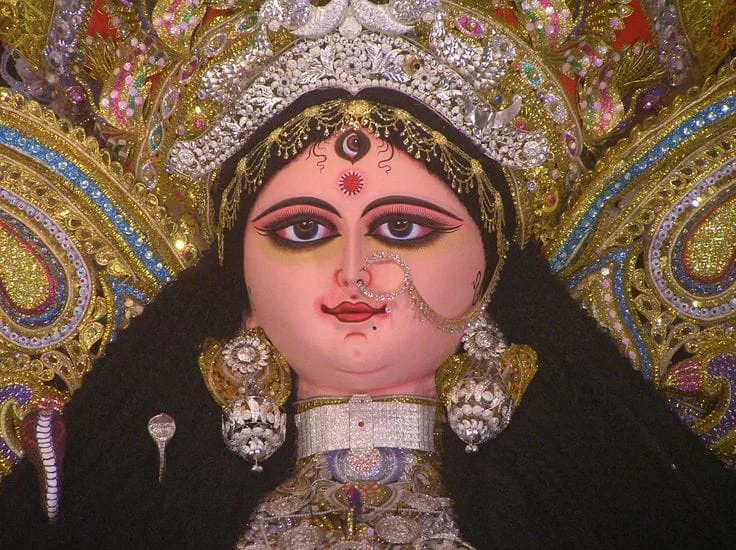
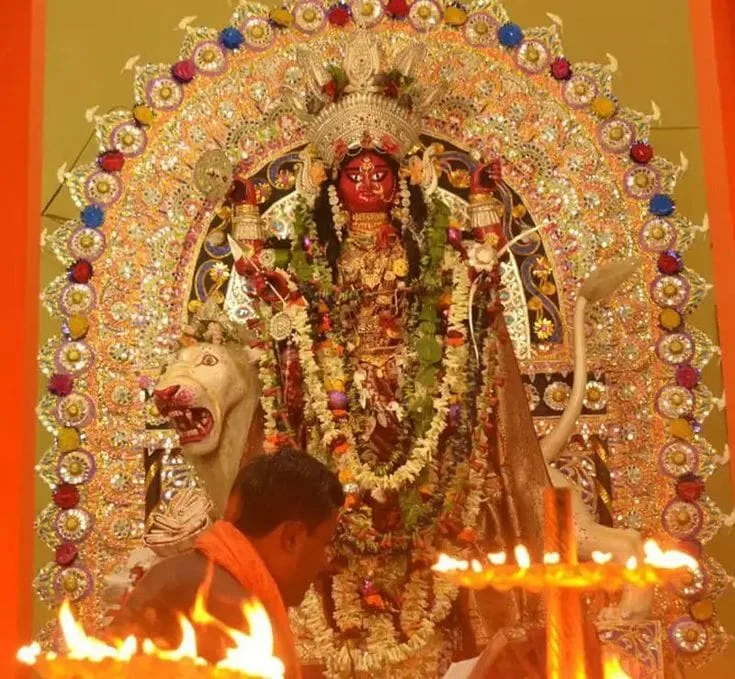
    Goddess Jagadhatri and Goddess Durga are both worshipped as powerful forms of Shakti. Both of the mighty Godesses are Trinayani which means three-eyed goddesses. The three nayan represents wisdom, strength and divine vision. The two goddesses are usually shown riding a lion, a symbol of courage and fearlessness.

    Also Read | Greek and Roman nymphs: The forgotten guardians of nature in ancient mythology

    Like Devi Durga, Ma Jagadhatri is believed to protect devotees from evil and restore balance whenever arrogance and injustice grow over peace. This is one of the reasons devotees see her as another manifestation of the same divine power.

    What makes Goddess Jagadhatri different?

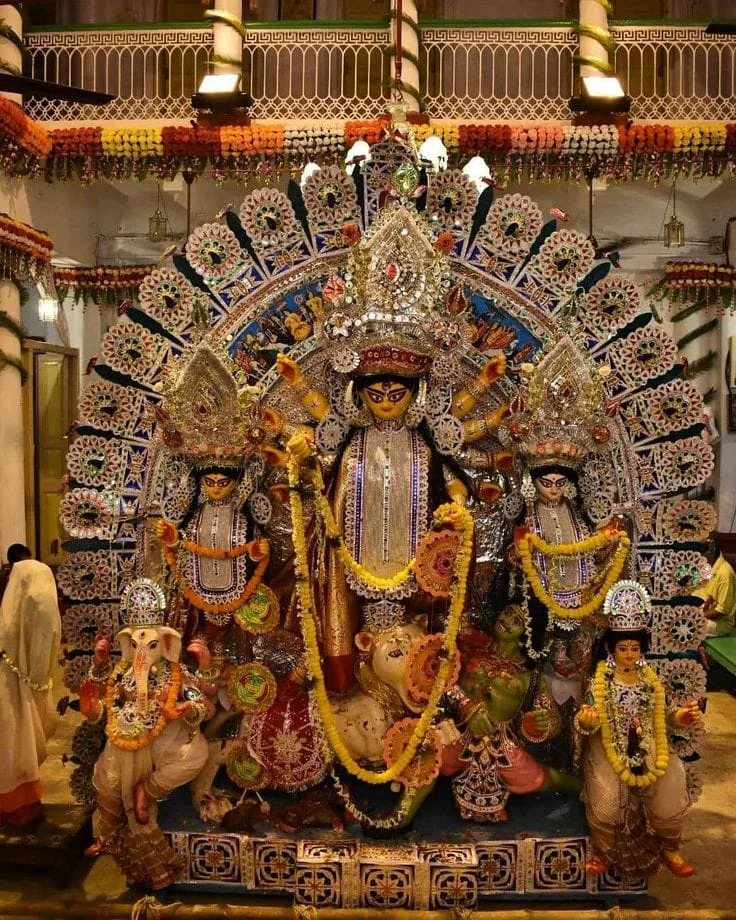
    People usually differentiates the two goddesses with the idols. Goddess Durga is depicted with ten arms, each carrying a weapon gifted by different gods. Goddess Jagadhatri, however, has four arms. She holds a conch, the Sharanga bow, a chakra and five arrows.

    Another major difference is the demon beneath the lion. Durga’s lion is shown defeating Mahishasura, while Jagadhatri’s lion stands over an elephant demon called Karindrasura. Because of this victory, Jagadhatri is also known as Karindrasuranisudini.

    Also Read | Ganesh Chaturthi was once a private festival: Here’s how it become a mass movement

    Her complexion is also traditionally described as radiant like the rising sun, and she is dressed in red, symbolising energy and divine power.

    Why is Jagadhatri worshipped?

    According to mythology, after Mahishasura was defeated by Devi Durga, the gods became proud of their victory. To remove their arrogance, the Goddess appeared as Jagadhatri and reminded them that all strength comes from the supreme divine power.This is the reason why Ma Jagadhatri is associated with humility, self-control and the power that sustains the universe.

    For devotees, Jagadhatri Puja is not only a celebration of victory over evil but also a reminder to let go of pride and remain grounded.

  • Love books? This country is rewarding people for reading every day

    Love books? This country is rewarding people for reading every day

    What if reading a book could earn you money? Singapore is turning that idea into reality. The National Library Board of Singapore has rolled out ReadSG, a five-year reading movement where individuals can earn points for having 15 minutes of daily reading time with a book. This program was rolled out on September 6 in tandem with Singapore’s first National Reading Month. The goal of this initiative is to encourage people to cultivate the reading habit in an age dominated by digital media.

    How Singapore’s ReadSG reading reward works 

    Under the ReadSG campaign, participants can log at least 15 minutes of reading each day through the government’s CrowdTask SG platform. Each qualifying session earns 20 virtual coins, although only one session can be counted per day. 

    Love reading? This country will pay you to read books
    (Representational Image) Daily readers can earn virtual coins by spending 15 minutes with a book | AI Generated

    Once participants collect 1,000 coins, they can exchange them for S$1. Although the financial incentive is small, the intention behind the program is to make reading an everyday activity rather than an occasional one. 

    Also Read | Can AI safety keep pace? Gemini hack and resignations deepen industry worries

    The 15-minute target is intentionally short. According to reports, it can be fitted into everyday moments such as a train journey, waiting for a bus or taking a coffee break. 

    Singapore reading statistics behind the campaign 

    The initiative comes despite relatively strong reading habits among Singaporean adults. A 2024 National Library Board study found that 89 per cent of adults read more than once a week, while 28 per cent said they read books. 

    Love reading? This country will pay you to read books
    (Representational Image) A new reading drive is turning 15 minutes of reading into daily rewards | AI Generated

    The campaign therefore focuses less on basic literacy and more on encouraging people to spend time with longer-form reading. 

    The National Library Board says long-form reading can support attention, critical thinking and imagination. 

    ReadSG also links reading with charity 

    Singapore’s reading push is not limited to individual rewards. Through its Read for Good initiative, recorded reading time can also contribute towards charity funding. 

    Love reading? This country will pay you to read books
    (Representational Image) Book lovers can earn rewards while building a regular reading habit | AI Generated

    The programme has set a target of 7.5 million minutes, which could unlock up to S$150,000 for selected community programmes. 

    Also Read | Who is Umar Kremlev? Putin-linked Russian businessman who reportedly paid for Trump Jr’s Bahamas party

    ReadSG campaign is currently in pilot phase 

    The ReadSG reading challenge is currently being tested in a pilot phase. Further features are expected to develop based on feedback from participants. 

    Love reading? This country will pay you to read books
    (Representational Image) Reading for 15 minutes a day can now help you earn virtual rewards | AI Generated

    By combining a simple daily reading target, digital rewards and a community-focused charity element, Singapore’s latest reading initiative is attempting to make 15 minutes of reading a day part of ordinary life.

  • Micro-cheating vs cheating: What is the difference in a relationship

    Micro-cheating vs cheating: What is the difference in a relationship

    Cheating does not always begin with a kiss. Sometimes, it starts with a message you would rather your partner never see. A late-night DM, a flirtatious exchange, deleted chats or a dating profile kept active “just to see what is out there” may seem too minor to call an affair. But when secrecy is involved, then the scope of the relationship becomes increasingly difficult to determine.

    It is this grey area which is known as micro-cheating. This describes actions which do not necessarily constitute a physical affair but could raise doubts about the emotional or physical exclusivity of the relationship. With social media making private conversations, constant interactions and hidden connections easier than ever, the line between harmless behaviour and infidelity is no longer always obvious.

    What is micro-cheating?

    Psychology Today defines micro-cheating as small breaches of trust that don’t cross into a physical affair but can make a partner question the relationship’s emotional or physical exclusivity.

    Micro-cheating vs cheating
    (Representational Image) Secret DMs, flirting and hidden chats can create relationship boundaries | AI Generated

    The term was popularised by Australian psychologist Melanie Schilling in 2017. There is, however, no universal rule book on which actions qualify as micro-cheating. An action that seems natural in one relationship can be extremely uncomfortable in another.

    Common examples of micro-cheating

    The following are some actions that are often referred to as micro-cheating:

    Messaging someone who attracts you in secret

    Flirting with people not your partner

    Not sharing messages with your partner

    Using your dating profile for entertainment purpose

    Also Read | Busy life taking a toll on your relationship? 5 habits to stay close

    Revealing more intimate details to someone else rather than your partner

    Taking off your wedding band while going out alone

    Frequent communication with an ex in secret

    But then again, it all depends on the context. These actions don’t automatically mean that someone is cheating.

    When does micro-cheating happen?

    There might not be any exact moment at which micro-cheating starts. More often than not, the key issue is whether or not trust is being betrayed.

    Take, for example, lunch with a work colleague who you find attractive. If your partner is aware of the lunch, there is probably nothing special about it. But if the lunch is done in secret, it takes on a whole new meaning.

    Micro-cheating vs cheating
    (Representational Image) Small actions can become serious when secrecy starts affecting trust | AI Generated

    Ask yourself: “Why were you doing it?” “Are you okay with your partner knowing about it?” “Were you deliberately hiding it?” And “Would your partner feel deceived if she/he knew about it?”

    If the answers give you pause, then perhaps the act has crossed into the grey zone.

    When emotional intimacy turns into an issue

    Micro-cheating is not necessarily romantic or sexual. It can also involve emotional intimacy.

    The act of relying on someone else for comfort, affirmation, or an intimate conversation when you are moving further away from your partner is something that will influence the relationship in some way. The emotional affair occurs due to frequent conversations, inside jokes, personal sharing, and secrecy.

    Micro-cheating vs cheating
    (Representational Image) Emotional intimacy outside a relationship can sometimes cross an unseen line | AI Generated

    Social media and the changing boundaries in relationships

    An occasional direct message at night, a Snapchat streak, Instagram reactions, or simply paying special attention to a certain person does not seem to be much of anything. However, when it happens consistently and secretly, it influences the situation.

    Also Read | Are you being used as a ‘placeholder partner’? 7 signs your partner may not see a future

    Social media may not have invented infidelity, but it has made private connections easier to start and maintain.

    Why couples often disagree about micro-cheating

    There is no universal definition of a relationship boundary. One couple may be comfortable with regular contact with an ex, while another may not be.

    That is why openly discussing expectations matters. A simple self-check can also help: Would I behave the same way if my partner were standing beside me?

    Micro-cheating vs cheating
    (Representational Image) Modern dating has made relationship boundaries harder to define | AI Generated

    Deleting messages, hiding interactions, seeking emotional validation elsewhere or feeling upset at the thought of your partner doing the same thing can all signal that a conversation about boundaries may be needed.

    Healthy relationships are not about eliminating every grey area. They are about being honest enough to talk about those grey areas when they appear.

  • What is Run-cations? Why marathon holidays are the new travel trend

    What is Run-cations? Why marathon holidays are the new travel trend

    What if your next holiday was planned not around a beach, a resort or a sightseeing list, but around a marathon? That is the idea behind run-cations, a growing travel trend that puts a running event at the heart of the itinerary.

    Instead of simply signing up for a race during an existing holiday, travellers are choosing the marathon first and then building the rest of their trip around it. Flights, hotels, recovery days, pre-race meals and sightseeing can all become part of the plan.

    Also Read | Water-based places in India: 4 stunning destinations to see

    For runners, it turns a race into more than a 42.195-km challenge. For destinations, it offers another way to experience a city, one that combines fitness, food, culture and exploration.

    What exactly is a run-cation?

    A run-cation combines running with vacationing. The race is the primary reason for the trip, while the destination becomes part of the overall experience.

    A typical run-cation could involve arriving a few days before race day, allowing time to settle in and acclimatise, followed by the marathon and a slower-paced holiday afterwards.

    From Tokyo to New York, travellers are planning holidays around marathons, turning race weekends into full-fledged city breaks.
    From Tokyo to New York, travellers are planning holidays around marathons, turning race weekends into full-fledged city breaks. / Pexels

    Instead of rushing through a checklist of tourist attractions, travellers can use the trip to explore neighbourhoods, sample local cuisine and experience the city at a more relaxed pace once the race is over.

    The concept also taps into the wider shift towards experience-led travel, where activities and personal milestones increasingly shape holiday plans.

    Why are travellers choosing marathon holidays?

    The growing overlap between fitness and travel is one of the key factors behind the trend.

    For many runners, a marathon provides a clear goal to work towards. Training for a race can begin months before the holiday, giving the trip a sense of purpose beyond simply taking a break.

    The new travel itinerary? Run, recover, explore and repeat.
    The new travel itinerary? Run, recover, explore and repeat. / Pexels

    There is also the community aspect. Major marathons bring together runners from different countries and backgrounds, creating an experience that extends beyond the race itself.

    And once the finish line is crossed, the holiday does not have to end. Travellers can spend the following days recovering while exploring the destination, turning a race weekend into a longer city break.

    Which destinations are popular for run-cations?

    Several major marathon destinations also happen to be cities that attract international tourists throughout the year.

    1. Tokyo

    The Tokyo Marathon combines a major international race with the chance to explore one of Asia’s most distinctive cities. Runners can extend their trip with visits to temples, neighbourhoods, food markets, shopping districts and pop-culture hotspots.

    1. London

    The London Marathon is a bucket-list event for many runners. The city’s museums, historic landmarks, markets and neighbourhoods make it easy to turn race weekend into a longer holiday.

    1. Berlin

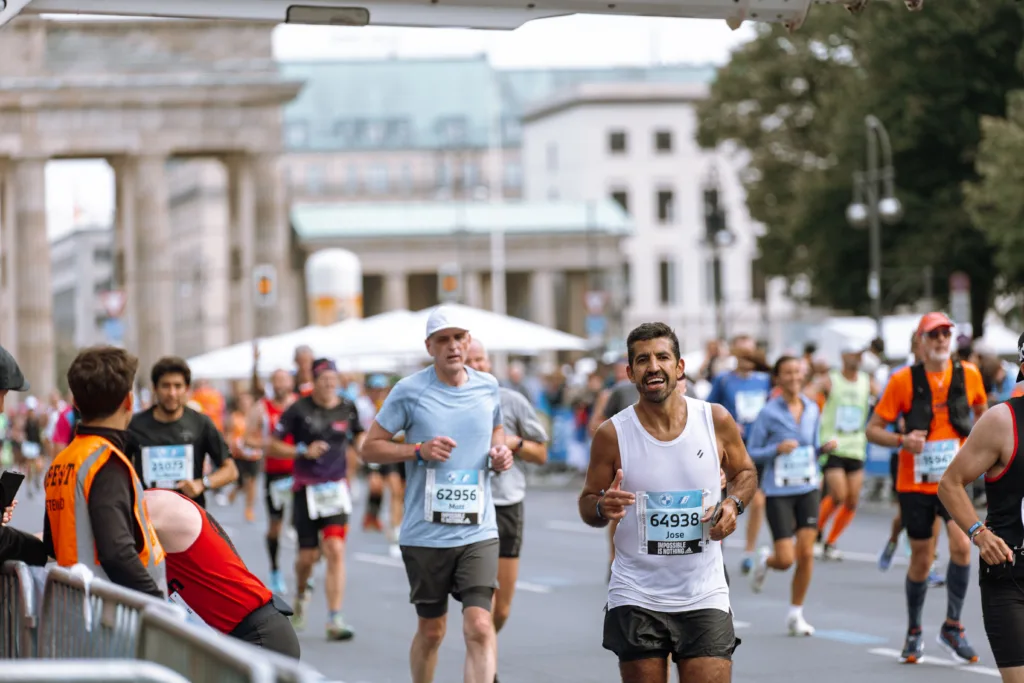
    Berlin offers runners the appeal of a major city marathon alongside a destination known for its history, museums, food and nightlife. The result is a natural combination of race and city break.

    Run a marathon, explore a city, repeat: the rise of ‘run-cations’.
    Run a marathon, explore a city, repeat: the rise of ‘run-cations’. / Pexels
    1. New York

    The New York City Marathon offers a particularly immersive way to experience the city, with the race route passing through several of its iconic boroughs. Travellers can then stay on to explore the city beyond race day.

    1. Sydney

    Sydney has gained further prominence among marathon travellers after joining the Abbott World Marathon Majors. Its beaches, harbour and urban attractions add a conventional holiday experience to the race itinerary.

    What makes run-cations different from regular race trips?

    It is all about the planning. A normal vacation might include a race as part of the activities but a run-cation includes a race from the start.

    This can affect everything from where you go, when you travel to where you stay, how many meals you have and how many recovery days you plan to take after the event.

    Also Read | Do you know why airlines really ask you to put your phone on airplane mode?

    For other travelers, it can be about seeing a city in a different light. Running the city allows you to see it in a way which traditional travel cannot, as well as giving you the time around the event to explore it.

    With the continued blend between fitness, community and experience-based travel, the running shoes are becoming a key part of the modern day traveler’s pack – right next to their passport and camera.

  • Once visited by Christopher Nolan, Matt Damon, and Tom Holland, now facing regulatory action: The story of Olympia Cafe, Mumbai

    Once visited by Christopher Nolan, Matt Damon, and Tom Holland, now facing regulatory action: The story of Olympia Cafe, Mumbai

    Olympia Coffee House, the century-old Colaba eatery in Mumbai that recently made headlines after visits by Christopher Nolan, Matt Damon, and Tom Holland, is now facing regulatory action over food safety and hygiene concerns. The Maharashtra Food and Drug Administration has suspended the cafe’s licence following an inspection triggered by a consumer complaint. Officials reportedly found a range of violations, including cockroach and fly infestation, poor food handling practices and a urinal inside the food storage area.

    Olympia Coffee House, the century-old Colaba eatery that recently made headlines after visits by Christopher Nolan, Matt Damon and Tom Holland, is now facing regulatory action over food safety and hygiene concerns. (ANI)
    Olympia Coffee House, the century-old Colaba eatery that recently made headlines after visits by Christopher Nolan, Matt Damon and Tom Holland, is now facing regulatory action over food safety and hygiene concerns. (ANI)

    Mumbai cafe’s license suspension after FDA inspection

    The Mumbai cafe licence suspension followed an inspection in which FDA officials reportedly flagged several conditions they considered serious food safety violations. Inspectors found meat and blood residues inside a refrigerator, along with cockroaches and flies on the premises.

    The inspection also reportedly found food being handled directly on the floor, unhygienic food preparation and utensil-washing areas, and the use of unclean water. Raw vegetarian and non-vegetarian food was also allegedly not being stored separately.

    The findings did not stop there. Officials reportedly found damaged wooden chopping boards being used in the kitchen, while food handlers were allegedly not wearing appropriate protective clothing.

    The Mumbai cafe’s license suspension by the FDA will remain in place until further notice, according to the report.

    Also Read | IIT Bombay student death: FIR filed after ChatGPT exam row

    The Mumbai cafe's license suspension action followed an inspection in which FDA officials reportedly flagged several conditions they considered serious food safety violations.(ANI)
    The Mumbai cafe’s license suspension action followed an inspection in which FDA officials reportedly flagged several conditions they considered serious food safety violations.(ANI)

    Mumbai cafe licence suspended as food safety checks intensify

    Olympia Coffee House is among several establishments across Maharashtra against which the FDA has taken action as food safety inspections intensify. The inspection drive has brought greater attention to hygiene standards in restaurants, cafes, and other food establishments.

    The reported presence of a urinal in the food storage area was among the findings that drew particular attention. The FDA has also flagged the need for proper separation of raw food, hygienic preparation areas, and safe handling practices.

    The Mumbai cafe’s license suspension following the inspection is therefore linked to a broader regulatory exercise rather than the cafe’s association with visiting celebrities.

    Also Read | Passport rules changed: What children and parents need to know

    Olympia Coffee House is among several establishments across Maharashtra against which the FDA has taken action as food safety inspections intensify. (ANI)
    Olympia Coffee House is among several establishments across Maharashtra against which the FDA has taken action as food safety inspections intensify. (ANI)

    Mumbai cafe’s license suspended weeks after Hollywood visit

    The regulatory action comes just weeks after Olympia became a talking point among film fans when Christopher Nolan, Matt Damon, and Tom Holland visited the Colaba cafe during their Mumbai trip in July.

    The Hollywood filmmaker and actors reportedly stopped for tea, bun maska, and desserts while in the city ahead of the premiere of Nolan’s film The Odyssey. Their visit brought fresh attention to the old-school cafe, which has long been known for dishes such as mutton keema pav, biryani, kebabs, dal gosht, Irani chai, and bun maska.

    For a cafe with such a long association with Mumbai’s food culture, the suspension of its Mumbai cafe’s licence over reported hygiene violations marks a striking shift in its recent public attention. The licence will remain suspended while the regulatory action continues.

    FAQs

    Why was Olympia Coffee House’s license suspended?

    The Maharashtra FDA suspended the licence after inspectors reported several food-safety and hygiene violations.

    Did Christopher Nolan, Matt Damon and Tom Holland visit Olympia Coffee House?

    Yes, the three reportedly visited the Colaba cafe in July during their Mumbai trip.

  • IIT Bombay student death: FIR filed after ChatGPT exam row

    IIT Bombay student death: FIR filed after ChatGPT exam row

    The IIT Bombay student death case has taken a serious legal turn after police registered an FIR against the institute following the death of a second-year student. The FIR invokes Section 108 of the Bharatiya Nyaya Sanhita, relating to abetment of suicide, along with provisions of the Scheduled Castes and Scheduled Tribes (Prevention of Atrocities) Act. The development came amid protests by students seeking answers over what happened after the student was pulled up for using a mobile phone during an examination.

    The IIT Bombay student death case has taken a serious legal turn after police registered an FIR against the institute following the death of a second-year student. (ANI)
    The student death case has taken a serious legal turn after police registered an FIR against the institute following the death of a second-year student. (ANI)

    IIT Bombay student death case moves to FIR

    The student death case began after the student was found using a mobile phone during an examination. According to the institute, he had uploaded the examination question paper on ChatGPT to seek answers.

    IIT Bombay has maintained that no disciplinary action was initiated against him. The institute said the instructor and Head of Department discussed the matter with the student, counselled him, and assured him that the incident would not adversely affect his academic career. He later returned to his hostel room, where he was found dead.

    The police FIR now means the circumstances surrounding the IIT Bombay student’s death will be examined as part of a formal investigation. The registration of an FIR does not establish guilt, and the allegations against the institute remain subject to investigation and due process.

    Also Read | Passport rules changed: What children and parents need to know

    The IIT Bombay student death case began after the student was found using a mobile phone during an examination. (ANI)
    The IIT Bombay student death case began after the student was found using a mobile phone during an examination. (ANI)

    IIT Bombay student death sparks campus protests

    The student death has also triggered protests on campus, with students demanding greater clarity from the administration. More than 100 students gathered at the main gate on Saturday, while earlier protests had drawn a larger crowd.

    Students have alleged that the deceased was asked to leave the examination hall and faced the possibility of disciplinary action, including suspension. IIT Bombay has disputed that account, saying that no disciplinary proceedings were initiated. The conflicting accounts are now among the issues surrounding the investigation.

    The student’s parents also joined the protest and sought an explanation from the institute. They have alleged that discrimination may have played a role, although this remains an allegation and has not been established by investigators.

    Also Read | India’s WTO dilemma: Can plurilateralism and multilateralism coexist?

    The IIT Bombay student death has also triggered protests on campus, with students demanding greater clarity from the administration. (ANI)
    The IIT Bombay student death has also triggered protests on campus, with students demanding greater clarity from the administration. (ANI)

    IIT Bombay student death raises mental health concerns

    The IIT Bombay student death has renewed concerns about academic pressure, student welfare, and the way institutions respond when students face disciplinary or academic difficulties. The institute’s director has said that greater attention will be given to student mental health, with IIT Bombay stating that psychologists are available on campus.

    The case also comes amid previous student deaths at the Powai campus this year, adding to concerns among students about mental health support and institutional communication.

    The investigation will now have to establish the circumstances surrounding the IIT Bombay student death and examine the competing accounts of what happened after the examination. For the institute, the case has also brought renewed scrutiny over student support, academic discipline, and communication during moments of distress.

    FAQs

    Why was an FIR registered after the IIT Bombay student death?

    Police registered an FIR under Section 108 of the BNS and provisions of the SC/ST Act to investigate the circumstances surrounding the death.

    What did IIT Bombay say about the exam incident?

    IIT Bombay said no disciplinary action was initiated and that the student was counselled and assured that the incident would not affect his academic career.

  • Do you know why airlines really ask you to put your phone on airplane mode?

    Do you know why airlines really ask you to put your phone on airplane mode?

    Switching your phone to Airplane Mode during a flight may feel like a routine instruction, but there are practical reasons behind the rule. It is not because an active smartphone is expected to suddenly cause an aircraft engine to fail. Instead, the restriction is linked to radio transmissions, communication systems and the way cellular networks operate when phones are airborne.

    How does cellular interference affect flights?

    A smartphone constantly searches for available cellular networks when its mobile connection is switched on. At cruising altitude, the phone may attempt to connect to ground-based towers as the aircraft moves rapidly across different areas. Multiple devices doing this at the same time can create unwanted radio-frequency activity.

    airlines really ask you to put your phone on airplane mode
    Your phone’s signal matters even at 35,000 feet | AI Generated

    Aviation systems are designed with safeguards, but airlines still require passengers to minimise unnecessary transmissions during a flight.

    Also Read | Water-based places in India: 4 stunning destinations to see

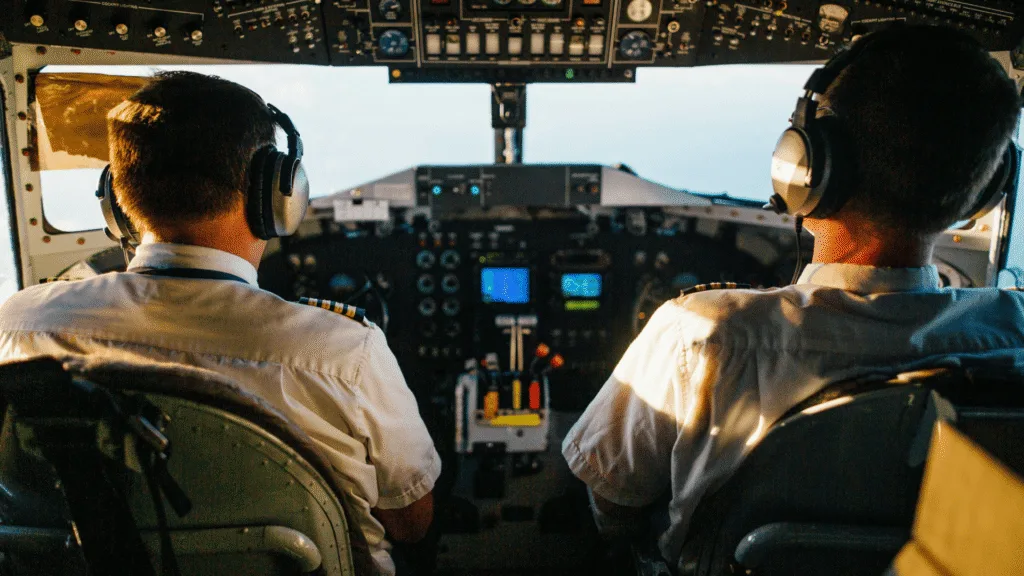
    Can mobile phones cause buzzing in pilot headsets?

    Cellular devices can produce electromagnetic interference with nearby audio equipment. This could even lead to buzzing or static noises being produced by speakers and headphones. Putting cell phones on airplane mode is just one way of preventing any potential sources of interference within the plane.

    plane (1) (1)
    Flight safety goes beyond switching off your phone | AI Generated

    Communications between pilots and air traffic control towers are extremely important especially during takeoff and landing.

    What about navigation and cockpit equipment?

    Modern aircraft contain highly protected communication and navigation systems. Airplane Mode reduces the amount of radio activity coming from passengers’ devices, helping maintain a controlled electronic environment inside the aircraft.

    This is one reason airlines continue to include the setting in their standard passenger safety instructions.

    Also Read | What makes Mount Kailash so sacred? A detailed guide for the Himalayan pilgrimage

    Why does 5G raise separate concerns?

    5G has also brought additional attention to aviation because some 5G C-band frequencies are close to frequencies used by aircraft radar altimeters. These are key sources of altitude data especially when approaching the airport and landing.

    plane (2) (1)
    The real reason airlines insist on airplane mode | AI Generated

    Some interventions have been put in place by the aviation industry and the regulatory authorities to help mitigate the effects of interference between 5G technology and aircrafts’ system.

    Why Airplane Mode is needed even now

    Therefore, when cabin crew asks passengers to put their phones in Airplane Mode, it means that the need is to prevent interference with electronics and avoid unnecessary wireless communication on board an aircraft.