Author: Sarwesh Sribardhan

  • 74% of households in Yemen unable to meet basic food needs

    74% of households in Yemen unable to meet basic food needs

    Yemen’s hunger crisis is worsening sharply as renewed fighting disrupts food supplies and forces more families from their homes.

    The World Food Programme (WFP) said on October 2 that 74% of households in accessible government-held areas were unable to meet their basic food needs.

    That is the highest level recorded there this year. The figure does not cover all of Yemen. It refers to areas where WFP can still operate and monitor food security.

    Still, the warning is significant. Government-held areas are home to an estimated 10 million people. Across the country, 18.3 million people are facing acute food insecurity, while 2.2 million children under five are acutely malnourished.

    Also Read | Europe weighs 50 million-barrel diesel stock release amid US pressure

    Food is there, but reaching it is another matter

    UNICEF says one child dies every 10 minutes in Yemen | X (@AR_Salimii)
    UNICEF says one child dies every 10 minutes in Yemen | X (@AR_Salimii)

    The immediate problem is not simply that there is less food. The fighting is making it harder for families to reach food, earn money and receive aid.

    Tens of thousands of people have been displaced by the latest escalation. Families arriving around Aden and Taiz are reportedly reaching safer areas without enough food or water.

    Some have had to flee more than once. At the same time, prices of basic staples such as wheat flour and vegetable oil are rising.

    Yemen imports about 90% of its food, which makes the country especially vulnerable when conflict disrupts transport, markets and commercial supplies.

    For households already living with little financial security, even a modest price rise can mean buying less food or switching to cheaper, less nutritious options.

    Aid access and funding pressures

    WFP says about 350,000 people in parts of Taiz and Hodeidah have been cut off from assistance | X (@UN)
    WFP says about 350,000 people in parts of Taiz and Hodeidah have been cut off from assistance | X (@UN)

    Aid agencies are also facing a second problem: reaching people in the first place. WFP says fighting has cut access to parts of Taiz and Hodeidah, leaving about 350,000 people it previously served without assistance.

    Its teams are finding it increasingly difficult to move food into frontline areas. Matthew Hollingworth, WFP’s Assistant Executive Director for Programme Operations, described the impact of the latest escalation as “absolutely devastating” for food security.

    He warned, “We are looking at a hunger crisis that is going to grow as it persists.”

    WFP is trying to expand its emergency response, but it says it needs $109 million to provide food and nutrition assistance to up to 1.5 million people affected by the escalation. It has already shifted resources away from food distributions planned for November.

    Also Read | Taiwan gets first 2 of 66 F-16V jets; China tensions add to the stakes

    One conflict, several choke points

    Some Yemeni families have fled more than once | X (@UNDPYemen)
    Some Yemeni families have fled more than once | X (@UNDPYemen)

    The wider conflict explains why the food crisis is moving so quickly.

    Yemen has been divided by years of war, with the Iran-aligned Houthis controlling much of the north, including the capital Sanaa, while the internationally recognised government is based in Aden.

    The latest fighting has further disrupted already fragile supply routes. The country also sits besides the Bab el-Mandeb Strait, a major shipping route at the southern entrance to the Red Sea.

    WFP has warned that wider disruption around the Red Sea, the Strait of Hormuz and the Black Sea could raise global food, fuel and fertiliser costs.

    For Yemen, however, the pressure is already immediate. Families are struggling to secure basic meals while aid agencies face shrinking access and an urgent funding gap.

  • Taiwan gets first 2 of 66 F-16V jets; China tensions add to the stakes

    Taiwan gets first 2 of 66 F-16V jets; China tensions add to the stakes

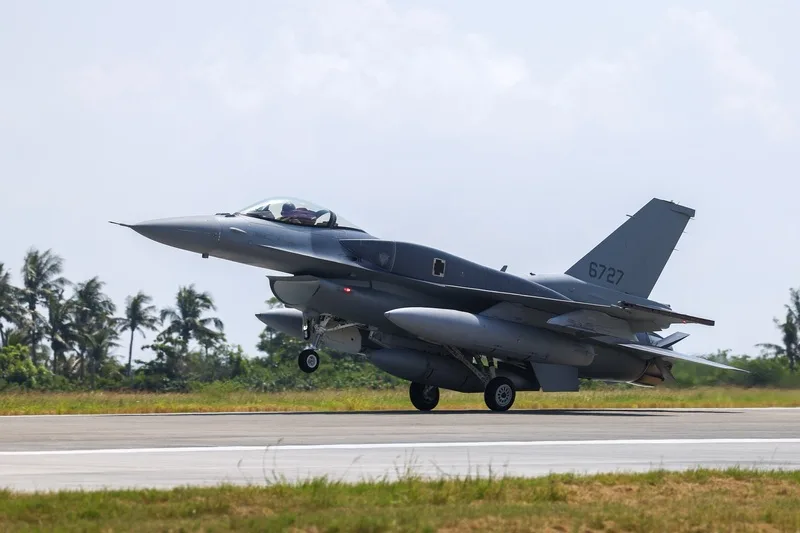
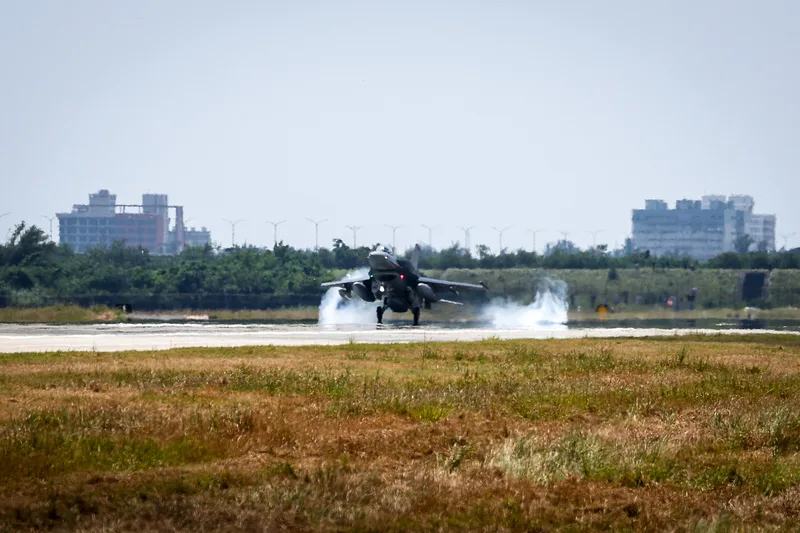
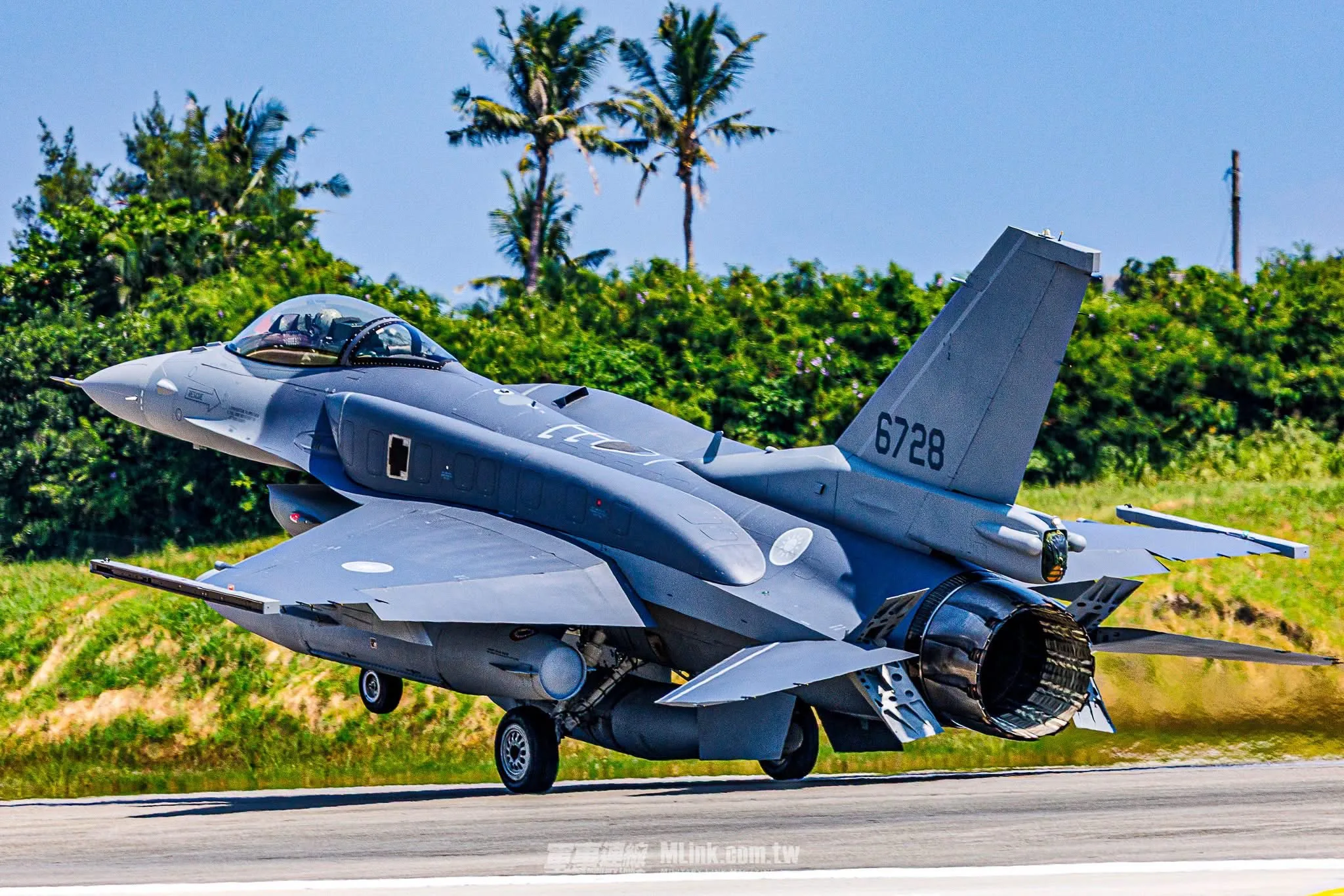
    Taiwan has received the first two of 66 new F-16V Block 70 fighter jets ordered from the United States, giving its air force a long-awaited addition to its combat fleet.

    The aircraft landed at Chihhang Air Base in Taitung on Friday, October 2, after flying through Hawaii and Guam. The delivery is part of an $8 billion US arms deal approved in 2019.

    It also comes at a sensitive moment, with Taiwan facing sustained military pressure from China and questions in Taipei over the pace of US weapons deliveries.

    Also Read | Swiss glaciers are melting, Greek lakes are shrinking: Europe’s water cycle is changing

    A new feather in Taiwan’s cap

    Taiwan's new F-16V jets bring improved radar and avionics | X (@TaiwanMonitor)
    Taiwan’s new F-16V jets bring improved radar and avionics | X (@TaiwanMonitor)

    The F-16V Block 70 is a newer version of the F-16 Fighting Falcon. It comes with modern avionics, improved radar and updated weapons systems.

    The aircraft are designed to strengthen Taiwan’s ability to deal with China’s air force, including its J-20 stealth fighters.

    The United States, however, has not agreed to provide Taiwan with its most advanced fighters, such as the F-22 or F-35.

    Taiwan already operates F-16s, and the new jets will eventually push its total F-16 fleet above 200 aircraft.

    The jets took their time getting there

    Taiwan already flies F-16s, but the new Block 70 jets will eventually take its F-16 fleet above 200 aircraft | X (@CollinSLKoh)
    Taiwan already flies F-16s, but the new Block 70 jets will eventually take its F-16 fleet above 200 aircraft | X (@CollinSLKoh)

    The delivery has taken much longer than originally planned. The US approved the sale in 2019, with deliveries expected to begin in 2023. But the programme was hit by technical and production-related delays.

    Reuters specifically cited software problems, while Taiwan’s Central News Agency said the programme was also affected by the relocation and restart of the production line and supply-chain disruptions.

    The first two jets were expected in Taiwan by the end of August but remained in Hawaii before finally making the journey to the island. That delay added to wider concerns in Taiwan about a backlog in US weapons deliveries.

    Timing of the delivery matters

    The timing of the arrival also matters. The two aircraft reached Taiwan about a week after US President Donald Trump met Chinese President Xi Jinping in Washington.

    Beijing has repeatedly opposed US arms sales to Taiwan and has called on Washington to stop arming the island.

    Washington, meanwhile, has said there has been no change in its policy and continues to describe Taiwan as part of its security commitments in the Indo-Pacific.

    Taiwan’s Defence Minister Wellington Koo said more F-16Vs would arrive, without giving a detailed schedule. President Lai Ching-te called the delivery an important development for Taiwan’s air defence capabilities.

    Also Read | Europe weighs 50 million-barrel diesel stock release amid US pressure

    A sizeable backdrop

    For Taiwan, the arrival is therefore about more than two new aircraft. It is the first visible delivery from a major fighter purchase that has been delayed for years.

    The F-16Vs will add newer sensors, avionics and weapons to an air force that has to respond frequently to Chinese military activity around the island.

    At the same time, the delivery highlights how closely Taiwan’s defence planning remains linked to the United States, even though Washington and Taipei do not maintain formal diplomatic relations.

  • Europe weighs 50 million-barrel diesel stock release amid US pressure

    Europe weighs 50 million-barrel diesel stock release amid US pressure

    European Union countries are discussing a French proposal to release 50 million barrels of diesel from emergency stocks as fuel prices remain under pressure.

    The proposal comes after the United States urged European countries to release more fuel reserves to help cool global prices. Three sources familiar with the discussions told Reuters about the plan on Friday.

    The proposed release would happen partly over 20 days, according to two of the sources. But this is still a proposal. EU governments have not announced a final agreement.

    Also Read | Swiss glaciers are melting, Greek lakes are shrinking: Europe’s water cycle is changing

    Fuel cushion under strain

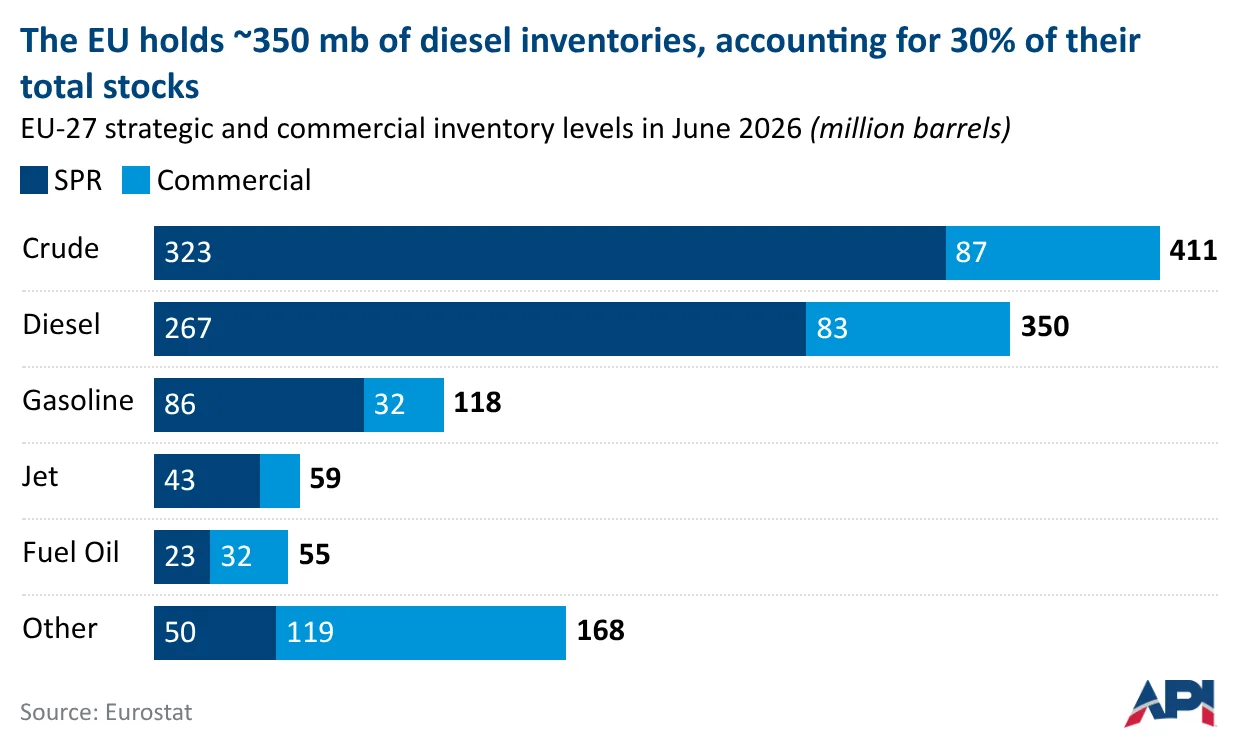
    The EU holds ~350 million barrels of diesel in inventory, ~267 million barrels of which is held in strategic stocks | X (@T_Mason_H)
    The EU holds ~350 million barrels of diesel in inventory, ~267 million barrels of which is held in strategic stocks | X (@T_Mason_H)

    Emergency diesel stock are fuel reserves kept for periods when normal supplies are disrupted. They are meant to act as a buffer during a crisis.

    Europe is now facing several pressures at the same time. The war involving Iran has disrupted energy flows. Russia has restricted diesel exports after damage to its refineries.

    China has also suspended some fuel exports to protect its domestic stocks. Europe has traditionally relied on Russia and the Middle East for diesel, but it has become increasingly dependent on imports from the United States in recent years.

    Hardly pocket change

    Europe has become more dependent on US diesel imports | X (@BenjellounRani)
    Europe has become more dependent on US diesel imports | X (@BenjellounRani)

    The scale of the French proposal is significant. 50 million barrels would be equal to about 17% of the EU’s total emergency stocks of diesel and gasoil.

    It would also amount to around 3% of the bloc’s annual consumption of the fuel.

    France has also proposed that IEA member countries release another 50 million barrels of crude oil. That would add crude to the market alongside the European diesel release.

    The International Energy Agency (IEA) had already agreed in March to make 400 million barrels of oil from emergency reserves available after the Middle East conflict disrupted global markets.

    US pressure adds another layer

    There is another layer to the issue, pressure from Washington.

    The US administration had urged France and Germany to draw down emergency diesel inventories and had warned of a possible US diesel export ban.

    The concern for Europe is that such a move could further tighten supplies, especially because the bloc has increasingly sourced diesel from the US.

    European governments are therefore discussing whether any stock-release agreement should be linked to a US commitment not to impose a unilateral export ban.

    At the same time, the European Commission has rejected that threat. Commission spokesperson Anna-Kaisa Itkonen said, “A ban would not be beneficial to anyone. It would undermine our trust in the United States as a reliable partner.”

    Also Read | Kaliningrad explained: The strategic Russian enclave surrounded by NATO

    Markets react

    The market reacted quickly to news of the talks. European gasoil futures fell by about 5% on Friday, while oil prices dropped by more than 2%.

    The immediate focus is now on whether EU countries can agree on a coordinated release without weakening reserves needed for another supply shock.

    French President Emmanuel Macron was also due to chair a G7 videoconference on the global energy situation on Friday.

  • Swiss glaciers are melting, Greek lakes are shrinking: Europe’s water cycle is changing

    Swiss glaciers are melting, Greek lakes are shrinking: Europe’s water cycle is changing

    Swiss glaciers and Greek lakes are showing signs of a wider change in Europe’s water cycle.

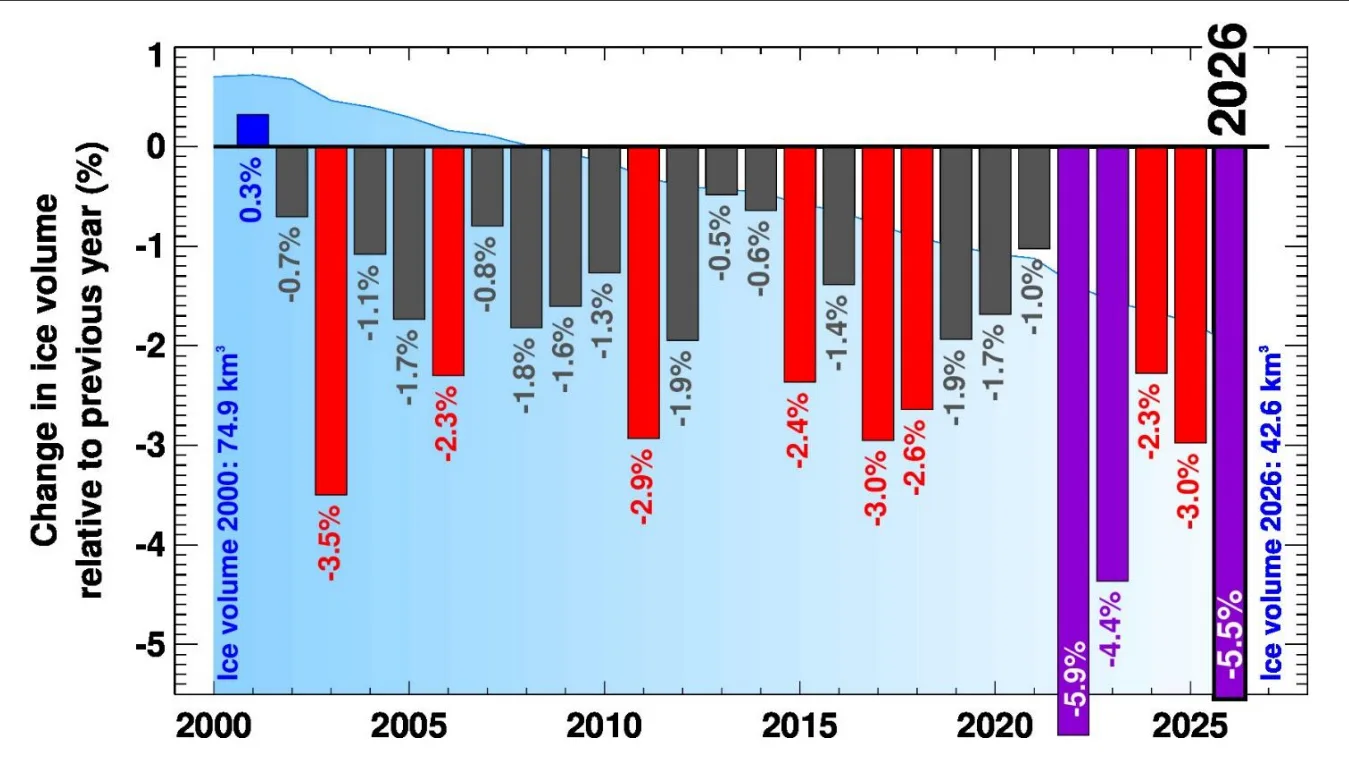
    In Switzerland, glaciers lost more than 5% of their ice in 2026, according to a report by the Swiss Glacier Monitoring Network (GLAMOS) and the Swiss Commission for Cryosphere Observation of the Swiss Academy of Sciences. Over the past five years, Swiss glaciers have lost almost one-fifth of their ice.

    In Greece, Lake Koroneia in the north has shrunk to just 2.7 square kilometres from 34.4 square kilometres in 2016, according to data from the National Observatory of Athens.

    The lake, once a major wetland, is now reduced largely to shallow pools and exposed lakebed. The two cases differ. But both show what happens when less water arrives and more water is lost.

    Also Read | Trump’s SI order replaces AI in US government language: Here’s why

    A summer of melting

    'Now we are in this new world': the stark warning comes as Swiss glaciers lose ice and Europe's heat puts more pressure on freshwater | X (@subfossilguy)
    ‘Now we are in this new world’: the stark warning comes as Swiss glaciers lose ice and Europe’s heat puts more pressure on freshwater | X (@subfossilguy)

    For the Swiss glaciers, the immediate problem was a damaging combination of weather conditions. The winter brought too little snow. Then came record summer temperatures and repeated heatwaves across Europe.

    Snow matters because it shields older glacier ice and adds fresh material that can eventually become new ice.

    The freezing level in the Swiss mountains stayed above 4,000 metres for 76 days, a Swiss record. By September, there was no snow on some glaciers even at elevations of 3,500 metres.

    Glacier thickness fell by an average of 2.5 to 4 metres, while some glacier tongues lost around 10 metres over the summer.

    Switzerland’s largest glacier, the Aletsch, recorded its biggest melt on record in 2026. Matthias Huss, who heads GLAMOS, described the situation bluntly, “Now we are in this new world, in this future, where glaciers are just melting away.”

    Less rain, more evaporation

    At Lake Koroneia, lower rainfall and higher evaporation have combined with irrigation demand, leaving a once-major wetland largely exposed | X (@thandojo)
    At Lake Koroneia, lower rainfall and higher evaporation have combined with irrigation demand, leaving a once-major wetland largely exposed | X (@thandojo)

    Greece presents a different but connected problem. Lake Koroneia has been squeezed by years of low rainfall, higher temperatures and heavy use of water for irrigation.

    Rainfall in the lake’s catchment has averaged about 400 millimetres a year over at least the past five years. That is around 150 millimetres below previous decades.

    Rising temperatures have also increased evaporation by about 100 to 150 millimetres a year, according to Dimitris Papadimos of the National Wetland Center.

    Human water use has added further pressure. Farmers have relied on the lake to supply water for crops and livestock during dry periods. The result has been dramatic.

    Its water surface fell from 34.4 square kilometres in 2016 to 2.7 square kilometres in 2026. Similar fluctuations have been recorded in other Greek lakes, including Volvi, Doirani and Pikrolimni.

    Some have experienced periods of complete summer drying.

    Also Read | Flydubai FZ1073: The 5 people who helped stop a mid-air catastrophe

    Nature’s savings account is running low

    Europe's water cycle is showing just how quickly the margins can narrow | X (@thandojo)
    Europe’s water cycle is showing just how quickly the margins can narrow | X (@thandojo)

    The consequences go beyond what can be seen from the ground. Glaciers act as stores of frozen freshwater.

    Their meltwater can support rivers during hot, dry months.

    In 2026, Swiss glaciers released an estimated 2.2 trillion litres of water between July and September alone, more than four times the annual drinking-water consumption of Swiss households.

    But that short-term boost comes with a longer-term cost. As glaciers become smaller, their ability to provide that seasonal supply also declines. Lakes face a similar problem, with a different ecological dimension.

    Shrinking wetlands can lose fish, birds, reeds and other habitats.

    Koroneia has previously experienced mass deaths of fish and birds and periods when it dried completely. What these cases show is not simply that Europe is getting hotter.

    They show how heat, changing rainfall, melting snow and human demand for water can combine to push natural water systems beyond their old patterns.

  • Flydubai FZ1073: The 5 people who helped stop a mid-air catastrophe

    Flydubai FZ1073: The 5 people who helped stop a mid-air catastrophe

    Flydubai flight FZ1073 was flying from Dubai to Tel Aviv on September 30 when an incident inside the cockpit triggered a serious emergency. The aircraft was diverted to Tabuk in Saudi Arabia and landed safely, with passengers and crew accounted for.

    The airline has said the cause and motive of the incident remain subject to investigation. Israeli officials and passengers later described the episode as an apparent attempt by the first officer to take control of the aircraft and crash it.

    Also Read | Trump’s SI order replaces AI in US government language: Here’s why

    Captain holds the line

    Captain Smit Machchhar was badly injured, yet the cockpit door became the turning point on Flydubai flight FZ1073 as passengers rushed in and confronted the suspected attacker | X (@Starboy2079)
    Captain Smit Machchhar was badly injured, yet the cockpit door became the turning point on Flydubai flight FZ1073 as passengers rushed in and confronted the suspected attacker | X (@Starboy2079)

    At the center of the response was Captain Smit Machchhar, the Indian pilot-in-command.

    Machchhar was attacked and suffered serious injuries. Despite being wounded, he managed to open the cockpit door, allowing people outside to enter.

    Prime Minister Narendra Modi later praised Machchhar for showing courage and resolve while seriously injured. He is recovering in a hospital in Tabuk, according to the reports.

    From fixing pipes to helping steady a plane

    Israeli Yaniv Hayun helped avert a tragedy aboard Flydubai flight FZ1073, after the co-pilot attacked the pilot and the plane began to dangerously lose altitude | X (@NOOLVIDAR11)
    Israeli Yaniv Hayun helped avert a tragedy aboard Flydubai flight FZ1073, after the co-pilot attacked the pilot and the plane began to dangerously lose altitude | X (@NOOLVIDAR11)

    That open cockpit door became a crucial moment. Israeli passenger Yaniv Hayun, a plumber, was among those who rushed inside.

    Hayun told Israeli media that he found the suspected attacker near the controls and pulled him away.

    He also said he had watched “Air Crash Investigation” and used what he remembered to pull back on the aircraft controls as the plane was descending.

    “I watched ‘Air Crash Investigation,’ so I pulled the controls, and the plane began to level out,” Hayun said.

    Quite the unusual rescue party

    Hayun was not alone. Assaf Rajuan, an insurance agency owner, also entered the cockpit and helped overpower the suspected attacker.

    Zvika Manes, the CEO of Bank Leumi’s underwriting company, helped restrain the man. Passenger accounts said cables from the aircraft’s multimedia headphones were used to help tie him down.

    Rajuan said passengers and crew kept the attacker restrained while the aircraft was diverted to Saudi Arabia.

    The fourth passenger was dentist Dr. Shota Musaev. After helping restrain the attacker, Musaev turned to Machchhar, who had suffered heavy bleeding.

    Musaev said he was the only doctor on the flight and managed to stop the bleeding. “I managed to stop the bleeding,” he said.

    The pilot remained conscious and was able to communicate, according to Musaev’s account.

    Never off-duty

    Two off-duty pilots who were travelling as passengers also played a critical role.

    They subsequently took over the aircraft’s operation and helped land it safely at Tabuk. That means the rescue was not the work of one person alone.

    Machchhar’s actions helped open the cockpit; passengers subdued the suspected attacker; a dentist treated the injured captain; and pilots among the passengers helped fly the aircraft.

    Also Read | Flydubai cockpit attack: Was Indian pilot Smit Machchhar hit with an axe?

    Why remains elusive

    This is the damage from a sudden drop in altitude of Flydubai Boeing 737 MAX 8 flight FZ1073 | X (@aprajitanefes)
    This is the damage from a sudden drop in altitude of Flydubai Boeing 737 MAX 8 flight FZ1073 | X (@aprajitanefes)

    The exact motive behind the cockpit attack has not been established.

    Israeli authorities have described the incident as an apparent attempt to crash the plane, while Flydubai has urged against premature conclusions as the investigation continues.

    What is clear is that a potentially catastrophic mid-air emergency ended with the aircraft landing safely in Saudi Arabia.

  • Lula has the first-round edge, but Brazil runoff is too close to call

    Lula has the first-round edge, but Brazil runoff is too close to call

    Brazil’s presidential race is entering its final stretch with President Luiz Inacio Lula da Silva and Senator Flavio Bolsonaro separated by just a fraction of a percentage point in a possible second-round contest.

    An AtlasIntel/Bloomberg poll released on September 29 showed Bolsonaro at 47.7% and Lula at 47.6% in a simulated runoff. The 0.1-point gap is well within the survey’s margin of error.

    Also Read | US midterms 2026: Republicans unleash $888 million ad blitz; Kennedy says ‘I think we’re going to have enough money’

    Not enough

    The latest Brazil election numbers leave little room for comfort, with Lula ahead in round one but virtually tied with Flavio Bolsonaro in round two | X (@Hotspotorlando)
    The latest Brazil election numbers leave little room for comfort, with Lula ahead in round one but virtually tied with Flavio Bolsonaro in round two | X (@Hotspotorlando)

    The same poll gives Lula a clearer lead in the first round, but still not enough to cross the threshold needed to win outright.

    Lula was on 45.3% and Bolsonaro on 42.2%, with Renan Santos at 5.2% and Augusto Cury at 2%.

    Brazil’s first-round vote is scheduled for October 4. Under the country’s electoral system, a presidential candidate must secure more than half of the valid votes to avoid a runoff.

    If that does not happen, the top two candidates face each other again on October 25.

    A tie by decimals

    The numbers also show how little distance there is between the two leading campaigns. In the previous AtlasIntel poll, released on September 23, Lula had 45.8% in the first round and Bolsonaro 43.4%.

    In the simulated runoff, Lula led 47.7% to Bolsonaro’s 47.4%. The latest survey therefore shows a small movement in both scenarios, but not a decisive break in the overall contest.

    AtlasIntel surveyed 5,005 people between September 23 and 28. The reported margin of error is one percentage point.

    Campaign mood and voter uncertainty

    Brazil's president and US senator Bernie Sanders share a warm moment during a meeting | X (@SenSanders)
    Brazil’s president and US senator Bernie Sanders share a warm moment during a meeting | X (@SenSanders)

    That closeness comes as the campaign remains relatively subdued on the ground. A recent analysis by political scientist Sergio Abranches, published by Scroll, described the campaign as “lackluster” and pointed to the growing importance of digital platforms.

    Abranches cited a September 21 Quaest poll in which 21% of respondents said their first-round choice could still change. He also noted that independent voters remained divided between the two main candidates.

    These polls showing a near dead heat should be read as a snapshot of the race, rather than a prediction of the final result.

    Also Read | China’s cuddly diplomats are back in Atlanta to revive panda diplomacy

    The final stretch

    The campaign is also being shaped by economic concerns. Lula’s team has been discussing a gradual fiscal adjustment, while advisers to Bolsonaro were proposing a faster reduction in the fiscal deficit.

    Both camps face questions over mandatory spending, including pensions and social benefits. Yet fiscal policy has not been the dominant theme of the campaign.

    With the first round only days away, the latest polling leaves the race open and puts greater attention on how voters respond in the final days before October 4.

  • China’s cuddly diplomats are back in Atlanta to revive panda diplomacy

    China’s cuddly diplomats are back in Atlanta to revive panda diplomacy

    China’s giant pandas are back in Atlanta. Male Ping Ping and female Fu Shuang arrived at Hartsfield-Jackson International Airport on September 27, ending a two-year gap after Zoo Atlanta’s previous pandas returned to China.

    The pair are in the US under a new 10-year agreement between Zoo Atlanta and the China Wildlife Conservation Association. They will remain in quarantine for about a month before they can be seen by the public.

    Also Read | Starship is finally in orbit. Can it make Starlink cheaper too?

    Panda-shaped footnote

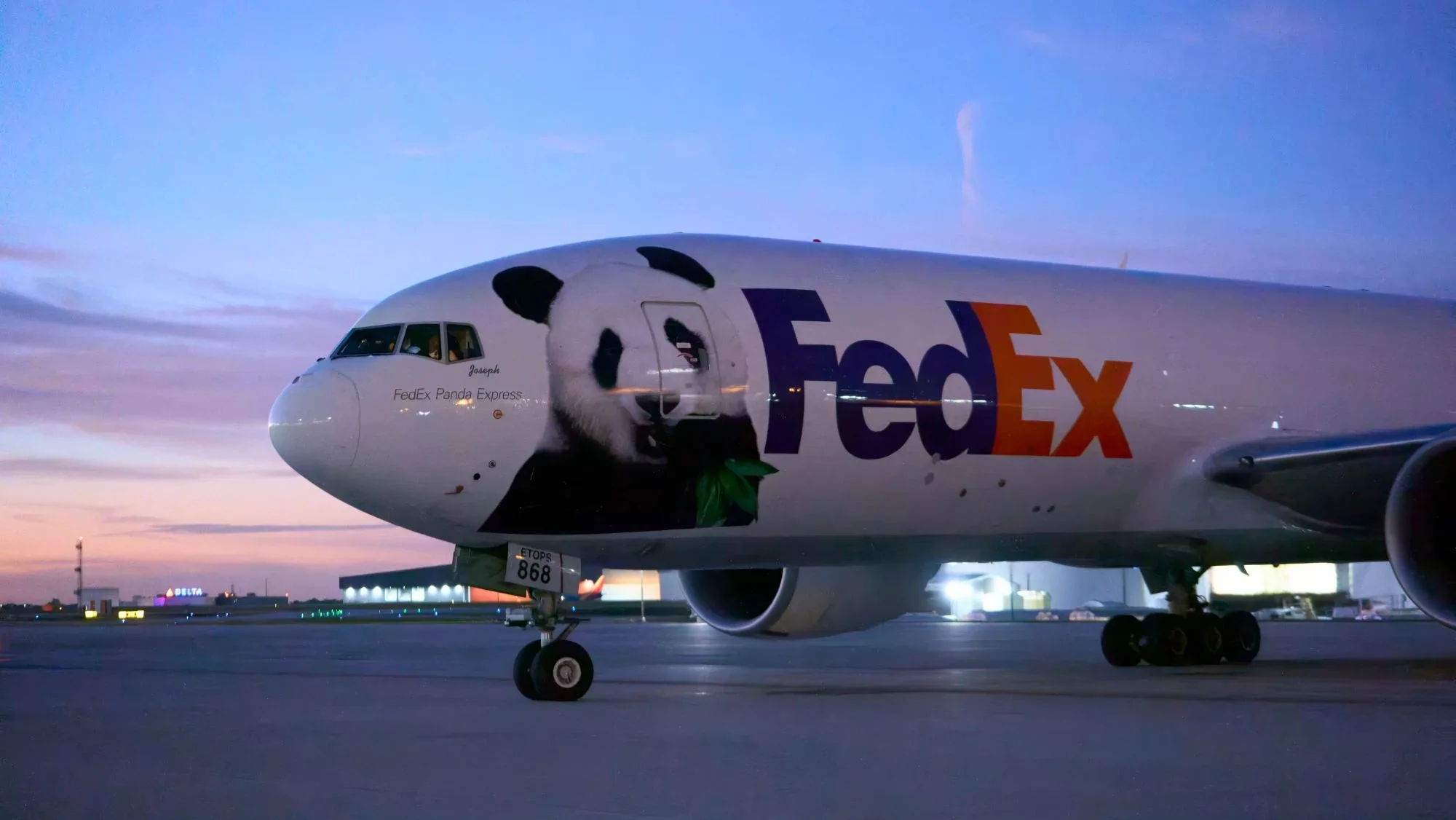
    The FedEx plane and trucks carrying Ping Ping and Fu Shuang to Zoo Atlanta have pictures of Ying Ying, Fu Shuang’s great-grandma | X (@likingpanda)
    The FedEx plane and trucks carrying Ping Ping and Fu Shuang to Zoo Atlanta have pictures of Ying Ying, Fu Shuang’s great-grandma | X (@likingpanda)

    Their arrival was announced by Chinese President Xi Jinping during his September 24 meeting with US President Donald Trump at the White House.

    Xi described the giant panda as an “envoy of friendship” between Chinese and American people and said Ping Ping and Fu Shuang would soon come to their new home in Atlanta.

    The announcement came during a high-profile US-China summit that covered broader economic and strategic issues, making the pandas one of the clearest symbolic gestures of goodwill during the visit.

    Pandas found their place in diplomacy

    Ping Ping, one of China’s giant pandas returning to Atlanta, is at the centre of the latest chapter in panda diplomacy | X (@SpoxCHN_MaoNing)
    Ping Ping, one of China’s giant pandas returning to Atlanta, is at the centre of the latest chapter in panda diplomacy | X (@SpoxCHN_MaoNing)

    This is what “panda diplomacy” means.

    China has used the giant panda, an animal native to the country, as a diplomatic symbol for decades.

    The modern US connection dates to 1972, when China gave two pandas, Ling-Ling and Hsing-Hsing, to the American people after President Richard Nixon’s historic visit to China.

    They arrived at the Smithsonian’s National Zoo in Washington, where they quickly became symbols of the emerging relationship between the two countries.

    The system later changed. From the 1980s, China moved away from permanently gifting pandas and increasingly used long-term loan agreements.

    Under this model, pandas remain under Chinese ownership, while overseas zoos host them under formal cooperation arrangements.

    Such agreements have generally involved long-term leases, annual fees, and the return of cubs born abroad to China.

    The program also has a conservation dimension, with Chinese and foreign institutions collaborating on research, breeding, and panda management.

    Atlanta’s pandas return

    Atlanta’s new pair fits into the established diplomatic system, but the symbolism has become more noticeable because of recent US-China tensions.

    Zoo Atlanta returned four pandas to China in 2024 after a 25-year partnership. The new agreement, announced in April 2026, restores pandas to the zoo while continuing the research and conservation relationship with Chinese authorities.

    The new loan was one of the outcomes of Xi’s latest US visit. Wider differences between Washington and Beijing remain unresolved.

    Also Read | US midterms 2026: Republicans unleash $888 million ad blitz; Kennedy says ‘I think we’re going to have enough money’

    Soft power

    Fu Shuang is among the giant pandas strengthening the long-standing link between China, Atlanta and panda diplomacy | X (@SpoxCHN_MaoNing)
    Fu Shuang is among the giant pandas strengthening the long-standing link between China, Atlanta and panda diplomacy | X (@SpoxCHN_MaoNing)

    Panda diplomacy works partly because the animals carry a powerful public appeal that conventional diplomatic language often lacks.

    Their arrival can create positive attention, encourage cultural contact, and give governments a highly visible symbol of cooperation. At the same time, the practice can become politically sensitive.

    Panda diplomacy can expose Beijing to public backlash when the animals become caught up in geopolitical disputes or welfare controversies.

    In Atlanta, Ping Ping and Fu Shuang are once again serving as living symbols of a relationship that extends far beyond the zoo gates.

  • US midterms 2026: Republicans unleash $888 million ad blitz; Kennedy says ‘I think we’re going to have enough money’

    US midterms 2026: Republicans unleash $888 million ad blitz; Kennedy says ‘I think we’re going to have enough money’

    The 2026 US midterm elections are entering a crucial final stretch, and one number is drawing attention, money.

    Republicans and their allies have booked about $888 million in advertising through Election Day on November 3, compared with roughly $666 million for Democrats and their allies, according to AdImpact.

    The Republican side therefore has about a $221 million advertising advantage in the closing weeks. Yet the picture is not as simple as one party simply having more money.

    Democratic candidates have, in many important races, raised more directly from donors. Republicans are instead relying heavily on super PACs, party committees and wealthy backers to expand their advertising push.

    Also Read | Starship is finally in orbit. Can it make Starlink cheaper too?

    Campaign cash finds its way

    US campaign finance is spread across several kinds of political organisations. Candidates raise and spend money through their own campaigns.

    Party committees can also spend on races, while super PACs can raise and spend large sums independently.

    In this election cycle, Republican-aligned outside groups have built a major financial reserve. Donald Trump’s MAGA Inc. entered September with about $416 million in cash, while other Republican-linked groups have booked additional advertising.

    The Wall Street Journal reported that Republican-aligned advertisers spent more than $204 million across 10 key Senate races during the first 18 days of September alone.

    That was $83 million more than Democratic-aligned advertisers during the same period.

    The safe seats suddenly look less cosy

    The spending is increasingly defensive as well as offensive. Reuters reported on September 27 that Republican groups and major donors had begun spending in at least 39 House races where they had not previously invested heavily this cycle.

    Several of those districts were traditionally regarded as safe Republican seats. Party leaders have also warned campaigns not to assume those seats are secure, according to people familiar with the strategy.

    At the same time, Democrats have been trying to use their fundraising strength at the candidate level to remain competitive and force Republicans to spend resources across a wider map.

    Democratic Senator Elizabeth Warren said that Republican advertising cannot by itself erase voter concerns over the economy and other issues.

    Republican Senator John Kennedy, meanwhile, offered a different view, saying, “I think we’re going to have enough money.”

    Also Read | ‘Possibly [be] needed in 90-120 days’: Why is the US checking Cuba readiness?

    Congress comes down to where the money lands

    The spending race shows where both parties believe the electoral battlefield is widening. Republicans currently hold a narrow House majority, with 218 Republicans, 214 Democrats, one independent caucusing with Republicans and two vacancies; Democrats would need a net gain of four seats to control the chamber next year.

    The financial push is therefore aimed not only at winning Democratic-held seats but also at protecting Republican districts that may be facing stronger-than-expected competition.

    In the Senate, advertising has also surged in races such as Texas, where Republican Ken Paxton has received far more outside advertising support than Democrat James Talarico this month.

    With Election Day approaching, the central question is no longer simply who has raised more from donors. It is how effectively each side can turn its money into voter contact, advertising and support in the races that will decide control of Congress.

  • Starship is finally in orbit. Can it make Starlink cheaper too?

    Starship is finally in orbit. Can it make Starlink cheaper too?

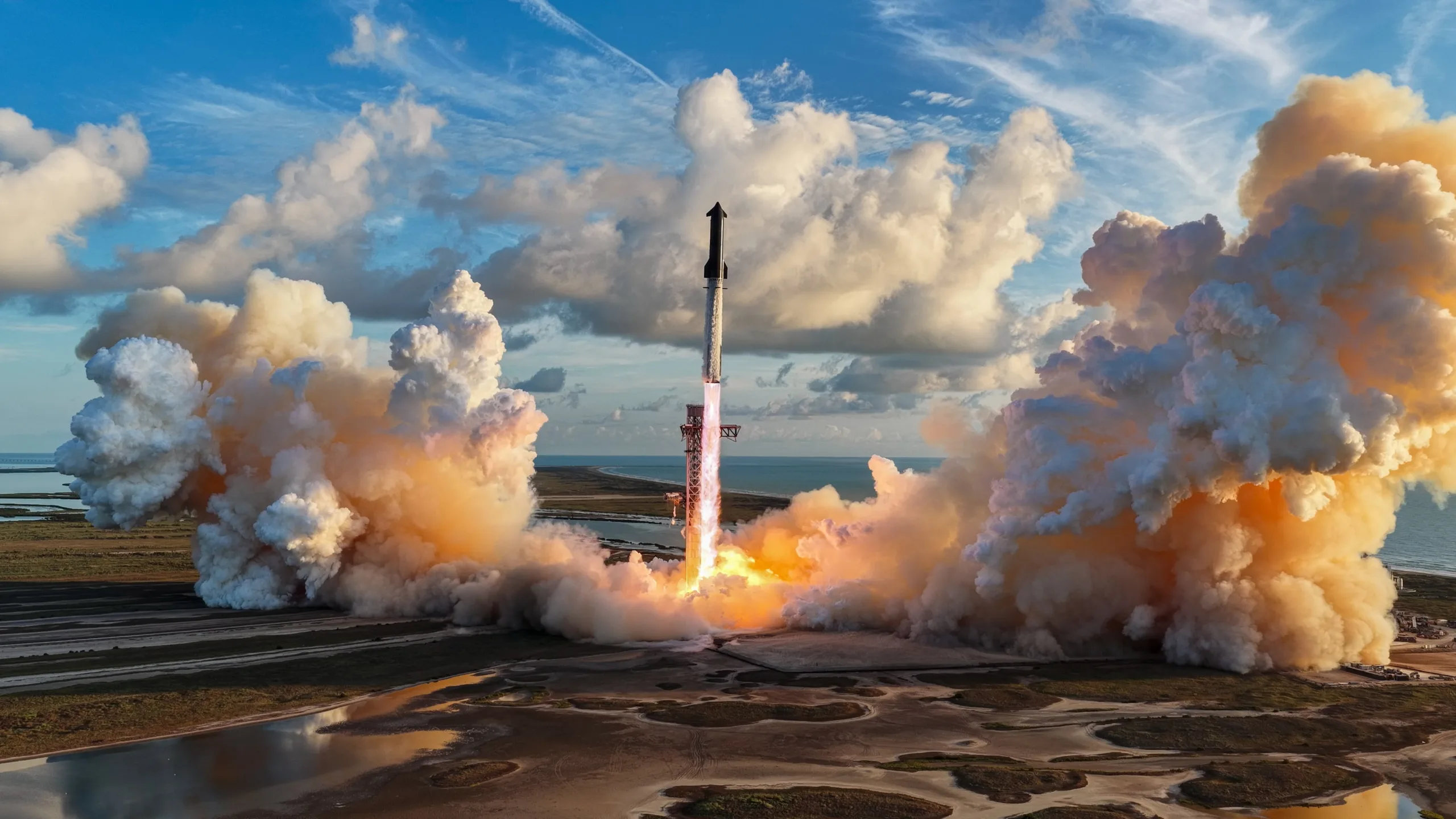
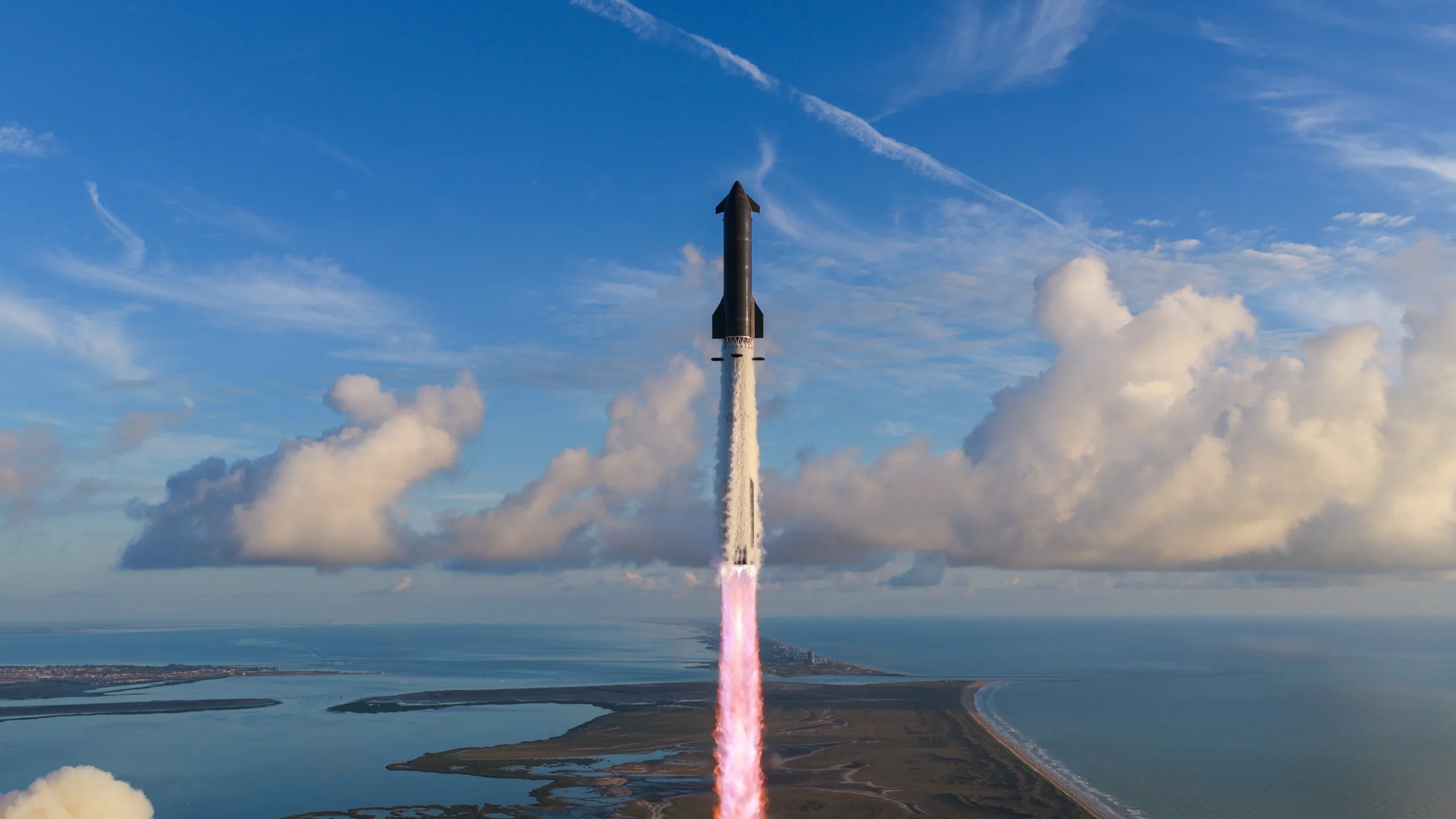
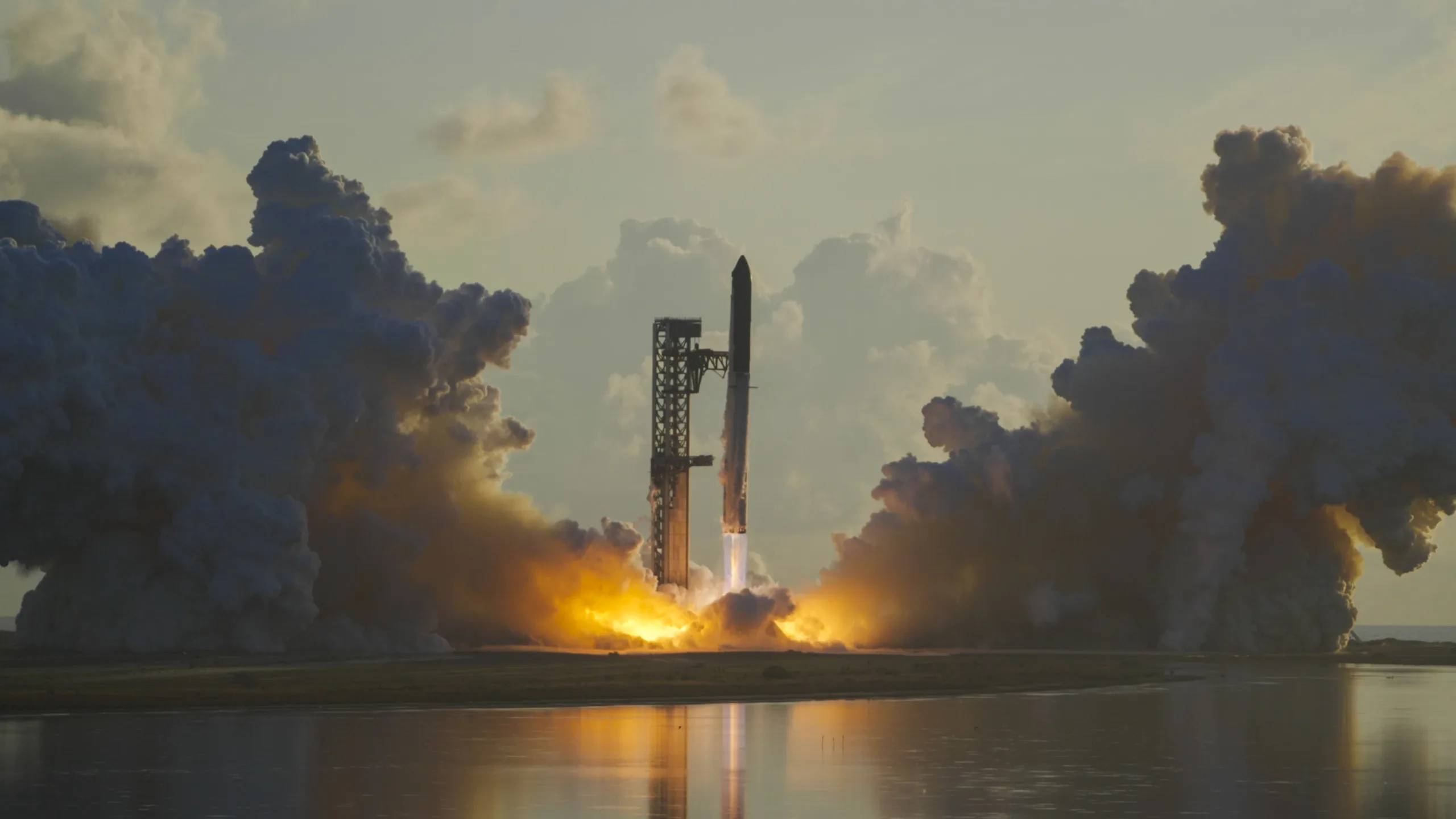
    SpaceX has cleared a major hurdle. Starship reached Earth orbit for the first time on September 28 and deployed 26 Starlink V3 satellites, turning a long-running rocket test into a mission with a direct commercial purpose.

    The result was important for Starlink because SpaceX wants Starship to become the main vehicle for putting larger, higher-capacity satellites into orbit.

    Yet the market reaction remained muted. SpaceX shares were up 0.3% in overnight trading ahead of the launch, while Reuters reported that the stock was down about 1% on Monday after the mission.

    Also Read | At 18, Christa Pike took a life; now age and trauma shape her appeal

    Starship opens the door to a roomier Starlink network

    SpaceX has the orbital milestone, but Starlink's next challenge is economic | X (@SpaceX)
    SpaceX has the orbital milestone, but Starlink’s next challenge is economic | X (@SpaceX)

    The reason Starship matters to Starlink is simple. Bigger satellites mean more network capacity in each launch.

    SpaceX says a Starlink V3 satellite is designed for 1 Tbps of downlink capacity and 160 Gbps of uplink capacity. Its downlink figure is about 10 times that of the previous V2 generation.

    SpaceX’s own IPO documents also say Starship is expected to carry as many as 60 V3 satellites in a single launch, potentially putting more than 20 times the downlink capacity into orbit compared with a Falcon 9 launch.

    In practical terms, that could let Starlink add capacity faster as its customer base grows.

    The cost equation

    SpaceX called Flight 14 its first 'revenue-generating flight' | X (@SpaceX)
    SpaceX called Flight 14 its first ‘revenue-generating flight’ | X (@SpaceX)

    That is where the cost argument comes in. Before Flight 14, Aaron Burnett, founder and CEO of space-focused research firm Mach33, estimated that the 26-satellite payload represented roughly 26 Tbps of network capacity.

    Using his assumed Starship launch cost, he put the cost at about $9.8 million per Tbps for the mission, close to his estimate for Falcon 9.

    Burnett expects that number to fall sharply as Starship begins carrying fuller payloads, achieves faster reuse, and benefits from manufacturing improvements.

    His forecast is that the cost of launching each unit of Starlink capacity could fall 16-fold by 2028. That is a projection based on future improvements, not a demonstrated cost reduction today.

    A triumph

    Starship's first orbital flight gave Starlink 26 V3 satellites | X (@SawyerMerritt)
    Starship’s first orbital flight gave Starlink 26 V3 satellites | X (@SawyerMerritt)

    Flight 14 also showed why investors are watching the rocket beyond the headline achievement.

    One of Starship’s three main engines shut down early after reaching space, briefly putting the planned orbital mission in doubt.

    SpaceX later confirmed that the vehicle could continue, and it successfully reached orbit and deployed all 26 satellites.

    The mission was then cut short by seven hours, ending after about three hours instead of the planned 10. SpaceX said the satellites were operating nominally.

    CFO Bret Johnsen had described Flight 14 as Starship’s first “revenue-generating flight” and called the rocket “core to the rest of our business.”

    Also Read | ‘Possibly [be] needed in 90-120 days’: Why is the US checking Cuba readiness?

    Orbital success is one thing; repeatability is another

    The significance of Flight 14 goes beyond one successful launch. Starship has now demonstrated orbital flight and its first operational satellite deployment, but SpaceX still needs to prove that the system can fly frequently, reuse hardware quickly, and reduce launch costs at scale.

    Musk has said Starship is “2 to 3 years away from hourly flights.”

    Timetable matters for Starlink because the economics of adding large amounts of new capacity will depend not only on how much each V3 satellite can deliver but also on how cheaply and regularly Starship can put them into orbit.

  • ‘Possibly [be] needed in 90-120 days’: Why is the US checking Cuba readiness?

    ‘Possibly [be] needed in 90-120 days’: Why is the US checking Cuba readiness?

    The United States is assessing whether key Army Reserve units could be made available for missions under US Southern Command within the next four months.

    The message itself does not mention Cuba. Multiple US officials, however, told CBS that the request is part of continued military planning focused on the island.

    There is no indication that any unit has been ordered to deploy. The document also does not say how many troops could be involved, where they might go, or what operation they would support.

    Also Read | 800,000 gather for Pope Leo XIV in Paris as France confronts its Catholic roots

    Military preparedness

    The Army Reserve is checking the possible availability of six types of formations. They include logistics and sustainment units, an engineer battalion, a medical brigade, a forward surgical and resuscitative detachment, and a military police brigade.

    Their roles are largely about keeping a military operation supplied, treating casualties, providing engineering support, and maintaining security.

    The message says these units could be “possibly [be] needed in 90-120 days.” Commands were asked to report their availability to Army Reserve headquarters by September 25.

    A diplomatic squeeze

    From logistics and engineers to medics and military police, the readiness check covers the support structure needed for a possible military mission | X (@TheCalvinCooli1)
    From logistics and engineers to medics and military police, the readiness check covers the support structure needed for a possible military mission | X (@TheCalvinCooli1)

    The timing matters because Washington and Havana have been under growing pressure for months. The Trump administration has increased economic pressure on Cuba and has pushed for political changes on the island.

    Earlier this year, US forces carried out reconnaissance operations around Cuba’s seabed and maritime approaches.

    Some US airpower components were also placed on heightened readiness, and personnel were prepared for possible deployment, although those plans did not move forward.

    At the same time, US Southern Command has refused to discuss specific operational movements, citing security concerns.

    A spokesperson said the command “continuously coordinates with the Joint Force” to assess military requirements across its area.

    Door ajar

    Army Reserve units are being assessed for possible logistical, medical, and security support as the Trump administration weighs military options involving Cuba | X (@RealTruth)
    Army Reserve units are being assessed for possible logistical, medical, and security support as the Trump administration weighs military options involving Cuba | X (@RealTruth)

    There is also an important second signal from Washington. On September 26, President Donald Trump said he did not believe the US would need military force and that “Cuba and we will make a deal.”

    Trump made the remarks at the White House after months of escalating pressure on Havana.

    Cuban Foreign Minister Bruno Rodriguez, speaking at the United Nations, said Cuba remained open to dialogue and to business relations with US companies while condemning the US trade embargo.

    The latest Army Reserve message therefore points to contingency planning, not a confirmed military operation.

    What happens next will depend on how the broader US-Cuba confrontation develops and whether the two sides move towards an agreement.

    Also Read | At 18, Christa Pike took a life; now age and trauma shape her appeal