West Bengal needs a sharper economic strategy as it intensifies efforts to attract private investment from major Indian and global companies. Investor outreach alone may not be enough. The state also needs institutional and regulatory reforms to foster greater competition and make the business environment more attractive to large investors.
The challenge is particularly significant because acquiring large parcels of land for industrial projects can be difficult in West Bengal. At the same time, the state’s financial resources limit its ability to offer substantial fiscal incentives to several companies simultaneously.
That makes it difficult for West Bengal to simply replicate the investment strategies of other states.
West Bengal Must Focus On Its Strengths
A more targeted approach could help the state make better use of its existing advantages. Instead of attempting to attract every kind of investor, West Bengal can identify domestic and international organisations for which the state offers a clear strategic benefit.
Incentives can then be designed around those specific opportunities without placing excessive pressure on the state’s finances.
Brownfield investors already operating in West Bengal may also have reasons to expand their existing facilities before considering a move elsewhere. While companies may publicly seek additional concessions, their existing investments, infrastructure and business networks can make expansion in the same location a practical option.
Investor Outreach Needs A More Focused Approach
Meetings between government officials and large companies need to move beyond formal interactions and goodwill visits. Each meeting should be based on a detailed understanding of the company’s businesses, investment plans and long-term priorities.
Officials should study the corporate group’s interests before approaching its representatives. Such preparation can allow discussions to focus on specific investment opportunities in West Bengal rather than remaining limited to general proposals.
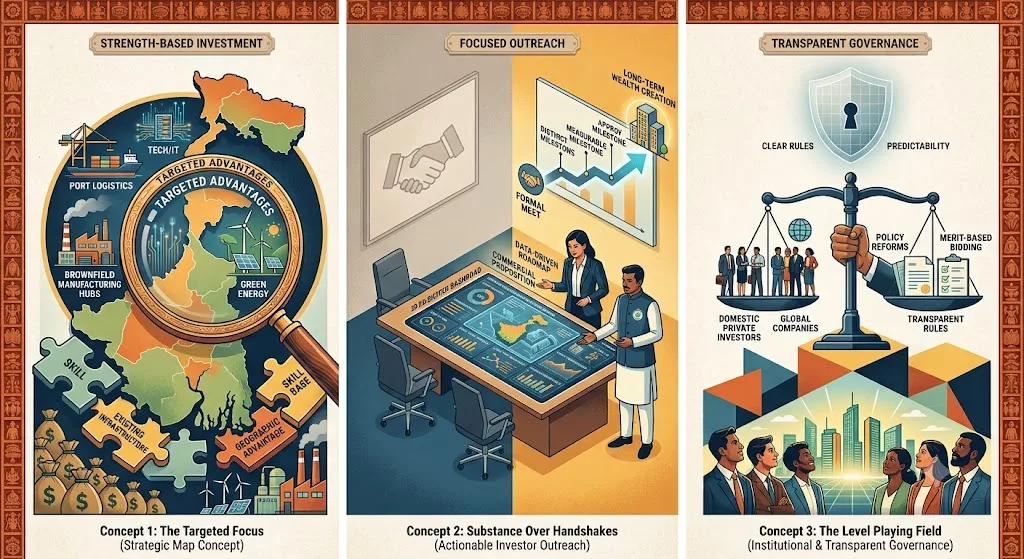
West Bengal needs a new strategy to attract private and smarter investment | Representational Image
The experience of the previous Trinamool Congress government also highlights the importance of this approach. Despite several highly publicised meetings with prominent business leaders, large investment flows did not materialise on the expected scale.
For foreign investors, the state should also make one principle clear: domestic and international companies must have access to a level playing field.
Transparent Procurement Can Build Investor Confidence
Government contracts should be decided through transparent procurement procedures based on merit. No bidder should receive preferential treatment.
A predictable and transparent system can be an important part of the state’s pitch to companies considering long-term investments.
For investors, the question is not simply whether a state offers incentives. They also need clarity about the rules under which they will operate and the returns that a business can potentially generate over several years.
Focus On Long-Term Wealth Creation
West Bengal’s investor outreach should focus strongly on the opportunity to build sustainable businesses in the state.
Companies capable of making substantial investments have several locations to choose from. Their primary concern is therefore whether a particular market can provide attractive returns over a sustained period.
Corporate social responsibility initiatives can create goodwill, but they cannot substitute for a strong commercial proposition that encourages a company to commit significant capital for the long term.
From Political Importance To Economic Importance
West Bengal already holds considerable political importance, but strengthening its economic position requires a different approach.
The state needs to explore new methods of attracting capital while improving its institutional and regulatory framework. There is no guarantee that a fresh strategy will immediately produce large investments, but a more targeted approach could create better conditions for sustained capital inflows.
As India works towards its 2047 development goal, larger states such as West Bengal will have an important role to play. Strengthening the state’s economic base and creating a more competitive investment environment will be central to that effort.
For West Bengal, the task now is to turn investor outreach into a more focused economic strategy and establish itself as a stronger destination for long-term private investment.
Retired Calcutta High Court judge Justice Indrajit Chatterjee has sought to step down from an appellate tribunal hearing cases linked to the Special Intensive Revision (SIR) of electoral rolls in West Bengal.
Justice Chatterjee, who is handling appeals from Murshidabad, has written to the Chief Justice of the Calcutta High Court seeking to resign from the tribunal. He cited the difficulty of travelling between his Salt Lake residence and the tribunal centre at Joka, along with the scale of the pending workload.
The development comes as thousands of appeals connected to the SIR exercise remain before tribunals across the state.
Justice Chatterjee Cites Long Commute And Heavy Workload
The tribunal centre is located in Joka, around 27 km from Justice Chatterjee’s Salt Lake residence. According to his letter, the daily journey has made it difficult for him to continue with the assignment.
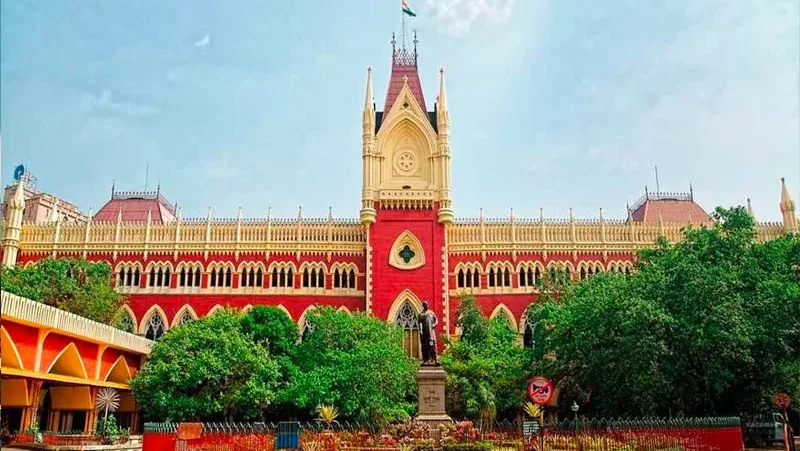
Calcutta High Court. Credit: X/ANI
“It is impossible to work under such conditions and do justice to the mammoth responsibilities bestowed on us,” Justice Chatterjee wrote, according to reports.
He has proposed that the tribunal office be shifted closer to Salt Lake. He has also indicated that he would be willing to carry out tribunal work from home.
Justice Chatterjee took charge of Appellate Tribunal 11 in April. The tribunal is dealing with appeals concerning electoral roll inclusions and exclusions in Murshidabad.
Over Five Lakh Appeals Remain Before His Tribunal
The scale of the backlog has emerged as a major issue. Justice Chatterjee has disposed of 425 appeals so far, while around 5.3 lakh cases remain pending before his tribunal, according to a recent report.
At a disposal rate of roughly 10 cases a day, the workload would take decades to clear. The figure illustrates the challenge facing the SIR appellate process, particularly in districts with large numbers of appeals.
Of the appeals decided by Justice Chatterjee, 350 appellants had their names restored to the electoral rolls, while 75 names were deleted, according to media reports.
Murshidabad Among Key SIR Districts
Murshidabad is among the districts with a particularly large SIR appeal workload. The district has 22 Assembly constituencies and three Lok Sabha constituencies.
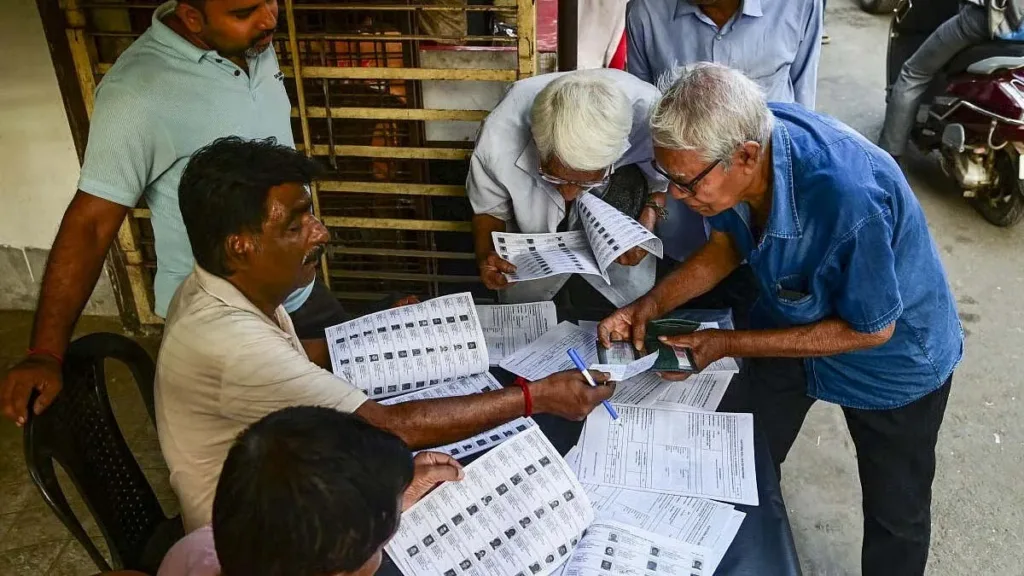
People checking their details in SIR form at West Bengal. Credit: X/ANI
Justice Chatterjee’s tribunal is handling appeals from the district, where the SIR process has generated a substantial number of cases.
The tribunal’s workload also comes against the backdrop of a much larger statewide backlog.
Over 37 Lakh SIR Appeals Pending In Bengal
The Election Commission of India told the Supreme Court in September that 38,20,683 appeals had been filed against orders connected with the SIR of electoral rolls in West Bengal.
Of these, 1,02,231 appeals had been disposed of, leaving 37,18,452 cases pending, according to the poll panel’s affidavit.
The Election Commission did not provide a separate break-up showing how many appeals were filed against deletion of names and how many challenged the inclusion of names in electoral rolls.
The Supreme Court is examining the issue following a petition filed by Prasenjit Bose, chairperson of the West Bengal Congress’s SIR committee.
Supreme Court Had Directed Appellate Tribunals
Following directions from the Supreme Court, 19 appellate tribunals were established across West Bengal to deal with appeals arising from the SIR exercise.
Justice Chatterjee’s proposed exit adds to the attention surrounding the functioning and workload of these tribunals. Former Calcutta High Court Chief Justice T S Sivagnanam had also previously stepped down from a tribunal.
For now, Justice Chatterjee has proposed alternatives that could allow him to continue, including relocating the tribunal closer to his Salt Lake residence or permitting him to work from home.
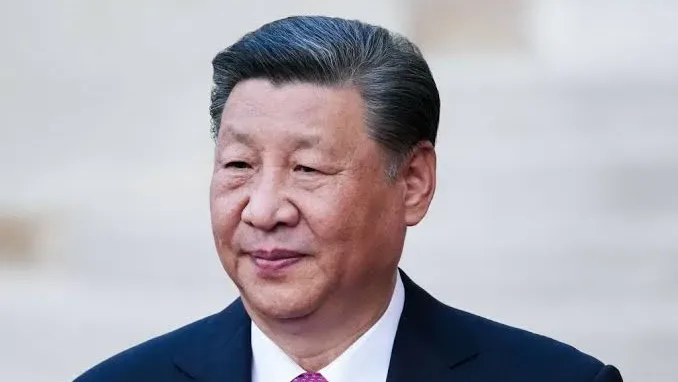
Chinese President Xi Jinping has called for efforts to achieve the country’s economic targets for 2026 while reiterating Beijing’s opposition to Taiwan independence and outside interference in cross-Strait affairs.
Xi made the remarks at a reception in Beijing on Wednesday, September 30, marking the 77th anniversary of the founding of the People’s Republic of China. The event was held on the eve of China’s National Day, which is observed on October 1.
The Chinese president said the country’s economy had continued to demonstrate resilience despite pressure and called for a balance between economic development and stability.
✨🇨🇳China will stick to its independent foreign policy of peace, advance the implementation of the four major global initiatives it proposed, and promote the building of a community with a shared future for humanity to contribute greater certainty and positive energy to a… pic.twitter.com/BZsLGPWGPI
With China dealing with both domestic and international economic challenges, Xi urged authorities to continue supporting growth and improving people’s livelihoods.
He said Beijing should maintain the principle of pursuing progress while ensuring stability and work towards completing the economic targets and tasks set for the year.
“In the face of a complex and intricate international and domestic environment, we must uphold the general principle of pursuing progress while ensuring stability,” Xi said.
He also said China should continue promoting economic development while taking steps to “effectively safeguard and improve people’s well-being and strive to accomplish the year’s targets and tasks”.
Xi’s comments came as part of the annual National Day reception, an event he regularly attends before the October 1 celebrations.
Xi Reiterates China’s Taiwan Position
The Taiwan issue was another key part of Xi’s remarks.
Xi called for closer exchanges and cooperation across the Taiwan Strait while restating Beijing’s opposition to forces supporting Taiwan independence and what China describes as interference by external forces.
“We should … deepen cross-Strait exchanges and cooperation, resolutely combat separatist forces advocating Taiwan independence, and oppose interference by external forces,” Xi said.
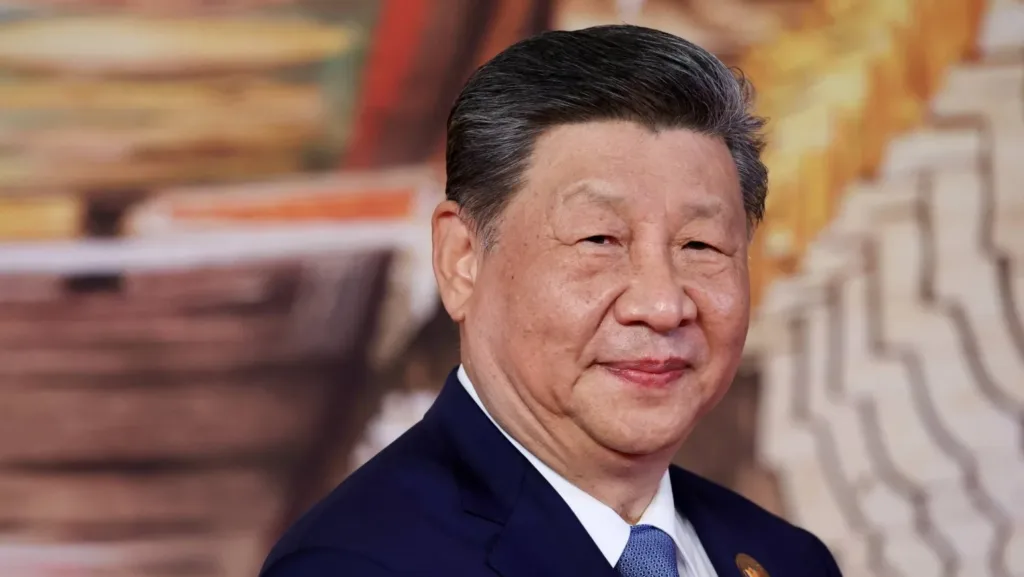
Xi reiterates China’s Taiwan position. Credit: X/ANI
He also called for peaceful development of cross-Strait relations while linking it to Beijing’s stated goal of national reunification.
China has long opposed Taiwan independence and maintains that Taiwan is part of China. Taiwan has its own elected government and political system, while Beijing continues to assert its sovereignty claims over the island.
Earlier on Wednesday, Xi and other senior Chinese leaders attended a Martyrs’ Day ceremony at Tian’anmen Square in Beijing.
The annual event is held on September 30, one day before National Day, to honour people who died in China’s struggles for national independence and development. China’s top legislature established Martyrs’ Day in 2014.
On September 30, President Xi Jinping paid tribute to national heroes at Tian'anmen Square in Beijing, presenting flower baskets to fallen national heroes in commemoration of China's Martyrs' Day. pic.twitter.com/Br0XmkW2HO
Xi, Premier Li Qiang and other senior officials attended the ceremony. Participants sang the national anthem and observed a moment of silence as part of the tribute.
Nine large flower baskets were placed before the Monument to the People’s Heroes.
China Prepares for National Day Holiday
China will begin its National Day holiday on October 1, with the break scheduled to continue through October 7.
This year’s celebrations come as China marks the 77th anniversary of the People’s Republic. The year also marks the 105th anniversary of the founding of the Communist Party of China and the 90th anniversary of the victory of the Long March.
The Long March took place from 1934 to 1936 and remains an important episode in the history of the Chinese Communist Party.
As China enters its National Day celebrations, Xi’s latest remarks have placed economic performance, cross-Strait exchanges and Beijing’s position on Taiwan among the key themes of the country’s official messaging.
A tigress T138, born at Valmiki Tiger Reserve (VTR) in 2023, has been brought from Bihar to West Bengal’s Buxa Tiger Reserve in Alipurduar district as part of efforts to strengthen the tiger population in the reserve. The adult tigress arrived in West Bengal on Wednesday and is scheduled to be released into the wild on October 2, Forest Minister Manoj Oraon said.
The animal was translocated from Bihar’s Valmiki Tiger Reserve in West Champaran district to Buxa as part of a long-term tiger augmentation programme. Buxa currently does not have a resident tiger population, although camera traps have recorded the presence of a big cat in the reserve.
After landing at Hasimara at 4:45 AM in an MI-17 helicopter, the tigress arrived at Rajabhatkhawa in Buxa Tiger Reserve at 6:45 AM from Bihar’s Valmiki Tiger Reserve. The tigress will return to the wild on October 2. 🐅🌿 pic.twitter.com/FHOISmu075
The tigress was flown to Hasimara airbase after being captured at Valmiki Tiger Reserve following several days of efforts by forest officials. From the airbase, the animal was transported by road to a designated enclosure inside Buxa Tiger Reserve.
Officials arranged a green corridor for the movement of the tigress to ensure a smooth transfer to the enclosure.
The capture operation in Bihar had faced repeated interruptions because of heavy rainfall. Forest personnel eventually tranquilised the tigress on Tuesday evening before transporting it to north Bengal.
Forest Minister Manoj Oraon visited Buxa Tiger Reserve on Wednesday to assess the arrangements ahead of the release. He also held discussions with Forest Department officials, police personnel and representatives of other agencies involved in the operation.
“The tigress will be released into the wild at 9.30 am on October 2. All preparations have been made,” Oraon told PTI.
Tigress To Be Released Into Wild on October 2
The tigress is currently being kept under close observation inside the reserve. According to Oraon, the animal is healthy and is being monitored around the clock.
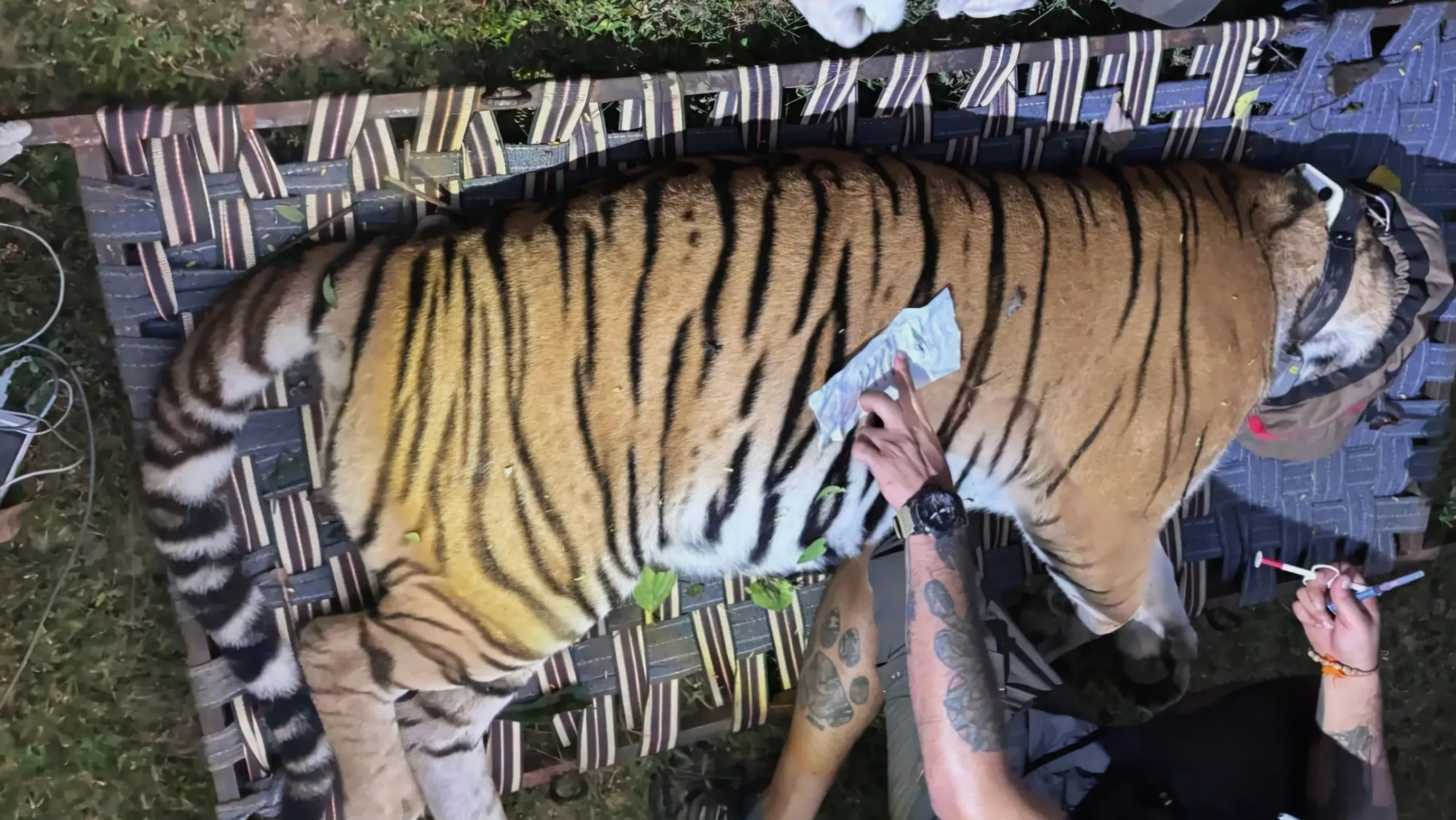
A radio collar has been fitted to the tigress to track its movements once it is released into the forest. Officials will use the monitoring system to keep track of the animal and reduce the chances of it moving towards areas inhabited by people.
“Arrangements have been made to keep a tab on the tigress’s movements so that it does not venture towards human habitations,” Oraon said.
West Bengal Chief Minister Suvendu Adhikari and Union Environment, Forest and Climate Change Minister Bhupender Yadav are scheduled to attend the release event, according to Oraon.
Tigers at Buxa Tiger Reserve. Credit: X/ANI
Buxa Tiger Reserve Tiger Augmentation Project
The translocation forms part of a five-year project titled ‘Proposal for Tiger Augmentation and Soft Release of Tiger in Buxa Tiger Reserve’. The programme covers the financial years from 2023-24 to 2027-28.
The project is aimed at more than simply bringing tigers into Buxa. Officials said the plan also focuses on improving prey availability and developing suitable habitats within the reserve.
Strengthening wildlife corridors and reducing human-wildlife conflict are also among the objectives of the programme.
Buxa’s camera traps have previously detected a big cat, though experts believe that animal may have entered the reserve after wandering from Bhutan or Assam’s Manas National Park.
The arrival of the tigress from Valmiki Tiger Reserve marks another step in the planned effort to establish and strengthen a tiger population in Buxa. Its movements will be closely monitored after the October 2 release as forest officials continue preparations to support the animal in its new habitat.
Durga Puja in West Bengal is entering a new political chapter in 2026. With a new government in office, several familiar features of Kolkata’s biggest annual festival are changing, from the Red Road carnival and puja patronage to government grants, food practices and the way pandals are inaugurated.
The biggest change is perhaps the end of the Durga Puja carnival on Red Road, a much-remembered feature of the Mamata Banerjee years. Instead, the new government is preparing a major Mahalaya programme at Eden Gardens on October 10, which Prime Minister Narendra Modi is expected to attend.
But the changes go beyond the calendar. Several well-known pujas have seen changes in their organising committees, while questions around food, themes, political stalls and the religious character of the festival have also emerged.
At the same time, the number of Durga Pujas across Bengal continues to rise. As of September 24, 2,318 pujas had registered on Kolkata’s Sahaj single-window permission portal. The figure included 270 new applicants. In 2025, the final number of applications reached 2,936, the highest recorded till then.
Across West Bengal, the state power department expects the number of community pujas to cross 65,000 this year, based partly on demand for temporary electricity connections.
Durga Puja’s long tradition of change
The community Durga Puja, or barowari puja, is generally associated with late-18th-century Guptipara. Historians, however, differ over the exact year and even over whether the earliest community festival there was Durga Puja or Jagaddhatri Puja.
The term barowari is commonly linked to baro yaar, meaning “twelve friends”.
Bengal’s Puja traditions have evolved repeatedly. Zamindars once played a major role in patronage, while political leaders later became closely associated with prominent community celebrations.
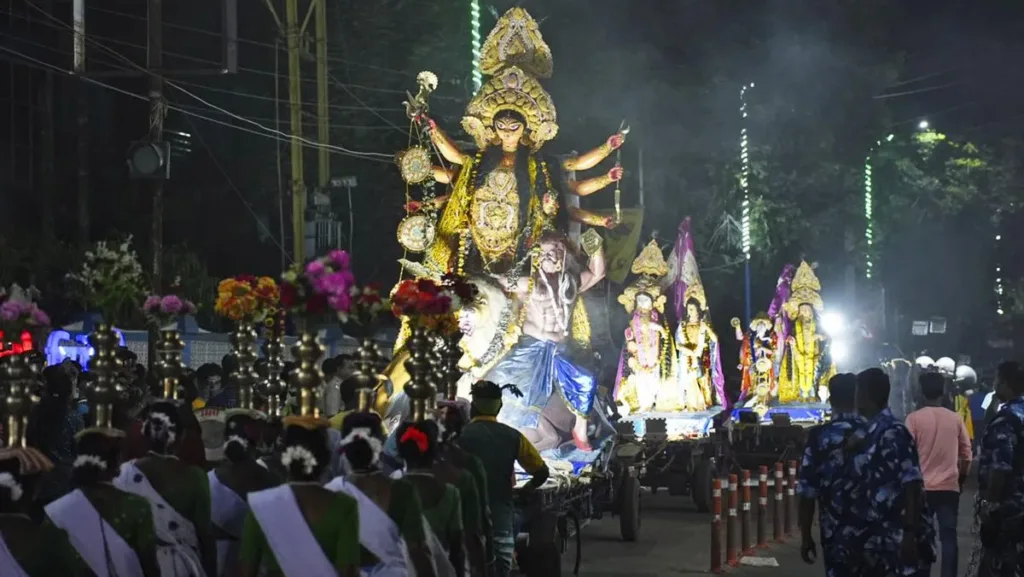
The visual language of Puja has changed too. Traditional ek-chalar thakur, where Durga and her family are presented together within one frame, now exists alongside elaborate multi-part installations. Sabeki pratima, or traditional idols, stand alongside theme-based creations made with unusual materials.
A look at traditional Durga puja in Bengal. Credit: X/asutoshhalder
Kumartuli remains at the centre of Kolkata’s idol-making tradition. As Mahalaya approaches, its narrow lanes become increasingly busy with visitors, photographers and people looking for a glimpse of the idols before they leave for the city’s pandals.
The nearby Kumartuli Ghat is also being developed. A Rs 10-crore project covers a 300-metre stretch of the Hooghly riverfront and includes viewing areas, walkways and improved public facilities.
Political patronage of Kolkata’s big pujas changes
One of the most noticeable developments in Durga Puja 2026 is the change in leadership at several prominent pujas.
During the Trinamool Congress years, several major celebrations became closely identified with influential party leaders. Sreebhumi was associated with Sujit Bose, Suruchi Sangha with Arup Biswas and his brother Swarup, Chetla Agrani with Firhad Hakim, and Naktala Udayan Sangha with Partha Chatterjee. That pattern is now changing.
At Sreebhumi Sporting Club, a new committee is overseeing this year’s Puja. BJP leader Kanak Debnath is its president. Organisers have said the scale of the celebration will remain while efforts will be made to reduce prolonged road blockades.
A look at Sreebhumi Durga Puja. IG/sreebhumisportingclub
Suruchi Sangha has also undergone a leadership change. BJP MLA Sourav Sikdar is now secretary, with the new committee replacing the earlier arrangement associated with the Biswas brothers. The transition, however, was met with protests from some residents.
At Tala Prattoy, known in recent years for its striking themes, much of the previous organising structure has changed. Sushanta Shibani Pal is handling this year’s theme.
The changes are not limited to individual puja committees. A new statewide organisation called the Paschim Banga Durga Puja Samannay Samiti, or West Bengal Durga Puja Coordination Committee, is taking shape. Kartik Maharaj is its chairman, while BJP MLA Rudranil Ghosh is chief adviser.
The organisation could provide another coordination platform alongside the established Forum for Durgotsab, which represents hundreds of Puja committees.
New pujas and disputes add to the churn
Some familiar Kolkata locations are also entering new territory. Allen Park on Park Street, better known for its Christmas and New Year celebrations, will host a Durga Puja for the first time. The celebration is being organised by Kolkata Sanatani Sangha, fronted by BJP leader Shankudeb Panda.
Mohammad Ali Park has also seen a dispute, with competing committees putting up banners under different names after BJP councillor Meena Devi Purohit proposed changing the venue’s name to Mahabali Park.
Bagbazar’s historic Puja faced a separate problem after a committee election became deadlocked. The matter eventually went to court.
Durga Puja grants and free electricity
The financial system supporting community Durga Puja is also being altered. The Mamata Banerjee government began providing annual assistance of Rs 10,000 to Puja committees in 2018. The amount was gradually increased and stood at Rs 1.1 lakh in 2025.
For 2026, the new BJP government has announced Rs 1 lakh per committee. Chief minister Suvendu Adhikari has also appealed to larger pujas to leave the assistance for smaller celebrations that require financial support. Several prominent committees have agreed to forgo the grant.
Suvendu Adhikari cut Durga Puja grants by 10000 rupees and declared Ashtami a dry day while telling big pujas to refuse state aid. Free electricity and fire licence waivers cannot replace lost excise revenue and community funding.https://t.co/9GUnkoXZWH
The government has also asked electricity suppliers to provide free power to Puja organisers. In 2025, the electricity waiver under the previous government stood at 80%.
There was also a controversy in Birbhum after BJP district president Uday Shankar Banerjee reportedly told committees that those accepting the 2026 government grant would have to display the chief minister’s photograph or face action. Minister Dilip Ghosh rejected the claim.
Will Bengal’s Durga Puja food traditions change?
Food has emerged as another important point of discussion ahead of Durga Puja.
In August, VHP central advisory council member Swami Nirgunananda suggested that non-vegetarian food should be kept away from the immediate Puja area. He also acknowledged that Bengal’s Durga Puja has never been entirely vegetarian.
VHP leaders later clarified that no official or binding instruction was prohibiting non-vegetarian food during Durga Puja.
Religious preacher Dhirendra Krishna Shastri, popularly known as Bageshwar Baba, subsequently criticised the consumption of non-vegetarian food during Puja and described those who did so as “pakhandis”, or hypocrites.
The remarks drew criticism, including from within the BJP. State party president Samik Bhattacharya defended Bengal’s food traditions. Adhikari later visited Kalighat temple and ate traditional prasad that included fried fish, fish head and basanti pulao.
At Suruchi Sangha, organisers have said mutton and hilsa will continue to be served during the Maha Navami feast.
Some housing societies have similarly said their Puja feasts will retain their existing traditions and remain largely non-vegetarian, except on Maha Ashtami.
However, some organisers are creating clearer boundaries around the sacred space. Thakurpukur SB Park and Chaltabagan have restricted visitors from entering while eating. The new Allen Park Puja will not have food stalls inside the park.
Theme pujas continue, but with a different emphasis
Theme-based Durga Puja remains part of Kolkata’s festival landscape in 2026. There is no official census dividing theme pujas from traditional celebrations.
Organisers have been asked to ensure that idols and themes do not hurt religious sentiments or undermine what the new government describes as Sanatani traditions.
Yet experimental themes have not disappeared. Subjects linked to care workers, gender identity and ecology continue to feature in this year’s celebrations.
Alongside them, some major pujas are placing greater emphasis on patriotism, nationalism and Hindu cultural identity.
Santosh Mitra Square, headed by BJP MLA Sajal Ghosh, has selected Vande Mataram as its theme. New Town Sanatani Durga Puja is exploring what its organisers describe as the connection between ancient Indian traditions and modern science.
The association between Durga and political or nationalist ideas, however, has a much longer history.
Bankimchandra Chattopadhyay used the image of Durga as a symbol of Bengal in Amar Durgotsav, included in Kamalakanter Daptar. Later, Kazi Nazrul Islam invoked Durga as Shakti in his poems and Agomani compositions. His 1922 poem Anandamoyeer Agamane used the Goddess’s arrival as an anti-colonial metaphor, leading to his prosecution for sedition by the British.
Why ‘Sharadotsav’ has become a political issue
Another debate concerns the word “Sharadotsav”, a term widely associated with Bengal’s autumn festivities and Durga Puja.
Suvendu Adhikari has asked Puja committees not to accommodate CPI(M) bookstalls using the term “Sharadotsav” instead of “Durga Puja”. The argument is that the terminology dilutes the festival’s religious identity.
The Left has pointed out that Rabindranath Tagore wrote Sharadotsav, a play celebrating autumn, in 1908.
A Puja committee at Kamardanga in Tangra has gone further, announcing that CPI(M), DYFI, SUCI and other Left-wing organisations would not be allowed to operate stalls at its celebration. The committee has urged other organisers to take a similar position, while the CPI(M) has criticised the move.
Mahalaya replaces the Red Road carnival
The Red Road immersion carnival, introduced in 2016 during the Mamata Banerjee government’s tenure, has been discontinued.
Durga puja carnival in Red Road in 2024. Credit: X/ANI
Its replacement is a large Mahalaya programme at Eden Gardens on October 10, 2026. Maha Shashthi falls on October 17 this year.
The event is expected to feature traditional performers, thousands of dhakis, fireworks and a drone show. Narendra Modi is expected to attend and virtually inaugurate prominent Kolkata pujas associated with the programme.
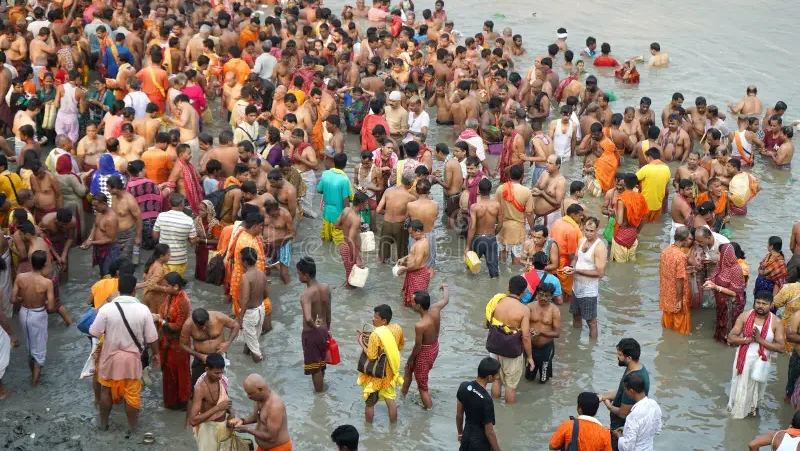
Mahalaya carries a special place in Bengal’s cultural calendar. Along with the tradition of tarpan, the day is strongly associated with Birendra Krishna Bhadra’s recitation of Mahishasuramardini, which has been linked with Mahalaya since the 1930s.
People performing Tarpan at Babughaat in Kolkata in 2025. Credit: X/ANI
The Eden Gardens event therefore places the new government at the centre of the ceremonial beginning of the Puja season.
More changes for Kolkata pandal-hoppers
The rules for Puja celebrations are changing in several other ways. Puja pandals will not be allowed to hold inaugurations before Mahalaya, according to the new government.
Maha Ashtami will be observed as a dry day, with liquor sales prohibited. DJs have also been banned during Puja celebrations and immersion processions.
Organisers have been asked to prevent prolonged road blockades and complete immersions within the prescribed period.
Even the look of Kolkata Police’s crowd-management volunteers is expected to change. A police tender has proposed orange T-shirts and caps in place of the familiar white-and-blue attire.
Bengal’s Durga Puja has never had one fixed identity
Despite the changes around politics, patronage, food and presentation, Bengal’s Durga Puja tradition has always contained considerable variation.
Historical accounts show that there was never a single rule governing the appearance of idols or the food served during Puja.
Mahendranath Datta, Swami Vivekananda’s younger brother, recorded differences between Shakta and Vaishnava households. He noted that the lion accompanying Durga could have a conventional lion’s face in Shakta homes, while Gosain or Vaishnava households sometimes depicted it with a horse-like face.
Food customs differed as well. Brahmin households could serve rice, vegetables, curd and payesh, while Shakta Brahmin homes permitted fish. Kayastha households served luchi.
Old family pujas continue to reflect that diversity. The Sabarna Roy Chowdhury family offers katla as Nabami bhog, while fish is offered during Puja at Chorbagan Chatterjee Bari. At the Janbazar home of Rani Rashmoni’s descendants, the Goddess receives vegetarian bhog even though non-vegetarian food is served to guests.
That history makes Bengal’s Durga Puja difficult to fit into a single cultural or dietary template.
The committees may change, political associations may shift and new rules may shape the festival’s public face. But the traditions of Durga Puja in Bengal have developed over centuries through different communities, families, artists and organisers.
For 2026, the most visible changes are already clear. The Red Road carnival is gone, Eden Gardens will host the Mahalaya celebration, several prominent pujas have new leadership, and debates over food, themes and political participation have entered the festival conversation.
Five centuries after it was promulgated, the Foral de Goa of 1526 remains at the centre of discussions about Goa’s land, village institutions and relationship with political power.
On September 16, 1526, Portuguese King João III issued the Foral de Goa, a collection of 49 laws that recorded the rights, duties and customs of Goa’s village communities. Historians regard it as one of the earliest surviving paper documents of its kind in South Asia and often describe it as Goa’s first constitution, although the comparison does not refer to a modern constitutional system.
The 500th anniversary is being marked in both Goa and Portugal. In Goa, Bombay High Court judge Valmiki Menezes is scheduled to release a commemorative edition later this month. Portugal is also hosting a year-long programme through the Centre of the History of Society and Culture at the University of Coimbra and other cultural institutions.
What Is the Foral de Goa of 1526?
The document’s official name is Foral dos Usos e Costumes dos Gancares e Lavradores desta Ilha de Goa e outras Anexas a Ella. In English, this refers to the charter concerning the customs and practices of the Gaunkars, or village landholders, and farmers of Goa and its adjoining islands.
It is also known as the Foral of Afonso Mexia, after Afonso de Mexia, the Vedor da Fazenda, or chief comptroller of the treasury in Portuguese India, who signed it.
The Foral was created 16 years after the Portuguese captured Goa from the Adil Shah of Bijapur in 1510. It emerged from negotiations between the Portuguese administration and Gaunkars representing 31 villages in Tiswadi.
According to Goa Archives director Balaji Shenoy, it was the first formal attempt to put the existing indigenous village administration and revenue arrangements in Portuguese-controlled Goa into writing.
How Did The Foral Protect Gaunkar Rights?
A central feature of the Foral was its recognition of the Gaunkars and their role in managing village common lands through the Gaunkaria system, now commonly associated with the Comunidade system.
The document acknowledged the system as an existing institution and recognised the land-related rights of the Gaunkars. Its preamble says the rules were prepared “after ordering careful inquiries and investigations to determine and clarify what they were obliged to pay us, and used to pay to the kings and lords of this land before it became ours…as well as the rights, uses and customs, under which they lived and which we ought to preserve for them…”
Under the system, Gaunkars paid a fixed tribute, known as foro, to the state. Revenue from village lands was then used for different village responsibilities, while cultivation rights could be auctioned and part of the resulting income distributed among the Gaunkars.
The Foral also referred to the work of earlier generations who had developed coastal areas and turned them into productive settlements.
What Did The 49 Clauses Cover?
The Foral went beyond simply fixing agricultural taxes. Its 49 clauses dealt with several aspects of village life and administration.
They covered tax collection and the distribution of annual surplus, different assessments depending on the type of land, treatment of villages facing financial difficulties, hereditary rights and the leasing of uncultivated land.
Rules also addressed leasing land to outsiders, disputes, absent or defaulting Gaunkars and succession. The document included provisions concerning the rights of children from multiple marriages.
Independent scholar Rochelle Pinto describes the Foral as much broader than a revenue document.
“It was one of the initial documents issued by the Portuguese Crown to indigenous land administrators, sixteen years after the conquest of Goa… the Foral recognised the political significance of a local legend that legitimised the primacy of the gaunkars over the land in Ilhas by incorporating it into the document. The most minimal description of the Foral would see it as a revenue-fixing document, but in fact it addressed ritual practices, inheritance laws, and a range of other aspects through its forty-nine clauses,” she said.
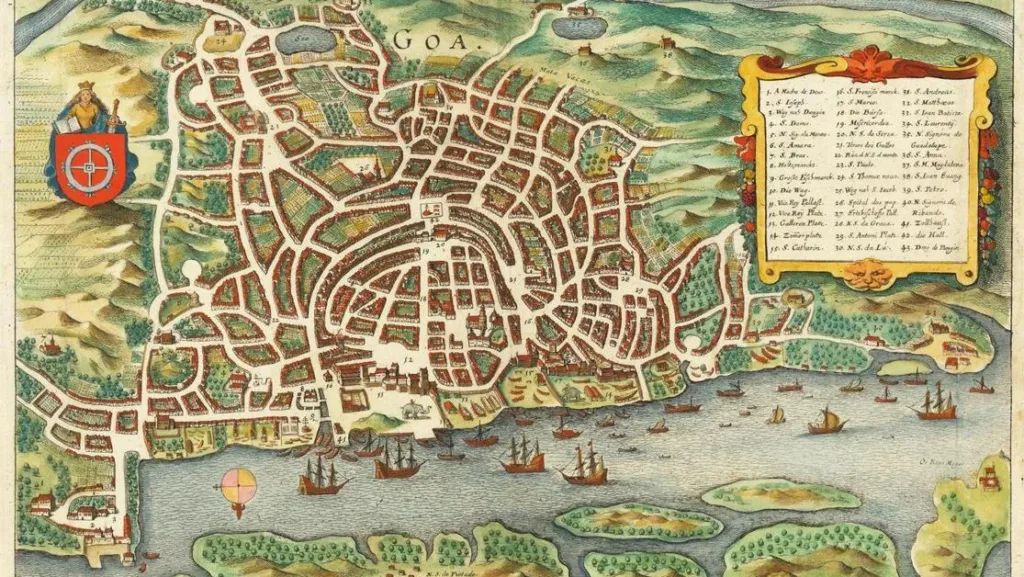
The image appears to show an antique bird’s-eye view map of Goa in 1650 | AI generated
Was The Foral Goa’s First Constitution?
The description of the Foral as Goa’s first constitution remains part of an ongoing historical debate.
Historian Dale Menezes, who is co-authoring a commentary for the commemorative edition, argues that the document can be understood as a constitution in the broader sense of establishing the terms of a new political community.
The Foral was issued after the Portuguese conquest, at a time when the new administration was seeking to establish its authority while dealing with existing local institutions.
“The Foral of 1526 represents a peculiar governmental instrument of the early modern times, that is to say 1500s onwards. There were certainly customs in earlier epochs, but kings, monarchs, and empires in India did not function by writing down these customs. At best we have land grants on stone or copper. Even the Bahamani and Bijapuri Sultanates that ruled parts of present-day Goa ruled according to localized custom but never set it down on paper for the use of all people across all villages in a given territory. Besides, the Foral of 1526 does not just codify land laws, it is much broader than that,” Menezes said.
Jocel de Souza, who works to preserve and revive the Gaunkari, or Comunidade, system, sees the document as an example of negotiation between rulers and local communities.
“It is a brilliant and path breaking set of laws compared to what rulers both in India and Europe were used to at the time. The usual practice was to impose sovereign diktats without any kind of collaboration. However, in the case of Goa, it was a collective charter and the people (who were being ruled) were involved in its drafting. This document laid the foundation for subsequent negotiations between the rulers and the ruled,” he said.
De Souza also links the community land system to Goa’s historical patterns of wealth distribution.
“All this ultimately boils down to the fact that community land rights were recognised, safeguarded and codified by the Police as early as the 16th century, when legislation of this nature was practically unheard of in any other part of this side of the world,” he said.
“It was this document that eventually was amended and expanded upon over the following centuries, that evolved and matured into the Portuguese Civil Code and the Code of Comunidades that we have today,” he added.
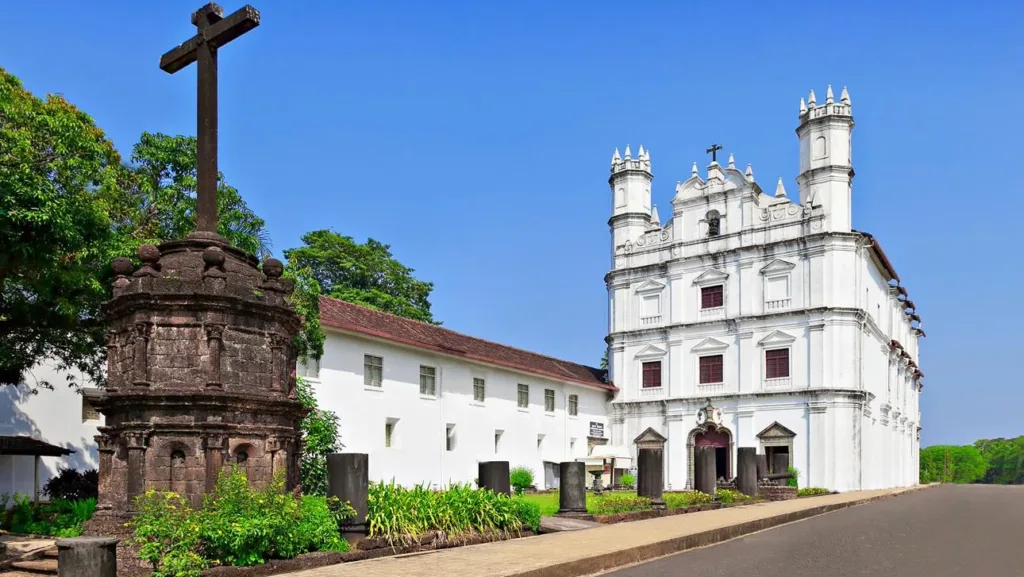
The historic Church of Saint Francis of Assisi and its adjoining convent in Old Goa, India. Credit: X/Pramod Sawant
Why Is The Foral Also Seen As A Colonial Document?
The interpretation of the Foral is not uniform. Shenoy places greater emphasis on the interests of the Portuguese administration and its need to secure revenue.
“The primary motivation of the Portuguese administration was to guarantee and stabilise tax collections for the Crown. It established a fixed, collective rent system for the villages. It was less a foundational gift of civil liberties and more a shrewd legal pact designed to anchor imperial tax extraction to pre-existing Hindu jurisprudence and agrarian frameworks,” he said.
He also cautioned against describing it as Goa’s first constitution. “The Foral of 1526 represents one of the earliest Western attempts at colonial mapping and administrative ordering of an Asian territory. Foral should not be viewed as Goa’s ‘first constitution,’ as doing so reframes a colonial instrument of conquest into a democratic gift,” Shenoy said.
How The Foral Influenced Goa’s Land System
The Foral initially applied to the 31 villages around the city of Goa, now Old Goa, which were under Portuguese control. When Portuguese rule expanded in 1543 to Bardez in the north and Salcete in the south, similar arrangements were offered to the landed elites of those territories.
Over the centuries, the original framework was amended and expanded. Its legacy can be traced through the development of the Code of Comunidades and the Portuguese Civil Code.
For Menezes, the document provides an unusual record of interaction between a foreign administration and existing Goan institutions.
“The Foral was not simply a record of Portuguese rule, nor merely a technical document concerning the old village communities.”
“Its pages preserve an extraordinary encounter between an incoming power and Goan institutions, practices and people. They reveal that Goans were not merely subjects upon whom a new order was imposed but Goans negotiated, defended inherited practices, accepted new obligations and helped shape the political arrangements under which they would live. The document therefore offers a rare window into the making of Goan society at a crucial moment in its history,” he said.
“Five centuries later, the questions contained in the Foral—about community, land, government, rights, obligations and the relationship between people and power—remain remarkably resonant,” he added.
Why The Foral Still Matters In Goa Today
The debate surrounding the Foral is not limited to historians. Its legacy remains connected to questions over community land and the future of the Comunidade system.
Advocate Kripa Pilarnekar, who has approached the Bombay High Court in Goa over the restoration of certain alienated Comunidade lands, argues that these institutions remain part of Goa’s historical inheritance.
“The Comunidades are not merely remnants of Goa’s past. They form part of the State’s shared historical inheritance. These village institutions have survived changes in rulers, legal systems, religion, politics and economic structures over several centuries. The larger question is whether a centuries-old system governing village lands, community rights and customary institutions can be protected in an era of rapidly increasing commercial pressure on land,” she said.
Pilarnekar said the present discussion should not be about returning to Goa’s past but about understanding what has survived from it.
“The Foral of 1526 tells us what Goa inherited. The challenge of 2026 is to decide, within the framework of law, what Goa will preserve,” she adds.
Five hundred years after João III promulgated the Foral, the document therefore remains more than an archival record. Its clauses continue to inform discussions about Goa’s village communities, land rights, taxation and the relationship between government and the people it governs.
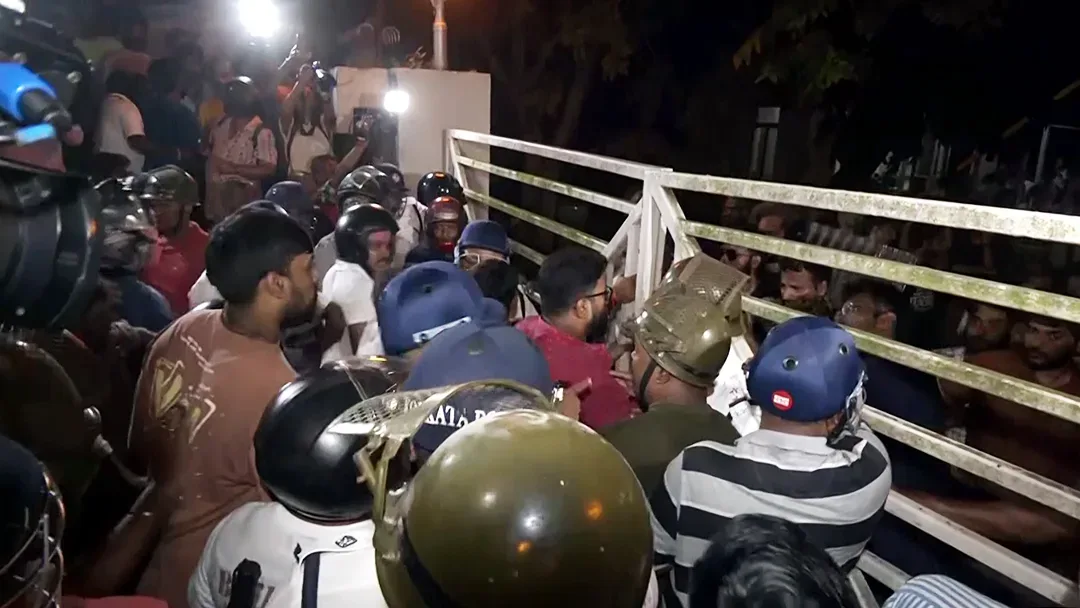
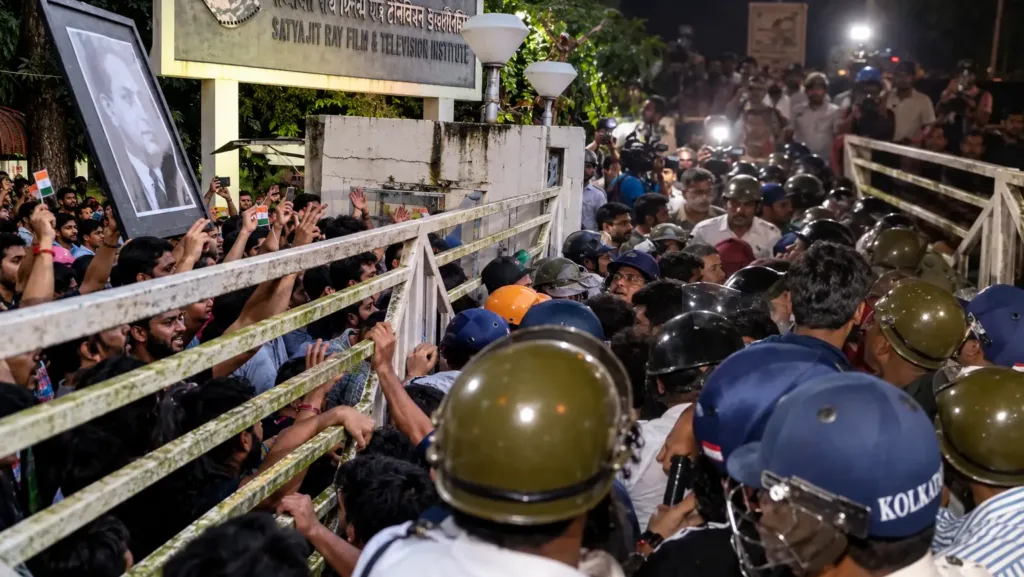
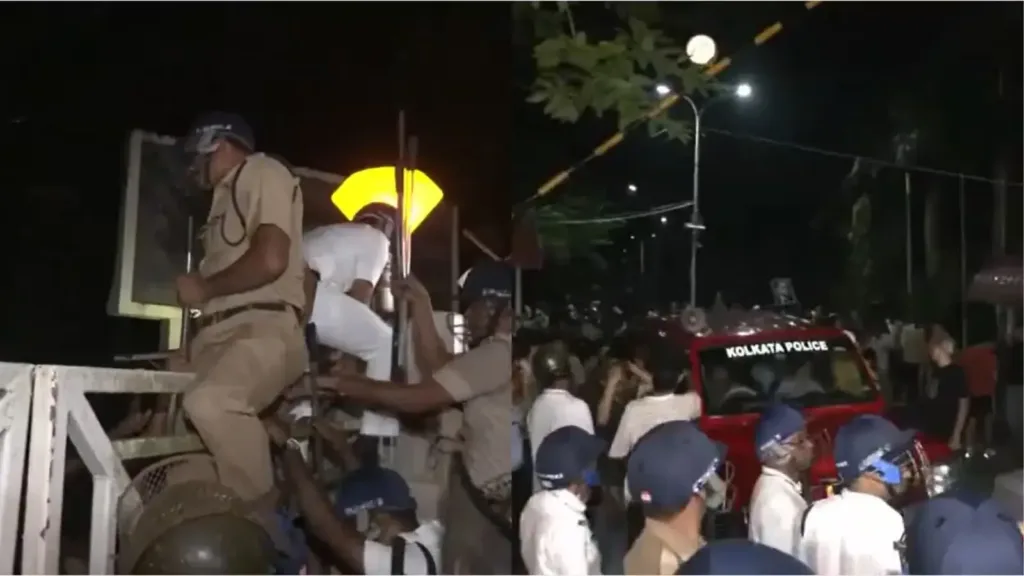
Police maintained a presence outside the main gate of the Satyajit Ray Film and Television Institute (SRFTI) in Kolkata on Monday, a day after a clash between a section of students and members of the Akhil Bharatiya Grahak Panchayat (ABGP) left several people injured.
The situation remained calm on Monday as students returned to their classes and no gathering of outsiders was seen outside the institute. A senior police officer was present near the main gate as authorities continued to look into the violence reported on Sunday. An SRFTI official said, “Today the situation is normal. Outsiders have dispersed, while students have resumed classes.”
Cases Filed Over SRFTI Campus Clash
A senior police officer said cases had been registered by both sides, along with a suo motu case, at the nearby Panchasayar police station in connection with Sunday’s incident. The clash involved students and members of ABGP, with both sides accusing each other of assault.
A clash broke out between members of the SFI and the Akhil Bharatiya Grahak Panchayat during an event organised by the Akhil Bharatiya Grahak Panchayat at the SRFTI auditorium, in Kolkata on Sunday. Credit: X/ANI
The dispute began during an ABGP programme that was being held at the institute’s auditorium. According to ABGP state leaders, the organisation had obtained permission from the authorities and paid to use the venue for the event. The programme started at around 10 am on Sunday.
Students Object To Outside Programme
According to the accounts provided by the students, the trouble began after some students noticed people from outside the institute attending the programme.
A section of students questioned the authorities about allowing a private organisation with right-wing links to hold an event on the SRFTI campus. The students then put up posters near the auditorium to register their protest.
The situation reportedly escalated when students and members of the organising group entered into a heated exchange.
The students’ association later alleged that speakers at the event delivered “highly provocative speeches”. It further claimed that members of the organisation used terms such as “anti-national”, “urban Naxals” and “terrorists” while referring to students.
The students’ body also alleged that female students were manhandled during the confrontation.
Students Allege Assault With Knives
The confrontation later turned violent, according to the students’ account. The students’ association alleged that some ABGP members assaulted students with knives.
The students claimed four students suffered serious injuries, while several others were also hurt.
A student, speaking to a news channel on Sunday, described how the confrontation unfolded.
“We were having our practical classes in the auditorium. When we saw people from outside holding a programme there, some of us protested and put up posters on the wall. The members of the organisation then came towards us and started beating us up. We somehow managed to escape towards the hostel,” the student said. An institute teacher also alleged that he and some of his colleagues were assaulted after they intervened in the confrontation.
LIVE: Clash Erupts Between SFI, ABGP Members At SRFTI Event In Kolkata | West Bengal https://t.co/MiLAdB0Nem
Following the clash, protests took place inside the campus. Students subsequently locked the main gate and staged a sit-in, demanding action against those they alleged had attacked them.
The students’ body claimed that around 150 students remained inside the campus and alleged that they had been “surrounded by goons”.
It also claimed that six policemen had detained the main accused inside a police vehicle, while a crowd outside the campus was demanding their release.
ABGP Rejects Allegations
ABGP rejected the students’ allegations and presented a different account of the incident.
The organisation claimed that its programme had been disrupted after students objected to the event and tore posters and banners, including images of Bharat Mata and Swami Vivekananda.
An ABGP member told reporters, “We had paid ₹15,000 to hire the auditorium and had obtained permission from the authorities. Our organisation works mainly for consumer protection and awareness. But an attempt was made to disrupt our programme, and posters were torn.”
The ABGP member also alleged that several members of the organisation were injured during the confrontation and said four of them had been admitted to hospital.
SRFTI campus unrest continues as outsiders gather at the gate at night; students and professors remain inside. Credit: X/ANI
ABGP Calls Event A Consumer Rights Programme
ABGP state president Pankaj Roy described the programme as an event focused on consumer rights with a “nationalist vision”.
He alleged that some students objected to a picture of Bharat Mata displayed at the venue. Roy also claimed that people attending the programme, including women, were harassed.
With cases filed by both sides, the incident is now being examined by the police. On Monday, however, the situation at SRFTI remained normal, with students attending classes and no fresh disturbance reported outside the institute.
India secured a place in the men’s cricket semi-finals at the 2026 Asian Games after their quarter-final against Afghanistan was abandoned due to rain in Nisshin, Japan. No ball was bowled in the match, but the washout did not prevent India from progressing to the next stage.
The Asian Games cricket rules provide an advantage to the higher-seeded team when a knockout fixture cannot produce a result. Since India entered the quarter-finals as a higher seed, they advanced to the semi-finals after the match was called off.
🚨 Match Abandoned 🚨
The #INDvAFG Asian Games 2026 Quarter-Final has been called off due to rain. #TeamIndia advance to the semi-final by virtue of higher seeding. #AsianGames
In a knockout match, both teams normally need a result to determine who moves forward. However, when weather conditions make a game impossible, the competition regulations can provide a route for the higher-seeded side to progress.
That is what happened in the India vs Afghanistan quarter-final. Persistent rain meant the fixture could not begin, with no toss or delivery taking place. As there was no result on the field, India’s higher seeding became decisive.
The progression was therefore not based on runs scored, wickets taken or a Duckworth-Lewis-Stern calculation. Instead, the tournament’s no-result provision allowed the higher-seeded team to move into the semi-finals.
Why Did India Have Higher Seeding?
India’s position in the knockout stage was linked to the format of the Asian Games men’s cricket competition. As the defending champions, India were among the four teams that received direct entry into the quarter-finals.
India men cricket team. Credit: X/ANI
India, Pakistan, Sri Lanka and Bangladesh were given byes into the last eight. Afghanistan, Japan and Nepal, meanwhile, had to compete in the preliminary stage for their places in the quarter-finals. This meant Afghanistan had to play their way into the knockout round, while India entered directly at the quarter-final stage.
India’s position at the top of the ICC Men’s T20I rankings also underlines the difference in the teams’ international standing.
India are ranked No. 1 in men’s T20Is with a rating of 269, while Afghanistan are ranked No. 10 with a rating of 218.
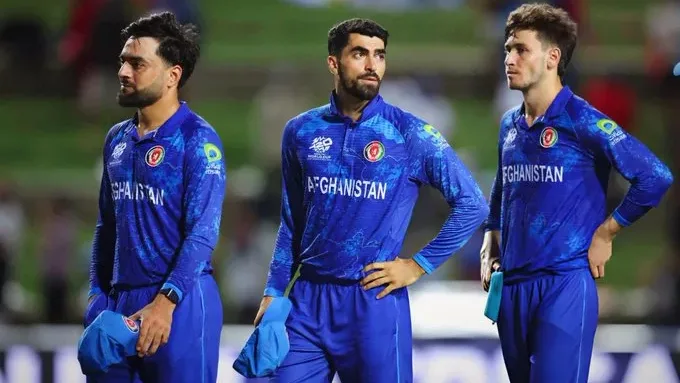
Afghanistan T20I players. Credit: X/ANI
However, the quarter-final was decided by the Asian Games’ competition regulations rather than simply by the ICC rankings. The tournament’s seeding and format determined India’s advantage when the match was washed out.
India also arrived at the Asian Games as the reigning T20 World Cup champions and defending Asian Games men’s cricket champions.
Rain Ends Afghanistan’s Campaign
The India-Afghanistan quarter-final was eventually abandoned without a ball being bowled after rain made play impossible.
The outcome allowed India to continue their campaign without taking the field, while Afghanistan’s hopes of winning the men’s cricket gold medal came to an end.
#WATCH | Asian Games 2026 | India vs Afghanistan Men's Cricket match cancelled due to bad weather in Nagoya, Japan.
The situation also echoed the previous Asian Games. India’s gold-medal match against Afghanistan at the 2022 Asian Games was affected by rain, with India winning the title by virtue of their higher seeding.
This time, the same tournament principle again came into play, sending India into the semi-finals despite the quarter-final never getting underway.
The Bharatiya Janata Party’s expenditure statements filed with the Election Commission for the 2026 West Bengal Assembly elections have brought payments to several YouTubers and social media personalities into focus.
According to an analysis of the filings, the BJP spent ₹286.99 crore during the West Bengal polls. The documents show that ₹55.76 crore was paid to 36 social media personalities by the party’s central unit in New Delhi between March 15 and May 6.
The payments were made for content and advertising-related activities during the election period. The Election Commission had required political parties to submit details of expenditure on internet and social media campaigning, including content development and related operational costs.
Sayak Chakraborty Received ₹2.5 Lakh
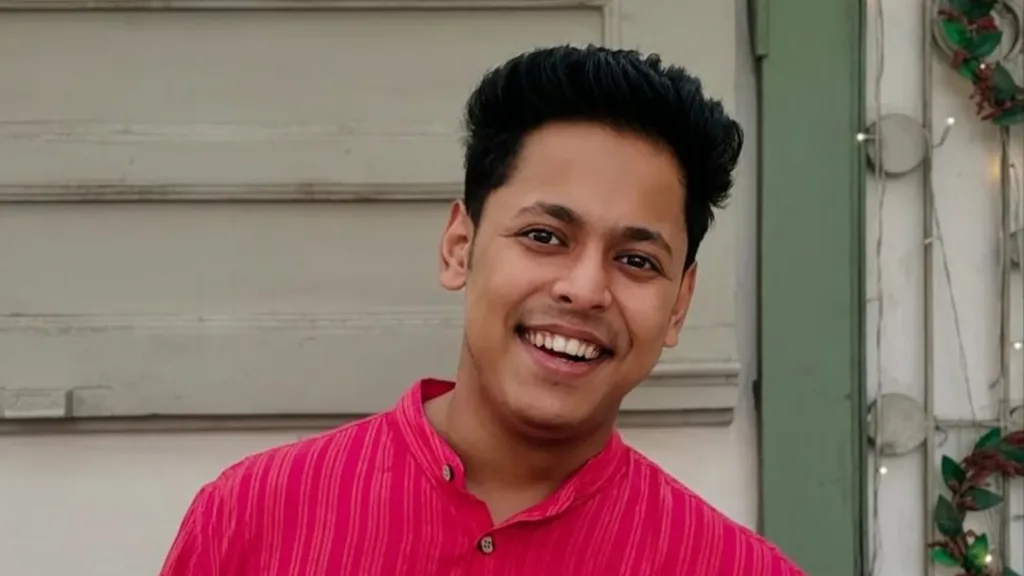
Actor and YouTuber Sayak Chakraborty was listed as receiving ₹2.5 lakh from the BJP for content linked to “general party propaganda”.
Chakraborty had made headlines in January after an altercation at a restaurant in Kolkata’s Park Street. He alleged that a Muslim waiter had served him a beef preparation instead of the mutton dish he had ordered. The incident was recorded on video and the waiter was subsequently arrested on allegations of hurting religious sentiments.
Sayak Chakraborty. IG/withlovesayak
The 31-year-old actor runs the YouTube channel @withlovesayak, which has more than 88,000 subscribers. Chakraborty said he agreed to create content for the BJP because the party had supported him following the restaurant incident.
“The incident at the restaurant was on January 30 and was an instant reaction. There was no politics. Many parties approached me to make content after the incident, but I only agreed to BJP as they supported me during the incident,” he said in a social media post.
Shamik Adhikary Paid ₹13 Lakh
Popular vlogger Shamik Adhikary, known online as @Nonsane, received ₹13 lakh, according to the expenditure details. His YouTube channel has more than 3.5 lakh subscribers. Before the election, Adhikary posted a series titled ‘Button’, which criticised the Trinamool Congress government over issues including the RG Kar rape and murder case and unemployment.
Shamik Adhikary. IG/yournonsanee
The series was widely circulated on social media, including by BJP leaders. Adhikary was also arrested over allegations of sexual assault, an incident that prompted allegations of political retribution from the TMC.
Other Influencers in BJP’s Payee List
Bangladeshi singer Sangit Sarkar received ₹2 lakh, according to the filings. Known for protest music and socio-political commentary, Sarkar had also released songs concerning issues in West Bengal, including the teachers’ recruitment controversy and alleged corruption.
Former journalist Pinakpani Ghosh, who runs the YouTube channel Pinak Ki Bolche, received ₹5.25 lakh. His channel has more than 2.4 lakh subscribers and frequently discusses Bengal politics and social issues.
Former radio jockey Priyanka Sarkar, also known as RJ Priyanka, received ₹15 lakh. She has more than 10.4 lakh Instagram followers.
Sarkar said she had produced two pieces of content for the BJP, one concerning the launch of a sleeper Vande Bharat train and another about initiatives announced in the Union Budget.
“It was a normal promotion. Neither have I harmed anyone’s sentiment nor reputation. I am not a supporter of any party. I have made videos during the RG Kar incident. But I have also made videos on the NEET paper leak case,” Ms. Sarkar said.
Political Reactions to Influencer Payments
The payments have drawn competing responses from the BJP and Trinamool Congress.
TMC MLA Kunal Ghosh accused the BJP of using payments to YouTubers and influencers to shape a narrative around religious polarisation during the election campaign.
BJP state spokesperson Debjit Sarkar defended the payments and said the party had followed the rules. “Yes. We have paid influencers. So what? We will do it again. We have absolutely played by the book.” he said.
The Election Commission’s 2026 election guidelines stated that political parties were required to report campaign expenditure on internet platforms and social media, including spending on content development.
Mobile phone retailers across India are set to observe October 2 as “No UPI Day” to protest the proposed 0.4 per cent Merchant Discount Rate (MDR) on eligible UPI merchant transactions. The campaign has been called by the All India Mobile Retailers Association (AIMRA), which says the additional cost could put pressure on small retailers.
The 0.4 per cent MDR on person-to-merchant UPI payments above ₹2,000 is scheduled to take effect from October 15, 2026. Person-to-person payments and eligible transactions up to ₹2,000 will remain outside the charge.
What Is ‘No UPI Day’ on October 2?
AIMRA Vice President and Delhi NCR President Tarvinder Singh said the association has called for the nationwide observance to draw attention to retailers’ concerns over the proposed UPI MDR.
Guys Keep some cash with you on October 2.
There’s talk of a “No UPI Day” by some trader groups over the MDR issue.
“The All India Mobile Retailers Association (AIMRA) has called for a ‘NO UPI DAY’ on October 2, 2026, to highlight the concerns of mobile retailers regarding the 0.4 per cent Merchant Discount Rate (MDR) applicable to eligible merchant UPI transactions,” AIMRA Vice President and President for Delhi NCR region, Tarvinder Singh, said in a statement.
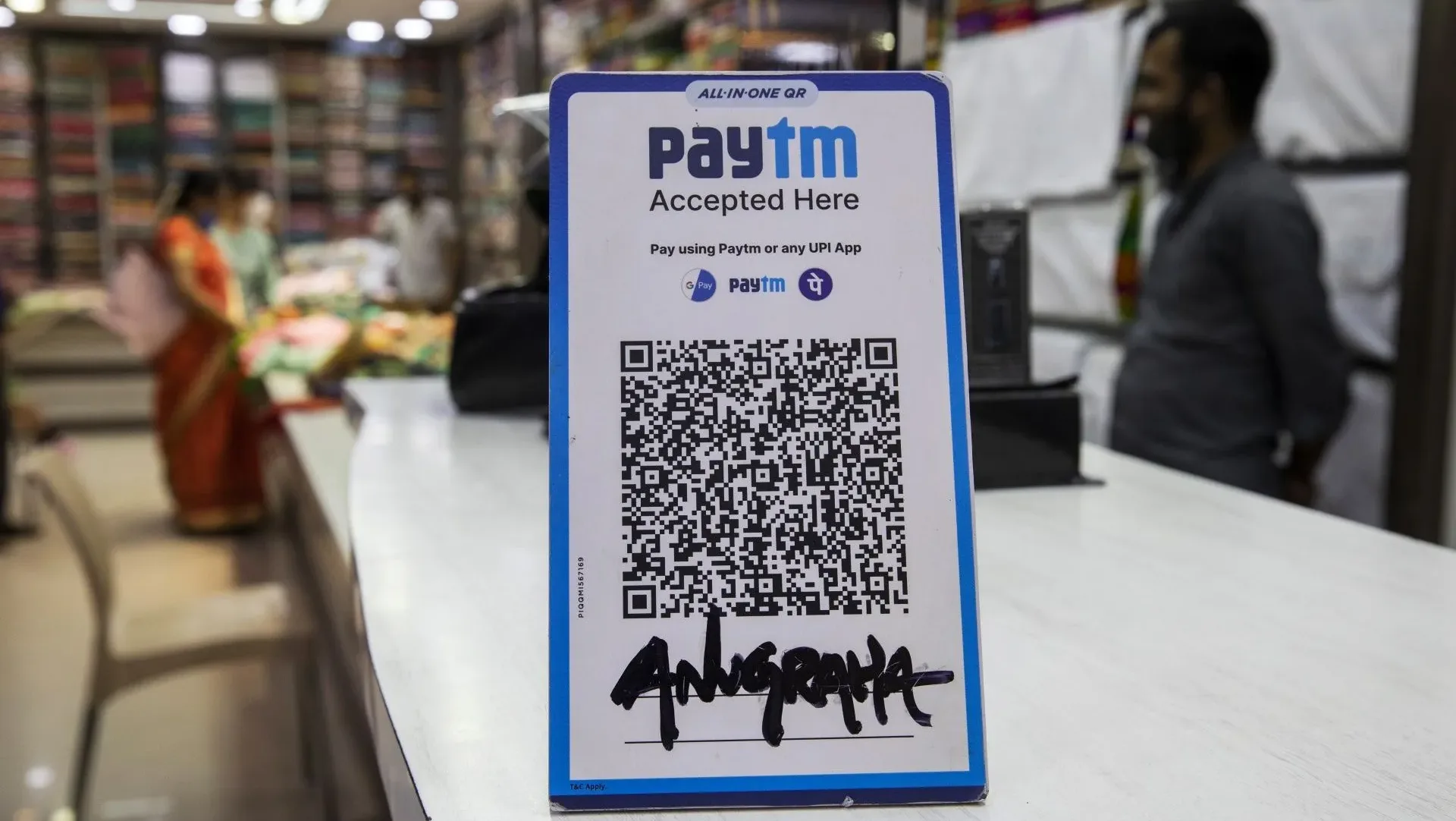
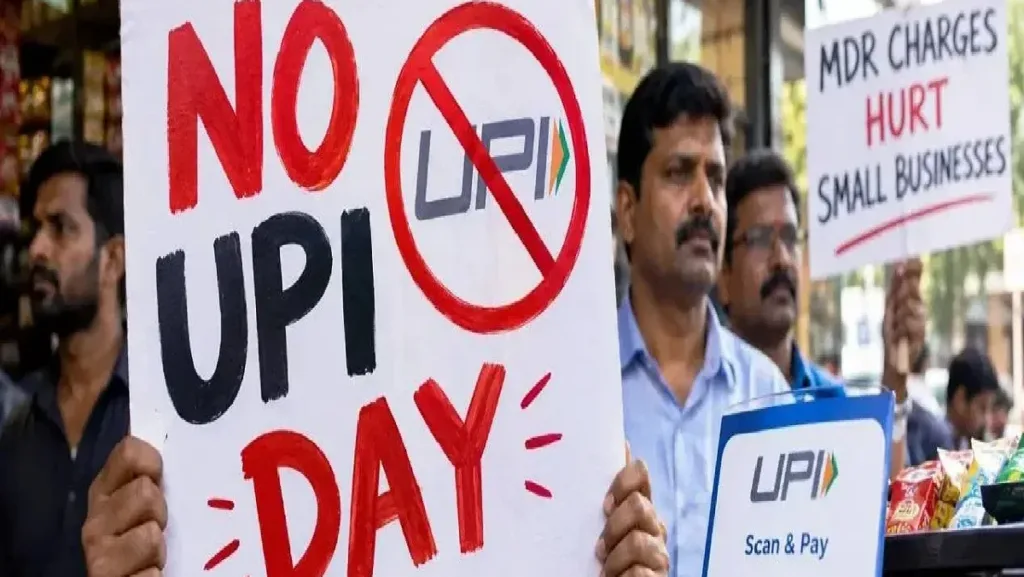
As part of the campaign, participating retailers plan to cover their UPI QR codes with black cloth and stop accepting UPI payments for the day. October 2 also marks Gandhi Jayanti.
The protest comes as several trade bodies have announced plans to participate in the “No UPI Day” campaign against the new MDR framework.
Mobile Retailers Raise Concerns Over UPI MDR
According to AIMRA’s representation to Finance Minister Nirmala Sitharaman, the proposed MDR could affect the earnings of small mobile retailers that rely heavily on digital payments.
The association estimates that a retailer processing between ₹5 lakh and ₹30 lakh in monthly UPI transactions could face a monthly loss of ₹2,000 to ₹12,000. AIMRA has argued that this could reduce a significant portion of the net income of smaller businesses.
The retailers’ body has also estimated the overall financial impact at around ₹40 crore every month, or nearly ₹500 crore annually, for small mobile retailers across India.
Retailers hold a placard of “No UPI Day” to protest the proposed 0.4 per cent MDR on eligible UPI merchant transactions. Credit: X/ANI
AIMRA Demands Zero MDR for UPI
AIMRA has stressed that its campaign is not against UPI or digital payments. Instead, the association wants merchant UPI payments to continue under a zero-MDR system.
“If We Want Digital India, UPI Must Remain Zero MDR. This is not a protest against UPI or Digital India. Our concern is the additional financial burden being placed on merchants who accept digital payments. If we want Digital India to grow further, digital payments should remain affordable for the entire retail ecosystem. Our clear demand is that UPI merchant payments should continue under a Zero MDR structure,” Singh said.
Under the new framework, the 0.4 per cent MDR will apply to specified merchant transactions above ₹2,000, with the charge capped at ₹300 for transactions of ₹75,000 or more.
The October 2 campaign is therefore expected to put the concerns of mobile retailers over UPI MDR at the centre of attention ahead of the October 15 implementation date.