Author: Anik Dutta

  • CPI(M) book stall sales double in Bengal amid Puja vandalism claims

    CPI(M) book stall sales double in Bengal amid Puja vandalism claims

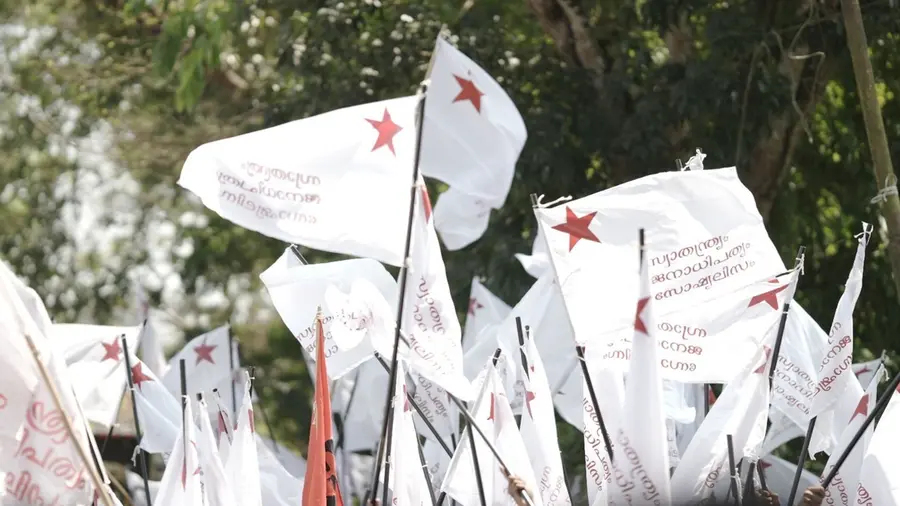
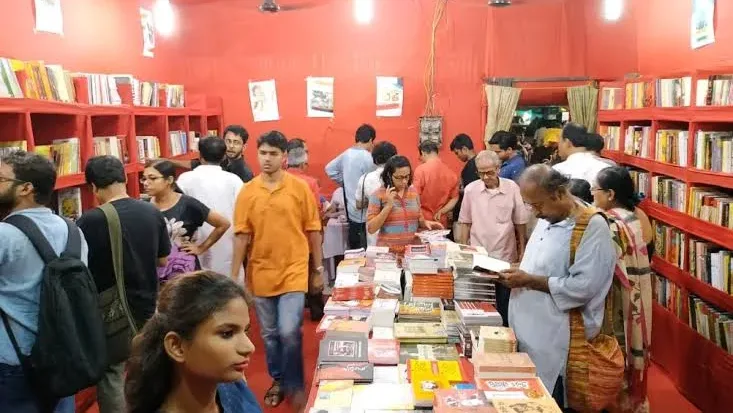
    The Communist Party of India (Marxist), or CPI(M), has claimed that book sales at its stalls across West Bengal increased significantly during the Durga Puja festivities, despite reports of vandalism and attempts to demolish stalls at several locations. The party says the rise in sales reflects growing public interest in its books, with some districts reporting figures well above last year’s collections.

    Reports of attacks on CPI(M) book stalls emerged in the days leading up to Durga Puja and continued during the celebrations. Incidents were reported even on Saptami night, when a tragic stampede took place in Chorbagan. In Jadavpur, allegations surfaced that a book stall had been demolished using a bulldozer.

    Amid the controversy, the Left leadership has argued that the response from readers has strengthened its presence at the Puja book stalls. However, the party has yet to complete the final tally of sales across all locations.

    CPI(M)reports higher book sales across West Bengal

    Several districts have reported an increase in book sales during the Puja period, according to local CPI(M) leaders. In Howrah, a party leader claimed that books worth more than ₹10 lakh were sold at Left-wing book stalls during the festivities.

    Murshidabad also recorded a rise in sales. The CPI(M) set up 19 stalls across the district, where books worth ₹4,74,641 were sold. According to the local leadership, the amount was nearly ₹1 lakh higher than the previous year’s figure.
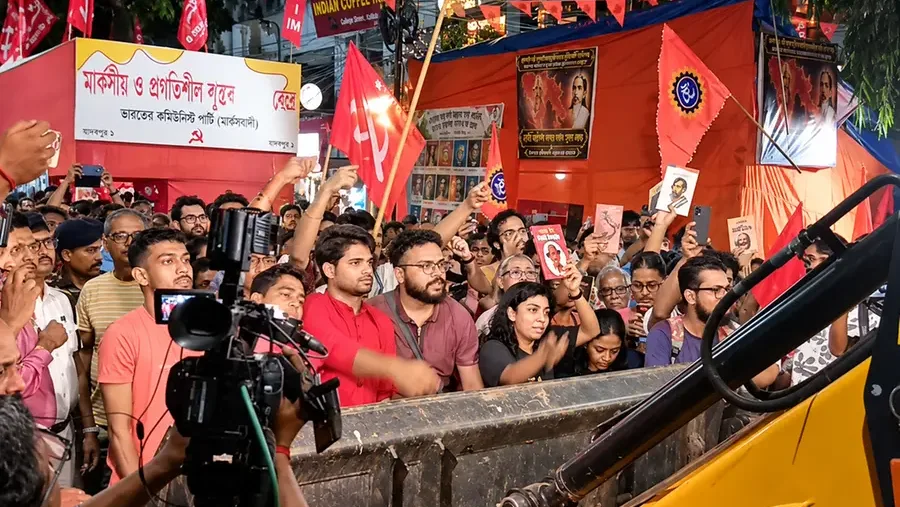
    A crowd gathers outside a CPIM book stall in Jadavpur, Kolkata as a bulldozer stands in the foreground amid a dispute over the stall during Durga Puja.
    A crowd gathers outside a CPIM book stall in Jadavpur, Kolkata as a bulldozer stands in the foreground amid a dispute over the stall during Durga Puja. Credit: X/ANI

    In Phulia, Shantipur, book sales reached ₹18,972 this year, compared with ₹9,447 last year. The increase came despite the reported vandalism of the CPI(M) stall in the area.

    Jadavpur, meanwhile, has reportedly witnessed record book sales, although the party has not yet released a final figure.

    The CPI(M) has pointed to these numbers as evidence that the controversy surrounding its stalls has not discouraged readers from visiting them.

    North Bengal sees rise in CPI(M) book stall sales

    The party has also reported an increase in sales in North Bengal. In North Dinajpur, books worth ₹77,000 were sold across seven stalls, according to the Left.

    Siliguri has emerged as another significant location for the CPI(M)’s book-selling campaign. The party claims that sales at its main stall rose from ₹15,000 during the previous Puja to ₹68,000 this year.

    The local leadership has also reported an increase in sales across 19 other book stalls in the subdivision. However, a comprehensive account of the total sales from all these locations is still awaited.

    The CPI(M) expects to complete the counting process within the next few days. Until then, the figures released by individual districts remain provisional indicators of the overall performance.
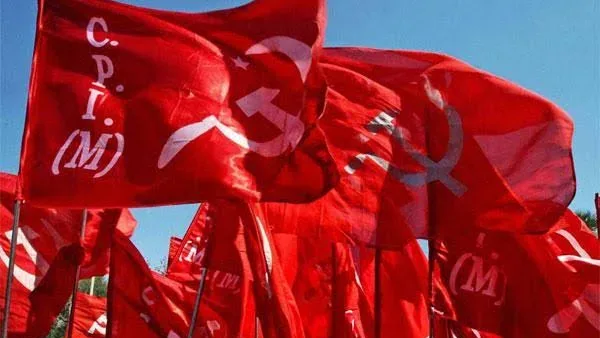
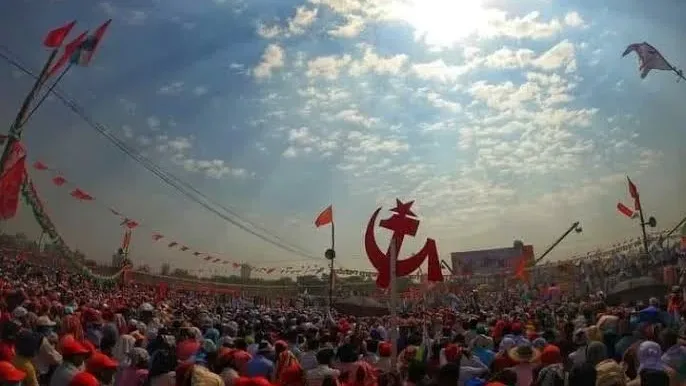
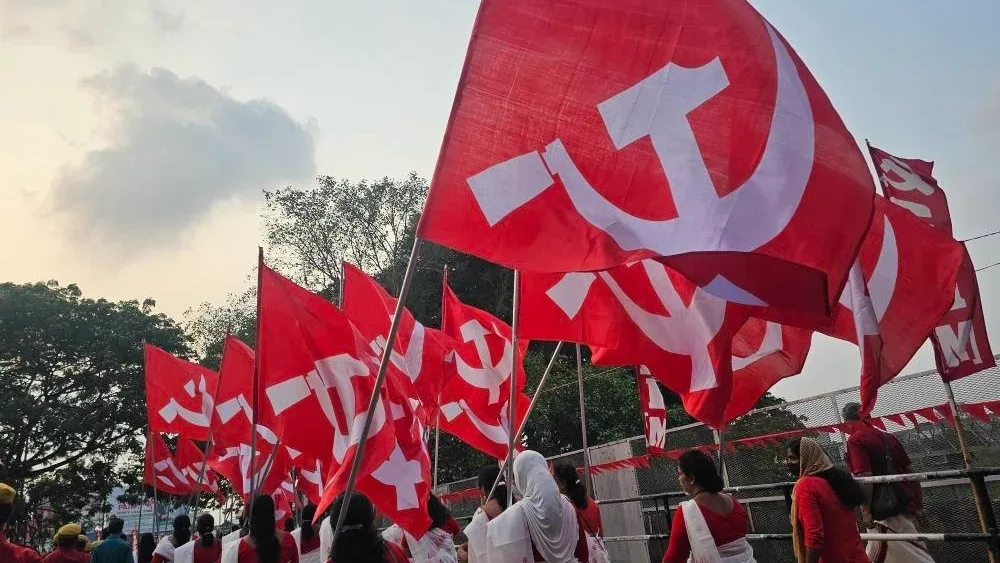
    CPIM flags
    CPIM flags. Credit: X/ANI

    Kalotan Dasgupta calls sales a response to vandalism

    CPI(M) leader Kalotan Dasgupta said the final sales figures would carry significance beyond their monetary value. He argued that the response from readers had turned the controversy into a wider contest over political ideas and the freedom to express them.

    “The final figure will serve as a slap in the face to those who came to vandalize the stalls. It will take another two days to complete the tally. But this is not just about the amount of money; it is a battle on the soil of West Bengal, a contest between those who sell books and those who peddle an ideology.”

    Dasgupta also said the support extended by local residents had been particularly meaningful for the party.

    “This matter cannot be judged in terms of monetary value. Many people have connected with our book stall this year. A resident living opposite the site of the attack even offered, ‘My ground-floor room is vacant; you can set up your book stall there.’ Gaining these new friends, that is our true reward.”

    His remarks placed the focus on the relationships formed during the Puja festivities, rather than on sales figures alone.

    BJP MLA Kaustav Bagchi condemns attacks on books

    BJP MLA Kaustav Bagchi said neither the use of bulldozers nor attacks on books could be justified. At the same time, he argued that the political messaging associated with the stalls had contributed to public anger.
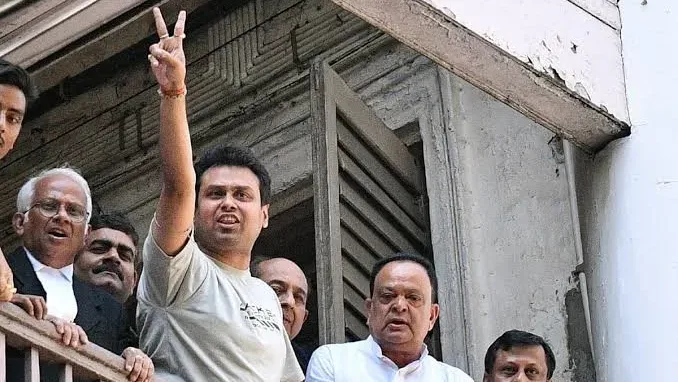
    BJP leader Kaustav Bagchi
    BJP leader Kaustav Bagchi. Credit: X/ANI

    “The use of bulldozers or attacks on books, neither is acceptable. At the same time, it must be understood that anti-national slogans and rhetoric directed against Hinduism have incited people. Nevertheless, I reiterate that attacks on books cannot be condoned.”

    His statement reflected opposition to the reported vandalism while also raising objections to the political and religious rhetoric surrounding the controversy.

    Swapan Dasgupta and RSS leader Jishnu Basu oppose vandalism

    Bengal Finance Minister Swapan Dasgupta had also condemned the reported attacks on Left book stalls, saying ideological differences could not justify preventing books from being displayed or sold.

    Also Read | West Bengal government plans Madrasah Service Commission merger with WBSSC

    “Who gave them the authority? I may have an ideological disagreement with the Left, but that is no reason to obstruct the sale of their books or prevent them from being displayed! This is simply unacceptable. I do not know who is behind this, who are these people? I am not getting into any debate here; I am simply saying that this is condemnable and must never happen again.”

    RSS leader Jishnu Basu also criticised attempts to prevent the stalls from operating, arguing that suppressing opposing views was contrary to Hindu values.

    “Those who, in their arrogance of power, are preventing the setting up of a book stall, have neither understood India nor are they worthy of bearing the name ‘Hindu.’ This goes against the Hindu ethos. Suppressing dissenting views is an injustice.”
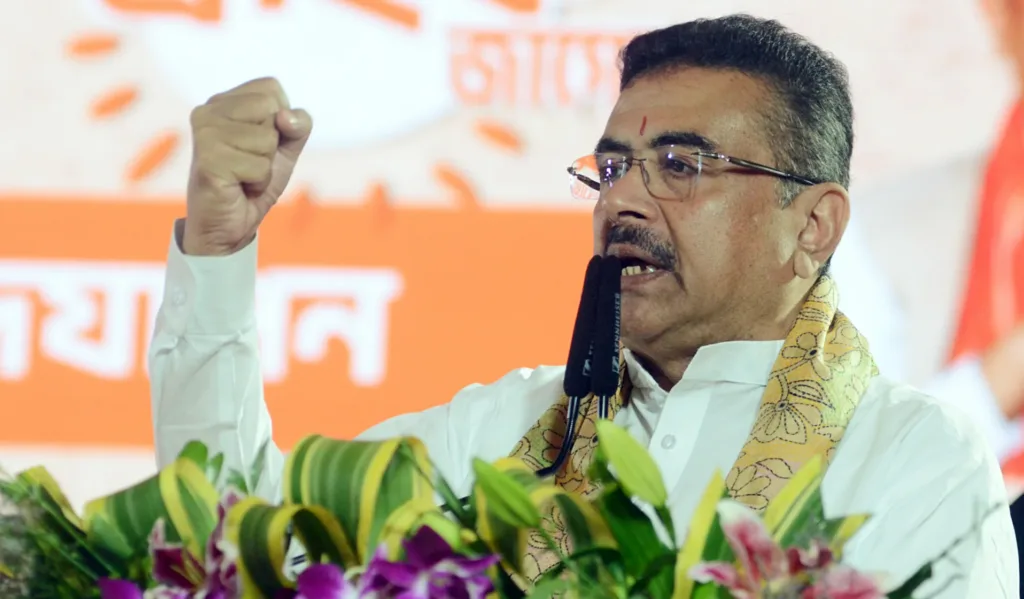
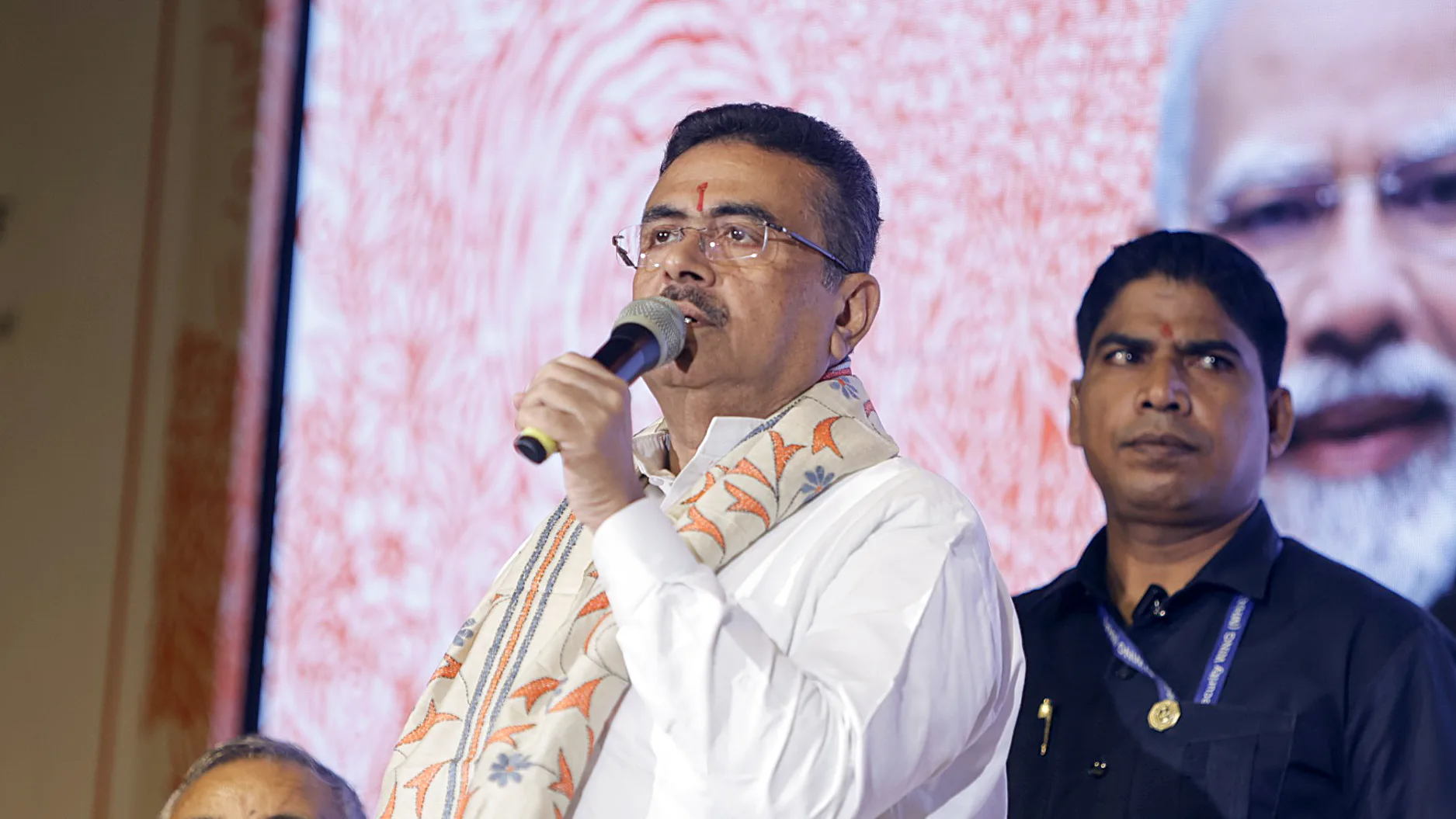
    West Bengal CM Suvendu Adhikari
    West Bengal Chief Minister Suvendu Adhikari / Credit: X/ANI

    Suvendu Adhikari comments on Durga Puja book stall row

    West Bengal Chief Minister Suvendu Adhikari said the dispute involved more than the sale of books, arguing that critics were conflating the stalls with CPI(M) politics. He maintained that book lovers should not be portrayed as opposed to books, while questioning the party’s approach to traditional Hindu practices.

    “They are conflating books with CPI(M) politics; we are book lovers, not anti-book. You oppose traditional Hinduism, refusing to offer Pushpanjali or Ashtami Anjali, or to participate in Sindoor Khela, yet you set up a stall right in front of a Durga Puja! Whatever the Corporation or the government has done is in accordance with the High Court’s directives. I would say there is no need for anyone to take the law into their own hands.”

    Also Read | Marxist books at Durga Puja pandals? Attacks on Left bookstalls draw BJP, RSS criticism

    As the controversy continues, the CPI(M) is awaiting its consolidated sales figures from across West Bengal. The reported increases in several districts have become a central part of the party’s response to the allegations of vandalism, while statements from political and RSS leaders have highlighted the wider debate over ideological differences, religious traditions and the freedom to sell books during Durga Puja.
  • Kolkata stampede: Which parts of the city are under Section 163 for 3 days? Here’s a full list

    Kolkata stampede: Which parts of the city are under Section 163 for 3 days? Here’s a full list

    On Sunday, Kolkata Police have imposed restrictions under Section 163 of the Bharatiya Nagarik Suraksha Sanhita (BNSS), 2023, in parts of north Kolkata from October 18 to October 20 following a deadly stampede at the Chorbagan Sarbojanin Durga Puja pandal that claimed atleast 19 lives.

    The order, issued by Kolkata Police Commissioner Ajay Nand, prohibits unlawful gatherings of five or more people, the carrying of dangerous weapons and activities that could disturb public peace in the designated area. The restrictions will remain in force for three days or until further orders.

    The move comes amid concerns about possible demonstrations, rallies and public meetings that could pose a threat to law and order following the tragedy.

    Section 163 BNSS restrictions in north Kolkata

    According to the police order, the restrictions cover the area under Bowbazar Police Station, bounded by College Street, CR Avenue, Collotola Street and Eden Hospital Road.

    The prohibitory measures ban unlawful assemblies involving five or more people. Carrying lathis, lethal weapons or other dangerous items is also prohibited. In addition, any act considered likely to cause a breach of peace or disrupt public tranquillity within the specified area is covered by the order.

    Explaining the legal basis for the restrictions, Commissioner Ajay Nand stated in the order:

    “Now, therefore, in exercise of the power conferred by Sub-Section(1) of Section 163 of the Bharatiya Nagarik Suraksha Sanhita(BNSS), 2023 read with the Sub-Section(3) of the said Section, I, Ajay Nand, Commissioner of Police, Kolkata being an Executive Magistrate for the Metropolitan area of Kolkata as well as in the district of South 24 Parganas (within the limits of the suburbs of Kolkata falling under Kolkata police jurisdiction) do hereby prohibit for a period of 03(three) days from 18.10.2026 to 20.10.2026 or until further order, any unlawful assembly of 05(five) or more persons, carrying of lathi, any lethal or other dangerous weapons or doing of any act which is likely to cause breach of the peace and disturbances of the public tranquility within the said Area in the town of Kolkata.”

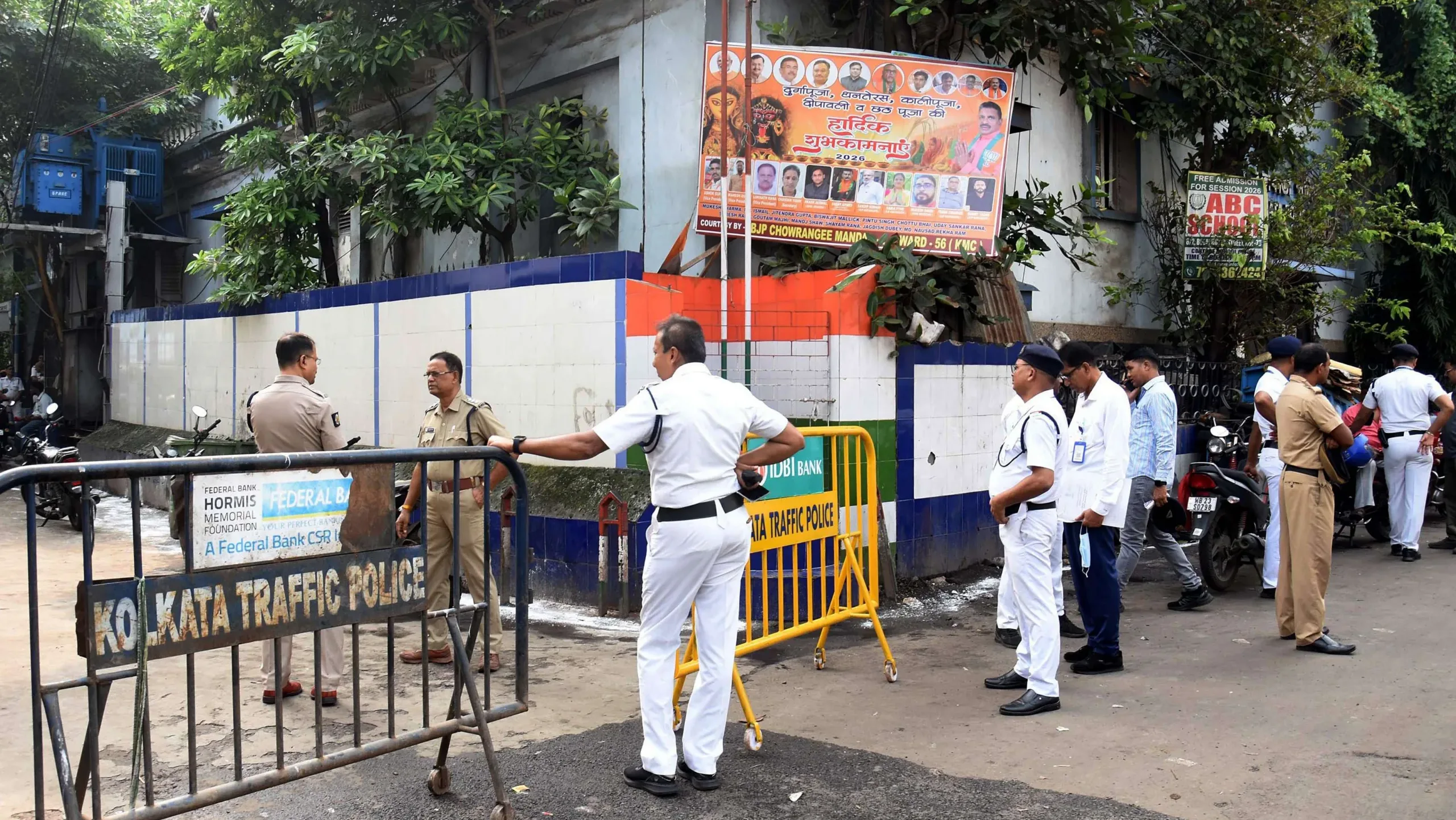
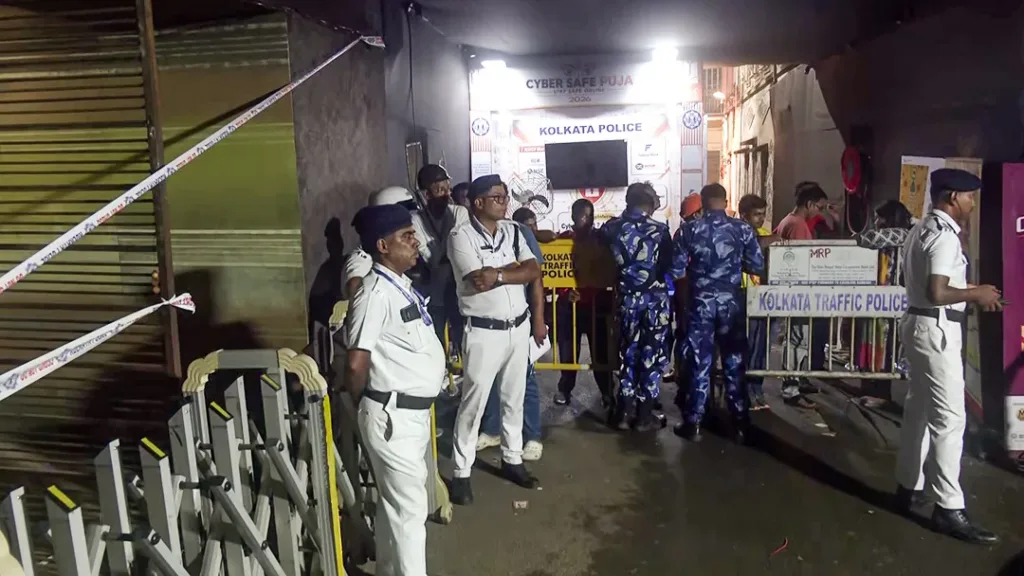
    Security personnel present as a forensic team inspects the aftermath of the Chorbagan Durga Puja pandal stampede, in Kolkata on Saturday.
    Security personnel present as a forensic team inspects the aftermath of the Chorbagan Durga Puja pandal stampede, in Kolkata on Saturday. Credit: X/ANI

    Where exactly has Section 163 been applied?

    Section 163 will be in effect from today, Sunday, October 18, through Tuesday, October 20.

    From College Street, via Kolutola Street, to Eden Hospital Road

    From Kolutola Street to Eden Hospital Road, via CR Avenue

    From College Street to CR Avenue via Kolutola Street

    From College Street, via Eden Hospital Road, to CR Avenue

    Chorbagan Durga Puja stampede claims atleast 19 lives

    The restrictions follow a stampede at the Chorbagan Sarbojanin Durga Puja pandal in north Kolkata, where heavy crowds gathered during the festive celebrations. The incident resulted in atleast 19 deaths, while injured people were taken to hospitals for treatment.

    Authorities have launched an investigation to establish the circumstances that led to the tragedy and determine accountability.

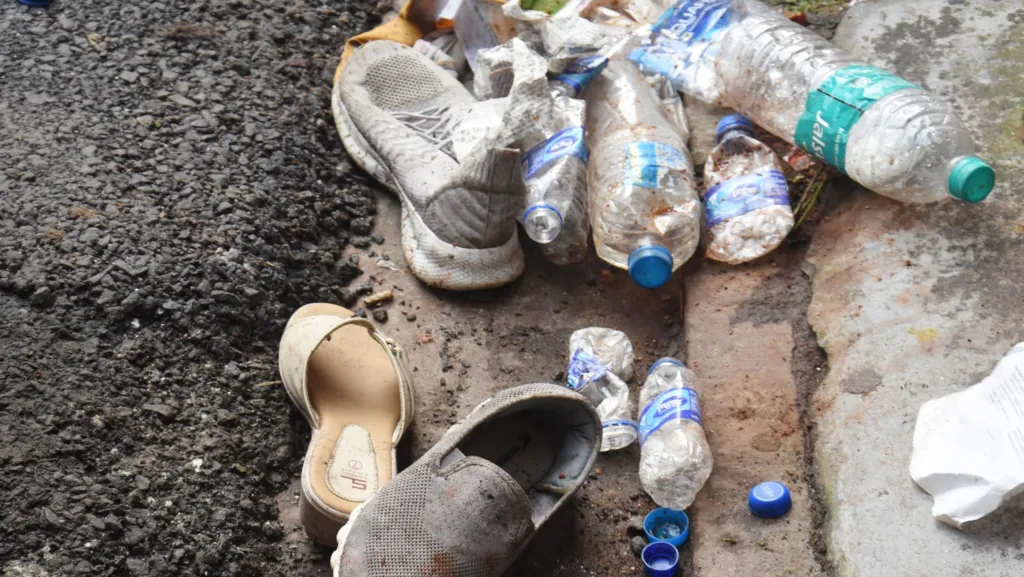
    People's belongings left at the Chorbagan Durga Puja pandal site following the stampede incident (Oct 17), in Kolkata on Sunday.
    People’s belongings left at the Chorbagan Durga Puja pandal site following the stampede incident (Oct 17), in Kolkata on Sunday. Credit: X/ANI

    The incident has also prompted steps by the state government to support the affected families and investigate the arrangements surrounding the event.

    Also Read | Kolkata road safety row: Paint removed after Chingrighata bike skid incident

    West Bengal Government announces Rs 25 lakh compensation

    The West Bengal government has announced compensation of Rs 25 lakh for the family of each victim. A job has also been promised to a member of each affected family. A Special Task Force (STF) inquiry has been initiated to examine the incident and establish responsibility.

    Chief Minister Suvendu Adhikari is monitoring the situation alongside the Chief Secretary, Home Secretary, Director General of Police and Kolkata Police Commissioner.

    Helpline number issued for assistance

    Authorities have established a helpline for people seeking assistance following the Chorbagan stampede. The helpline number is 1800 345 5678.

    Also Read | Durga Puja in Kolkata: 5 things to do beyond pandal-hopping

    With the Section 163 restrictions in effect from October 18 to 20, police have moved to prevent further disturbances in the affected area while investigations into the deadly Durga Puja pandal stampede continue.

  • Durga Puja in Kolkata: 5 things to do beyond pandal-hopping

    Durga Puja in Kolkata: 5 things to do beyond pandal-hopping

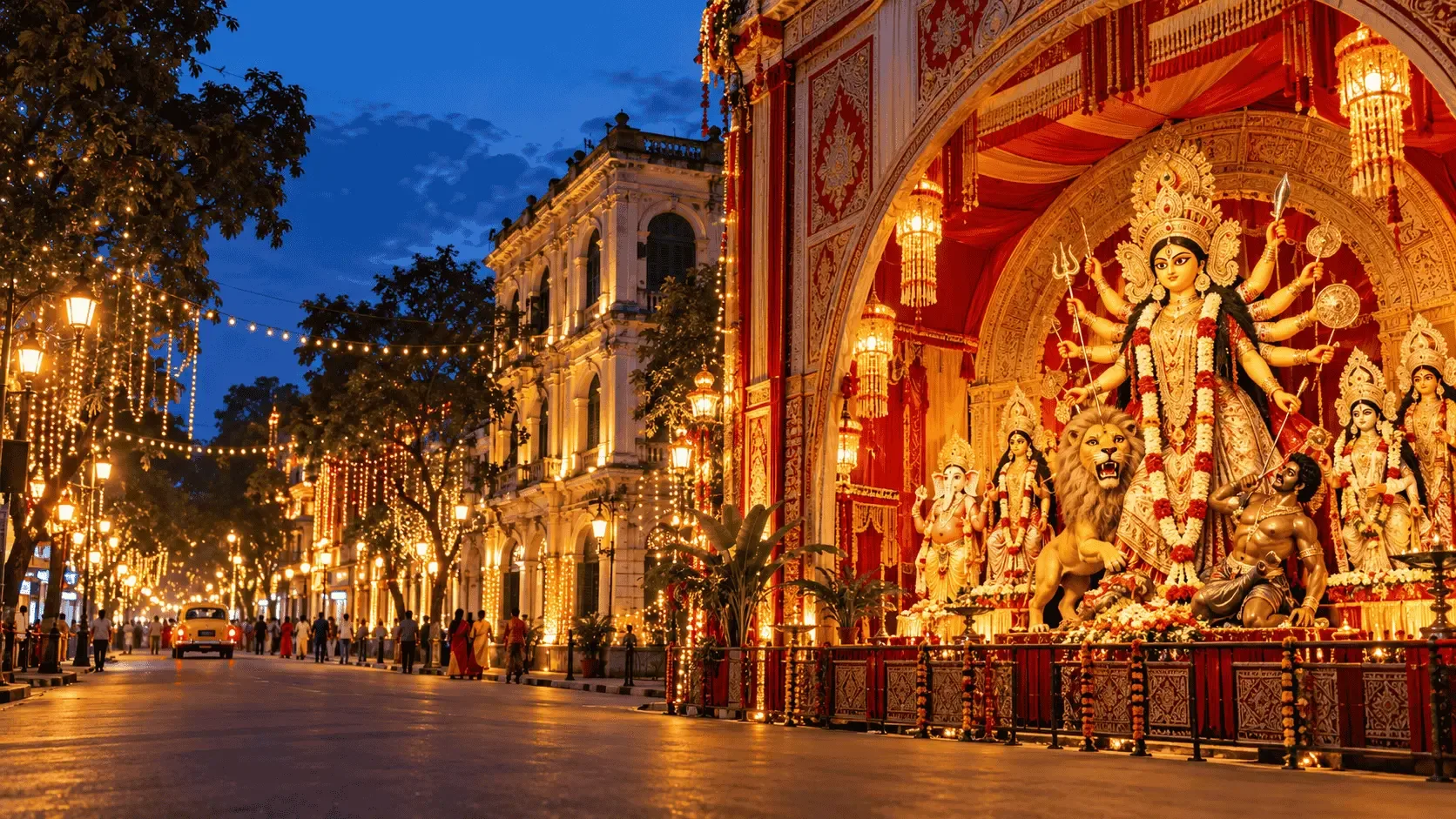
    Durga Puja in Kolkata is synonymous with elaborate pandals, dazzling lights and long queues of people moving from one neighbourhood to another. But the biggest festival in the city does not have to revolve entirely around pandal-hopping. For those looking to avoid the crowds or spend the holidays differently, Kolkata offers plenty of alternatives, from theatre performances and movie outings to museum visits, food trails and lazy afternoons at home.

    Whether you want to explore the city’s cultural side, catch up on the latest film releases or simply enjoy a few days of rest, here are five ways to make the most of Durga Puja in Kolkata without following the usual pandal route.

    Watch a Theatre Play Instead of Pandal-Hopping

    Kolkata has a rich theatre culture, making a live performance a worthwhile addition to your Durga Puja plans. Instead of spending hours navigating crowded streets, you can enjoy an evening of drama at one of the city’s established venues.

    The Academy of Fine Arts is scheduled to host Macbeth 2.0, directed by Koushik Sen, on October 18. Theatre enthusiasts can also catch Aparajito’s Raktakarabi on October 20.

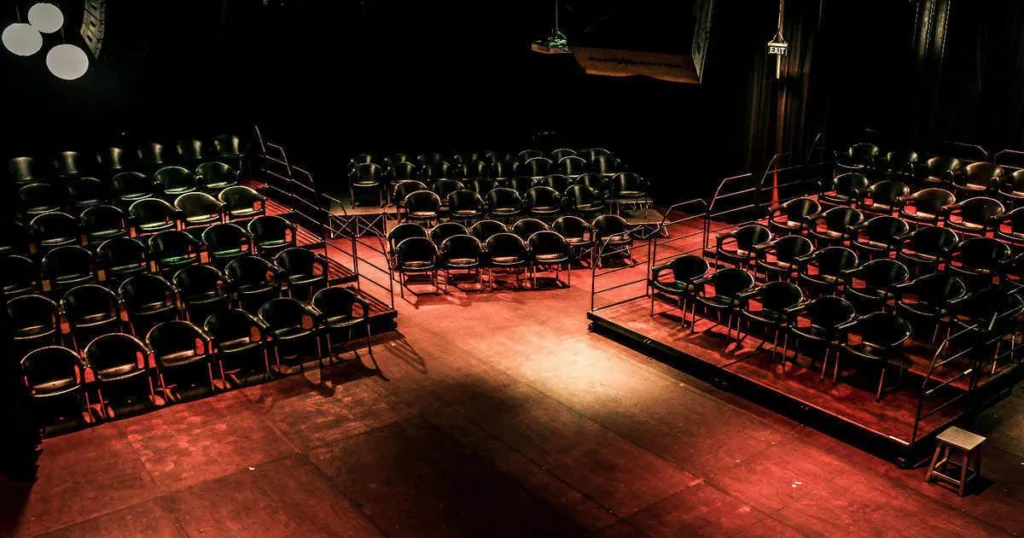
    Theatre play auditorium
    Theatre play auditorium | Representational Image

    Those looking for performances in other languages can consider A Woman Alone at Cave Studio, scheduled to run from October 17 to 24. The venue also lists Main Madhubala and Main Tainu Phir Milangi for October 17.

    With different productions on the calendar, theatre offers an alternative for anyone hoping to enjoy Kolkata’s artistic scene during the festive break.

    Catch the Latest Films During Durga Puja

    A cinema outing is another way to enjoy the holidays without dealing with pandal crowds. The festive period brings a varied selection of films, giving moviegoers plenty of options across languages and genres.

    Bengali cinema enthusiasts can look forward to titles such as DeSu7, Bohurupi: The Golden Daku, The Eken: Kerala-e Kurukshetra and Emperor vs Sarat Chandra.

    Poster of the movie DeSu7 poster, releasing this pujo
    Poster of the movie DeSu7 poster, releasing this pujo. Credit: X/Subhasree Ganguly

    For those interested in Hollywood releases, Street Fighter and Whalefall are among the titles listed for the festive period. Other Hindi and South Indian films mentioned in the lineup include Nayyi Navelli, Jailer 2, Ranabaali, Raftaar and Vishwambhara.

    Checking local cinema schedules before heading out is advisable, as showtimes and availability may vary.

    Explore Kolkata’s Museums and Heritage

    Durga Puja is also an opportunity to discover the city’s history and cultural treasures away from the busy streets.

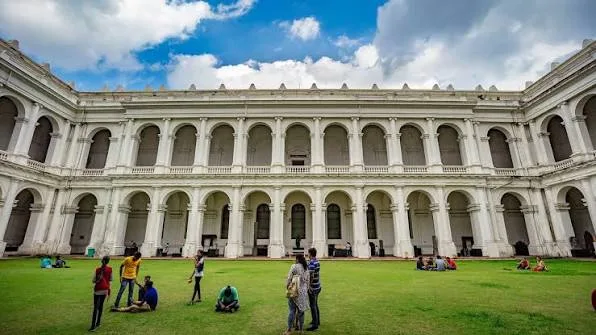
    The Indian Museum offers visitors a chance to explore historical collections and ancient artefacts. Another option is the Museum of Word, which provides a different cultural experience for those interested in language and the written word.

    Indian Museum in Kolkata
    Indian Museum in Kolkata. Credit: X/ANI

    Before planning a visit, check the opening schedules. The Indian Museum is closed on Mondays, while the Museum of Word is closed on Mondays, Ashtami and Dussehra.

    A museum visit can be a quieter way to spend a festive afternoon while learning more about history, heritage and culture.

    Make Food a Major Part of Your Puja Plans

    No Durga Puja celebration in Kolkata feels complete without good food. From elaborate Bengali meals to international cuisines, the city offers plenty of choices for those who want to make eating a central part of their holiday.

    You can plan a meal around traditional Bengali favourites, starting with breakfast and ending with dessert. Alternatively, explore restaurants serving Italian, African and other international cuisines.

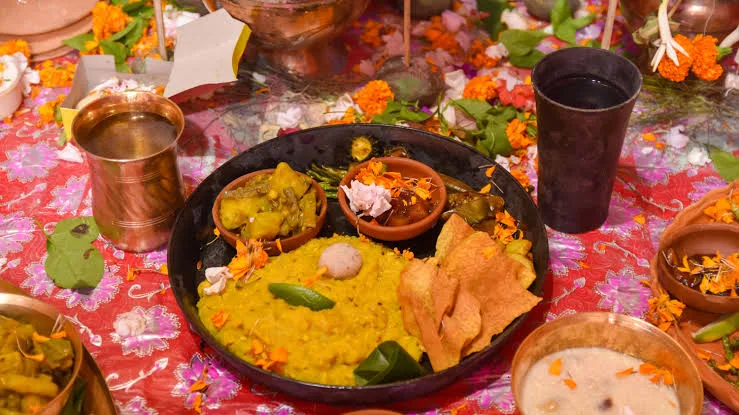
    Food items people are fond mailny during Durga Puja
    Food items people are fond mailny during Durga Puja | Representational Image

    Those who prefer staying indoors can order their favourite dishes and enjoy a relaxed meal with family or friends. For food enthusiasts, the festive break is an opportunity to try something new or return to familiar comfort food.

    Enjoy the Bengali Art of ‘Lyadh’ at Home

    Not every Puja day needs a packed schedule. After months of work and daily responsibilities, the holidays can be the perfect time to slow down.

    The Bengali concept of ‘lyadh’ celebrates doing very little without feeling guilty about it. Whether it means enjoying a long bhaat-ghum, waking up around noon or spending an entire afternoon chatting with friends, relaxation can be a plan in itself.

    Also Read | Kolkata road safety row: Paint removed after Chingrighata bike skid incident

    A sleepover with friends or family, accompanied by good food and plenty of adda, can make for a memorable Puja without stepping outside.

    Celebrate Durga Puja Your Own Way

    Pandal-hopping remains one of Kolkata’s most loved traditions, but it is far from the only way to celebrate. Theatre, films, museums, food outings and quiet days at home all offer different ways to enjoy the festive season.

    Also Read | 31-foot Kolkata landmark disappears, reappears after 12 years

    Whether you prefer cultural experiences or simply want to recharge, these Durga Puja activities in Kolkata let you make the holidays your own, with or without the crowds.

    –

  • Kolkata road safety row: Paint removed after Chingrighata bike skid incident

    Kolkata road safety row: Paint removed after Chingrighata bike skid incident

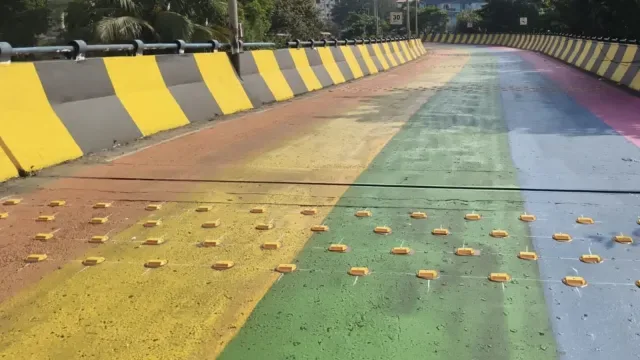
    The controversy over painted roads and flyovers in West Bengal has intensified after a video purportedly showing motorcycles skidding on a freshly coloured surface at Kolkata’s Chingrighata flyover went viral on social media. The state government has begun removing paint from several locations, including Gariahat, while reflective cat’s-eye road studs have been installed at Chingrighata as part of measures to address safety concerns.

    On Wednesday night, mechanised road-cleaning machines and labourers were seen washing away the coloured surface at Gariahat. The development has raised questions about the safety of the pre-Durga Puja beautification drive, under which roads, bridges and flyovers across West Bengal have received colourful makeovers.

    The controversy has also reached Asansol, where paint applied to a road at Shahid Bhagat Singh More was reportedly removed overnight. By Thursday morning, the stretch had returned to its earlier appearance.

    Chingrighata Flyover Video Sparks Road Safety Concerns

    The issue came into focus after a video circulated on social media on Wednesday, apparently showing three motorcycles skidding and falling one after another on a newly painted flyover surface in Kolkata.

    The footage, posted by Sayandip Lahiri, appeared to have been recorded using a vehicle’s dashboard camera. However, its authenticity could not be independently verified.

    The incident triggered concerns among road users about whether the coloured surfaces could affect tyre grip, particularly during wet weather. The possibility of glare from brightly painted stretches has also become a point of discussion.

    Following the incident, reflective cat’s-eye studs were installed at regular intervals on the Chingrighata flyover. The road studs are intended as a road-safety measure as the authorities examine the circumstances surrounding the reported skids.

    Gariahat Road Paint Removed, Asansol Also Takes Action

    The removal of paint at Gariahat marks another development in the growing debate over the state’s road beautification initiative.

    Road-cleaning machines and manual labour were used to wash off the coloured surface late on Wednesday. The work followed concerns about the safety of painted roads, particularly on stretches where two-wheelers make frequent use of the carriageway.

    In Asansol, the painted road at Shahid Bhagat Singh More was also reportedly stripped of its colour overnight. Officials have considered anti-skid treatment amid concerns that the surface could become slippery in wet conditions.

    The bright colours have also prompted complaints about glare, raising questions about their suitability for roads used by motorists throughout the day and night.

    Agnimitra Paul Says Anti-Skid Paint Is Being Examined

    Urban Development and Municipal Affairs Minister Agnimitra Paul, whose department is overseeing the initiative, has maintained that the paint being used is anti-skid. She also said the police and administration were examining the circumstances surrounding the Chingrighata incident.

    “One bike fell down and hit another bike in front of it. We do not know why it fell. The police and administration have been informed about the matter. They are looking into it,” Paul said.

    Addressing the removal of paint and the installation of reflective road studs, the minister said that steps were being taken to prevent injuries despite the use of anti-skid colours.

    Asked about the colours being washed away Paul said that even though the colours were “anti-skid” they were being washed and cat’s eyes were being installed to ensure that “nobody gets hurt.”

    Paul also acknowledged that the bright surfaces had caused concerns among some road users.

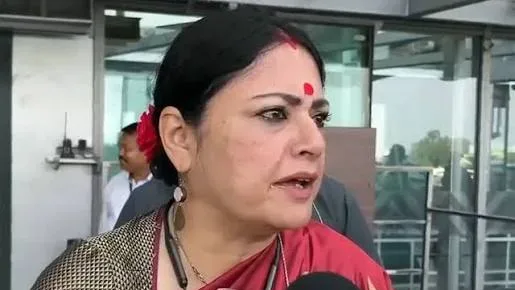
    Agnimitra Paul, Minister of Urban Development and Municipal Affairs of West Bengal.
    Agnimitra Paul, Minister of Urban Development and Municipal Affairs of West Bengal. Credit: X/ANI

    “I have heard that the colours are dazzling for many people. We are looking into that. If people are facing difficulties, an alternative arrangement will also be made,” she said.

    Also Read | Developments of fresh violence erupts at the SRFTI: Bricks and bottles hurled at students

    Suvendu Adhikari Questions Link Between Paint and Accidents

    Chief Minister Suvendu Adhikari questioned whether there was sufficient evidence to establish a connection between the painted roads and the reported accidents.

    “Do accidents happen because of painting? On how many flyovers have accidents occurred?” he asked, adding that he would not comment further without complete information.

    West Bengal CM Suvendu Adhikari
    West Bengal Chief Minister Suvendu Adhikari / Credit: X/ANI

    His remarks came as the authorities faced growing scrutiny over the implementation of the road-colouring project and its implications for public safety.

    Durga Puja Road Beautification Faces Safety Questions

    The colourful makeover of roads, bridges and flyovers across West Bengal was introduced as part of a broader beautification programme ahead of Durga Puja. The initiative has received a positive response in several areas, bringing a different appearance to stretches that traditionally feature black asphalt.
    However, the Chingrighata incident and the subsequent removal of paint at Gariahat and Asansol have shifted the focus towards road safety.

    The key concerns include tyre grip on painted surfaces, the potential effects of wet weather and glare caused by bright colours. These issues are particularly relevant on flyovers and busy roads used by two-wheelers.

    Also Read | 31-foot Kolkata landmark disappears, reappears after 12 years

    With reflective studs installed at Chingrighata and painted surfaces removed at other locations, these developments have placed road safety at the centre of the debate over West Bengal’s pre-Durga Puja beautification drive. The authorities’ examination of the incident and their response to motorists’ complaints will remain important as the initiative comes under greater scrutiny.

  • West Bengal government plans Madrasah Service Commission merger with WBSSC

    West Bengal government plans Madrasah Service Commission merger with WBSSC

    The West Bengal government has started the process of abolishing the Madrasah Service Commission and bringing madrasa teacher recruitment under the West Bengal School Service Commission (WBSSC). The proposed change was cleared at a recent state cabinet meeting and will require amendments to the existing laws before it can take effect.

    The move is aimed at bringing the recruitment process for teachers in recognised madrasas under a common framework used by the state’s School Education Department.

    Madrasah Service Commission Set To Be Scrapped

    A senior government official said the state has initiated the process to repeal the law governing the Madrasah Service Commission. The government plans to introduce legislative changes in the West Bengal Assembly before the merger can be completed.

    Chief Minister Suvendu Adhikari had also announced the proposed abolition of the commission at a programme on Tuesday evening.

    “It will now be merged with the West Bengal School Service Commission (WBSSC),” Adhikari had said.

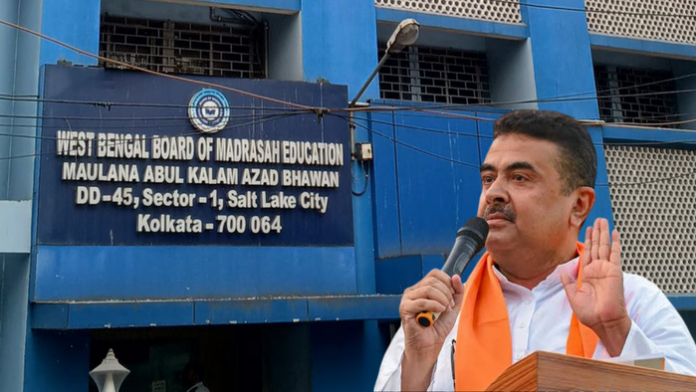
    West Bengal Board of Madrasa Education and West Bengal Chief Minister Subhendu Adhikari
    West Bengal Board of Madrasa Education and West Bengal Chief Minister Subhendu Adhikari | Representational Image

    According to the School Education Department, two separate bills are likely to be placed before the Assembly. One bill will seek to repeal the West Bengal Madrasah Service Commission Act, while the other will propose changes to the existing WBSSC Act.

    Two Bills Likely In West Bengal Assembly

    Principal Secretary, Education, Binod Kumar confirmed that work on the proposed merger is underway.

    Also Read | 7 major changes Bengal’s new school curriculum may bring in 2027

    “Yes, something regarding this (merger) will be done by this year,” Principal Secretary, Education, Binod Kumar said.

    The legislative process will be followed by the required formal approvals. Once the Assembly passes the bills, they will be sent to the governor for assent. A gazette notification will then be issued to formally bring the changes into effect.

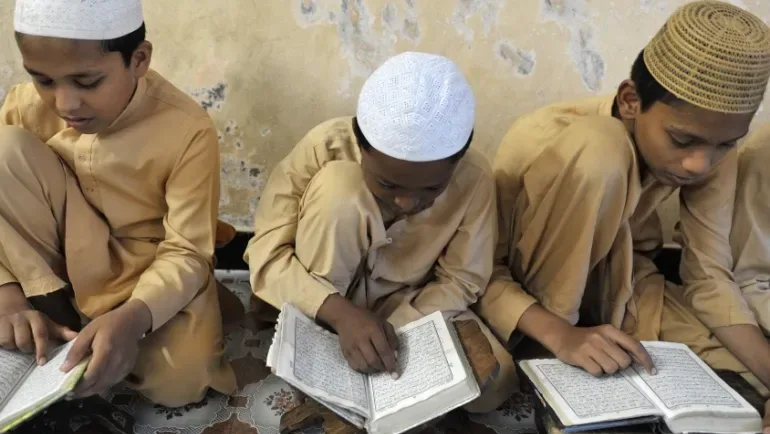
    Students at a madrasa school in West Bengal
    Students at a madrasa school in West Bengal. Credit: X/ANI

    What The WBSSC Merger Means For Madrasa Teachers

    Under the proposed arrangement, recruitment of teachers for recognised madrasas is expected to come under the WBSSC framework. This would end the separate recruitment structure currently associated with the Madrasah Service Commission.

    Officials said the move is part of the state government’s broader effort to streamline teacher recruitment and create greater uniformity in the selection process.

    However, the merger cannot be implemented immediately. The existing laws first need to be amended or repealed, followed by the Assembly process, gubernatorial assent and publication of the final gazette notification.

    Also Read | Why is CPM Bengal struggling to attract young members?

    The government’s decision therefore marks the beginning of a legal and administrative process that could change how teachers are recruited for recognised madrasas across West Bengal

  • 31-foot Kolkata landmark disappears, reappears after 12 years

    31-foot Kolkata landmark disappears, reappears after 12 years

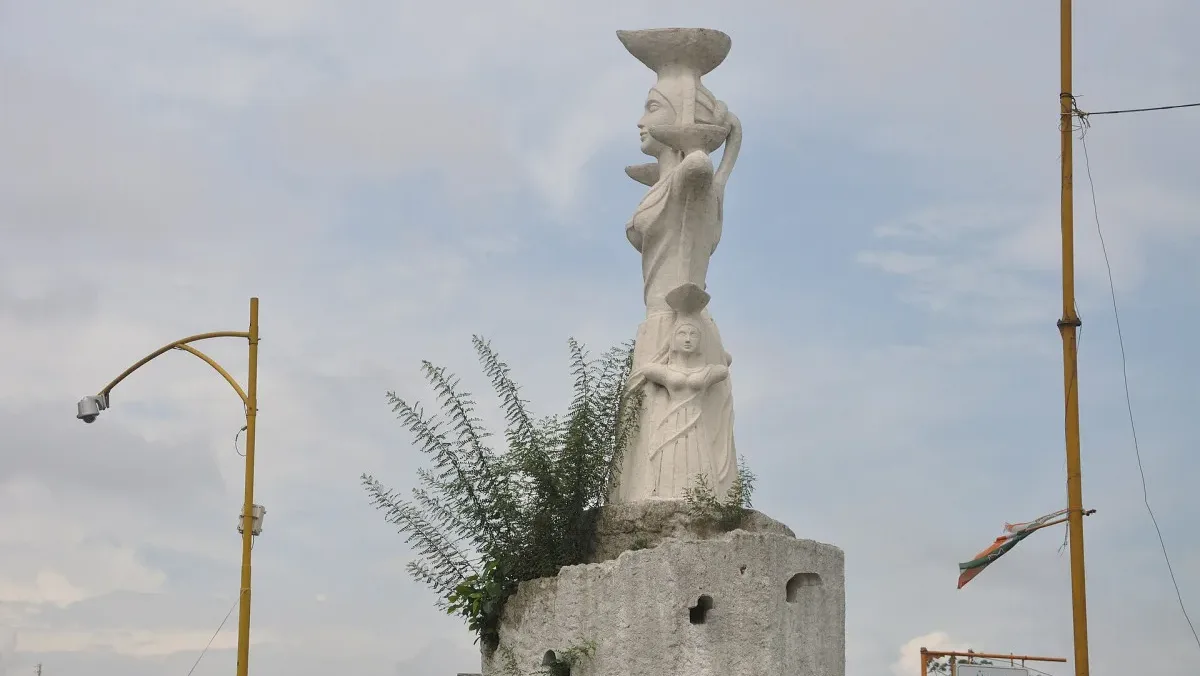
    A piece of Kolkata’s artistic history has resurfaced after remaining hidden for nearly 12 years. Paroma, the 31-foot public sculpture conceptualised by artist Shanu Lahiri, was thought to have vanished after it was dismantled and removed from an Eastern Metropolitan Bypass roundabout in 2014. Now, the sculpture has been found in a private home in Tangra.

    Paroma had become a familiar part of Kolkata’s landscape after it was installed in 1987. Its sudden disappearance on the night of November 24, 2014, had left the city with little more than rubble and several unanswered questions.

    The sculpture survived, however, and was quietly preserved by Kolkata resident Hui Hao Howard Lee.

    How Paroma Disappeared From Kolkata

    Paroma stood on an important roundabout along the EM Bypass and was designed as a work of public art. Lahiri created the concept with other artists, including Manik Talukdar and Debojit Chakraborty, as well as young art graduates she had taught.

    The sculpture was removed overnight in 2014. The Kolkata Metropolitan Development Authority, or KMDA, carried out the removal following an order from Firhad Hakim, who was then a minister in the West Bengal government and later became Kolkata’s mayor.

    Hakim had said at the time that the sculpture was supposed to be relocated and that it had been broken down by mistake.

    What happened next added another chapter to the story. A 200-kg metal globe carrying the Bengali letter “ব” was installed at the location after Paroma’s removal. For years, the fate of the original sculpture remained unclear.

    Kolkata Man Found Paroma in the East Kolkata Wetlands

    Paroma was not destroyed completely. A few days after it disappeared, Lee learned from his mother-in-law that a large sculpture resembling Paroma had been dumped in the Chowbaga area of the East Kolkata Wetlands.

    Lee went to the location and discovered that it was indeed the missing artwork. “I saw some boys playing,” says Lee. He eventually brought the sculpture to his home in Tangra after paying the boys who had been looking after it.

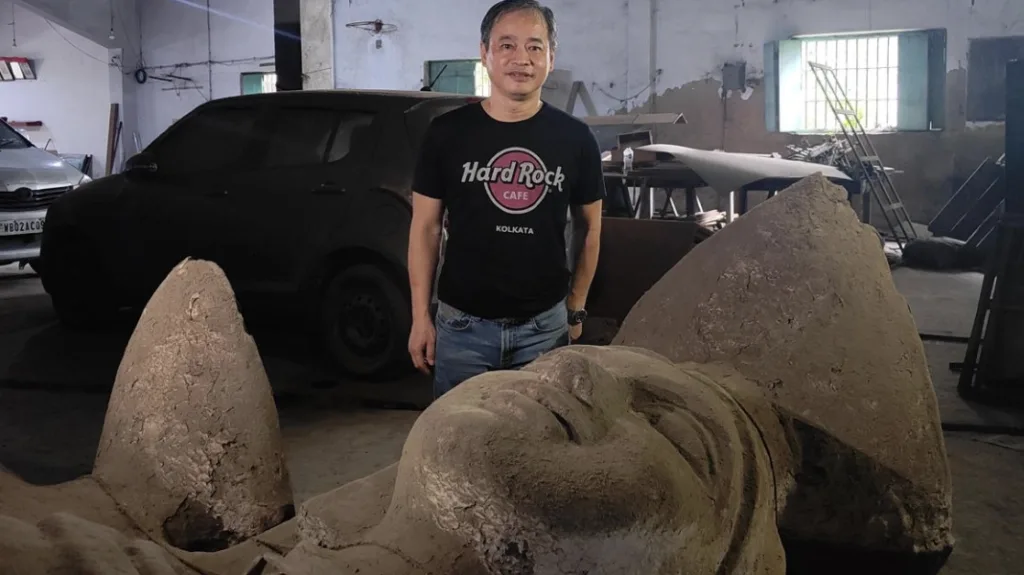
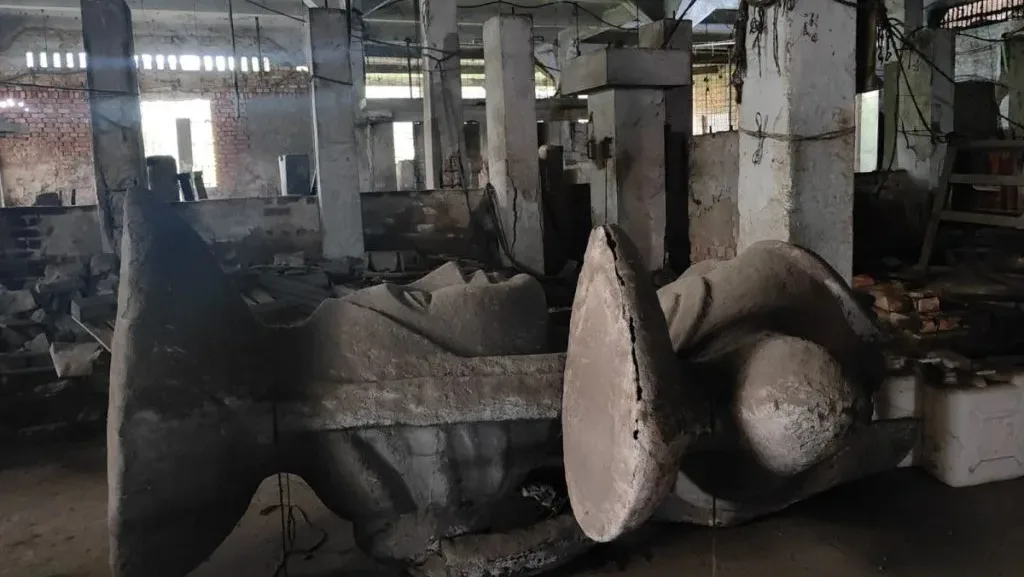
    The recovered Paroma statue, broken at the base, at the former tannery of Hui Hao Howard Lee, who found the landmark.
    The recovered Paroma statue, broken at the base, at the former tannery of Hui Hao Howard Lee, who found the landmark. Credit: X/aparnabhattacharya

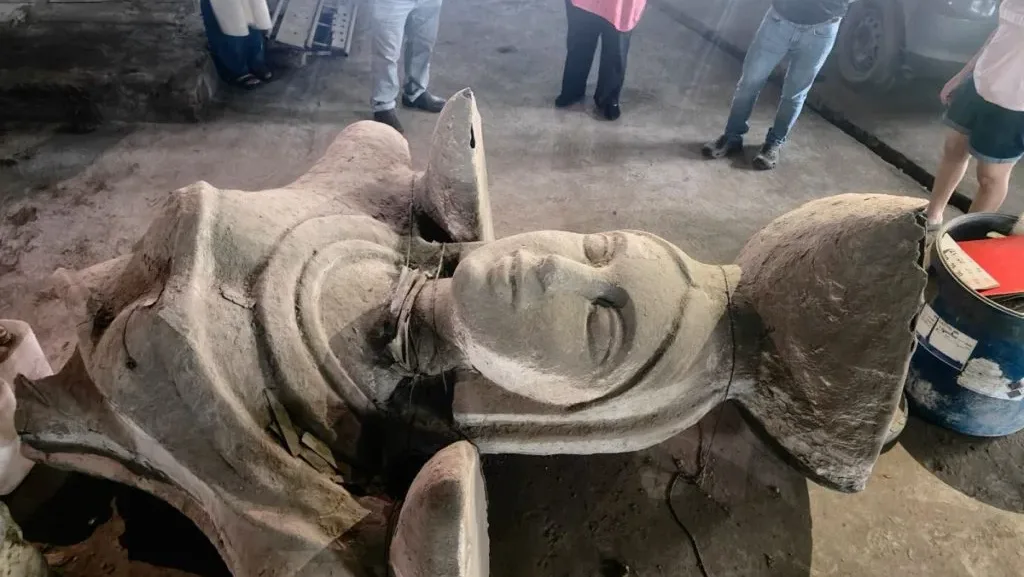
    The recovered structure was considerably smaller than the original. The sculpture itself had been around 17 feet high and had lost roughly five feet. Its 14-foot brick-and-mortar base did not survive, but the fibreglass sculpture remained largely intact.

    Lee kept it on the expansive floor of what was once his family’s tannery. He and his family continue to live in another part of the same building.

    “I was overjoyed and relieved to find the sculpture,” says Lee. “I thanked God that I could salvage whatever was left of it. I even asked the boys to find the remaining parts,” he adds.

    Paroma Was Part of Lee’s Childhood

    For Lee, preserving Paroma was not simply about saving a work of art. The sculpture was part of his childhood in Tangra.

    Lee grew up in the area when it had a much larger Chinese community. As children, he and his brother would climb the spiral base of Paroma.

    “We had photographs of us on the statue,” says Lee.

    He later developed an interest in Bengal’s art and became an avid collector. That connection helped him understand the significance of the sculpture he had rescued.

    The story also reflects changes in Tangra and the East Kolkata Wetlands, both of which have undergone significant transformation over the years.

    The recovered Paroma statue at Lee’s former tannery in Kolkata.
    The recovered Paroma statue at Lee’s former tannery in Kolkata. Credit: X/ayanabhattacharya

    What Did Shanu Lahiri Create With Paroma?

    Lahiri’s idea of public art went beyond simply placing a sculpture in an open space. Her works were intended to become part of everyday city life.

    Paroma drew inspiration from the Bengali folk-art figure known as the Diwali putul, a form that combines the image of a woman or mother with a lamp and represents light and protection.

    The sculpture was created with the involvement of several artists. Its large scale also made collaboration necessary. Private company GD Pharmaceuticals, known for Boroline, funded the project.

    Paroma was therefore not a government-funded monument. It was created as a public artwork during the Left Front era in West Bengal and became part of Kolkata’s visual identity.

    Children climbed its base, birds nested on it and passing motorists saw its silhouette against the city’s skyline.

    Artists React to Paroma’s Recovery

    Artist Chittrovanu Mazumdar, who is Shanu Lahiri’s nephew, recalled the shock surrounding its removal. “I had been shocked by its removal,” says Mazumdar.

    But he believes the recovered sculpture cannot simply be treated as the same object that once stood beside the EM Bypass. “It is a fragment,” he reminds.

    Mazumdar also spoke about the vulnerability of artworks and the damage caused when they are dismantled without care.

    “Art has a natural difficulty to survive. Its materials are not durable,” says Mazumdar. “Taking a work of art down is a very violent act,” he says.

    He noted that Paroma was a mother figure based on the Diwali putul, transformed into a large public sculpture. “It was something we were used to seeing every day,” he says Mazumdar.

    Questions Over Kolkata’s Public Art

    Art historian Tapati Guha-Thakurta believes Paroma’s recovery raises a larger question about how cities preserve public art.

    “Another remarkable piece of art disappeared after Paroma’s removal. A Meera Mukherjee sculpture that was installed in Rabindra Sadan complex is not there any more,” Guha-Thakurta points out.

    She also noted that the Somnath Hore sculptures at the Rabindra Sadan-Nandan complex do not appear to be well cared for.

    Guha-Thakurta further pointed out that Paroma’s surroundings had already changed dramatically before the sculpture was removed. The open skyline that once surrounded it had given way to highrises and construction.

    “So in a way, it was already not what it was previously,” says Guha-Thakurta.

    That raises an important question for Kolkata: how should public art be protected, and who should take responsibility for preserving it?

    Paroma’s Future Remains Uncertain

    Nabina Gupta, artist, co-curator of the Shanu Lahiri exhibition and founder-director of Disappearing Dialogues, sees something fitting in the fact that a citizen and art collector rescued Paroma.

    “It is so right that a citizen and an art lover, who has a personal connection with the piece of art, finds it and looks after it. It shows how art functions in society and how citizens shape the city’s thought process,” says Gupta.

    Also Read | Calm restored at SRFTI campus after clash between students and ABGP

    Ayana Bhattacharya, a PhD researcher associated with The Shanu Lahiri Archives, also stressed the need to preserve public art.

    “But as a city we have not done a great job of preserving public art, irrespective of regime changes. Or of making space for enough public art engagements,” says Bhattacharya.

    The question of what happens to the original site also remains open.

    “The Biswa Bangla globe that replaced Parama has been altered already. What will finally come up in that place?” asks Bhattacharya.

    She believes Paroma’s story should be preserved even if the sculpture itself cannot return to its original form.

    “Paroma deserves to be archived and reframed as a practice. But it is a fragment,” she says.

    The recovered Paroma statue.
    The recovered Paroma statue. Credit:X/ayanabhattacharya

    A Paroma Replica Will Return During Durga Puja

    While the original Paroma remains in Lee’s care, the artwork will once again appear in Kolkata in another form.

    Damayanti Lahiri, Shanu Lahiri’s daughter, said that the Abasar Sarbajain Durga Puja pandal in Bhawanipore will feature a large replica of Paroma this year.

    Damayanti had only recently learned that the original sculpture had survived. She was informed by a friend who is also acquainted with Lee’s family.

    Also Read | Developments of fresh violence erupts at the SRFTI: Bricks and bottles hurled at students

    Shanu Lahiri died in 2013, a year before Paroma disappeared. Asked how her mother might have responded to everything that happened to the sculpture, Damayanti offered a simple answer.

    “She would not have been sentimental about it at all,” laughs Damayanti.

    For Kolkata, however, Paroma’s survival carries a different significance. The sculpture that once stood in plain sight, disappeared without warning and remained hidden for more than a decade has now returned to the city’s cultural conversation. Its damaged form is a reminder of what was lost, but its survival also shows that a city’s memories can sometimes endure in unexpected places.

  • How costly is Rashmika Mandanna’s ‘MS Blue’ sari? Check the price

    How costly is Rashmika Mandanna’s ‘MS Blue’ sari? Check the price

    M.S. Subbulakshmi, the first recipient of the Bharat Ratna, was closely associated with blue Kanchipuram silk saris. The distinctive inky shade came to be known as ‘MS blue’ and remains strongly linked with the singer’s public image.

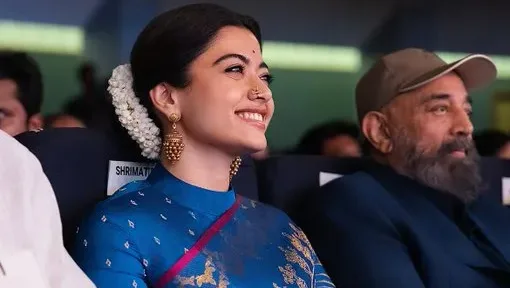
    The sari, priced at Rs 49,999 according to the brand’s official website, featured a deep MS-blue body that gradually shifted towards royal purple. Gold zari detailing, along with temple-inspired motifs on the border and pallu, added to its traditional character.

    At the event, Rashmika first appeared in an Aikyatha Kajivaram silk sari from the Suswaram Raga Edition. The design draws inspiration from Shankarabharanam, a raga associated with Shiva as Nataraja and his cosmic dance.

    The brand explained the inspiration behind the design on Instagram, writing: “The pallu moves like the oscillations of the raga itself while the border carries the sacred Billapathra. The sarees’s signature blue draws from M. S. Subbulakshmi Amma’s timeless grace, and the quiet depth of Neelakanta. Nataraja appears in form and rhythm, while the shoulder flows like the Ganga, resting upon the stillness of Shiva’s neck.”

    Traditional jewellery completes the look

    Styled by Neerja Kona, Mandanna complemented the Kanchipuram silk sari with handcrafted jewellery. Gold jhumkas, bangles, a traditional nath and a hair pin were used to complete the ensemble.

    Also Read | Want glowing skin before festive season? Try Ananya Panday’s three-ingredient homemade face pack

    Her hair was tied into a bun and decorated with fresh white flowers, adding another classic element to the look.

    Rashmika’s second Kanchipuram silk look

    Mandanna also wore a rich wine-coloured Kanchipuram silk sari from Sutrani. Unlike the blue ensemble, this sari featured an all-over geometric check pattern and a finely woven silk-thread border.

    The burnt-orange pallu created a sharp contrast against the deep wine base, while traditional motifs and touches of gold zari added detail to the six-yard drape. She paired it with an off-white Mushru Benaras silk blouse.

    Rashmika Mandanna wearing the blue Kanchipuram referred as 'MS Blue' after MS Subbulakshmi
    Rashmika Mandanna wearing the blue Kanchipuram referred as ‘MS Blue’ after MS Subbulakshmi. Credit: X/Rashmika Mandanna

    Sutrani described the combination on Instagram, highlighting the contrast between deep wine, vivid orange and antique gold.

    For jewellery, Rashmika kept things understated with a delicate gold neckpiece, matching earrings and bangles.

    Also Read | Khushbu Sundar’s weight loss journey: Why portion size matters

    Rashmika Mandanna’s tribute to an icon

    With MS – A Legacy on Screen, Rashmika Mandanna is preparing to step into the role of one of India’s most celebrated classical vocalists. Her choice of Kanchipuram silk, traditional jewellery and flowers at the launch reflected the visual legacy associated with M. S. Subbulakshmi while keeping the styling rooted in contemporary fashion.

  • Delhi Police deploys 5,000 personnel ahead of EC protest marches at India Gate-Jantar Mantar

    Delhi Police deploys 5,000 personnel ahead of EC protest marches at India Gate-Jantar Mantar

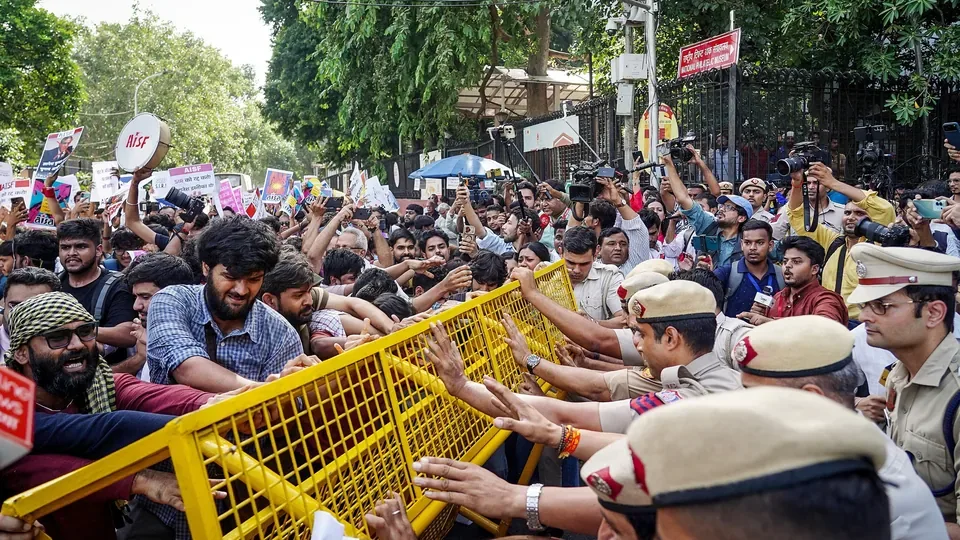
    The Delhi Police has stepped up security across the Capital ahead of two protest marches against the Election Commission (EC) scheduled for Sunday. Around 5,000 personnel, including members of the Rapid Action Force (RAF) and other paramilitary units, have been deployed as authorities prepare for a possible large gathering.

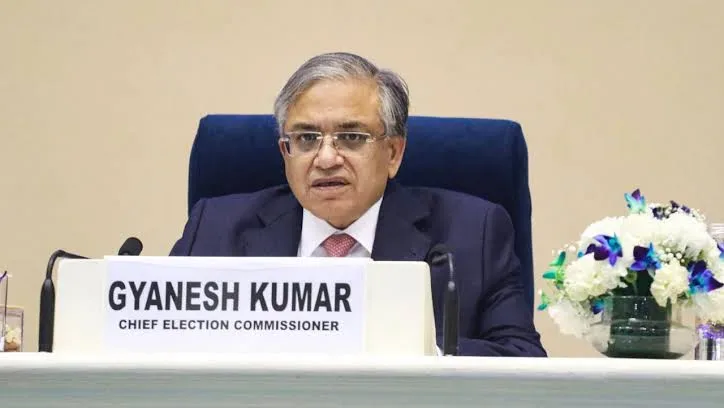
    The protests come as demonstrations against Chief Election Commissioner (CEC) Gyanesh Kumar enter their third consecutive day.

    Police said permission has not been granted for either of the proposed marches from India Gate to Jantar Mantar. Despite this, officials said they are preparing for a significant turnout and have strengthened security arrangements along the route.

    Two Protest Marches Planned on Sunday

    Two separate marches have been announced against CEC Gyanesh Kumar.

    The first, described as a Citizens’ March, is scheduled to begin at India Gate at 3pm and proceed towards Jantar Mantar. The second has been called by the Indian Youth Congress and is scheduled for 5pm along the same route.

    In view of the expected gatherings, police have installed multiple layers of barricades at several points leading towards Jantar Mantar.

    Chief Election Comissioner Gyanesh Kumar
    Chief Election Comissioner Gyanesh Kumar. Credit: X/ANI

    Access has been restricted from Tolstoy Marg, Janpath Road, Sansad Marg and the Kerala Bhawan side. Barricades have also been placed around Ashoka Road and C-Hexagon as part of the security arrangements.

    RAF, Paramilitary Forces Deployed

    According to Delhi Police, personnel from district units, reserve forces, the RAF and other paramilitary organisations have been positioned on both sides of the stretch between Parliament Street police station and Jantar Mantar.

    Also Read | Smit Machchhar chanted Hanuman Chalisa during Flydubai attack: Why the prayer symbolises strength and protection? 

    A police officer said the deployment was necessary despite the lack of permission for the marches.

    “Though permission has not been granted, we are expecting huge numbers,” the officer said, seeking anonymity.

    PCR vans and other police vehicles will remain stationed on roads leading towards Jantar Mantar. Police said the arrangements are aimed at managing the expected crowd and maintaining law and order.

    CCTV, Drones to Monitor Situation

    Security agencies are also using surveillance systems to keep track of the situation. CCTV cameras will be monitored directly from the office of the Deputy Commissioner of Police (DCP), New Delhi, according to the police.

    Drones will also be used to monitor crowds and assess the security situation if required.

    Police personnel deployed for the arrangements have been provided with anti-riot equipment. The Ministry of Home Affairs has also been informed about the security measures being taken in the Capital.

    Also Read | ‘Ek Kachori, Do Samosa’: How Delhi women are turning protest slogans into viral Gen Z activism

    The heightened security comes after protests around Jantar Mantar in recent days and amid expectations of further gatherings on Sunday.

    FIRs Registered Over Recent Protests

    Delhi Police has registered three FIRs against protesters in connection with the recent demonstrations at and around Jantar Mantar.

    The police have also received three complaints alleging sexual harassment of women protesters and journalists by police personnel. These complaints have been forwarded to the Crime Branch for investigation.

    The security arrangements are expected to remain closely monitored as the two proposed marches approach. With both gatherings planned along the India Gate to Jantar Mantar route and no permission granted for the marches, police have prepared a substantial deployment to deal with any potential law-and-order concerns.

  • India shooting ammunition shortage: Did old .22 ammo affect Asian Games performance?

    India shooting ammunition shortage: Did old .22 ammo affect Asian Games performance?

    For an elite shooter, the smallest change in a shot can be significant. Years of training allow experienced shooters to recognise differences in the sound, recoil and feel of a round almost instantly. The rifle, ammunition and athlete have to work together with remarkable consistency.

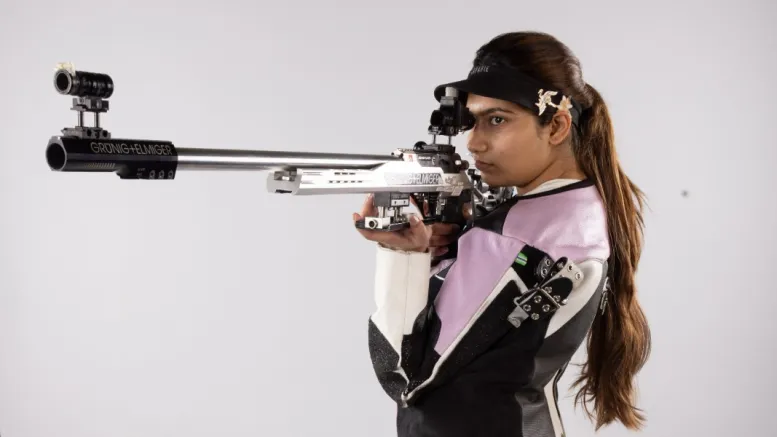
    That became a concern for Indian rifle shooter Ashi Chouksey at the ISSF World Cup in Hangzhou, China, in July, just weeks before the 2026 Asian Games in Japan.

    During the women’s 50m rifle 3 positions event, Chouksey reportedly felt that something was not right with her ammunition. Her coach asked her to continue because no alternative stock was available. According to Sportstar magazine, the ammunition came from stock left over from the Paris 2024 Olympics.

    Chouksey eventually finished 23rd and failed to make the eight-shooter final.

    The episode has brought renewed attention to the availability of match-grade .22-calibre ammunition in India, particularly after Indian shooters reportedly carried year-old ammunition to the Aichi-Nagoya Asian Games.

    Why .22-Calibre Ammunition Matters in Competitive Shooting?

    A .22 Long Rifle, commonly known as .22 LR, is used in several competitive shooting disciplines. The cartridge contains a bullet, case, primer and propellant and is widely used in both rifle and pistol events.

    Match-grade ammunition is different from ordinary civilian or defence ammunition. Competitive shooters require rounds that deliver highly consistent velocity, trajectory and performance.

    Olympic silver medallist and former international shooter Vijay Kumar explained the importance of controlled ammunition in precision shooting.

    A batch of .22-calibre rimfire rounds, the small cartridges widely used in competitive shooting.
    A batch of .22-calibre rimfire rounds, the small cartridges widely used in competitive shooting. Credit: X/ANI

    “Sports ammunition comes with a specific velocity and power designed around accuracy at 50 metres or 25 metres,” Kumar told India Today Digital.

    “If you fix a gun at one point and fire a defence ammunition, the bullets will not repeatedly hit exactly the same place. But controlled-velocity ammo [used for shooting sports] is manufactured and measured so that the bullets hit the same place,” he added.

    This consistency becomes particularly important when the difference between a strong performance and a disappointing result can come down to very small variations.

    Indian elite shooters generally rely on imported match ammunition. Popular brands include ELEY, Lapua and RWS, with much of the competitive-grade supply coming from Europe.

    Ashi Chouksey’s World Cup Experience Raises Questions

    Chouksey’s experience in Hangzhou became an important example of the concerns surrounding ammunition availability.

    Her case does not establish that old ammunition was solely responsible for her 23rd-place finish. Experienced shooters and officials interviewed by India Today Digital stressed that the age of a cartridge alone cannot determine its performance.

    Former international rifle shooter Suma Shirur said ammunition can remain usable depending on how it has been stored.

    “It [the performance of competition ammunition] depends on the kind of ammunition, and how long it has been stored. If you are keeping it in a place with moisture, or if it is not stored properly [as per protocol], it can affect its performance. So, the age of the ammunition and how it has been stored both matter,” Kumar told India Today Digital.

    Temperature, humidity and storage conditions can all influence ammunition performance. This is why shooters generally prefer to test and select ammunition well before a major competition.

    Chouksey herself later bounced back at the Asian Games, winning a silver medal in the women’s 50m rifle 3 positions team event with Tilottama Sen and Vidarsa Vinod.

    Indian Shooters Report Delays in Getting Match Ammunition

    The issue goes beyond one shooter’s experience. International-level shooters, coaches and people involved in the ammunition trade told India Today Digital that access to match-grade .22 ammunition has been a concern, particularly for shooters outside India’s elite group.

    Gagandeep Singh, proprietor of Delhi’s Sharda Gun House in Ramesh Nagar, said delivery times had increased considerably.

    “Civilian shops generally don’t keep match-grade bullets. But I can tell you that right now, the shortage is such that orders that used to take three to four months now take anywhere between eight and 10 months,” Singh told India Today Digital.

    A former NRAI official, who requested anonymity, also said ammunition delays had affected preparation ahead of the Asian Games.

    “Shooters have faced difficulties getting new ammunition in the run-up to the [Asian] Games, which affected their practice,” the former official said.

    “Shooters have been practising with old ammunition, which means they might not know whether an error is coming from their technique or the ammunition itself,” the former official added.

    That uncertainty can be particularly difficult in a sport where athletes spend considerable time refining their technique and equipment.

    NRAI Denies Shortage Affected Asian Games Preparation

    The National Rifle Association of India acknowledged that there had been a period of limited .22-calibre ammunition supply.

    NRAI Secretary-General Pawan Singh attributed the situation to supply-chain constraints linked to the Russia-Ukraine war and the wider geopolitical situation.

    However, Singh rejected the claim that the required ammunition was unavailable for the Asian Games.

    “The required ammunition was made available before the Asian Games and was used and tested by the athletes during their training and competition preparation for the Asian Games,” Pawan Singh told India Today Digital.

    That statement presents an important distinction. While supply problems had existed, the NRAI maintained that ammunition required for the Asian Games was eventually made available and tested.

    A former NRAI official, however, maintained that some shooters had practised with older ammunition.

    “Shooters had practised with older ammunition for the Asian Games,” the former official said.

    How Shooters Select and Test Their Ammunition?

    Getting match-grade ammunition is only part of the process. Shooters also need to establish which ammunition works best with their individual firearm.

    Suma Shirur explained that the same ammunition may not perform identically in every rifle or pistol.

    “It depends on which rifle the ammunition is best suited to. We extensively test it and go for testing before selecting ammunition,” Shirur told India Today Digital.

    This creates an additional challenge for Indian shooters because much of the match-grade ammunition is produced in Europe.

    “Most of the ammunition manufacturers are in Europe, so even club-level shooters there can go and get their ammunition tested before buying it. Unfortunately, we don’t have that luxury in India,” Shirur said.

    Vijay Kumar believes India should eventually develop the ability to produce competitive ammunition domestically.

    “I completely agree that what we import should be manufactured in India. As shooting grows and the number of players increases, there should be at least one or two companies here producing ammunition to the same standard,” Kumar told India Today Digital.

    Kumar repeated the importance of domestic production, adding, “As shooting grows and the number of players increases, there should be at least one or two companies here producing ammunition to the same standard.”

    Elite Shooters and Other Participants Face Different Challenges

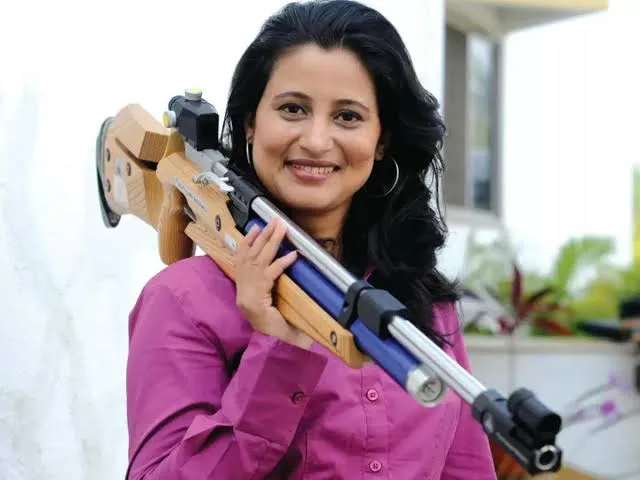
    Former Olympian and Arjuna Award winner Anjali Bhagwat distinguished India’s top shooters and those trying to break into the elite level.

    “Elite shooters did not have a problem [in getting .22 ammunition],” Bhagwat said. She added, “Normal participants have no access to ammunition.”

    Former Olympian and Arjuna Award winner Anjali Bhagwat.
    Former Olympian and Arjuna Award winner Anjali Bhagwat. Credit: X/Olymlics

    The difference matters because regular access to suitable ammunition is an important part of training. Shooters outside the national elite group need opportunities to practise and develop before they can compete for places at major international events.

    The reported delays therefore raise questions about the broader development pathway, even though the available evidence does not establish that ammunition shortages directly caused India’s lower medal tally at the Asian Games.

    Why Is There a Global Shortage of .22 Ammunition?

    The supply problem is not limited to India. The wider ammunition industry has faced pressure over the availability of raw materials, including nitrocellulose, which is used in smokeless propellant. The European Commission has identified constraints involving nitrocellulose and nitroglycerine as challenges to increasing ammunition production.

    The European Union introduced the Act in Support of Ammunition Production, or ASAP, in 2023 to increase production capacity, replenish stocks and support ammunition supplies to Ukraine.

    However, increasing manufacturing capacity is not an immediate process. Specialised chemical facilities, machinery and other inputs are required, meaning production cannot simply be expanded overnight.

    There is also a wider geopolitical dimension involving critical raw materials and chemical supply chains. European Parliament records have raised concerns about China’s role in supplies of strategic materials and chemicals connected to ammunition production.

    These developments show how international conflicts, trade restrictions and industrial bottlenecks can affect ammunition supply chains.

    Also Read | Smit Machchhar chanted Hanuman Chalisa during Flydubai attack: Why the prayer symbolises strength and protection? 

    However, those factors alone do not establish the precise extent to which the global situation contributed to the shortage of match-grade .22 ammunition faced by Indian shooters.

    Is Old Ammunition Always Bad?

    Experts interviewed for the report were cautious about linking ammunition age directly to poor performance.

    Suma Shirur said there is no simple rule that older ammunition is automatically unsuitable.

    “You can’t generalise it. The condition of a batch of bullets depends on so many factors, like how it’s stored, the temperature, the humidity, and many other factors. Yes, a shooter tries to get the same brand or bullet whose behaviour they know, but the bullets being old doesn’t mean they are bad. There is some old ammunition that does work. I can’t make a general statement on whether it is good or bad,” she said.

    Vijay Kumar also rejected the idea that ammunition age can automatically explain an underwhelming result.

    “I think if somebody is saying this is the reason for my poor performance, that is clearly an excuse,” Kumar said.

    He pointed out that ammunition-related malfunctions can occur even when cartridges are not old.

    “In rapid fire [a sport Vijay Kumar masters], malfunctions happen. It depends on your luck, the quality of the gun, how properly it is maintained and how the ammunition is stored.”

    Kumar also stressed that athletes cannot expect to win every competition.

    Also Read | ‘Ek Kachori, Do Samosa’: How Delhi women are turning protest slogans into viral Gen Z activism

    “A shooter cannot win all the time. An athlete cannot win all the time. If somebody finishes 20th or 30th, they have to come back, work harder and improve their score and consistency,” he said.

    Did Ammunition Shortage Cost India Medals at Asian Games?

    India finished the 2026 Asian Games shooting competition with 15 medals, including three gold, eight silver and four bronze. That was lower than its 22-medal haul at the 2023 Asian Games in Hangzhou, where Indian shooters won seven gold medals among their 22 medals.

    Neeru Dhanda poses aftrer winning the gold medal at Asian Games 10m rifle shooting
    Neeru Dhanda poses aftrer winning the gold medal at Asian Games 10m rifle shooting. Credit: X/ANI

    Of the 28 shooting events at the 2026 Asian Games, eight involved .22-calibre ammunition. India won three medals in those events.

    That makes it difficult to establish a direct connection between ammunition availability and the overall medal tally.

    Vijay Kumar summed up the uncertainty surrounding equipment and performance in shooting.

    “Shooting is a sport where equipment can malfunction. Performance depends on the gun and ammunition working as they should,” Kumar said.

    At the same time, the reported supply difficulties remain relevant. Shooters outside the elite group have faced problems accessing match-grade ammunition, while concerns over older ammunition have also surfaced around major international competitions.

    The evidence does not show that ammunition shortages directly cost India a specific medal at the 2026 Asian Games. What it does highlight is a broader dependence on imported match-grade ammunition and a supply chain exposed to disruptions beyond the control of individual athletes.

    For Indian shooting, reliable access to the right ammunition is therefore not simply a question of having enough rounds. Shooters need consistent ammunition, enough time to test it with their equipment and dependable supplies well before major competitions.

    In a sport built around precision, even small uncertainties can become important. The challenge for Indian shooting is ensuring that athletes have as few of those uncertainties as possible when they step onto the international stage.

  • Why is CPM Bengal struggling to attract young members?

    Why is CPM Bengal struggling to attract young members?

    The Communist Party of India (Marxist) in West Bengal is confronting a gap between youth participation in Left-led student movements and the number of young people formally joining the party.

    The CPM’s latest organisational review found that only 4.55 per cent of its members in West Bengal are below the age of 30. The party has described the figure as a matter of concern and acknowledged that greater attention needs to be given to bringing new members into its ranks.

    The issue was highlighted in a 12-page communication circulated among party members after the extended state committee meeting held in Kalyani, Nadia, on August 29 and 30. The meeting focused on the party’s political and organisational position in the state.

    CPM’s youth membership raises concern

    The latest figures have prompted questions inside the organisation about why youth participation in student and public movements is not translating into a larger pool of young CPM members.

    CPI (M) rally at Brigade during Bengal elections 2026. Credit: X/ANI
    CPI (M) rally at Brigade during Bengal elections 2026 | Credit: X/ANI

    The decline is visible when the recent figures are compared with earlier organisational data. The share of CPM members below 30 stood at 8.7 per cent in 2021 before falling to 8.2 per cent in 2024 and then to 4.55 per cent.

    The party’s 2026 membership renewal figures also showed a 0.44 per cent decline in overall membership from the previous year, with the organisational review pointing to insufficient emphasis on inducting new members.

    SFI remains active on campuses

    The numbers present a contrast with the continued presence of the Students’ Federation of India (SFI), the CPM’s student organisation, in West Bengal.

    According to the CPM’s organisational report adopted at its 24th Congress, SFI membership in the state increased from around 5.1 lakh in 2020-21 to more than 8.3 lakh in 2023-24.

    The student organisation has remained active around issues linked to education, examinations and employment. The latest organisational review has therefore focused on the difficulty of converting such activism into sustained party membership.

    Students hold SFI flags during a rally
    Students hold SFI flags during a rally. Credit: X/ANI

    Former student activists cited organisational gaps as one factor. They said activists who work through the SFI on campuses in Kolkata, Siliguri, Durgapur or Santiniketan can lose contact with the party structure after returning to their home districts.

    Auxiliary Groups remain a key concern

    The CPM’s own review points to a weakness at the grassroots level. Around 64.90 per cent of the party’s branches in Bengal reportedly do not have an Auxiliary Group, the preliminary structure through which sympathisers and supporters can be developed towards primary membership.

    Former SFI activists said the absence of a clear organisational link can make the transition from campus politics to local party work difficult.

    “There is often no communication or bridge between the area committee and student activists who return from campuses,” a former SFI activist said on condition of anonymity.

    Some activists also argued that young leaders working outside Kolkata do not always receive the same visibility as those active on major city campuses.

    Communist party workers during a rally in Kolkata earlier this year
    Communist party workers during a rally in Kolkata earlier this year. Credit: X/ANI

    Former SFI activists take different paths

    Somnath Sow, who was associated with the SFI at Visva-Bharati University between 2013 and 2023, said he stepped away from the party over organisational issues and is currently focusing on his studies and legal practice in Burdwan.

    Also Read | Keep your friends close, but your enemies closer? The implications of TMC-CPI(M) dialogue amid EC row

    After the 2026 Assembly elections, the CPM approached him again to become active in the organisation.

    Other former student activists have taken different political routes. Soumen Karfa, who was associated with the SFI and DYFI, is now a BJP MLA from Bhatar. Pratikur Rahman joined the Trinamool Congress before the 2026 elections after differences with the CPM’s strategy and later said he had felt “suffocated” and cornered.

    Migration also affects youth mobilisation

    Former SFI activist Debasish Mandal from Birbhum pointed to education and employment-related migration as another factor.

    “Many SFI activists migrate to other states either for higher studies or employment opportunities. There are hardly any job opportunities in the state, so both educated and otherwise youth migrate, so they become physically detached with party, but their moral support remains,” Mandal said.

    The CPM has also been experimenting with programmes aimed at engaging younger voters. Its ‘Projonmer Dak’ (call of the generation) initiative used music, digital interaction and young party leaders to discuss issues including education and employment.

    The party’s latest communication called for young people involved in mass movements to be systematically brought into its organisational structure. It also identified political and ideological education, experience through movements and organisational consciousness as important elements in developing party members.

    The document additionally warned against what it termed “un-communist” self-promotion and called for more organised and coherent social media activity.

    Also Read | West Bengal needs a new strategy to attract private and smarter investment

    CPM acknowledges youth participation challenge

    Mayukh Biswas, a state CPM leader and former SFI general secretary, acknowledged that there had been organisational problems but said steps were being taken to address them.

    “There were some problems in the organisation, which have been addressed, and we are trying for more youth participation in the party,” Biswas said.

    He also pointed to the recent participation of young people in student mobilisations as a significant development.

    The challenge for the CPM in West Bengal now lies in strengthening the organisational connection between that youth participation and its formal party structure, an issue that has been explicitly flagged in its latest internal review.