Author: Anik Dutta

  • West Bengal Durga puja 2026: What is changing this year with Bengal’s regime change?

    West Bengal Durga puja 2026: What is changing this year with Bengal’s regime change?

    Durga Puja in West Bengal is entering a new political chapter in 2026. With a new government in office, several familiar features of Kolkata’s biggest annual festival are changing, from the Red Road carnival and puja patronage to government grants, food practices and the way pandals are inaugurated.

    The biggest change is perhaps the end of the Durga Puja carnival on Red Road, a much-remembered feature of the Mamata Banerjee years. Instead, the new government is preparing a major Mahalaya programme at Eden Gardens on October 10, which Prime Minister Narendra Modi is expected to attend.

    But the changes go beyond the calendar. Several well-known pujas have seen changes in their organising committees, while questions around food, themes, political stalls and the religious character of the festival have also emerged.

    At the same time, the number of Durga Pujas across Bengal continues to rise. As of September 24, 2,318 pujas had registered on Kolkata’s Sahaj single-window permission portal. The figure included 270 new applicants. In 2025, the final number of applications reached 2,936, the highest recorded till then.

    Across West Bengal, the state power department expects the number of community pujas to cross 65,000 this year, based partly on demand for temporary electricity connections.

    Durga Puja’s long tradition of change

    The community Durga Puja, or barowari puja, is generally associated with late-18th-century Guptipara. Historians, however, differ over the exact year and even over whether the earliest community festival there was Durga Puja or Jagaddhatri Puja.

    The term barowari is commonly linked to baro yaar, meaning “twelve friends”.

    Bengal’s Puja traditions have evolved repeatedly. Zamindars once played a major role in patronage, while political leaders later became closely associated with prominent community celebrations.

    The visual language of Puja has changed too. Traditional ek-chalar thakur, where Durga and her family are presented together within one frame, now exists alongside elaborate multi-part installations. Sabeki pratima, or traditional idols, stand alongside theme-based creations made with unusual materials.
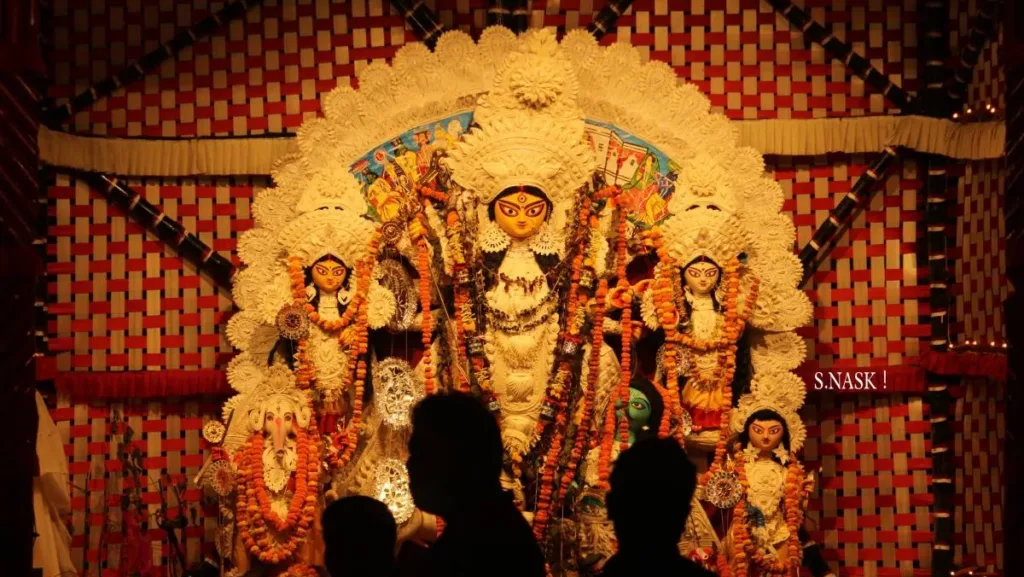
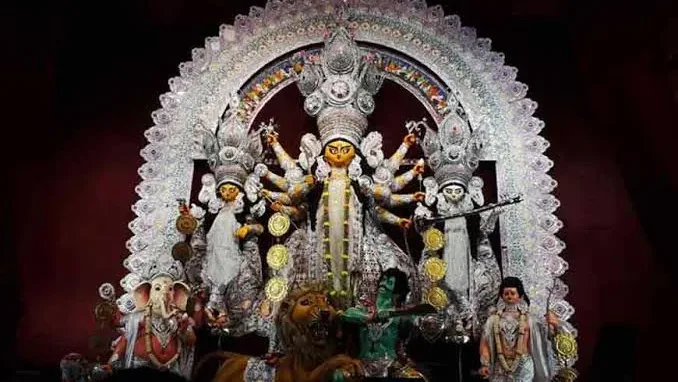
    A look at traditional Durga puja in Bengal
    A look at traditional Durga puja in Bengal. Credit: X/asutoshhalder

    Kumartuli remains at the centre of Kolkata’s idol-making tradition. As Mahalaya approaches, its narrow lanes become increasingly busy with visitors, photographers and people looking for a glimpse of the idols before they leave for the city’s pandals.

    The nearby Kumartuli Ghat is also being developed. A Rs 10-crore project covers a 300-metre stretch of the Hooghly riverfront and includes viewing areas, walkways and improved public facilities.

    Political patronage of Kolkata’s big pujas changes

    One of the most noticeable developments in Durga Puja 2026 is the change in leadership at several prominent pujas.

    During the Trinamool Congress years, several major celebrations became closely identified with influential party leaders. Sreebhumi was associated with Sujit Bose, Suruchi Sangha with Arup Biswas and his brother Swarup, Chetla Agrani with Firhad Hakim, and Naktala Udayan Sangha with Partha Chatterjee. That pattern is now changing.

    At Sreebhumi Sporting Club, a new committee is overseeing this year’s Puja. BJP leader Kanak Debnath is its president. Organisers have said the scale of the celebration will remain while efforts will be made to reduce prolonged road blockades.
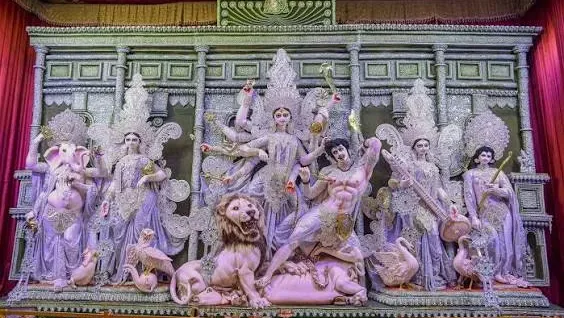
    A look at Sreebhumi Durga Puja
    A look at Sreebhumi Durga Puja. IG/sreebhumisportingclub

    Suruchi Sangha has also undergone a leadership change. BJP MLA Sourav Sikdar is now secretary, with the new committee replacing the earlier arrangement associated with the Biswas brothers. The transition, however, was met with protests from some residents.

    At Tala Prattoy, known in recent years for its striking themes, much of the previous organising structure has changed. Sushanta Shibani Pal is handling this year’s theme.

    The changes are not limited to individual puja committees. A new statewide organisation called the Paschim Banga Durga Puja Samannay Samiti, or West Bengal Durga Puja Coordination Committee, is taking shape. Kartik Maharaj is its chairman, while BJP MLA Rudranil Ghosh is chief adviser.

    The organisation could provide another coordination platform alongside the established Forum for Durgotsab, which represents hundreds of Puja committees.

    New pujas and disputes add to the churn

    Some familiar Kolkata locations are also entering new territory. Allen Park on Park Street, better known for its Christmas and New Year celebrations, will host a Durga Puja for the first time. The celebration is being organised by Kolkata Sanatani Sangha, fronted by BJP leader Shankudeb Panda.

    Mohammad Ali Park has also seen a dispute, with competing committees putting up banners under different names after BJP councillor Meena Devi Purohit proposed changing the venue’s name to Mahabali Park.

    Bagbazar’s historic Puja faced a separate problem after a committee election became deadlocked. The matter eventually went to court.

    Durga Puja grants and free electricity

    The financial system supporting community Durga Puja is also being altered. The Mamata Banerjee government began providing annual assistance of Rs 10,000 to Puja committees in 2018. The amount was gradually increased and stood at Rs 1.1 lakh in 2025.

    For 2026, the new BJP government has announced Rs 1 lakh per committee. Chief minister Suvendu Adhikari has also appealed to larger pujas to leave the assistance for smaller celebrations that require financial support. Several prominent committees have agreed to forgo the grant.

    The government has also asked electricity suppliers to provide free power to Puja organisers. In 2025, the electricity waiver under the previous government stood at 80%.

    There was also a controversy in Birbhum after BJP district president Uday Shankar Banerjee reportedly told committees that those accepting the 2026 government grant would have to display the chief minister’s photograph or face action. Minister Dilip Ghosh rejected the claim.

    Will Bengal’s Durga Puja food traditions change?

    Food has emerged as another important point of discussion ahead of Durga Puja.

    In August, VHP central advisory council member Swami Nirgunananda suggested that non-vegetarian food should be kept away from the immediate Puja area. He also acknowledged that Bengal’s Durga Puja has never been entirely vegetarian.

    VHP leaders later clarified that no official or binding instruction was prohibiting non-vegetarian food during Durga Puja.

    Religious preacher Dhirendra Krishna Shastri, popularly known as Bageshwar Baba, subsequently criticised the consumption of non-vegetarian food during Puja and described those who did so as “pakhandis”, or hypocrites.

    The remarks drew criticism, including from within the BJP. State party president Samik Bhattacharya defended Bengal’s food traditions. Adhikari later visited Kalighat temple and ate traditional prasad that included fried fish, fish head and basanti pulao.

    At Suruchi Sangha, organisers have said mutton and hilsa will continue to be served during the Maha Navami feast.

    Some housing societies have similarly said their Puja feasts will retain their existing traditions and remain largely non-vegetarian, except on Maha Ashtami.

    However, some organisers are creating clearer boundaries around the sacred space. Thakurpukur SB Park and Chaltabagan have restricted visitors from entering while eating. The new Allen Park Puja will not have food stalls inside the park.

    Theme pujas continue, but with a different emphasis

    Theme-based Durga Puja remains part of Kolkata’s festival landscape in 2026. There is no official census dividing theme pujas from traditional celebrations.

    Organisers have been asked to ensure that idols and themes do not hurt religious sentiments or undermine what the new government describes as Sanatani traditions.
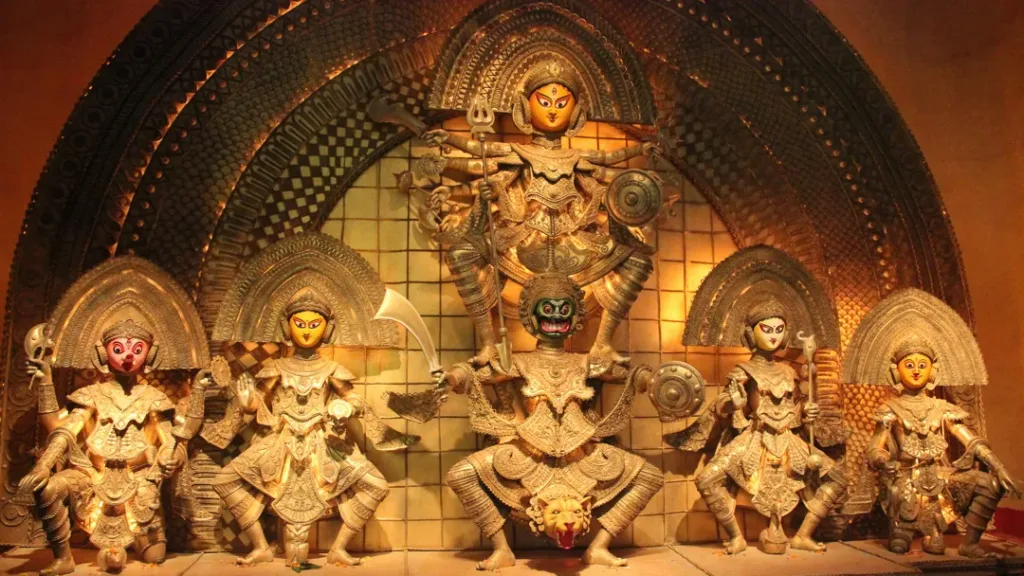
    A theme-based Durga puja in Kolkata in 2025
    Idols conceptualised as Purulia ‘Chhau’ dancers, Ajeya Sanghati club, Kolkata, 2025.

    Yet experimental themes have not disappeared. Subjects linked to care workers, gender identity and ecology continue to feature in this year’s celebrations.

    Alongside them, some major pujas are placing greater emphasis on patriotism, nationalism and Hindu cultural identity.

    Santosh Mitra Square, headed by BJP MLA Sajal Ghosh, has selected Vande Mataram as its theme. New Town Sanatani Durga Puja is exploring what its organisers describe as the connection between ancient Indian traditions and modern science.

    The association between Durga and political or nationalist ideas, however, has a much longer history.

    Bankimchandra Chattopadhyay used the image of Durga as a symbol of Bengal in Amar Durgotsav, included in Kamalakanter Daptar. Later, Kazi Nazrul Islam invoked Durga as Shakti in his poems and Agomani compositions. His 1922 poem Anandamoyeer Agamane used the Goddess’s arrival as an anti-colonial metaphor, leading to his prosecution for sedition by the British.

    Why ‘Sharadotsav’ has become a political issue

    Another debate concerns the word “Sharadotsav”, a term widely associated with Bengal’s autumn festivities and Durga Puja.

    Suvendu Adhikari has asked Puja committees not to accommodate CPI(M) bookstalls using the term “Sharadotsav” instead of “Durga Puja”. The argument is that the terminology dilutes the festival’s religious identity.

    The Left has pointed out that Rabindranath Tagore wrote Sharadotsav, a play celebrating autumn, in 1908.

    A Puja committee at Kamardanga in Tangra has gone further, announcing that CPI(M), DYFI, SUCI and other Left-wing organisations would not be allowed to operate stalls at its celebration. The committee has urged other organisers to take a similar position, while the CPI(M) has criticised the move.

    Mahalaya replaces the Red Road carnival

    The Red Road immersion carnival, introduced in 2016 during the Mamata Banerjee government’s tenure, has been discontinued.
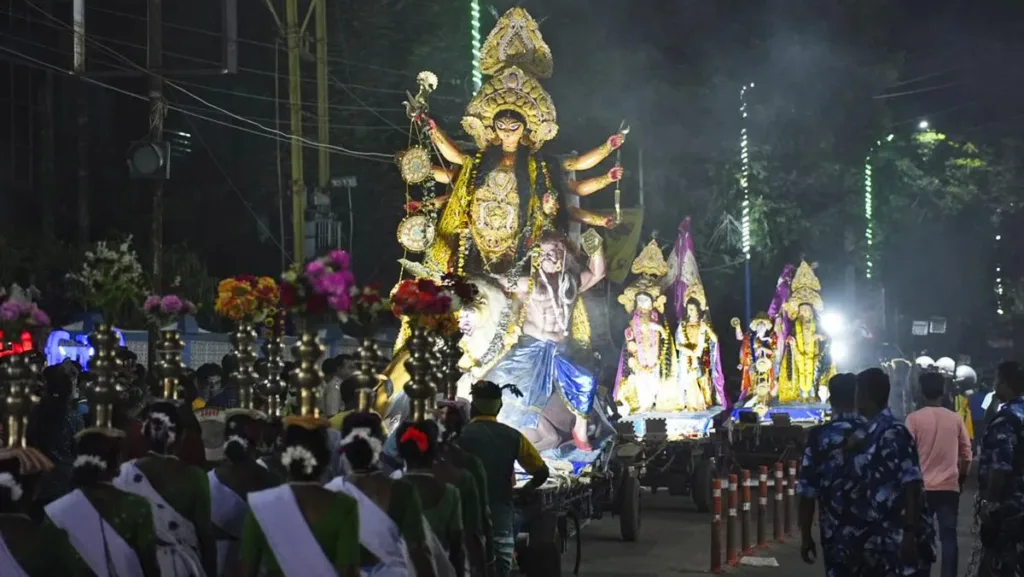
    Durga puja carnival in Red Road in 2024
    Durga puja carnival in Red Road in 2024. Credit: X/ANI

    Its replacement is a large Mahalaya programme at Eden Gardens on October 10, 2026. Maha Shashthi falls on October 17 this year.

    The event is expected to feature traditional performers, thousands of dhakis, fireworks and a drone show. Narendra Modi is expected to attend and virtually inaugurate prominent Kolkata pujas associated with the programme.

    Also Read | Kumartuli: The 300-year-old Kolkata neighbourhood where Maa Durga comes to life before Puja

    Mahalaya carries a special place in Bengal’s cultural calendar. Along with the tradition of tarpan, the day is strongly associated with Birendra Krishna Bhadra’s recitation of Mahishasuramardini, which has been linked with Mahalaya since the 1930s.
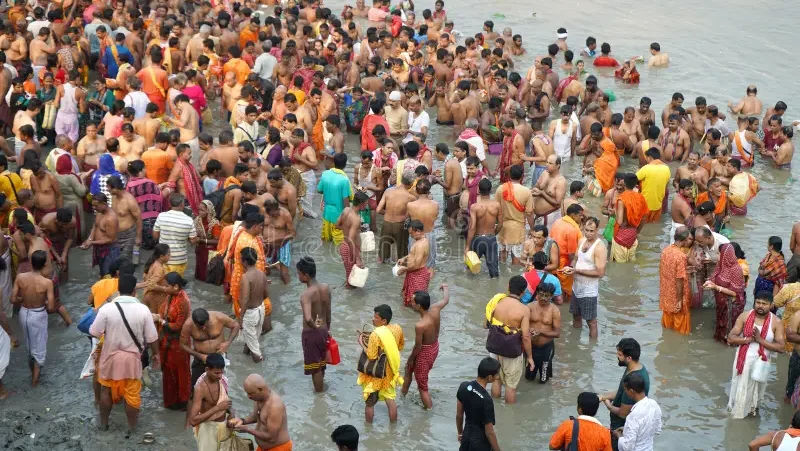
    People performing Tarpan at Babughaat in Kolkata in 2025
    People performing Tarpan at Babughaat in Kolkata in 2025. Credit: X/ANI

    The Eden Gardens event therefore places the new government at the centre of the ceremonial beginning of the Puja season.

    More changes for Kolkata pandal-hoppers

    The rules for Puja celebrations are changing in several other ways. Puja pandals will not be allowed to hold inaugurations before Mahalaya, according to the new government.

    Maha Ashtami will be observed as a dry day, with liquor sales prohibited. DJs have also been banned during Puja celebrations and immersion processions.

    Organisers have been asked to prevent prolonged road blockades and complete immersions within the prescribed period.

    Even the look of Kolkata Police’s crowd-management volunteers is expected to change. A police tender has proposed orange T-shirts and caps in place of the familiar white-and-blue attire.

    Bengal’s Durga Puja has never had one fixed identity

    Despite the changes around politics, patronage, food and presentation, Bengal’s Durga Puja tradition has always contained considerable variation.

    Historical accounts show that there was never a single rule governing the appearance of idols or the food served during Puja.

    Mahendranath Datta, Swami Vivekananda’s younger brother, recorded differences between Shakta and Vaishnava households. He noted that the lion accompanying Durga could have a conventional lion’s face in Shakta homes, while Gosain or Vaishnava households sometimes depicted it with a horse-like face.

    Food customs differed as well. Brahmin households could serve rice, vegetables, curd and payesh, while Shakta Brahmin homes permitted fish. Kayastha households served luchi.

    Old family pujas continue to reflect that diversity. The Sabarna Roy Chowdhury family offers katla as Nabami bhog, while fish is offered during Puja at Chorbagan Chatterjee Bari. At the Janbazar home of Rani Rashmoni’s descendants, the Goddess receives vegetarian bhog even though non-vegetarian food is served to guests.

    That history makes Bengal’s Durga Puja difficult to fit into a single cultural or dietary template.

    Also Read | Calm restored at SRFTI campus after clash between students and ABGP

    The committees may change, political associations may shift and new rules may shape the festival’s public face. But the traditions of Durga Puja in Bengal have developed over centuries through different communities, families, artists and organisers.

    For 2026, the most visible changes are already clear. The Red Road carnival is gone, Eden Gardens will host the Mahalaya celebration, several prominent pujas have new leadership, and debates over food, themes and political participation have entered the festival conversation.

  • Foral de Goa 1526, the charter behind Goa’s land legacy: Know all about 500 years of history

    Foral de Goa 1526, the charter behind Goa’s land legacy: Know all about 500 years of history

    Five centuries after it was promulgated, the Foral de Goa of 1526 remains at the centre of discussions about Goa’s land, village institutions and relationship with political power.

    On September 16, 1526, Portuguese King João III issued the Foral de Goa, a collection of 49 laws that recorded the rights, duties and customs of Goa’s village communities. Historians regard it as one of the earliest surviving paper documents of its kind in South Asia and often describe it as Goa’s first constitution, although the comparison does not refer to a modern constitutional system.

    The 500th anniversary is being marked in both Goa and Portugal. In Goa, Bombay High Court judge Valmiki Menezes is scheduled to release a commemorative edition later this month. Portugal is also hosting a year-long programme through the Centre of the History of Society and Culture at the University of Coimbra and other cultural institutions.

    What Is the Foral de Goa of 1526?

    The document’s official name is Foral dos Usos e Costumes dos Gancares e Lavradores desta Ilha de Goa e outras Anexas a Ella. In English, this refers to the charter concerning the customs and practices of the Gaunkars, or village landholders, and farmers of Goa and its adjoining islands.

    It is also known as the Foral of Afonso Mexia, after Afonso de Mexia, the Vedor da Fazenda, or chief comptroller of the treasury in Portuguese India, who signed it.

    The Foral was created 16 years after the Portuguese captured Goa from the Adil Shah of Bijapur in 1510. It emerged from negotiations between the Portuguese administration and Gaunkars representing 31 villages in Tiswadi.

    According to Goa Archives director Balaji Shenoy, it was the first formal attempt to put the existing indigenous village administration and revenue arrangements in Portuguese-controlled Goa into writing.

    How Did The Foral Protect Gaunkar Rights?

    A central feature of the Foral was its recognition of the Gaunkars and their role in managing village common lands through the Gaunkaria system, now commonly associated with the Comunidade system.

    The document acknowledged the system as an existing institution and recognised the land-related rights of the Gaunkars. Its preamble says the rules were prepared “after ordering careful inquiries and investigations to determine and clarify what they were obliged to pay us, and used to pay to the kings and lords of this land before it became ours…as well as the rights, uses and customs, under which they lived and which we ought to preserve for them…”

    Under the system, Gaunkars paid a fixed tribute, known as foro, to the state. Revenue from village lands was then used for different village responsibilities, while cultivation rights could be auctioned and part of the resulting income distributed among the Gaunkars.

    The Foral also referred to the work of earlier generations who had developed coastal areas and turned them into productive settlements.

    What Did The 49 Clauses Cover?

    The Foral went beyond simply fixing agricultural taxes. Its 49 clauses dealt with several aspects of village life and administration.

    They covered tax collection and the distribution of annual surplus, different assessments depending on the type of land, treatment of villages facing financial difficulties, hereditary rights and the leasing of uncultivated land.

    Rules also addressed leasing land to outsiders, disputes, absent or defaulting Gaunkars and succession. The document included provisions concerning the rights of children from multiple marriages.

    Independent scholar Rochelle Pinto describes the Foral as much broader than a revenue document.

    “It was one of the initial documents issued by the Portuguese Crown to indigenous land administrators, sixteen years after the conquest of Goa… the Foral recognised the political significance of a local legend that legitimised the primacy of the gaunkars over the land in Ilhas by incorporating it into the document. The most minimal description of the Foral would see it as a revenue-fixing document, but in fact it addressed ritual practices, inheritance laws, and a range of other aspects through its forty-nine clauses,” she said.

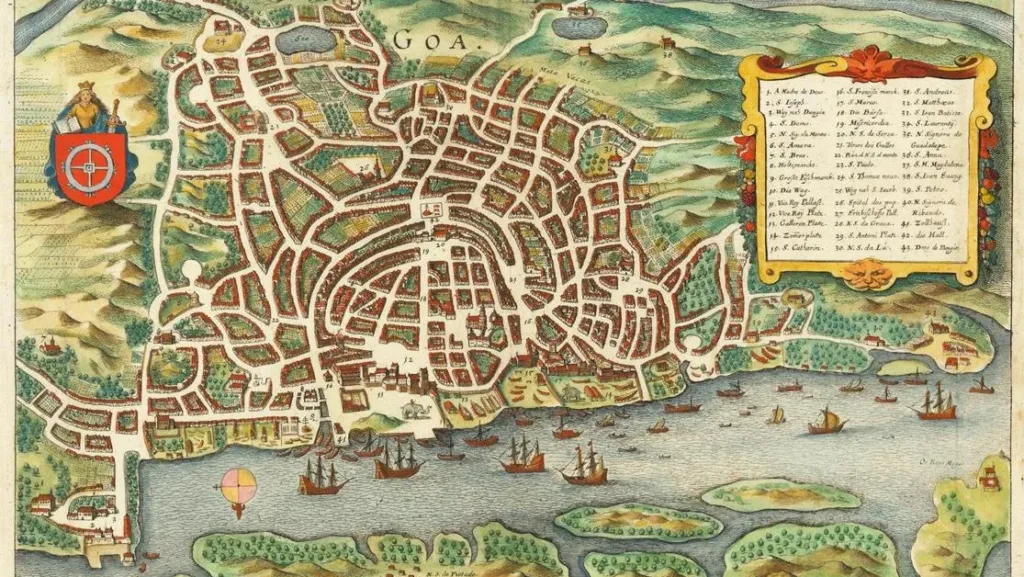
    The image appears to show an antique bird's-eye view map of Goa in 1650
    The image appears to show an antique bird’s-eye view map of Goa in 1650 | AI generated

    Was The Foral Goa’s First Constitution?

    The description of the Foral as Goa’s first constitution remains part of an ongoing historical debate.

    Historian Dale Menezes, who is co-authoring a commentary for the commemorative edition, argues that the document can be understood as a constitution in the broader sense of establishing the terms of a new political community.

    The Foral was issued after the Portuguese conquest, at a time when the new administration was seeking to establish its authority while dealing with existing local institutions.

    “The Foral of 1526 represents a peculiar governmental instrument of the early modern times, that is to say 1500s onwards. There were certainly customs in earlier epochs, but kings, monarchs, and empires in India did not function by writing down these customs. At best we have land grants on stone or copper. Even the Bahamani and Bijapuri Sultanates that ruled parts of present-day Goa ruled according to localized custom but never set it down on paper for the use of all people across all villages in a given territory. Besides, the Foral of 1526 does not just codify land laws, it is much broader than that,” Menezes said.

    Jocel de Souza, who works to preserve and revive the Gaunkari, or Comunidade, system, sees the document as an example of negotiation between rulers and local communities.

    Also Read | 5 things to know about the Congress’s Rs 81.45 lakh payment to The Indian Express during the Bengal polls

    “It is a brilliant and path breaking set of laws compared to what rulers both in India and Europe were used to at the time. The usual practice was to impose sovereign diktats without any kind of collaboration. However, in the case of Goa, it was a collective charter and the people (who were being ruled) were involved in its drafting. This document laid the foundation for subsequent negotiations between the rulers and the ruled,” he said.

    De Souza also links the community land system to Goa’s historical patterns of wealth distribution.

    “All this ultimately boils down to the fact that community land rights were recognised, safeguarded and codified by the Police as early as the 16th century, when legislation of this nature was practically unheard of in any other part of this side of the world,” he said.

    “It was this document that eventually was amended and expanded upon over the following centuries, that evolved and matured into the Portuguese Civil Code and the Code of Comunidades that we have today,” he added.

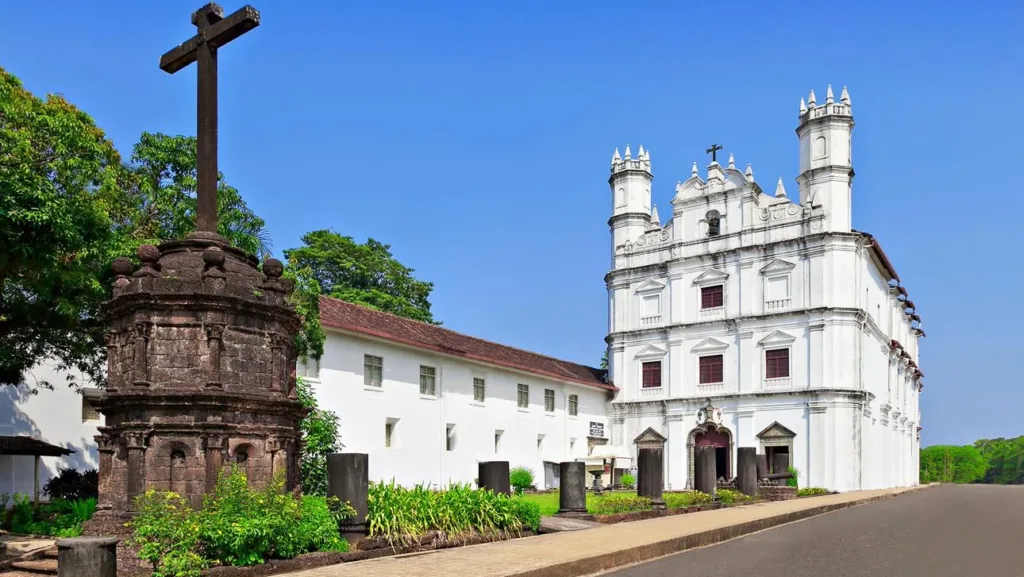
    The historic Church of Saint Francis of Assisi and its adjoining convent in Old Goa, India.
    The historic Church of Saint Francis of Assisi and its adjoining convent in Old Goa, India. Credit: X/Pramod Sawant

    Why Is The Foral Also Seen As A Colonial Document?

    The interpretation of the Foral is not uniform. Shenoy places greater emphasis on the interests of the Portuguese administration and its need to secure revenue.

    “The primary motivation of the Portuguese administration was to guarantee and stabilise tax collections for the Crown. It established a fixed, collective rent system for the villages. It was less a foundational gift of civil liberties and more a shrewd legal pact designed to anchor imperial tax extraction to pre-existing Hindu jurisprudence and agrarian frameworks,” he said.

    He also cautioned against describing it as Goa’s first constitution. “The Foral of 1526 represents one of the earliest Western attempts at colonial mapping and administrative ordering of an Asian territory. Foral should not be viewed as Goa’s ‘first constitution,’ as doing so reframes a colonial instrument of conquest into a democratic gift,” Shenoy said.

    How The Foral Influenced Goa’s Land System

    The Foral initially applied to the 31 villages around the city of Goa, now Old Goa, which were under Portuguese control. When Portuguese rule expanded in 1543 to Bardez in the north and Salcete in the south, similar arrangements were offered to the landed elites of those territories.

    Also Read | 3-day bank strike deferred as panel takes up 5-day week demand

    Over the centuries, the original framework was amended and expanded. Its legacy can be traced through the development of the Code of Comunidades and the Portuguese Civil Code.

    For Menezes, the document provides an unusual record of interaction between a foreign administration and existing Goan institutions.

    “The Foral was not simply a record of Portuguese rule, nor merely a technical document concerning the old village communities.”

    “Its pages preserve an extraordinary encounter between an incoming power and Goan institutions, practices and people. They reveal that Goans were not merely subjects upon whom a new order was imposed but Goans negotiated, defended inherited practices, accepted new obligations and helped shape the political arrangements under which they would live. The document therefore offers a rare window into the making of Goan society at a crucial moment in its history,” he said.

    “Five centuries later, the questions contained in the Foral—about community, land, government, rights, obligations and the relationship between people and power—remain remarkably resonant,” he added.

    Why The Foral Still Matters In Goa Today

    The debate surrounding the Foral is not limited to historians. Its legacy remains connected to questions over community land and the future of the Comunidade system.

    Advocate Kripa Pilarnekar, who has approached the Bombay High Court in Goa over the restoration of certain alienated Comunidade lands, argues that these institutions remain part of Goa’s historical inheritance.

    “The Comunidades are not merely remnants of Goa’s past. They form part of the State’s shared historical inheritance. These village institutions have survived changes in rulers, legal systems, religion, politics and economic structures over several centuries. The larger question is whether a centuries-old system governing village lands, community rights and customary institutions can be protected in an era of rapidly increasing commercial pressure on land,” she said.

    Pilarnekar said the present discussion should not be about returning to Goa’s past but about understanding what has survived from it.

    “The Foral of 1526 tells us what Goa inherited. The challenge of 2026 is to decide, within the framework of law, what Goa will preserve,” she adds.

    Five hundred years after João III promulgated the Foral, the document therefore remains more than an archival record. Its clauses continue to inform discussions about Goa’s village communities, land rights, taxation and the relationship between government and the people it governs.

  • Calm restored at SRFTI campus after clash between students and ABGP

    Calm restored at SRFTI campus after clash between students and ABGP

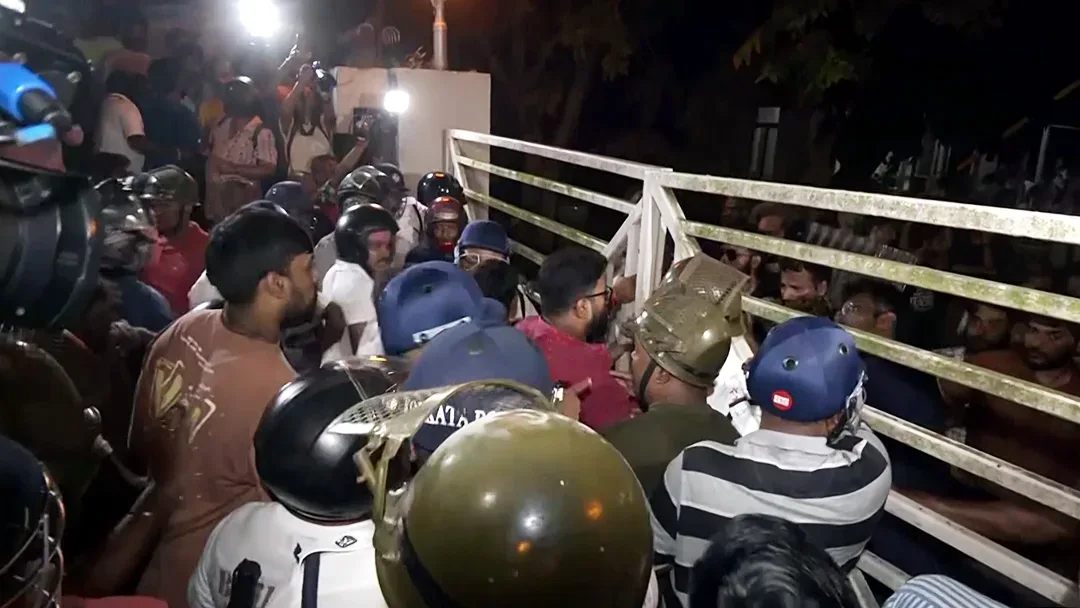
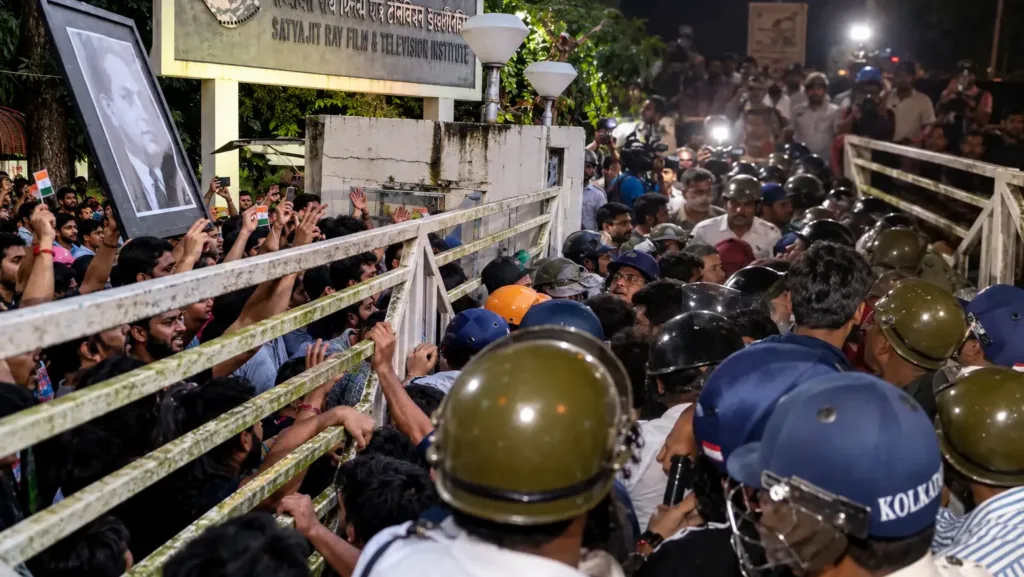
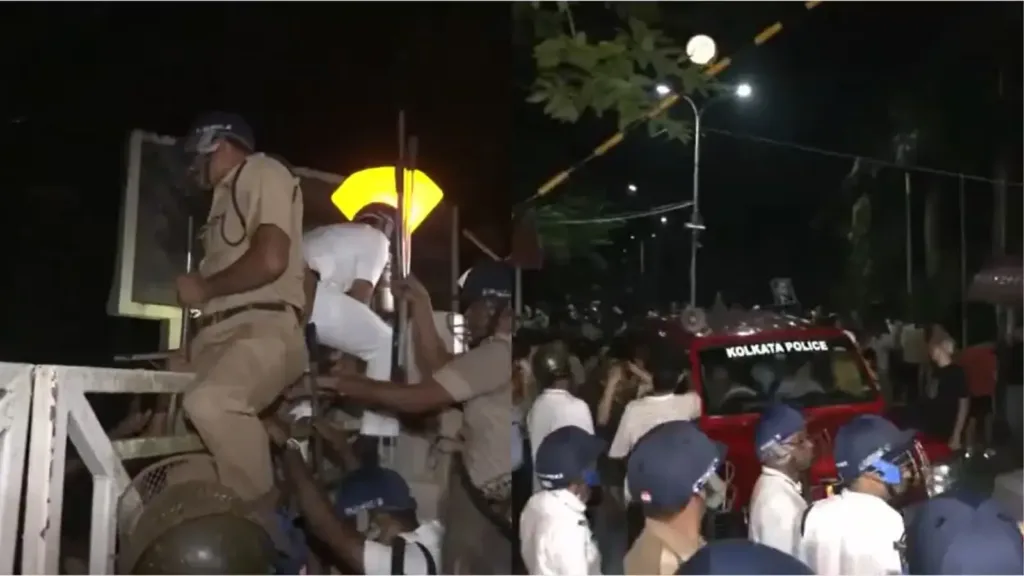
    Police maintained a presence outside the main gate of the Satyajit Ray Film and Television Institute (SRFTI) in Kolkata on Monday, a day after a clash between a section of students and members of the Akhil Bharatiya Grahak Panchayat (ABGP) left several people injured.

    The situation remained calm on Monday as students returned to their classes and no gathering of outsiders was seen outside the institute. A senior police officer was present near the main gate as authorities continued to look into the violence reported on Sunday. An SRFTI official said, “Today the situation is normal. Outsiders have dispersed, while students have resumed classes.”

    Cases Filed Over SRFTI Campus Clash

    A senior police officer said cases had been registered by both sides, along with a suo motu case, at the nearby Panchasayar police station in connection with Sunday’s incident. The clash involved students and members of ABGP, with both sides accusing each other of assault.

    A clash broke out between members of the SFI and the Akhil Bharatiya Grahak Panchayat during an event organised by the Akhil Bharatiya Grahak Panchayat at the SRFTI auditorium, in Kolkata on Sunday.
    A clash broke out between members of the SFI and the Akhil Bharatiya Grahak Panchayat during an event organised by the Akhil Bharatiya Grahak Panchayat at the SRFTI auditorium, in Kolkata on Sunday. Credit: X/ANI

    The dispute began during an ABGP programme that was being held at the institute’s auditorium. According to ABGP state leaders, the organisation had obtained permission from the authorities and paid to use the venue for the event. The programme started at around 10 am on Sunday.

    Students Object To Outside Programme

    According to the accounts provided by the students, the trouble began after some students noticed people from outside the institute attending the programme.

    A section of students questioned the authorities about allowing a private organisation with right-wing links to hold an event on the SRFTI campus. The students then put up posters near the auditorium to register their protest.

    The situation reportedly escalated when students and members of the organising group entered into a heated exchange.

    The students’ association later alleged that speakers at the event delivered “highly provocative speeches”. It further claimed that members of the organisation used terms such as “anti-national”, “urban Naxals” and “terrorists” while referring to students.

    The students’ body also alleged that female students were manhandled during the confrontation.

    Students Allege Assault With Knives

    The confrontation later turned violent, according to the students’ account. The students’ association alleged that some ABGP members assaulted students with knives.

    The students claimed four students suffered serious injuries, while several others were also hurt.

    A student, speaking to a news channel on Sunday, described how the confrontation unfolded.

    “We were having our practical classes in the auditorium. When we saw people from outside holding a programme there, some of us protested and put up posters on the wall. The members of the organisation then came towards us and started beating us up. We somehow managed to escape towards the hostel,” the student said. An institute teacher also alleged that he and some of his colleagues were assaulted after they intervened in the confrontation.

    Following the clash, protests took place inside the campus. Students subsequently locked the main gate and staged a sit-in, demanding action against those they alleged had attacked them.

    The students’ body claimed that around 150 students remained inside the campus and alleged that they had been “surrounded by goons”.

    It also claimed that six policemen had detained the main accused inside a police vehicle, while a crowd outside the campus was demanding their release.

    ABGP Rejects Allegations

    ABGP rejected the students’ allegations and presented a different account of the incident.

    Also Read | BJP Bengal poll spend: Influencers named in ECI filings

    The organisation claimed that its programme had been disrupted after students objected to the event and tore posters and banners, including images of Bharat Mata and Swami Vivekananda.

    An ABGP member told reporters, “We had paid ₹15,000 to hire the auditorium and had obtained permission from the authorities. Our organisation works mainly for consumer protection and awareness. But an attempt was made to disrupt our programme, and posters were torn.”

    The ABGP member also alleged that several members of the organisation were injured during the confrontation and said four of them had been admitted to hospital.

    SRFTI campus unrest continues as outsiders gather at the gate at night; students and professors remain inside.
    SRFTI campus unrest continues as outsiders gather at the gate at night; students and professors remain inside. Credit: X/ANI

    ABGP Calls Event A Consumer Rights Programme

    ABGP state president Pankaj Roy described the programme as an event focused on consumer rights with a “nationalist vision”.

    He alleged that some students objected to a picture of Bharat Mata displayed at the venue. Roy also claimed that people attending the programme, including women, were harassed.

    Also Read | Kolkata Police cracks down on civic volunteers with new SOP

    With cases filed by both sides, the incident is now being examined by the police. On Monday, however, the situation at SRFTI remained normal, with students attending classes and no fresh disturbance reported outside the institute.

  • What actually is the ‘virtue of higher seeding’? Here is how it helped India reach the semis of Asian Games

    What actually is the ‘virtue of higher seeding’? Here is how it helped India reach the semis of Asian Games

    India secured a place in the men’s cricket semi-finals at the 2026 Asian Games after their quarter-final against Afghanistan was abandoned due to rain in Nisshin, Japan. No ball was bowled in the match, but the washout did not prevent India from progressing to the next stage.

    The Asian Games cricket rules provide an advantage to the higher-seeded team when a knockout fixture cannot produce a result. Since India entered the quarter-finals as a higher seed, they advanced to the semi-finals after the match was called off.

    What Is The ‘Virtue Of Higher Seeding’?

    The phrase “virtue of higher seeding” refers to the advantage given to a team that has been placed higher in the tournament’s seeding system.

    Also Read | 4 injured as chutney dispute sparks street brawl in Hapur market

    In a knockout match, both teams normally need a result to determine who moves forward. However, when weather conditions make a game impossible, the competition regulations can provide a route for the higher-seeded side to progress.

    That is what happened in the India vs Afghanistan quarter-final. Persistent rain meant the fixture could not begin, with no toss or delivery taking place. As there was no result on the field, India’s higher seeding became decisive.

    The progression was therefore not based on runs scored, wickets taken or a Duckworth-Lewis-Stern calculation. Instead, the tournament’s no-result provision allowed the higher-seeded team to move into the semi-finals.

    Why Did India Have Higher Seeding?

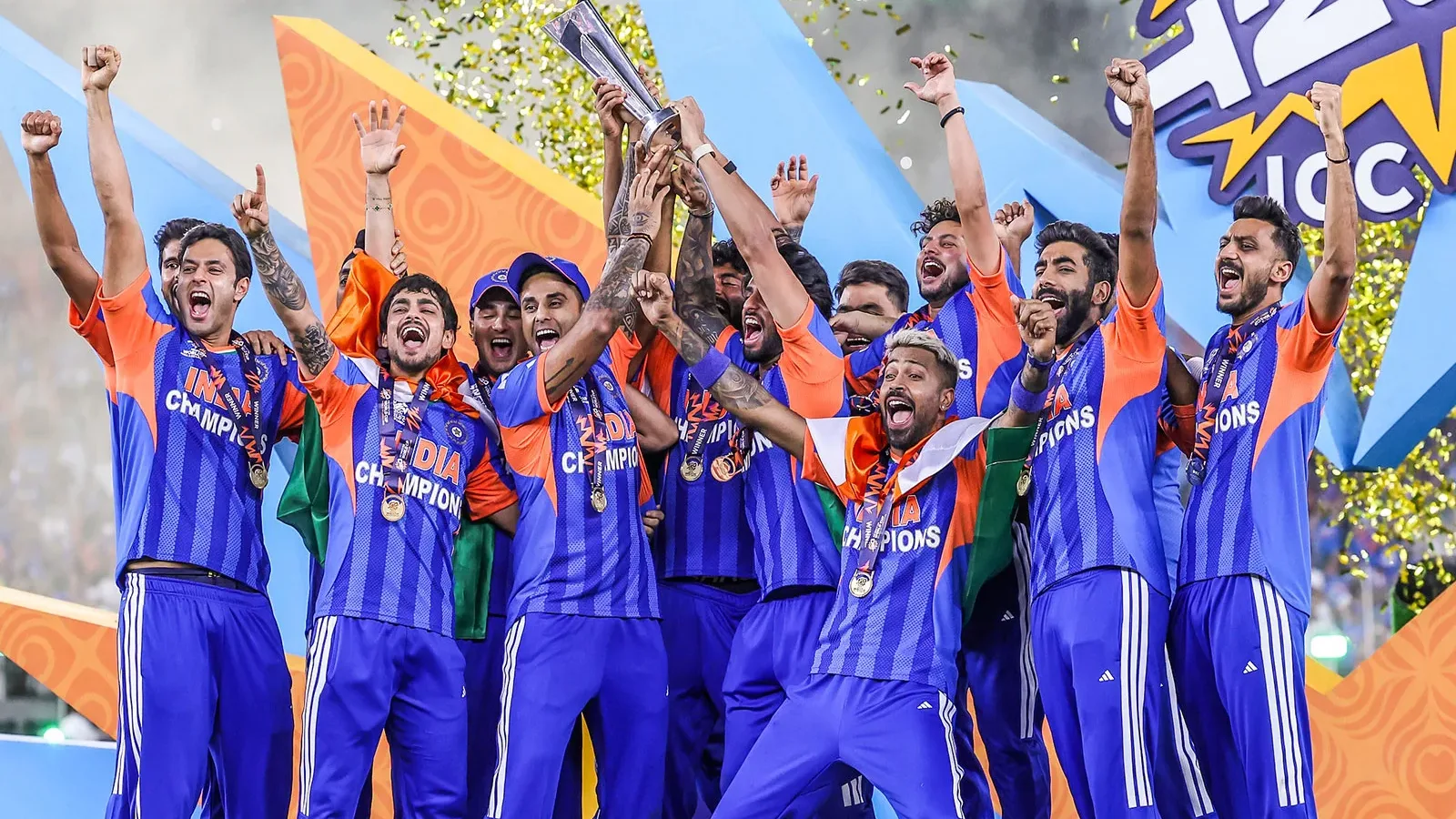
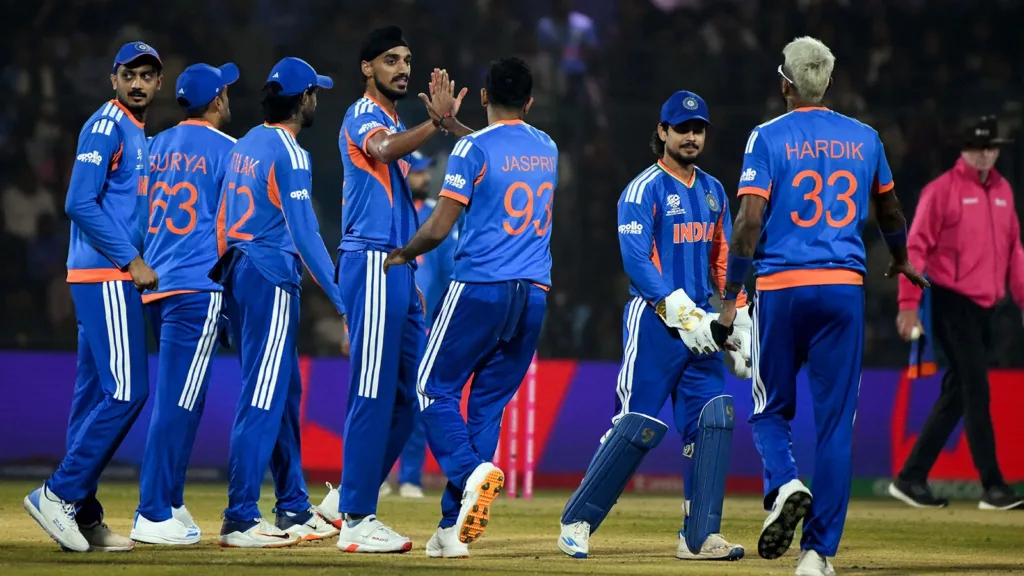
    India’s position in the knockout stage was linked to the format of the Asian Games men’s cricket competition. As the defending champions, India were among the four teams that received direct entry into the quarter-finals.

    India men cricket team
    India men cricket team. Credit: X/ANI

    India, Pakistan, Sri Lanka and Bangladesh were given byes into the last eight. Afghanistan, Japan and Nepal, meanwhile, had to compete in the preliminary stage for their places in the quarter-finals. This meant Afghanistan had to play their way into the knockout round, while India entered directly at the quarter-final stage.

    Also Read | 3-day bank strike deferred as panel takes up 5-day week demand

    India vs Afghanistan T20 Rankings

    India’s position at the top of the ICC Men’s T20I rankings also underlines the difference in the teams’ international standing.

    India are ranked No. 1 in men’s T20Is with a rating of 269, while Afghanistan are ranked No. 10 with a rating of 218.

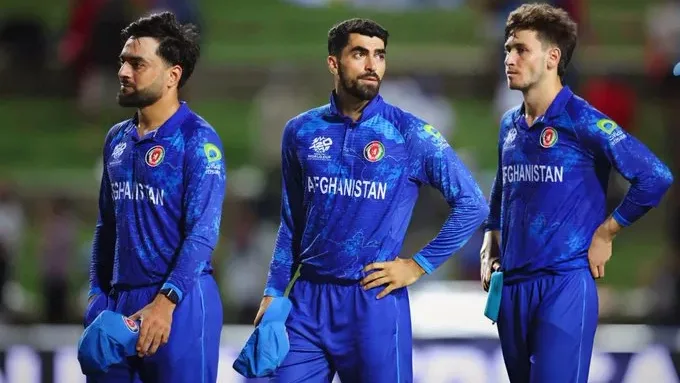
    Afghanistan T20I players
    Afghanistan T20I players. Credit: X/ANI

    However, the quarter-final was decided by the Asian Games’ competition regulations rather than simply by the ICC rankings. The tournament’s seeding and format determined India’s advantage when the match was washed out.

    India also arrived at the Asian Games as the reigning T20 World Cup champions and defending Asian Games men’s cricket champions.

    Rain Ends Afghanistan’s Campaign

    The India-Afghanistan quarter-final was eventually abandoned without a ball being bowled after rain made play impossible.

    The outcome allowed India to continue their campaign without taking the field, while Afghanistan’s hopes of winning the men’s cricket gold medal came to an end.

    The situation also echoed the previous Asian Games. India’s gold-medal match against Afghanistan at the 2022 Asian Games was affected by rain, with India winning the title by virtue of their higher seeding.

    This time, the same tournament principle again came into play, sending India into the semi-finals despite the quarter-final never getting underway.

  • BJP Bengal poll spend: Influencers named in ECI filings

    BJP Bengal poll spend: Influencers named in ECI filings

    The Bharatiya Janata Party’s expenditure statements filed with the Election Commission for the 2026 West Bengal Assembly elections have brought payments to several YouTubers and social media personalities into focus.

    According to an analysis of the filings, the BJP spent ₹286.99 crore during the West Bengal polls. The documents show that ₹55.76 crore was paid to 36 social media personalities by the party’s central unit in New Delhi between March 15 and May 6.

    The payments were made for content and advertising-related activities during the election period. The Election Commission had required political parties to submit details of expenditure on internet and social media campaigning, including content development and related operational costs.

    Sayak Chakraborty Received ₹2.5 Lakh

    Actor and YouTuber Sayak Chakraborty was listed as receiving ₹2.5 lakh from the BJP for content linked to “general party propaganda”.

    Chakraborty had made headlines in January after an altercation at a restaurant in Kolkata’s Park Street. He alleged that a Muslim waiter had served him a beef preparation instead of the mutton dish he had ordered. The incident was recorded on video and the waiter was subsequently arrested on allegations of hurting religious sentiments.

    Sayak Chakraborty
    Sayak Chakraborty. IG/withlovesayak

    The 31-year-old actor runs the YouTube channel @withlovesayak, which has more than 88,000 subscribers. Chakraborty said he agreed to create content for the BJP because the party had supported him following the restaurant incident.

    “The incident at the restaurant was on January 30 and was an instant reaction. There was no politics. Many parties approached me to make content after the incident, but I only agreed to BJP as they supported me during the incident,” he said in a social media post.

    Shamik Adhikary Paid ₹13 Lakh

    Popular vlogger Shamik Adhikary, known online as @Nonsane, received ₹13 lakh, according to the expenditure details. His YouTube channel has more than 3.5 lakh subscribers. Before the election, Adhikary posted a series titled ‘Button’, which criticised the Trinamool Congress government over issues including the RG Kar rape and murder case and unemployment.

    Shamik Adhikary
    Shamik Adhikary. IG/yournonsanee

    The series was widely circulated on social media, including by BJP leaders. Adhikary was also arrested over allegations of sexual assault, an incident that prompted allegations of political retribution from the TMC.

    Other Influencers in BJP’s Payee List

    Bangladeshi singer Sangit Sarkar received ₹2 lakh, according to the filings. Known for protest music and socio-political commentary, Sarkar had also released songs concerning issues in West Bengal, including the teachers’ recruitment controversy and alleged corruption.

    Also Read | Kolkata Police cracks down on civic volunteers with new SOP

    Former journalist Pinakpani Ghosh, who runs the YouTube channel Pinak Ki Bolche, received ₹5.25 lakh. His channel has more than 2.4 lakh subscribers and frequently discusses Bengal politics and social issues.

    Former radio jockey Priyanka Sarkar, also known as RJ Priyanka, received ₹15 lakh. She has more than 10.4 lakh Instagram followers.

    Sarkar said she had produced two pieces of content for the BJP, one concerning the launch of a sleeper Vande Bharat train and another about initiatives announced in the Union Budget.

    “It was a normal promotion. Neither have I harmed anyone’s sentiment nor reputation. I am not a supporter of any party. I have made videos during the RG Kar incident. But I have also made videos on the NEET paper leak case,” Ms. Sarkar said.

    Political Reactions to Influencer Payments

    The payments have drawn competing responses from the BJP and Trinamool Congress.

    TMC MLA Kunal Ghosh accused the BJP of using payments to YouTubers and influencers to shape a narrative around religious polarisation during the election campaign.

    BJP state spokesperson Debjit Sarkar defended the payments and said the party had followed the rules. “Yes. We have paid influencers. So what? We will do it again. We have absolutely played by the book.” he said.

    Also Read | Who is Sumit Roy? Abhishek Banerjee’s PA arrested in Shalbani land scam case

    The Election Commission’s 2026 election guidelines stated that political parties were required to report campaign expenditure on internet platforms and social media, including spending on content development.

  • Mobile retailers plan ‘No UPI Day’ on October 2; raise concern over UPI MDR

    Mobile retailers plan ‘No UPI Day’ on October 2; raise concern over UPI MDR

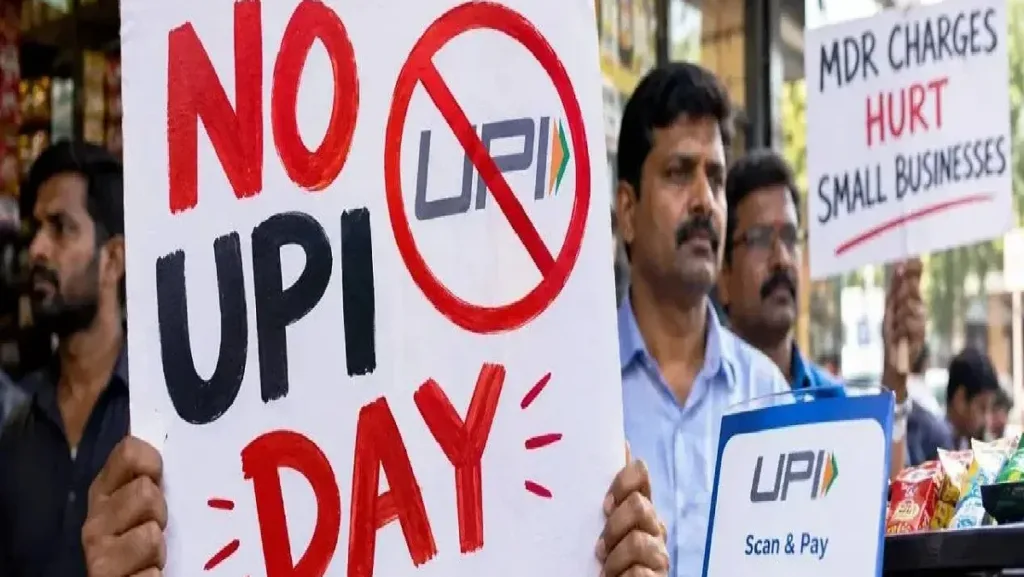
    Mobile phone retailers across India are set to observe October 2 as “No UPI Day” to protest the proposed 0.4 per cent Merchant Discount Rate (MDR) on eligible UPI merchant transactions. The campaign has been called by the All India Mobile Retailers Association (AIMRA), which says the additional cost could put pressure on small retailers.

    The 0.4 per cent MDR on person-to-merchant UPI payments above ₹2,000 is scheduled to take effect from October 15, 2026. Person-to-person payments and eligible transactions up to ₹2,000 will remain outside the charge.

    What Is ‘No UPI Day’ on October 2?

    AIMRA Vice President and Delhi NCR President Tarvinder Singh said the association has called for the nationwide observance to draw attention to retailers’ concerns over the proposed UPI MDR.

    “The All India Mobile Retailers Association (AIMRA) has called for a ‘NO UPI DAY’ on October 2, 2026, to highlight the concerns of mobile retailers regarding the 0.4 per cent Merchant Discount Rate (MDR) applicable to eligible merchant UPI transactions,” AIMRA Vice President and President for Delhi NCR region, Tarvinder Singh, said in a statement.

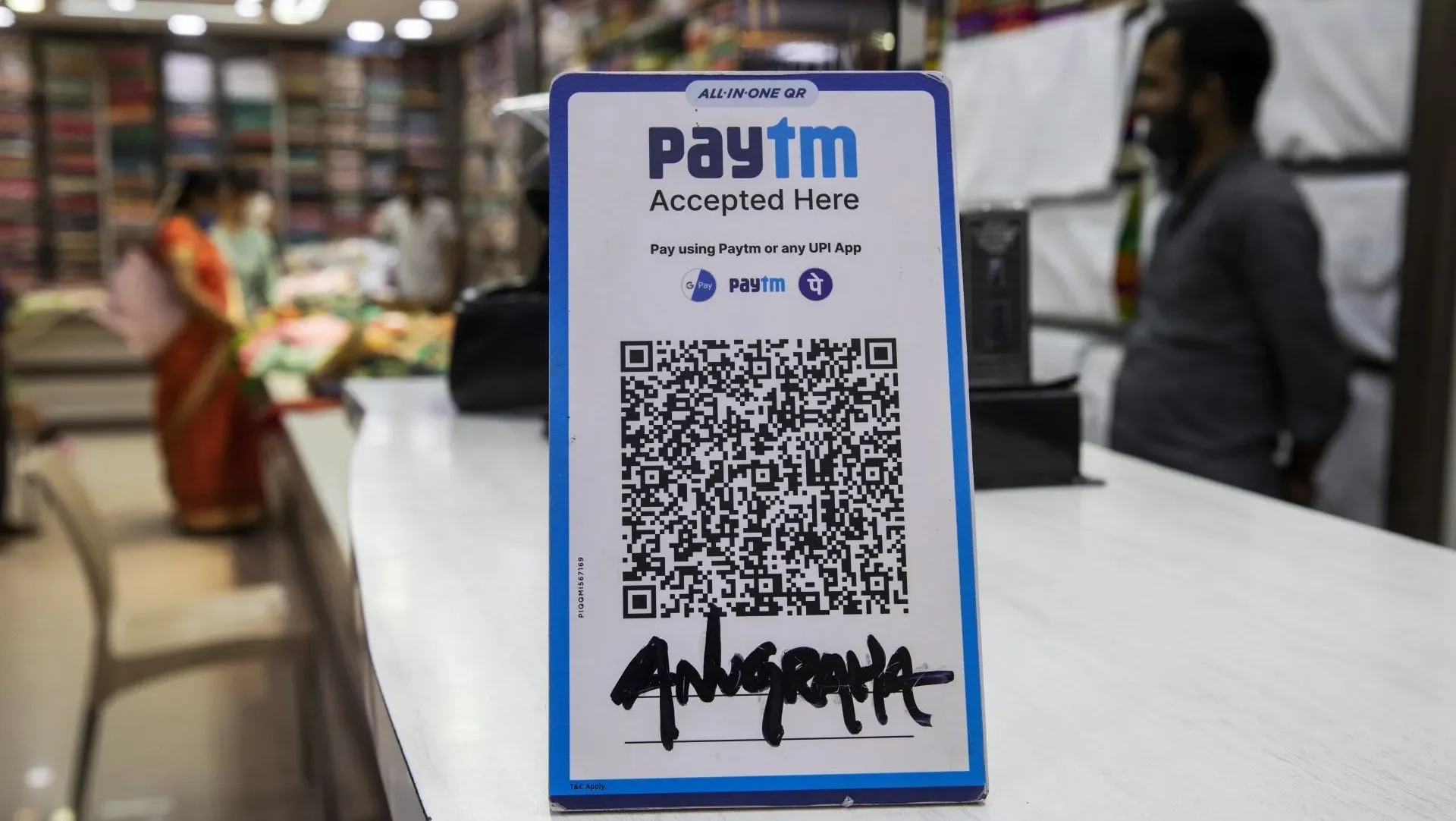
    As part of the campaign, participating retailers plan to cover their UPI QR codes with black cloth and stop accepting UPI payments for the day. October 2 also marks Gandhi Jayanti.

    The protest comes as several trade bodies have announced plans to participate in the “No UPI Day” campaign against the new MDR framework.

    Mobile Retailers Raise Concerns Over UPI MDR

    According to AIMRA’s representation to Finance Minister Nirmala Sitharaman, the proposed MDR could affect the earnings of small mobile retailers that rely heavily on digital payments.

    Also Read | CJP demands CEC Gyanesh Kumar’s resignation, announces nationwide protest from Oct 2

    The association estimates that a retailer processing between ₹5 lakh and ₹30 lakh in monthly UPI transactions could face a monthly loss of ₹2,000 to ₹12,000. AIMRA has argued that this could reduce a significant portion of the net income of smaller businesses.

    The retailers’ body has also estimated the overall financial impact at around ₹40 crore every month, or nearly ₹500 crore annually, for small mobile retailers across India.

    Retailers hold a placard of "No UPI Day" to protest the proposed 0.4 per cent MDR on eligible UPI merchant transactions
    Retailers hold a placard of “No UPI Day” to protest the proposed 0.4 per cent MDR on eligible UPI merchant transactions. Credit: X/ANI

    AIMRA Demands Zero MDR for UPI

    AIMRA has stressed that its campaign is not against UPI or digital payments. Instead, the association wants merchant UPI payments to continue under a zero-MDR system.

    “If We Want Digital India, UPI Must Remain Zero MDR. This is not a protest against UPI or Digital India. Our concern is the additional financial burden being placed on merchants who accept digital payments. If we want Digital India to grow further, digital payments should remain affordable for the entire retail ecosystem. Our clear demand is that UPI merchant payments should continue under a Zero MDR structure,” Singh said.

    Also Read | Prashant Kishor’s Jan Suraaj eyes Delhi after Bankipur bypoll win

    Under the new framework, the 0.4 per cent MDR will apply to specified merchant transactions above ₹2,000, with the charge capped at ₹300 for transactions of ₹75,000 or more.

    The October 2 campaign is therefore expected to put the concerns of mobile retailers over UPI MDR at the centre of attention ahead of the October 15 implementation date.

  • Student suicides in India: The growing impact of academic pressure

    Student suicides in India: The growing impact of academic pressure

    Student suicides in India continue to raise serious questions about academic pressure, mental health and the expectations placed on young people. A recent death by suicide at IIT Bombay has once again brought attention to a problem that extends well beyond a single institution or an individual case.

    The circumstances surrounding the IIT Bombay student’s death remain under investigation, and conclusions should not be drawn from incomplete accounts of the student’s final hours. However, the incident has also highlighted the wider concern surrounding youth suicides and the pressures faced by students in high-achieving academic environments.

    Student suicides are a wider concern

    Student suicides are not unique to India. Universities in the United States and other countries have also faced similar tragedies. Among full-time US college students aged 18 to 22, around 11% to 15% have reported serious thoughts of suicide during the previous year, depending on the survey.

    Research from the US has also found higher levels of anxiety, depression and other mental health problems among students in high-achieving environments compared with national norms. While much of the available research comes from the US, the underlying pressures faced by young people can also be relevant to students in India.

    Data from India’s National Crime Records Bureau showed 14,488 suicides among people categorised as students in 2024. Students accounted for 8.5% of all reported suicides that year. A nationally representative mortality study covering the period from 2001 to 2019 found that 44% of all suicides occurred among people aged 15 to 29. Among women, the proportion was 56%.

    Academic pressure can affect mental health

    The reasons behind suicide are often complicated and cannot always be understood through a single factor. Family conflict, relationships, social isolation, mental illness, academic stress and financial uncertainty can overlap in ways that are difficult to identify after a death.

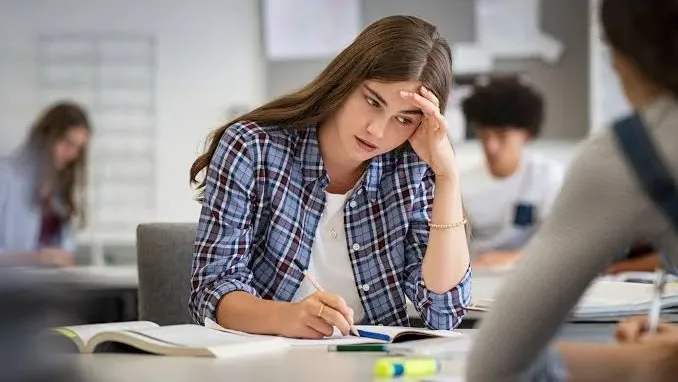
    Academic pressure and stress affect mental health of students
    Academic pressure and stress affect mental health of students | Representational Image

    Examination results can become particularly difficult for young people when marks are treated as a measure of intelligence, personal worth or future prospects.

    A review combining findings from 52 studies across several countries found that most of the studies reported a relationship between academic pressure or the timing of the school year and at least one negative mental health outcome. These included anxiety, depression and suicidal ideation.

    The pressure can be especially intense in institutions where students are expected to maintain exceptionally high academic standards. A poor examination result may then feel less like a temporary setback and more like a threat to a student’s entire future.

    Building resilience before failure

    The discussion around student suicides also raises questions about how young people are prepared to deal with failure. Resilience can be developed before students encounter their first major academic setback. When children grow up believing that a very high mark represents success while anything lower amounts to failure, their understanding of achievement can become narrowly tied to examination performance.

    Also Read | Healthy office snacks: 8 foods to eat when hunger hits at 4pm

    Effective parenting can help build resilience
    Effective parenting can help build resilience | Representational Image

    Parents can play an important role in changing that approach. Instead of repeatedly asking, “What rank did you get?”, greater emphasis can be placed on the question, “What did you learn?”

    Academic performance early in life does not necessarily determine eventual professional success. Changing direction, repeating a year, moving to another college, failing an examination or choosing a different career can all become part of a person’s longer journey.

    Why does connectedness matter?

    Counselling services at universities can provide support, but they cannot address every problem on their own. Students may hesitate to seek help if they believe that asking for support is a sign of weakness.

    Also Read | Highly sensitive in relationships? 6 ways to feel safer and more secure

    Another important factor is connectedness. Research has found that students who feel they belong to their school or university, believe that adults care about them and have people they can approach for help face a lower risk of suicidal thoughts and behaviour. Creating a stronger sense of belonging can therefore form an important part of efforts to support students.

    Education must prepare students for life

    The death of a student should not be reduced to a statistic or used simply as an example in debates over examinations, caste or technology such as ChatGPT. The wider issue of youth suicides is far larger than any one case.

    The purpose of education extends beyond helping young people perform well in examinations. It also involves preparing them for setbacks, failures and unexpected changes. For students, learning how to cope when plans go wrong can be as important as learning how to succeed when everything goes right.

  • CJP demands CEC Gyanesh Kumar’s resignation, announces nationwide protest from Oct 2

    CJP demands CEC Gyanesh Kumar’s resignation, announces nationwide protest from Oct 2

    The Cockroach Janta Party (CJP) has stepped up its criticism of the Election Commission of India amid a controversy over reported differences within the poll panel. The party has demanded the resignation of Chief Election Commissioner Gyanesh Kumar and announced plans for nationwide protests if he does not step down.

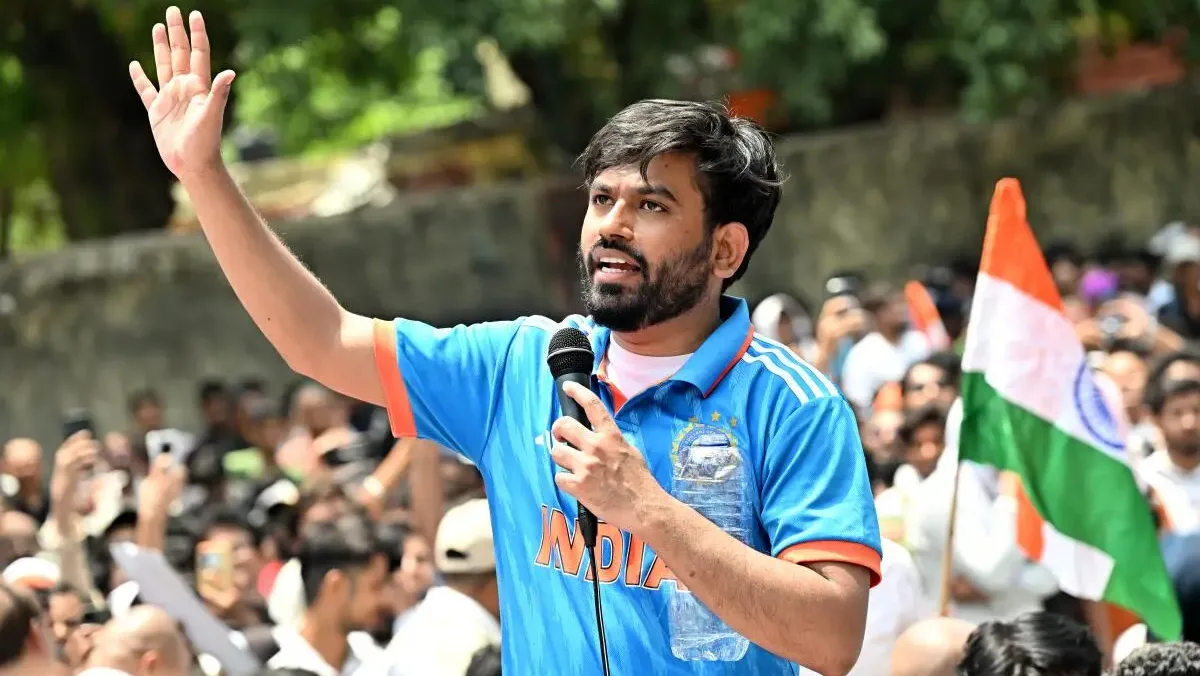
    CJP founder Abhijeet Dipke, along with spokespersons Saurav Das and Ashutosh Ranka, outlined the party’s demands at a press conference. The development came after a report by The Indian Express detailed objections reportedly raised by Election Commissioners Sukhbir Singh Sandhu and Vivek Joshi over several decisions concerning electoral rolls and the Special Intensive Revision (SIR).

    The Election Commission, however, has rejected the suggestion of an internal breakdown and said that all decisions, including those related to SIR, had the approval of all three commissioners.

    What are CJP’s three demands?

    The CJP listed three key demands during its press conference.

    First, the party called for Gyanesh Kumar to resign and demanded criminal proceedings against him.

    Second, it sought an immediate halt to the Special Intensive Revision (SIR) and called for the restoration of the January 2025 voter list.

    Third, the party demanded that the 2023 law governing the appointment and functioning of the Election Commission be repealed, along with reforms to the poll panel.

    Also Read | ECI dissent report sparks Opposition attack as poll panel rejects formal dissent claim

    Dipke also issued a 48-hour ultimatum to the Chief Election Commissioner and warned of a protest that he referred to as “Jantar Mantar 2.0” if Kumar failed to resign within the deadline.

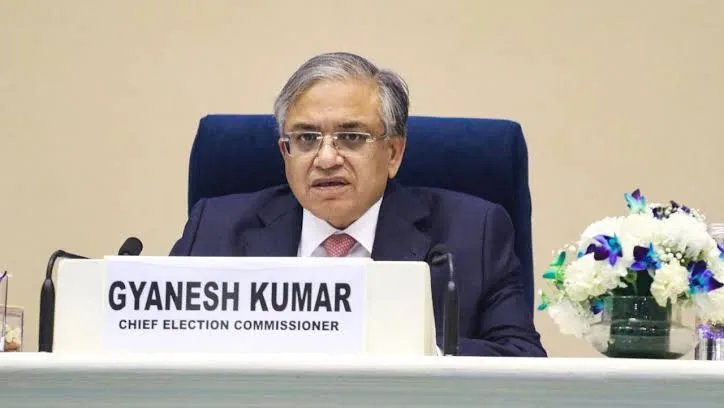
    Chief Election Comissioner Gyanesh Kumar
    Chief Election Comissioner Gyanesh Kumar. Credit: X/ANI

    Why is the Election Commission facing scrutiny?

    The controversy follows an Indian Express report that said Sandhu and Joshi had formally objected to several decisions taken within the Election Commission over the past 10 months.

    According to the report, the objections covered issues including voter registration, deletion of names from electoral rolls, access to voter databases and aspects of the SIR exercise. The two commissioners reportedly raised objections on 14 occasions.

    One point of contention involved Form 6, which is used by Indian citizens to apply for inclusion in the electoral roll for the first time. The report said changes were made to the form in connection with SIR, despite concerns raised by the commissioners.

    The reported disagreements have also brought renewed attention to the way electoral databases are managed and the role of statutory election officials in maintaining voter lists.

    CJP alleges voting rights are under threat

    Speaking about the controversy, Dipke said: “We are in a difficult phase; the right to vote is being snatched… If you know elections are being rigged you cannot participate. You will have to take a stand.”

    He also alleged that CEC Kumar was the “biggest threat to Indian democracy” and accused the Election Commission of deciding who would be allowed to vote.

    Also Read | What is ERONET? The ECI software at the centre of the SIR row

    These are allegations made by the CJP and are not established findings. The Election Commission has maintained that its decisions, including the SIR exercise, were unanimous and approved by all three commissioners.

    CJP announces nationwide protest from October 2

    On Friday, Dipke announced that the CJP would begin nationwide protests from October 2, Gandhi Jayanti, if Kumar did not resign. The agitation is set to begin in Mumbai before spreading to other cities, according to the party.

    “This Gandhi Jayanti let’s pledge to save democracy,” Dipke said.

    CJP co-convener Ashutosh Ranka added: “There cannot be a better date than Oct 2 to reclaim our Republic.”

    Dipke also questioned why Opposition parties continue to contest elections while alleging irregularities in the electoral process.

    In an earlier statement, he said: “When you continue to participate in rigged elections, you legitimise these elections and help maintain the illusion that they are free and fair.”

    The CJP’s announcement adds another layer to the ongoing debate surrounding the Election Commission, SIR and the management of electoral rolls, with the poll panel’s response and the reported objections from two commissioners remaining central to the controversy.

  • Healthy office snacks: 8 foods to eat when hunger hits at 4pm

    Healthy office snacks: 8 foods to eat when hunger hits at 4pm

    The afternoon slump can make the office pantry look especially appealing. By around 4 pm, lunch may feel like a distant memory, while dinner is still several hours away. Reaching for a snack at this time is not necessarily a bad habit.

    In fact, the reason you feel hungry could have more to do with what you ate at lunch. An early meal, inadequate protein or too many refined carbohydrates can leave you hungry again by late afternoon.

    Ms Charu Dua, HOD, Clinical Nutrition Department, Amrita Hospital, Faridabad, says an afternoon urge to eat may sometimes be genuine hunger.

    “If lunch was early, low in protein or mostly made up of refined carbohydrates, what feels like a snack craving may actually be true hunger,” she explains. Rather than ignoring that hunger, Dua recommends planning a nutritious snack.

    “The key is not fighting it with willpower, but preparing for it with the right food choices.”

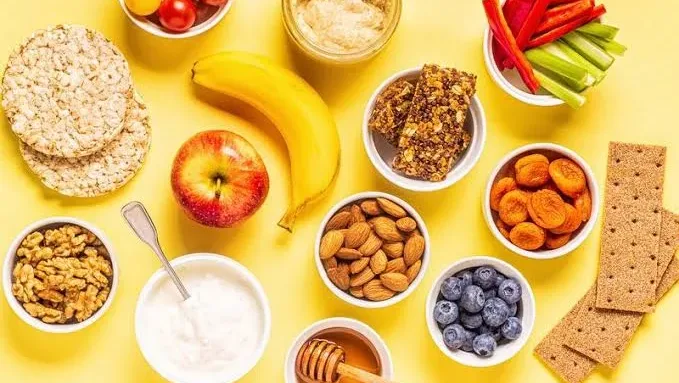
    Healthy snacks
    Healthy snacks | Representational Image

    What Should You Look for in an Office Snack?

    A good snack should help you stay satisfied until the next proper meal. According to Dua, protein, fibre and healthy fats are useful nutrients to include.

    “A useful office snack should ideally contain protein, fibre or healthy fats,” she says. “These nutrients digest more slowly than refined carbohydrates and help improve satiety.”

    She adds, “Protein tends to keep you fuller for longer, while fibre helps reduce hunger between meals.”

    8 Healthy Snacks for Your Office Desk

    1. Roasted Chana

    Roasted chana is an easy option to keep at work. It supplies plant protein and fibre without requiring refrigeration. “Roasted chana is a great option because it is rich in plant protein and fibre,” says Dua.

    She also points to its convenience. “It is inexpensive, shelf-stable and far better than fried snacks.” Portion size still matters. “Stick to a small handful of about 25 to 30 grams to avoid excess calorie intake.”

    2. Unsalted Nuts

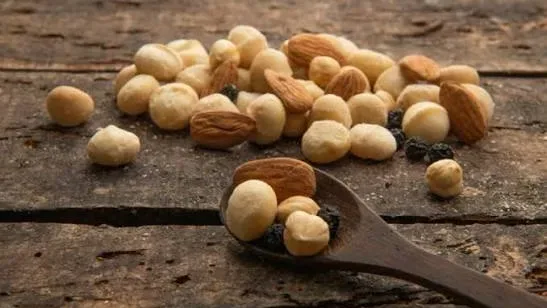
    Almonds, walnuts, pistachios and peanuts provide a combination of protein, fibre and healthy fats. “They help maintain energy levels without sharp spikes and crashes,” Dua explains. Because nuts are calorie-dense, she recommends limiting the serving to around 20 to 25 grams.

    Unsalted Nuts
    Unsalted Nuts | Representational Image

    3. Whole Fruits

    An apple, orange, pear or banana can make a convenient afternoon snack. “A whole fruit is one of the simplest and most effective snacks,” Dua says.

    Whole fruit also has an advantage over juice. “Whole fruit is always better than fruit juice, which removes fibre and concentrates sugar.” For greater satiety, she suggests pairing fruit with some nuts.

    4. Roasted Makhana

    Makhana can work as a light office snack when prepared without excessive toppings. “Makhana can be a good low-calorie snack when prepared correctly,” she explains. Dua advises avoiding buttered, heavily salted or cheese-coated versions and recommends combining it with peanuts or chana because makhana itself is low in protein.

    5. Seeds

    Pumpkin and sunflower seeds are compact and easy to carry. “Pumpkin and sunflower seeds provide healthy fats, protein and minerals,” Dua says. However, she stresses that portion sizes should still be monitored.

    6. Whole-Grain Crackers With Peanut Butter

    This combination can provide carbohydrates, protein and fat. “This is a balanced combination of carbohydrates, fat and protein when chosen correctly,” she notes.

    Dua recommends checking labels rather than relying on terms such as “multigrain”. She also suggests choosing peanut butter where peanuts are the main ingredient.

    7. High-Protein Snacks

    Protein bars and roasted soy snacks can be useful when lunch or dinner gets delayed. “Be cautious of marketing terms like ‘natural’ or ‘fitness’,” Dua advises. “Some protein bars contain as much sugar as sweets.” Check protein, fibre, added sugar and serving size before buying one.

    8. Dark Chocolate

    For those looking for something sweet, a small portion of dark chocolate can fit into an afternoon snack.

    “Sometimes cravings are emotional rather than physical,” Dua explains. “One or two pieces of dark chocolate can satisfy sweet cravings without turning into a full dessert.” She adds, “Portion control is key, as dark chocolate is still calorie-dense.”

    Dark Chocolate
    Dark Chocolate | Representational Image

    Keep an Emergency Snack Box at Work

    Planning ahead can make healthier choices easier during busy office hours. “A simple office snack box can include roasted chana, nuts, seeds, whole-grain crackers and small portions of dark chocolate,” Dua says.

    She also advises, “Avoid eating directly from packets. Portion your snack and eat slowly.”

    How to Tell Hunger From Habit

    Not every afternoon craving means you need food immediately. “Ask yourself whether you are hungry, thirsty, tired or just bored. Sometimes a glass of water or a short break is enough,” she says. If you are genuinely hungry, having a planned snack can help bridge the gap before dinner.

    A 4 PM Snack Can Be Part of a Healthy Routine

    Dua says afternoon snacking itself is not the issue. What matters is the food choice, portion and frequency.

    “A planned snack at 4 pm is completely fine and can even prevent overeating at dinner,” she says. “The issue is when snacking becomes unplanned, frequent and based on unhealthy foods.” Her advice is simple: “a good snack should bridge the gap between meals, not become another meal itself.”

  • India Space Force: Why India may need a separate space command? 

    India Space Force: Why India may need a separate space command? 

    Space has been part of military planning since the early years of the Space Age, but its role in warfare is changing rapidly. India could eventually need a dedicated Space Force as space-based intelligence, communication and navigation become increasingly important to military operations.

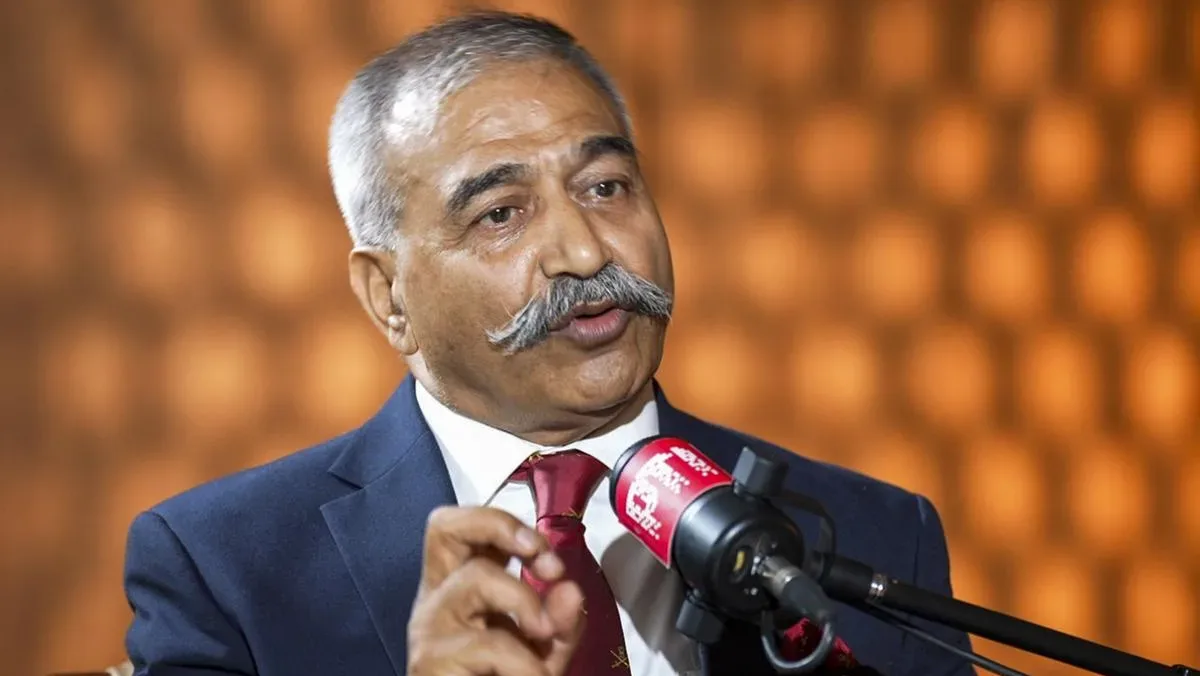
    Lieutenant General (Retired) Anil Kumar Bhatt, Director General of the Indian Space Association, said the growing importance of space means India will eventually have to strengthen its military structure beyond the existing Defence Space Agency (DSA). However, Bhatt cautioned against the idea that large-scale space warfare, as often portrayed in popular culture, is already around the corner.

    “Combat has slowly started creeping in, but the kind of space wars people often imagine, such as satellites attacking one another or humans fighting on the Moon or Mars, remain some distance away,” Bhatt said.

    From Spy Satellites to Modern Space Warfare

    The military use of space predates the launch of Sputnik. American researchers were examining the use of space for reconnaissance as early as 1946. That work eventually contributed to the Corona programme, with the US launching its first spy satellite in 1960.

    The satellite generated more imagery of the Soviet Union during a single mission than previous spy-plane operations had produced collectively. Within a decade, satellites had become America’s primary surveillance tools from orbit.

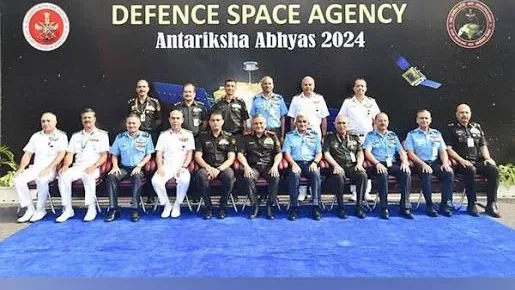
    India's Defence Space Agency
    India’s Defence Space Agency. Credit: X/ANI

    Space has since supported intelligence, surveillance and reconnaissance, communications and navigation. The emerging shift, however, is towards the weaponisation of the domain. Bhatt believes India’s DSA should eventually evolve into a Space Command and, later, a Space Force.

    “Setting up the DSA was the starting point. The way things are developing, it will have to evolve into a Space Command and eventually into a Space Force. But it must remain a triservices agency. The Air Force has pushed for one ‘Aerospace Force’ that absorbs the Space Force’s or DSA’s role but it is my personal belief that things are very different on the two sides of the Karman Line, and the domain above that line must be with a separate triservices organisation,” said Bhatt.

    India’s Defence Space Approach Has Changed

    India’s approach to military space capabilities has undergone a significant change in recent years. The Defence Space Agency was established in 2019, marking an important step towards coordinating the country’s space-related defence capabilities. Bhatt said the relationship between India’s armed forces and the private space and defence industry has also changed.

    Also Read | India asks Pakistan to back anti-terror claims with action as tensions rise

    “Five years back, the armed forces would never talk to anybody —any civilian, a startup or a private company— about anything to do with space. But today? Seventy-five defence challenges have been defined for start-ups to know and build what the armed forces require for the future,” said Bhatt.

    Frequent discussions between the military and industry have helped narrow the gap between what companies develop and what the armed forces require.

    Drones in Indian Defence Space Agency
    Drones in Indian Defence Space Agency. Credit: X/Ministry of Defence, Govt of India

    Minimum Orders for Defence Start-Ups

    Despite closer cooperation, defence start-ups continue to face challenges when developing products specifically for military use. Without assured orders, companies can find it difficult to sustain projects after developing prototypes. The Indian Space Association has therefore pushed for a minimum-order mechanism under defence challenges.

    “In defence challenges, the MoD has introduced something called a ‘minimum order quantity’. The idea is this: if a prototype is being made, money is being given by the government or the start-up is putting in the money, the exercise does not make sense if the prototype is not bought by anybody. It is a loss. So, we have pushed for a process where the government must buy at least a minimum number of units developed under a challenge, so as to keep the manufacturing feasible,” said Bhatt.

    Also Read | What is ERONET? The ECI software at the centre of the SIR row

    Space Could Become a Future Theatre of Conflict

    Recent conflicts have highlighted how important space-based capabilities can be on the battlefield. Operation Sindoor provided India with a direct experience of the role played by space-based intelligence, while the Russia-Ukraine war demonstrated the military value of commercial space assets.

    Bhatt believes future conflicts could involve attacks against space infrastructure itself, rather than space simply supporting operations on Earth.

    “Conflict in space could not be just about satellites shooting each other. It could begin in the form of cyberattacks on satellites and jamming of sensors by electronic means or destruction by laser/DEW. It is a matter of time.”

    Why India Needs a Triservices Space Structure? 

    According to Bhatt, space capabilities would have to be integrated into military planning at every level if India moves towards a more integrated theatre command structure.

    A future Space Force, he said, would provide intelligence, surveillance and reconnaissance, communications and navigation support across different theatres rather than serving one individual service.

    “A theatre will not only have the Army, Navy, or the Air Force, but will also have space. That means the same assets can be shared by many theatres. That would mean that DSA personnel would be critical for every theatre as they would be running the ISR, communication, navigation, etc, and advising the commanders. And that is why it must remain a triservices organisation instead of being led by any one service,” said Bhatt.

    India’s Defence Space Agency is therefore likely to remain central to the country’s evolving military space strategy as the role of space expands from support for operations on Earth towards becoming a potential theatre of conflict itself.