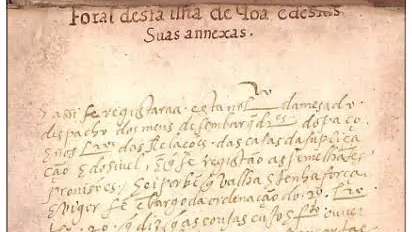
Five centuries after it was promulgated, the Foral de Goa of 1526 remains at the centre of discussions about Goa’s land, village institutions and relationship with political power.
On September 16, 1526, Portuguese King João III issued the Foral de Goa, a collection of 49 laws that recorded the rights, duties and customs of Goa’s village communities. Historians regard it as one of the earliest surviving paper documents of its kind in South Asia and often describe it as Goa’s first constitution, although the comparison does not refer to a modern constitutional system.
The 500th anniversary is being marked in both Goa and Portugal. In Goa, Bombay High Court judge Valmiki Menezes is scheduled to release a commemorative edition later this month. Portugal is also hosting a year-long programme through the Centre of the History of Society and Culture at the University of Coimbra and other cultural institutions.
What Is the Foral de Goa of 1526?
The document’s official name is Foral dos Usos e Costumes dos Gancares e Lavradores desta Ilha de Goa e outras Anexas a Ella. In English, this refers to the charter concerning the customs and practices of the Gaunkars, or village landholders, and farmers of Goa and its adjoining islands.
It is also known as the Foral of Afonso Mexia, after Afonso de Mexia, the Vedor da Fazenda, or chief comptroller of the treasury in Portuguese India, who signed it.
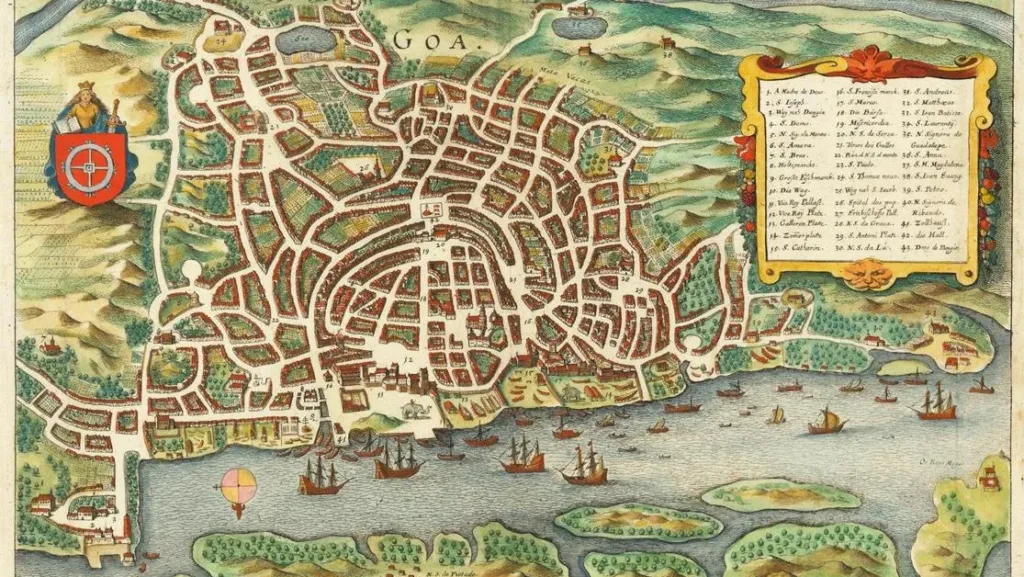
The Foral was created 16 years after the Portuguese captured Goa from the Adil Shah of Bijapur in 1510. It emerged from negotiations between the Portuguese administration and Gaunkars representing 31 villages in Tiswadi.
According to Goa Archives director Balaji Shenoy, it was the first formal attempt to put the existing indigenous village administration and revenue arrangements in Portuguese-controlled Goa into writing.
How Did The Foral Protect Gaunkar Rights?
A central feature of the Foral was its recognition of the Gaunkars and their role in managing village common lands through the Gaunkaria system, now commonly associated with the Comunidade system.
The document acknowledged the system as an existing institution and recognised the land-related rights of the Gaunkars. Its preamble says the rules were prepared “after ordering careful inquiries and investigations to determine and clarify what they were obliged to pay us, and used to pay to the kings and lords of this land before it became ours…as well as the rights, uses and customs, under which they lived and which we ought to preserve for them…”
Under the system, Gaunkars paid a fixed tribute, known as foro, to the state. Revenue from village lands was then used for different village responsibilities, while cultivation rights could be auctioned and part of the resulting income distributed among the Gaunkars.
The Foral also referred to the work of earlier generations who had developed coastal areas and turned them into productive settlements.
What Did The 49 Clauses Cover?
The Foral went beyond simply fixing agricultural taxes. Its 49 clauses dealt with several aspects of village life and administration.
They covered tax collection and the distribution of annual surplus, different assessments depending on the type of land, treatment of villages facing financial difficulties, hereditary rights and the leasing of uncultivated land.
Rules also addressed leasing land to outsiders, disputes, absent or defaulting Gaunkars and succession. The document included provisions concerning the rights of children from multiple marriages.
Independent scholar Rochelle Pinto describes the Foral as much broader than a revenue document.
“It was one of the initial documents issued by the Portuguese Crown to indigenous land administrators, sixteen years after the conquest of Goa… the Foral recognised the political significance of a local legend that legitimised the primacy of the gaunkars over the land in Ilhas by incorporating it into the document. The most minimal description of the Foral would see it as a revenue-fixing document, but in fact it addressed ritual practices, inheritance laws, and a range of other aspects through its forty-nine clauses,” she said.
Was The Foral Goa’s First Constitution?
The description of the Foral as Goa’s first constitution remains part of an ongoing historical debate.
Historian Dale Menezes, who is co-authoring a commentary for the commemorative edition, argues that the document can be understood as a constitution in the broader sense of establishing the terms of a new political community.
The Foral was issued after the Portuguese conquest, at a time when the new administration was seeking to establish its authority while dealing with existing local institutions.
“The Foral of 1526 represents a peculiar governmental instrument of the early modern times, that is to say 1500s onwards. There were certainly customs in earlier epochs, but kings, monarchs, and empires in India did not function by writing down these customs. At best we have land grants on stone or copper. Even the Bahamani and Bijapuri Sultanates that ruled parts of present-day Goa ruled according to localized custom but never set it down on paper for the use of all people across all villages in a given territory. Besides, the Foral of 1526 does not just codify land laws, it is much broader than that,” Menezes said.
Jocel de Souza, who works to preserve and revive the Gaunkari, or Comunidade, system, sees the document as an example of negotiation between rulers and local communities.
Also Read | 5 things to know about the Congress’s Rs 81.45 lakh payment to The Indian Express during the Bengal polls
“It is a brilliant and path breaking set of laws compared to what rulers both in India and Europe were used to at the time. The usual practice was to impose sovereign diktats without any kind of collaboration. However, in the case of Goa, it was a collective charter and the people (who were being ruled) were involved in its drafting. This document laid the foundation for subsequent negotiations between the rulers and the ruled,” he said.
De Souza also links the community land system to Goa’s historical patterns of wealth distribution.
“All this ultimately boils down to the fact that community land rights were recognised, safeguarded and codified by the Police as early as the 16th century, when legislation of this nature was practically unheard of in any other part of this side of the world,” he said.
“It was this document that eventually was amended and expanded upon over the following centuries, that evolved and matured into the Portuguese Civil Code and the Code of Comunidades that we have today,” he added.
Why Is The Foral Also Seen As A Colonial Document?
The interpretation of the Foral is not uniform. Shenoy places greater emphasis on the interests of the Portuguese administration and its need to secure revenue.
“The primary motivation of the Portuguese administration was to guarantee and stabilise tax collections for the Crown. It established a fixed, collective rent system for the villages. It was less a foundational gift of civil liberties and more a shrewd legal pact designed to anchor imperial tax extraction to pre-existing Hindu jurisprudence and agrarian frameworks,” he said.
He also cautioned against describing it as Goa’s first constitution. “The Foral of 1526 represents one of the earliest Western attempts at colonial mapping and administrative ordering of an Asian territory. Foral should not be viewed as Goa’s ‘first constitution,’ as doing so reframes a colonial instrument of conquest into a democratic gift,” Shenoy said.
How The Foral Influenced Goa’s Land System
The Foral initially applied to the 31 villages around the city of Goa, now Old Goa, which were under Portuguese control. When Portuguese rule expanded in 1543 to Bardez in the north and Salcete in the south, similar arrangements were offered to the landed elites of those territories.
Also Read | 3-day bank strike deferred as panel takes up 5-day week demand
Over the centuries, the original framework was amended and expanded. Its legacy can be traced through the development of the Code of Comunidades and the Portuguese Civil Code.
For Menezes, the document provides an unusual record of interaction between a foreign administration and existing Goan institutions.
“The Foral was not simply a record of Portuguese rule, nor merely a technical document concerning the old village communities.”
“Its pages preserve an extraordinary encounter between an incoming power and Goan institutions, practices and people. They reveal that Goans were not merely subjects upon whom a new order was imposed but Goans negotiated, defended inherited practices, accepted new obligations and helped shape the political arrangements under which they would live. The document therefore offers a rare window into the making of Goan society at a crucial moment in its history,” he said.
“Five centuries later, the questions contained in the Foral—about community, land, government, rights, obligations and the relationship between people and power—remain remarkably resonant,” he added.
Why The Foral Still Matters In Goa Today
The debate surrounding the Foral is not limited to historians. Its legacy remains connected to questions over community land and the future of the Comunidade system.
Advocate Kripa Pilarnekar, who has approached the Bombay High Court in Goa over the restoration of certain alienated Comunidade lands, argues that these institutions remain part of Goa’s historical inheritance.
“The Comunidades are not merely remnants of Goa’s past. They form part of the State’s shared historical inheritance. These village institutions have survived changes in rulers, legal systems, religion, politics and economic structures over several centuries. The larger question is whether a centuries-old system governing village lands, community rights and customary institutions can be protected in an era of rapidly increasing commercial pressure on land,” she said.
Pilarnekar said the present discussion should not be about returning to Goa’s past but about understanding what has survived from it.
“The Foral of 1526 tells us what Goa inherited. The challenge of 2026 is to decide, within the framework of law, what Goa will preserve,” she adds.
Five hundred years after João III promulgated the Foral, the document therefore remains more than an archival record. Its clauses continue to inform discussions about Goa’s village communities, land rights, taxation and the relationship between government and the people it governs.
Leave a Reply