Author: Anik Dutta

  • Student suicides in India: The growing impact of academic pressure

    Student suicides in India: The growing impact of academic pressure

    Student suicides in India continue to raise serious questions about academic pressure, mental health and the expectations placed on young people. A recent death by suicide at IIT Bombay has once again brought attention to a problem that extends well beyond a single institution or an individual case.

    The circumstances surrounding the IIT Bombay student’s death remain under investigation, and conclusions should not be drawn from incomplete accounts of the student’s final hours. However, the incident has also highlighted the wider concern surrounding youth suicides and the pressures faced by students in high-achieving academic environments.

    Student suicides are a wider concern

    Student suicides are not unique to India. Universities in the United States and other countries have also faced similar tragedies. Among full-time US college students aged 18 to 22, around 11% to 15% have reported serious thoughts of suicide during the previous year, depending on the survey.

    Research from the US has also found higher levels of anxiety, depression and other mental health problems among students in high-achieving environments compared with national norms. While much of the available research comes from the US, the underlying pressures faced by young people can also be relevant to students in India.

    Data from India’s National Crime Records Bureau showed 14,488 suicides among people categorised as students in 2024. Students accounted for 8.5% of all reported suicides that year. A nationally representative mortality study covering the period from 2001 to 2019 found that 44% of all suicides occurred among people aged 15 to 29. Among women, the proportion was 56%.

    Academic pressure can affect mental health

    The reasons behind suicide are often complicated and cannot always be understood through a single factor. Family conflict, relationships, social isolation, mental illness, academic stress and financial uncertainty can overlap in ways that are difficult to identify after a death.

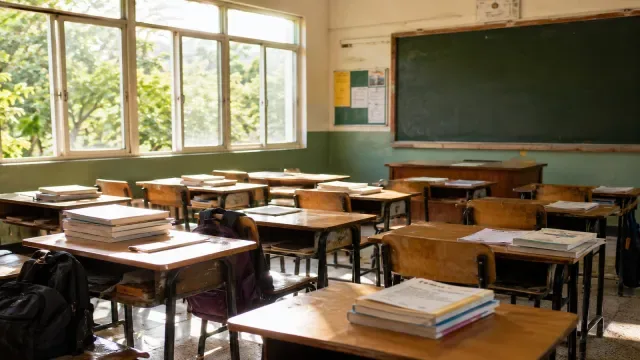
    Academic pressure and stress affect mental health of students
    Academic pressure and stress affect mental health of students | Representational Image

    Examination results can become particularly difficult for young people when marks are treated as a measure of intelligence, personal worth or future prospects.

    A review combining findings from 52 studies across several countries found that most of the studies reported a relationship between academic pressure or the timing of the school year and at least one negative mental health outcome. These included anxiety, depression and suicidal ideation.

    The pressure can be especially intense in institutions where students are expected to maintain exceptionally high academic standards. A poor examination result may then feel less like a temporary setback and more like a threat to a student’s entire future.

    Building resilience before failure

    The discussion around student suicides also raises questions about how young people are prepared to deal with failure. Resilience can be developed before students encounter their first major academic setback. When children grow up believing that a very high mark represents success while anything lower amounts to failure, their understanding of achievement can become narrowly tied to examination performance.

    Also Read | Healthy office snacks: 8 foods to eat when hunger hits at 4pm

    Effective parenting can help build resilience
    Effective parenting can help build resilience | Representational Image

    Parents can play an important role in changing that approach. Instead of repeatedly asking, “What rank did you get?”, greater emphasis can be placed on the question, “What did you learn?”

    Academic performance early in life does not necessarily determine eventual professional success. Changing direction, repeating a year, moving to another college, failing an examination or choosing a different career can all become part of a person’s longer journey.

    Why does connectedness matter?

    Counselling services at universities can provide support, but they cannot address every problem on their own. Students may hesitate to seek help if they believe that asking for support is a sign of weakness.

    Also Read | Highly sensitive in relationships? 6 ways to feel safer and more secure

    Another important factor is connectedness. Research has found that students who feel they belong to their school or university, believe that adults care about them and have people they can approach for help face a lower risk of suicidal thoughts and behaviour. Creating a stronger sense of belonging can therefore form an important part of efforts to support students.

    Education must prepare students for life

    The death of a student should not be reduced to a statistic or used simply as an example in debates over examinations, caste or technology such as ChatGPT. The wider issue of youth suicides is far larger than any one case.

    The purpose of education extends beyond helping young people perform well in examinations. It also involves preparing them for setbacks, failures and unexpected changes. For students, learning how to cope when plans go wrong can be as important as learning how to succeed when everything goes right.
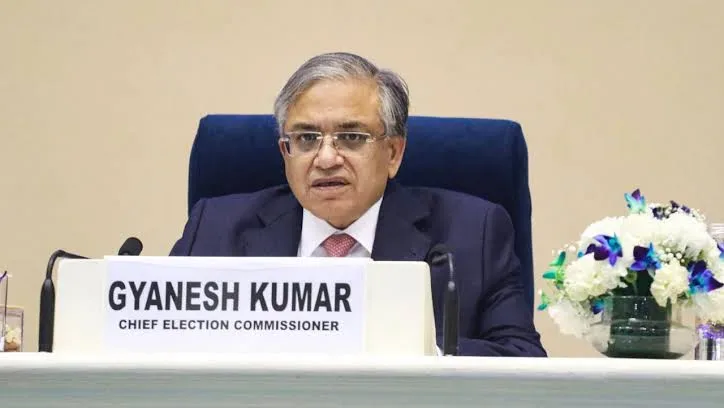
  • CJP demands CEC Gyanesh Kumar’s resignation, announces nationwide protest from Oct 2

    CJP demands CEC Gyanesh Kumar’s resignation, announces nationwide protest from Oct 2

    The Cockroach Janta Party (CJP) has stepped up its criticism of the Election Commission of India amid a controversy over reported differences within the poll panel. The party has demanded the resignation of Chief Election Commissioner Gyanesh Kumar and announced plans for nationwide protests if he does not step down.

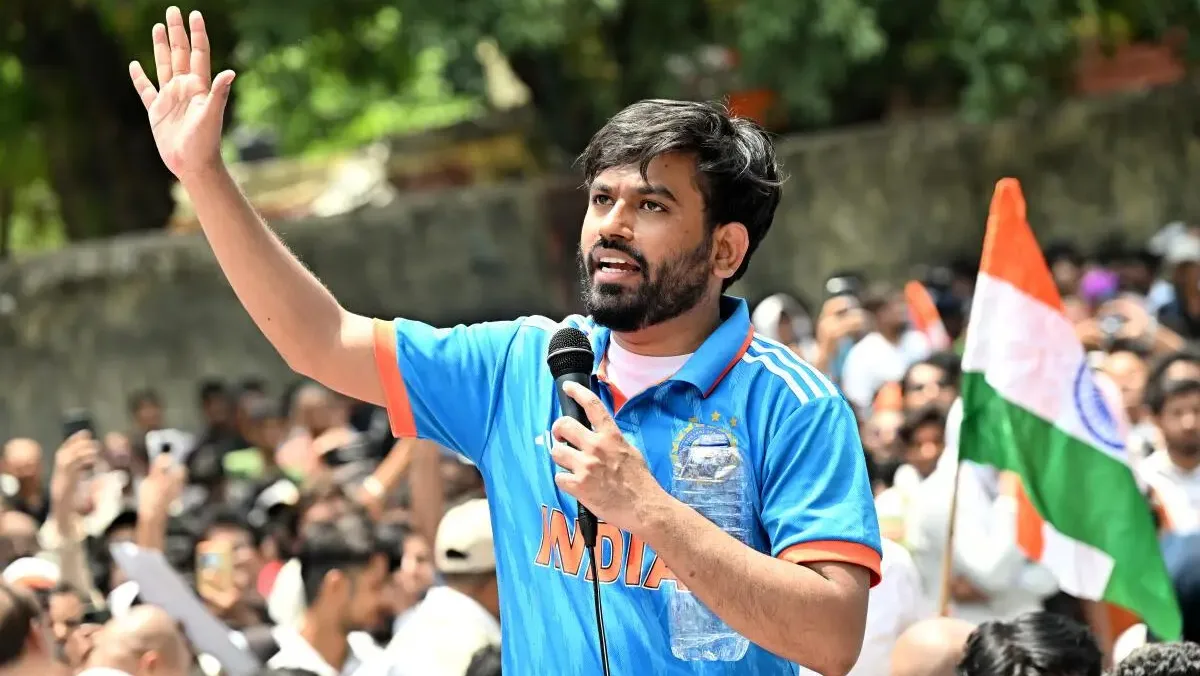
    CJP founder Abhijeet Dipke, along with spokespersons Saurav Das and Ashutosh Ranka, outlined the party’s demands at a press conference. The development came after a report by The Indian Express detailed objections reportedly raised by Election Commissioners Sukhbir Singh Sandhu and Vivek Joshi over several decisions concerning electoral rolls and the Special Intensive Revision (SIR).

    The Election Commission, however, has rejected the suggestion of an internal breakdown and said that all decisions, including those related to SIR, had the approval of all three commissioners.

    What are CJP’s three demands?

    The CJP listed three key demands during its press conference.

    First, the party called for Gyanesh Kumar to resign and demanded criminal proceedings against him.

    Second, it sought an immediate halt to the Special Intensive Revision (SIR) and called for the restoration of the January 2025 voter list.

    Third, the party demanded that the 2023 law governing the appointment and functioning of the Election Commission be repealed, along with reforms to the poll panel.

    Also Read | ECI dissent report sparks Opposition attack as poll panel rejects formal dissent claim

    Dipke also issued a 48-hour ultimatum to the Chief Election Commissioner and warned of a protest that he referred to as “Jantar Mantar 2.0” if Kumar failed to resign within the deadline.

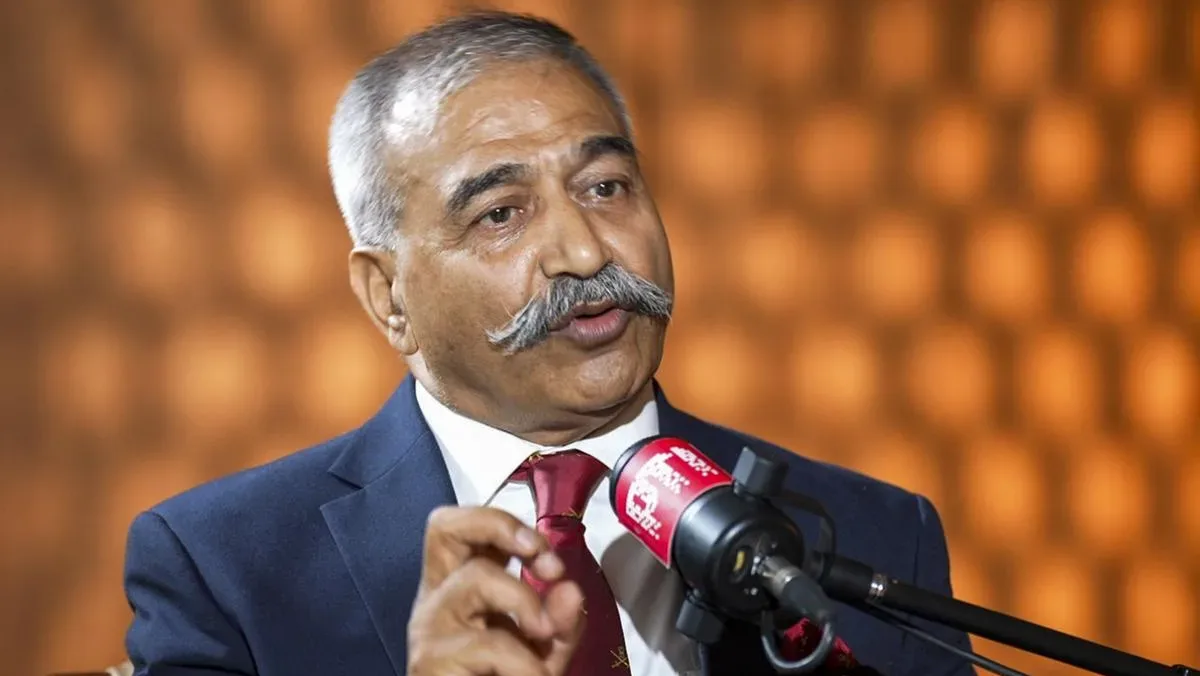
    Chief Election Comissioner Gyanesh Kumar
    Chief Election Comissioner Gyanesh Kumar. Credit: X/ANI

    Why is the Election Commission facing scrutiny?

    The controversy follows an Indian Express report that said Sandhu and Joshi had formally objected to several decisions taken within the Election Commission over the past 10 months.

    According to the report, the objections covered issues including voter registration, deletion of names from electoral rolls, access to voter databases and aspects of the SIR exercise. The two commissioners reportedly raised objections on 14 occasions.

    One point of contention involved Form 6, which is used by Indian citizens to apply for inclusion in the electoral roll for the first time. The report said changes were made to the form in connection with SIR, despite concerns raised by the commissioners.

    The reported disagreements have also brought renewed attention to the way electoral databases are managed and the role of statutory election officials in maintaining voter lists.

    CJP alleges voting rights are under threat

    Speaking about the controversy, Dipke said: “We are in a difficult phase; the right to vote is being snatched… If you know elections are being rigged you cannot participate. You will have to take a stand.”

    He also alleged that CEC Kumar was the “biggest threat to Indian democracy” and accused the Election Commission of deciding who would be allowed to vote.

    Also Read | What is ERONET? The ECI software at the centre of the SIR row

    These are allegations made by the CJP and are not established findings. The Election Commission has maintained that its decisions, including the SIR exercise, were unanimous and approved by all three commissioners.

    CJP announces nationwide protest from October 2

    On Friday, Dipke announced that the CJP would begin nationwide protests from October 2, Gandhi Jayanti, if Kumar did not resign. The agitation is set to begin in Mumbai before spreading to other cities, according to the party.

    “This Gandhi Jayanti let’s pledge to save democracy,” Dipke said.

    CJP co-convener Ashutosh Ranka added: “There cannot be a better date than Oct 2 to reclaim our Republic.”

    Dipke also questioned why Opposition parties continue to contest elections while alleging irregularities in the electoral process.

    In an earlier statement, he said: “When you continue to participate in rigged elections, you legitimise these elections and help maintain the illusion that they are free and fair.”

    The CJP’s announcement adds another layer to the ongoing debate surrounding the Election Commission, SIR and the management of electoral rolls, with the poll panel’s response and the reported objections from two commissioners remaining central to the controversy.

  • Healthy office snacks: 8 foods to eat when hunger hits at 4pm

    Healthy office snacks: 8 foods to eat when hunger hits at 4pm

    The afternoon slump can make the office pantry look especially appealing. By around 4 pm, lunch may feel like a distant memory, while dinner is still several hours away. Reaching for a snack at this time is not necessarily a bad habit.

    In fact, the reason you feel hungry could have more to do with what you ate at lunch. An early meal, inadequate protein or too many refined carbohydrates can leave you hungry again by late afternoon.

    Ms Charu Dua, HOD, Clinical Nutrition Department, Amrita Hospital, Faridabad, says an afternoon urge to eat may sometimes be genuine hunger.

    “If lunch was early, low in protein or mostly made up of refined carbohydrates, what feels like a snack craving may actually be true hunger,” she explains. Rather than ignoring that hunger, Dua recommends planning a nutritious snack.

    “The key is not fighting it with willpower, but preparing for it with the right food choices.”

    Healthy snacks
    Healthy snacks | Representational Image

    What Should You Look for in an Office Snack?

    A good snack should help you stay satisfied until the next proper meal. According to Dua, protein, fibre and healthy fats are useful nutrients to include.

    “A useful office snack should ideally contain protein, fibre or healthy fats,” she says. “These nutrients digest more slowly than refined carbohydrates and help improve satiety.”

    She adds, “Protein tends to keep you fuller for longer, while fibre helps reduce hunger between meals.”

    8 Healthy Snacks for Your Office Desk

    1. Roasted Chana

    Roasted chana is an easy option to keep at work. It supplies plant protein and fibre without requiring refrigeration. “Roasted chana is a great option because it is rich in plant protein and fibre,” says Dua.

    She also points to its convenience. “It is inexpensive, shelf-stable and far better than fried snacks.” Portion size still matters. “Stick to a small handful of about 25 to 30 grams to avoid excess calorie intake.”

    2. Unsalted Nuts

    Almonds, walnuts, pistachios and peanuts provide a combination of protein, fibre and healthy fats. “They help maintain energy levels without sharp spikes and crashes,” Dua explains. Because nuts are calorie-dense, she recommends limiting the serving to around 20 to 25 grams.

    Unsalted Nuts
    Unsalted Nuts | Representational Image

    3. Whole Fruits

    An apple, orange, pear or banana can make a convenient afternoon snack. “A whole fruit is one of the simplest and most effective snacks,” Dua says.

    Whole fruit also has an advantage over juice. “Whole fruit is always better than fruit juice, which removes fibre and concentrates sugar.” For greater satiety, she suggests pairing fruit with some nuts.

    4. Roasted Makhana

    Makhana can work as a light office snack when prepared without excessive toppings. “Makhana can be a good low-calorie snack when prepared correctly,” she explains. Dua advises avoiding buttered, heavily salted or cheese-coated versions and recommends combining it with peanuts or chana because makhana itself is low in protein.

    5. Seeds

    Pumpkin and sunflower seeds are compact and easy to carry. “Pumpkin and sunflower seeds provide healthy fats, protein and minerals,” Dua says. However, she stresses that portion sizes should still be monitored.

    6. Whole-Grain Crackers With Peanut Butter

    This combination can provide carbohydrates, protein and fat. “This is a balanced combination of carbohydrates, fat and protein when chosen correctly,” she notes.

    Dua recommends checking labels rather than relying on terms such as “multigrain”. She also suggests choosing peanut butter where peanuts are the main ingredient.

    7. High-Protein Snacks

    Protein bars and roasted soy snacks can be useful when lunch or dinner gets delayed. “Be cautious of marketing terms like ‘natural’ or ‘fitness’,” Dua advises. “Some protein bars contain as much sugar as sweets.” Check protein, fibre, added sugar and serving size before buying one.

    8. Dark Chocolate

    For those looking for something sweet, a small portion of dark chocolate can fit into an afternoon snack.

    “Sometimes cravings are emotional rather than physical,” Dua explains. “One or two pieces of dark chocolate can satisfy sweet cravings without turning into a full dessert.” She adds, “Portion control is key, as dark chocolate is still calorie-dense.”

    Dark Chocolate
    Dark Chocolate | Representational Image

    Keep an Emergency Snack Box at Work

    Planning ahead can make healthier choices easier during busy office hours. “A simple office snack box can include roasted chana, nuts, seeds, whole-grain crackers and small portions of dark chocolate,” Dua says.

    She also advises, “Avoid eating directly from packets. Portion your snack and eat slowly.”

    How to Tell Hunger From Habit

    Not every afternoon craving means you need food immediately. “Ask yourself whether you are hungry, thirsty, tired or just bored. Sometimes a glass of water or a short break is enough,” she says. If you are genuinely hungry, having a planned snack can help bridge the gap before dinner.

    A 4 PM Snack Can Be Part of a Healthy Routine

    Dua says afternoon snacking itself is not the issue. What matters is the food choice, portion and frequency.

    “A planned snack at 4 pm is completely fine and can even prevent overeating at dinner,” she says. “The issue is when snacking becomes unplanned, frequent and based on unhealthy foods.” Her advice is simple: “a good snack should bridge the gap between meals, not become another meal itself.”

  • India Space Force: Why India may need a separate space command? 

    India Space Force: Why India may need a separate space command? 

    Space has been part of military planning since the early years of the Space Age, but its role in warfare is changing rapidly. India could eventually need a dedicated Space Force as space-based intelligence, communication and navigation become increasingly important to military operations.

    Lieutenant General (Retired) Anil Kumar Bhatt, Director General of the Indian Space Association, said the growing importance of space means India will eventually have to strengthen its military structure beyond the existing Defence Space Agency (DSA). However, Bhatt cautioned against the idea that large-scale space warfare, as often portrayed in popular culture, is already around the corner.

    “Combat has slowly started creeping in, but the kind of space wars people often imagine, such as satellites attacking one another or humans fighting on the Moon or Mars, remain some distance away,” Bhatt said.

    From Spy Satellites to Modern Space Warfare

    The military use of space predates the launch of Sputnik. American researchers were examining the use of space for reconnaissance as early as 1946. That work eventually contributed to the Corona programme, with the US launching its first spy satellite in 1960.

    The satellite generated more imagery of the Soviet Union during a single mission than previous spy-plane operations had produced collectively. Within a decade, satellites had become America’s primary surveillance tools from orbit.

    India's Defence Space Agency
    India’s Defence Space Agency. Credit: X/ANI

    Space has since supported intelligence, surveillance and reconnaissance, communications and navigation. The emerging shift, however, is towards the weaponisation of the domain. Bhatt believes India’s DSA should eventually evolve into a Space Command and, later, a Space Force.

    “Setting up the DSA was the starting point. The way things are developing, it will have to evolve into a Space Command and eventually into a Space Force. But it must remain a triservices agency. The Air Force has pushed for one ‘Aerospace Force’ that absorbs the Space Force’s or DSA’s role but it is my personal belief that things are very different on the two sides of the Karman Line, and the domain above that line must be with a separate triservices organisation,” said Bhatt.

    India’s Defence Space Approach Has Changed

    India’s approach to military space capabilities has undergone a significant change in recent years. The Defence Space Agency was established in 2019, marking an important step towards coordinating the country’s space-related defence capabilities. Bhatt said the relationship between India’s armed forces and the private space and defence industry has also changed.

    Also Read | India asks Pakistan to back anti-terror claims with action as tensions rise

    “Five years back, the armed forces would never talk to anybody —any civilian, a startup or a private company— about anything to do with space. But today? Seventy-five defence challenges have been defined for start-ups to know and build what the armed forces require for the future,” said Bhatt.

    Frequent discussions between the military and industry have helped narrow the gap between what companies develop and what the armed forces require.

    Drones in Indian Defence Space Agency
    Drones in Indian Defence Space Agency. Credit: X/Ministry of Defence, Govt of India

    Minimum Orders for Defence Start-Ups

    Despite closer cooperation, defence start-ups continue to face challenges when developing products specifically for military use. Without assured orders, companies can find it difficult to sustain projects after developing prototypes. The Indian Space Association has therefore pushed for a minimum-order mechanism under defence challenges.

    “In defence challenges, the MoD has introduced something called a ‘minimum order quantity’. The idea is this: if a prototype is being made, money is being given by the government or the start-up is putting in the money, the exercise does not make sense if the prototype is not bought by anybody. It is a loss. So, we have pushed for a process where the government must buy at least a minimum number of units developed under a challenge, so as to keep the manufacturing feasible,” said Bhatt.

    Also Read | What is ERONET? The ECI software at the centre of the SIR row

    Space Could Become a Future Theatre of Conflict

    Recent conflicts have highlighted how important space-based capabilities can be on the battlefield. Operation Sindoor provided India with a direct experience of the role played by space-based intelligence, while the Russia-Ukraine war demonstrated the military value of commercial space assets.

    Bhatt believes future conflicts could involve attacks against space infrastructure itself, rather than space simply supporting operations on Earth.

    “Conflict in space could not be just about satellites shooting each other. It could begin in the form of cyberattacks on satellites and jamming of sensors by electronic means or destruction by laser/DEW. It is a matter of time.”

    Why India Needs a Triservices Space Structure? 

    According to Bhatt, space capabilities would have to be integrated into military planning at every level if India moves towards a more integrated theatre command structure.

    A future Space Force, he said, would provide intelligence, surveillance and reconnaissance, communications and navigation support across different theatres rather than serving one individual service.

    “A theatre will not only have the Army, Navy, or the Air Force, but will also have space. That means the same assets can be shared by many theatres. That would mean that DSA personnel would be critical for every theatre as they would be running the ISR, communication, navigation, etc, and advising the commanders. And that is why it must remain a triservices organisation instead of being led by any one service,” said Bhatt.

    India’s Defence Space Agency is therefore likely to remain central to the country’s evolving military space strategy as the role of space expands from support for operations on Earth towards becoming a potential theatre of conflict itself.

  • Trump’s Board of Peace plans $2.45 billion Gaza recovery plan

    Trump’s Board of Peace plans $2.45 billion Gaza recovery plan

    US President Donald Trump’s Board of Peace is set to present a six-month, $2.45 billion recovery plan for Gaza at a meeting of its members on Wednesday, according to a report by Axios. The proposal covers emergency housing, debris removal, hospital repairs, economic recovery and security arrangements.

    The plan contains 66 projects and is being presented as a framework for the initial phase of Gaza’s post-war recovery and governance. It has reportedly been prepared over the past year by members of the Board of Peace and a Palestinian technocratic government. The board has 28 member countries.

    Gaza Reconstruction Plan: What Does It Include?

    According to the reported plan, infrastructure would receive about $1 billion. The proposed spending includes around $400 million for temporary shelters, $275 million for clearing rubble and unexploded ordnance, $50 million for hospital rehabilitation and $30 million for road repairs.

    The proposal also covers electricity and water infrastructure, border crossings and solar power. Around $400 million is reportedly earmarked for insulated caravans to provide temporary accommodation for displaced Palestinians currently living in tents.

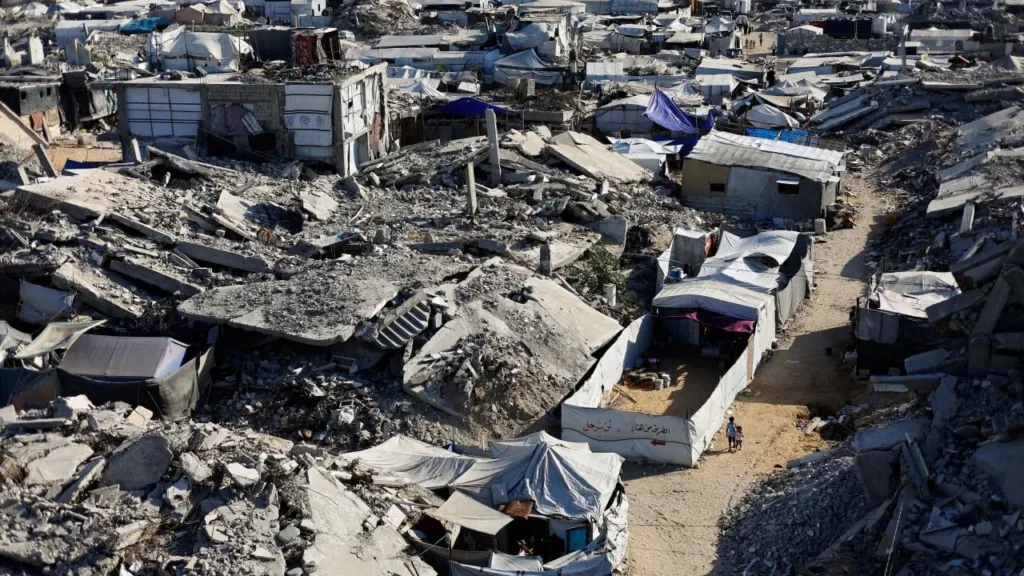
    An aerial view shows widespread destruction in Gaza, with sprawling camps of makeshift tents set up among collapsed concrete buildings and rubble.
    An aerial view shows widespread destruction in Gaza, with sprawling camps of makeshift tents set up among collapsed concrete buildings and rubble. Credit: X/ANI

    Security-related projects account for another major portion of the proposed budget. The plan reportedly sets aside about $885 million for security projects, including facilities and deployment related to a multinational security force. It also includes funding for Palestinian police and a weapons buy-back programme.

    A Board of Peace official was quoted as saying: “The plan shows how to stand up a government from nothing, an economy from shambles and a territory from disaster.”

    Gaza Recovery Could Cost $71.4 Billion

    The proposed six-month programme is only an initial step compared with the estimated cost of rebuilding Gaza.

    The plan puts the physical damage in Gaza at about $35.2 billion and estimates that full recovery and reconstruction could require approximately $71.4 billion over the next 10 years.

    Also Read | From Trump TV to Truth Social: Inside the US president’s media multiverse

    Beyond immediate relief, the proposal reportedly includes plans for digital services, economic support, healthcare and education. The broader objective is to establish the foundations of a functioning Palestinian administration and restart private-sector activity.

    Israel, Hamas Cooperation Key to Gaza Plan

    Implementation remains dependent on political and security conditions involving Israel and Hamas.

    According to Axios, Israel’s government has agreed in principle to parts of the proposal previously discussed but has not begun implementation, citing domestic political considerations ahead of its October 27 election. Hamas has also agreed in principle to disarm, although that commitment has yet to be tested.

    Funding is another challenge as the Board officials said the entire $2.45 billion does not have to be available immediately, while donor countries would be expected to support individual projects once political obstacles are addressed.

    Also Read | Iran offers to reopen Strait of Hormuz in 7 days if US eases pressure

    The proposal therefore combines short-term humanitarian needs with longer-term reconstruction and governance plans, but its implementation will depend on funding and cooperation among the parties involved.

  • Chief Minister Suvendu Adhikari promises major investments in Bengal; Adani hospital project set to begin 

    Chief Minister Suvendu Adhikari promises major investments in Bengal; Adani hospital project set to begin 

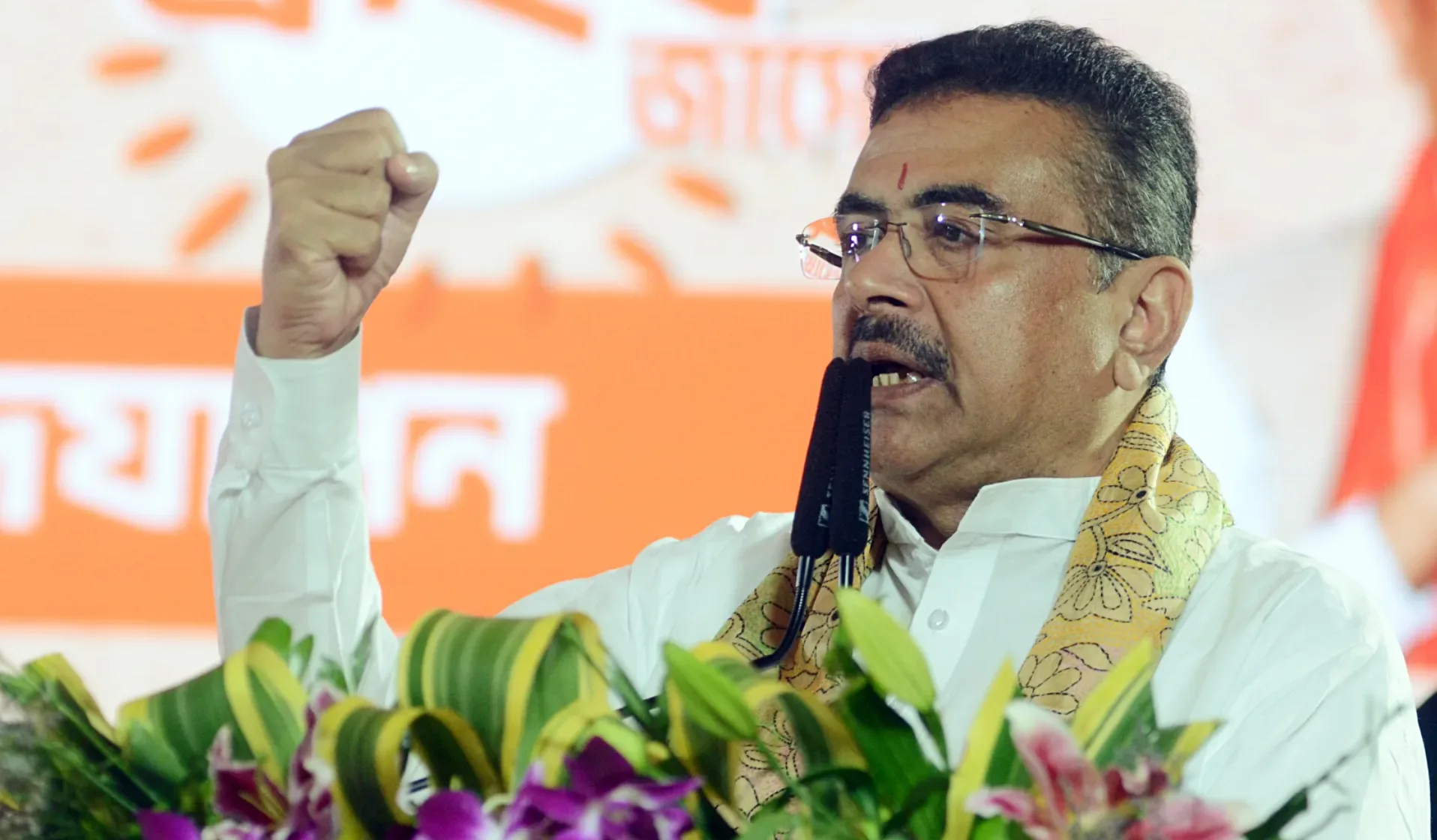
    West Bengal Chief Minister Suvendu Adhikari on Tuesday said the state could see major investments from leading industrial groups, while indicating that the government was working to bring more big businesses to Bengal.

    Speaking to reporters in Cooch Behar, Adhikari referred to Prime Minister Narendra Modi’s message of “talk less and work more” while discussing his government’s efforts to attract investment. His remarks came a day after he met industrialist Mukesh Ambani and his son Anant Ambani in Mumbai. Recent reports said investment opportunities and the expansion of Reliance’s presence in West Bengal were discussed during the meeting. 

    Suvendu Adhikari hints at Ambani development

    Adhikari suggested that his meeting with the Ambanis could lead to a development in Bengal, although he did not disclose details.

    “I received an invitation from Anant Ambani to attend their Ganpati festival. I couldn’t make it last week, but yesterday I visited their home, performed Aarti at their temple, and had dinner with Mukesh ji and Anant ji. You will have to wait and watch what happens,” Adhikari told reporters in Cooch Behar.

    The meeting was part of the state government’s efforts to attract fresh industrial investment. Reports said discussions included opportunities for Reliance to expand its business activities in Bengal. 

    West Bengal Cm Suvendu Adhikari with Mukhesh and Anant Ambani
    West Bengal Cm Suvendu Adhikari with Mukhesh and Anant Ambani. Credit: X/Suvendu Adhikari

    ‘There will be huge investments in Bengal’

    Adhikari said major investors would be brought to the state and claimed that Bengal would receive substantial investment.

    “There will be huge investments in Bengal. All major investors will be here. The Communists and previous chief minister Mamata (Banerjee) have caused massive damage to the state. The entire country is ready to support the BJP government to get Bengal back on its feet. I have got this commitment from everybody,” Adhikari said.

    Also Read | Will West Bengal’s new land reforms make it easier to set up businesses? Exploring

    His comments form part of the state government’s broader push to attract large industrial projects and position West Bengal as an investment destination. The government has also announced plans to provide land to 33 industries before Durga Puja. 

    Adani hospital project in New Town

    Adhikari also said the groundbreaking ceremony for the Adani Group’s proposed hospital in Kolkata’s New Town would take place soon, with Gautam Adani expected to attend.

    The proposed facility is a 2,000-bed hospital, with the foundation stone ceremony scheduled for September 24, according to recent reports. 

    Also Read | West Bengal 933 schools with no students under government review; might hand buildings to other depts

    The developments involving the Ambani and Adani groups come as the Bengal government steps up its outreach to major corporate groups. The focus remains on attracting investment and expanding industrial activity across the state.

    This version targets Suvendu Adhikari, Bengal investment, Mukesh Ambani, Anant Ambani, Adani Group and New Town hospital as the main SEO keywords while keeping the political claims clearly attributed.

  • President Droupadi Murmu urges film stars to avoid harmful products; calls for more women on award juries

    President Droupadi Murmu urges film stars to avoid harmful products; calls for more women on award juries

    President Droupadi Murmu has urged popular film personalities to be careful about the products they promote, particularly those that could harm public health. Speaking at the 72nd National Film Awards ceremony, Murmu said celebrities have a strong influence on children and young people and should use that reach responsibly.

    The President presented the National Film Awards for 2024 across various categories at a ceremony held at Ekta Nagar, near the Statue of Unity. Several prominent names from the Indian film industry attended the event.

    Droupadi Murmu’s message to film stars

    Addressing the gathering, Murmu highlighted how the public often follows the lifestyle choices of successful actors and other popular artists.

    “When successful artists speak about the benefits of a disciplined lifestyle, millions of children and young people emulate them. I urge popular artists not to endorse products that are harmful to people’s health. A true star is the one who spreads light, not darkness,” Murmu said.

    Her remarks focused on the wider influence of film personalities beyond their work on screen. She pointed out that the words and actions of well-known artists can have a strong effect on younger audiences.

    President calls for more women on award juries

    Murmu also spoke about the representation of women in the committees responsible for selecting films for the National Film Awards.

    Also Read | Passport rules changed: What children and parents need to know

    She called for greater participation of women in the regional juries and said their perspectives could contribute to a broader approach to decision-making.

    “I would like to see women’s participation ensured in every regional jury,” she said. The President noted that several women were among the award recipients at the ceremony. She also stressed the importance of including women’s viewpoints across different fields.

    “incorporating the female perspective in any field makes it possible to form a holistic human outlook”.

    Murmu highlights welfare of film workers

    The President also appealed to the film industry to pay greater attention to the people working behind the scenes.

    She called for respect and social security for workers, small-scale artists, assistants and others who contribute to India’s creative economy.

    Many of these professionals work to establish themselves in the industry, making their contribution an important part of the larger film ecosystem.

    Also Read | India’s semiconductor push faces sabotage risk, Union Minister Ashwini Vaishnaw warns

    The 72nd National Film Awards ceremony brought together leading figures from Indian cinema, with Murmu using the occasion to highlight responsible endorsements, wider representation of women and better support for workers across the creative sector.

  • West Bengal 933 schools with no students under government review; might hand buildings to other depts

    West Bengal 933 schools with no students under government review; might hand buildings to other depts

    The West Bengal government has formed a committee to decide the future of 933 primary and high schools that have reported no students for several years. School Education Minister Dipak Burman said the government is examining what can be done with the buildings, land, playgrounds and other assets of these institutions.

    The move comes amid a wider review of zero-enrolment schools across the state. According to the latest UDISE+ data, 4,133 schools in West Bengal reported zero enrolment during the 2025-26 academic year, with 19,502 teachers listed against them. The state has ordered physical verification to establish the actual status of these schools and assess their infrastructure.

    What Will Happen To 933 Schools?

    Speaking to reporters at his residence in Falakata, Alipurduar district, Burman said several of the 933 schools had effectively stopped functioning because they had remained without students for years.

    Also Read | Who is Akash? Senior Maoist leader Asim Mondal held in West Bengal

    Their unused infrastructure has now become part of the government’s discussion. One proposal is to allow other government departments to use the properties where appropriate.

    “The thought is whether there can be an interdepartmental exchange. We will give it to the government and they will decide next,” Burman said, adding that the education department would examine the proposal.

    The plan does not mean that every zero-enrolment school will automatically be closed or converted. The government is also carrying out physical verification because UDISE+ records may not always reflect the situation on the ground.

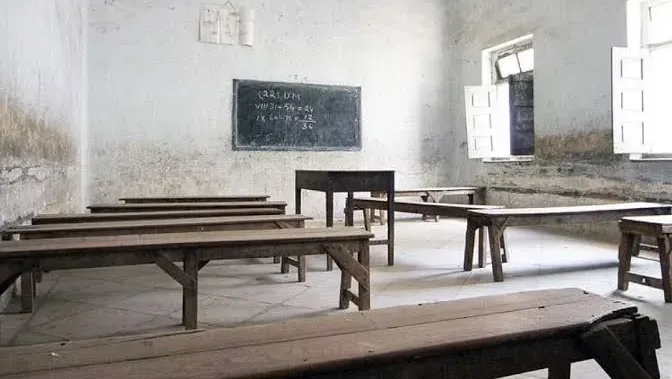
    Picture of an empty classroom
    Picture of an empty classroom | Representational Image

    West Bengal Zero-Enrolment Schools Under Review

    The 933 schools are part of a much larger group of institutions listed with zero enrolment. The latest UDISE+ figures put the number in West Bengal at 4,133.

    The government has directed district administrations to inspect these schools and prepare details about their land, buildings and other facilities. The exercise is also intended to determine whether unused infrastructure could serve other public purposes.

    The issue is closely linked to the uneven distribution of teachers across schools. Government data shows that 6,769 schools have only one teacher, serving around 2.3 lakh students. A teacher deployment policy allows staff and sanctioned posts from zero or very low-enrolment schools to be shifted to institutions facing shortages.

    Also Read | 32 Kolkata tourists missing in Nepal: Here are all the helpline numbers for you

    Remote Schools In West Bengal To Continue

    Burman said the government would not apply the same approach to schools in remote locations where there are few students and no nearby alternatives.

    “Even if there are schools in remote areas where students are less, population is less and no other school nearby, that school will continue to function. But, if we see that there are a number of schools nearby, we will have to think about these,” he said.

    On teacher shortages, Burman said the ongoing recruitment process was expected to improve staffing levels.

    “The process is going on and hopefully … by 2027 academic year, every school will have the required teachers,” he said.

    Teacher Recruitment And School Staffing

    The staffing issue comes after the Supreme Court’s April 2025 judgment cancelled the appointments of 25,753 teaching and non-teaching staff recruited through the 2016 process. A fresh recruitment exercise has since been initiated, including more than 35,000 assistant-teacher vacancies for Classes 9 to 12, according to the information provided.

    For now, the committee’s review of the 933 schools will determine how their unused properties are handled, while remote schools and institutions serving communities without nearby alternatives remain under consideration for continued operation.

    FAQs

    Why is West Bengal reviewing 933 schools?

    The schools have had no students for several years, leaving their buildings, land and other assets largely unused.

    Will remote-area schools be closed?

    No. Minister Dipak Burman said remote schools with few students and no nearby alternatives will continue to function.

  • Ethiopian armed groups ally against Abiy; alliance wants to uproot the Government

    Ethiopian armed groups ally against Abiy; alliance wants to uproot the Government

    Seven armed groups in Ethiopia, including former enemies from the country’s 2020-2022 civil war, have announced a new alliance seeking to overthrow Prime Minister Abiy Ahmed’s government.

    The coalition, named the Ethiopian Peoples’ Forces Alliance for Survival, brings together groups from several parts of Ethiopia. Its members include organisations from Tigray, Amhara, Oromia, Afar, Somali Region and Benishangul-Gumuz. The announcement comes as tensions between the federal government and several regional armed groups remain high. 

    TPLF And Fano Join Forces

    One of the most notable aspects of the new alliance is the presence of the Tigray People’s Liberation Front (TPLF) and the Amhara Fano National Movement.

    The two groups were on opposing sides during the Tigray war between 2020 and 2022. Fano forces fought alongside Ethiopia’s federal government against the TPLF during that conflict, which resulted in hundreds of thousands of deaths and was accompanied by reports of ethnically driven atrocities. 

    Also Read | Tiny French island, big Atlantic message: Macron meets Carney

    Fano later became involved in an armed conflict with the federal government in Amhara. That fighting has continued since 2023 and has resulted in thousands of deaths. 

    The new grouping therefore brings together organisations that have previously been in direct conflict with one another, while some members continue to have disputes over territory and other issues.

    Alliance Says It Wants To Overthrow Government

    The alliance announced its formation late on Sunday. Its statement accused the federal government of concentrating power and marginalising Ethiopia’s regions.

    The statement was read by Fano leader Zemene Kassie and broadcast on Tigrayan television.

    “We, the peoples’ forces concerned with the survival of Ethiopia’s peoples, bear the historic responsibility of overthrowing this regime,” the statement said.

    The Ethiopian government had not immediately responded to requests for comment when Reuters reported the announcement. Last month, an adviser to Abiy said a possible armed coalition would seek to cause disruption but would not be capable of removing the federal government.

    The government has also said it is pursuing a national dialogue aimed at addressing long-running political divisions and internal conflicts.

    Tensions Rise In Tigray

    The formation of the alliance comes after renewed tensions between federal forces and the TPLF.

    In May, the TPLF reasserted control over Tigray’s political administration. The move was described as a violation of the 2022 peace agreement by Reuters and followed accusations from the TPLF that the federal government had failed to implement the deal fully.

    Also Read | Can AI safety keep pace? Gemini hack and resignations deepen industry worries

    The Ethiopian military has also carried out several reported drone strikes against Tigrayan forces in recent months, according to data from the Armed Conflict Location & Event Data project.

    The federal government has not commented on those reported strikes. However, Ethiopia’s military said last week that nearly 300 Tigrayan fighters had surrendered.

    Ethiopia And Eritrea Dispute

    Ethiopia has also accused neighbouring Eritrea of backing insurgent groups, including the TPLF and Fano. Eritrea has rejected those allegations.

    The new Alliance for Survival now adds another layer to Ethiopia’s complicated security situation, bringing together armed groups from different regions and backgrounds. While the groups have declared a common objective, Reuters noted that some members remain divided over territorial and other disputes. 

    FAQs

    Which groups joined the Ethiopian alliance?

    The alliance includes the TPLF, Amhara Fano National Movement and groups from Oromia, Afar and Benishangul-Gumuz.

    Why did the groups ally?

    The groups accuse Abiy Ahmed’s government of centralising power and marginalising Ethiopia’s regions.