Blog

  • Can you buy a gun for self-defence in West Bengal? Know the rules

    Can you buy a gun for self-defence in West Bengal? Know the rules

    Can an ordinary person in West Bengal actually own a gun? The answer is yes, but it is certainly not as simple as walking into a shop and buying one.

    Under the Indian Arms Act, 1959 and the Arms Rules, 2016, civilians can apply for firearms licences under specific circumstances. Broadly, licences are issued for self-defence, business protection and sports shooting. Each category has its own requirements, and simply wanting to own a gun is not enough.

    Notably, just in recent weeks, Trinamool Congress MP Kirti Azad said that he would obtain an arms licence for security. That raises a wider question: what about ordinary citizens? What does the law actually allow?

    ALSO READ| Is the magic of Bengal’s music now lost, or is another story waiting to unfold?

    When can someone get a gun licence for self-defence?

    The Arms Act notes that a self-defence licence is primarily meant for people who can demonstrate a genuine threat to their life or property. The authorities do not generally issue such licences merely because an applicant feels unsafe. There has to be some supporting evidence.

    Documents that may be required include:

    1. FIR or GD copy.
    2. Police record of any previous assault, threats or blackmail allegations.
    3. Any evidence of threats received through threatening letters or digital means.

    People holding sensitive government positions, or those occupying social positions that put their lives at risk, may also apply. Depending on the circumstances and the licence granted, they may be permitted to possess firearms in the Non-Prohibited Bore (NPB) category, including certain pistols, revolvers or shotguns.

    What about business owners?

    Interestingly, a separate category exists for people whose work involves handling substantial amounts of cash or valuables.
    Jewellers, banks, cash-handling agencies, petrol pumps and large distributors, for example, may have a reason to seek additional security where large cash transactions occur regularly.

    ALSO READ| Did you know Bengal once had its own airline? Here’s why it never took flight

    Then in such cases, applicants have to provide documents including:

    1. Specific business licences, including trade licences.
    2. Company’s incorporation certificate.
    3. Proof of financial transactions.
    4. Annual turnover ledger.
    5. GST Return.
    6. Income Tax Return (ITR).

    Can sports shooters get a gun licence?

    Yes. Firearms licences can also be issued for sports shooting and target practice. But this category is specifically linked to participation in recognised shooting activities.

    The applicant must be an active member of a recognised shooting club or rifle association.

    The required documents can include:

    National Rifle Association of India (NRAI) or State Rifle Association-approved membership card and certificate.

    Shooter ID card (special identity card for sports category).

    Proof of active participation in various district, state or national level shooting competitions for 2 years.

    What kind of gun can a civilian actually own?

    This is where the rules become particularly important. A district police official noted that getting a gun license does not mean that all types of guns can be purchased. He said that no type of automatic rifle, machine gun or any military weapon used by the army can be purchased.

    303 rifles, 7.62 mm and high-powered firearms meant for military use also cannot be purchased by ordinary civilians, the official made it clear.

    ALSO READ| Who is Sumit Roy? Supreme Court orders not to arrest Abhishek Banerjee’s close aide

    With a valid licence, however, certain civilian firearms, such as shotguns and smoothbore guns, may be available. These can include single-barrel or SBBL guns and double-barrel or DBL guns. Depending on the category and conditions of the licence, certain 9 mm pistols may also be permitted.

    What is the minimum age?

    For personal or business purposes, an applicant must generally be at least 21 years old.

    Sports shooting has different provisions. Under special conditions, those aged 12 years and above can apply under the sports category.

    How does the application process work?

    The applicant has to submit Form A-1, either online or offline, following which the application is sent to the concerned police station. Following this, an officer under the District Magistrate handles the application process in each district.

    The police then conduct the necessary verification. A report from the District Intelligence Department is also obtained. The application subsequently moves to the concerned officer under the District Magistrate.

    After checking the documents, background information and other details, the file is placed before the District Magistrate. The District Magistrate then takes the final decision after examining the information and verification reports.
  • Pancha Kedar–Part 4: Rudranath, where Lord Shiva revealed his face to the world

    Pancha Kedar–Part 4: Rudranath, where Lord Shiva revealed his face to the world

    Some temples arouse devotion, some marvel with their architecture, and others attract millions of visitors through their ceremonies and festivals. Rudranath is a different world altogether.

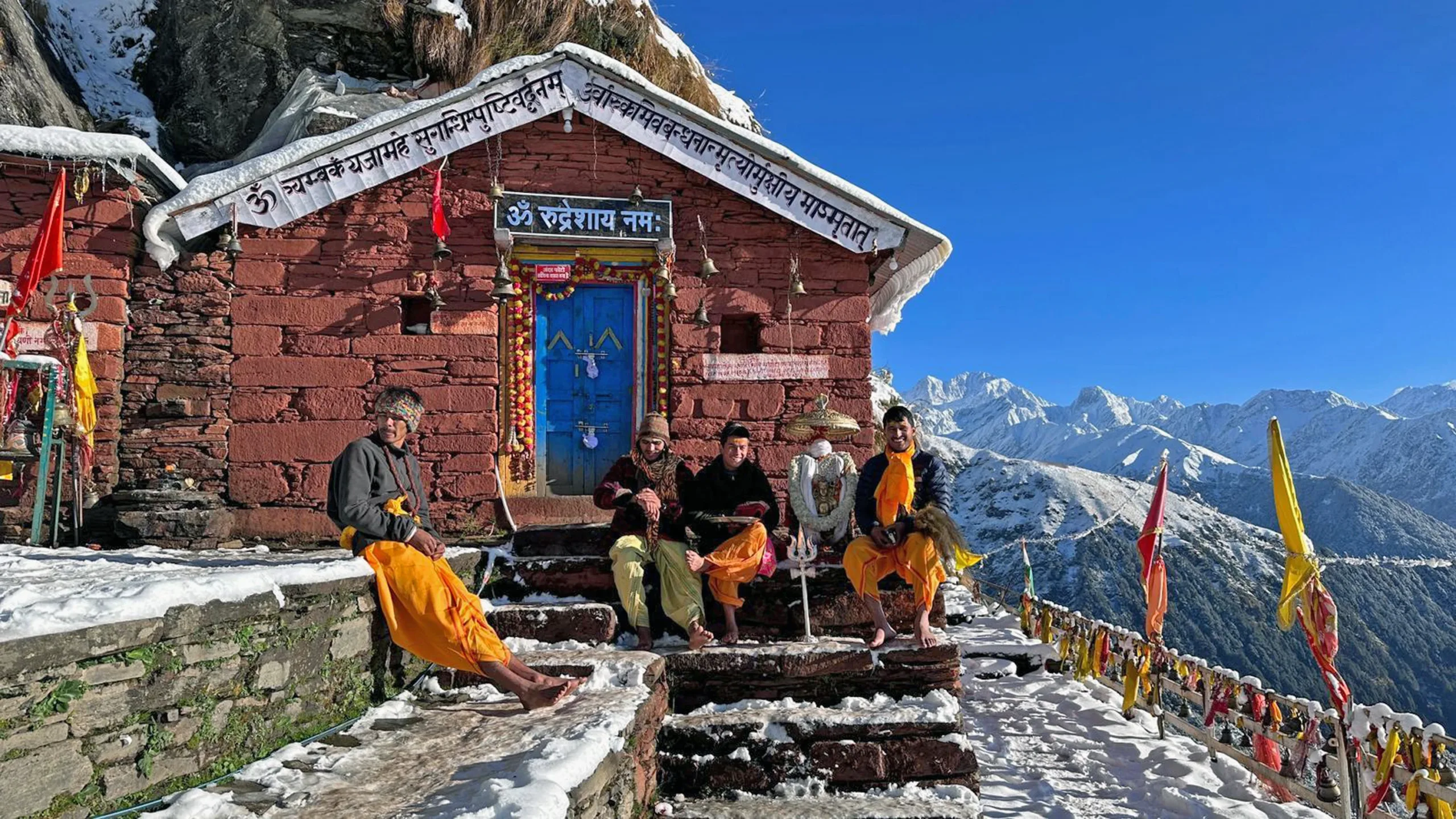
    Perhaps the most mysterious of the Pancha Kedar, Rudranath is nestled in dense forests, alpine meadows, and misty ridges at an elevation of almost 3,600 metres (11,800 feet) in the Garhwal Himalayas.

    Rudranath is one of the less-frequented peaks of Kedarnath; compared to Kedarnath or the less steep path of Tungnath, the peak requires patience, endurance, and total surrender. No roads touch it, no bustling bazaars throng at its doorstep, and no grand processions greet it. One has to earn the right to stand before the Lord.

    ALSO READ| Pancha Kedar–Part 1: Why did Lord Shiva hide from the Pandavas?

    According to the ancient Pancha Kedar tradition, it is here that the Lord Shiva’s face appeared once He went underground to evade the Pandavas.

    How is Rudranath different from other Kedars?

    Unlike many temples where the deity is represented by a carefully sculpted idol, Rudranath preserves a naturally formed rock worshipped as the face of Shiva.

    Human beings instinctively seek faces. We recognise emotions, intentions and identity through the face more than through any other part of the body. A smile comforts us. A glance reassures us. A stern expression warns us. Throughout history, the face has represented truth because it reveals what words often conceal. Perhaps that is why Shiva chose to reveal His face here.

    The name itself gives an important hint: Rudranath. Rudra is one of the earliest names of Shiva, dating to the Rig Veda, well before the development of much mythology as found in the Puranas. Although the word is translated ‘the fierce one’ or ‘the roaring one,’ Vedic scholars have noted that Rudra is not only the destroyer, but also a powerful god. He is also the great healer, the deity who annihilates ignorance, thus bringing truth to light.

    The normal starting point for excursions to Rudranath is from the villages of Sagar or Mandal, and the walk takes about 20 kms through dense oak and rhododendron woods to reach the large alpine meadows. The path follows ridges, crosses mountain streams and meanders through lonely areas where only birdsong and the rustle of the wind and the distant cawing of the cattle can be heard when they are grazing.

    ALSO READ| Pancha Kedar–Part 2: Kedarnath, where Lord Shiva’s hump emerged and time stands still

    Unlike many famous pilgrimage centres, Rudranath offers long periods of complete silence. Silence, in Indian spirituality, is never regarded as emptiness. It is regarded as revelation. Ancient sages believed that the deepest truths become audible only when the noise of the mind begins to settle. Perhaps that is why Shiva, the great yogi, chose such remote places for His manifestations. One does not simply visit Rudranath. One gradually becomes quiet enough to receive it.

    As the final stretch of the trek unfolds, the temple appears almost unexpectedly, nestled within the mountains as though it has grown naturally from the rocks themselves.

    Who built Rudranath?

    It is thought that the existing stone temple was restored during the time of Adi Shankaracharya, who was an important figure in revitalising many ancient pilgrimage routes up the Himalayas. But local beliefs say that the shrine is much older and is connected to the Pandavas. The structure of Rudranath and the other Pancha Kedar temples is made with huge stones, which are supposed to withstand the rigours of the harsh Himalayan winters for centuries.

    Rudranath is different from all other Kedars as per its atmosphere. Many pilgrims report that they experience a strange calmness when they get inside the temple. There are no elaborate decorations. The oil lamps softly flicker against old walls, and the scent of incense wafts through the cool mountain air. Mahadeva’s face is calm, compassionate and timeless, and the devotees realise that truth does not have to shout.

    There are four water bodies around the temple, which are also considered sacred: Surya Kund, Chandra Kund, Tara Kund and Manas Kund. They both have their own local folklore and ritual meaning.

    Another one of Rudranath’s unique traditions is Pitr Tarpan, special rituals performed for the departed ancestors. Many families come here to pray for the dead.

    In the spring and early summer, the meadows are blanketed with flowers. The forests are home to Himalayan monals, musk deer, and countless birds from the mountains, and medicinal herbs, which have been used for centuries in Ayurveda, are still being found growing naturally on these slopes.

    The temple is open for visits only in the summer. The deity is then taken in a ritual to Gopeshwar, where worship of the goddess is continued until the spring. Even here, tradition does not try to defy nature; it’s a natural thing. One thing the Lord seems to do is travel with the seasons, and He does so to teach mankind how to be in harmony with the earth; itself devotion.

    ALSO READ| Pancha Kedar-Part 3: Tungnath, the highest Shiva temple in the world

    For many pilgrims, Rudranath becomes the emotional heart of the Pancha Kedar journey. Kedarnath inspires awe. Tungnath offers serenity. Rudranath invites introspection.

    Perhaps this is what the Pandavas experienced after finally standing before the face of Shiva. Forgiveness did not arrive through miracles. It emerged through understanding.

    The face of Mahadeva did not condemn them for the war they had fought. Instead, it reflected their own humanity to them.

    Hence the importance of Rudranath as one of the most significant places in the Himalayas. It’s not just a temple where Shiva’s face emerged by ancient storybook fairy tale. It’s a place where each pilgrim is softly asked to shed many layers of his or her mask and be confronted directly with the truth.

    But that’s the true definition of Rudranath, isn’t it?

  • Who was Asish Banerjee? Close Mamata Banerjee aide found dead at TMC party office in Birbhum

    Who was Asish Banerjee? Close Mamata Banerjee aide found dead at TMC party office in Birbhum

    Veteran Trinamool Congress leader and former West Bengal Assembly Deputy Speaker Asish Banerjee was found hanging inside a TMC party office in Rampurhat, Birbhum, on Sunday morning, sending shockwaves through the state’s political circles.

    Police said his body was recovered from the office located near his residence and has been sent for post-mortem examination. A purported note was also recovered from the spot, though its contents and authenticity are yet to be independently verified.

    Also Read | Who was Kamal Senapati? Hooghly railway officer dies after being hit by train

    Banerjee was a prominent figure in the TMC’s Birbhum organisation and was regarded as being close to party supremo Mamata Banerjee. He served as Deputy Speaker of the West Bengal Assembly during Mamata Banerjee’s tenure as chief minister.

    Who is Asish Banerjee?

    Born in Rampurhat, Banerjee represented the constituency in the state Assembly for five consecutive terms. He first won the Rampurhat seat in 2001 and retained it in the 2006, 2011, 2016 and 2021 Assembly elections. His 25-year electoral run came to an end in the 2026 Assembly polls when he lost to BJP’s Dhruba Saha by more than 24,000 votes.

    His long association with Rampurhat made him one of the most recognisable TMC leaders in Birbhum. His political career, however, extended beyond the Assembly.

    From teacher to minister

    Before entering electoral politics, Banerjee worked as an associate professor at Rampurhat College. He had completed his higher education at Burdwan University and held a PhD. His political journey had roots in his student years.

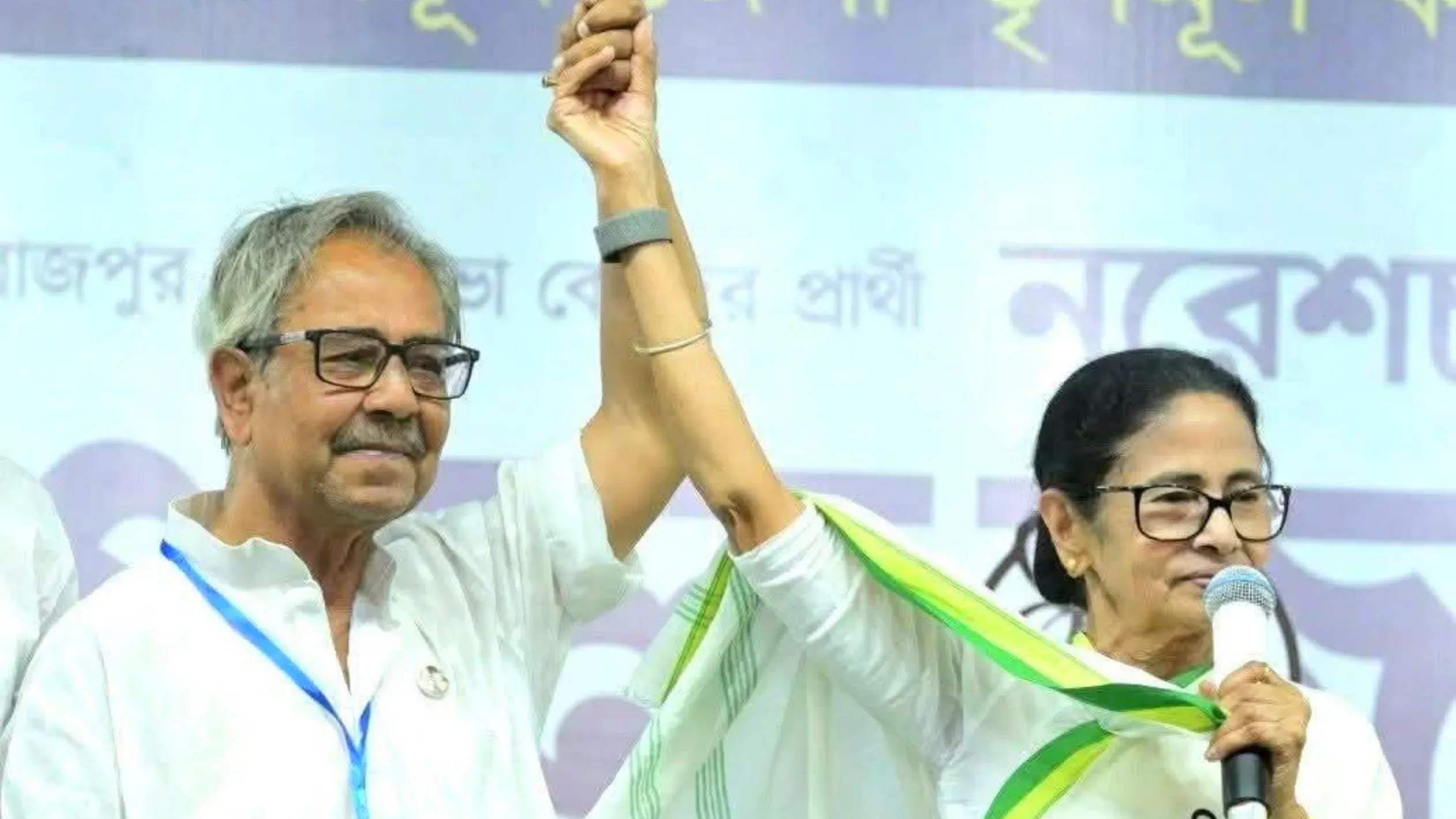
    Former TMC MLA and ex-Deputy Speaker Asish Banerjee was found dead at a party office in Birbhum's Rampurhat.
    Former TMC MLA and ex-Deputy Speaker Asish Banerjee was found dead at a party office in Birbhum’s Rampurhat./ X

    After joining the TMC’s government, Banerjee was given ministerial responsibilities. He served as Minister of State with independent charge of Ayurveda, Yoga and Naturopathy, Unani, Siddha and Homoeopathy in 2014. He subsequently handled Biotechnology, Statistics and Programme Implementation portfolios.

    In 2017, he became West Bengal’s Agriculture Minister, a position he held until 2021.

    In July 2021, Banerjee was appointed Deputy Speaker of the West Bengal Legislative Assembly, placing him among the senior constitutional functionaries of the state. He held the post until May 2026.

    Political setback before death

    Banerjee’s final months in active politics came against the backdrop of a major electoral setback for the TMC in Birbhum. He lost the Rampurhat election in 2026, ending his quarter-century run as an MLA. The BJP’s Dhruba Saha defeated him by 24,233 votes.

    In June, Banerjee resigned as the TMC’s Birbhum district chairman and chairman of the party’s district core committee. At the time, he said he would continue as an ordinary member of the party. Reports also said he had expressed dissatisfaction over the functioning of the district organisation during the Assembly election.

    Also Read | The Unfinished Awakening: Bengal, Freedom and India’s Tryst with Destiny at 80

    His death therefore comes after a period of considerable political upheaval in his home district. However, police have not yet established the circumstances surrounding his death, and no conclusion should be drawn from the political developments preceding it.

    The recovery of the purported note has added another dimension to the investigation. Police are examining the circumstances of the death and the contents of the note, while the post-mortem examination is expected to provide further clarity.

  • Darjeeling to Bhutan: The autumn escape that became my favourite journey

    Darjeeling to Bhutan: The autumn escape that became my favourite journey

    Sometimes, the best journeys begin with an escape rather than a plan.

    Three years ago, during the Durga Puja holidays, I travelled to Darjeeling, a place I have visited almost every year for decades. But this time felt different. It had been nearly 15 years since I had experienced the Queen of the Hills during Puja, and the overwhelming crowds made me fear that my affection for the town might slowly fade.

    So I did something spontaneous. I decided to travel abroad.

    That “foreign country” was Bhutan.

    For me, travelling abroad has never been about ticking off distant countries or boarding long-haul flights. I still believe I haven’t fully explored India itself, let alone North Bengal. A lifetime isn’t enough to uncover every hidden corner of this region. For the last 46 years, I have happily lived with an incurable case of wanderlust, and perhaps that lifelong obsession with travel has kept my mind healthier than any medicine ever could.

    Crossing into another world

    Leaving Darjeeling behind, I drove towards Jaigaon, the bustling Indian town on the Indo-Bhutan border. As the hills slowly dissolved into the plains, the scenery transformed into endless tea gardens, dense forests and emerald-green fields.

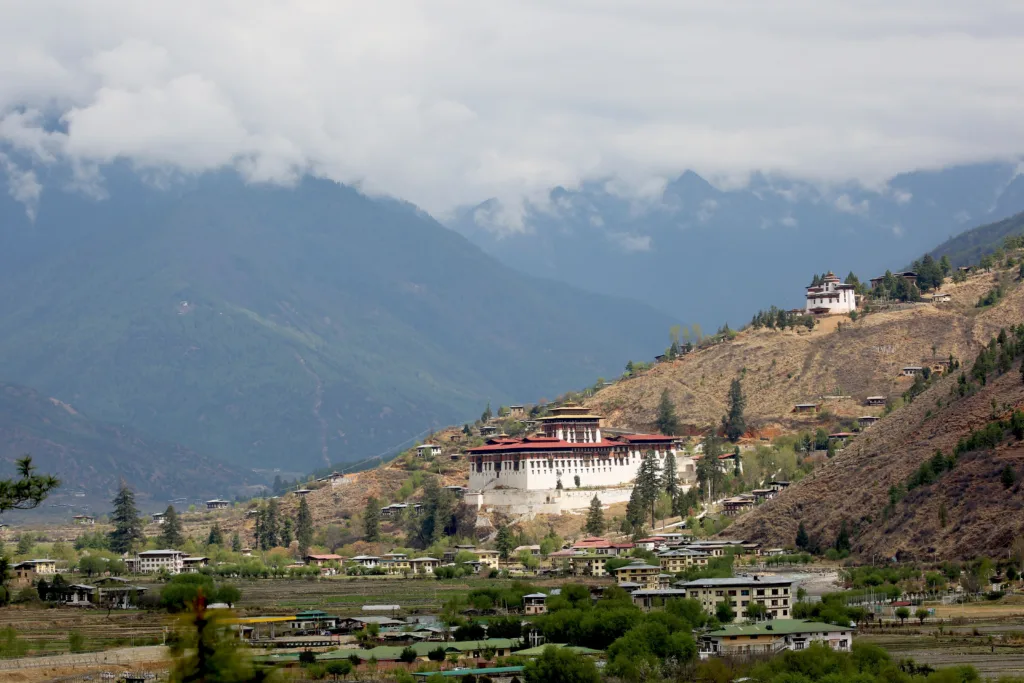
    Discover the best of Bhutan, from majestic mountains and ancient monasteries to serene valleys and charming towns
    Discover the best of Bhutan, from majestic mountains and ancient monasteries to serene valleys and charming towns | Pexels

    It was mid-October.

    Under a brilliant blue sky scattered with cotton-white clouds, I felt less like a tourist and more like a humble traveller approaching the kingdom of a benevolent king.

    Nearly 200 kilometres later, the magnificent Dragon Gate appeared before me. Beyond it lay Phuentsholing—the welcoming gateway to Bhutan.

    Also Read | When is the best time to visit Kalimpong? Here’s a season-by-season travel guide

    The change was immediate.

    Phuentsholing felt remarkably clean, peaceful and organised. Since travellers need an entry permit to venture beyond the town, most visitors spend a night there, and so did we. Our comfortable hotel cost around ₹2,500. We could have stayed more cheaply in Jaigaon, but spending the first night inside Bhutan felt like the perfect beginning.

    That afternoon we explored the Crocodile Park, wandered through a fascinating cave park and ended the day at a beautiful monastery perched nearly 1,500 feet above the town. Watching Jaigaon merge into the vast Dooars plains from that height remains one of my favourite memories.

    From majestic Himalayas to serene monasteries, explore the beauty and charm of Bhutan on an unforgettable travel journey
    From majestic Himalayas to serene monasteries, explore the beauty and charm of Bhutan on an unforgettable travel journey | Pexels

    Eight hours to Thimphu

    The next morning we set off for Thimphu.

    The distance from Phuentsholing is only 172 kilometres, but Bhutan teaches you early that mountain roads measure journeys differently. Eight hours passed as every bend revealed another masterpiece, blue mountains fading into the horizon, mist-covered villages and valleys that seemed untouched by time.

    Lunch came at a restaurant that felt suspended among the clouds. Sitting there, I couldn’t shake the feeling that we had briefly left the earth behind.

    At nearly 8,000 feet above sea level, Thimphu strikes a rare balance between tradition and progress. Under King Jigme Khesar Namgyel Wangchuck’s leadership, the capital has managed to modernise without losing its cultural soul.

    The city offers plenty to explore, the Royal Palace, the towering Buddha Dordenma overlooking the valley, the National Heritage Museum and the lively Clock Tower Square. Flowing quietly through it all is the Wang Chhu River, known as the Raidak River after crossing into India.

    Punakha: Where history lives on

    Our journey then took us to Punakha, Bhutan’s ancient capital until 1955.

    Standing at the meeting point of the Mo Chhu and Pho Chhu rivers, Punakha Dzong is far more than a beautiful fortress. It was here that Ugyen Wangchuck was crowned Bhutan’s first king in 1907.

    Surrounded by suspension bridges, waterfalls, forests and rolling mountains, Punakha carries an almost eternal springtime charm. It is the kind of place where history never feels trapped inside museum walls—it simply lives around you.

    Paro and the monastery that defies gravity

    About 55 kilometres from Thimphu lies Paro, another valley that feels almost unreal.

    The town is home to Bhutan’s only international airport, widely regarded as one of the world’s most challenging airports because of its short runway and towering Himalayan peaks. Only specially trained pilots are permitted to land there.

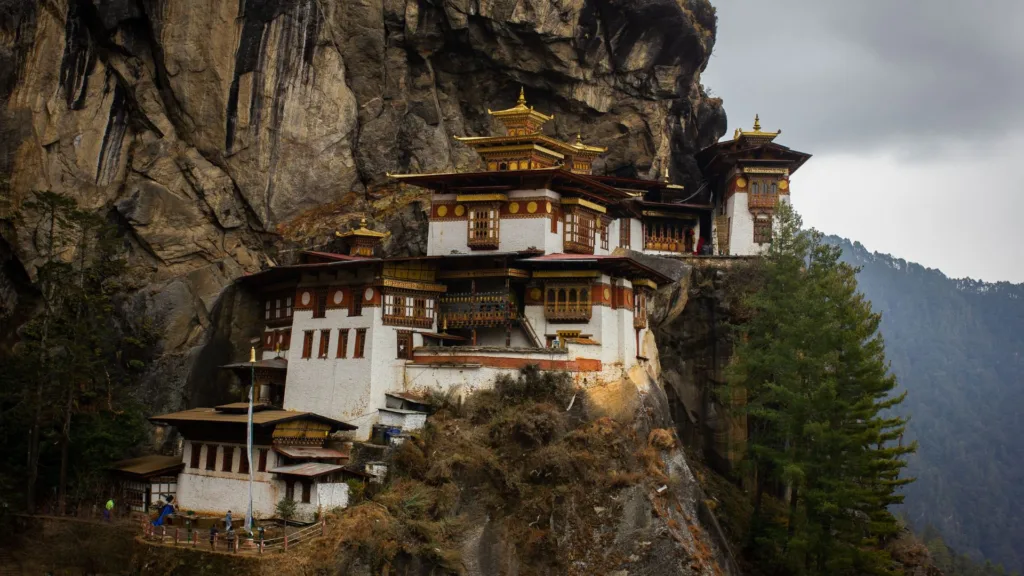
    Paro’s Rinpung Dzong is an architectural masterpiece, but nothing prepares you for Tiger’s Nest Monastery.

    Clinging dramatically to a steep cliff, Taktsang can only be reached by hiking or horseback. It is one of Bhutan’s holiest sites, and standing there, suspended between rock and sky, I understood why it has become the country’s most enduring symbol.

    Explore Bhutan’s breathtaking landscapes, peaceful monasteries and scenic mountain roads on an unforgettable journey
    Explore Bhutan’s breathtaking landscapes, peaceful monasteries and scenic mountain roads on an unforgettable journey | pexels

    The magic of Bhutan’s mountain passes

    Some of Bhutan’s most unforgettable moments happen on its roads.

    Dochula Pass, sitting at around 10,300 feet, is breathtaking throughout the year. Winter blankets it in snow, while drifting clouds dominate the remaining seasons. The 108 memorial chortens standing against snow-capped Himalayan peaks create a view that lingers long after you’ve left.

    Also Read | Sawan 2026: Planning a Jyotirlinga Yatra? Here’s a travel guide for you

    Then came Chele La Pass.

    At over 13,000 feet above sea level, the journey itself becomes the adventure. Snow-covered trees, frozen waterfalls and icy mountain winds welcomed us at every turn.

    Even the warm clothes I had packed for Darjeeling suddenly felt inadequate.

    The cold forced us to leave sooner than we wanted, but my heart wasn’t quite ready to descend.

    Is Bhutan expensive?

    Bhutan accommodates every kind of traveller.

    Hotels begin at around ₹1,500 a night, while properties priced above ₹2,000 usually offer excellent comfort and hospitality. Food is comparatively expensive, but the country’s cleanliness, peaceful atmosphere and warm hospitality make every rupee feel worthwhile.

    Discover why Bhutan is a dream destination with stunning mountains, ancient dzongs, peaceful monasteries and scenic valleys
    Discover why Bhutan is a dream destination with stunning mountains, ancient dzongs, peaceful monasteries and scenic valleys | Pexels

    How many days are enough for Bhutan?

    In my experience, seven days are the minimum needed to appreciate Bhutan properly.

    But if you truly want to understand its monasteries, mountain villages, rivers and gentle people, even a month feels surprisingly short.

    Bhutan isn’t simply another country to visit. It is a place where happiness seems measured less by wealth than by smiles, serenity and simplicity. Every journey there leaves me with more than photographs, it leaves me with a quieter mind and a gentler heart.

    Perhaps that is Bhutan’s greatest gift. You arrive hoping to discover a beautiful country, and somewhere along the way, you end up rediscovering yourself.

    Author: Parthamoy Chatterjee

  • How to decorate your home for Independence Day without overdoing the tricolour

    How to decorate your home for Independence Day without overdoing the tricolour

    Independence Day is the perfect time to bring a touch of festive warmth into your home without transforming every corner into a sea of saffron, white and green. A few thoughtful additions like flowers, handloom textiles, candles and handcrafted accents can capture the spirit of August 15 while blending seamlessly with your everyday décor.

    The key is to allow the tricolour to enhance your surroundings instead of dominating them.

    Also Read | India Independence Day 2026: Wishes, greetings and messages to share on August 15

    Begin at the entrance

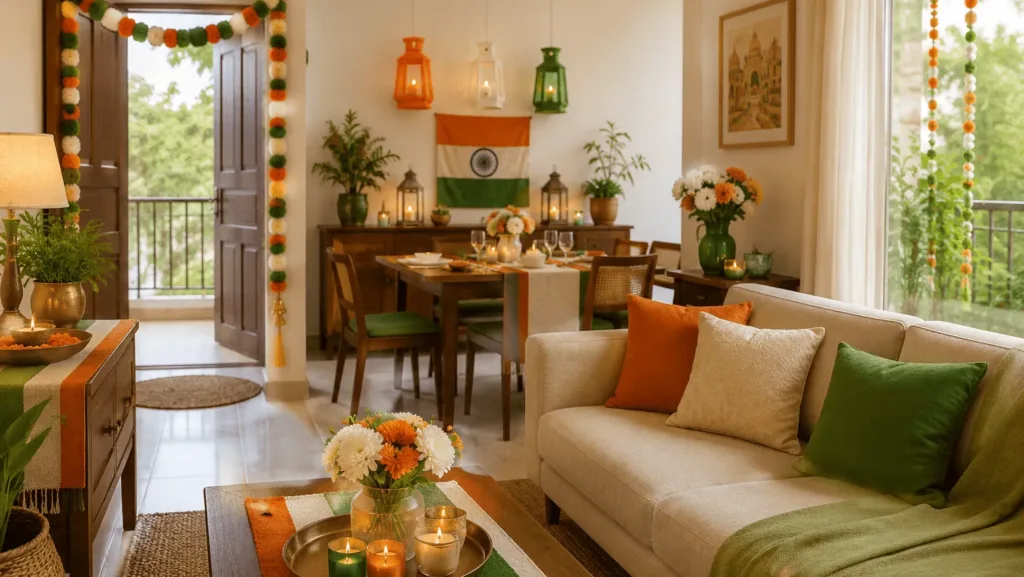
    Since the door makes a strong first impression, do not clutter it up. A bouquet of marigolds in white immediately adds festive appeal, while a fabric strip or a homemade toran made using recycled paper, cloth or dried flowers will subtly bring in the tricolor.

    Independence Day home decor ideas
    (Representational Image) Easy Independence Day décor ideas using flowers, diyas, textiles and Indian crafts | AI-generated

    What can you do to refresh your living room without going overboard?

    Rather than decorating every nook and corner with themed decorations, concentrate on one or two items that can jazz up the surroundings. Change the cushion covers to shades of saffron, ivory and green colours, or team up your usual throw with cushion covers in contrasting colours.

    A ceramic green vase full of orange and white flowers will be a beautiful tribute to the Indian flag without seeming too much. If you are into DIYs, a wall decor displaying pictures, postcards or sketches highlighting the cultural wealth of India would be great.

    Set a festive dining table

    The dining table is one of the easiest places to introduce the theme. Use white crockery as a clean base and add colour through saffron and green napkins, floral centrepieces or serving accessories.

    Seasonal fruits can double as natural décor, while handmade place cards with Indian-inspired motifs can make a family meal feel even more special.

    Independence Day home decor ideas
    (Representational Image) Refresh your home this Independence Day with simple and elegant tricolour accents | AI Generated

    Light up the evening

    As the sun sets, warm lighting can transform the atmosphere. Arrange candles or diyas around your living room, balcony or entrance for a cosy glow. Small lanterns in tricolour-inspired tones can also work beautifully outdoors when used safely.

    Also Read | How many years of Independence does India complete in 2026?

    Celebrate Indian craftsmanship

    Independence Day also offers a great opportunity to bring Indian craftsmanship into one’s home through the use of handloom table runner, terracotta accessories, cane baskets, Madhubani paintings and Indian pottery.

    The best way to celebrate Independence Day through decor is not by stuffing your room with three colours but by appreciating the warmth and craft of India in the rooms you call your own.

  • India Independence Day 2026: Wishes, greetings and messages to share on August 15

    India Independence Day 2026: Wishes, greetings and messages to share on August 15

    India celebrates its 80th Independence Day today, on August 15, 2026, commemorating 79 years since the country attained freedom from British rule in 1947. The national occasion, observed every year with flag-hoisting ceremonies, cultural programmes, patriotic events, and public gatherings, is also a moment for citizens to reflect on the long and arduous journey that transformed India from a colonial possession into a sovereign democratic republic.

    Independence Day carries a significance that extends well beyond the ceremonial unfurling of the Tricolour. It recalls the generations of freedom fighters who challenged colonial authority through constitutional politics, mass movements, revolutionary action, social reform and acts of extraordinary personal sacrifice. From Mahatma Gandhi’s mass mobilisation and Jawaharlal Nehru’s political leadership to Subhas Chandra Bose’s uncompromising nationalism and the countless lesser-known men and women who participated in the freedom struggle, India’s independence was the culmination of a movement whose social breadth remains difficult to fully capture.

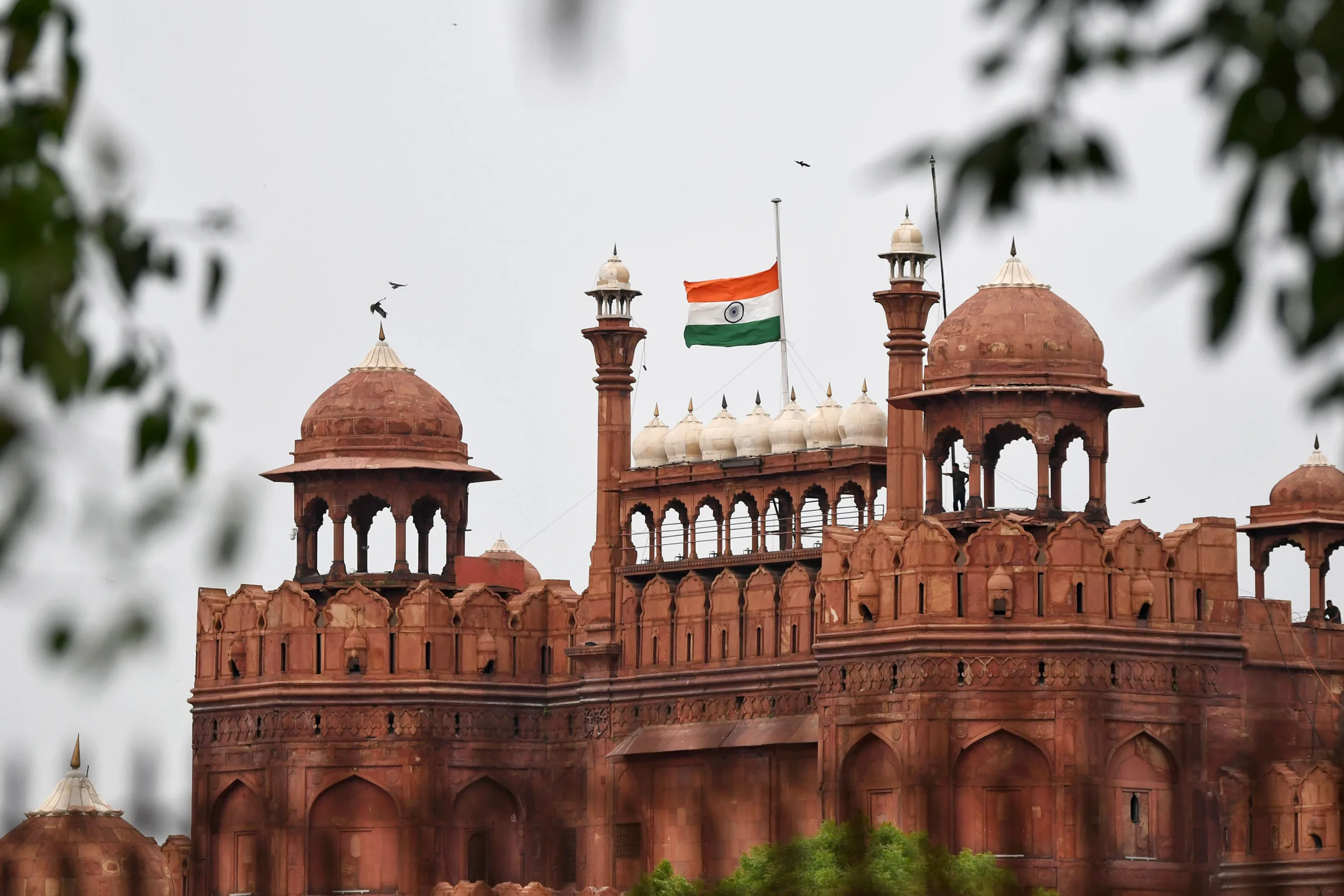
    India marks its 80th Independence Day in 2026 after completing 79 years of freedom
    India marks its 80th Independence Day in 2026 after completing 79 years of freedom | ANI

    The occasion is consequently marked by messages of patriotism, fraternity, constitutional values and national unity, with families, institutions, schools, workplaces and community organisations exchanging Independence Day greetings and organising programmes to commemorate the historic date.

    Also Read | How many years of Independence does India complete in 2026?

    Independence Day 2026 wishes

    For those looking for messages to share with family, friends, colleagues or on social media, a simple and meaningful greeting can carry the spirit of the occasion.

    Also Read | The Unfinished Awakening: Bengal, Freedom and India’s Tryst with Destiny at 80

    “Happy Independence Day 2026! May we always cherish the freedom won through the sacrifices of those who came before us and work together to build an India that is more prosperous, inclusive and resilient.”

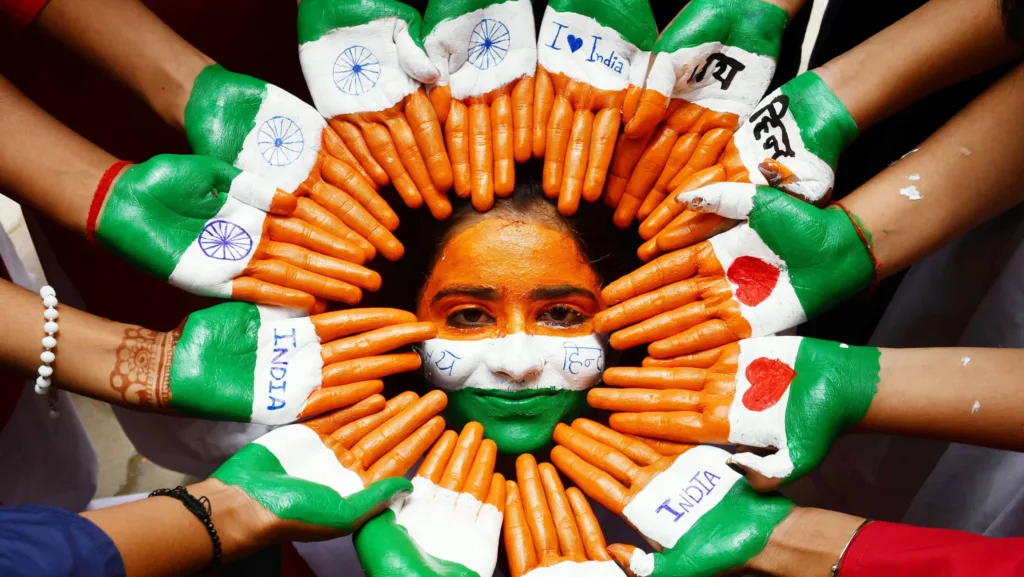
    India Independence Day 2026: Best wishes, greetings and messages to celebrate August 15.
    India Independence Day 2026: Best wishes, greetings and messages to celebrate August 15 | ANI

    Another message could read:

    “On this Independence Day, let us honour the courage of our freedom fighters and celebrate the remarkable journey of India. May our nation continue to rise with unity, confidence and hope. Happy 80th Independence Day!”

    For a more formal greeting:

    “Warm wishes on the 80th Independence Day of India. May this historic occasion inspire us to uphold the values of liberty, democracy, equality and fraternity, while contributing to the nation’s continued progress.”

    For social media, a shorter message may be more appropriate:

    “79 years of freedom, 80th Independence Day, and a future still being written. Jai Hind.”

    15 August 2026: Best Independence Day wishes, greetings, quotes and messages to share.
    15 August 2026: Best Independence Day wishes, greetings, quotes and messages to share | ANI

    Why is Independence Day 2026 significant?

    The 2026 celebration comes at an important point in India’s journey towards 2047, when the country will mark 100 years of independence. The intervening two decades are increasingly being viewed through the prism of the national ambition of building a Viksit Bharat, or developed India, by the centenary of independence.

    That makes the 80th Independence Day more than an anniversary. It is a point of reflection between the India that emerged from colonial rule in 1947 and the India that seeks to emerge as a developed, technologically capable and globally influential nation by 2047.

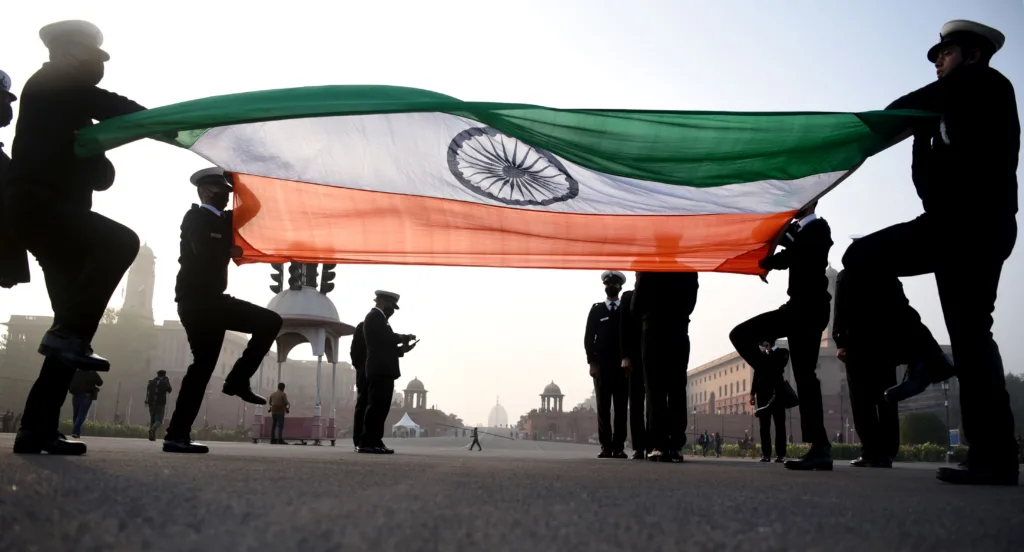
    India Independence Day 2026: Celebrate 79 years of freedom with heartfelt wishes and greetings.
    India Independence Day 2026: Celebrate 79 years of freedom with heartfelt wishes and greetings | ANI

    The story of independence, after all, did not conclude with the lowering of the Union Jack in 1947. It entered a different chapter. The responsibility of subsequent generations has been to translate political freedom into opportunity, education, economic security, dignity and social mobility.

    As the Tricolour rises on August 15, 2026, the most meaningful tribute may therefore be neither a slogan nor a ceremonial gesture, but a renewed commitment to the democratic and constitutional ideals that give independence its enduring meaning.

  • How many years of Independence does India complete in 2026?

    How many years of Independence does India complete in 2026?

    India completes 79 years of independence in 2026 and celebrates its 80th Independence Day on August 15. The distinction often causes confusion because the number of completed years and the ordinal number of the Independence Day are not the same.

    India became independent from British rule on August 15, 1947. Therefore, by August 15, 2026, exactly 79 years will have elapsed since that historic transfer of power. The country will consequently enter its 80th year of independence, while the national celebration itself will be the 80th Independence Day.

    Also Read | The Unfinished Awakening: Bengal, Freedom and India’s Tryst with Destiny at 80

    The arithmetic is straightforward: 2026 minus 1947 equals 79. However, because August 15, 1947, was the first Independence Day, August 15, 1948, was the second, and so on, August 15, 2026, becomes the 80th such observance. The Government of India referred to August 15, 2025, as the 79th Independence Day, thereby establishing the corresponding numbering for 2026.

    India turns 79 years independent in 2026 as it celebrates its 80th Independence Day, marking a historic step towards 2047.
    India turns 79 years independent in 2026 as it celebrates its 80th Independence Day, marking a historic step towards 2047 | ANI

    The distinction becomes particularly relevant this year because the 80th Independence Day places India only 21 years away from the centenary of independence in 2047. The approaching milestone has acquired significance alongside the national aspiration of building a Viksit Bharat by the centenary year.

    India’s journey since 1947 has encompassed some of the most consequential transformations in its modern history. The country inherited a deeply impoverished economy, widespread illiteracy, limited industrial capacity and the immense human consequences of Partition. It subsequently established a constitutional democracy, built institutions, expanded education and infrastructure, developed an industrial and technological base, and emerged as one of the world’s major economies.

    Also Read | Onam Sadya: Why is the traditional feast served on a banana leaf?

    Yet Independence Day is ultimately less about arithmetic than about inheritance. The generation that secured freedom fought primarily for political sovereignty; subsequent generations have been entrusted with converting that sovereignty into opportunity, prosperity and dignity.

    August 15, 2026, marks India's 80th Independence Day and 79 completed years of freedom since independence from British rule in 1947 | ANI
    August 15, 2026, marks India’s 80th Independence Day and 79 completed years of freedom since independence from British rule in 1947 | ANI

    Thus, August 15, 2026, marks 79 completed years of India’s independence, the beginning of its 80th year, and the celebration of its 80th Independence Day.

    The numbers may appear deceptively similar, but together they mark a significant moment: India is no longer merely commemorating the freedom achieved in 1947; it is increasingly measuring the distance between that historic beginning and the India it hopes to become by 2047.

  • The Unfinished Awakening: Bengal, Freedom and India’s Tryst with Destiny at 80

    The Unfinished Awakening: Bengal, Freedom and India’s Tryst with Destiny at 80

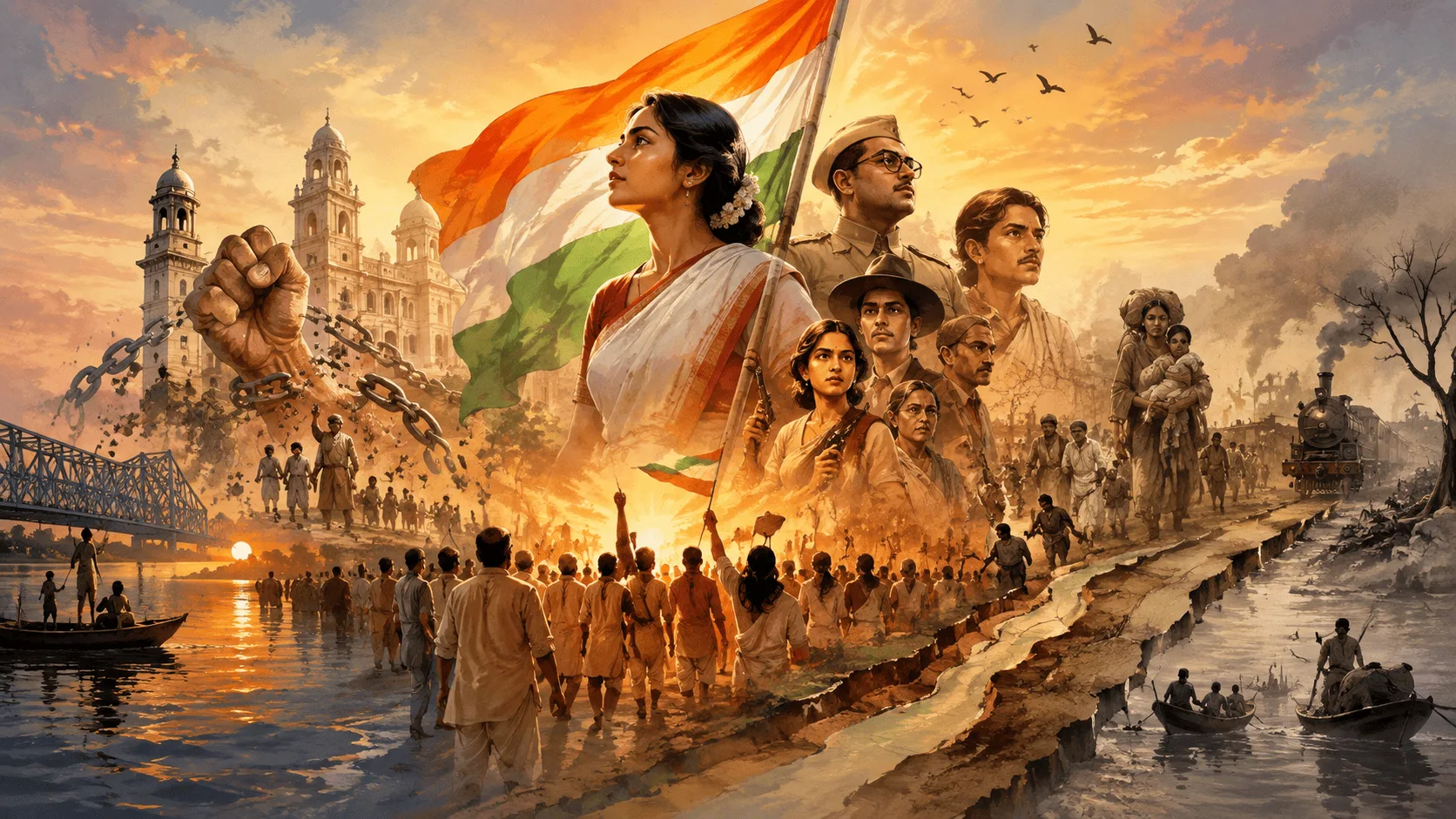
    On the night India crossed the threshold of freedom, Bengal occupied a peculiar and almost tragic position in the national imagination: it was at once one of the principal nurseries of Indian nationalism, the birthplace of movements that had challenged the moral authority of the Raj long before independence became an attainable political proposition, and the province that would experience the arrival of freedom through the violence of Partition, with Calcutta itself suspended between jubilation and apprehension. While New Delhi prepared for the ceremonies that would accompany the transfer of power, Bengal confronted a more complicated dawn, for the liberation of a country had arrived alongside the division of a homeland that had for generations been imagined, inhabited and remembered as a cultural whole. Eight decades later, as India marks its 80th Independence Day, that contradiction remains indispensable to any serious understanding of what freedom meant to Bengal and what Bengal, in turn, meant to the making of India.

    Long before 15 August became the ceremonial vocabulary through which an independent republic would annually remember itself, Bengal had already supplied much of the intellectual and emotional grammar of the freedom movement. The first Partition of Bengal in 1905, conceived by the colonial administration ostensibly for reasons of administrative convenience but widely perceived as an attempt to fracture an increasingly politically conscious population, produced the Swadeshi movement and transformed resistance from an abstract political sentiment into an everyday practice of boycott, indigenous enterprise, national education and cultural assertion. The streets, classrooms, printing presses and drawing rooms of Bengal became laboratories of nationalism, while literature, music and theatre acquired a political potency that the colonial state found increasingly difficult to contain. Rabindranath Tagore’s songs, Bankim Chandra Chattopadhyay’s Vande Mataram and the writings of a generation of intellectuals did something that political resolutions alone could not accomplish: they gave the idea of India an emotional vocabulary.

    Yet Bengal’s nationalism was never confined to the genteel world of intellectual debate. Beneath the public movement existed a subterranean republic of revolutionaries, whose names would eventually become inseparable from the mythology of India’s struggle for independence. Khudiram Bose, barely eighteen when he was executed in 1908, entered nationalist memory as the embodiment of a generation for whom colonial rule had ceased to appear merely unjust and had instead become intolerable; the organisations associated with Anushilan Samiti and Jugantar subsequently cultivated networks of young men who regarded armed resistance as an alternative to petitions, negotiations and constitutional gradualism. Their methods remain historically contentious, and their violence cannot responsibly be romanticised, but their importance lies in what they revealed about the changing psychology of colonial India: the British Empire, once presented as an almost permanent fact of political life, had begun to appear vulnerable to challenge.

    Also Read | Is the magic of Bengal’s music now lost, or is another story waiting to unfold?

    That transformation found one of its most formidable expressions in Subhas Chandra Bose, whose political imagination was perhaps too impatient to accommodate itself to the incrementalism of conventional nationalist politics. Netaji’s journey from Congress president to leader of the Indian National Army remains one of the most contested trajectories in the history of India’s freedom struggle, particularly because his wartime alliances with the Axis powers continue to invite legitimate historical scrutiny; yet reducing Bose either to a military romantic or to the controversies surrounding his wartime diplomacy would be to miss the larger significance of his politics. He understood freedom not merely as the legal transfer of sovereignty but as a psychological emancipation, requiring Indians to cease thinking of themselves as subjects awaiting political concessions and to imagine themselves instead as the authors of their own destiny. His famous call to sacrifice was consequently less a piece of rhetoric than an attempt to manufacture political agency among a colonised people.

    Bengal’s contribution to the freedom movement was, moreover, never exclusively male, nor was it confined to the celebrated names that populate school textbooks. Pritilata Waddedar, Kalpana Dutta and Bina Das belonged to a generation of women who entered political resistance at considerable personal risk, while Matangini Hazra, the elderly Gandhian revolutionary from Tamluk, became one of the most enduring symbols of the Quit India Movement when she continued advancing with the national flag after being shot by the colonial police in 1942. In the parallel nationalist administration established in Tamluk during the Quit India period, Bengal demonstrated another dimension of resistance: the capacity not merely to oppose colonial authority but to experiment, however imperfectly and briefly, with alternative forms of political organisation.

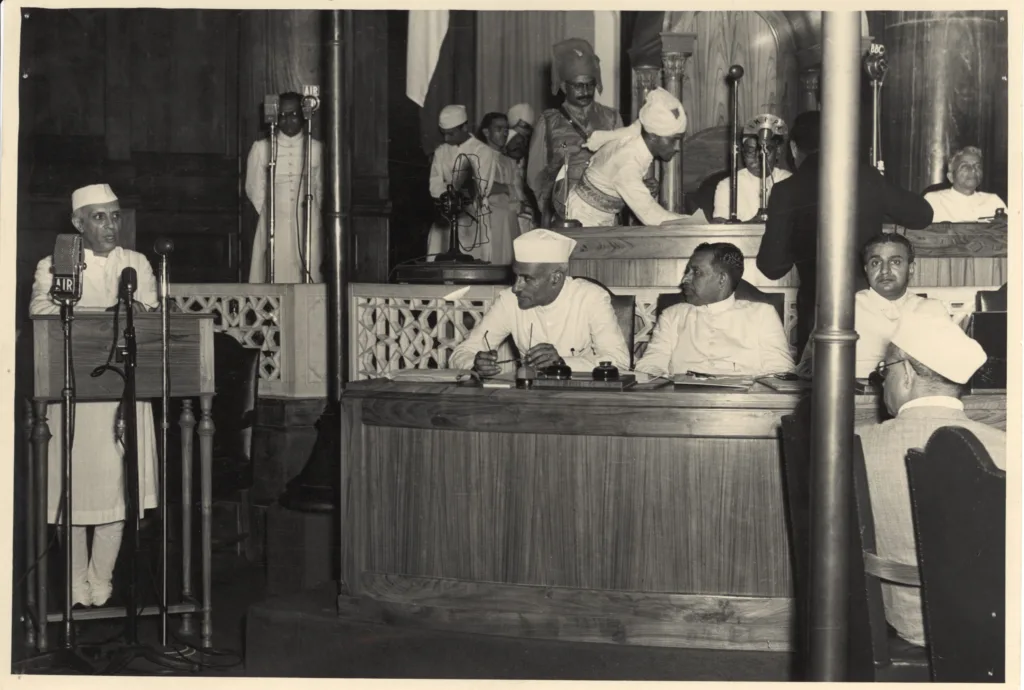
    And then came 1947, carrying with it the strange cruelty that history sometimes reserves for places that have contributed most passionately to its making. Nehru’s celebrated Tryst with Destiny speech, delivered on the eve of independence, imagined India awakening to life and freedom after a long night of subjugation; Bengal entered that same dawn with the knowledge that freedom had also redrawn the map beneath its feet. The partition of Bengal divided families, disrupted economies, displaced millions and transformed the meaning of home for communities on both sides of the new border. Calcutta, which had once stood at the centre of an undivided Bengal and had served as the capital of British India until 1911, became a city negotiating the enormous human consequences of Partition even as the new republic attempted to celebrate its arrival.

    Jawaharlal Nehru delivering his speech, Tryst with Destiny, on the eve of India’s first independence day | Wikipedia
    Jawaharlal Nehru delivering his speech, Tryst with Destiny, on the eve of India’s first independence day | Wikipedia

    This is why the Bengal story of Independence cannot be reduced to nostalgia, however seductive nostalgia may be. To remember Khudiram is to remember the ferocity of youthful conviction; to remember Surya Sen is to remember the audacity of organised rebellion; to remember Pritilata and Matangini is to recognise how extensively women participated in the making of freedom; to remember Netaji is to confront the complexity of nationalism itself; and to remember Partition is to understand that political liberation can coexist with profound human loss. The inheritance is therefore not a simple pantheon of heroes but a complicated archive of courage, disagreement, idealism, violence, sacrifice and grief.

    For India in 2026, that archive acquires renewed significance because the meaning of freedom has inevitably changed. The generation that fought the Raj sought sovereignty; the generation that inherited sovereignty has had to confront poverty, illiteracy, inequality, communal tension, institutional weakness and the enormous challenge of converting political independence into substantive opportunity. The India that now speaks of becoming a developed nation by 2047 is consequently engaged in a second, very different kind of freedom struggle: not against an external sovereign, but against the internal constraints that prevent citizens from exercising the full possibilities of independence.

    Also Read | Did you know Bengal once had its own airline? Here’s why it never took flight

    Bengal, which once supplied so much of the intellectual energy of India’s freedom movement, must find its place within that unfinished project. The challenge is no longer to overthrow an empire, but to build institutions capable of sustaining aspiration; no longer to demand Swaraj, but to translate political liberty into economic dynamism, educational excellence, technological confidence and social dignity. The Bengal that produced revolutionaries, poets, scientists, reformers and political thinkers cannot afford to treat its history as a museum of former greatness; its more demanding obligation is to convert that inheritance into a capacity for renewal.

    Perhaps, then, the most appropriate way to observe Independence Day in Bengal is neither through triumphalism nor through melancholy, but through a more demanding act of remembrance. Eighty years after Nehru spoke of India’s tryst with destiny, the tryst remains unfinished, because freedom, once achieved, does not become self-sustaining merely by virtue of being inherited. Every generation must decide what it will do with the political inheritance placed in its hands.

    The tricolour that rises over Bengal each August therefore carries within it more than the memory of 1947. It carries the unfinished arguments of 1905, the courage of the revolutionaries, the imagination of Tagore, the defiance of Netaji, the sacrifice of Matangini and Pritilata, the wounds of Partition and the aspirations of millions who inherited freedom without ever having witnessed its birth. The awakening of 1947 gave India its sovereignty; the responsibility of 2026 is to determine what that sovereignty can become.

    And perhaps that is the most enduring lesson Bengal can offer a country approaching its centenary: that freedom is not a destination reached at midnight, but a promise whose meaning must be renewed at every dawn.

  • Is the magic of Bengal’s music now lost, or is another story waiting to unfold?

    Is the magic of Bengal’s music now lost, or is another story waiting to unfold?

    There was a time when Bengal did not merely produce music; it possessed a musical civilisation.

    Its songs were not disposable embellishments to cinema, nor ephemeral commodities engineered for a weekend’s streaming numbers. They were cultural artefacts, carrying within their melodies the melancholy of a river, the romance of a rain drenched afternoon, the anguish of partition, the exuberance of youth and the philosophical resignation that Bengalis have long perfected into an aesthetic virtue.

    The greats did not simply sing songs. They fashioned an idiom.

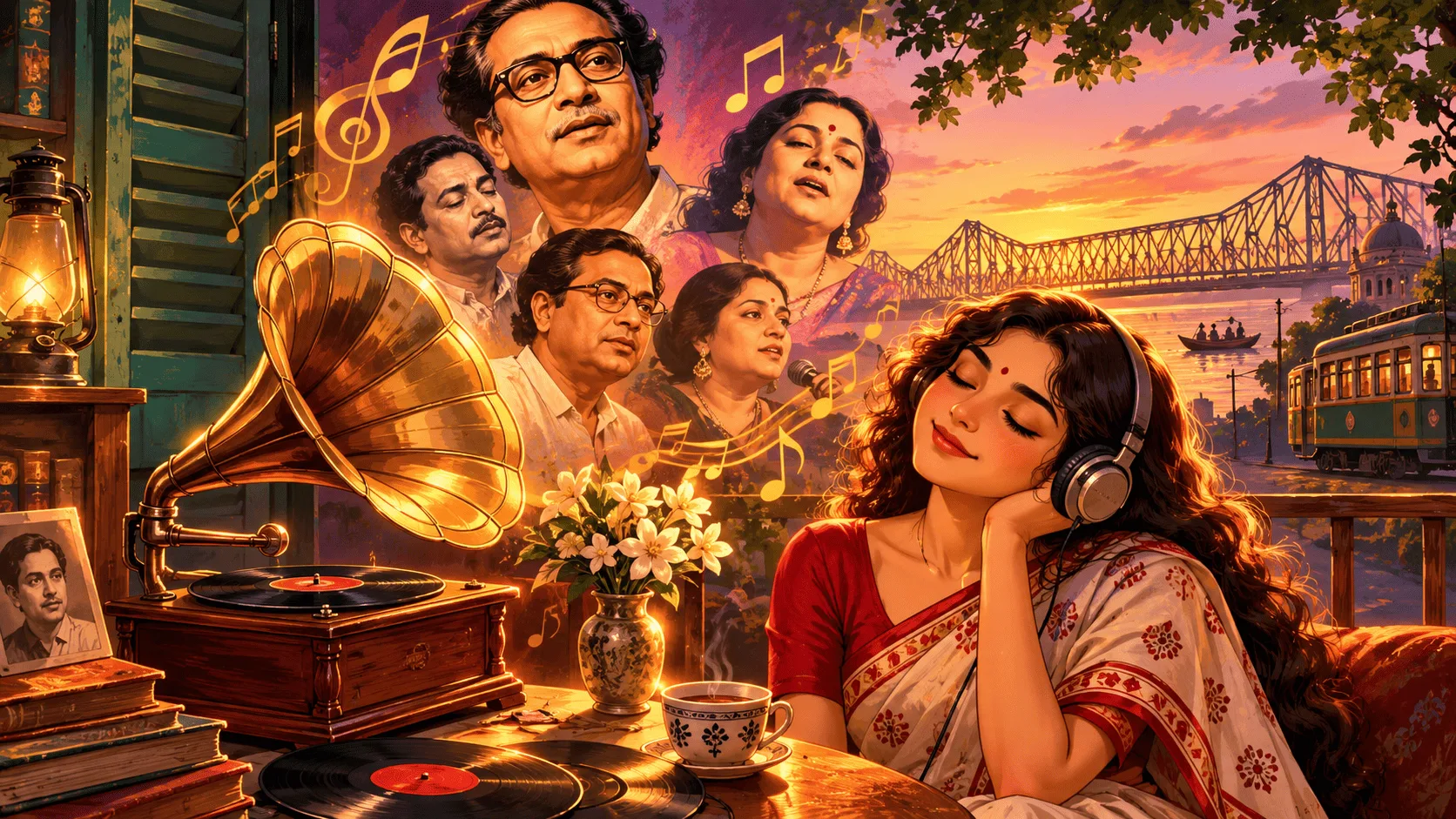
    Hemanta Mukhopadhyay possessed a baritone that could make solitude sound almost aristocratic. Manna Dey brought classical rigour into popular music without sacrificing accessibility. Sandhya Mukhopadhyay invested romantic longing with an almost operatic tenderness. Shyamal Mitra, Manabendra Mukhopadhyay, Dwijen Mukhopadhyay and Aarti Mukherji added their own hues to an extraordinarily variegated canvas. Behind them stood composers and lyricists such as Salil Chowdhury, Sudhin Dasgupta, Nachiketa Ghosh and Pulak Bandyopadhyay, whose collaborations created songs that have outlived the films for which they were composed.

    Also Read | Did you know Bengal once had its own airline? Here’s why it never took flight

    Sudhin Dasgupta alone worked with an astonishing constellation of voices, including Hemanta, Manna Dey, Shyamal Mitra, Sandhya Mukhopadhyay, Lata Mangeshkar, Asha Bhosle, Mohammed Rafi and Talat Mahmood.

    This was Bengal’s great musical paradox: it was fiercely Bengali without ever being culturally insular.

    Calcutta and Bombay were not rival musical republics. They were neighbouring provinces of the same imagination. Lata Mangeshkar could sing in Bengali; Kishore Kumar could become an intrinsic part of the Bengali sonic memory; Salil Chowdhury could carry the political conscience and melodic sophistication of Bengal into Hindi cinema. The traffic was not merely commercial. It was artistic.

    That cosmopolitanism has gradually receded and the decline did not arrive with the theatricality of an obituary. It came insidiously, through changing economics, altered listening habits and the transformation of cinema music into content. The old ecosystem, in which lyricists, composers, arrangers, singers and musicians could develop enduring artistic partnerships, slowly fragmented. The song became shorter, the production more immediate, the shelf life more precarious.

    What disappeared was not talent and Bengal has never been bereft of talent.

    What disappeared was the ecosystem that could turn talent into a musical era. This distinction is crucial.

    A generation ago, a composer could acquire a signature. A singer could cultivate a recognisable musical personality. A lyricist could become inseparable from a certain emotional vocabulary. Today, songs arrive amid an avalanche of releases, competing not merely with other songs but with reels, remixes, algorithms and an attention span increasingly atomised by the tyranny of immediacy.

    And then came the Dev era.

    The rise of Dev in Bengali commercial cinema, particularly through the enormously popular soundtracks of films such as Paglu, Shedin Dekha Hoyechilo and others, produced one of the last conspicuous manifestations of Bengal’s older cosmopolitan musical instinct. Jeet Gannguli became a formidable musical force, while voices from the Bombay playback establishment, including Sonu Nigam, Shaan and Kunal Ganjawala, became integral to Bengali popular cinema.

    It was commercially unapologetic, musically contemporary and unmistakably ambitious.

    Also Read | Who was Kamal Senapati? Hooghly railway officer dies after being hit by train

    More importantly, it demonstrated that Bengali cinema could still summon Bombay’s most recognisable voices and make them sing to a Bengali audience at considerable scale. Songs such as Je Kothati Mone and Shey Chhilo Boroi Anmona became chartbusters, evidence that linguistic particularity did not necessitate musical insularity.

    Perhaps that was the last grand bridge between two musical cultures that once conversed with enviable ease.

    Today, the irony is almost painful. The old songs refuse to die even as the ecosystem that created them has largely disappeared. They survive in Puja playlists, late night radio, streaming algorithms, family archives and the accidental nostalgia of a younger generation discovering that their grandparents’ music possesses something contemporary music often struggles to manufacture: permanence.

    Bengal’s lost musical diadem, therefore, is not really lost.

    Its jewels remain scattered across decades of recordings. What has been misplaced maybe is the crown.

    And perhaps the challenge before Bengali music is not to resurrect the past, for nostalgia is a poor substitute for creation, but to recover the confidence of that past: the audacity to compose ambitiously, to sing without haste, to write with literary precision and to believe that a Bengali song can travel beyond Bengal without first surrendering its Bengali soul.

    For music, like civilisation, does not perish when its practitioners change. It perishes when a culture ceases to believe that what it creates is worthy of being remembered.

  • What is the Sweatpants Theory? Uncovering one ‘Weird’ modern Gen-Z dating term

    What is the Sweatpants Theory? Uncovering one ‘Weird’ modern Gen-Z dating term

    There is something faintly absurd about the modern dating vocabulary. We once had courtship, romance and heartbreak. We now have ghosting, breadcrumbing, situationships, love bombing and, apparently, the Sweatpants Theory.

    Yet beneath its deliberately ridiculous name lies a rather serious proposition: perhaps attraction becomes more authentic when performance is reduced.

    ALSO READ| What is digital jealousy? Online habit affecting modern couples

    What is the Sweatpants Theory about?

    The Sweatpants Theory has been circulating on TikTok and other social platforms as the idea that people can appear more attractive when they dress comfortably and behave without the elaborate self presentation traditionally associated with dating. In other words, the less one appears to be trying to impress, the more approachable and, paradoxically, attractive one may become.

    It sounds like an internet joke. It is, however, a revealing symptom of how profoundly dating has changed.

    For decades, a date was an exercise in presentation. Clothes were selected, hair arranged, perfume applied, conversation rehearsed and expectations carefully calibrated. The objective was to present the most desirable version of oneself before intimacy had earned access to the least curated one.

    Modern dating has begun to distrust that theatre

    The Sweatpants Theory essentially argues that comfort can become its own form of seduction. Someone who looks relaxed may appear more confident because they are not visibly negotiating the approval of the room. A person in ordinary clothes, laughing freely and behaving naturally, can communicate something that a meticulously assembled dating persona cannot: this is who I am when I am not trying to convince you to like me.

    ALSO READ| Feeling fear during meditation? The surprising reason may not be what you think

    That distinction matters in an age when dating apps have transformed romance into a marketplace of curated identities.

    Profiles are edited. Photographs are selected with forensic precision. Biographies are compressed into witty sentences. First dates can feel less like encounters and more like auditions. Even vulnerability can become performative, packaged as evidence of emotional intelligence.

    The Sweatpants Theory cuts against this economy of impression management. Its deeper appeal, therefore, may have little to do with sweatpants. It is about authenticity.

    But there is a caveat. Authenticity should not become an alibi for indifference. Turning up looking deliberately careless is not necessarily confidence; sometimes it is simply carelessness. The distinction between being comfortable and making no effort remains important, particularly because relationships require reciprocity.

    The theory becomes interesting precisely at that intersection. Modern daters increasingly appear exhausted by the elaborate rituals of romantic self marketing. They do not necessarily want someone flawless. They want someone recognisable. Someone whose dating persona does not collapse the moment the relationship moves from candlelit restaurants to grocery shopping, bad hair days, unfinished chores and Sunday afternoons spent doing absolutely nothing.

    Perhaps that is the real revolution concealed inside the Sweatpants Theory.

    ALSO READ| 25 years of Dil Chahta Hai: The friendship we grew up with

    Romance has historically been obsessed with discovering whether someone finds us attractive at our most polished. Modern relationships demand a more uncomfortable question: will they still find us compelling when there is nothing left to perform?

    The sweatpants, then, are merely sartorial shorthand and the real theory is about being seen without the costume.