Category: India

  • Once visited by Christopher Nolan, Matt Damon, and Tom Holland, now facing regulatory action: The story of Olympia Cafe, Mumbai

    Once visited by Christopher Nolan, Matt Damon, and Tom Holland, now facing regulatory action: The story of Olympia Cafe, Mumbai

    Olympia Coffee House, the century-old Colaba eatery in Mumbai that recently made headlines after visits by Christopher Nolan, Matt Damon, and Tom Holland, is now facing regulatory action over food safety and hygiene concerns. The Maharashtra Food and Drug Administration has suspended the cafe’s licence following an inspection triggered by a consumer complaint. Officials reportedly found a range of violations, including cockroach and fly infestation, poor food handling practices and a urinal inside the food storage area.
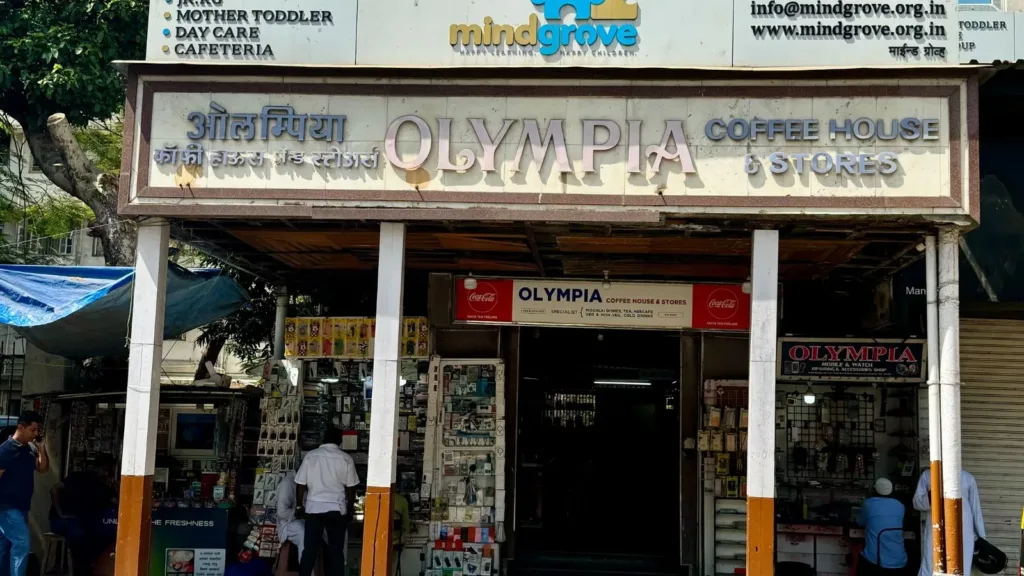
    Olympia Coffee House, the century-old Colaba eatery that recently made headlines after visits by Christopher Nolan, Matt Damon and Tom Holland, is now facing regulatory action over food safety and hygiene concerns. (ANI)
    Olympia Coffee House, the century-old Colaba eatery that recently made headlines after visits by Christopher Nolan, Matt Damon and Tom Holland, is now facing regulatory action over food safety and hygiene concerns. (ANI)

    Mumbai cafe’s license suspension after FDA inspection

    The Mumbai cafe licence suspension followed an inspection in which FDA officials reportedly flagged several conditions they considered serious food safety violations. Inspectors found meat and blood residues inside a refrigerator, along with cockroaches and flies on the premises.

    The inspection also reportedly found food being handled directly on the floor, unhygienic food preparation and utensil-washing areas, and the use of unclean water. Raw vegetarian and non-vegetarian food was also allegedly not being stored separately.

    The findings did not stop there. Officials reportedly found damaged wooden chopping boards being used in the kitchen, while food handlers were allegedly not wearing appropriate protective clothing.

    The Mumbai cafe’s license suspension by the FDA will remain in place until further notice, according to the report.

    Also Read | IIT Bombay student death: FIR filed after ChatGPT exam row
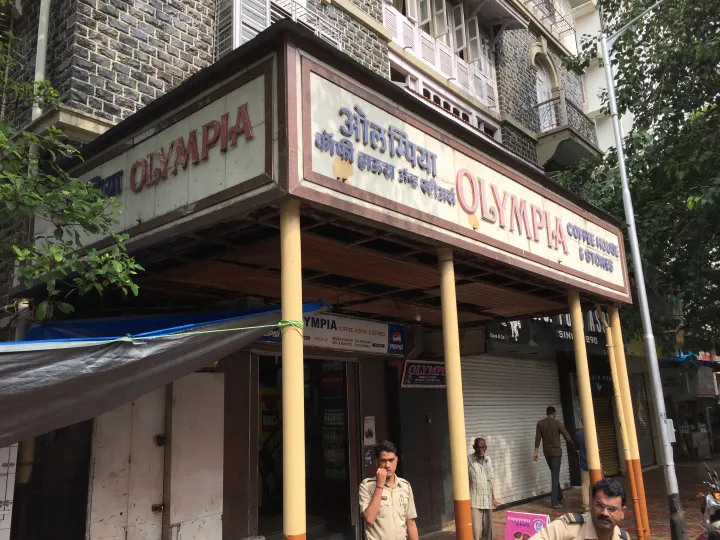
    The Mumbai cafe's license suspension action followed an inspection in which FDA officials reportedly flagged several conditions they considered serious food safety violations.(ANI)
    The Mumbai cafe’s license suspension action followed an inspection in which FDA officials reportedly flagged several conditions they considered serious food safety violations.(ANI)

    Mumbai cafe licence suspended as food safety checks intensify

    Olympia Coffee House is among several establishments across Maharashtra against which the FDA has taken action as food safety inspections intensify. The inspection drive has brought greater attention to hygiene standards in restaurants, cafes, and other food establishments.

    The reported presence of a urinal in the food storage area was among the findings that drew particular attention. The FDA has also flagged the need for proper separation of raw food, hygienic preparation areas, and safe handling practices.

    The Mumbai cafe’s license suspension following the inspection is therefore linked to a broader regulatory exercise rather than the cafe’s association with visiting celebrities.

    Also Read | Passport rules changed: What children and parents need to know
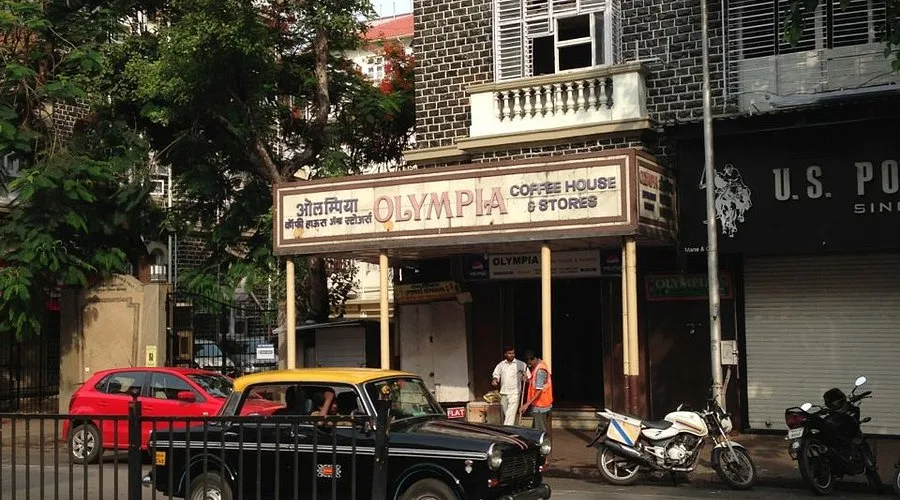
    Olympia Coffee House is among several establishments across Maharashtra against which the FDA has taken action as food safety inspections intensify. (ANI)
    Olympia Coffee House is among several establishments across Maharashtra against which the FDA has taken action as food safety inspections intensify. (ANI)

    Mumbai cafe’s license suspended weeks after Hollywood visit

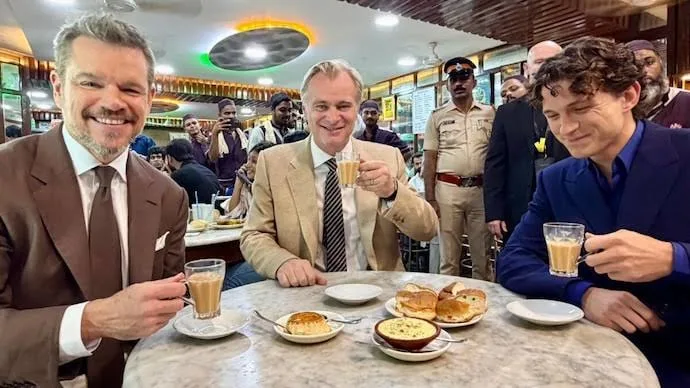
    The regulatory action comes just weeks after Olympia became a talking point among film fans when Christopher Nolan, Matt Damon, and Tom Holland visited the Colaba cafe during their Mumbai trip in July.

    The Hollywood filmmaker and actors reportedly stopped for tea, bun maska, and desserts while in the city ahead of the premiere of Nolan’s film The Odyssey. Their visit brought fresh attention to the old-school cafe, which has long been known for dishes such as mutton keema pav, biryani, kebabs, dal gosht, Irani chai, and bun maska.

    For a cafe with such a long association with Mumbai’s food culture, the suspension of its Mumbai cafe’s licence over reported hygiene violations marks a striking shift in its recent public attention. The licence will remain suspended while the regulatory action continues.

    FAQs

    Why was Olympia Coffee House’s license suspended?

    The Maharashtra FDA suspended the licence after inspectors reported several food-safety and hygiene violations.

    Did Christopher Nolan, Matt Damon and Tom Holland visit Olympia Coffee House?

    Yes, the three reportedly visited the Colaba cafe in July during their Mumbai trip.
  • IIT Bombay student death: FIR filed after ChatGPT exam row

    IIT Bombay student death: FIR filed after ChatGPT exam row

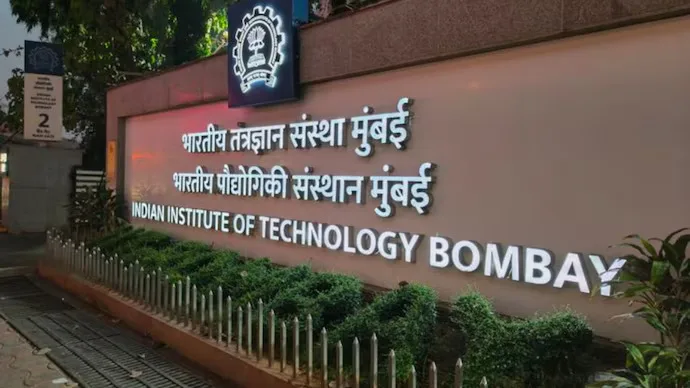
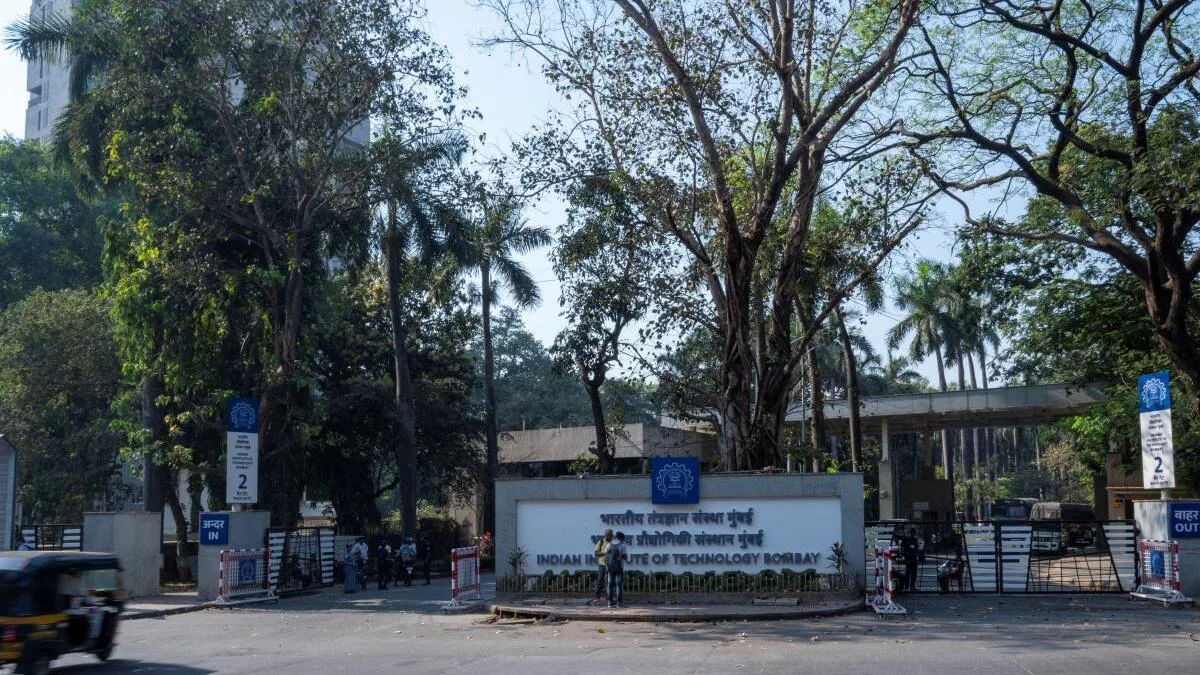
    The IIT Bombay student death case has taken a serious legal turn after police registered an FIR against the institute following the death of a second-year student. The FIR invokes Section 108 of the Bharatiya Nyaya Sanhita, relating to abetment of suicide, along with provisions of the Scheduled Castes and Scheduled Tribes (Prevention of Atrocities) Act. The development came amid protests by students seeking answers over what happened after the student was pulled up for using a mobile phone during an examination.

    The IIT Bombay student death case has taken a serious legal turn after police registered an FIR against the institute following the death of a second-year student. (ANI)
    The student death case has taken a serious legal turn after police registered an FIR against the institute following the death of a second-year student. (ANI)

    IIT Bombay student death case moves to FIR

    The student death case began after the student was found using a mobile phone during an examination. According to the institute, he had uploaded the examination question paper on ChatGPT to seek answers.

    IIT Bombay has maintained that no disciplinary action was initiated against him. The institute said the instructor and Head of Department discussed the matter with the student, counselled him, and assured him that the incident would not adversely affect his academic career. He later returned to his hostel room, where he was found dead.

    The police FIR now means the circumstances surrounding the IIT Bombay student’s death will be examined as part of a formal investigation. The registration of an FIR does not establish guilt, and the allegations against the institute remain subject to investigation and due process.

    Also Read | Passport rules changed: What children and parents need to know

    The IIT Bombay student death case began after the student was found using a mobile phone during an examination. (ANI)
    The IIT Bombay student death case began after the student was found using a mobile phone during an examination. (ANI)

    IIT Bombay student death sparks campus protests

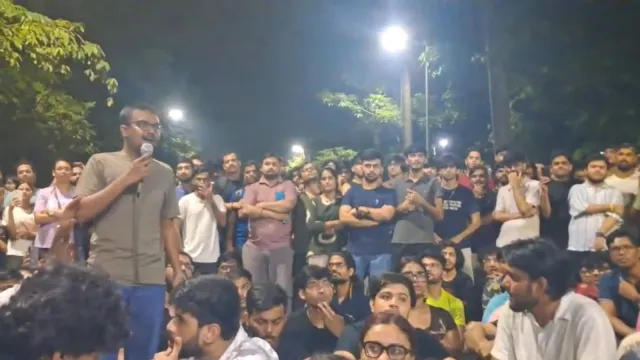
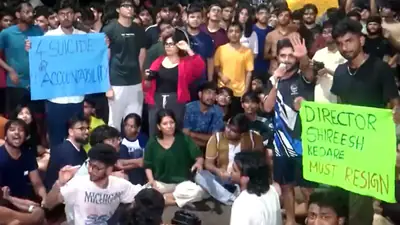
    The student death has also triggered protests on campus, with students demanding greater clarity from the administration. More than 100 students gathered at the main gate on Saturday, while earlier protests had drawn a larger crowd.

    Students have alleged that the deceased was asked to leave the examination hall and faced the possibility of disciplinary action, including suspension. IIT Bombay has disputed that account, saying that no disciplinary proceedings were initiated. The conflicting accounts are now among the issues surrounding the investigation.

    The student’s parents also joined the protest and sought an explanation from the institute. They have alleged that discrimination may have played a role, although this remains an allegation and has not been established by investigators.

    Also Read | India’s WTO dilemma: Can plurilateralism and multilateralism coexist?

    The IIT Bombay student death has also triggered protests on campus, with students demanding greater clarity from the administration. (ANI)
    The IIT Bombay student death has also triggered protests on campus, with students demanding greater clarity from the administration. (ANI)

    IIT Bombay student death raises mental health concerns

    The IIT Bombay student death has renewed concerns about academic pressure, student welfare, and the way institutions respond when students face disciplinary or academic difficulties. The institute’s director has said that greater attention will be given to student mental health, with IIT Bombay stating that psychologists are available on campus.

    The case also comes amid previous student deaths at the Powai campus this year, adding to concerns among students about mental health support and institutional communication.

    The investigation will now have to establish the circumstances surrounding the IIT Bombay student death and examine the competing accounts of what happened after the examination. For the institute, the case has also brought renewed scrutiny over student support, academic discipline, and communication during moments of distress.

    FAQs

    Why was an FIR registered after the IIT Bombay student death?

    Police registered an FIR under Section 108 of the BNS and provisions of the SC/ST Act to investigate the circumstances surrounding the death.

    What did IIT Bombay say about the exam incident?

    IIT Bombay said no disciplinary action was initiated and that the student was counselled and assured that the incident would not affect his academic career.

  • Passport rules changed: What children and parents need to know

    Passport rules changed: What children and parents need to know

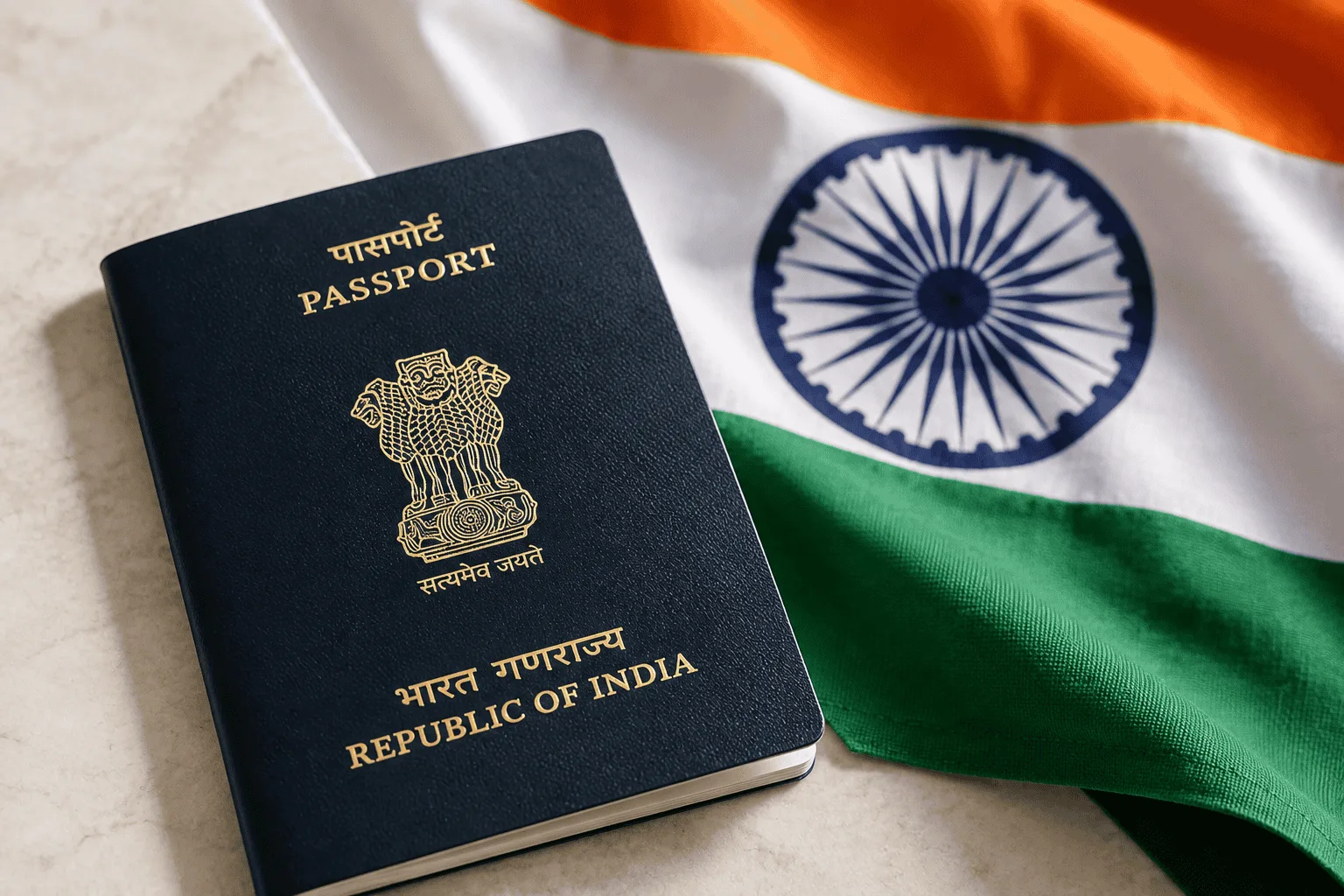
    The Ministry of External Affairs has amended India’s passport rules, bringing changes to the validity of passports issued to children below 15 years of age and provisions governing passport application fees.

    The Passports (Amendment) Rules, 2026 were notified through the Official Gazette on September 15 and came into force immediately. The amendment modifies Rule 12 of the Passports Rules, 1980, which deals with the validity of passports issued to minors.

    What are the new passport rules in India?

    One of the key changes concerns ordinary 36-page passports issued to children below 15 years of age.

    Under the amended rules, such a passport will be valid for five years from the date of issue or until the child turns 18, whichever is earlier.

    Also Read | India’s 4am diplomatic push: How BRICS overcame Iran-Saudi-UAE differences

    The amendment was issued under the provisions of the Passports Act, 1967. The notification was signed by Joint Secretary and Chief Passport Officer BS Mubarak.

    The earlier rule provided that a 36-page ordinary passport issued to a child below 15 would remain valid for five years or until the child attained 15 years of age, whichever was earlier.

    The new provision therefore extends the age limit from 15 to 18, while retaining the five-year validity period.

    For instance, if a passport is issued when a child is 14, the five-year period would ordinarily extend to age 19. However, under the amended rule, the passport will expire when the child turns 18.

    What has changed in passport application fees?

    The amendment also changes Rule 8 of the Passports Rules, 1980, relating to passport application fees.

    The revised provision states that fees for different types of passport applications will be charged at the rates specified against the corresponding applications in Schedule IV of the rules.

    The Ministry of External Affairs had already revised passport-related fees from July 1, 2026.

    Under the revised fee structure, a fresh or reissued 36-page passport for adults costs ₹2,500, up from ₹1,500, while a 60-page passport costs ₹3,500, up from ₹2,000.

    The Tatkaal fee for a 36-page passport is ₹5,000, compared with the earlier ₹3,500, while a 60-page passport under Tatkaal costs ₹6,000, up from ₹4,000.

    Applicants should check the applicable fee category on the Passport Seva portal before making a payment, as charges vary according to the type of application and service selected.

    What does the new child passport rule mean for parents?

    The revised rule means a passport issued to a child below 15 can remain valid beyond the child’s 15th birthday, subject to the five-year limit.

    However, the passport will automatically cease to be valid when the holder turns 18, even if five years have not elapsed since its issue.

    New passport rules from Sept 15 bring changes for travellers and families.
    New passport rules from Sept 15 bring changes for travellers and families / Pexels

    This makes the child’s age at the time of application important when determining the actual validity period.

    Also Read | India’s WTO dilemma: Can plurilateralism and multilateralism coexist?

    Parents applying for passports should therefore check the validity applicable to their child’s age before making travel plans based on the passport’s expiry date.

    When did the new passport rules come into effect?

    The Passports (Amendment) Rules, 2026 came into force on September 15, 2026, the date they were published in the Official Gazette.

    The changes amend the Passports Rules, 1980, which were themselves updated earlier this year.

    For applicants, the key changes to note are the revised validity provision for children below 15 and the updated framework governing passport application fees.

  • India’s WTO dilemma: Can plurilateralism and multilateralism coexist?

    India’s WTO dilemma: Can plurilateralism and multilateralism coexist?

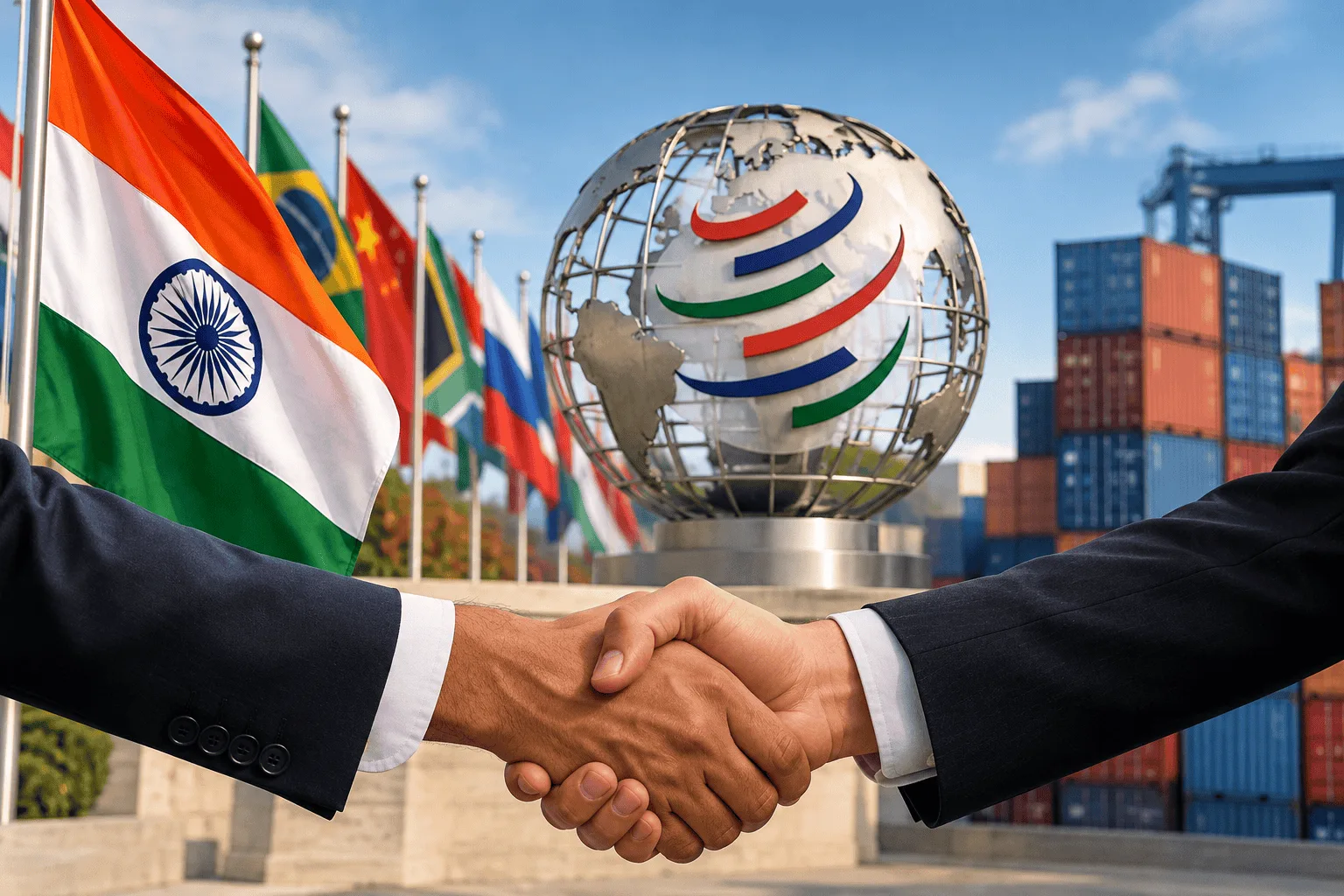
    The debate over plurilateral agreements at the World Trade Organisation has gained fresh attention after the 2026 BRICS Summit in New Delhi.

    The BRICS New Delhi Declaration said members recognise the importance of identifying “appropriate pathways” for plurilateral initiatives within the WTO legal framework, including on development-oriented issues.

    The wording is significant in the context of India’s longstanding preference for an inclusive, member-driven and multilateral WTO system. But it does not amount to a formal announcement that India has accepted plurilateral agreements.

    Also Read | Delhi faces some of India’s worst pollution, but ranks above Srinagar and Bengaluru in clean-air survey: Here’s why

    Instead, the declaration opens the door to discussions on how such initiatives could fit within the existing WTO framework.

    What are plurilateral agreements?

    A plurilateral agreement is a trade agreement in which only a group of WTO members participate. It differs from a multilateral agreement, which operates across the wider WTO membership under the applicable rules.

    A simple distinction is:

    Multilateral: The wider WTO membership participates.
    Plurilateral: A group of participating members negotiates an agreement.
    Bilateral: Two countries negotiate an agreement.

    Plurilateral negotiations can allow interested WTO members to move forward on specific subjects when reaching consensus among the entire membership proves difficult.

    However, negotiating an agreement among a group of members and formally incorporating it into the WTO’s legal framework are separate steps.

    Why is India’s position important?

    India has traditionally emphasised a member-driven and multilateral WTO system, particularly with regard to the interests of developing countries.

    Its reservations have also extended to whether certain subjects should become part of the WTO negotiating mandate and whether a growing number of plurilateral initiatives could create multiple parallel rule-making processes for developing economies.

    The Investment Facilitation for Development (IFD) Agreement provides a recent example.

    The agreement focuses on making investment-related administrative procedures more transparent, predictable and efficient, particularly to facilitate foreign investment in developing economies.

    At the WTO’s 14th Ministerial Conference (MC14) in Yaoundé, Cameroon, in March 2026, India maintained its reservations over incorporating the IFD Agreement into the WTO rulebook.

    According to WTO records cited in the source material, 129 WTO members were participating in the IFD initiative, while 165 of the 166 members supported a proposed ministerial decision on incorporation. Consensus was nevertheless not reached because of India’s reservations.

    How does plurilateralism work under WTO rules?

    The WTO has both agreements covering its wider membership and certain plurilateral agreements involving participating members.

    Annex 4 of the Marrakesh Agreement Establishing the WTO is particularly relevant. Under Article X:9 of the WTO Agreement, adding a new plurilateral agreement to Annex 4 requires a consensus decision by WTO members.

    That distinction is central to the current debate. A group of countries can negotiate an agreement among themselves, but getting that agreement formally incorporated into Annex 4 requires consensus.

    The IFD Agreement demonstrates the difference between participation in a plurilateral initiative and its formal incorporation into the WTO framework.

    What does the BRICS declaration actually change?

    The 2026 BRICS New Delhi Declaration places two ideas alongside each other.

    It reaffirms support for a rules-based multilateral trading system with the WTO at its core, including principles such as Most-Favoured-Nation treatment and Special and Differential Treatment for developing countries.

    BRICS Logo
    BRICS Logo / Website

    At the same time, it recognises the importance of finding appropriate pathways for plurilateral initiatives within the WTO legal framework, including on development-oriented issues.

    The declaration is a collective BRICS document, rather than a separate Indian policy statement. It also does not identify specific plurilateral agreements for incorporation or create a new legal mechanism for doing so.

    Therefore, the BRICS language should not by itself be read as India abandoning its earlier reservations.

    IFD and e-commerce agreements: Why do they matter?

    Two developments illustrate the wider WTO debate.

    The IFD Agreement, finalised in 2024 by participating members, seeks to streamline investment-related administrative procedures. Its participating members sought its incorporation into Annex 4, but consensus was not reached at MC14.

    Digital trade provides another example through the WTO Agreement on Electronic Commerce. At MC14, 66 WTO members, representing approximately 70% of global trade, adopted a pathway for implementing the agreement through interim arrangements while work continued towards incorporation into the WTO legal framework.

    The WTO subsequently reported that 67 members had adopted the pathway, with the agreement remaining open for acceptance by other WTO members.

    India has also raised questions about the institutional and legal basis of the interim arrangements for the e-commerce agreement.

    What does this mean for India?

    For India, the debate goes beyond individual agreements. It concerns the future structure of WTO rule-making and how developing-country interests are protected within that system.

    Plurilateral negotiations can provide a way for countries willing to move faster on emerging issues to develop common rules. At the same time, India has traditionally stressed that the WTO should remain the central institution for global trade governance and that its rule-making should remain inclusive.

    Also Read | India’s 4am diplomatic push: How BRICS overcame Iran-Saudi-UAE differences

    The BRICS declaration therefore presents a more nuanced picture than a simple shift from multilateralism to plurilateralism.

    The stated multilateral foundation remains, while possible pathways for plurilateral initiatives are also being discussed.

    For UPSC aspirants, the more precise takeaway is that India should not simply be described as being “against plurilateral agreements”. Its position has involved caution over their incorporation into the WTO framework and concerns about their wider institutional implications.

  • India’s 4am diplomatic push: How BRICS overcame Iran-Saudi-UAE differences

    India’s 4am diplomatic push: How BRICS overcame Iran-Saudi-UAE differences

    India pulled off a significant diplomatic feat at the 18th BRICS Summit in New Delhi, securing consensus on the group’s joint statement after negotiations continued until around 4 am on Saturday, according to government sources.

    The challenge was particularly significant because the expanded grouping includes Iran, Saudi Arabia and the UAE which are the countries with competing positions and deep differences on several regional and geopolitical issues.

    Also Read | Kolkata’s Bagbazar Sarbojanin Durga Puja hits legal hurdle after poll ends in tie, HC to decide next

    Against the backdrop of continuing conflicts and heightened tensions in West Asia, India led sustained consultations aimed at preventing those differences from derailing the joint declaration.

    How did India bridge the differences?

    According to government sources, the negotiations involved disagreements over “several contentious issues”. India worked to reconcile the competing positions and find language that could be accepted by all members.

    The talks continued for hours, with the eventual agreement coming only after sustained consultations. The late-night negotiations highlight the increasingly complicated diplomacy required to maintain consensus within a BRICS that now brings together countries with widely different geopolitical interests.

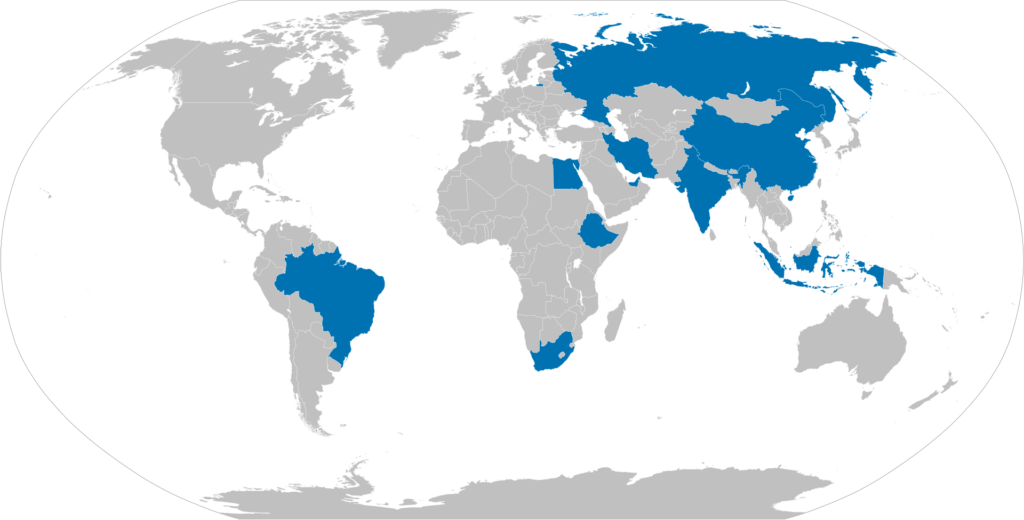
    BRICS member countries
    BRICS member countries / Wikipedia

    Rather than allowing contentious regional issues to dominate the summit, India sought to keep the discussions centred on areas where members could find common ground.

    The successful conclusion of the talks allowed the grouping to issue its joint statement despite the competing positions of its members.

    Why is the BRICS consensus significant?

    The episode illustrates the challenge facing BRICS as the grouping becomes more diverse. Its members do not share identical positions on major geopolitical questions, particularly in regions marked by active conflicts and rivalries.

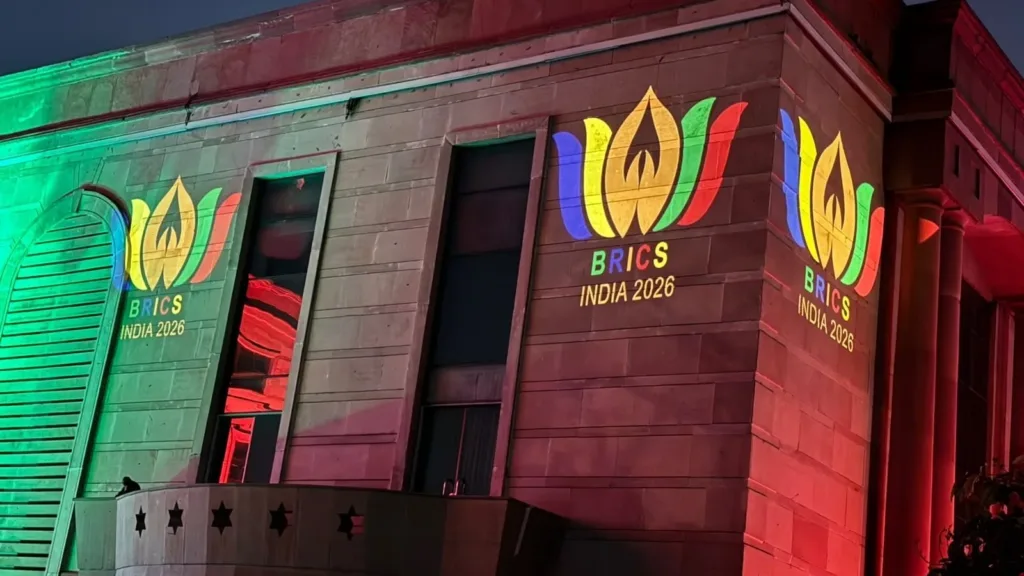
    Ministry of External Affairs lights up ahead of the 18th BRICS Summit.
    Ministry of External Affairs lights up ahead of the 18th BRICS Summit /
    BRICS 2026

    For India, the negotiations also offered an opportunity to use its BRICS presidency to push for greater cooperation while demonstrating its ability to bring divergent positions towards a common outcome.

    The consensus came as leaders gathered in New Delhi for the 18th BRICS Summit.

    Xi Jinping arrives in Delhi

    Chinese President Xi Jinping arrived in New Delhi on Saturday to attend the summit, marking his first visit to India in seven years.

    Union Minister of State for Commerce and Industry Jitin Prasada received Xi at the airport, where cultural artistes performed traditional dances to welcome the Chinese president.

    Also Read | Delhi faces some of India’s worst pollution, but ranks above Srinagar and Bengaluru in clean-air survey: Here’s why

    External Affairs Ministry spokesperson Randhir Jaiswal said on social media that India looked forward to “constructive discussions” as it works towards greater cooperation and a “more balanced, representative and multipolar world.”

    The late-night consensus therefore comes at a crucial moment for India’s BRICS presidency, with the grouping attempting to maintain unity despite increasingly complex geopolitical fault lines.

  • Delhi faces some of India’s worst pollution, but ranks above Srinagar and Bengaluru in clean-air survey: Here’s why

    Delhi faces some of India’s worst pollution, but ranks above Srinagar and Bengaluru in clean-air survey: Here’s why

    Delhi has long been associated with some of India’s worst air pollution episodes, particularly during winter. Yet the capital has finished 21st among 48 cities with populations above 10 lakh in the Centre’s Swachh Vayu Sarvekshan 2026, ahead of Srinagar and Bengaluru.

    Delhi scored 172 points, while Srinagar stood at 26th with 162.6 points and Bengaluru at 32nd with 152.6 points.

    The numbers may look surprising at first. But the ranking is not a cleanest-air list. It assesses how cities are addressing pollution, including measures to control road dust, vehicular and industrial emissions, construction waste and solid waste, as well as public awareness initiatives.

    Also Read | Kolkata parking rules change from Sept 1: Here’s what drivers need to know

    That distinction explains why a city battling severe pollution can still perform relatively well in the survey.

    What does the Swachh Vayu Sarvekshan actually measure?

    The survey is conducted under the Centre’s National Clean Air Programme (NCAP) and covers 130 cities across three population categories.

    Rather than relying only on ambient air-quality readings, the assessment looks at the steps cities have taken to tackle pollution and how effectively those measures are being implemented.

    According to the assessment process outlined in the report, cities first conduct self-assessments. These are scrutinised by state-level monitoring committees, followed by evaluation by the Central Pollution Control Board (CPCB) and field verification by independent teams.

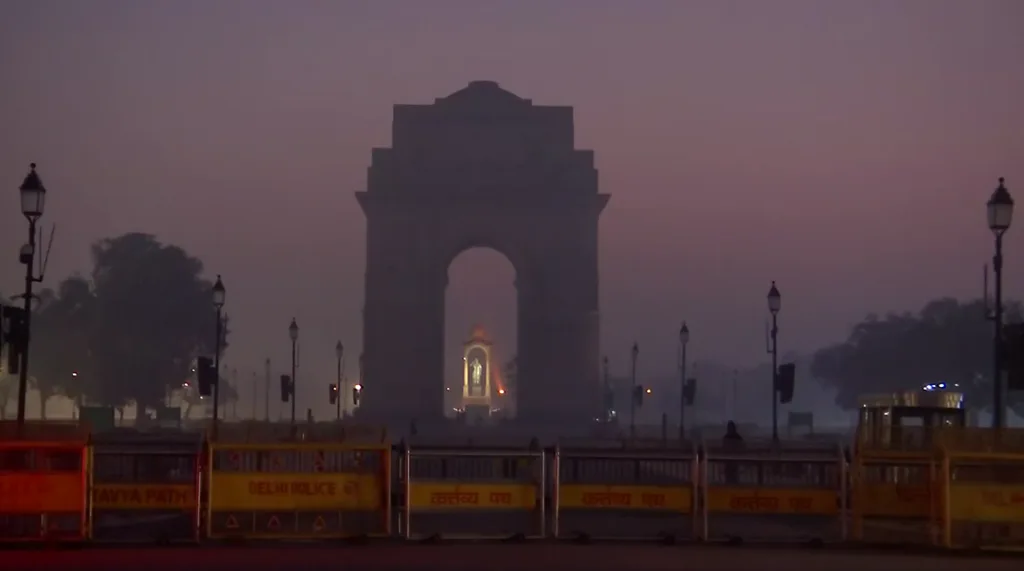
    A layer of smog covers the area around India Gate and Kartavya Path as the Air Quality Index (AQI) recorded '281' in the 'Very Poor' category as per the Central Pollution Control Board (CPCB), in New Delhi
    A layer of smog covers the area around India Gate and Kartavya Path as the Air Quality Index (AQI) recorded ‘281’ in the ‘Very Poor’ category as per the Central Pollution Control Board (CPCB), in New Delhi/ ANI

    That means the score reflects a combination of pollution-control action, implementation and measurable progress, rather than the AQI recorded on a particular day.

    Delhi’s position has also improved significantly compared with the previous edition. The capital ranked 32nd in 2025 with 157.3 points. In 2026, it moved up to 21st with 172 points.

    The improvement, therefore, is better understood as a measure of Delhi’s efforts to address pollution than as evidence that the capital’s air has become consistently clean.

    So why is Delhi above Srinagar and Bengaluru?

    Delhi’s higher ranking does not establish that its air is cleaner than Srinagar’s or Bengaluru’s.

    The same principle applies to the two cities. Srinagar’s 26th position and Bengaluru’s 32nd position reflect their scores against the survey’s broader pollution-control parameters, not a direct comparison of which city’s residents are breathing cleaner air every day.

    This is particularly important when rankings are read alongside real-world pollution levels.

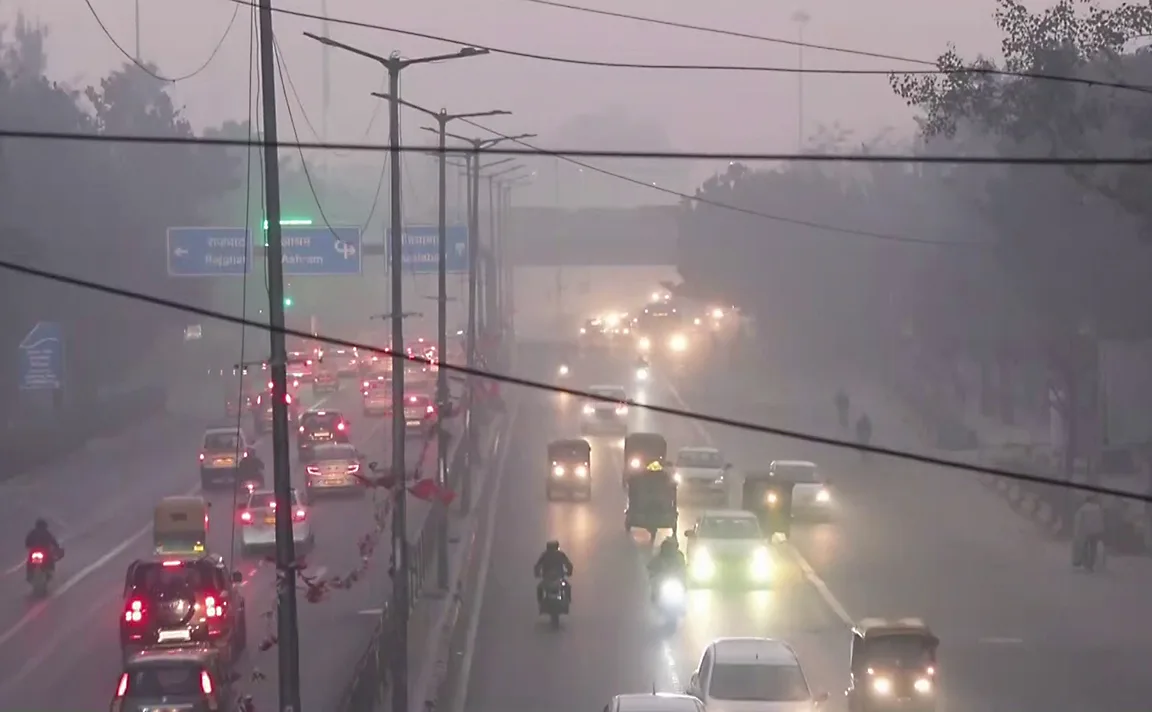
    A thick layer of smog covered all over the area gives a hazy view as air pollution increases, in Bengaluru / ANI
    A thick layer of smog covered all over the area gives a hazy view as air pollution increases, in Bengaluru / ANI

    Delhi continues to experience severe pollution episodes during winter, with its AQI frequently reaching hazardous levels. The report notes that the capital’s AQI has crossed 400 and, at times, 450. In January 2026, authorities invoked Stage IV of the Graded Response Action Plan (GRAP) after pollution reached critical levels.

    So, Delhi’s position should not be interpreted as a clean-air certificate.

    Even the top-ranked city still has pollution problems

    The distinction becomes clearer when looking at the top of the table.

    Lucknow ranked first among million-plus cities with 198 points, followed by Indore with 197 and Jabalpur with 195.

    Yet Lucknow’s first-place ranking does not mean it has eliminated air pollution. Its PM10 levels have reportedly fallen substantially from the 2017-18 baseline, but remained above the national standard of 60 micrograms per cubic metre in 2025-26.

    Lucknow ranked first among million-plus cities with 198 points, followed by Indore with 197 and Jabalpur with 195.
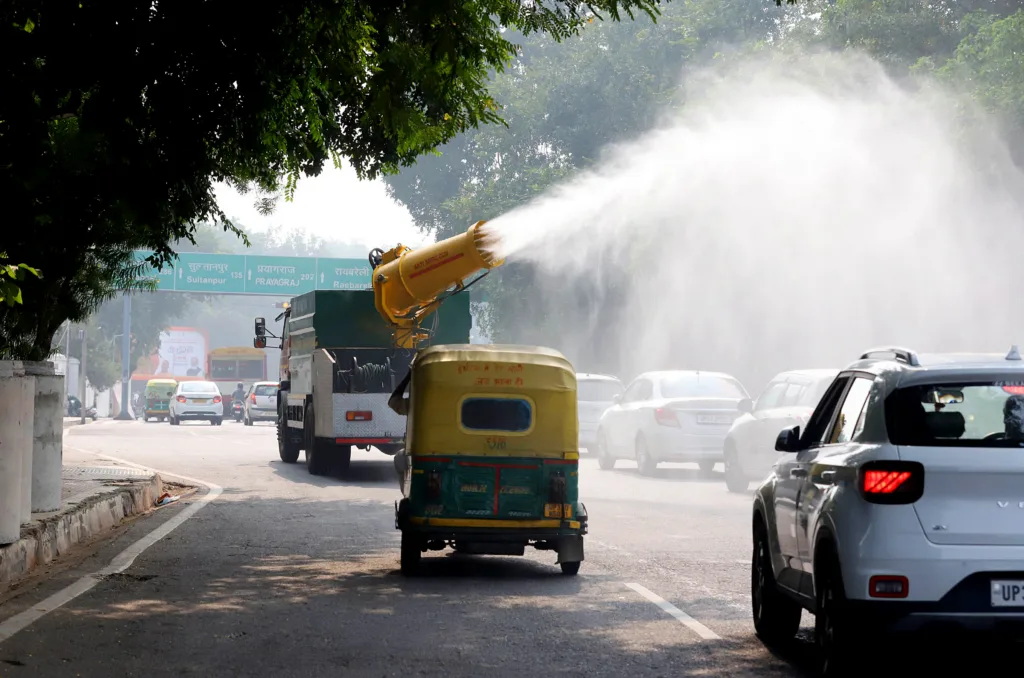
    A Municipal Corporation truck mounted with Anti-Smog Gun sprays water to curb air pollution as smog engulfs the city, in Lucknow /ANI

    Among the measures credited to Lucknow are electric vehicles for waste collection, mechanised road sweeping and improved legacy-waste management.

    The ranking is therefore designed to capture how cities are progressing against pollution, rather than declare which city has the cleanest air.

    Is India’s air quality actually improving?

    While there are indications of progress, the numbers also demonstrate the magnitude of the task at hand.

    As per government data, out of the 130 cities surveyed, 108 of them have recorded lower levels of PM10 than the level registered in their baseline year 2017-18 for the year 2025-26.

    On the other hand, only 14 cities have been found to meet the national PM10 standard.

    This is a substantial gap. While the reduction in pollution levels is positive, low levels do not always mean that the air quality has attained healthy or acceptable levels.

    Also Read | Why is Suvendu Adhikari pushing the Saffron Samman Yatra now?

    In the case of Delhi, what will be a meaningful indicator of progress is whether the pollution control efforts have led to fewer hazardous air days, lower particulate levels and lesser exposure to the populace.

    The Swachh Vayu Sarvekshan 2026 rankings demonstrate Delhi’s improvement in areas covered by the survey. They do not demonstrate that Delhi has solved its air pollution problem.