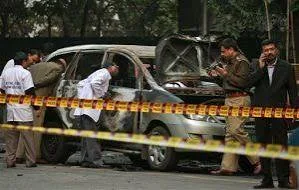
A Delhi court has taken fresh cognisance of the 2012 Israeli Embassy car blast case, observing that forensic findings, witness statements and material gathered during the investigation indicate that a terrorist act was committed as part of a criminal conspiracy.
In an order dated November 19, Special National Investigation Agency (NIA) Judge Anu Grover Baliga of the Rouse Avenue Court said the material presented at this stage was sufficient to establish that an offence involving a terrorist act had taken place in pursuance of a conspiracy.
The Israeli Embassy car blast relates to the explosion near an Israeli Embassy vehicle in New Delhi on February 13, 2012, which injured Tal Yehoshua Koren, the wife of an Israeli diplomat. The court’s fresh action marks the first valid cognisance of the case after the Supreme Court set aside an earlier order passed by a magistrate court in 2012.
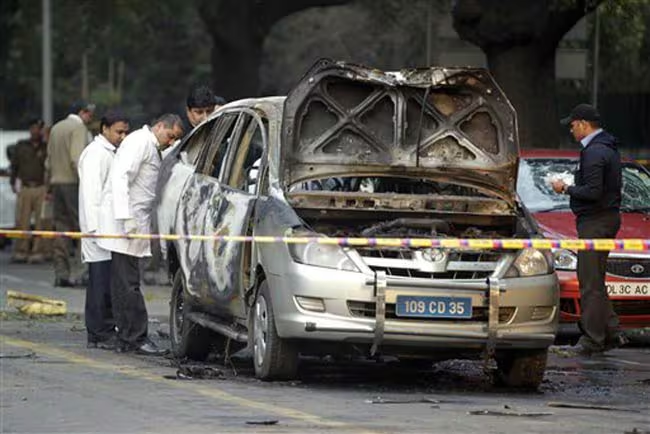
What happened in the 2012 Israeli Embassy blast case?
The explosion took place on February 13, 2012, when a motorcycle-borne person allegedly attached a magnetic explosive device to the rear of an Innova car belonging to the Israeli Embassy. The device detonated seconds later, injuring Tal Yehoshua Koren.
Investigators suspected that four Iranian nationals had planned and carried out the attack before fleeing India. However, the only person formally made an accused in the case was Delhi-based freelance journalist Syed Mohammed Ahmed Kazmi.
The Delhi Police Special Cell arrested Kazmi on March 6, 2012, alleging that he had conspired with the Iranian nationals and received money from them. Around three months later, the police filed a chargesheet invoking provisions of the Unlawful Activities (Prevention) Act (UAPA) and sections of the Indian Penal Code.
In August 2012, a chief metropolitan magistrate court took cognisance of the chargesheet. However, the Supreme Court set aside that order on October 19, 2012, ruling that a magistrate court did not have the authority to take cognisance of cases involving scheduled offences under the National Investigation Agency Act. The apex court also granted statutory bail to Kazmi.
Also Read | Noida’s voter enrolment: 6 forms per booth expose gap with Ghaziabad ahead of UP polls
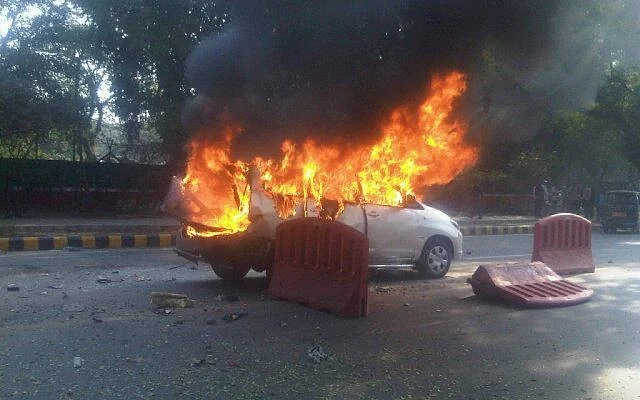
Court cites forensic report and witness statements
While taking fresh cognisance in the 2012 Israeli Embassy blast case, Judge Baliga noted that the earlier cognisance order had been invalidated by the Supreme Court. Consequently, the November 19 order constitutes the first valid cognisance by a competent court, according to the judge.
The court relied on a Central Forensic Science Laboratory (CFSL) report, statements of witnesses referred to by the Special Public Prosecutor and material discovered during the investigation. It held that these findings were sufficient at this stage to indicate that a terrorist act had taken place in furtherance of a conspiracy.
The court took cognisance under several provisions, including Section 307 of the Indian Penal Code, which deals with attempt to murder, Section 323, relating to voluntarily causing hurt, and Section 120B, which concerns criminal conspiracy. It also invoked relevant provisions of the UAPA and the Explosive Substances Act.
The judge clarified that the earlier magistrate court order could not be treated as a merely irregular proceeding because the Supreme Court had already set it aside. The prosecution, therefore, could not rely on Section 460 of the Code of Criminal Procedure to preserve the earlier cognisance.
Also Read | Delhi air pollution: 13 key gaps emerge in CAQM report as infrastructure targets remain unmet
Kazmi’s lawyer disputes fresh cognisance
Advocate Mehmood Pracha, representing Kazmi, opposed the fresh cognisance during the proceedings. He argued that taking cognisance again would amount to what he described as “double cognisance”.
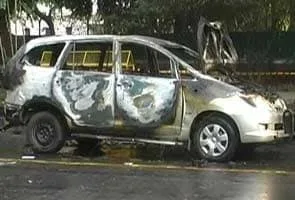
Pracha also disputed the prosecution’s account of the explosion, claiming that inflammable material was present inside the vehicle and arguing that no offence had taken place. These submissions form part of the defence’s position in the case.
The court is scheduled to hear arguments on the framing of charges on December 7. The proceedings will determine the next stage of the case against Kazmi, who was arrested in connection with the attack more than 14 years ago.
The fresh cognisance in the 2012 Israeli Embassy blast case establishes the court’s formal consideration of the alleged offences, but the allegations against the accused will have to be examined through the subsequent judicial proceedings.
Leave a Reply