
Anthropic, the company behind the Claude family of artificial intelligence models, made its Nasdaq debut on Thursday, November 19. The listing has become one of the biggest public-market offerings in history.
The company priced 980 million shares at $83 apiece, raising $81.3 billion through its initial public offering (IPO). Investor demand pushed the shares 34% above the issue price when trading began.
This took Anthropic’s market value to around $2 trillion. The company was valued at approximately $1.5 trillion at its IPO price on a fully diluted basis. Its valuation climbed further after investors began trading the stock.
Anthropic $ANT just rang the opening bell for the stock market today at the NASDAQ exchange https://t.co/BOmWoQ51FP
— Evan (@StockMKTNewz) November 19, 2026
Also Read | Ethiopia and Eritrea mass troops at border as fears of a new war grow
Understanding the IPO
An IPO is the process through which a privately held company offers its shares to the public for the first time. It allows ordinary investors and institutions to buy a stake in the business through a stock exchange.
Before an IPO, ownership is generally concentrated among founders, employees and early investors, including venture capital firms.
Once the company goes public, its shares can be bought and sold in the open market. Their prices move according to demand, investor confidence and expectations about the company’s future performance.
Anthropic is now trading on Nasdaq under the ticker symbol ANT. This means its financial performance and business decisions will face closer public scrutiny.
The $107.3 billion fundraising exercise
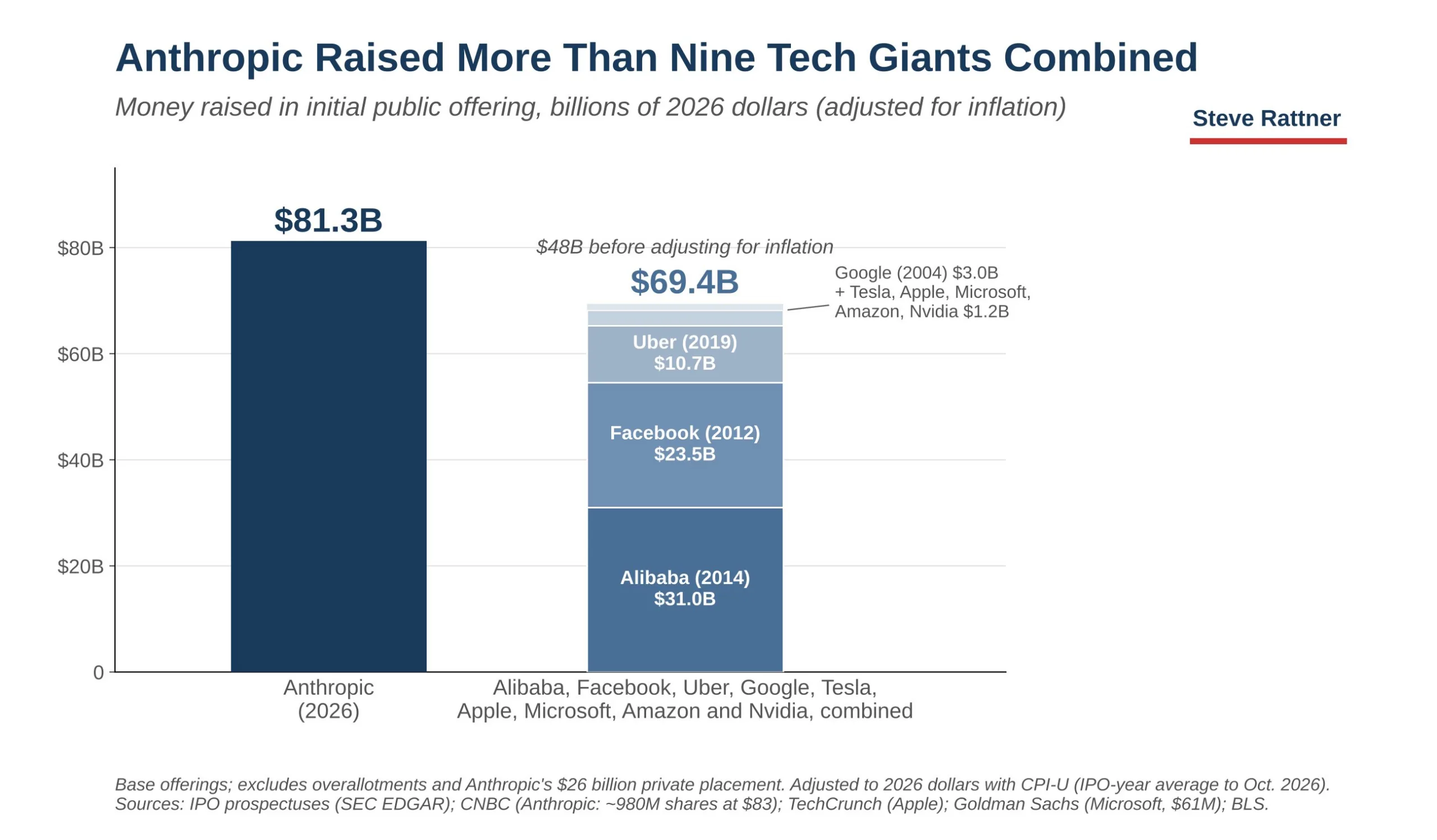
The IPO, however, is only one part of Anthropic’s massive fundraising exercise. Alongside the public offering, the company raised another $26 billion through a private placement of shares.
This took the total deal value to approximately $107.3 billion. A private placement is different from an IPO. Instead of offering shares through the stock exchange, a company sells them directly to selected investors.
Anthropic’s final prospectus also shows that the public offering included shares sold by existing shareholders. The company stated that it would not receive proceeds from those particular sales.
The bulk of the offering, however, involved new shares issued by Anthropic.
Claude finds its commercial footing
The strong investor response reflects the company’s rapid growth and the rising demand for AI products. Its Claude models have become increasingly popular among businesses and software developers.
Claude Code, in particular, has gained traction as an AI tool for software development. Anthropic had 11,900 customers generating at least $100,000 in annual revenue each over the 12 months ending September 30.
Its annualised revenue run rate had also reached $81 billion by October 31.
A revenue run rate is an estimate based on the company’s current earnings pace. It is not the same as revenue already earned over an entire financial year.
The company’s third-quarter revenue reached $16.96 billion, marking a 47% increase from the previous quarter.
The bill for brilliance comes due
Rapid growth has come with enormous expenses. Building and operating advanced AI models requires extensive computing infrastructure, specialised chips and large data centres.
Anthropic spent nearly $9 billion on computing capacity and infrastructure in the first half of 2026. It incurred another $5 billion in computing costs during the third quarter.
The company has committed nearly $900 billion in computing spending with infrastructure partners, including Amazon and Google’s parent company Alphabet.
These are future spending commitments, not money already spent. The company has also warned investors that problems with financing or infrastructure development among its partners could affect the availability and cost of computing capacity.
All that glitters is not yet earnings
There are also questions about profitability. Despite its growing revenue, Anthropic reported an operating loss of $567 million in the third quarter, compared with an operating income of $974 million in the preceding quarter.
Its net loss stood at $23.3 billion, although this figure included non-operating items linked to bonds convertible into company shares.
The numbers highlight the challenge facing AI companies.
They must spend heavily to develop more powerful models while ensuring that customers generate enough revenue to justify those investments.
Competition from OpenAI, Google and other AI developers adds to the pressure.
Also Read | US flight disruptions: What triggered the FAA outage that grounded flights for second time since 9/11?
Profit and purpose must now share the room
Anthropic’s public listing also brings its governance structure into focus. The company operates as a public benefit corporation under Delaware law.
This structure requires it to consider shareholder interests alongside its stated public benefit purpose of developing advanced AI responsibly. It has also established a Long-Term Benefit Trust, designed to help protect this commitment.
CEO Dario Amodei and president Daniela Amodei will now have to manage the company’s commercial ambitions while maintaining its emphasis on AI safety.
The IPO gives Anthropic access to public capital on an enormous scale. Its performance in the coming quarters will show whether the business can sustain the expectations that accompanied its historic market debut.
Leave a Reply