Dark matter has remained one of the universe’s biggest mysteries for decades. Scientists know that something invisible appears to be shaping galaxies and other cosmic structures, yet they have never been able to directly identify what it is. Now, a mysterious signal recorded nearly 1.6 kilometres beneath the ground in a former South Dakota gold mine has brought the search for dark matter back into focus.
Detected by the LUX-ZEPLIN experiment, the unusual event could be linked to a hypothetical dark matter particle, although researchers have stressed that it is far too early to call it a discovery. So, what exactly is this dark matter? Why do scientists believe in its existence and why do they hunt for dark matter underground?
What is dark matter?
Dark matter is a form of matter that does not seem to emit, absorb or reflect any amount of light which is adequate enough to make it detectable through telescopic observations. The term “dark” means that it does not interact with the electromagnetic radiation in any detectable manner; it does not imply any particular color.
Scientists estimate that dark matter makes up about 27% of the universe. Ordinary matter, including stars, planets and living things, accounts for roughly 5%. Most of the rest is attributed to dark energy.
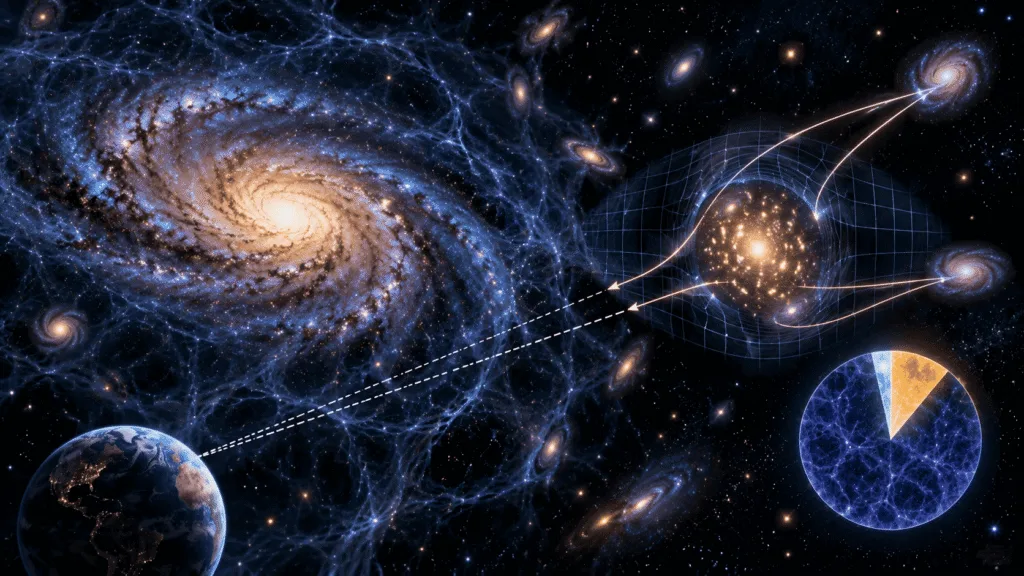
(Representational Image) A strange underground signal has renewed the search for elusive dark matter | AI Generated
How do scientists know dark matter exists?
The strongest clues come from gravity. Astronomers have observed galaxies and galaxy clusters behaving as if they contain considerably more mass than can be seen.
In the 1930s, Fritz Zwicky found that galaxies in the Coma Cluster were moving too rapidly for visible matter alone to hold the cluster together. Later, Vera Rubin found that stars in spiral galaxies were also moving faster than expected, particularly those far from their galactic centres.
Gravitational lensing provides another important clue. A large object can bend light emitted from farther away, and that is how scientists detect mass that cannot be seen because of the effect of gravity.
Is dark matter the same as dark energy?
Not necessarily. While dark matter and dark energy are two different concepts, dark matter relates to the gravitational forces that structure galaxies.
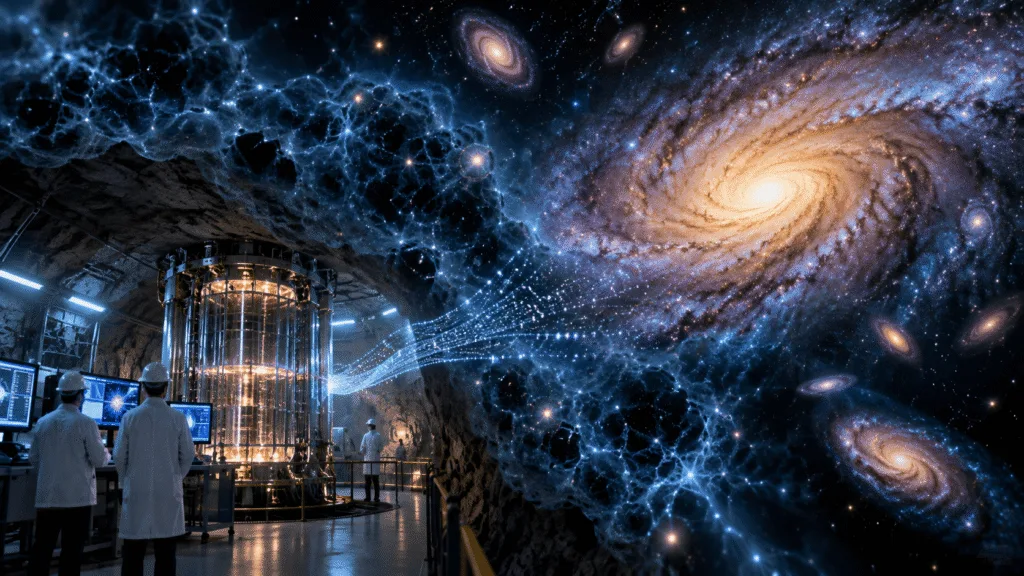
(Representational Image) Dark matter could explain the unseen mass shaping galaxies across the universe | AI Generated
Why is the LZ experiment underground?
LZ operates around 1.6 kilometres below the surface at the Sanford Underground Research Facility, inside a former gold mine. Underground position ensures less interference caused by cosmic rays and other forms of radiation.
The detector uses liquid xenon and searches for tiny signals produced when a possible dark matter particle interacts with a xenon atom.
Has dark matter finally been detected?
Not yet. The above-mentioned phenomenon is quite fascinating, but one such strange reading can never be considered as a proof of discovery. There should be more events with a similar behavior pattern for the phenomenon to be proved scientifically.
If dark matter could be discovered at some point of time in the future, it would help to understand better the universe and its evolution. The nature of dark matter continues to be one of the big puzzles of physics.
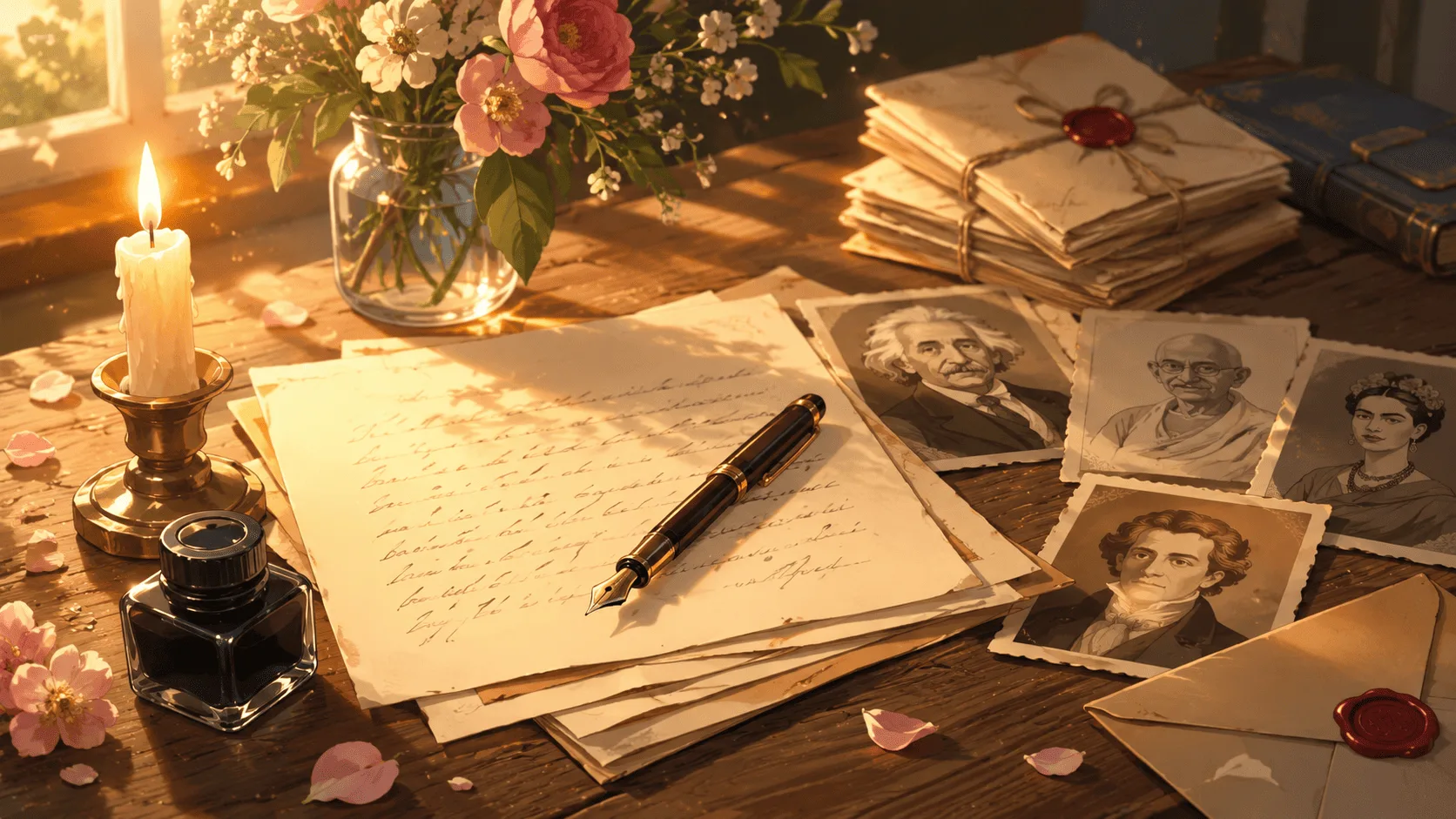
In an age of emails, instant messages and social media, the handwritten letter has become a rare sight. But letters have a way of preserving something digital messages often cannot: the voice, emotions and personality of the person who wrote them. Across history, famous figures have put their thoughts on paper to express love, confront loss, appeal for peace, pursue ambition and bid farewell.
On World Letter Writing Day, observed on September 1, we look back at eight remarkable letters written by well-known personalities. Spanning centuries and vastly different circumstances, these letters offer intimate glimpses into the lives, relationships, hopes and fears of the people behind some of history’s most recognisable names.
Elvis Presley writes to his fans from Germany
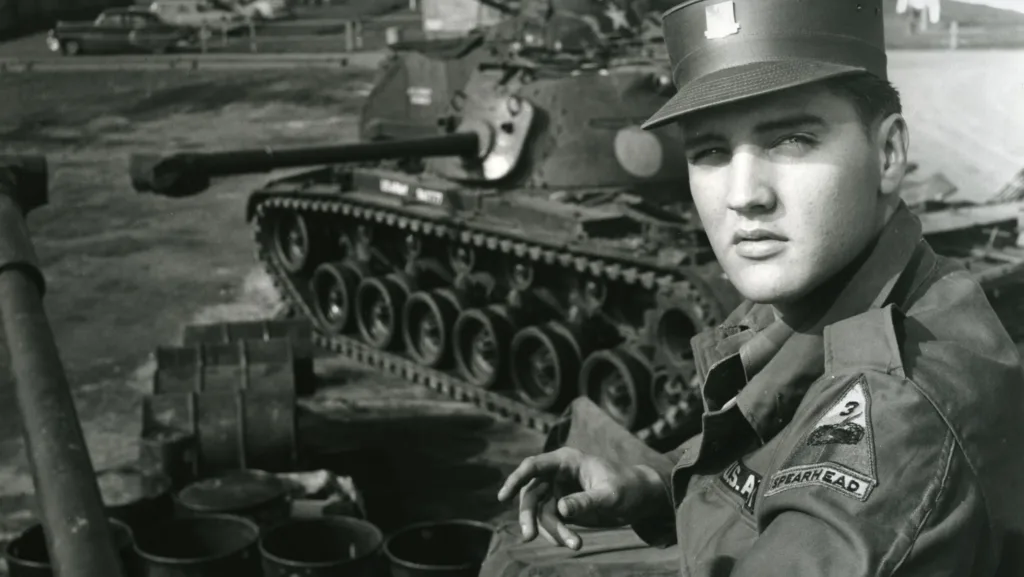
While serving as a US soldier in Germany, Elvis Presley found himself receiving an overwhelming amount of mail from fans around the world. In 1959, during his stay in Friedberg, Hesse, the rock ‘n’ roll star acknowledged that he could not respond to every letter personally.
“I am sorry that I can’t answer every letter personally,” Presley wrote.
Presley at Ray Barracks, West Germany, 1958 | Wikipedia
He went on to explain how much the messages meant to him while he was away from home. “My mind is constantly thinking of all my friends and fans that I had to leave behind,” he wrote. “But I appreciate each and every one of you as friends, fans, and every letter that I receive helps me so much to carry on.”
Presley had been drafted into the US Army in 1958 and remained stationed in Friedberg until 1960.
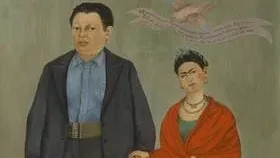
Frida Kahlo writes a painful farewell to Diego Rivera
In 1953, a year before her death, Mexican artist Frida Kahlo faced the amputation of one of her legs because of gangrene. While waiting for the operation, she wrote a deeply personal letter to her husband, fellow artist Diego Rivera.
Kahlo’s words reflected years of emotional pain in their relationship. She accused Rivera of repeatedly cheating on her, including with her sister, and connected the coming loss of her leg to the earlier wounds she had endured in their marriage.
Frieda and Diego Rivera | Wikipedia
“When they told me it would be necessary to amputate, the news didn’t affect me the way everybody expected. No, I was already a maimed woman when I lost you, again, for the umpteenth time maybe, and still I survived.”
She ended the letter with a striking declaration: “I’m writing to let you know I’m releasing you, I’m amputating you.”
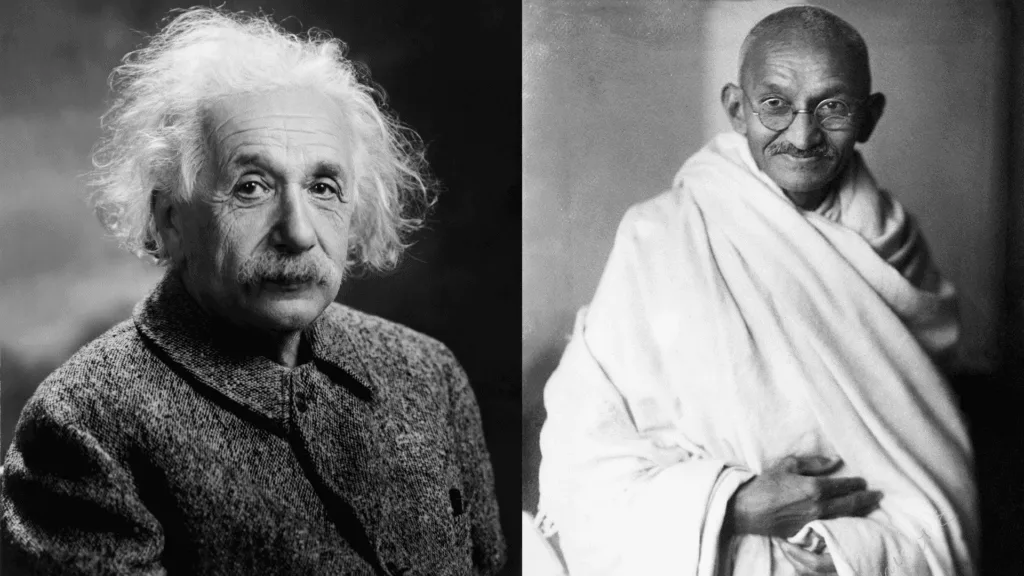
Albert Einstein writes to Mahatma Gandhi
In 1931, Albert Einstein wrote to Mahatma Gandhi expressing his admiration for the Indian leader’s commitment to non-violence.
“You have shown through your works, that it is possible to succeed without violence even with those who have not discarded the method of violence.”
Einstein also expressed hope that Gandhi’s example would reach beyond India and contribute to a world less dependent on war.
Albert Einstein writes to Mahatma Gandhi | Wikipedia
“We may hope that your example will spread beyond the borders of your country, and will help to establish an international authority, respected by all, that will take decisions and replace war conflicts.”
Gandhi responded to Einstein and invited him to visit his ashram in India. However, the two never met in person.
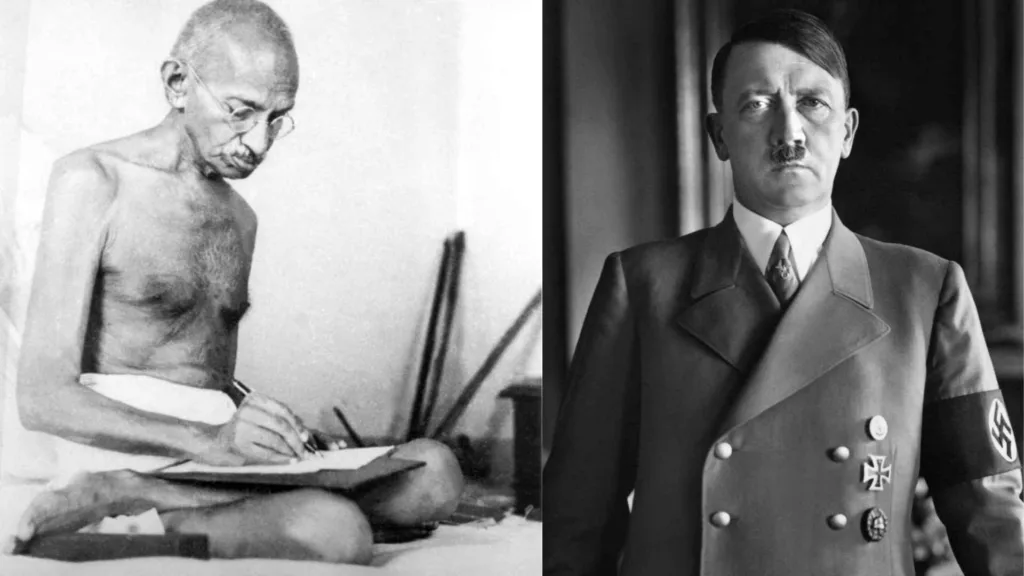
Mahatma Gandhi appeals to Adolf Hitler
Eight years later, Gandhi wrote another striking letter, this time to Adolf Hitler, as the threat of another major war grew in Europe.
Beginning with the words “Dear friend,” Gandhi appealed directly to Hitler to prevent a conflict that he feared could devastate humanity.
“It is quite clear that you are today the one person in the world who can prevent a war which may reduce humanity to a savage state.”
Mahatma Gandhi appeals to Adolf Hitler | Wikipedia
He then asked: “Will you listen to the appeal of one who has deliberately shunned the method of war not without considerable success?”
Gandhi’s appeal did not change the course of events. A few weeks later, the German Wehrmacht invaded Poland, setting the Second World War in motion.
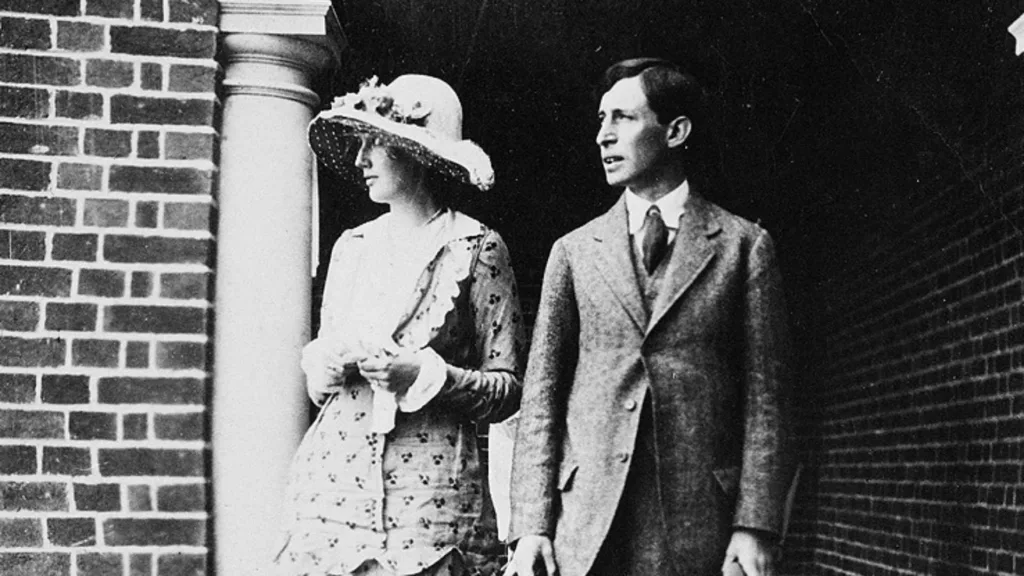
Virginia Woolf’s heartbreaking farewell
In 1941, British writer Virginia Woolf wrote a farewell letter to her husband, Leonard Woolf. Her words expressed both her affection for him and her belief that she would not recover from the severe depression she was experiencing.
“You have given me the greatest possible happiness. You have been in every way all that anyone could be.”
Virginia and Leonard Woolf | Wikipedia
She continued: “I don’t think two people could have been happier till this terrible disease came.”
Woolf also acknowledged the support she had received from her husband, writing, “I shan’t recover this time … If anybody could have saved me it would have been you. Everything has gone from me but the certainty of your goodness.”
Shortly afterwards, Woolf drowned herself in a river.
Leonardo da Vinci makes his case for a job
Centuries before modern CVs and job applications, Leonardo da Vinci had his own way of presenting his abilities. In the early 1480s, he wrote to Ludovico Sforza, the future Duke of Milan, seeking employment as a military engineer.
Da Vinci’s letter listed 10 areas in which he claimed expertise, confidently presenting himself as someone capable of designing and building military equipment and structures.
He concluded with an offer to prove his abilities himself: “And should any of the above seem impossible or impracticable to anyone, I am happy to demonstrate them in your park or any other place as Your Excellency pleases, to whom I humbly recommend myself.”
Sforza hired the young da Vinci. Years later, he commissioned the artist to paint The Last Supper.
Queen Elizabeth II shares her drop scone recipe
Not every historic letter dealt with politics, conflict or personal heartbreak. In 1960, Queen Elizabeth II sent a handwritten recipe to US President Dwight D. Eisenhower.
Eisenhower had enjoyed the drop scones, also known as Scotch pancakes, served during a visit to the United Kingdom. Several months later, the Queen sent him the recipe.
Queen Elizabeth II | Wikipedia
“Though the quantities are for 16 people, when there are fewer, I generally put in less flour and milk, but use the other ingredients as stated
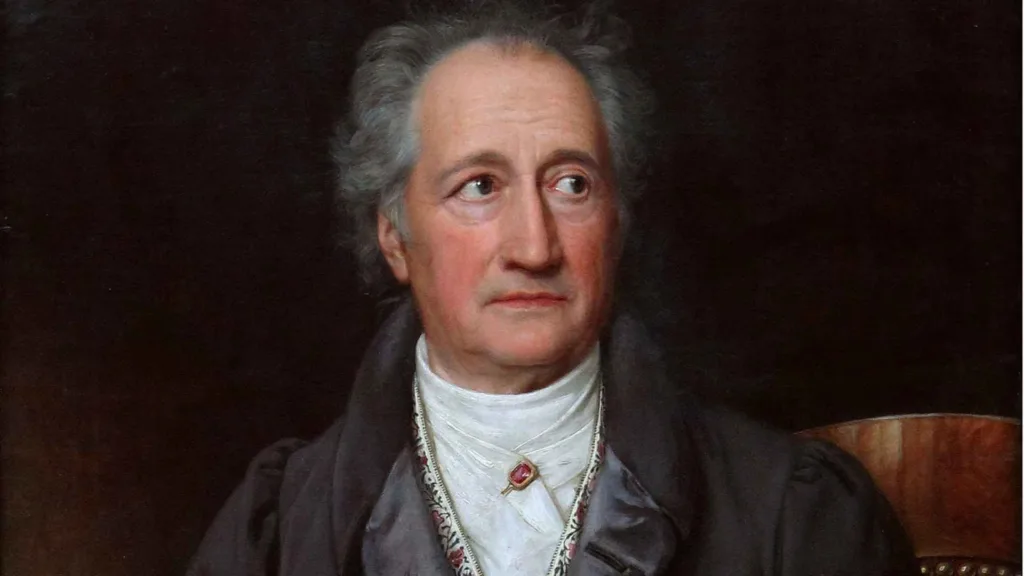
Goethe pours his heart out in a letter
In 1776, German poet Johann Wolfgang Goethe wrote a deeply affectionate letter to Charlotte von Stein, expressing the intensity of his feelings for her.
“Your presence has had a wonderful choking effect on my heart, I cannot say what I feel,” Goethe wrote, revealing the longing and emotion that ran through their relationship.
Johann Wolfgang Goeth | Wikipedia
Goethe, who was younger than von Stein by seven years, went on to write more than 1,500 letters to her. She is said to have remained faithful to her husband despite Goethe’s affection.
His unrequited love eventually took him away from Weimar for several years as he travelled in Italy. He returned to Weimar in 1788, where he later met Christiane Vulpius, who became his wife.
Nepal has begun burying unidentified flood victims as mortuaries and temporary holding centres run out of space and bodies recovered from the disaster begin to decompose. Authorities are preserving DNA samples, photographs and detailed forensic records before burial in an effort to ensure families can still identify their missing relatives later.
Only 20 of the 768 bodies recovered had been identified by relatives by Saturday evening. The wider death toll from the devastating flash floods had reached 734 by Sunday, with around 2,500 people still missing.
Chitwan recorded the highest number of recovered bodies at 259, followed by Nawalparasi East with 184, Nawalparasi West with 82, Gorkha with 58, Nuwakot with 52, Dhading with 50, Tanahun with 36 and Rasuwa with 13.
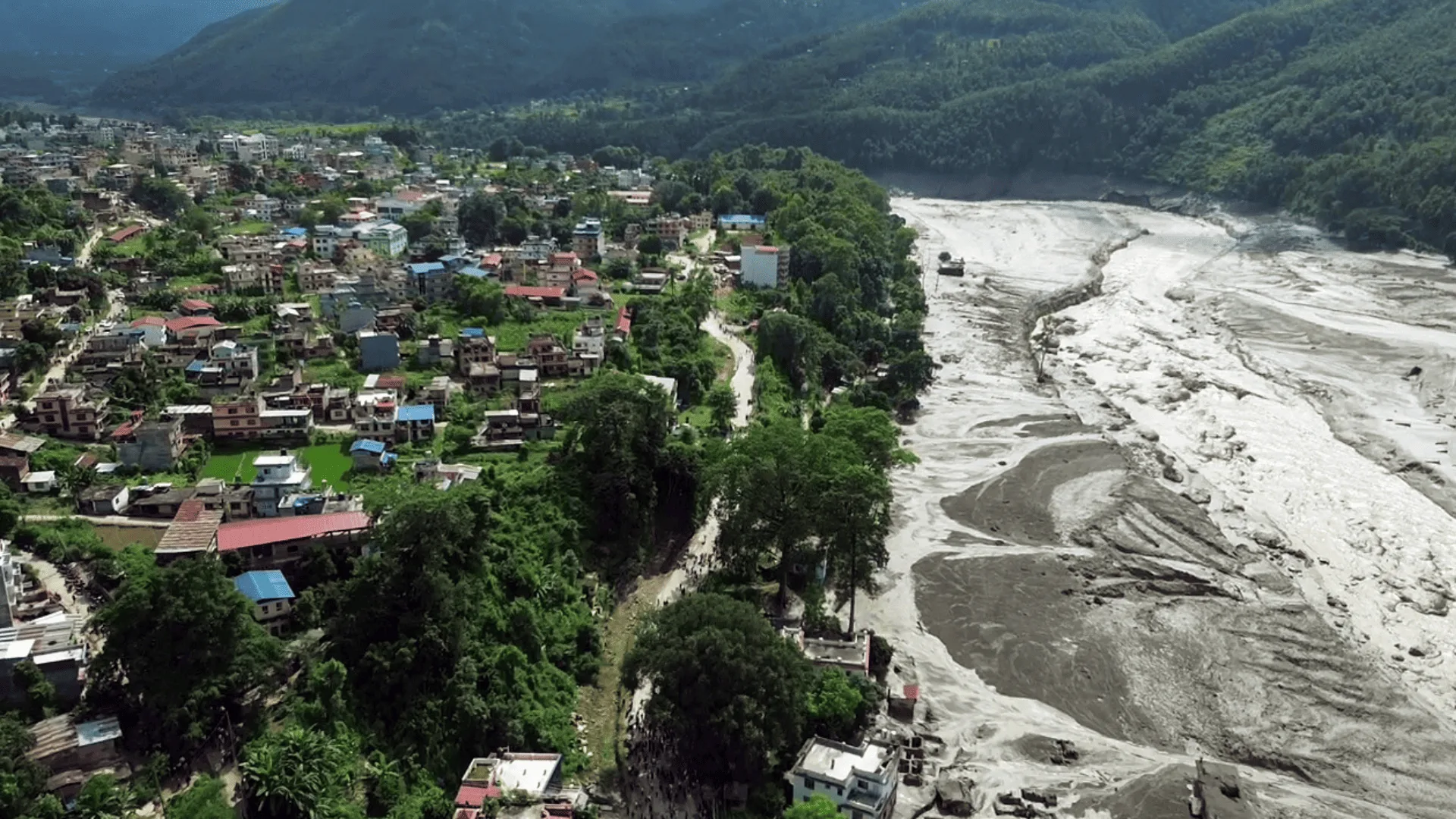
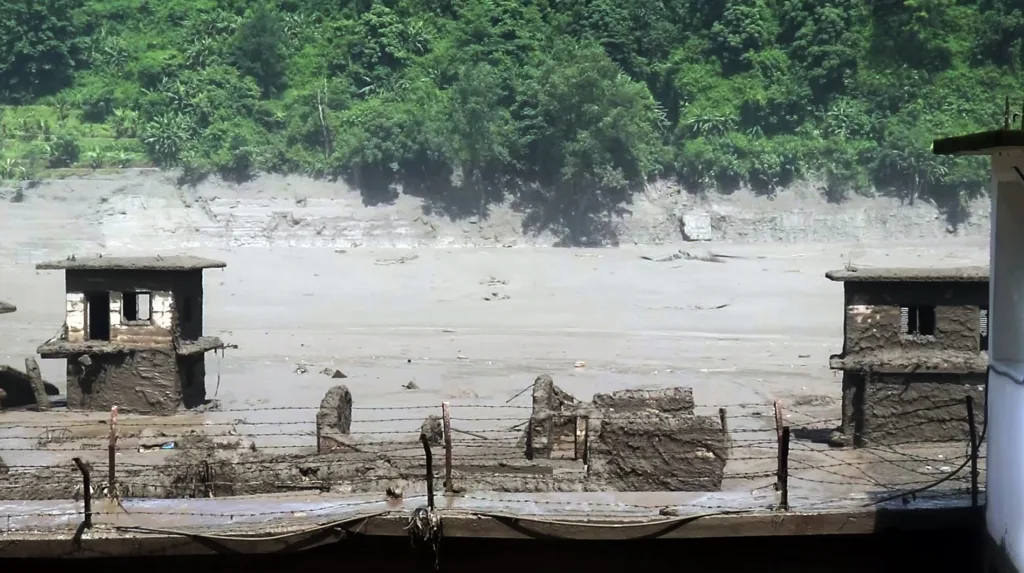
An area devastated by mud-laden floodwaters following a flash flood caused by an outburst in the Bhotekoshi River, in Rasuwa /ANI
The disaster followed a glacier collapse near the Nepal-Tibet border on Wednesday, sending water, mud, rocks and debris through the Bhote Koshi and Trishuli river systems. The floods swept away homes, roads, bridges and infrastructure, with some bodies reportedly carried as far as Bihar and Uttar Pradesh.
Why is Nepal burying unidentified flood victims?
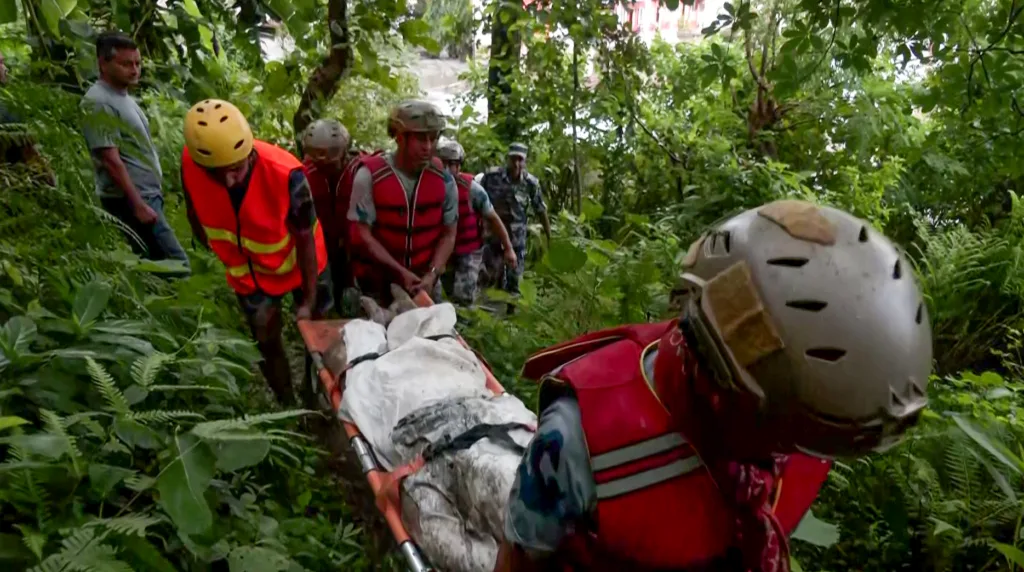
The immediate problem is space. In Chitwan, authorities had recovered more than 200 bodies, but only four had been identified, yet. Hospitals and temporary holding facilities were struggling to accommodate the remains as decomposition progressed.
Health experts also warned that prolonged storage of decomposing bodies and the resulting foul odour could create sanitation concerns and increase the risk of infections. With existing mortuary capacity overwhelmed, officials began looking for emergency burial sites.
The Chitwan District Security Committee subsequently decided to bury unidentified and unclaimed bodies at an open site in Devghat, Bharatpur Metropolitan City, under Nepal’s Unidentified and Unclaimed Bodies Management (First Amendment) Directive, 2026.
Security forces and disaster management teams retrieve bodies from the flash-flood-affected Battar Bazar area, in Nuwakot on Thursday / ANI
Prime Minister Balendra Shah said bodies that could not be identified would be managed by the government, while those identified by relatives would be handed over to their families.
How will families identify victims after burial?
The burial does not mean authorities are abandoning efforts to establish the victims’ identities.
Before burial, forensic teams collect DNA samples and assign each body a permanent identification or reference number. Investigators also preserve photographs, physical descriptions, clothing, jewellery, identity documents and other belongings linked to that number.
Authorities are maintaining records of inquests, autopsies, DNA profiles, burial dates and the precise location of each grave. These records can subsequently be compared with missing-person reports and DNA samples provided by relatives, The Kathmandu Post reported.
Nepal Police has also published information on unidentified and unclaimed flood victims online. According to a post by Nepal Police on X, people can scan a QR code or access its official database to view details of bodies recovered in Rasuwa district.
A 40-member medical team, including seven forensic pathologists and seven dental surgeons, has been involved in the identification effort. DNA samples have already been collected from bodies held at temporary facilities.
The challenge is spreading beyond Chitwan
The crisis is not confined to a single district. Authorities in Nawalparasi East have transferred bodies to facilities outside Chitwan, including Pokhara and Palpa. Other remains have been moved to hospitals in Rupandehi and Kapilvastu.
Officials in Kathmandu have also started identifying possible burial sites as authorities prepare for the possibility of recovering more unidentified remains.
For Nepal, the challenge now involves two urgent priorities: managing the immediate health and logistical crisis created by hundreds of recovered bodies while preserving enough forensic evidence for families to establish their identities later.
By linking every buried victim to DNA evidence, photographs and detailed records, authorities are attempting to ensure that burial is not the end of the identification process.
Waukee High School and the nearby Prairieview School in Iowa were placed under an external lockdown on Friday morning after authorities received a report of a person carrying a weapon outside the high school.
However, officials later confirmed that there was no active threat to students or staff, and no injuries were reported.
The Waukee Police Department said officers and additional emergency responders were sent to the area to investigate the report and check the surroundings.
“THERE IS NO ACTIVE THREAT AT THIS TIME,” stated the Waukee Police Department in a Facebook update.
The Waukee Community School District informed families at around 8:35 a.m. that Waukee High School and Prairieview had been placed under lockdown “as a precaution” following a “potential threat off-property near Waukee High School.”
The lockdown was not initiated because of an active attack inside either school
Waukee Police Chief Chad McCluskey said that the police “thoroughly investigated” the situation and “This response went exactly as we planned.”
“Waukee Community School District personnel and Waukee Police Department personnel worked seamlessly to ensure the safety of our kids, the safety of our community, and to support timely information sharing to help reduce anxiety associated with this incident.”
What happened during the Waukee lockdown?
Under the district’s external lockdown procedures, normal classes continued inside the buildings. However, students and staff were not permitted to enter or leave the affected schools, while visitors were also barred from entering.
Families were asked not to travel to the schools while police were investigating the reported weapon sighting.
Meanwhile, the district said all other schools continued to operate normally.
Notably, the lockdown remained in place for roughly 90 minutes as police conducted their investigation. At 9:15 a.m., the lockdown was lifted after officers completed checks of the area.
Waukee police sent a message to parents around 9:20 a.m, noting, “The Waukee Police Department thoroughly investigated the situation, including areas inside and outside our buildings, and determined there is no threat to student safety,” authorities stated in a message to parents sent around 9:20 a.m. “All schools will operate as normal today.”
“We appreciate the quick response of our local law enforcement. Thank you to our families, staff, and students for your patience and understanding. If you have any questions, please contact us at [info@waukeeschools.org](mailto:info@waukeeschools.org),” the school thanked in their later post.