Category: Lifestyle

  • Who was Miss Dior? Meet Christian Dior’s real-life muse

    Who was Miss Dior? Meet Christian Dior’s real-life muse

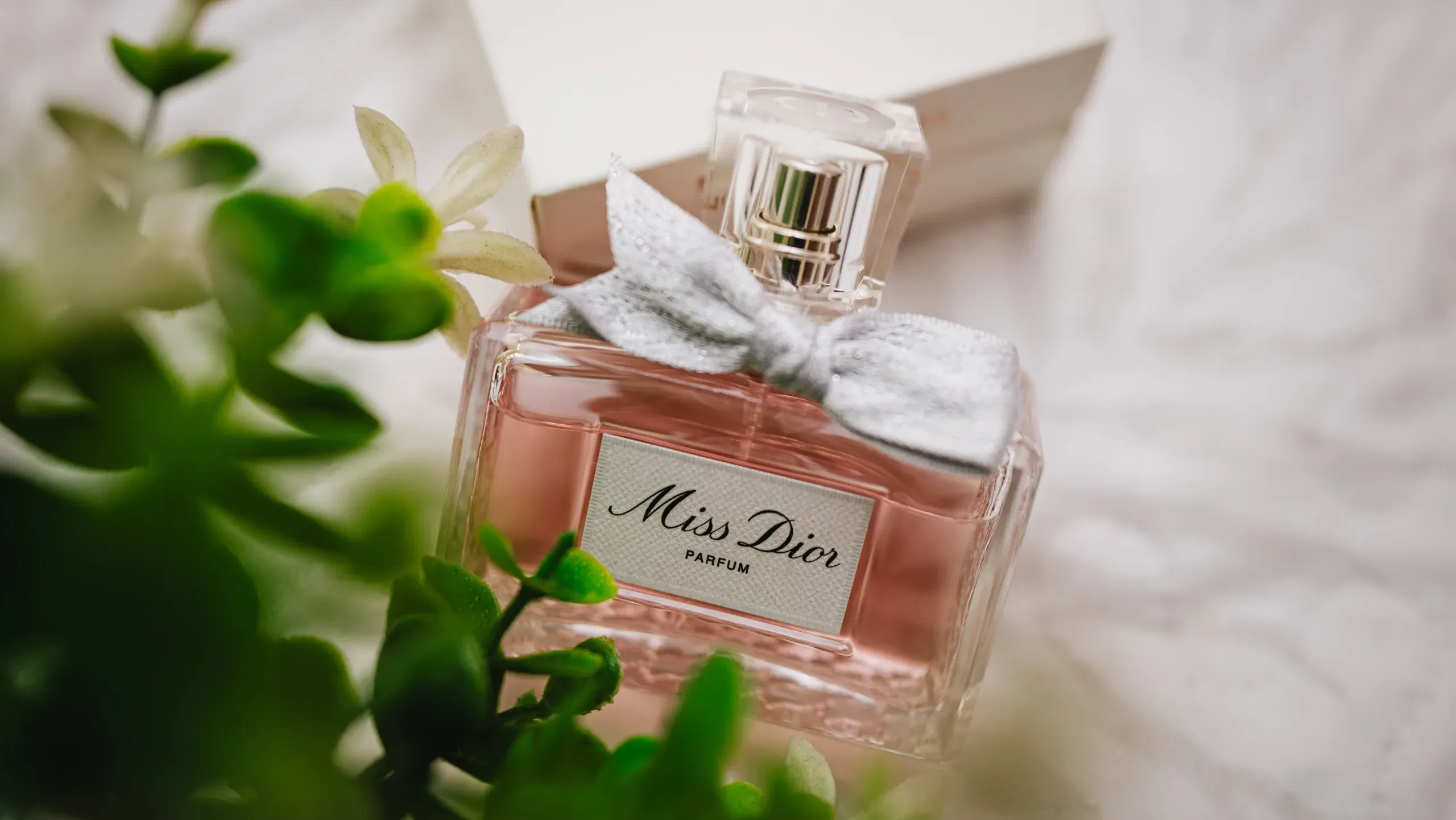
    For nearly 80 years, the name Miss Dior has been associated with romance, flowers and one of the most recognisable fragrances in the world. But behind the perfume was a real woman: Catherine Dior, the younger sister of fashion designer Christian Dior.

    Catherine was not simply the inspiration behind a fragrance name. She was a gardener, a French Resistance fighter and a survivor of a Nazi concentration camp. Her life and her close relationship with her brother became part of the story behind one of Dior’s most enduring creations.

    Also Read | Micro-cheating vs cheating: What is the difference in a relationship

    Who was Catherine Dior, the woman behind Miss Dior?

    Born in 1917, Catherine was 12 years younger than Christian Dior and grew up in a family where flowers played an important role. Their mother, Madeleine, was an enthusiastic gardener who cultivated roses at the family home in Normandy.

    That love of flowers later became closely connected to the Dior siblings. Christian incorporated floral references into his fashion and fragrance work, while Catherine eventually made horticulture and rose cultivation a major part of her life.
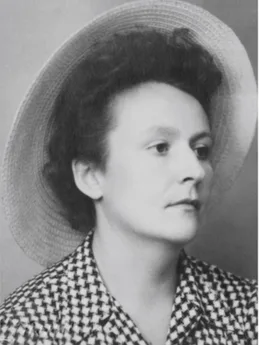
    Catherine Dior
    Catherine Dior / Wikipedia

    But Catherine’s life changed dramatically during the Second World War.

    In 1941, she became involved with the French Resistance after meeting Hervé des Charbonneries, a store manager who recruited her into the F2 resistance network. Catherine operated under the code name Caro and helped gather information for the Allied forces.

    Her resistance activities eventually led to her arrest. She was imprisoned at Ravensbrück concentration camp, where she endured the final years of the war before returning to France.

    How did Catherine inspire the Miss Dior perfume?

    After the war, Catherine reunited with Christian in Paris. Around the same period, Christian was preparing to establish himself as a fashion designer and was also developing his first fragrance.

    The perfume was created with floral notes including jasmine, rose and lily of the valley. These flowers had a personal connection to the Dior family and reflected Christian’s longstanding fascination with gardens and nature.

    The fragrance was initially known by the working name Corolle, a French word associated with the petals of a flower.

    More than a fragrance, Miss Dior carries a story of love, flowers and legacy.
    More than a fragrance, Miss Dior carries a story of love, flowers and legacy / Pexels

    The name Miss Dior emerged when Catherine entered the room during the fragrance’s development. A friend of Christian reportedly referred to her as Miss Dior, and the name stayed.

    The fragrance subsequently became closely associated with Christian Dior’s debut couture collection in 1947, when the perfume filled the salon alongside the flowers decorating the space.

    Why is Catherine Dior’s story important to the Dior legacy?

    Catherine’s influence on Miss Dior went beyond the name.

    Her experience represented a generation of young Europeans whose lives had been dramatically reshaped by the Second World War. She had participated in the Resistance, survived imprisonment and later rebuilt her life around horticulture.

    After Christian Dior’s death in 1957, Catherine moved to Les Naÿssès, a family estate near Grasse, one of France’s most important regions for perfume production.

    Long before Miss Dior became a global fragrance icon, it was the name of Christian Dior’s beloved younger sister, Catherine.
    Representational Image of Dior magazine / Pexels

    There, she continued cultivating roses. The connection between Catherine, roses and the Miss Dior fragrance remained part of the house’s heritage, with roses from Grasse continuing to feature in Dior’s fragrance history.

    Catherine reportedly wore Miss Dior herself and kept a bottle on her dressing table, adding another personal link between the woman and the perfume that carried her name.

    From a sister’s name to a global fragrance icon

    What began as a deeply personal reference eventually became one of Dior’s signature fragrance names.

    Miss Dior has gone through several iterations over the decades, but its association with flowers, femininity and romance has remained central to its identity. The fragrance has also continued to feature prominently in Dior’s global beauty campaigns.

    Also Read | Reverse Vacation trend: Why Gen Z is ditching luxury travel

    The story of Catherine Dior adds another dimension to that legacy. Behind the polished image of Miss Dior was a woman whose life included resistance, imprisonment, survival and a lifelong connection to flowers.

    That makes the history of Miss Dior as much a story about Catherine Dior as it is about Christian Dior and the perfume itself.
  • Micro-cheating vs cheating: What is the difference in a relationship

    Micro-cheating vs cheating: What is the difference in a relationship

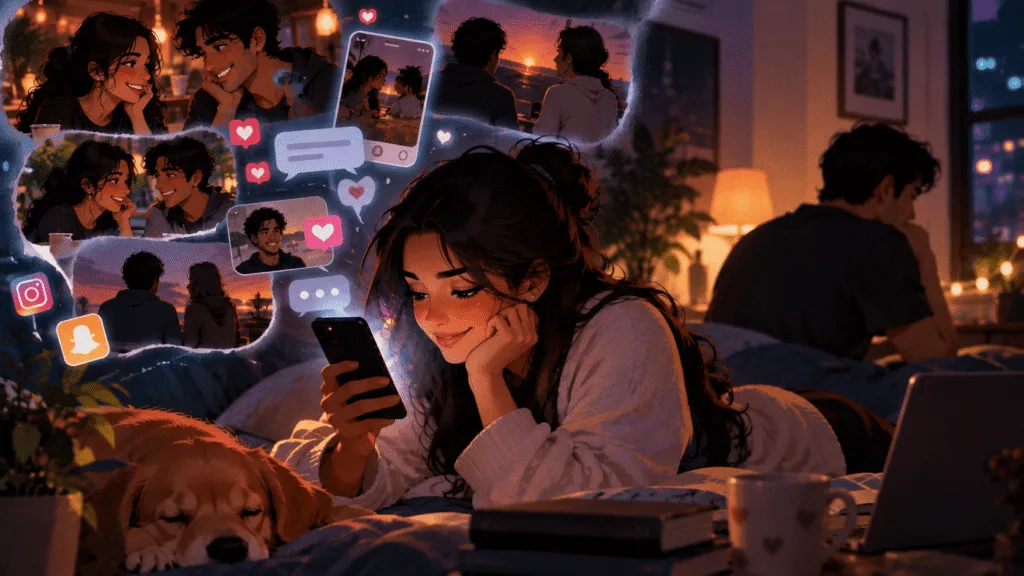
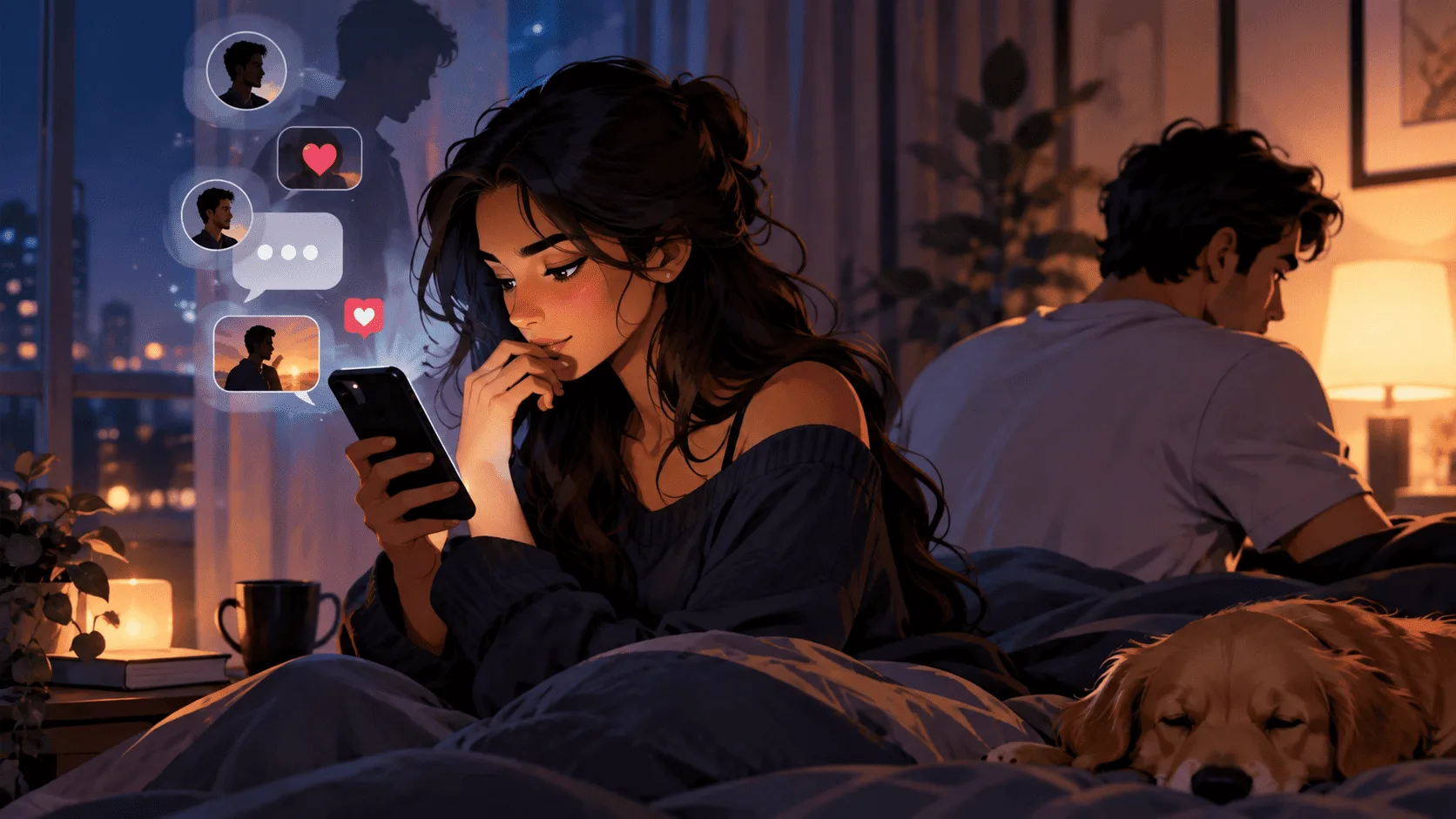
    Cheating does not always begin with a kiss. Sometimes, it starts with a message you would rather your partner never see. A late-night DM, a flirtatious exchange, deleted chats or a dating profile kept active “just to see what is out there” may seem too minor to call an affair. But when secrecy is involved, then the scope of the relationship becomes increasingly difficult to determine.

    It is this grey area which is known as micro-cheating. This describes actions which do not necessarily constitute a physical affair but could raise doubts about the emotional or physical exclusivity of the relationship. With social media making private conversations, constant interactions and hidden connections easier than ever, the line between harmless behaviour and infidelity is no longer always obvious.

    What is micro-cheating?

    Psychology Today defines micro-cheating as small breaches of trust that don’t cross into a physical affair but can make a partner question the relationship’s emotional or physical exclusivity.

    Micro-cheating vs cheating
    (Representational Image) Secret DMs, flirting and hidden chats can create relationship boundaries | AI Generated

    The term was popularised by Australian psychologist Melanie Schilling in 2017. There is, however, no universal rule book on which actions qualify as micro-cheating. An action that seems natural in one relationship can be extremely uncomfortable in another.

    Common examples of micro-cheating

    The following are some actions that are often referred to as micro-cheating:

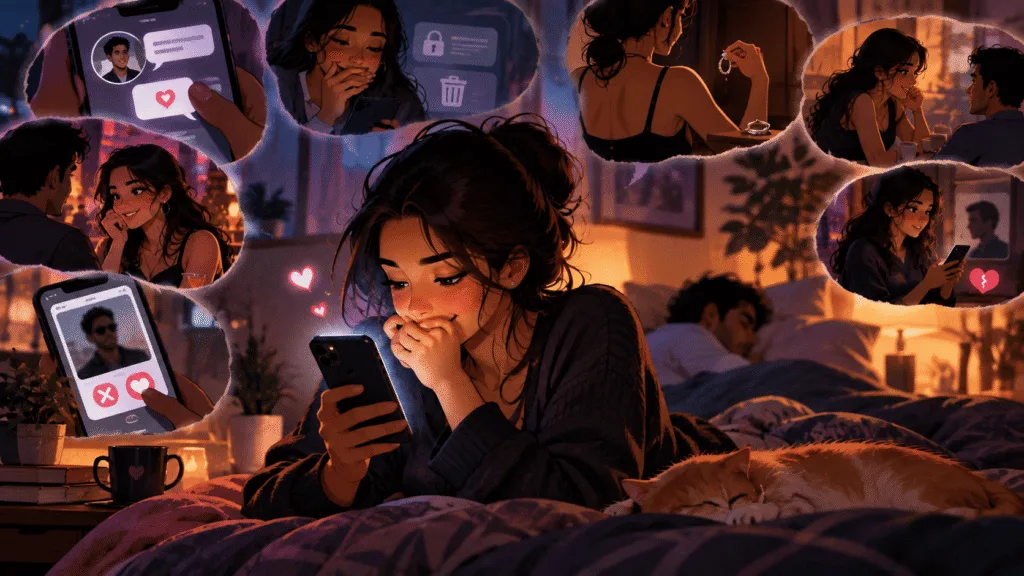
    Messaging someone who attracts you in secret

    Flirting with people not your partner

    Not sharing messages with your partner

    Using your dating profile for entertainment purpose

    Also Read | Busy life taking a toll on your relationship? 5 habits to stay close

    Revealing more intimate details to someone else rather than your partner

    Taking off your wedding band while going out alone

    Frequent communication with an ex in secret

    But then again, it all depends on the context. These actions don’t automatically mean that someone is cheating.

    When does micro-cheating happen?

    There might not be any exact moment at which micro-cheating starts. More often than not, the key issue is whether or not trust is being betrayed.

    Take, for example, lunch with a work colleague who you find attractive. If your partner is aware of the lunch, there is probably nothing special about it. But if the lunch is done in secret, it takes on a whole new meaning.

    Micro-cheating vs cheating
    (Representational Image) Small actions can become serious when secrecy starts affecting trust | AI Generated

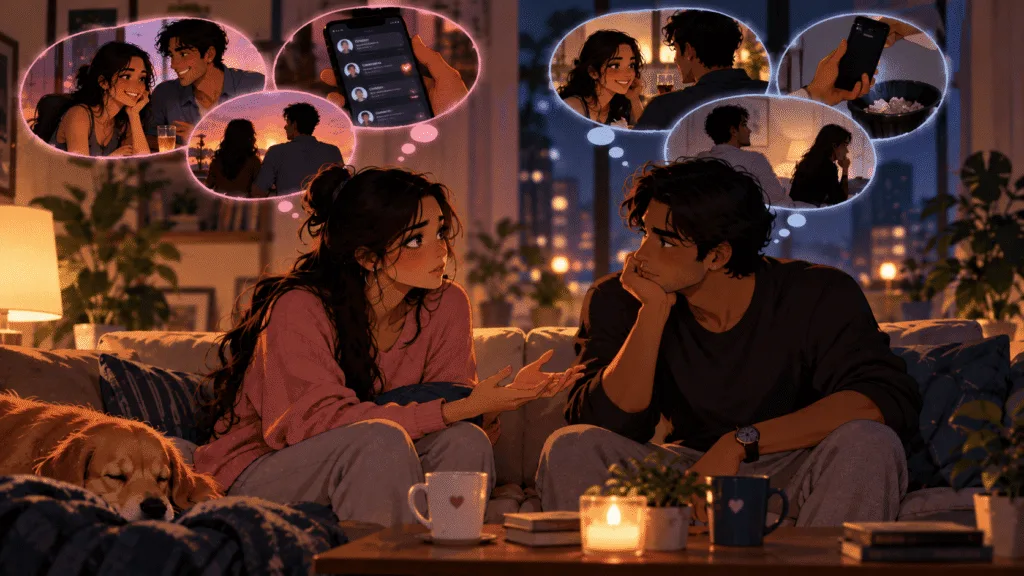
    Ask yourself: “Why were you doing it?” “Are you okay with your partner knowing about it?” “Were you deliberately hiding it?” And “Would your partner feel deceived if she/he knew about it?”

    If the answers give you pause, then perhaps the act has crossed into the grey zone.

    When emotional intimacy turns into an issue

    Micro-cheating is not necessarily romantic or sexual. It can also involve emotional intimacy.

    The act of relying on someone else for comfort, affirmation, or an intimate conversation when you are moving further away from your partner is something that will influence the relationship in some way. The emotional affair occurs due to frequent conversations, inside jokes, personal sharing, and secrecy.

    Micro-cheating vs cheating
    (Representational Image) Emotional intimacy outside a relationship can sometimes cross an unseen line | AI Generated

    Social media and the changing boundaries in relationships

    An occasional direct message at night, a Snapchat streak, Instagram reactions, or simply paying special attention to a certain person does not seem to be much of anything. However, when it happens consistently and secretly, it influences the situation.

    Also Read | Are you being used as a ‘placeholder partner’? 7 signs your partner may not see a future

    Social media may not have invented infidelity, but it has made private connections easier to start and maintain.

    Why couples often disagree about micro-cheating

    There is no universal definition of a relationship boundary. One couple may be comfortable with regular contact with an ex, while another may not be.

    That is why openly discussing expectations matters. A simple self-check can also help: Would I behave the same way if my partner were standing beside me?

    Micro-cheating vs cheating
    (Representational Image) Modern dating has made relationship boundaries harder to define | AI Generated

    Deleting messages, hiding interactions, seeking emotional validation elsewhere or feeling upset at the thought of your partner doing the same thing can all signal that a conversation about boundaries may be needed.

    Healthy relationships are not about eliminating every grey area. They are about being honest enough to talk about those grey areas when they appear.

  • What is Gondhal? Inside the Marathi film taking Maharashtra’s ancient ritual to the Oscars

    What is Gondhal? Inside the Marathi film taking Maharashtra’s ancient ritual to the Oscars

    The Marathi movie Gondhal has brought a centuries-old Maharashtrian tradition into the international spotlight after being selected as India’s official entry for the 2027 Oscars. Written and directed by Santosh Davakhar, the film was chosen from 33 submissions by the Film Federation of India for the Best International Feature Film category at the 99th Academy Awards.

    Set in rural Maharashtra, the film takes place against the backdrop of a night-long Gondhal celebration. Its story explores relationships, desire, deception and fate, while the traditional ritual remains central to the film’s atmosphere and setting.

    What is Gondhal?

    Gondhal is a Maharashtrian ritual where songs, music, dance, and storytelling are combined. This ritual is conducted to honour the deities and has been traditionally conducted in connection with family functions, especially marriages.

     Gondhal Marathi film
    Maharashtra’s centuries-old Gondhal ritual takes centre stage in the film | IMDB

    The ritual is conducted by performers called Gondhalis, who use songs, rhythmic movements and traditional instruments. Historical descriptions of Gondhal also refer to drums, the tuntune, metal instruments, and a torch or lamp. The ritual may conclude with an aarti before deity.

    Also Read | The ‘Hot Fox Agenda’: Why Hollywood keeps turning foxes into heartthrobs

    Why is Gondhal ritual performed?

    Gondhal has traditionally been connected with family celebrations and is often performed after a major occasion. Families and members of the community come together through the night, making the ritual both a devotional ceremony and a shared social experience.

    The performance also has a strong storytelling tradition. Devotional songs and performances carry mythological and cultural narratives from one generation to another.

    Gondhal Marathi film
    The Marathi film Gondhal explores devotion, tradition and night-long rituals | IMDB

    Traditionally, the ritual is associated with invoking the Goddess and seeking protection or relief from difficulties believed to arise from negative influences or long-standing family and household concerns. Its energetic movements, loud musical sounds and devotional atmosphere are also traditionally believed to help draw positive energy and keep negative forces away.

    Gondhal’s role in Santosh Davakhar’s film

    Director Santosh Davakhar has spoken about growing up watching Gondhal performances and choosing the ritual as the starting point for his film. It becomes the stage on which the psychological thriller unfolds, with its elements of attraction, intrigue, and peril.

    Also Read | Busy life taking a toll on your relationship? 5 habits to stay close

    Watch the trailer:

    In this case, Gondhal takes on a much greater significance beyond that of mere culture.The ritual forms an important part of the film’s setting and atmosphere, connecting its story with a living Maharashtrian tradition.

    With its Oscar selection, Gondhal has placed this distinctive ritual before an international audience, highlighting a tradition where devotion, music, storytelling and community remain closely connected.

  • Reverse Vacation trend: Why Gen Z is ditching luxury travel

    Reverse Vacation trend: Why Gen Z is ditching luxury travel

    Vacations are usually about comfort, convenience and a break from everyday stress. But Reverse Vacation turns that idea on its head. The emerging travel trend encourages people to deliberately choose places where daily conveniences are limited and luxury takes a back seat.

    Instead of five-star resorts, easy food deliveries and strong connectivity, the idea is to spend time in remote or rustic settings where life moves at a slower and less convenient pace.

    Also Read | Zip coding: Smart dating hack or a recipe for relationship drama?

    What is the Reverse Vacation trend?

    Reverse Vacation refers to travelling somewhere that feels less convenient than your everyday life. The idea is to avoid the conveniences that have become part of modern urban living.

    That could mean choosing a remote village instead of a luxury resort, going somewhere without reliable network connectivity or spending a weekend without easy access to food delivery, malls, cafés and convenience stores.

    Gen Z is swapping five-star comfort for rustic escapes.
    Gen Z is swapping five-star comfort for rustic escapes / Pexels

    For someone living in a tier-1 city, the trend could mean travelling to a tier-2 or tier-3 city or heading further into a rural setting.

    The idea isn’t necessarily about deliberately having a bad trip. Instead, it is about temporarily stepping away from familiar comforts and experiencing a simpler way of living.

    Why are people trying Reverse Vacation?

    The trend is being linked to the desire for a mental reset and a fresh perspective. When everyday life revolves around instant services and constant convenience, deliberately stepping away from them can make ordinary comforts feel more valuable.

    Some people refer to the concept as “Trauma Tourism”, although that term is used within the trend’s online discussion rather than as a formal travel category.

    What if your next holiday was deliberately uncomfortable

    The trend has gained attention among Gen Z alongside other lifestyle movements centred on personal growth, including minimalism, dopamine detoxes and slow travel.

    How can you plan a Reverse Vacation?

    Planning one does not necessarily require an extreme trip. The basic idea is to choose a destination and stay that remove some of the conveniences you normally depend on.

    You could:

    • Choose a remote village or smaller town
    • Swap a luxury resort for a basic homestay
    • Spend time somewhere with limited mobile connectivity
    • Avoid food delivery and convenience apps
    • Explore places without malls or large commercial hubs
    • Spend more time walking and experiencing the local surroundings
    • Keep the itinerary slower and less structured

    Also Read | Gen Z is ‘maxxing’ everything: From looks and voice to aura and money, all about the new internet lingo

    The experience is ultimately about changing your surroundings and routine, rather than treating discomfort as the goal itself.

    For some travellers, a weekend away from constant connectivity and instant services may simply become a memorable change of pace.

  • Gen Z is ‘maxxing’ everything: From looks and voice to aura and money, all about the new internet lingo

    Gen Z is ‘maxxing’ everything: From looks and voice to aura and money, all about the new internet lingo

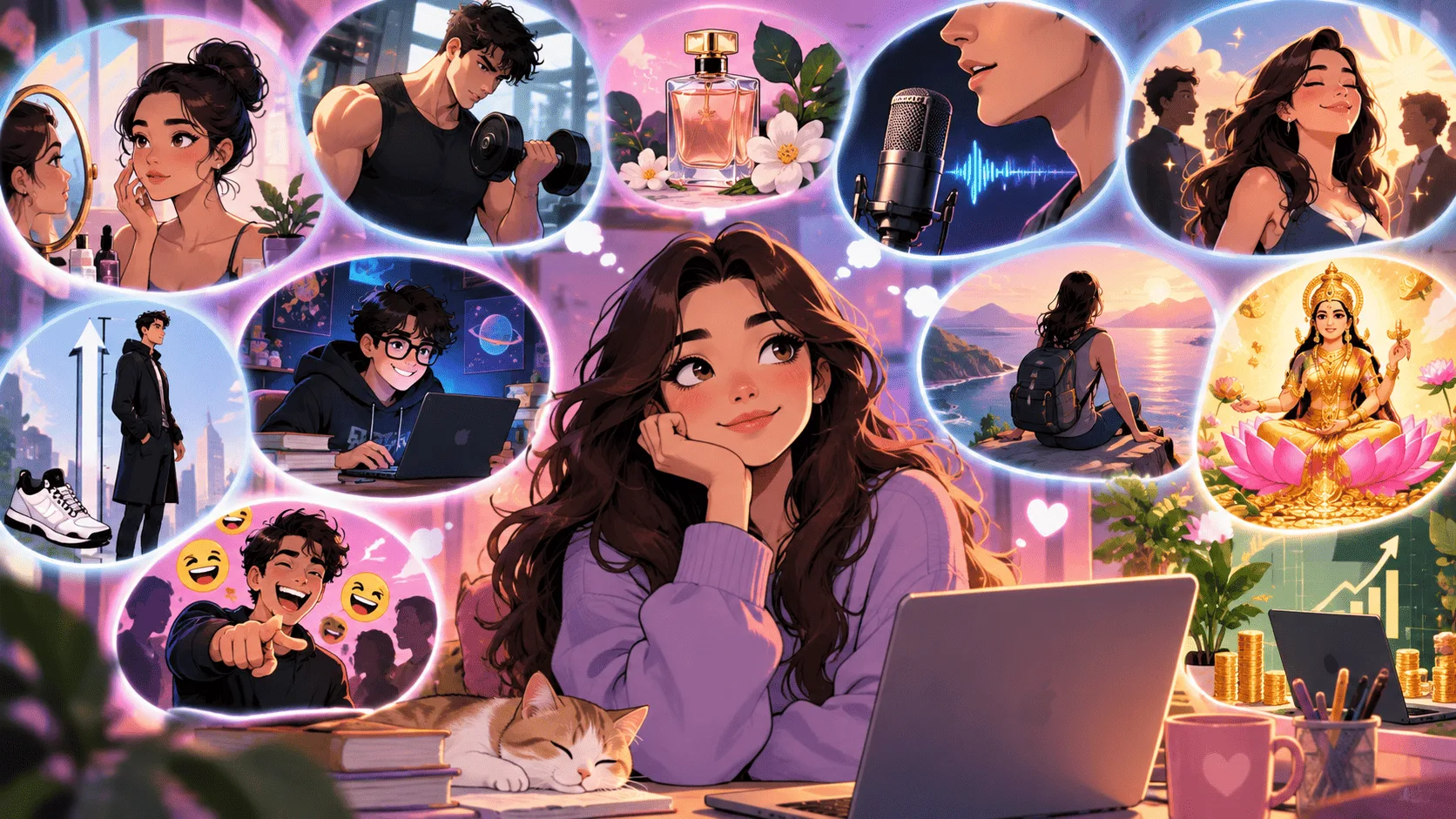
    The internet has found a new way to describe self-improvement, and Gen Z is putting “-maxxing” behind almost everything. What began with looksmaxxing has now expanded into dating, fragrance, humour, confidence, singlehood, money and even spirituality.

    But what does “maxxing” actually mean, and why are so many aspects of everyday life being turned into something to optimise?

    Looks-Maxxing and Height-Maxxing

    Looksmaxxing refers to efforts aimed at improving physical appearance. Skincare, grooming, fitness, hairstyles, clothing and personal styling can all fall under the term.

    More specific trends have also emerged, including jawmaxxing, heightmaxxing, tan-maxxing and bone-smashing. While some involve simple appearance or styling changes, others have attracted attention because of concerns around safety.

    Gen Z maxxing trend
    (Representational Image) Looksmaxxing, aura-maxxing and Lakshmi-maxxing are going viral | AI Generated

    Heightmaxxing focuses on creating the impression of being taller through posture, footwear, clothing choices and proportions. The idea is particularly common in online conversations around male attractiveness.

    Also Read | Zip coding: Smart dating hack or a recipe for relationship drama?

    Pheromone-Maxxing vs Smell-Maxxing

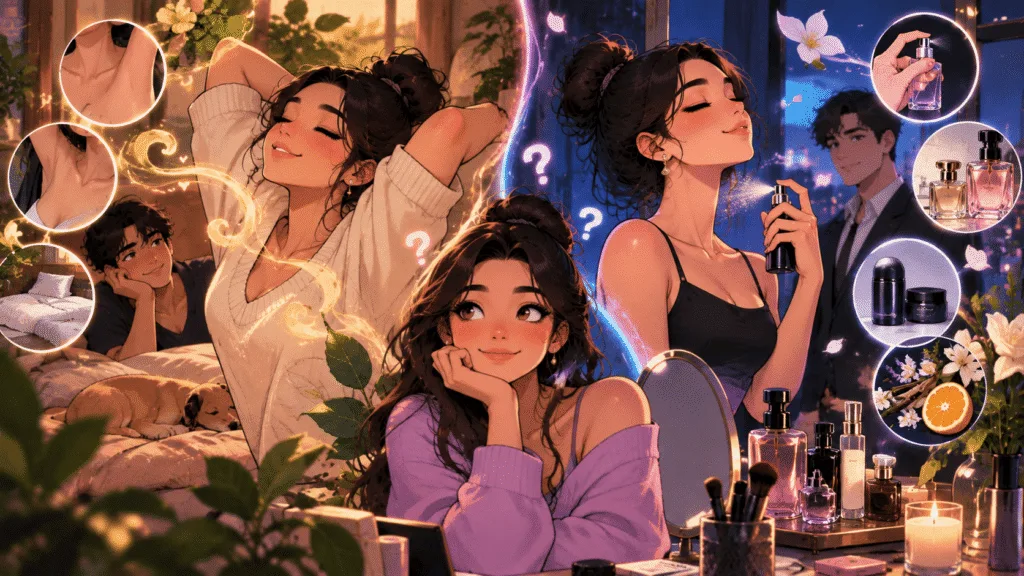
    Pheromone-maxxing is based on the belief that natural body scent can increase attraction. Some online versions even suggest avoiding deodorant or showers before dates.

    However, there is no established scientific evidence that humans possess a pheromone that works as a dependable sexual-attraction switch.

    Gen Z maxxing trend
    (Representational Image) Gen Z is turning looks, voice, humour and money into ‘maxxing’ trends | AI Generated

    Smell-maxxing takes a more conventional route. It focuses on perfume, cologne, deodorant, body products and fragrance layering to create a more appealing personal scent.

    Aura-Maxxing, Voice-Maxxing and Whimsy-Maxxing

    Aura-maxxing is about projecting confidence, charisma and social ease rather than changing physical features.

    Voice-maxxing focuses on making speech sound smoother, deeper or more confident through aspects such as pacing, pronunciation and delivery.

    Gen Z maxxing trend
    (Representational Image) The ‘maxxing’ trend is taking Gen Z internet culture beyond looks | AI Generated

    Whimsy-maxxing, meanwhile, is about embracing eccentricity, playfulness and individuality instead of trying to appear universally appealing.

    Nerd-Maxxing, Jester-Maxxing and Solo-Maxxing

    Nerd-maxxing encourages people to openly embrace their interests, whether that means gaming, books, coding, films, music or science.

    Jester-maxxing turns humour into a social and dating tool, with an emphasis on making people laugh and creating memorable interactions.

    Gen Z maxxing trend
    (Representational Image) Pheromone-maxxing to solo-maxxing, Gen Z’s latest lingo explained | AI Generated

    Solo-maxxing shifts attention away from relationships. It describes investing time in hobbies, travel, friendships, fitness and enjoying life while single.

    What is Lakshmi-Maxxing?

    Lakshmi-maxxing brings the “maxxing” vocabulary into conversations about prosperity. The term draws from Goddess Lakshmi, associated in Hindu tradition with wealth, prosperity and abundance.

    Gen Z maxxing trend
    (Representational Image) Gen Z’s viral ‘maxxing’ lingo explained | AI Generated

    Online, it can refer to adopting habits, aesthetics and rituals linked with abundance, financial growth and an aspirational lifestyle. It sits somewhere between manifestation, personal branding and prosperity-focused content.

    Also Read | Busy life taking a toll on your relationship? 5 habits to stay close

    Why is Gen Z ‘Maxxing’ everything?

    The spread of maxxing reflects how online culture increasingly frames different parts of life as things that can be improved or optimised.

    Dating apps and social media have made appearance, personality and lifestyle highly visible. The language also makes personal insecurities sound more playful. Instead of simply saying you want greater confidence, you can call it aura-maxxing. Want to enjoy being single? That becomes solo-maxxing.

    From looksmaxxing to Lakshmi-maxxing, the suffix has become a shorthand for turning almost any aspect of life into a personal project.

  • Zip coding: Smart dating hack or a recipe for relationship drama?

    Zip coding: Smart dating hack or a recipe for relationship drama?

    The zip coding dating trend is the latest relationship idea making its way from TikTok into conversations about modern dating and unlike some viral dating rules, it is not necessarily a hard no.

    The term has two distinct meanings. One refers to keeping your dating-app location range very small and prioritising people who live nearby. The other describes a relationship where a couple considers themselves together only when they are in the same location, while treating themselves as single when they are apart.

    Also Read | Busy life taking a toll on your relationship? 5 habits to stay close

    The distinction matters because one is essentially about convenience and dating preferences, while the other can directly affect relationship boundaries.

    What exactly is the zip coding dating trend?

    In its first form, “zip coding” means restricting your dating pool geographically. Someone might set a very small radius on a dating app or decide they only want to date people who live close enough to see regularly.

    There is a practical argument for it. Dating apps can create an overwhelming number of choices, leading to swipe fatigue and decision paralysis. Limiting matches by location can make it easier to focus on people you can realistically meet and build a relationship with.

    Readme puts books, reading tastes and shared interests at the centre of dating.
    Representational image of dating / Pexels

    Living nearby can also make maintaining a relationship easier. Regular dates, spontaneous plans and everyday time together are generally more achievable when partners do not have to travel long distances.

    However, the trend can become less about convenience and more about status. Someone who only wants to date people from wealthy, fashionable or supposedly desirable neighbourhoods may be using location as a social filter rather than a practical one.

    That is where “zip coding” can start looking less like a sensible dating preference and more like unnecessary pickiness.

    Is location-based dating actually a bad thing?

    Not necessarily.

    Prioritising someone who lives within a reasonable distance can be a perfectly practical dating preference. It can reduce the logistical pressure that comes with trying to build a relationship across cities or long commutes.

    The problem comes when the postcode becomes a proxy for social status or compatibility.

    Micro-weddings are becoming increasingly popular as couples rethink traditional big-day expectations.
    Couple / Pexels

    A neighbourhood can reflect someone’s lifestyle and community, but assuming that everyone from a particular area will share the same values or personality can quickly become limiting.

    So, when it comes to restricting your dating pool by location, zip coding is not inherently toxic. It depends on why you are doing it and how rigid the rule becomes.

    When does zip coding become a relationship problem?

    The second version is considerably more complicated.

    Here, “zip coding” describes a relationship whose rules change depending on where the partners are. For example, a couple may consider themselves monogamous while living on the same college campus but treat themselves as single when they return to their respective hometowns during a break.

    On its own, that arrangement is not necessarily cheating.

    It can resemble forms of ethical non-monogamy in which partners agree that they can date or sleep with other people while they are apart but remain committed to each other when they are together.

    The crucial word is agreement.

    If both partners understand the arrangement and genuinely consent to it, they can decide what their relationship looks like when they are together and apart. It could even offer some couples an alternative to navigating a conventional long-distance relationship.

    But that arrangement can become complicated very quickly if the boundaries are unclear.

    What is the biggest red flag with zip coding?

    The biggest problem is when the two partners have different definitions of the relationship.

    If one person believes they are in a committed relationship regardless of distance while the other considers themselves single whenever they are apart, there is no shared agreement.

    In that situation, the issue is no longer simply a quirky TikTok dating trend. It becomes a question of trust, communication and consent.

    Also Read | The ‘Hot Fox Agenda’: Why Hollywood keeps turning foxes into heartthrobs

    The distinction between an open relationship and cheating is particularly important here. Ethical non-monogamy requires informed agreement between the people involved. Secretly changing the rules when your partner is away does not meet that standard.

    So, the verdict on zip coding is complicated: the location-based dating version can be practical, while the relationship version requires exceptionally clear boundaries.

    Without mutual understanding, what looks like a modern dating arrangement can quickly become a relationship conflict.

  • The ‘Hot Fox Agenda’: Why Hollywood keeps turning foxes into heartthrobs

    The ‘Hot Fox Agenda’: Why Hollywood keeps turning foxes into heartthrobs

    If you have ever found yourself inexplicably charmed by an animated fox, you are far from alone. From Robin Hood and Nick Wilde to Fantastic Mr Fox and even Foxy the Pirate, fictional foxes have developed a surprising reputation as pop culture heartthrobs.

    The phenomenon has become especially noticeable around Nick Wilde from Zootopia. His sarcastic charm, confidence and complicated relationship with Judy Hopps have inspired countless fan edits and discussions online.

    And perhaps Hollywood deserves some of the credit or the blame.

    The idea of a “Hot Fox Agenda” may sound ridiculous, but look at the evidence. Animated films and shows have repeatedly given fox characters clever personalities, mischievous streaks, confidence and, often, a softer romantic side.

    What makes animated foxes so appealing?

    Foxes already have a built-in reputation for being sly, independent and adaptable. Pop culture has taken those traits and turned them into character archetypes that audiences recognise immediately.

    Give a fox character a sharp sense of humour, a little swagger and a softer side beneath the attitude, and suddenly the character becomes much more than the comic relief or villain.

    That formula is particularly obvious with Nick Wilde.

    In Zootopia, Nick initially comes across as a smooth-talking hustler who enjoys getting under Judy’s skin. Their early interactions have the familiar push-and-pull dynamic of an enemies-to-lovers romance, making his eventual vulnerability and emotional openness even more appealing.

    Nick isn’t the first animated fox to receive this treatment.

    Did Hollywood start the ‘Hot Fox Agenda’ decades ago?

    Long before Nick Wilde arrived in 2016, Disney had already discovered the appeal of a charming fox.

    In the 1973 animated film Robin Hood, the legendary outlaw became a fox. The character retained his clever, rebellious personality while also developing a romantic storyline with Maid Marian.

    For some viewers, Robin Hood became a childhood crush long before anyone had coined the term “Hot Fox Agenda”. Online discussions have continued to revisit the character’s combination of confidence, gentleness and romantic charm.

    Then came Swiper the Fox from Dora the Explorer.

    Swiper is hardly a conventional romantic hero. He is, after all, constantly trying to steal things. But the mysterious mask, mischievous personality and occasional glimpses of redemption give him a very different kind of appeal.

    And apparently, a fictional villain with a redemption arc is enough to keep the agenda going.

    How did Fantastic Mr Fox take things even further?

    Wes Anderson’s Fantastic Mr Fox arguably doubled down on the formula.

    The stop-motion character already had plenty of confidence, intelligence and style. Then Hollywood added George Clooney’s voice to the mix.

    Mr Fox’s distinctive personality, his marigold corduroy suit and his complicated attempts to balance family life with his adventurous instincts turned him into one of the most memorable animated foxes on screen.

    The result? Another fox character who somehow managed to be charming despite being, objectively, a fox.

    What about video games and TV shows?

    The fox phenomenon isn’t restricted to animated movies.

    In Five Nights at Freddy’s, Foxy the Pirate transformed the fox archetype into something considerably stranger: a battered animatronic pirate with a hook.

    Five Nights at Freddy's, Foxy the Pirate

    Yet even that character has developed a devoted fan following, proving just how flexible the fictional fox formula has become.

    Television has also acknowledged the phenomenon.

    In Bob’s Burgers, Tina Belcher famously admits to being attracted to a cartoon fox, asking whether it is bad to develop a crush on a fictional character she barely knows.

    Apparently, the answer from pop culture is a resounding no.

    Why does Nick Wilde remain the ultimate animated fox crush?

    Nick Wilde may be the clearest example of the formula working perfectly.

    His appeal isn’t simply about appearance or attitude. His relationship with Judy gradually reveals a more vulnerable side of his personality.

    The character starts out as a hustler who keeps people at a distance. As his relationship with Judy develops, he becomes more emotionally open, showing that the confidence and sarcasm are only part of his personality.

    Nick Wilde isn’t alone: The rise of the hot animated fox

    That combination, sarcastic exterior, emotional vulnerability and undeniable charm, is precisely what makes the character so compelling to fans.

    With Zootopia returning for a third film, audiences may be getting even more of Nick and Judy’s dynamic.

    And if Hollywood continues its decades-long fascination with clever, charming foxes, the Hot Fox Agenda shows no sign of ending.

  • Busy life taking a toll on your relationship? 5 habits to stay close

    Busy life taking a toll on your relationship? 5 habits to stay close

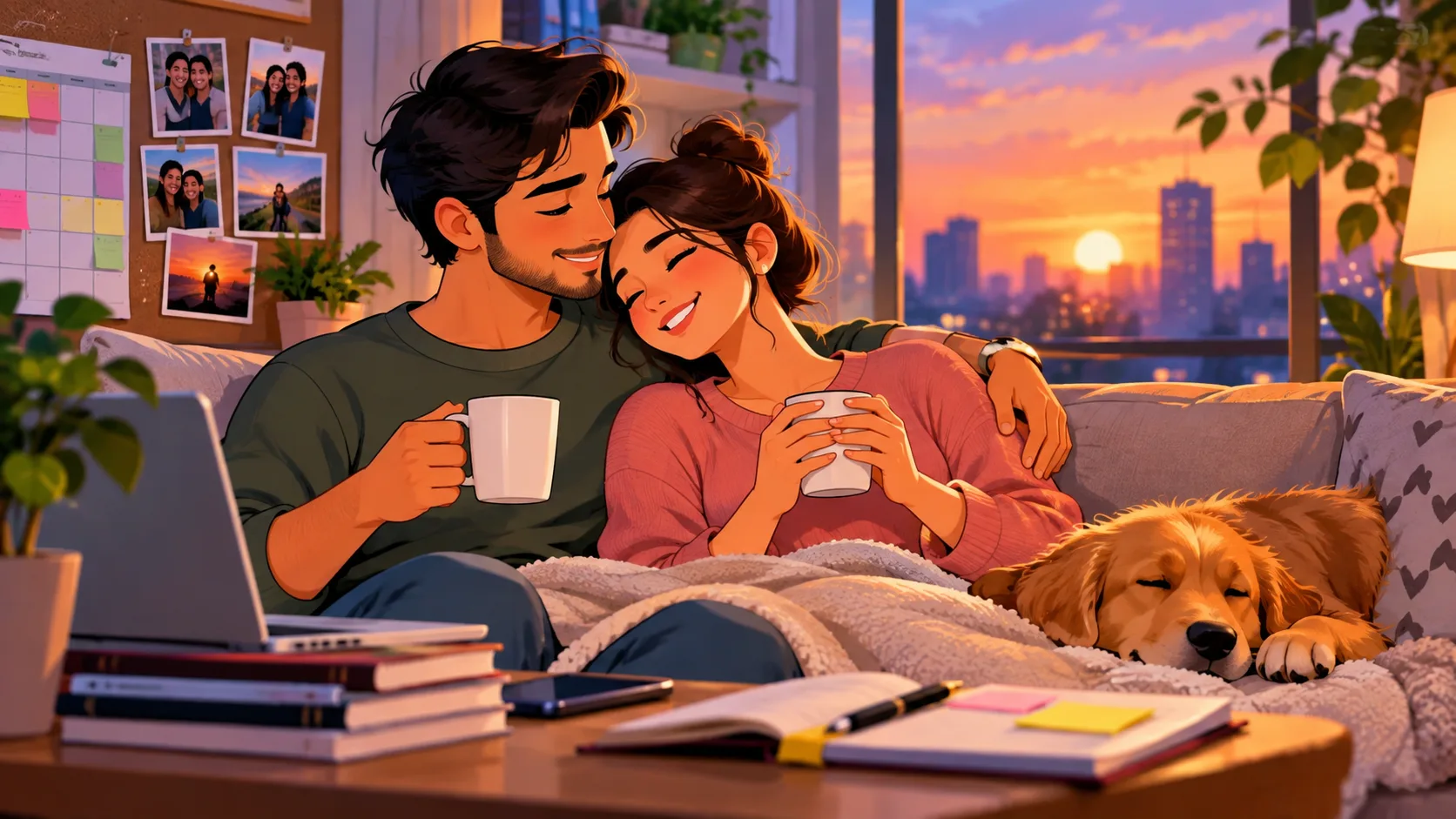
    Some days, couples barely get past “What time will you be home?” before another meeting, message or household task gets in the way. Busy schedules can quietly turn meaningful conversations into quick updates and shared time into something that keeps getting postponed. But a relationship does not always need a free weekend to feel close. Small, consistent habits can help couples stay connected even when life refuses to slow down.

    A busy routine, however, does not have to create emotional distance. Couples can stay connected by making a few simple relationship habits part of their everyday lives. Here are five ways to nurture a relationship even when free time is limited.

    Make time for a daily check-in

    A long conversation is not necessary every day. Even 10 minutes can provide an opportunity to reconnect after a hectic day. Instead of discussing only household tasks, ask your partner about something that was important to them.

    Busy schedules? 5 relationship
    (Representational Image) Busy schedules do not have to come between couples and quality time | AI Generated

    Listen to the answer without checking your phone or rushing to the next task. A short but genuine conversation can help both partners feel heard and involved in each other’s lives.

    Also Read | Are you being used as a ‘placeholder partner’? 7 signs your partner may not see a future

    Schedule quality time together

    When calendars are full, couple time can easily get pushed aside. Setting aside a specific day or evening can prevent that from happening. Treat the time as something worth keeping, rather than an appointment that can be cancelled whenever another task appears.

    Busy schedules? 5 relationship
    (Representational Image) Simple relationship habits can make busy days feel more connected | AI Generated

    Quality time could mean going out for dinner, watching a film at home or taking a simple walk around the neighbourhood.

    Build small relationship rituals

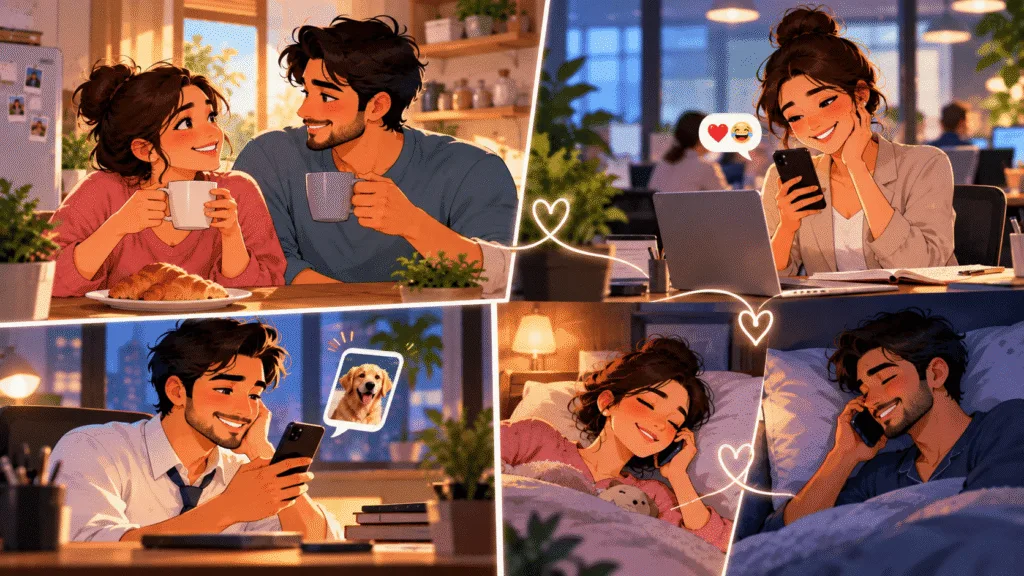
    Shared routines can help couples maintain a sense of closeness when their schedules rarely match. Having morning coffee together, making a goodnight call or sending each other a funny reel during a hectic workday can become meaningful habits.

    Busy schedules? 5 relationship habits
    (Representational Image) Daily check-ins and shared rituals can strengthen a couple’s bond | AI Generated

    These rituals do not need to take much time. Their value comes from creating regular moments that both partners associate with their relationship.

    Clearly ask for what you need

    Partners cannot always know what the other person is thinking or feeling. One person might want company after a long day, while the other assumes they need some quiet time.

    GenZ relationships
    (Representational Image) Busy schedules? 5 relationship habits to keep couples close | AI Generated

    Rather than waiting for your partner to figure it out, communicate directly. Saying, “Can we spend 20 minutes together tonight?” makes your need clear and gives your partner something specific to respond to.

    Give your shared time your full attention

    When couples finally find time together, distractions can reduce the quality of that time. Work messages, social media and separate screen time can easily take over an evening.

    Also Read | From ‘you complete me’ to ‘I need my space’: How Gen Z is redefining love and commitment

    When possible, put those distractions aside and focus on each other. Even a short meal or conversation can become valuable when both partners are genuinely present.

    Busy schedules? 5 relationship habits
    (Representational Image) Quality time matters even when life leaves couples with little time | AI Generated

    Making a busy relationship work

    A demanding schedule does not automatically mean a relationship has to be neglected. Instead of trying to create more hours in the day, couples can focus on using their existing time in ways that support connection, communication and togetherness.

  • Book lovers, there’s finally a dating app built around your reading taste

    Book lovers, there’s finally a dating app built around your reading taste

    For people who consider a love of books a dating prerequisite, Readme could be the app worth checking out. The new dating platform puts reading habits and book preferences at the centre of matchmaking, connecting people who read, or those who specifically want to date someone who does.

    Created by the team behind astrology app Co-Star, Readme takes a different approach from conventional dating profiles, where carefully crafted bios and prompts often become the starting point for a match.

    Instead, the app looks to books and reading tastes as a way to reveal shared interests, personality and values.

    What is the Readme dating app?

    The concept behind Readme is straightforward: connect people who read, or people who want to date someone who reads.

    Users can discover matches based on similarities in their book tastes, giving them an immediate conversation starter beyond the usual dating-app prompts. For book lovers, that could mean moving from “What do you do?” to discussing favourite authors, genres or the book currently sitting on the nightstand.

    Readme is a new dating app designed around books and reading preferences.
    Readme is a new dating app designed around books and reading preferences / Pexels

    According to Readme’s head of brand Emily Segal, the idea comes from the belief that someone’s taste in books can reveal more about them than a carefully rehearsed dating-app line.

    That makes reading preference the app’s central compatibility tool, at least for now.

    Why did the Co-Star team create Readme?

    Readme comes from the same team behind Co-Star, the popular astrology app founded by Banu Guler.

    Guler announced Readme on X this week, sharing a statement from Segal about the new platform.

    The move also builds on something the Co-Star team had already observed among its users: an appetite for compatibility-based dating.

    Segal said people have long wanted Co-Star to create a dating app, but the team took time to find an approach that felt authentic. Astrology, she noted, is only one part of compatibility — and Readme instead explores another potential window into someone’s personality: their relationship with books.

    Will astrology be part of Readme?

    That’s still unclear.

    The role astrology may eventually play in Readme has not been confirmed. For now, the app’s identity appears firmly centred on books, reading preferences and connecting people through shared literary interests.

    Users can download Readme and explore the matchmaking concept themselves.

  • Bare nails trend: Why natural nails are back in fashion

    Bare nails trend: Why natural nails are back in fashion

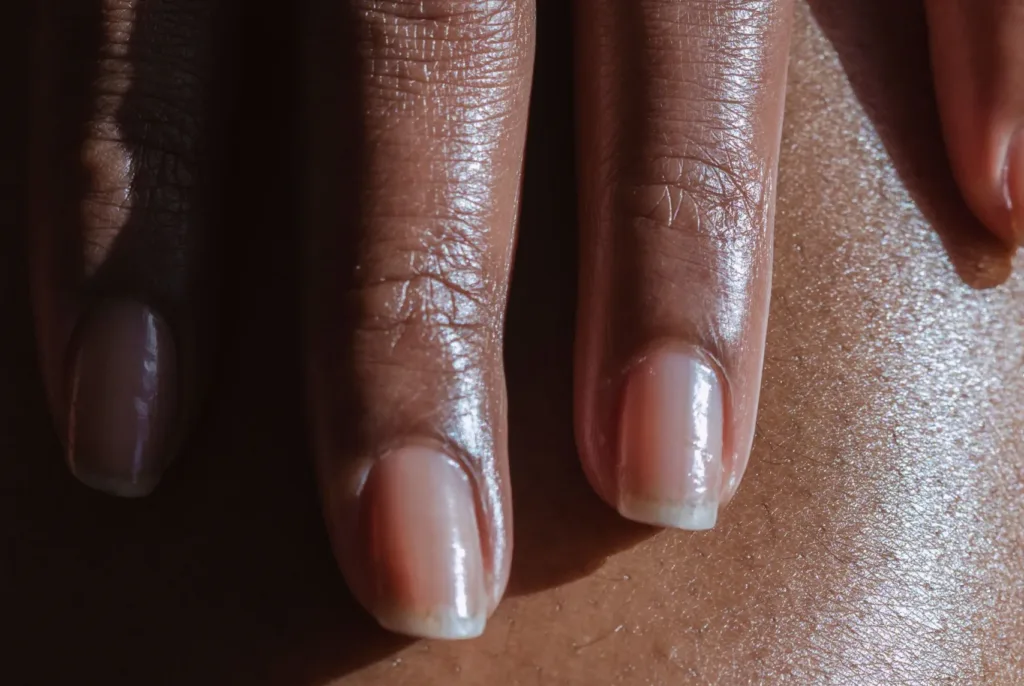
    Bare nails are the latest beauty obsession, with natural, polish-free nails emerging as one of 2026’s defining manicure trends. Once considered low-maintenance or even unkempt, bare nails are now being embraced as a symbol of understated elegance and quiet luxury.

    Once associated with neglect or simply skipping the salon, polish-free nails are now being embraced as a deliberate beauty choice.

    Also Read | Y2K makeup trends return: How to give retro looks a modern update

    Celebrities including Zendaya, Hailey Bieber, Billie Eilish, Victoria Beckham and Selena Gomez have been seen sporting natural-looking nails, helping turn the understated look into a symbol of effortless elegance.

    Bare nails are replacing elaborate manicures in 2026
    Bare nails are replacing elaborate manicures /IG, billieeilish

    The shift also reflects a broader movement towards quieter, lower-maintenance beauty, where looking polished no longer necessarily means spending hours achieving it.

    Why are bare nails suddenly so fashionable?

    For years, elaborate nail art, extensions, crystals and intricate designs were closely associated with luxury. A detailed manicure could function as an accessible way of displaying beauty and status.

    But as long nails, extensions and increasingly elaborate manicures have become more widely available, that association has begun to change. The emphasis is now shifting towards clean, healthy-looking nails without visible polish or elaborate decoration.

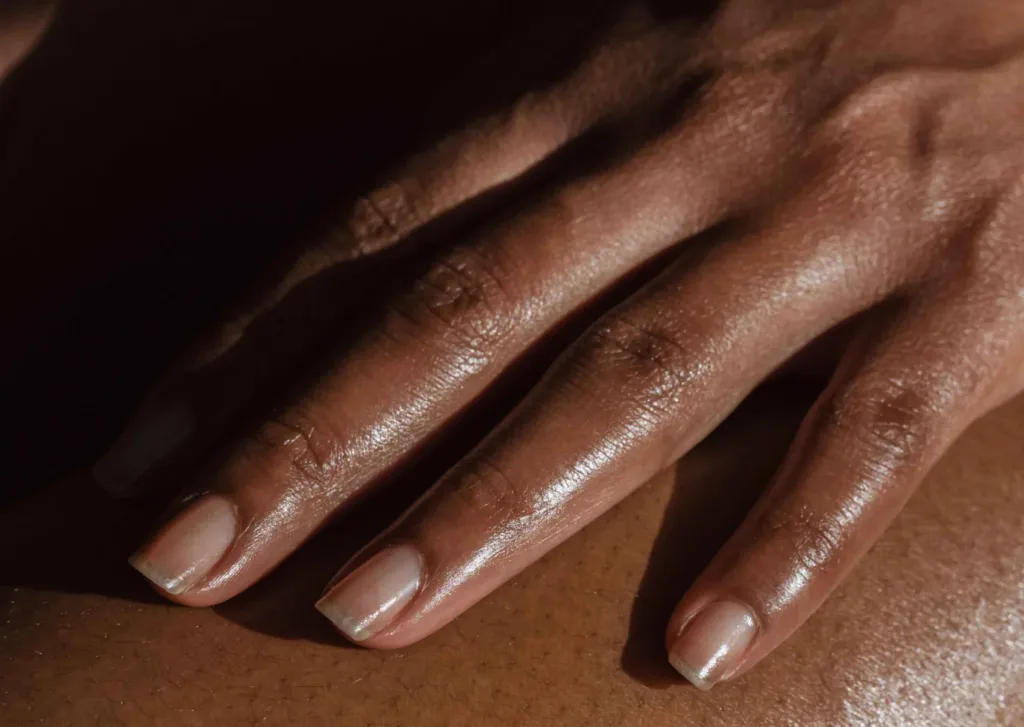
    From chrome finishes and nail charms to bold colours, elaborate manicures are taking a back seat as natural, polish-free nails become one of 2026’s biggest beauty trends.
    From chrome finishes and nail charms to bold colours, elaborate manicures are taking a back seat as natural, polish-free nails become one of 2026’s biggest beauty trends / Pexels

    The result is a beauty aesthetic that looks effortless while still requiring attention to grooming and nail health.

    The rise of the no-manicure manicure

    The bare nails movement fits neatly into the continuing popularity of the “clean girl” aesthetic, which favours a more pared-back approach to beauty.

    There is also a practical reason behind its appeal. Traditional manicures, particularly those involving gel, acrylics or extensions, can require regular appointments, maintenance and removal. A natural nail look eliminates much of that upkeep while retaining a neat, polished appearance.

    For people who increasingly value convenience, the no-manicure manicure offers an alternative to spending hours maintaining elaborate designs.

    Are natural or bare nails becoming the new luxury?

    There is also a wellness element to the trend. Some professions, including medicine and culinary work, discourage or prohibit nail polish because of workplace concerns around contamination and practicality.

    Bare nails are having a major beauty moment, turning natural nails into the ultimate symbol of understated elegance.
    Representational Image / Pexels

    Dermatologists have warned that using gel polish, acrylics and nail extensions too often would make one’s nails weak. Amidst all this, nails which look healthy in their natural state have come to represent grooming.

    2026 has brought about a change in the hierarchy of beauty. Not anymore are elaborate nails the only signifier of being polished and well-groomed. It takes sometimes a lot less to make a statement.

    Also Read | Dating a narcissist? 11 subtle signs that may reveal the pattern

    Bare nails are a part of the current trend of subtle beauty where rather than being flashy or overly done, emphasis is laid on healthy skin, natural eyebrows, basic hair, and barely there makeup.

    This results in a form of luxury which is silent in its nature. Bare nails blend well with this kind of aesthetic.