Author: Tuhin Das Mahapatra

  • Who is Sumit Roy? Supreme Court orders not to arrest Abhishek Banerjee’s close aide

    Who is Sumit Roy? Supreme Court orders not to arrest Abhishek Banerjee’s close aide

    The Supreme Court has given interim relief to Sumit Roy, a close aide of Trinamool Congress national general secretary Abhishek Banerjee. The Apex Court on Thursday ordered that the arrest be suspended for now and that he should cooperate with the investigation in full.

    A three-judge Bench headed by Chief Justice Surya Kant, Justice Joymalya Bagchi and Justice V. Mohan gave the order. The court stated that the temporary relief barring arrest would be in effect until the next hearing. It also attached a condition that Sumit Roy has to appear before the investigating officers on a daily basis from 10 am to 6 pm and cooperate with the police.

    What happened in the Supreme Court?

    Senior advocate Gopal Shankar Narayan appeared for Sumit Roy, while Solicitor General Tushar Mehta represented the West Bengal government.

    During the hearing, Justice Joymalya Bagchi sought clarification on the allegations against Roy and asked, “What charges were filed against Sumit Roy?” per the court transcription.

    Responding on behalf of his client, Gopal Shankar Narayan said, “Cash for job scam. If my client is given protection, he will cooperate in the investigation.”

    Solicitor General Tushar Mehta requested the court to postpone the hearing by a day, stating that he had not yet had sufficient time to examine all the case papers.

    He submitted that the matter should be taken up on Friday after he had reviewed the documents.

    Objecting to the request, Sumit Roy’s counsel remarked, “The incident happened in 2021. The FIR was filed in July 2026. Do we have to appeal to the Solicitor General for a minor PA matter?”

    “I will give all the answers. Just give the court one day to see the papers,”  Mehta assured the Bench.

    Tushar Mehta told the Bench, “When the accused was going to be arrested, the former Chief Minister again obstructed us. He has done the same thing before.”

    Justice Bagchi then asked, “Is this the tip of the iceberg?”

    Mehta replied, “Of course. Let us have a chance to speak. He is influential.”

    Following the submissions, the Supreme Court granted Roy interim protection from arrest while directing him to remain available for questioning.

    What are the allegations against Sumit Roy?

    Sumit is facing multiple criminal cases registered in different parts of West Bengal.

    One of the key allegations relates to the Shalbani land case in West Midnapore, where he has been accused of involvement in the alleged illegal sale of government land.

    Another case has been registered at Debra Police Station, where allegations have been made regarding a purported cash-for-jobs scam.

    Sumit also faces an extortion case registered at Bishnupur Police Station in South 24 Parganas.

    The complaint noted that a resort owner accused Roy of pressuring him to vacate and lock up his property during Roy’s stay. Investigators have already conducted raids at Roy’s residence in connection with that case.

    Why did he approach the Supreme Court?

    Following the registration of the Shalbani case, Sumit reportedly remained untraceable, leading investigators to obtain an arrest warrant against him.

    He subsequently moved the Calcutta High Court seeking anticipatory bail.

    While the High Court granted him anticipatory bail in connection with the Debra case, it declined similar relief in the Shalbani land case. Following this, he approached the Supreme Court seeking protection from arrest.
  • Calcutta High Court gets 8 new judges at once in over two decades: Here’s a full list

    Calcutta High Court gets 8 new judges at once in over two decades: Here’s a full list

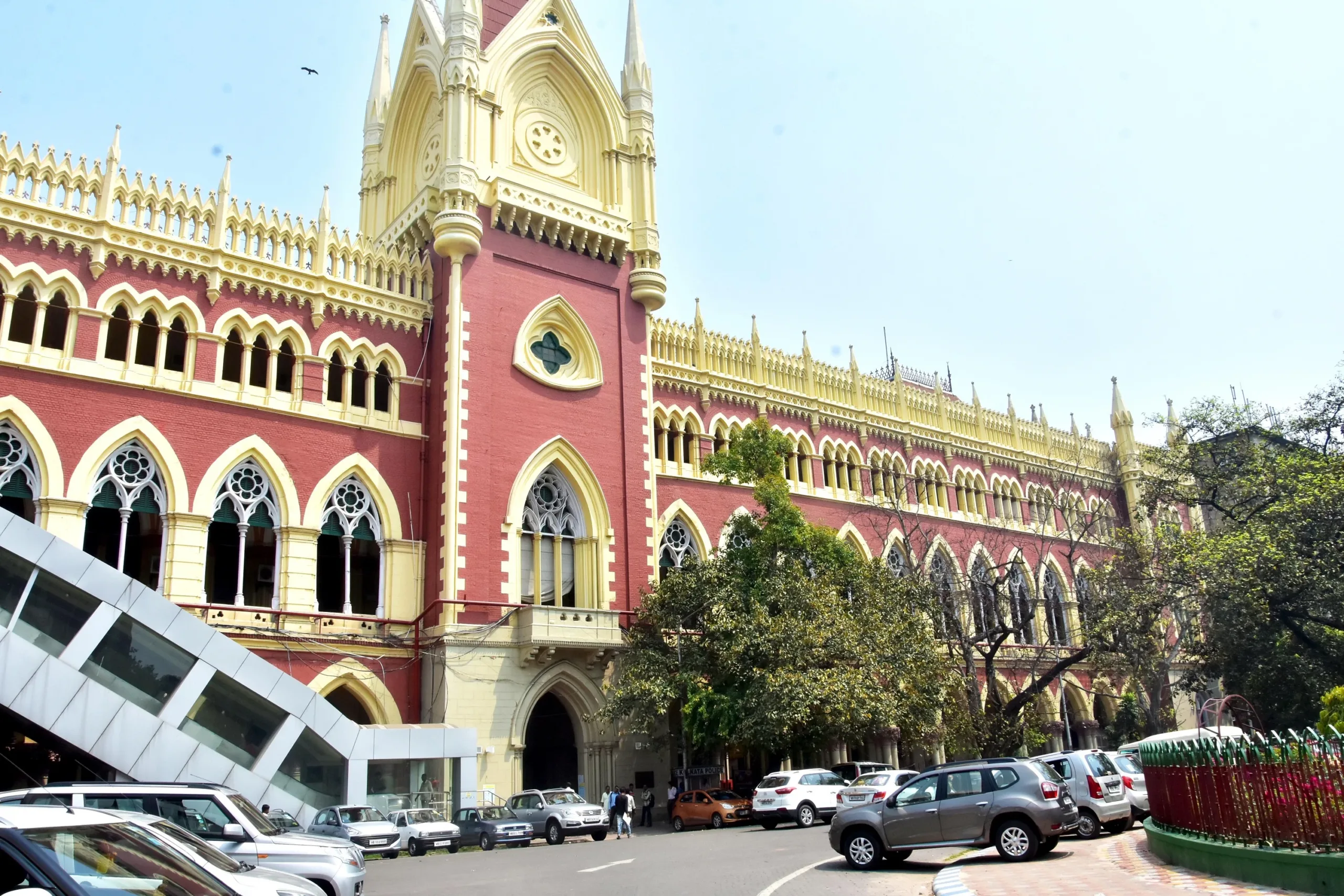
    Eight new judges will be simultaneously inducted into the Calcutta High Court, for the first time in over 20 years in history, when as many as eight judges are appointed in a single batch. The transfer should ease a judicial system burdened with a backlog of pending cases and a chronic shortage of judges.

    The appointments follow the recommendations of the Supreme Court Collegium that recommended the names of nine advocates to the Central Government from the Calcutta High Court for appointments as judges on May 12. The President of India has now accepted the appointments of eight of those, recommended by the Appointments Committee of the State Cabinet, paving the way for them to join the Bench.

    ALSO READ| Did you know Bengal once had its own airline? Here’s why it never took flight

    Reports confirmed that the oath-taking ceremony is likely to be held next Tuesday.

    Who are these 8 new judges?

    The eight advocates who are set to take the oath as judges are Aryak Dutt, Atarup Banerjee, Sandeep Dey, Parthasarathy Roy, Sudeep Dev, Anuj Singh, Arjun Roy Mukherjee and Nishad Medera.

    Notably, the sanctioned strength of the court is 72 judges. However, after the induction of these eight new judges, the working strength will rise to 49, indicating that while vacancies will remain, the gap will narrow considerably.

    Several members of the legal fraternity lauded the fact that it has been more than twenty years since the Calcutta High Court witnessed such a large number of judges being appointed at one time. Many believe the appointments will help improve the pace of judicial proceedings and reduce the burden on the existing Bench, which has been handling an increasing number of cases over the years.

    The need for additional judges has been felt for quite some time.

    For several years, discussions have continued regarding the appointment of more judges to the Calcutta High Court. Multiple representations and applications were reportedly made flagging the growing workload on the court.

    Which are the other Circuit Benches facing judges’ shortage?

    The pressure has not been limited to the principal seat in Kolkata alone.

    The number of cases that require regular hearing has increased steadily at the Andaman Circuit Bench as well as at the Jalpaiguri Circuit Bench. Proceedings are held there regularly, and four of the High Court judges rotate their duties there for 15-day periods.

    This system is necessary for providing access to justice in various parts of the jurisdiction of the court, but it has also put pressure on the already strong hands of the judges of the Calcutta High Court.

  • Why is Shiva worshipped as a Lingam while other gods have idols?

    Why is Shiva worshipped as a Lingam while other gods have idols?

    Walk into almost any ancient Hindu temple and a fascinating pattern begins to emerge. Vishnu appears in majestic human form holding the conch, discus, mace and lotus. Krishna stands gracefully with the flute. Rama carries the bow. Durga rides the lion, Lakshmi sits upon the lotus, and Ganesha is instantly recognisable by his elephant head. Yet when one enters the sanctum of a Shiva temple, the experience changes completely. Instead of an elaborate human figure, one usually encounters a smooth, cylindrical stone rising from a circular base: the Shiva Lingam. 

    Why is Shiva worshipped as a Lingam?

    This raises an enduring question: Why is Shiva primarily worshipped as a Lingam while most other Hindu deities are worshipped through anthropomorphic idols? 

    The answer is more of a process of Indian philosophy rather than a single story. Shiva holds a special place in the Hindu mind. Vishnu is regarded as the preserver who keeps coming into the world in various avatars like Rama and Krishna, and Devi appears in individual forms to save creation, but Shiva is the one who is beyond creation and will remain after destruction. 

    He is the Adi Yogi, the one outside society, the Ascetic who has nothing, the dancer who dances cosmic rhythm, creating and destroying worlds, the one who is without form, the one from which all forms emerge. It is not easy to represent such a creature in a single humanised image.

    ALSO READ| Did you know there’s a secret trail between Kedarnath and Badrinath? Discover the lost Himalayan path of the gods

    The Sanskrit word Lingam itself provides the first clue. Contrary to popular misunderstanding, linga does not simply mean an object of worship. In classical Sanskrit it primarily means ‘mark,’ ‘symbol,’ ‘sign’ or ‘characteristic.’ A Lingam is therefore not intended to be a portrait of Shiva but a sign pointing towards His presence. Just as smoke is the linga of fire because it indicates the existence of flames, the Shiva Lingam is the visible sign of an invisible reality, the Supreme One.

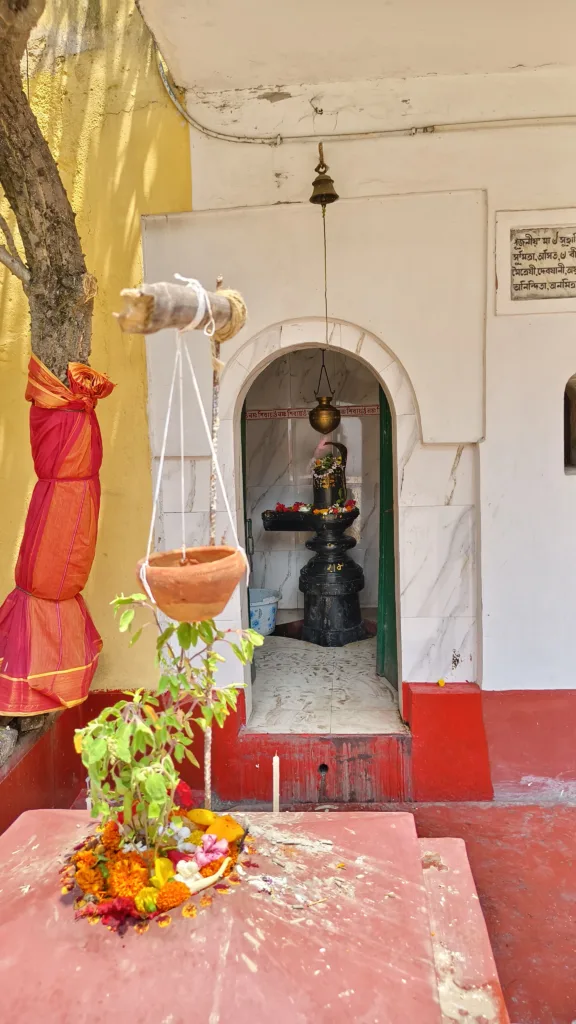
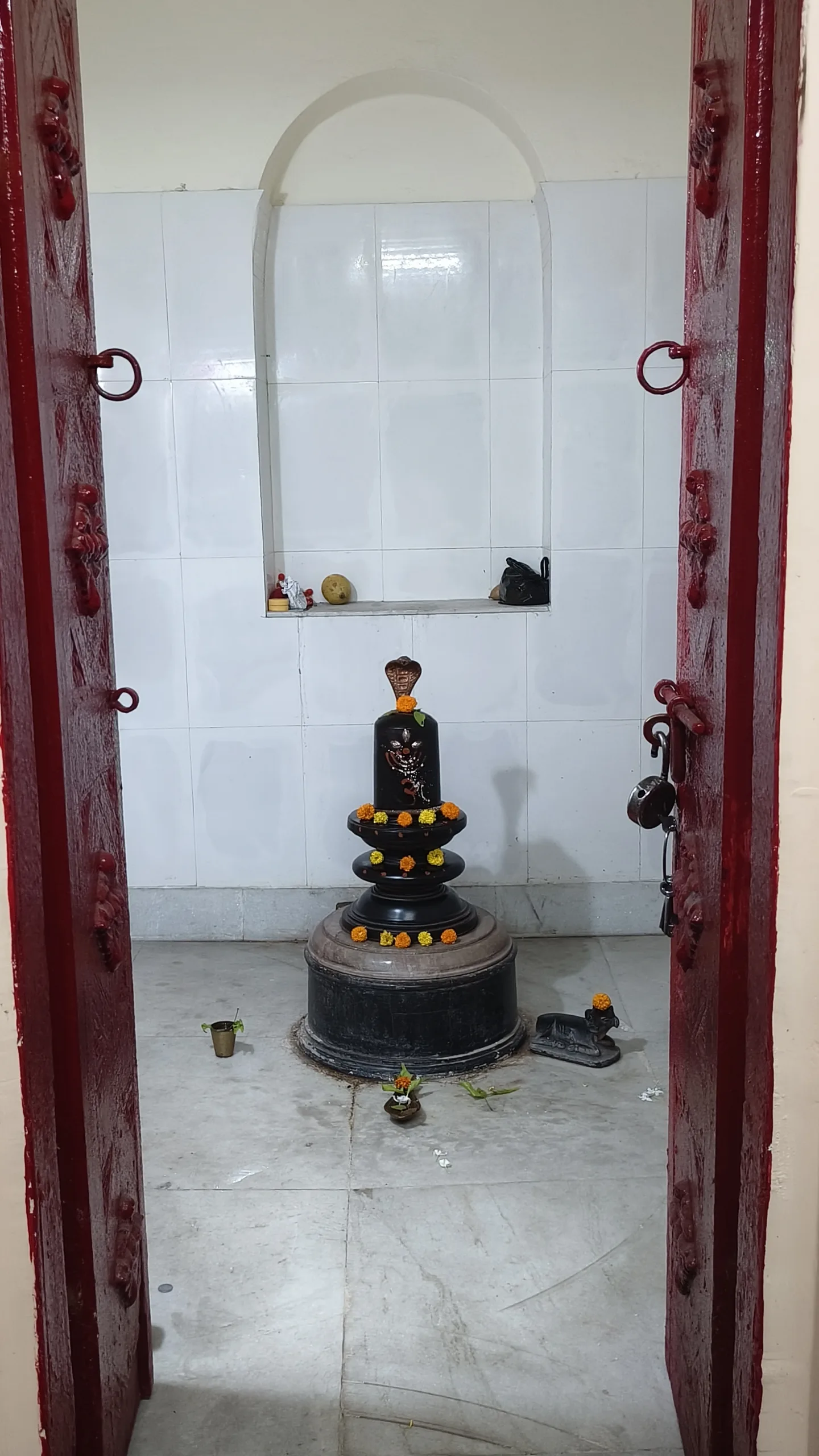
    Shiva Lingam
    Shiva Lingam can be seen in a Hindu Temple. Credit: Rikta Das Mahapatra.

    This knowledge is beautifully expressed in the Linga Purana. Once Brahma and Vishnu had an argument about who was superior. Just then, a column of unending light radiated in front of them, taller than the sky and deeper than the earth. Vishnu was amazed and went downward in the form of a boar, while Brahma went up in the shape of a swan, and both tried to find out the beginning or the end of the column. Neither succeeded. After countless ages, they came back, stating that the pillar was without origin and had no end. Then Shiva emerged from the infinite light and showed that the infinite is not measurable by finite minds. The Jyotirlinga, or the pillar of divine light, was established as the theology of the Shiva Lingam. In the temples, the stone worshipped by the Lingam is interpreted as being a symbol of that limitless cosmic axis

    Unlike the idols of Vishnu or Krishna, which recall particular episodes in Hindu mythology, the Lingam points beyond history altogether. It represents Shiva before He assumes form and after every form has disappeared. In philosophical language, it symbolises Nirguna Brahman, the Divine beyond qualities, while anthropomorphic images generally express Saguna Brahman, the Divine with qualities accessible to human devotion. 

    Why the Shiva lingam is central to Hindu worship

    Both these ways are adopted by Hinduism. Some are more comfortable with a personal form. Some are more comfortable with a form that is filled with compassion and familiar attributes. Others look for the transcendental reality, which cannot be portrayed with the normal imagination. Shiva is the unique one that connects the two worlds. He is revered as Mahadeva, the compassionate Lord with matted hair and crescent moon and as the formless Lingam (embodiment of infinite consciousness). 

    The worship of sacred stones is suggested by archaeology to be older than the actual building of temples in India. Long before the advent of elaborate sculptures, natural rocks, mountains, rivers and trees were regarded as the presence of the Divine. This ancient tradition is believed to be refined and carried on through the Shiva Lingam. This notion is continued by many of the twelve Jyotirlingas.

    ALSO READ| Did you know Bengal once had its own airline? Here’s why it never took flight

    The other major component of the Lingam is the circular base called the Yoni or Pitha, which is on which the upright stone stands. The symbolism of these elements is usually interpreted only in a biological sense, but classical philosophy is much broader. The Lingam symbolises the pure consciousness or Purusha and the Yoni symbolises the creative energy or nature, Prakriti. Their marriage is an allegory for the fact that consciousness and creation are one.

    The universe exists because stillness and energy, Shiva and Shakti, remain eternally united. Without consciousness, energy becomes directionless.

  • Did you know there’s a secret trail between Kedarnath and Badrinath? Discover the lost Himalayan path of the gods

    Did you know there’s a secret trail between Kedarnath and Badrinath? Discover the lost Himalayan path of the gods

    There is one story that still intrigues devotees and trekkers of the Garhwal Himalayas: Dev Marg, the lost trail between Kedarnath and Badrinath. The journey between the two revered shrines is now a long road ride through the winding mountain roads, dipping down deep in the river valleys before returning to the high Himalayan mountains, taking up to several hours for the almost 200 kilometres of distance.

    But, but local folklore tells a very different story.

    Well before the advent of roads, helicopters and organised pilgrimages, there is a story of saints and wandering ascetics and the Himalayan shepherds following a path through an ancient mountain track that connected the two temples virtually. The path is known as the Dev Marg, the Path of the Gods, in Garhwali tradition, where it was believed pilgrims would pass over high ridges of the Himalayas and reach Lord Vishnu’s shrine at Badrinath and Lord Shiva’s at Kedarnath without being forced to go down to the populated valleys below.

    ALSO READ| Why is Shiva worshipped as a Lingam while other gods have idols?

    Whether this mysterious trail was once a functioning pilgrimage route or has since become part history and part legend remains a matter of debate, though. Yet even today, stories of the hidden path continue to echo through the mountains.

    This is not one of the miracle-based legends that often starts with a miracle and progresses from there, but rather one that started with geography. The Garhwal Himalayas are a huge catchment of glacial valleys backed by high ridges and concealed passes and snowfields that are untraveled for most of the year. Today’s trekkers are aware of many ancient shepherd paths that have traversed these mountains, long before this area was reached by roads. Many of these trails have been buried under ice, and some are only partially preserved.

    It is in this topography that the secret route of Kedar-Badri came into being. The locals think that Lord Shiva, after giving Lord Vishnu Badarikashrama as his seat of meditation, moved west and became Lord Kedarnath at Lord Vishnu’s place of meditation. 

    How the Puranas Inspired the Legend of the Hidden Kedar–Badri Route

    However, the break-up was never perceived as a partition. The Puranas repeatedly remind us that Shiva and Vishnu are two manifestations of the same Supreme Reality. The two sanctums are, therefore, said to have been spiritually united by an invisible Himalayan corridor which was traversed by the sages who were engaged in tapasya and not by ordinary pilgrims. 

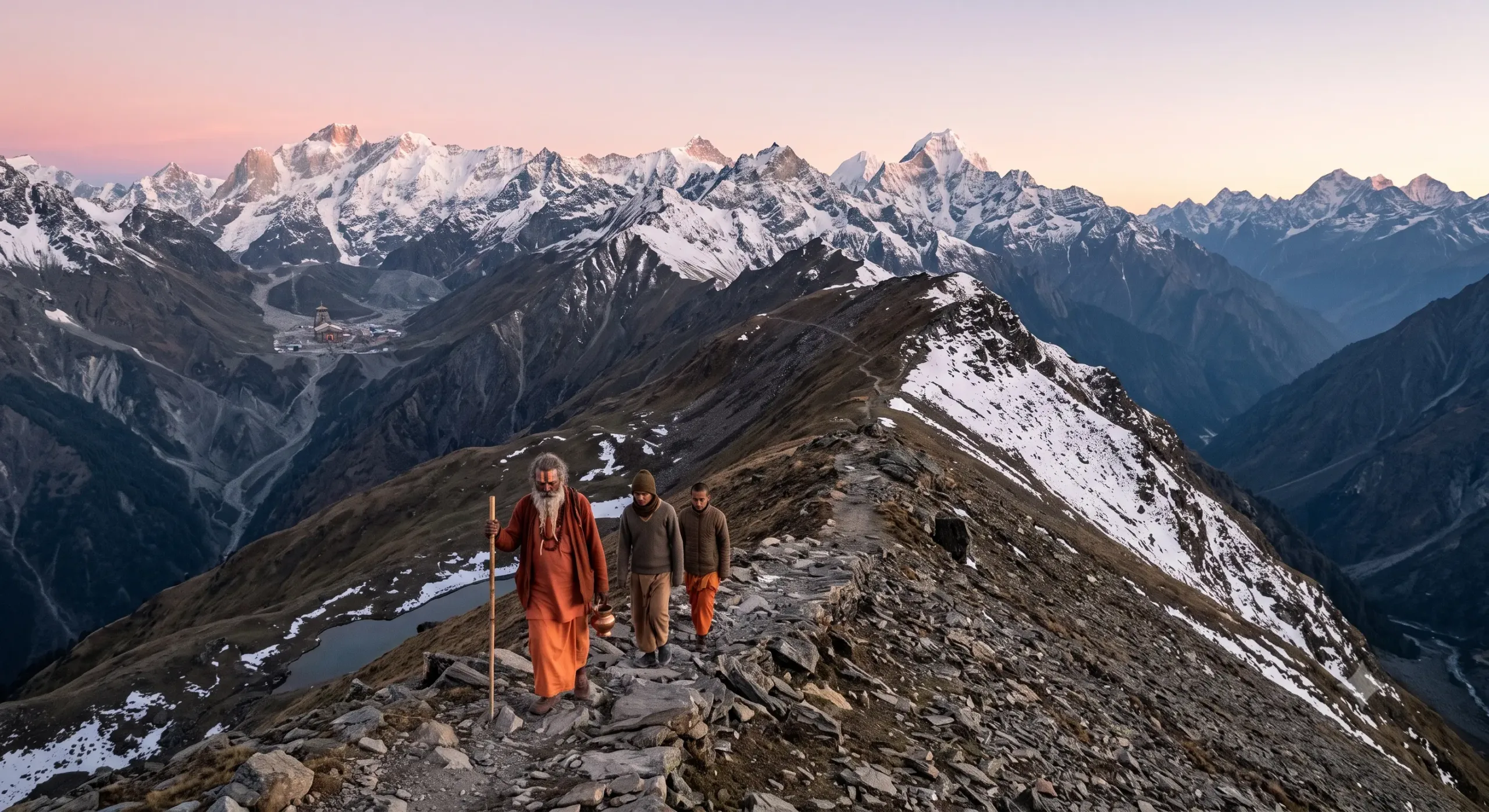
    Old Garhwali ascetics describe the route not as a single well-defined trail but as a sequence of glaciers, alpine meadows and high passes stretching across some of the most isolated terrain in the central Himalayas. Beginning beyond Kedarnath, the path is believed to pass through regions associated with Vasuki Tal, climb towards remote snowfields and eventually descend through glacial basins leading into the upper Alaknanda valley near Badrinath. 

    Notably, Modern mountaineering expeditions have identified difficult alpine crossings in this broader region, but there is no recognised pilgrimage trail linking the two temples directly. The legend therefore survives primarily as folklore. 

    What makes this forgotten path particularly fascinating is the role it plays in the spiritual imagination of the Himalayas. Ancient ascetics were rarely interested in the easiest route. Their journeys themselves formed part of their discipline. To cross glaciers, endure freezing winds and walk for days without encountering another human being was not considered hardship alone; it was a means of quieting the restless mind. The hidden route from Kedarnath to Badrinath therefore came to symbolise the inward path travelled by those who had already transcended the ordinary concerns of worldly life. 

    Several wandering monks have claimed over the centuries that certain Himalayan sadhus continued to use sections of this route during favourable weather, though such accounts remain impossible to verify. These narratives often describe isolated caves where unnamed yogis spent years in meditation, surviving on glacial water, wild herbs and offerings occasionally brought by shepherds. 

    Whether every account is historically accurate is less important than what they reveal about the Himalayan tradition itself. The mountains have always been imagined as preserving a spiritual world largely hidden from ordinary sight, a realm where renunciation continues quietly beyond the reach of history. 

    What do these two ‘Nath’ symbolise?

    Kedarnath represents vairagya, the path of renunciation embodied by Shiva. Badrinath represents dhyana, the path of contemplative preservation embodied by Narayana. To walk from Kedarnath to Badrinath is therefore to move from renunciation towards inner balance, from the fierce austerity of Mahadeva to the serene meditation of Vishnu. The physical trail becomes a metaphor for the evolution of consciousness itself. 

    Then this deeper meaning is reflected in the annual pilgrimage traditions of the Himalayas. Even though devotees travel by road today, many still consider it spiritually appropriate to visit 

    Kedarnath before Badrinath. Local priests often explain that one first seeks the blessings of Shiva, who removes ignorance and ego, before approaching Narayana, who grants wisdom and inner peace. 

    Modern satellite imagery, trekking surveys and geological studies reveal that the region between Kedarnath and Badrinath is among the most rugged anywhere in the Himalayas. 

    Massive glaciers, unstable moraines, avalanche-prone slopes and rapidly changing weather make direct travel extraordinarily hazardous. These findings help explain why no continuous pilgrimage route survives today. It is entirely possible that ancient shepherd tracks once crossed parts of this landscape before glacial movement, earthquakes and landslides gradually erased them. The Himalayas are geologically young mountains, constantly reshaping themselves through tectonic activity and erosion. Trails that existed a thousand years ago may no longer exist in recognisable form. 

    This meeting of geology and mythology is characteristic of the Himalayas. Science explains how landscapes evolve through natural processes; tradition preserves the meanings people discovered within those landscapes. The legend of the secret Kedar–Badri route may therefore contain memories of genuine high-altitude crossings transformed over centuries into sacred narrative. 

    The real path between Kedarnath and Badrinath lies within the seeker. 

  • Did you know Bengal once had its own airline? Here’s why it never took flight

    Did you know Bengal once had its own airline? Here’s why it never took flight

    Every once in a while, you stumble upon a story so unbelievable that you instinctively think, “How did I never know about this?” This is one of those stories.


    How did the Bengal Air story start?


    Nearly three decades ago, during the Communist Government, there was a bold move to start a regional airline in West Bengal. It was long before UDAN and the renewed interest in air connectivity between the east and the northeastern part of India that the state government had a vision of an airline that would do just that.
    The airline was called Bengal Air. But in 2026, that dead dream survives only as a rusting aircraft lying in a scrapyard near Sonipat, Haryana.
    Bengal Air recently made headlines after a YouTube video went viral, where Eastern India’s flying dream was spotted among other scrapped planes. The aircraft was carrying the registration VT-BAA.

    ALSO READ| Lok Sabha goes Gen Z: ‘Clock It’, ‘Delulu’ and ‘FOMO’ steal the spotlight during Exam Bill debate

    Back in 1998, when the Left Front government under Chief Minister Jyoti Basu was trying to revive Bengal’s industrial landscape, civil aviation emerged as one of the sectors the state wanted to explore. A consortium formed by the West Bengal Industrial Development Corporation (WBIDC) and Bengal Air Services Limited (BASL) proposed launching Bengal Air, a regional airline designed to improve connectivity across eastern and northeastern India.

    The plan was simple: to operate three Hawker Siddeley HS-748-2B turboprop aircraft, connecting Kolkata with cities such as Cooch Behar, Bagdogra, Shillong, Agartala, Jamshedpur, Patna, Ranchi, Bhubaneswar and Rourkela.
    To support operations, Bengal Air partnered with Nepal’s Necon Air, which agreed to provide technical expertise. Interestingly, both airlines carried remarkably similar Trishul logos on their aircraft tails. At first glance, they looked identical, although Necon Air’s logo included Lord Shiva’s damaru, while Bengal Air’s version featured only the trident.
    The aircraft themselves were to be acquired from Canadian company Dellair Trading Inc. Two of them, registered C-GBCY and C-GBCS (later identified as VT-BAB), were photographed waiting at Winnipeg International Airport in 2001, ready for delivery to India.
    But then, for reasons that have never been fully explained publicly, the project was called off. The proposed deal with Dellair collapsed before completion. The two aircraft in Canada never reached India.

    Where is that single Bengal Air aircraft now?


    Even that single aircraft never entered passenger service. Instead, it remained parked at Netaji Subhash Chandra Bose International Airport. Reports suggest that in 2001, the consortium approached the government once again, seeking ₹28 crore to revive the airline and begin operations. The proposal, however, failed to receive the necessary support.
    Then, the only Bengal Air aircraft was kept in an abandoned condition at the Dum Dum Airport, Kolkata, for almost 20 years until it was auctioned off as scrap in 2018.
    Today, the same aircraft is in a scrap yard near Sonipat in Haryana. It was bought by a businessman who specialises in the acquisition of retired aircraft and refurbishing them for commercial use as restaurants, theme parks or exhibition materials.
    Today, very few people remember Bengal Air. There are no airport terminals bearing its logo, no retired pilots sharing stories of its flights, and no passengers recalling journeys aboard its aircraft.
    Only a weathered fuselage with the words ‘Bengal Air’ painted across its side remains.