Tag: Yamuna pollution

  • Chhath Puja in Delhi: 3 Yamuna ghats offer relatively cleaner water, but none is safe for bathing

    Chhath Puja in Delhi: 3 Yamuna ghats offer relatively cleaner water, but none is safe for bathing

    As thousands of devotees prepare to offer arghya to the Sun God during Chhath Puja on November 15 and 16, concerns over the quality of Yamuna water in Delhi have resurfaced. An analysis of Delhi Pollution Control Committee (DPCC) data and satellite imagery by NDTV Datafy has found that none of the seven major riverbank ghats examined meets the government’s prescribed bathing water standards.

    However, three locations upstream of Wazirabad, namely Shyam Ghat, Sonia Vihar and Sur Ghat, have comparatively lower pollution levels than the four major ghats downstream. The findings highlight the sharp deterioration in water quality as the river passes through the city.

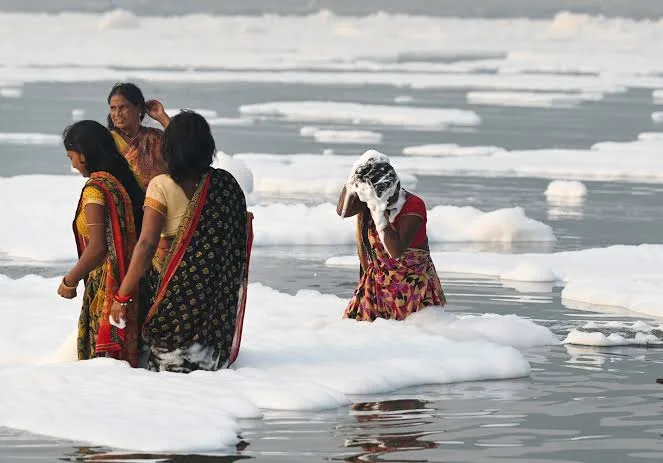
    For devotees observing Chhath Puja in Delhi, the findings are particularly significant because the rituals involve standing in the river during evening and morning prayers. Although the upstream locations are relatively less polluted, the analysis does not establish any of the seven ghats as safe for bathing.
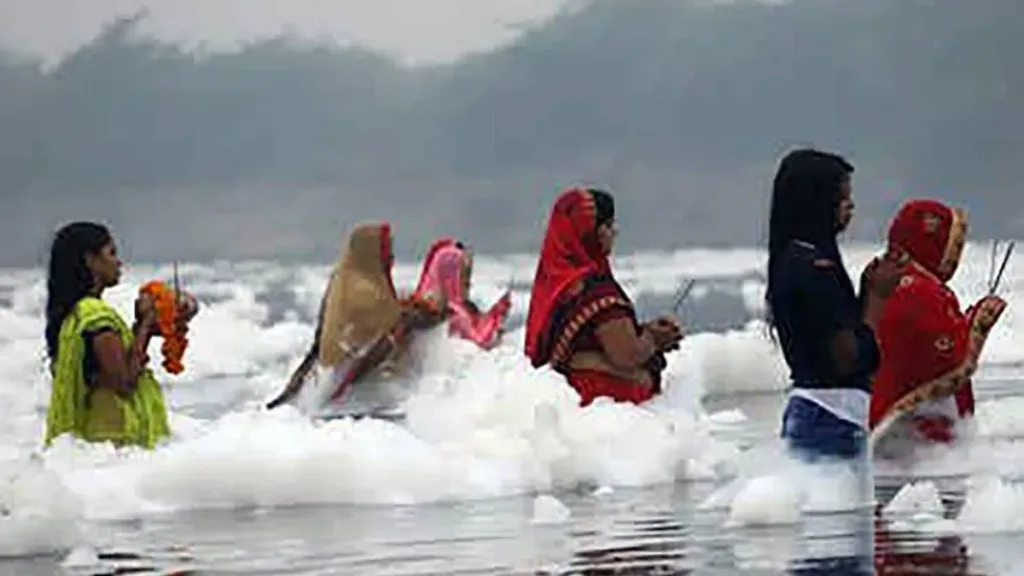
    As thousands of devotees prepare to offer arghya to the Sun God during Chhath Puja on November 15 and 16, concerns over the quality of Yamuna water in Delhi have resurfaced. (ANI)
    As thousands of devotees prepare to offer arghya to the Sun God during Chhath Puja on November 15 and 16, concerns over the quality of Yamuna water in Delhi have resurfaced. (ANI)

    What bathing water standards say about Yamuna pollution

    The Centre’s bathing water standards prescribe a biochemical oxygen demand (BOD) level of 3 milligrams per litre (mg/L) or less. BOD measures the amount of oxygen required by microorganisms to break down organic matter in water. Higher readings generally indicate greater organic pollution, much of which in the Yamuna is linked to sewage.

    The standards also specify limits for faecal coliform, bacteria associated with human and animal waste. The desirable level is below 500, while the count must not exceed 2,500. Elevated faecal coliform levels indicate possible contamination by disease-causing organisms and increase the risk of gastrointestinal, skin and eye infections if devotees bathe in this water during Chhath Puja.

    These parameters are important for assessing the risks faced by devotees entering the river during Chhath Puja in Delhi. Even where the water appears relatively clear, bacterial contamination may remain a concern.

    At the Wazirabad monitoring station, BOD levels are around one-third higher than the prescribed limit, while faecal coliform counts are more than twice the desirable level. This indicates that even the comparatively cleaner upstream stretch does not fully meet bathing water requirements.

    Also Read | IIT Roorkee student death puts campus mental health support under scrutiny as exams are postponed
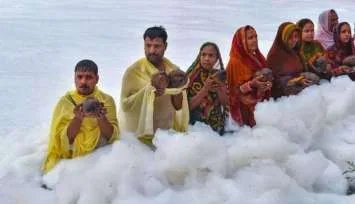
    At the Wazirabad monitoring station, BOD levels are around one-third higher than the prescribed limit, while faecal coliform counts are more than twice the desirable level. (ANI)
    At the Wazirabad monitoring station, BOD levels are around one-third higher than the prescribed limit, while faecal coliform counts are more than twice the desirable level, making it harmful for bathing during Chhath Puja. (ANI)

    3 Yamuna ghats have comparatively lower pollution levels

    Shyam Ghat, Sonia Vihar and Sur Ghat are situated between Palla, where the Yamuna enters Delhi, and Wazirabad. According to the analysis, BOD levels across this stretch range between 2 and 4 mg/L, while faecal coliform readings remain within the maximum permissible limit.

    Sur Ghat is located a few hundred metres downstream of the DPCC’s Wazirabad monitoring station. The pollution control body does not collect samples directly near Shyam Ghat or Sonia Vihar. However, both locations fall between its Palla and Wazirabad monitoring points.

    Satellite images analysed by NDTV Datafy also indicate that the water near Shyam Ghat and Sonia Vihar is comparatively clear, with lower algae levels similar to those observed at Sur Ghat.

    The three locations therefore emerge as relatively better options for devotees seeking to offer prayers near the Yamuna during Chhath Puja in Delhi. However, lower pollution does not mean that the water is completely safe. The Wazirabad readings show that even this stretch falls short of at least some prescribed bathing water standards.

    Also Read | PM Modi outlines 5 priorities for agriculture to achieve Viksit Bharat goal
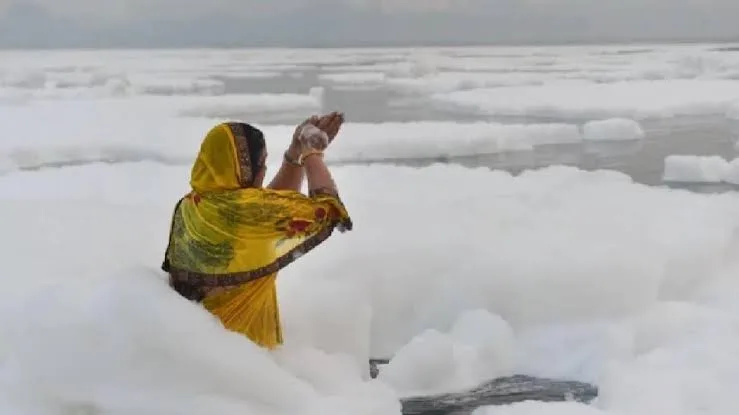
    As Chhath Puja in Delhi approaches, the findings underline the continuing challenge of Yamuna pollution. (ANI)
    As Chhath Puja in Delhi approaches, the findings underline the continuing challenge of Yamuna pollution. (ANI)

    Pollution rises sharply downstream of Wazirabad

    The situation changes considerably after the river passes Wazirabad. At the ISBT Bridge monitoring station, BOD levels rise from around 4 mg/L to 30 mg/L. Faecal coliform counts also increase sharply, from approximately 1,300 to 35,000.

    Vasudev Ghat and Nigambodh Ghat near Kashmere Gate, which are situated close to the ISBT Bridge monitoring station, record particularly high pollution levels. Their faecal coliform count is around 14 times the maximum permissible limit.

    ITO Chhath Ghat and Kalindi Kunj show comparatively lower readings than the two locations near ISBT Bridge. However, faecal coliform levels at these locations remain around seven to eight times the permissible limit, making them unsuitable for bathing under the prescribed standards.

    The analysis also points to a substantial increase in phosphate levels between Wazirabad and ISBT Bridge. The concentration rises approximately eightfold, providing nutrients that encourage algae growth.

    Satellite imagery from October, based on Sentinel-2 observations, reinforces the findings. The three upstream ghats have clearer water and weaker algae signals. Downstream of Wazirabad, the river appears murkier, while the algae signal is around three times stronger.

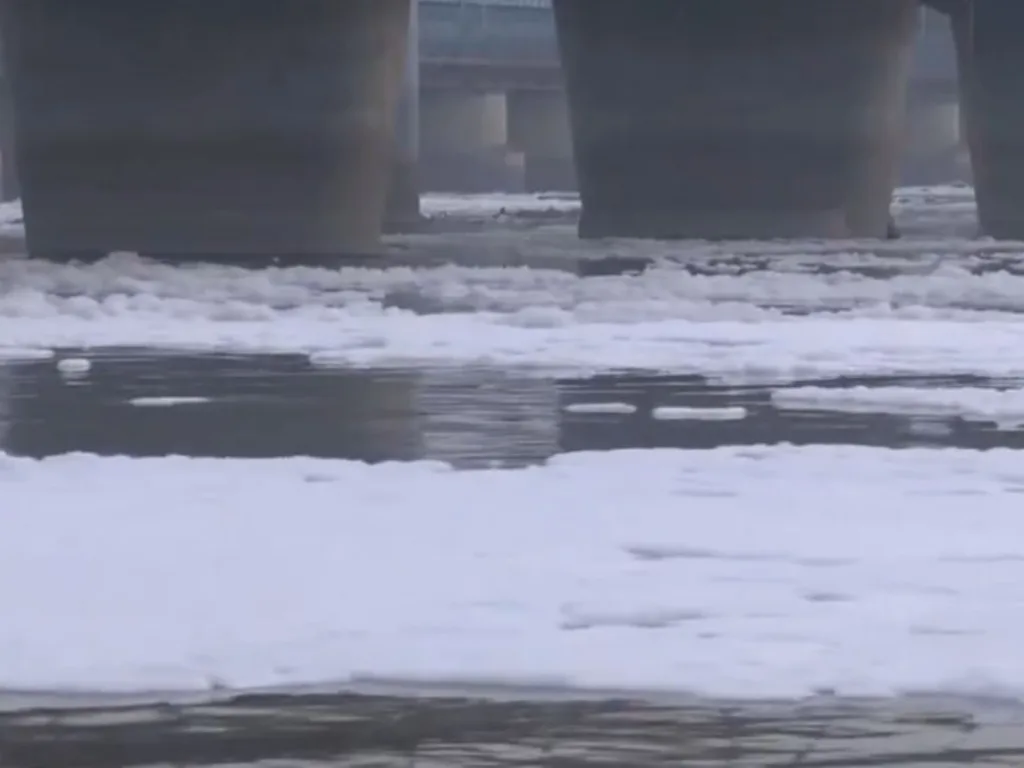
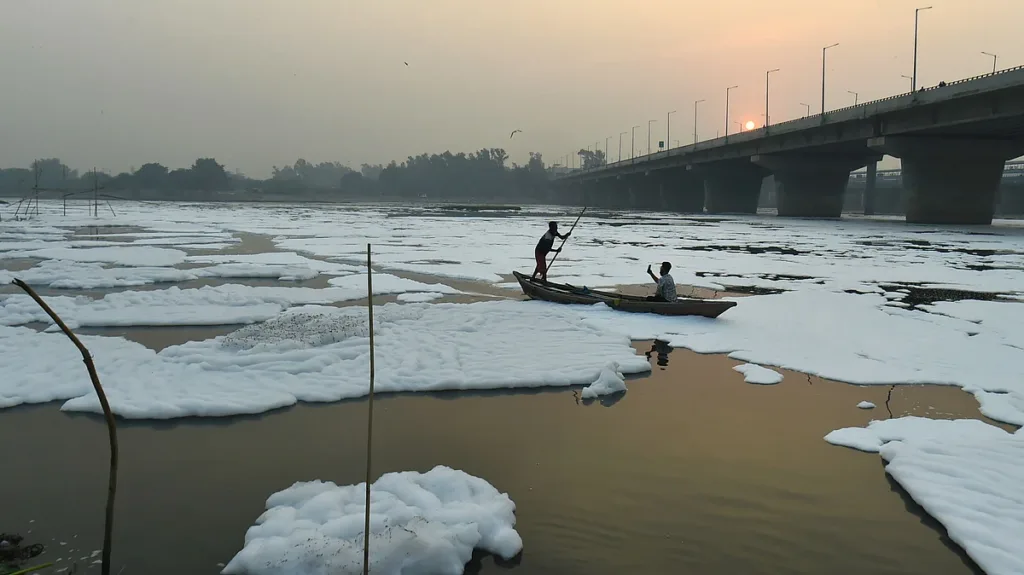
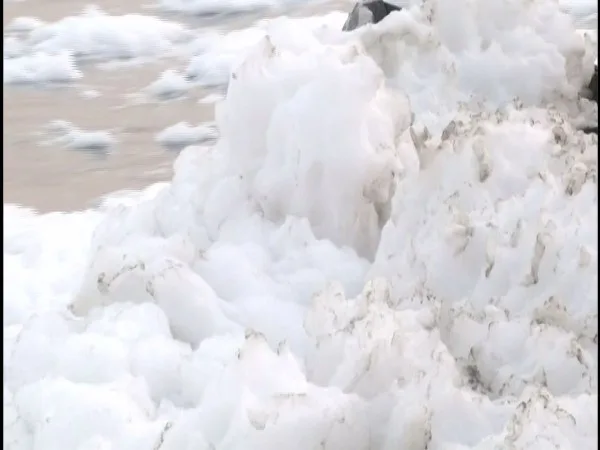
    Kalindi Kunj records the highest readings on both indicators, partly because relatively stagnant water and aquatic weeds behind the Okhla barrage can influence the measurements. The stretch has also been reported to have white toxic foam floating on the water’s surface.

    As Chhath Puja in Delhi approaches, the findings underline the continuing challenge of Yamuna pollution. While some upstream locations are relatively less contaminated, none of the seven major ghats assessed meets all the government’s bathing water requirements.
  • Yamuna pollution: Swedish firm explores sewage treatment partnership with Delhi government

    Yamuna pollution: Swedish firm explores sewage treatment partnership with Delhi government

    The return of thick white foam on the Yamuna near Kalindi Kunj has once again brought Delhi’s river pollution problem into focus. As workers struggle to clear the froth and prevent further contamination, a Swedish company specialising in sewage sludge management has approached the Delhi government, expressing interest in contributing to the clean-up effort.

    Representatives of the company recently met Delhi Water Minister and Delhi Jal Board (DJB) Chairman Parvesh Verma at the Delhi Secretariat. According to the government, the discussions centred on exploring possible areas of cooperation in sewage sludge management. While no formal agreement has been announced, the development comes at a time when Yamuna pollution continues to expose the limitations of the capital’s existing waste management infrastructure.

    The white foam, which frequently appears along the river during winter, is associated with detergents, untreated sewage and other pollutants entering the water. However, the problem extends well beyond the visible froth. Several drains continue to discharge contaminated water into the river, raising questions about the effectiveness of Delhi’s sewage treatment and monitoring systems.

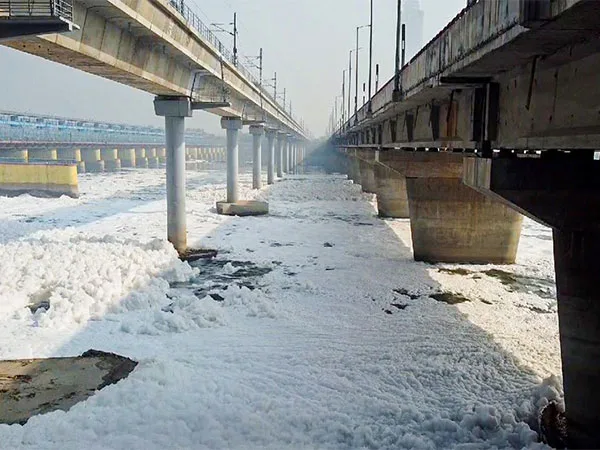
    The return of thick white foam on the Yamuna near Kalindi Kunj has once again brought Delhi's river pollution problem into focus. (ANI)
    The return of thick white foam on the Yamuna near Kalindi Kunj has once again brought Delhi’s river pollution problem into focus. (ANI)

    Yamuna pollution exposes gaps in Delhi’s sewage management

    A recent study by the Central Pollution Control Board (CPCB), released last month, identified 12 drains as major pollution hotspots along the Yamuna. The assessment also found waste dumped at 32 locations, while arrangements to prevent contaminated water from entering the river were either inadequate or non-functional at 11 drains.

    The extent of Yamuna pollution becomes particularly evident when water quality readings are compared across different locations in Delhi.

    At Palla, where the river enters the national capital, the biochemical oxygen demand (BOD) level remained within the prescribed bathing-water limit in September. However, by the time the Yamuna reached the ISBT Bridge, the reading had increased to 30 mg per litre, ten times the permissible limit.

    BOD measures the amount of oxygen required by microorganisms to break down organic matter in water. Higher readings indicate greater organic contamination and can adversely affect aquatic life. The sharp increase in BOD levels highlights how the river’s condition deteriorates as it passes through Delhi.

    The recurring foam near Kalindi Kunj is therefore only one visible symptom of a much larger environmental crisis. Unless untreated sewage, industrial discharge and accumulated sludge are addressed at their sources, temporary measures to remove the froth are unlikely to bring lasting improvements.

    Also Read | BJP links Neha Bora’s temple remarks to Congress, revives ‘anti-Hindu’ row

    A recent study by the Central Pollution Control Board (CPCB), released last month, identified 12 drains as major pollution hotspots along the Yamuna. (ANI)
    A recent study by the Central Pollution Control Board (CPCB), released last month, identified 12 drains as major pollution hotspots along the Yamuna. (ANI)

    Delhi government turns to international expertise

    The Swedish company’s interest is part of the Delhi government’s broader attempt to bring international technology and expertise into its Yamuna rejuvenation programme.

    Verma said cleaning the river would require the best available technology, global expertise and sustained efforts. He also stressed that the government’s approach would extend beyond the river itself to improving Delhi’s overall water supply and sewage management infrastructure.

    The capital has already experimented with foreign technology to tackle its drainage problems. In January, the government deployed a Finnish-made Watermaster machine in the Najafgarh drain to remove accumulated silt, sludge and weeds.

    Verma has previously stated that the Najafgarh drain accounts for nearly 70 per cent of the pollution entering the Yamuna, making its rehabilitation a crucial part of the clean-up strategy.

    Japan has also emerged as an important international partner in Delhi’s water infrastructure development. On October 22, four water and sewage facilities constructed or upgraded with assistance from the Japan International Cooperation Agency (JICA) were inaugurated.

    The projects, involving an investment of approximately Rs 1,810 crore, include sewage treatment facilities at Okhla, Rithala and Kondli. These installations are expected to strengthen the city’s capacity to process wastewater before it enters natural water bodies.

    Also Read | Rahul Gandhi renews debate challenge as Amit Shah offers Parliament session

    Apart from the Swedish and Japanese initiatives, the Asian Development Bank (ADB) is associated with a proposed Rs 2,574-crore project aimed at improving water supply in areas served by the Wazirabad water treatment plant. (ANI)
    Apart from the Swedish and Japanese initiatives, the Asian Development Bank (ADB) is associated with a proposed Rs 2,574-crore project aimed at improving water supply in areas served by the Wazirabad water treatment plant. (ANI)

    Yamuna cleaning target set for May 2029

    Apart from the Swedish and Japanese initiatives, the Asian Development Bank (ADB) is associated with a proposed Rs 2,574-crore project aimed at improving water supply in areas served by the Wazirabad water treatment plant.

    The involvement of multiple international agencies reflects the scale of investment and technical intervention required to address Yamuna pollution. However, the effectiveness of these initiatives will ultimately depend on whether Delhi can improve sewage collection, treatment capacity and the management of its extensive network of drains.

    The BJP-led Delhi government has set May 2029 as its target for cleaning the Yamuna’s stretch through the capital. The deadline places considerable responsibility on the administration to ensure that ongoing infrastructure projects translate into measurable improvements in water quality.

    The proposed Swedish collaboration could bring additional expertise in handling sewage sludge, an important but often overlooked component of wastewater management. However, discussions are still at a preliminary stage, and the government has not announced a formal agreement or a detailed implementation plan.

    For Delhi, the challenge is no longer simply removing the white froth whenever it appears. The real test will be preventing untreated waste from reaching the river in the first place. Without sustained action against the sources of contamination, the Yamuna’s recurring pollution crisis is unlikely to disappear, regardless of how many international partnerships the capital pursues.