Category: West Bengal

  • Why is Purulia Bengal’s new cyber fraud hotspot?

    Why is Purulia Bengal’s new cyber fraud hotspot?

    Purulia, West Bengal’s westernmost district bordering Jharkhand, has emerged as a new area of concern in the state’s fight against cybercrime after police detected a sharp rise in suspicious financial activity. The discovery has prompted an investigation into a network allegedly involved in routing and withdrawing funds linked to suspected digital fraud.

    The case came to light after the Purulia Cybercrime Police Station noticed an unusual increase in suspicious activity through the Pratibimb application on the National Coordination Portal. The system is used by law enforcement agencies to identify and track digital and financial footprints associated with cybercrime.

    Following verification through the National Cybercrime Reporting Portal, police took suo motu cognisance of the matter and registered an FIR against unidentified persons. The move allowed investigators to begin proceedings without waiting for a separate complaint from an individual victim.
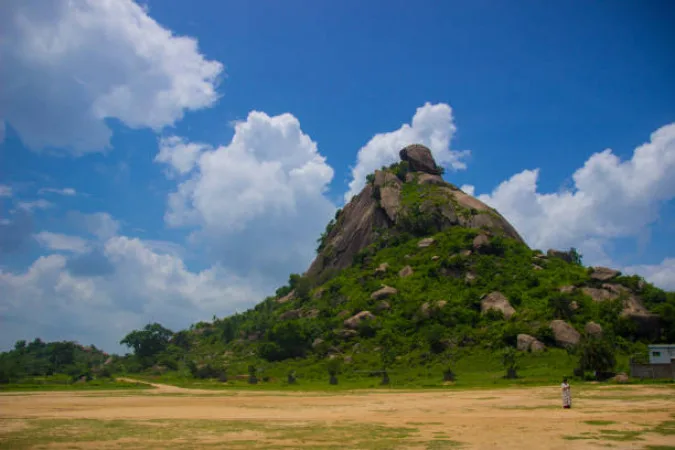
    Purulia, West Bengal's westernmost district bordering Jharkhand, has emerged as a new area of concern in the state's fight against cybercrime after police detected a sharp rise in suspicious financial activity. (Tripadvisor)
    Purulia, West Bengal’s westernmost district bordering Jharkhand, has emerged as a new area of concern in the state’s fight against cybercrime after police detected a sharp rise in suspicious financial activity. (Tripadvisor)

    Purulia cyber fraud case exposes suspicious money trail

    The investigation has revealed a series of financial transactions that police suspect are connected to cyber fraud. During a single month, suspicious activity was allegedly linked to withdrawals from 39 ATMs and 14 mutual bank accounts.

    Investigators also identified two transactions involving allegedly fraudulent cheques. According to the police complaint, the money was routed through several bank accounts before being withdrawn, indicating the possible use of multiple accounts as conduits for illicit funds.

    The FIR was lodged by Sub-Inspector Zaheeruddin of the Purulia Cybercrime Police Station. Case number 24/26 has been registered against unidentified individuals under provisions relating to alleged digital theft, identity fraud and financial offences.

    The discovery has placed Purulia cyber fraud under increased scrutiny as investigators attempt to determine who controlled the accounts, where the money originated and whether the transactions are connected to a wider organised network.

    Police are also expected to examine the digital and banking records associated with the accounts and ATM withdrawals to establish the identities of the people involved.

    Also Read | What are the flashpoints behind India’s growing debate over political legitimacy?
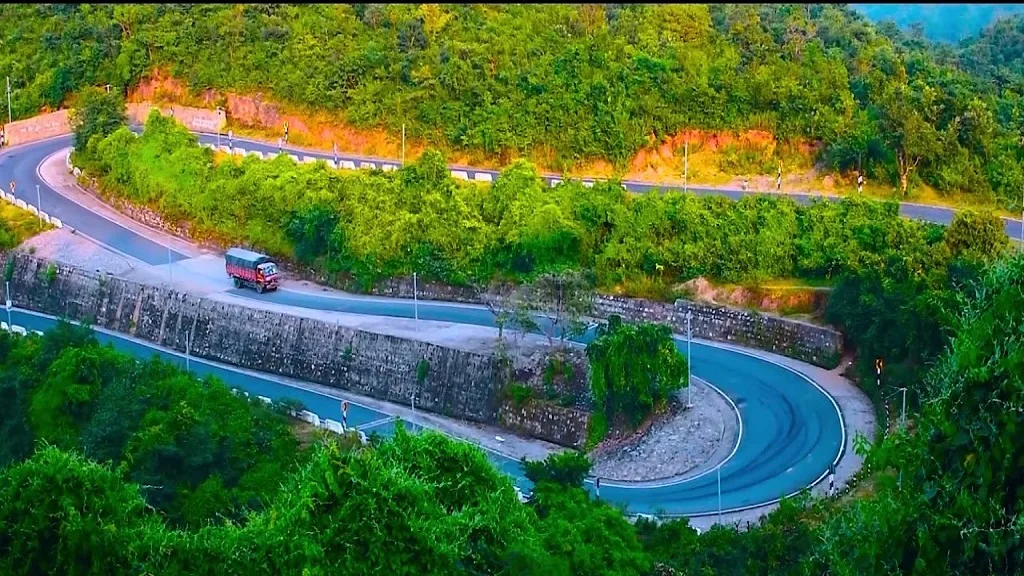
    The investigation has revealed a series of financial transactions that police suspect are connected to cyber fraud. (ANI)
    The investigation has revealed a series of financial transactions that police suspect are connected to cyber fraud. (ANI)

    How the Pratibimb app helped police detect the activity

    A key part of the investigation was the use of the Pratibimb app through the National Coordination Portal. The technology enables police agencies to examine digital and financial information and identify patterns that may otherwise remain scattered across individual complaints.

    In the Purulia case, the unusual concentration of suspicious transactions reportedly triggered attention at the cybercrime police station. Officials subsequently cross-checked the information with records available through the National Cybercrime Reporting Portal.

    The use of such systems reflects a broader shift in India’s cybercrime investigations. Instead of relying exclusively on complaints filed by individual victims, law enforcement agencies are increasingly using centralised databases and analytical tools to identify suspicious patterns.

    The Purulia cyber fraud investigation is therefore significant not only because of the number of accounts and ATM withdrawals involved but also because of how the alleged network was detected.

    Once suspicious activity is identified, investigators can follow the financial trail through bank accounts, transaction records, ATM locations and other available digital evidence. Such information can help establish links between apparently unrelated transactions and identify possible members of a larger fraud network.

    Also Read | Keep your friends close, but your enemies closer? The implications of TMC-CPI(M) dialogue amid EC row
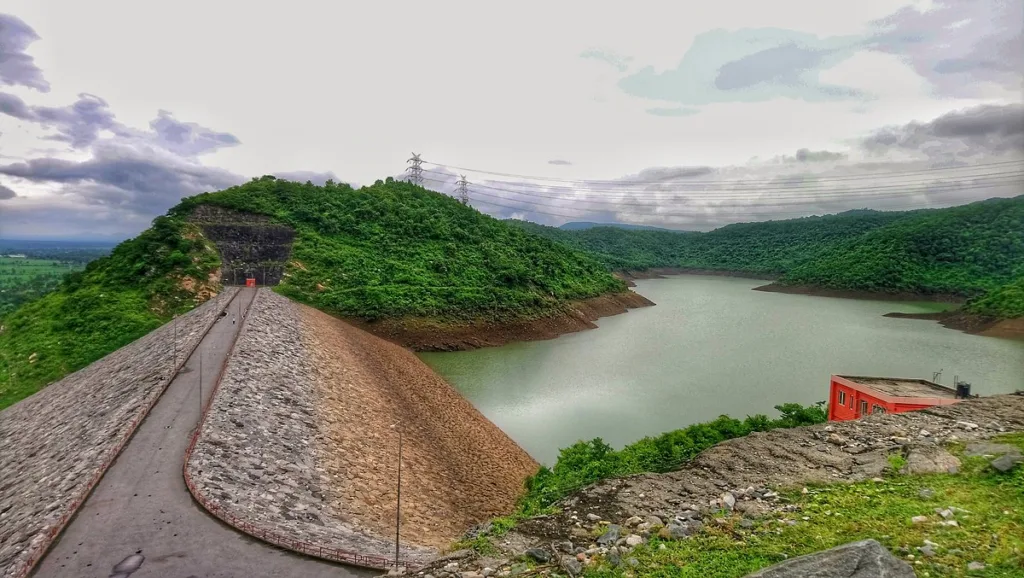
    A key part of the investigation was the use of the Pratibimb app through the National Coordination Portal. (ANI)
    A key part of the investigation was the use of the Pratibimb app through the National Coordination Portal. (ANI)

    Purulia cyber fraud case highlights wider cybercrime challenge

    The developments in Purulia come against the backdrop of a rapidly expanding cybercrime problem across India. Official figures cited in the report show that 5,387,905 cyber fraud complaints had been registered through the National Cybercrime Reporting Portal up to July this year.

    The sheer volume of complaints has increased the importance of technology-assisted investigations. Tools such as Pratibimb and the National Coordination Portal are being used to map suspected fraud networks, trace digital money trails and help authorities identify emerging hotspots.

    In Purulia, the latest investigation has raised concerns that the district is becoming a key transit point for money generated through online scams. However, police will need to establish the full scale and structure of the alleged network before determining its precise role.

    The case also highlights how cyber fraud increasingly depends on financial intermediaries rather than a single point of withdrawal. Multiple accounts, rapid ATM transactions and fraudulent banking instruments can make it difficult to trace stolen money once it enters the financial system.

    As investigators pursue the individuals behind the transactions, the Purulia cyber fraud case is likely to draw attention to the growing role of coordinated digital policing in West Bengal. It also underlines the need for banks, law enforcement agencies and digital platforms to respond quickly when unusual financial patterns emerge.

    The investigation remains ongoing, and the allegations against the unidentified suspects are yet to be tested in court. For now, the suspicious transactions detected in Purulia provide another indication of the increasingly complex methods being used to move money in cyber-enabled financial crimes.
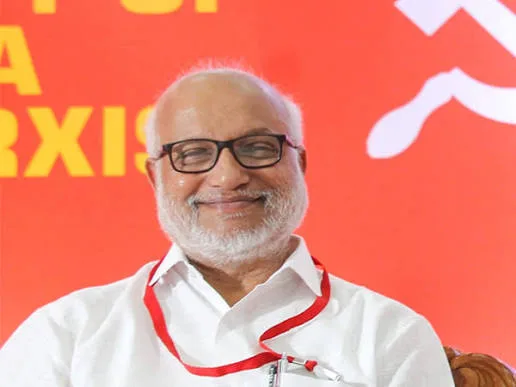
  • Keep your friends close, but your enemies closer? The implications of TMC-CPI(M) dialogue amid EC row

    Keep your friends close, but your enemies closer? The implications of TMC-CPI(M) dialogue amid EC row

    Mamata Banerjee’s reported outreach to the CPI(M) has opened an unusual political channel in West Bengal, where the Trinamool Congress and the Left party have remained bitter rivals for decades. The Mamata CPI(M) outreach comes amid an escalating Opposition campaign over the Election Commission’s Special Intensive Revision (SIR) of electoral rolls and reports of disagreements within the poll panel.

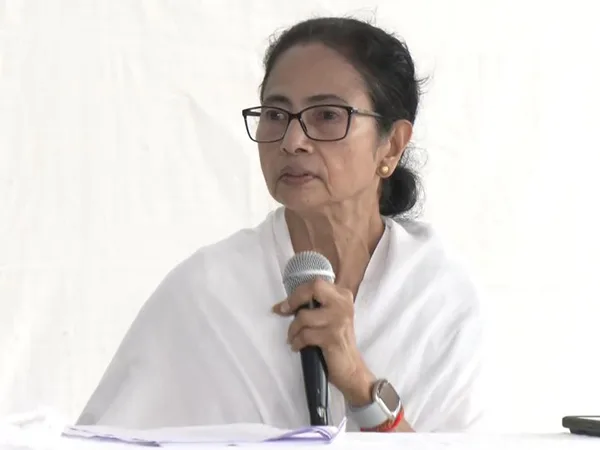
    Banerjee and CPI(M) general secretary MA Baby spoke over the phone on September 25 after the Left leader wrote to Opposition parties seeking a joint response to developments concerning the Election Commission. According to reports, the two leaders discussed the need for Opposition parties to work together on the issue. Banerjee also spoke to Congress leader Rahul Gandhi and urged an early meeting of INDIA bloc parties.

    The development has attracted attention because TMC and CPI(M) have historically been fierce opponents in Bengal. However, CPI(M) leader MA Baby has described the current initiative as issue-based and said it was too early to say whether it would lead to any wider political understanding.

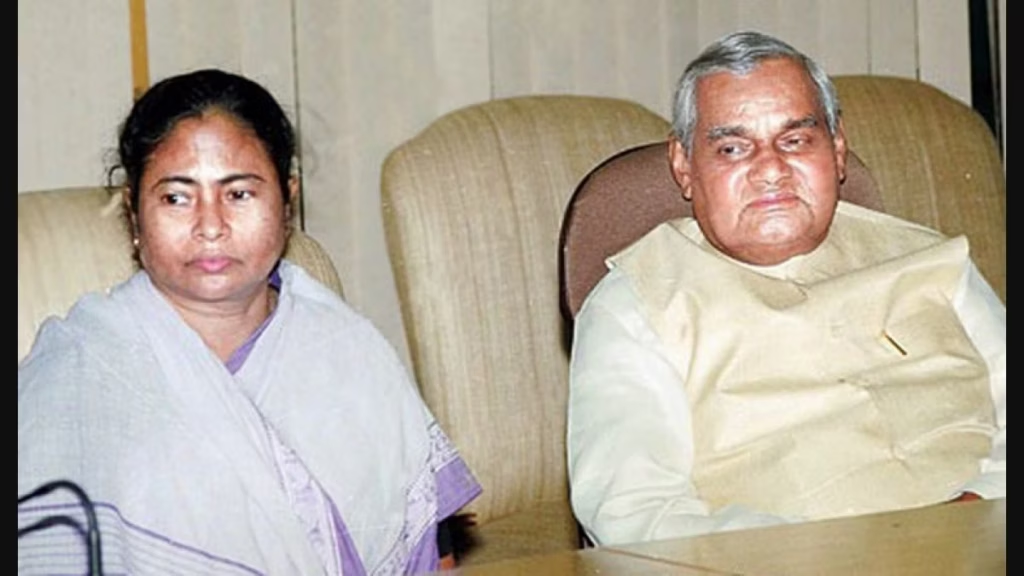
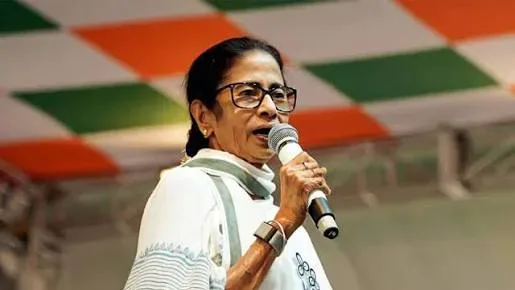
    Mamata Banerjee and CPI(M) General Secretary MA Baby spoke over the phone on September 25 after the Left leader wrote to Opposition parties seeking a joint response to developments concerning the Election Commission. (ANI)
    Mamata Banerjee and CPI(M) General Secretary MA Baby spoke over the phone on September 25 after the Left leader wrote to Opposition parties seeking a joint response to developments concerning the Election Commission. (ANI)

    Mamata CPI(M) outreach begins with the Election Commission row

    The immediate reason for the Mamata CPI(M) outreach is the controversy surrounding the SIR exercise and concerns raised by Opposition parties about the functioning of the Election Commission.

    The Indian Express reported that Election Commissioners Sukhbir Singh Sandhu and Vivek Joshi had recorded objections on multiple occasions over decisions related to the SIR process. The Election Commission acknowledged the existence of the written notes but described them as part of its decision-making process.

    Against this backdrop, Baby wrote to Banerjee and other Opposition leaders, calling for a meeting. Banerjee subsequently responded positively and spoke to Baby by phone.

    The CPI(M) has sought broader Opposition participation rather than limiting the initiative to its own party or the INDIA bloc. Baby told The Federal that the Left was looking for the widest possible cooperation among non-NDA parties on the issue.

    This explains why the present Mamata CPI(M) outreach is being viewed primarily through the lens of the Election Commission dispute rather than as a formal alliance announcement.

    Also Read | TMC rebel MLAs: Supreme Court sets October 8 timeline from Bengal Speaker

    The outreach between CPI(M) and the TMC is creating the fuss because the TMC took the help of the BJP to counter the very same Left Front government led by the CPI(M). (ANI)
    The outreach between CPI(M) and the TMC is creating the fuss because the TMC took the help of the BJP to counter the very same Left Front government led by the CPI(M). (ANI)

    Mamata-CPI(M) outreach revives an old political contradiction

    The latest contact between the two parties is notable because TMC and CPI(M) have spent years attacking each other in Bengal politics. Mamata Banerjee built the TMC as the principal political force challenging the Left’s long rule in the state, eventually defeating the CPM-led Left Front in 2011.

    The outreach between CPI(M) and the TMC is creating the fuss because the TMC took the help of the BJP to counter the very same Left Front government led by the CPI(M). The TMC-BJP alliance began shortly after Mamata Banerjee founded the Trinamool Congress (TMC) in 1998. Seeking to challenge West Bengal’s dominant Left Front, the TMC joined the BJP-led National Democratic Alliance (NDA).

    Between 1999 and 2006, the TMC remained a key NDA partner. Banerjee served as the Union Railway Minister and later the Coal and Mines Minister under Prime Minister Atal Bihari Vajpayee.

    The parties TMC and BJP jointly contested the 1998, 1999, and 2004 Lok Sabha elections, alongside the 2006 state assembly polls. Following electoral setbacks, the TMC exited the NDA in 2006. The former allies later became fierce regional rivals

    The political relationship remained adversarial with the CPI(M) after the TMC came to power. Even though both parties are part of the broader INDIA bloc at the national level, they have maintained separate political strategies in West Bengal.

    The present Mamata CPI(M) outreach therefore represents a tactical convergence on a specific issue rather than confirmation of a new electoral alliance.

    Political analyst Sumantra Bose, speaking to Open Magazine, argued that the SIR controversy and state-level electoral politics should be treated as separate questions. He said the developments concerning the Election Commission could provide grounds for cooperation between the two parties, while their interests in West Bengal remained substantially different.

    Bose also described both the CPM and Congress as parties that have been trying to rebuild their organisational presence in Bengal. His comments are an assessment of the state’s political situation, rather than evidence of a formal arrangement between the parties.

    Also Read | Mamata Banerjee sharpens attack on SIR, backs key Opposition moves

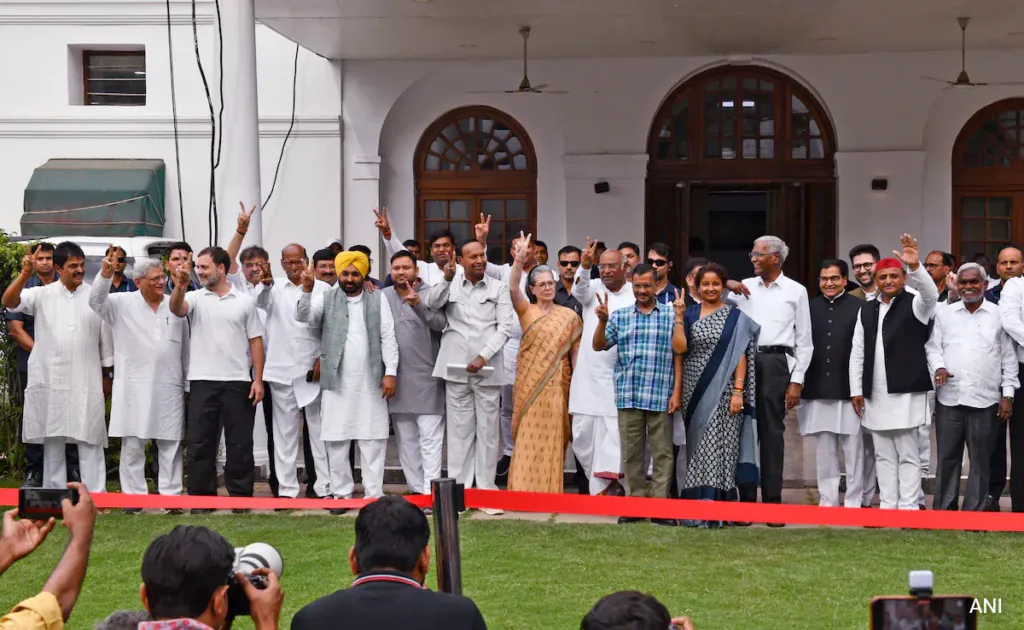
    The immediate political test for the Mamata CPI(M) outreach is likely to be the wider Opposition meeting scheduled in Delhi on September 30. (ANI)
    The immediate political test for the Mamata CPI(M) outreach is likely to be the wider Opposition meeting scheduled in Delhi on September 30. (ANI)

    What the Mamata CPI(M) outreach means for the INDIA bloc

    The immediate political test for the Mamata CPI(M) outreach is likely to be the wider Opposition meeting scheduled in Delhi on September 30. Banerjee and TMC MP Abhishek Banerjee are expected to attend the meeting, which is set to discuss the Election Commission and SIR.

    The CPI(M) has also reached out beyond the INDIA bloc. Baby said the Left had contacted several non-NDA parties as part of its effort to build a broader response to the Election Commission issue.

    For Banerjee, the immediate focus remains opposition to the Election Commission’s actions and the SIR process. She has publicly criticised Chief Election Commissioner Gyanesh Kumar and alleged large-scale deletions from electoral rolls, claims that remain part of the ongoing political dispute.

    The BJP, meanwhile, has criticised Banerjee’s engagement with the CPI(M). West Bengal minister Dilip Ghosh said the political circumstances had changed and accused Banerjee of seeking a larger role within the Opposition camp. Those remarks represent the BJP’s political interpretation of the development.

    It is not yet clear whether the Mamata-CPI(M) outreach remains confined to the Election Commission issue or develops into broader coordination in Bengal. For now, the evidence points to communication and issue-based cooperation, rather than a declared electoral alliance.

    The September 30 INDIA bloc meeting and subsequent protests are likely to provide a clearer indication of whether the current contact produces sustained coordination between the two long-time rivals.

  • TMC rebel MLAs: Supreme Court sets October 8 timeline from Bengal Speaker

    TMC rebel MLAs: Supreme Court sets October 8 timeline from Bengal Speaker

    The Supreme Court on Monday said West Bengal Assembly Speaker Rathindra Nath Bose has time until October 8 to decide disqualification petitions filed against 10 rebel Trinamool Congress (TMC) MLAs.

    The petitions were filed on July 8 by TMC leader Sohandeb Chattopadhyay.

    A three-judge bench headed by Chief Justice of India Surya Kant and comprising Justices Joymalya Bagchi and V Mohana referred to the Supreme Court’s 2020 ruling on disqualification proceedings while dealing with the matter.

    Also Read | BJP’s Bengal poll bill exceeds Congress’ spend across five polls

    The court said the Speaker, while deciding such petitions, acts as a tribunal and is expected to take a decision within a reasonable period.

    What the Supreme Court said on TMC rebel MLAs

    The bench relied on its earlier judgment in Keisham Meghachandra Singh v Speaker, Manipur Legislative Assembly, decided in 2020. In that case, the Supreme Court had held that a Speaker exercising powers over disqualification petitions acts as a tribunal.

    The court noted that the 2020 judgment had prescribed a three-month period for the Manipur Speaker to decide the pending disqualification petitions.

    Applying that principle to the West Bengal case, the bench said the Speaker should follow the same timeline.

    The bench stated, “We have every reason to believe that the Speaker is fully cognisant” of the principles laid down by the court and would make efforts to take an appropriate decision within the prescribed period.

    The Supreme Court ultimately disposed of the petition after taking the earlier ruling into account. It did not keep the matter pending despite a request from the petitioner’s side.

    Who filed the disqualification petitions?

    The petition before the Supreme Court was filed by senior TMC leader Sohandeb Chattopadhyay. He had also filed the disqualification petitions against the 10 rebel MLAs in the West Bengal Assembly.

    The legislators named in the proceedings include Ritabrata Banerjee, Arup Roy, Firhad Hakim, Sandipan Saha, Akhuruzzaman Ansari, Shiuli Saha, Sabina Yasmin, Biplab Mitra, Javed Khan and Rathin Ghosh.

    Senior advocate Kapil Sibal appeared for Chattopadhyay. He asked the Supreme Court to keep the matter pending, pointing out that similar issues were arising in several proceedings.

    The bench, however, declined that request. During the hearing, the court remarked that there were several proceedings in which judicial timelines had not been followed, saying it was “gloriously in breach” of such timelines.

    What is the TMC rebel MLAs dispute?

    The dispute follows the political developments after the 2026 West Bengal Assembly election. According to the Hindustan Times report, around 58 newly elected TMC MLAs broke away from the party and backed Ritabrata Banerjee as Leader of the Opposition. The group described itself as the “real TMC”.

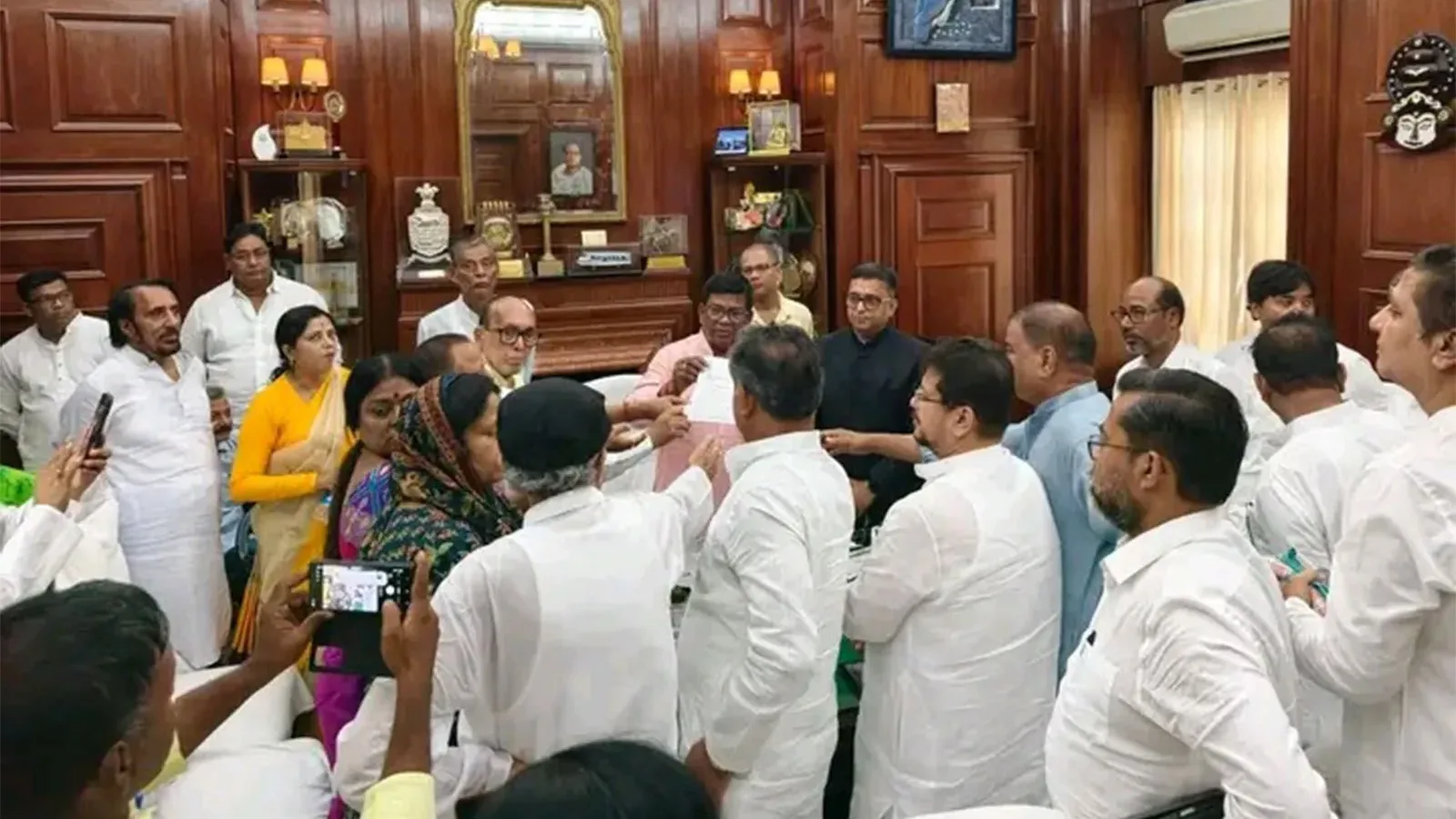
    SC sets October 8 timeline for rebel MLAs’ pleas.
    SC sets October 8 timeline for rebel MLAs’ pleas.(ANI)

    The TMC subsequently expelled Ritabrata Banerjee and Sandipan Saha, citing “anti-party” activities. The disqualification proceedings against the 10 MLAs form part of the wider dispute involving the rival TMC factions.

    The Supreme Court’s order does not itself decide whether any of the 10 MLAs should be disqualified. That decision remains with the West Bengal Assembly Speaker under the applicable proceedings.

    Separate case involving 20 rebel TMC MPs

    The West Bengal Assembly case is separate from another disqualification matter involving 20 rebel TMC Members of Parliament.

    TMC general secretary Abhishek Banerjee has filed a separate petition in the Supreme Court seeking an expedited decision on disqualification petitions against the 20 rebel MPs pending before the Lok Sabha Speaker.

    Also Read | Chief Minister Suvendu Adhikari promises major investments in Bengal; Adani hospital project set to begin 

    The October 8 timeline discussed in Monday’s order concerns the 10 rebel MLAs in the West Bengal Assembly. It should not be confused with the separate proceedings involving the 20 rebel MPs in the Lok Sabha.

    Reports on the latter indicate that October 8 is the deadline given to the MPs to submit their replies, rather than a court-imposed deadline for the Lok Sabha Speaker to deliver a final decision.

    The Supreme Court’s latest order therefore places the focus on the West Bengal Assembly Speaker’s handling of the 10 disqualification petitions, with October 8 now marking the timeline referred to by the court.

  • Mamata Banerjee sharpens attack on SIR, backs key Opposition moves

    Mamata Banerjee sharpens attack on SIR, backs key Opposition moves

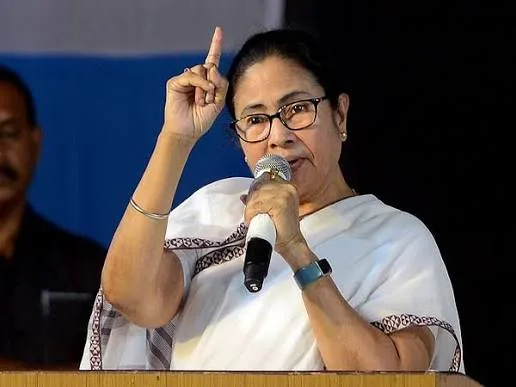
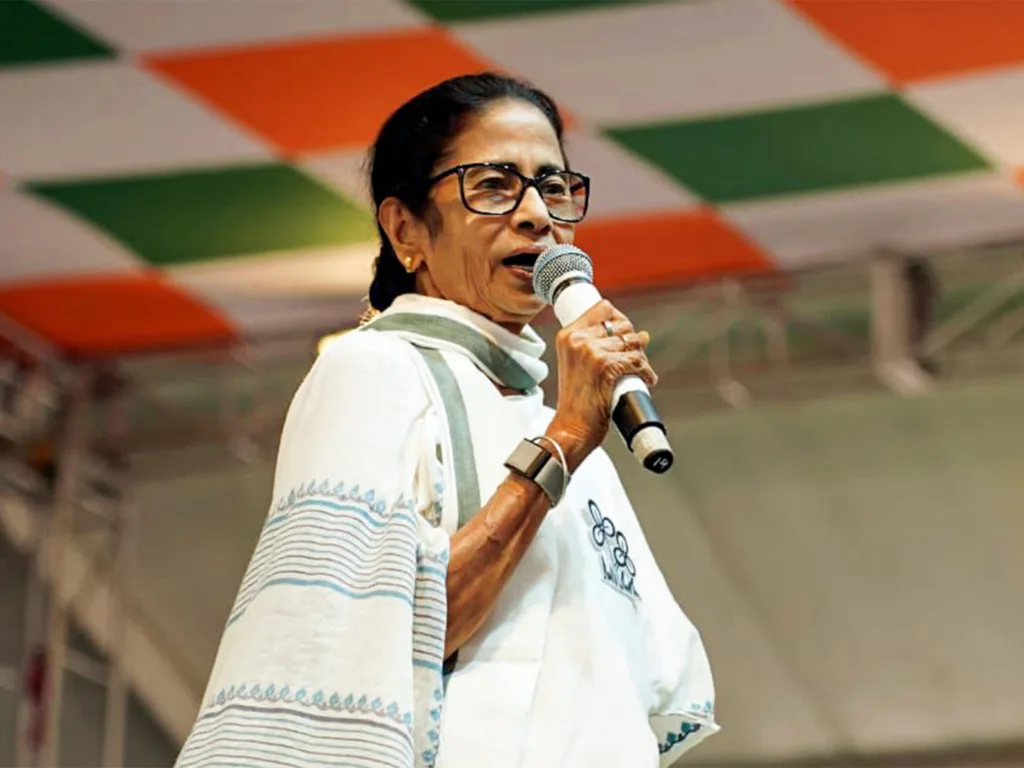
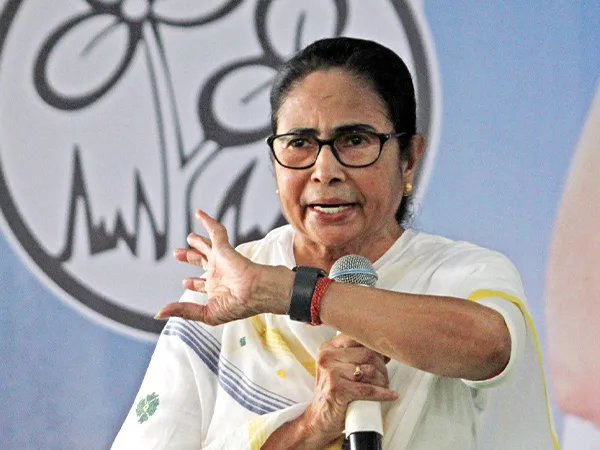
    Trinamool Congress chief Mamata Banerjee has stepped up her criticism of the Election Commission and called for greater coordination among Opposition parties amid the ongoing Special Intensive Revision (SIR) controversy. Addressing a rally at Serampore in West Bengal’s Hooghly district on Saturday, Banerjee said an INDIA bloc meeting could be held in Delhi on September 30 to discuss the issue and decide the Opposition’s next course of action.

    The Mamata Banerjee SIR row has also brought the TMC closer to the CPI(M) on the specific issue of the Election Commission, despite the parties’ long-standing political rivalry in West Bengal. Banerjee said she had reached out to Congress leader Rahul Gandhi and argued that Opposition parties should come together over what she described as a common public issue.

    Trinamool Congress chief Mamata Banerjee has stepped up her criticism of the Election Commission and called for greater coordination among Opposition parties amid the ongoing Special Intensive Revision (SIR) controversy. (ANI)
    Trinamool Congress chief Mamata Banerjee has stepped up her criticism of the Election Commission and called for greater coordination among Opposition parties amid the ongoing Special Intensive Revision (SIR) controversy. (ANI)

    Mamata Banerjee SIR row brings TMC and Left into talks

    The Mamata Banerjee SIR row has led to an unusual channel of communication between the TMC and CPI(M), two parties that have been major political opponents in West Bengal. CPI(M) general secretary M A Baby had written to Opposition leaders seeking discussions on concerns surrounding the Election Commission and the electoral process.

    According to reports, Banerjee and Baby also spoke over the phone on Friday. The discussions centred on the need for Opposition parties to coordinate their response to the controversy surrounding the poll panel and the SIR exercise.

    The proposed INDIA bloc meeting is expected to take place at the Constitution Club of India in New Delhi on September 30. India Today reported that senior Opposition leaders are expected to attend, although the final list of participants had not been confirmed as of September 26.

    The discussions come after reports of differences within the Election Commission over aspects of the SIR process. An Indian Express report said Election Commissioners Sukhbir Singh Sandhu and Vivek Joshi had raised objections on several occasions concerning decisions and orders linked to the exercise.

    Also Read | Prashant Kishor’s Jan Suraaj eyes Delhi after Bankipur bypoll win

    The Mamata Banerjee SIR row has led to an unusual channel of communication between the TMC and CPI(M), two parties that have been major political opponents in West Bengal. (ANI)
    The Mamata Banerjee SIR row has led to an unusual channel of communication between the TMC and CPI(M), two parties that have been major political opponents in West Bengal. (ANI)

    Mamata Banerjee SIR row puts Opposition unity in focus

    The Mamata Banerjee SIR row has given the Opposition an issue around which parties with otherwise different political positions are attempting to coordinate. At the Serampore rally, Banerjee said ideological differences should not prevent parties from joining hands when they are addressing what they consider common public concerns.

    “There is no need to see who is red, who is blue or who is yellow,” Banerjee said, referring to the different political identities within the Opposition. She said her focus would be on the issue rather than which party had raised it.

    The proposed September 30 meeting would come a day after the Congress Working Committee is scheduled to discuss the Election Commission issue. Opposition parties have also been discussing their response to Chief Election Commissioner Gyanesh Kumar and the SIR process.

    Banerjee has previously made stronger demands over the matter. On September 23, she sought fresh Assembly elections in West Bengal using the pre-SIR electoral rolls and called for action against Kumar, alleging irregularities in the electoral process. The Election Commission has disputed those claims in its position on the revision exercise.

    Also Read | Cyclone Arnab explained: Why it’s actually a deep depression

    The Mamata Banerjee SIR row has given the Opposition an issue around which parties with otherwise different political positions are attempting to coordinate. (ANI)
    The Mamata Banerjee SIR row has given the Opposition an issue around which parties with otherwise different political positions are attempting to coordinate. (ANI)

    Mamata Banerjee SIR row adds a new Bengal political equation

    The Mamata Banerjee SIR row has also opened a fresh line of communication between parties that have spent decades contesting each other in Bengal. The TMC ended the Left Front’s 34-year rule in 2011, while the BJP subsequently emerged as the principal challenger to the TMC in the state.

    The TMC and CPI(M), along with other Opposition parties, have separately maintained differences over electoral strategies and political priorities. The INDIA bloc itself was formed in 2023 ahead of the 2024 Lok Sabha elections, bringing together parties with varying ideological positions and competing regional interests.

    Against that background, coordination over the Election Commission represents a specific issue on which these parties are seeking common ground. Moneycontrol reported that Opposition parties were discussing a coordinated response and that the September 30 meeting could form part of wider efforts concerning the CEC and SIR.

    Banerjee also raised allegations concerning an attack on TMC leader Kunal Ghosh and claimed that leaders associated with her faction had faced restrictions while travelling to the Serampore rally. These allegations were made by Banerjee during her address and remain part of the broader political confrontation in Bengal.

    The immediate focus, however, remains the Election Commission and the SIR exercise. The proposed INDIA bloc meeting on September 30 is expected to allow Opposition parties to discuss their respective concerns and decide whether they can pursue a coordinated course of action. The Election Commission has maintained that differing views and observations can form part of institutional deliberations and has defended the legal basis of its orders.

    The Mamata Banerjee SIR row therefore continues to develop on two fronts, with the electoral-roll controversy driving Opposition coordination nationally while also creating a temporary point of engagement between long-time political rivals in West Bengal.

  • BJP’s Bengal poll bill exceeds Congress’ spend across five polls

    BJP’s Bengal poll bill exceeds Congress’ spend across five polls

    The Bharatiya Janata Party (BJP) spent ₹286.99 crore on the West Bengal Assembly election alone, exceeding the ₹248.55 crore spent by the Congress across five elections, according to expenditure statements filed with the Election Commission.

    The figures cover the Assembly elections held in West Bengal, Assam, Kerala, Tamil Nadu and Puducherry earlier this year. Across the five polls, the BJP’s expenditure through its central office stood at ₹529.38 crore, with West Bengal accounting for more than half of the total.

    Also Read | India Space Force: Why India may need a separate space command?

    In Bengal, the BJP reported ₹217.16 crore on general campaigning and another ₹69.83 crore on candidates and related expenses.

    How much did BJP spend in the Bengal election?

    The BJP’s Bengal expenditure of ₹286.99 crore was divided between party campaigning and candidate-related expenses.

    Of the total, ₹217.16 crore went towards general campaigning, while ₹69.83 crore was spent on candidates. The figures were included in expenditure statements submitted to the Election Commission after the polls.

    Election Commission expenditure statements show the BJP spent ₹286.99 crore on West Bengal
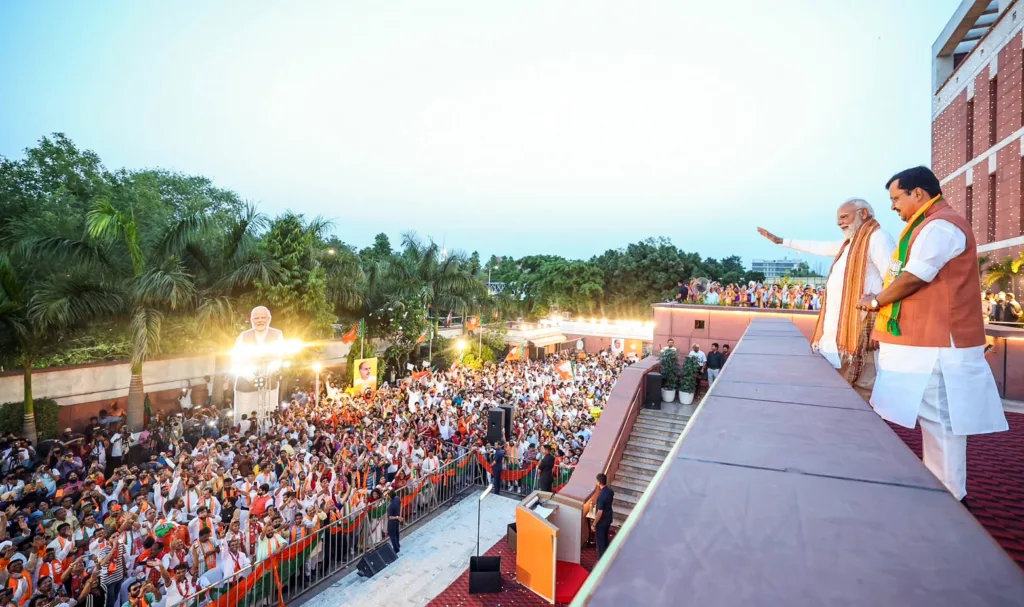
    Prime Minister Narendra Modi and BJP National President Nitin Nabin at BJP headquarters to celebrate victory with BJP supporters / ANI

    The BJP’s expenditure in the other four elections stood at ₹96.27 crore in Assam, ₹82.67 crore in Kerala, ₹51.56 crore in Tamil Nadu and ₹11.90 crore in Puducherry, taking its combined five-election expenditure to ₹529.38 crore.

    Election expenditure statements submitted by recognised political parties include spending on areas such as campaigning, travel, advertisements, rallies and campaign material.

    What was Congress’ total election spending?

    The Congress reported ₹248.55 crore in expenditure across the five elections.

    Of this, ₹143 crore was spent on general campaigning, while ₹105.55 crore went towards candidates and related expenses, according to the filings.

    ECI dissent report sparks Opposition attack as poll panel rejects formal dissent claim. (ANI)
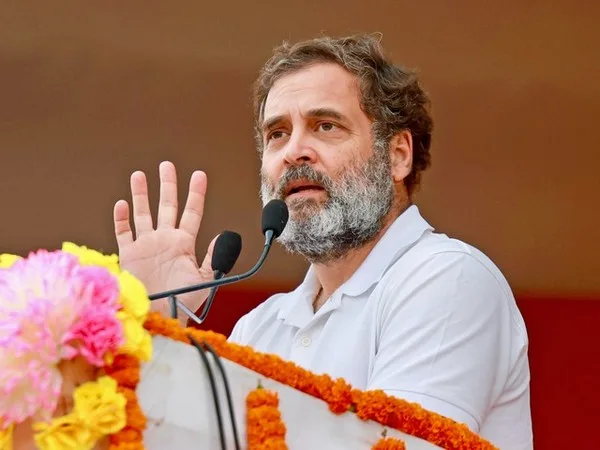
    Congress leader Rahul Gandhi addresses the crowd (ANI)

    West Bengal accounted for ₹42.08 crore of the Congress’ reported expenditure through its central headquarters and state unit. This included ₹12.96 crore on general campaigning and ₹29.12 crore on candidates and related expenses.

    The Congress spent more than the BJP in Kerala, reporting ₹105.34 crore compared with the BJP’s ₹82.67 crore. Of the Congress’ Kerala expenditure, ₹71.30 crore went towards general campaigning and ₹34.05 crore towards candidates.

    How did the BJP’s spending compare across the five states?


    State/UT BJP expenditure


    West Bengal ₹286.99 crore
    Assam ₹96.27 crore
    Kerala ₹82.67 crore
    Tamil Nadu ₹51.56 crore
    Puducherry ₹11.90 crore
    Total ₹529.38 crore

    The Bengal figure alone was about ₹38.44 crore higher than the Congress’ combined ₹248.55 crore expenditure across all five elections.

    BJP spent ₹286.99 crore on Bengal polls, EC data shows.
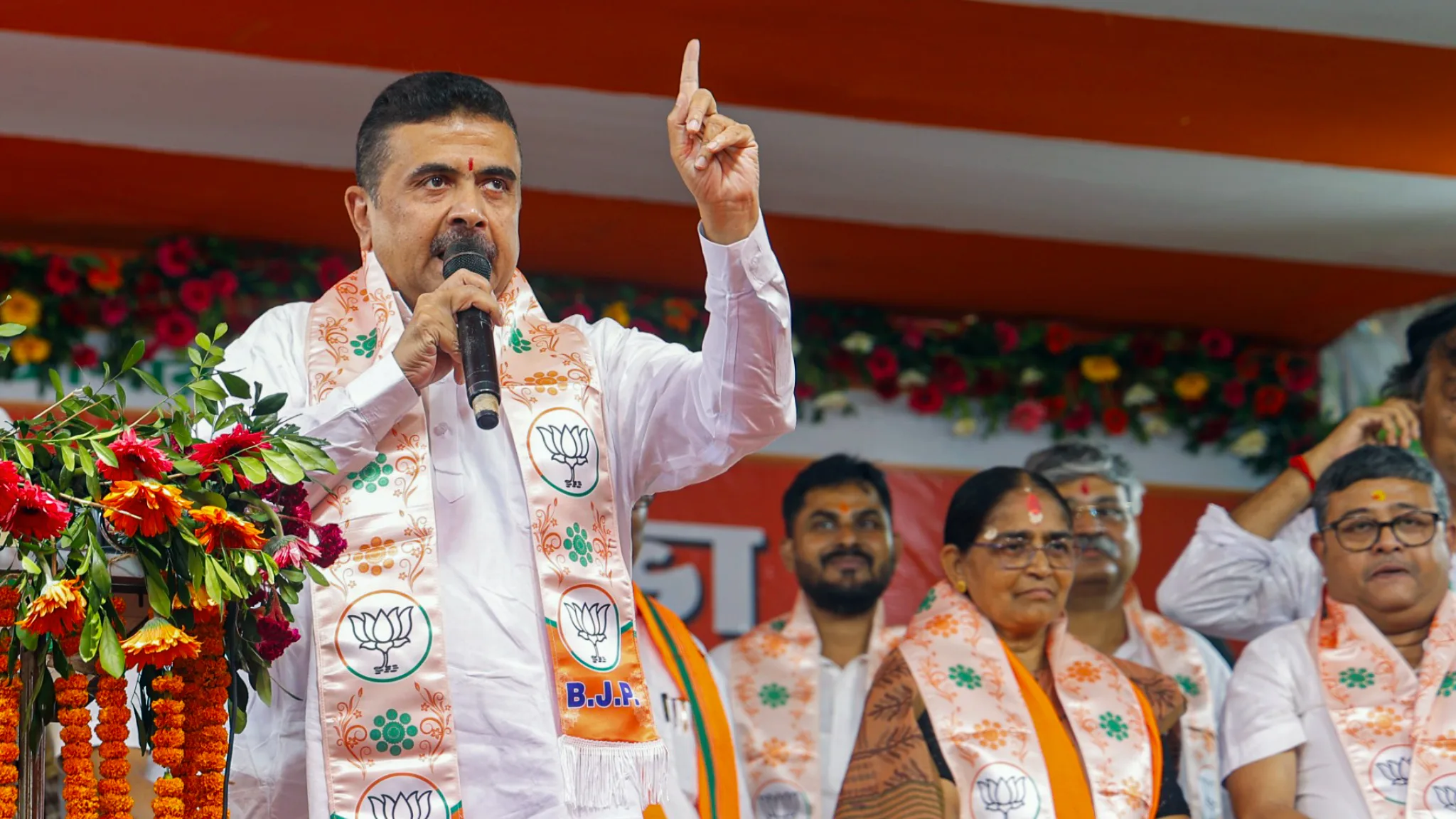
    West Bengal Chief Minister Suvendu Adhikari (ANI Photo)

    The comparison is based on party expenditure statements filed with the Election Commission and reflects reported expenditure, not the total spending by every organisational unit or candidate unless included in the relevant filings.

    What do the filings show about party finances?

    The filings also provide a picture of the parties’ finances during the election period.

    The BJP’s central headquarters received ₹1,472.8 crore during the election period, according to the figures cited by PTI. Its central office reported a closing balance of ₹7,627.2 crore, up from ₹6,722.6 crore when the elections were announced.

    The Congress reported ₹207.17 crore in receipts across its headquarters and five state units. Its combined balance declined from about ₹169.06 crore to ₹103.2 crore during the period, according to the same filings.

    Also Read | Amazon joins India’s quick-commerce race with a $3 billion war chest

    The CPI(M), meanwhile, reported consolidated expenditure of ₹39.04 crore across the five elections. Its Kerala state unit reported ₹28.60 crore, while its West Bengal unit reported ₹8.23 crore.

    The Trinamool Congress’ expenditure statement for the West Bengal election had not been made public in the source data at the time of reporting.

  • Chief Minister Suvendu Adhikari promises major investments in Bengal; Adani hospital project set to begin 

    Chief Minister Suvendu Adhikari promises major investments in Bengal; Adani hospital project set to begin 

    West Bengal Chief Minister Suvendu Adhikari on Tuesday said the state could see major investments from leading industrial groups, while indicating that the government was working to bring more big businesses to Bengal.

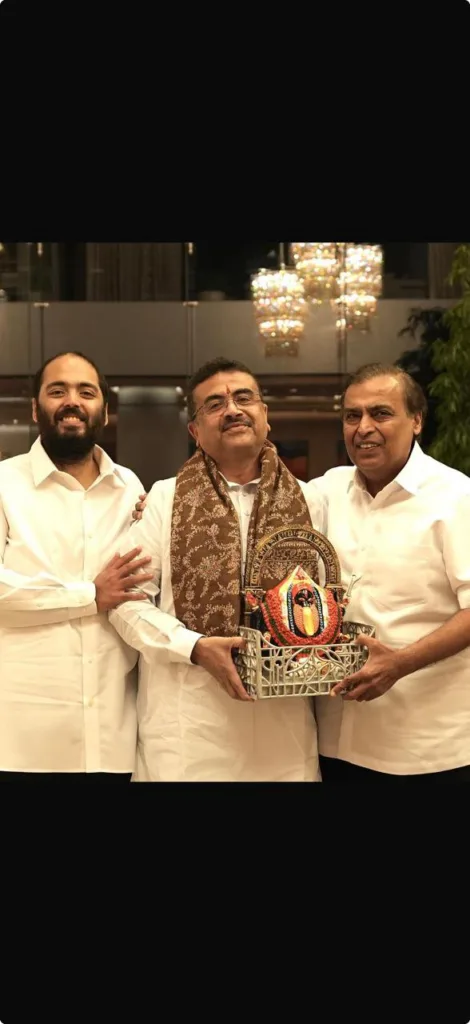
    Speaking to reporters in Cooch Behar, Adhikari referred to Prime Minister Narendra Modi’s message of “talk less and work more” while discussing his government’s efforts to attract investment. His remarks came a day after he met industrialist Mukesh Ambani and his son Anant Ambani in Mumbai. Recent reports said investment opportunities and the expansion of Reliance’s presence in West Bengal were discussed during the meeting. 

    Suvendu Adhikari hints at Ambani development

    Adhikari suggested that his meeting with the Ambanis could lead to a development in Bengal, although he did not disclose details.

    “I received an invitation from Anant Ambani to attend their Ganpati festival. I couldn’t make it last week, but yesterday I visited their home, performed Aarti at their temple, and had dinner with Mukesh ji and Anant ji. You will have to wait and watch what happens,” Adhikari told reporters in Cooch Behar.

    The meeting was part of the state government’s efforts to attract fresh industrial investment. Reports said discussions included opportunities for Reliance to expand its business activities in Bengal. 

    West Bengal Cm Suvendu Adhikari with Mukhesh and Anant Ambani
    West Bengal Cm Suvendu Adhikari with Mukhesh and Anant Ambani. Credit: X/Suvendu Adhikari

    ‘There will be huge investments in Bengal’

    Adhikari said major investors would be brought to the state and claimed that Bengal would receive substantial investment.

    “There will be huge investments in Bengal. All major investors will be here. The Communists and previous chief minister Mamata (Banerjee) have caused massive damage to the state. The entire country is ready to support the BJP government to get Bengal back on its feet. I have got this commitment from everybody,” Adhikari said.

    Also Read | Will West Bengal’s new land reforms make it easier to set up businesses? Exploring

    His comments form part of the state government’s broader push to attract large industrial projects and position West Bengal as an investment destination. The government has also announced plans to provide land to 33 industries before Durga Puja. 

    Adani hospital project in New Town

    Adhikari also said the groundbreaking ceremony for the Adani Group’s proposed hospital in Kolkata’s New Town would take place soon, with Gautam Adani expected to attend.

    The proposed facility is a 2,000-bed hospital, with the foundation stone ceremony scheduled for September 24, according to recent reports. 

    Also Read | West Bengal 933 schools with no students under government review; might hand buildings to other depts

    The developments involving the Ambani and Adani groups come as the Bengal government steps up its outreach to major corporate groups. The focus remains on attracting investment and expanding industrial activity across the state.

    This version targets Suvendu Adhikari, Bengal investment, Mukesh Ambani, Anant Ambani, Adani Group and New Town hospital as the main SEO keywords while keeping the political claims clearly attributed.

  • West Bengal 933 schools with no students under government review; might hand buildings to other depts

    West Bengal 933 schools with no students under government review; might hand buildings to other depts

    The West Bengal government has formed a committee to decide the future of 933 primary and high schools that have reported no students for several years. School Education Minister Dipak Burman said the government is examining what can be done with the buildings, land, playgrounds and other assets of these institutions.

    The move comes amid a wider review of zero-enrolment schools across the state. According to the latest UDISE+ data, 4,133 schools in West Bengal reported zero enrolment during the 2025-26 academic year, with 19,502 teachers listed against them. The state has ordered physical verification to establish the actual status of these schools and assess their infrastructure.

    What Will Happen To 933 Schools?

    Speaking to reporters at his residence in Falakata, Alipurduar district, Burman said several of the 933 schools had effectively stopped functioning because they had remained without students for years.

    Also Read | Who is Akash? Senior Maoist leader Asim Mondal held in West Bengal

    Their unused infrastructure has now become part of the government’s discussion. One proposal is to allow other government departments to use the properties where appropriate.

    “The thought is whether there can be an interdepartmental exchange. We will give it to the government and they will decide next,” Burman said, adding that the education department would examine the proposal.

    The plan does not mean that every zero-enrolment school will automatically be closed or converted. The government is also carrying out physical verification because UDISE+ records may not always reflect the situation on the ground.

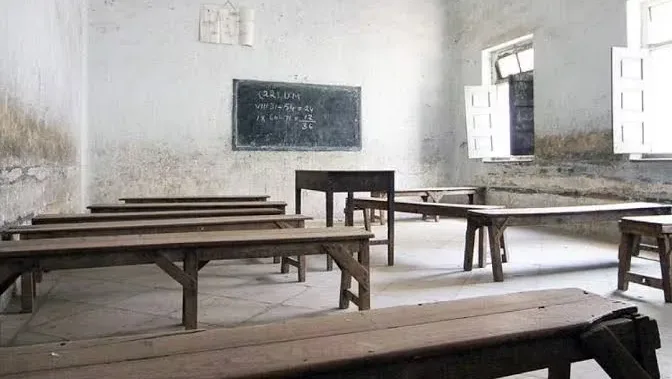
    Picture of an empty classroom
    Picture of an empty classroom | Representational Image

    West Bengal Zero-Enrolment Schools Under Review

    The 933 schools are part of a much larger group of institutions listed with zero enrolment. The latest UDISE+ figures put the number in West Bengal at 4,133.

    The government has directed district administrations to inspect these schools and prepare details about their land, buildings and other facilities. The exercise is also intended to determine whether unused infrastructure could serve other public purposes.

    The issue is closely linked to the uneven distribution of teachers across schools. Government data shows that 6,769 schools have only one teacher, serving around 2.3 lakh students. A teacher deployment policy allows staff and sanctioned posts from zero or very low-enrolment schools to be shifted to institutions facing shortages.

    Also Read | 32 Kolkata tourists missing in Nepal: Here are all the helpline numbers for you

    Remote Schools In West Bengal To Continue

    Burman said the government would not apply the same approach to schools in remote locations where there are few students and no nearby alternatives.

    “Even if there are schools in remote areas where students are less, population is less and no other school nearby, that school will continue to function. But, if we see that there are a number of schools nearby, we will have to think about these,” he said.

    On teacher shortages, Burman said the ongoing recruitment process was expected to improve staffing levels.

    “The process is going on and hopefully … by 2027 academic year, every school will have the required teachers,” he said.

    Teacher Recruitment And School Staffing

    The staffing issue comes after the Supreme Court’s April 2025 judgment cancelled the appointments of 25,753 teaching and non-teaching staff recruited through the 2016 process. A fresh recruitment exercise has since been initiated, including more than 35,000 assistant-teacher vacancies for Classes 9 to 12, according to the information provided.

    For now, the committee’s review of the 933 schools will determine how their unused properties are handled, while remote schools and institutions serving communities without nearby alternatives remain under consideration for continued operation.

    FAQs

    Why is West Bengal reviewing 933 schools?

    The schools have had no students for several years, leaving their buildings, land and other assets largely unused.

    Will remote-area schools be closed?

    No. Minister Dipak Burman said remote schools with few students and no nearby alternatives will continue to function.

  • Who is Akash? Senior Maoist leader Asim Mondal held in West Bengal

    Who is Akash? Senior Maoist leader Asim Mondal held in West Bengal

    Senior CPI (Maoist) leader Asim Mondal alias Akash has been arrested by the Kolkata Police Special Task Force (STF) in West Bengal, bringing to an end more than 15 years of his reported underground activity across inter-state forest areas.

    Mondal, a member of the CPI (Maoist) Central Committee and secretary of its West Bengal State Committee-I, was arrested from the Patashpur area of Purba Medinipur on Thursday, September 17.

    Also Read | 32 Kolkata tourists missing in Nepal: Here are all the helpline numbers for you

    The arrest came after police received information about his movement in the area. Kolkata Police Commissioner Ajay Nand said the operation followed intelligence inputs about Mondal’s presence. He was travelling in a rickshaw in the Polerhat area of Bhangar when an STF team picked him up.

    Who is Asim Mondal alias Akash?

    Asim Mondal, who is from Paschim Medinipur, is reported to have joined the Maoist movement during his student years in the 1980s.

    Mondal later became a Central Committee member and secretary of the CPI (Maoist) West Bengal State Committee-I. He was also associated with the organisation’s activities in the Bengal-Jharkhand region.

    Mondal was reportedly associated with senior Maoist commander Kishenji and emerged as a prominent figure in the organisation’s Bengal network after Kishenji’s death in 2011.

    Police said Mondal had remained active in Jharkhand after a large number of Maoists moved out of Bengal in 2012. Kolkata Police Commissioner Ajay Nand said he had not been making movements in West Bengal but was active in Jharkhand and was allegedly involved in multiple cases.

    Why was Asim Mondal wanted by security agencies?

    Mondal was wanted in several criminal cases across multiple states. Reports put the number of cases at more than a dozen in Bengal, while another report citing police sources said he was wanted in nearly 55 cases across three states.

    He also carried a substantial reward for information leading to his arrest. According to The Indian Express, Jharkhand had announced a ₹1 crore bounty, while Odisha authorities had announced ₹1.20 crore, taking the reported combined bounty to ₹2.20 crore.

    His reported cases include allegations linked to killings and rioting in Bengal, according to The Telegraph. These are allegations and charges reported by authorities; the arrest itself does not establish guilt in those cases.

    How was Asim Mondal arrested?

    The Kolkata Police STF tracked Mondal following information about his movements in the Patashpur area of Purba Medinipur.

    Mondal was travelling in a rickshaw in Polerhat when the STF team detained him. Police reportedly seized pen drives, documents, letters and ₹95,000 in cash from his possession.

    The arrest followed sustained security operations along the West Bengal-Jharkhand border and the use of technical intelligence to track Mondal.

    Police are expected to question him about the Maoist network, associates and activities in the region.

    What did the Bengal government say about the arrest?

    West Bengal Chief Minister Suvendu Adhikari congratulated the Kolkata Police STF following the arrest.

    In a post on X, Adhikari said Mondal had evaded law enforcement for more than 15 years across inter-state forest belts and attributed the arrest to technical intelligence. He also said the state government would not allow attempts to revive or expand Maoist networks in West Bengal.

    The comments were made by Adhikari following the arrest and represent the state government’s position on the operation.

    What happens next for Asim Mondal?

    Mondal is expected to be produced before a court, where the next legal proceedings will determine the course of the cases against him.

    Also Read | Bandel cheese found a place on global tables, but not a secure future for its makers

    Kolkata Police are also expected to investigate his movements, associates and alleged organisational links. The arrest follows the detention or surrender of several people associated with his network, according to police and media reports.

    The case is therefore likely to remain under investigation as authorities examine Mondal’s alleged role in the CPI (Maoist) network and the cases pending against him.

  • Bandel cheese found a place on global tables, but not a secure future for its makers

    Bandel cheese found a place on global tables, but not a secure future for its makers

    Bandel cheese has gone places its makers could hardly have imagined. From a village in Bankura, the sharp, smoky cheese has found its way to London and New York, earning attention from chefs, food writers and curious diners. Back home, however, the story is far less glamorous. Here, one of Bengal’s last traditional cheesemakers is still working over fire and smoke, unsure of what the next generation will do with the craft.

    In Chak Chand village, Palash Ghosh carries on a family tradition that has passed from one generation to the next. He can make hundreds of pieces at a time, but producing more does not necessarily mean earning more. The traders who take the cheese to the market, he says, make the money while the makers remain on uncertain incomes.

    Years of work, hours over the fire

    Bandel cheese is not something that can simply be rushed into production. Preparing it takes about three hours, after which the cheese is smoked over a fire for another four to five hours. Ghosh says he and his father could earn around Rs 600 a day doing other work. Yet they continue to make the cheese, even as milk and sugar prices rise and the returns from traders remain low.

    Also Read | Can you buy a gun for self-defence in West Bengal? Know the rules

    Ghosh also says access to the Kolkata market remains tightly controlled. Traders in New Market, where Bandel cheese is sold, do not share the source details with potential buyers, while the prices offered to makers have not kept pace with rising costs.

    Bandel cheese
    (Representational Image) From Bankura to global tables, Bandel cheese carries a tradition now at risk | AI Generated

    Ghosh travels from his village to Kolkata with consignments of around 10,000 pieces at a time. The cheese is available through a handful of New Market shops and via home delivery from The Whole Hog Deli.

    When appreciation does not pay the bills

    Bandel cheese has attracted celebrity chefs, documentaries and articles, and has even reached international tables. But fame has not translated into the infrastructure needed to produce and sell it on a larger scale. Regulatory requirements and the absence of standardisation have also stood in the way of large-scale exports.

    That is where research could offer a way forward. At FTSI TCG CREST, researchers are studying how the cheese can be produced at scale without losing the qualities that make it distinctive. The work also focuses on standardising the product, potentially making it easier to meet export requirements.

    Bandel Cheese
    (Representational Image) Bengal’s Bandel cheese has global fans, but its last traditional makers need support | AI Generated

    There has been a parallel push for a Geographical Indication tag. The National University of Juridical Sciences applied for the GI tag, but the process has remained stuck over procedural hurdles.

    Also Read | Is the magic of Bengal’s music now lost, or is another story waiting to unfold?

    For Ghosh, though, recognition on paper is only one piece of the puzzle. He is looking for better production facilities, packaging, market access and practical support. What weighs on him most is not whether Bandel cheese will remain famous, but whether anyone will remain to make it.

    He has a son. And despite spending years preserving his family’s craft, Ghosh says he does not want his son to follow him into it. If the cheese can travel across the world but cannot provide a secure future for the hands that make it, he asks, what is left for the tradition to offer the next generation?

  • 32 Kolkata tourists missing in Nepal: Here are all the helpline numbers for you

    32 Kolkata tourists missing in Nepal: Here are all the helpline numbers for you

    32 people from Kolkata are missing while travelling in Nepal. They had gone to visit Manasarovar in a group with a travel agency. The group was to cross over the border with Tibet on Wednesday morning. But since the Harappa Ban disaster, they have not been contacted. No one has been found yet.

    The missing group included 30 tourists and two employees of the travel agency that had arranged the journey. One of the tourists had travelled all the way from the United States for the Manasarovar pilgrimage, although he is an Indian citizen.

    The group left Kolkata on August 21 and reached Nepal the following day. Until Tuesday, the tourists were in Kathmandu and had sent photographs and videos to the travel agency from there. 

    ALSO READ| Will West Bengal’s new land reforms make it easier to set up businesses? Exploring

    They were scheduled to cross the Nepal-Tibet border on Wednesday morning. By around 8.30 am, the group had reportedly reached the immigration office. After that, neither the tourists nor the group members contacted the travel agency again. 

    The travel agency said an international organisation was handling arrangements for the Manasarovar expedition. After news of the disaster emerged, efforts were made to reach the affected area by helicopter.

    However, the helicopter could not land at the site. The agency has since contacted Nepal Tourism authorities as well as the Indian embassy in Nepal.

    How can you contact the authorities following the Nepal disaster?

    On Wednesday morning, a sudden flash flood hit the Bhote Koshi River area of Nepal’s Rasuwa district, ravaging settlements, roads and bridges near the Nepal-Tibet border.

    Following the massive Nepal disaster, helplines were opened to help families in West Bengal seeking information. A helpline has been launched at the state police headquarters, Bhawani Bhavan, on the instructions of Chief Minister Subhendu Adhikari.

    Affected people or their family members can contact the state government’s helpline numbers: 033-24793311 and 9147890181.

    Kolkata Police has also opened a helpline; seekers can call on 18003455678 or contact WhatsApp at 9874902880.

    The Indian Embassy in Nepal can be contacted at +977-9851316807 and +977-9709107500.

    ALSO READ| Bidhan Market eviction: What Calcutta High Court ordered

    They had gone to visit Manasarovar in a group with a travel agency. The group was to cross over the border with Tibet on Wednesday morning. But since the Harappa Ban disaster, they have not been contacted. No one has been found yet. The DG Control number is 9174890145, while the Bhawani Bhavan control room can be reached at 033-24794044 and 9147890146.

    Notably, another tourist group from Hooghly is stuck in Nepal. A bus carrying 65 tourists from Arambagh is currently at Chetan Park, around 120 kilometres from the main disaster-hit area.

    The group had left for Nepal on August 24. The tourists could not be contacted since Wednesday morning. They were later contacted, and all 65 tourists are reportedly safe.

    How serious is the Nepal disaster?

    The Nepal Tourism Board has reported hundreds of travellers missing from the affected area. A preliminary list put the number of missing travellers at 384, including 291 foreign nationals and 93 Nepali nationals. Indian nationals form the largest group among the foreign travellers on that list.

    ALSO READ| Why do the survivors describe the Kolkata hotel fire as ‘a scene from a horror movie’?

    Damaged infrastructure and challenging conditions in the affected area have also posed a challenge to search and rescue efforts.

    India has also stepped up efforts to assist Nepal and track Indian nationals who may have been affected.

    The Indian Embassy in Kathmandu has been coordinating with the Nepalese authorities over rescue and relief operations.