Category: Kolkata

  • Kumartuli: The 300-year-old Kolkata neighbourhood where Maa Durga comes to life before Puja

    Kumartuli: The 300-year-old Kolkata neighbourhood where Maa Durga comes to life before Puja

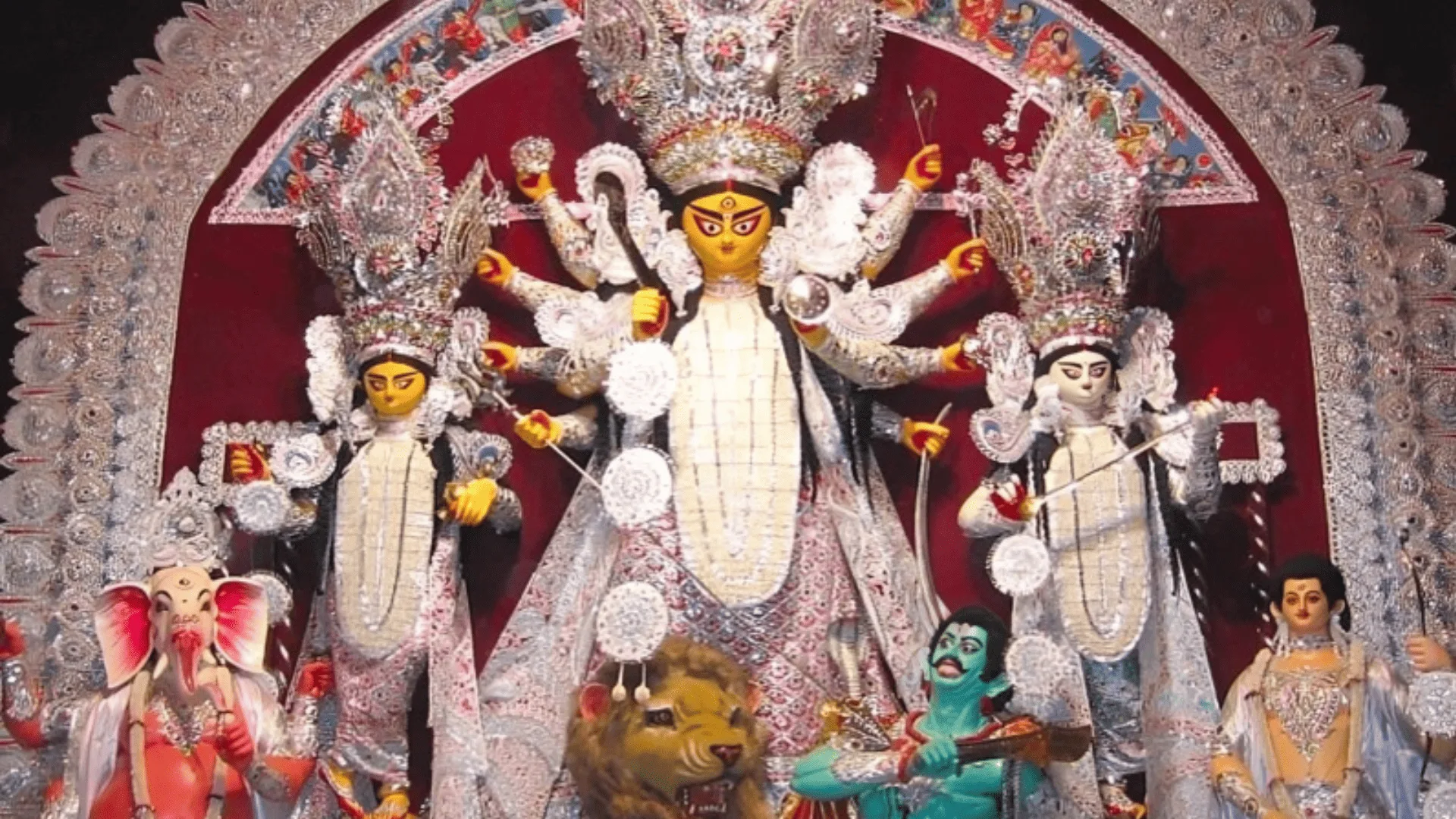
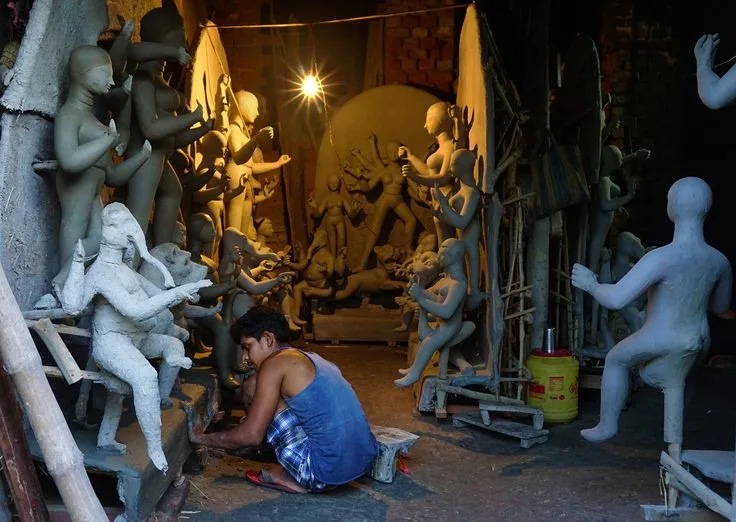
    For most Bengalis, Durga Puja begins with Mahalaya, the sound of Mahishasuramardini on the radio. But in Kolkata, the festival starts much earlier in the winding lanes of Kumartuli, where artisans spend months giving shape to Maa Durga. Long before the goddess reaches pandals across the city, she is born here through clay, straw, bamboo and generations of craftsmanship.

    Located in North Kolkata, Kumartuli is nearly 300 years old and is considered the heart of Bengal’s idol-making tradition. Every year, hundreds of sculptors work in small workshops to create thousands of idols of Maa Durga, Lakshmi, Saraswati, Kartik and Ganesha for Pujas across India and in many countries abroad.

    A tradition that has survived for centuries
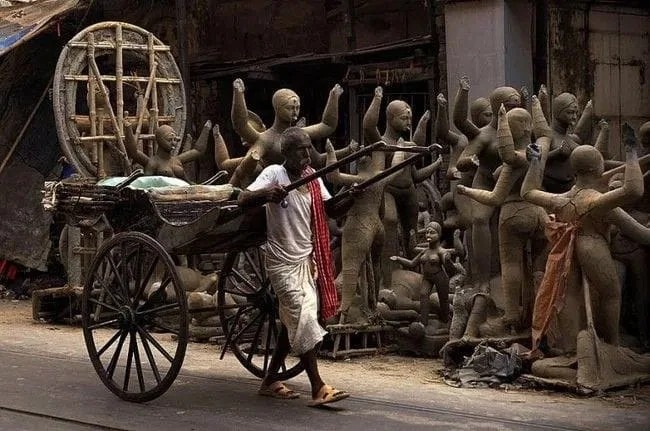
    The name Kumartuli comes from the Bengali words Kumar (potter) and Tuli (locality). The neighbourhood was established in the early 18th century when potter families settled in the area and began making clay idols. Over time, the place grew into Kolkata’s most famous artisan hub, with skills passed down from one generation to other generations.

    Also Read | Is Arsalan’s food safe to eat? Restaurant clarifies Achari Kebab aroma after West Bengal food safety inspection

    Today, idols of Devi Durga made in Kumartuli are transported not only across West Bengal but also to cities like Delhi, Mumbai and Bengaluru, as well as countries including the US, UK, Canada and Australia, wherever Bengali communities celebrate Durga Puja.

    How Maa Durga takes shape

    The making of a Durga idol still follows a traditional gateway that has been followed over the decades. It begins with a bamboo framework that forms the structure of the idol. Straw is tied around it to create the body, followed by layers of clay collected from riverbanks. Once the clay dries, artisans sculpt the face, hands and finer details with remarkable precision.

    Also Read | Who is Sumit Roy? Abhishek Banerjee’s PA arrested in Shalbani land scam case

    After the sculpture is complete, the idol is painted and decorated with clothes, ornaments and weapons. One of the most significant tradition of all is Chokkhu Daan, the ritual of painting Maa Durga’s eyes, which traditionally takes place around Mahalaya and is seen as giving life to the idol.

    The busiest weeks before Durga Puja
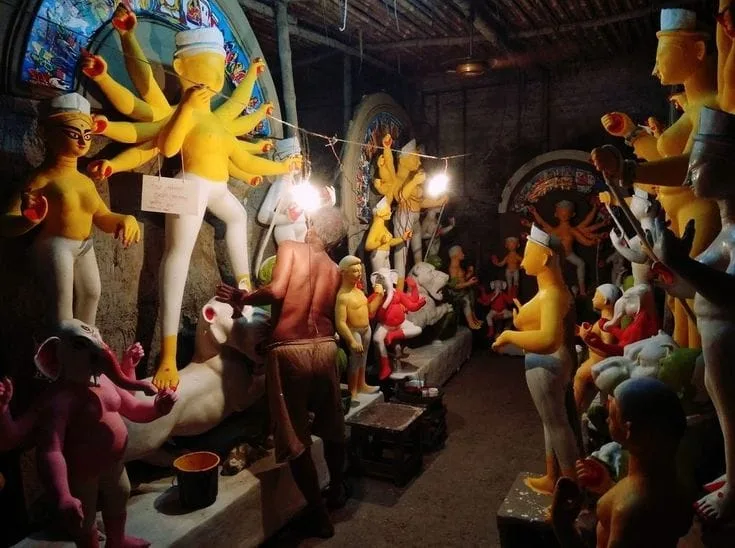
    The weeks before Durga Puja are the busiest time in Kumartuli. Workshops remain open from early morning until late at night as artisans rush to complete orders before the festival begins. Despite challenges such as heavy rainfall, rising raw material costs and labour shortages this year, work continues at full pace to ensure idols reach pandals on time.

    Kumartuli is more than a place where idols are made. It is a living reminder of Kolkata’s artistic heritage and one of the first places where the spirit of Durga Puja comes alive each year.

    This is the place where Ma Durga comes alive first and later into tha pandals.

  • Kolkata Police cracks down on civic volunteers with new SOP

    Kolkata Police cracks down on civic volunteers with new SOP

    Kolkata Police Commissioner Ajay Nand has issued a new standard operating procedure (SOP) for civic volunteers. The new guidelines set out stricter rules on attendance, conduct, and performance. The guidelines, issued on Friday, come amid criticism over alleged lapses in duty by civic volunteers and the recent arrest of a Kolkata Police civic volunteer in connection with a murder case in Jharkhand.

    The new SOP has been circulated to police units across the city and aims to strengthen supervision and accountability among the auxiliary force.

    Strict action over unauthorised absence

    Under the new rules, officers-in-charge and unit heads have been asked to maintain strict discipline and take action against unauthorised absence and misconduct. They will have to send daily reports to the Deputy Commissioner of the Home Guard Organisation (DC, HGO) about civic volunteers who remain absent without permission.

    The SOP sets out a two-stage notice system. If a civic volunteer remains absent without authorisation for seven consecutive days, the person will receive a first notice either electronically via WhatsApp or directly. If the absence continues, a second and final notice will be issued seven days later. The volunteer will then be allowed to explain the reason for the absence.

    If the explanation is not found satisfactory, the volunteer will be permanently demobilised. The process will be initiated by the unit-in-charge and completed with the approval of the DC, HGO.

    The guidelines state that absence will be accepted only in certain circumstances, including verified personal illness or the death of a family member or close relative.

    Performance reports and training made mandatory

    The new SOP also puts greater emphasis on regular assessment of civic volunteers. Unit heads will now have to submit performance and assessment reports twice a year for every volunteer under their jurisdiction. The reports will be used to assess whether their conduct and performance remain satisfactory.

    Attendance at prescribed training programmes will also be monitored strictly. Police orders issued earlier had already made such training mandatory, and the latest guidelines reiterate that requirement.

    Commanding officers of all divisions, traffic guards and specialised units have been directed to circulate the SOP widely and ensure immediate compliance. Both English and Bengali versions of the guidelines have been issued.

    FAQs

    Q: What is the new Kolkata Police SOP for civic volunteers?


    It is a set of guidelines covering civic volunteers’ attendance, conduct, performance, discipline, and training.

    Q: What happens if a civic volunteer is absent without permission?


    A first notice is issued after seven consecutive days of unauthorised absence. If the absence continues, a second and final notice is issued seven days later.

  • Who is Sumit Roy? Abhishek Banerjee’s PA arrested in Shalbani land scam case

    Who is Sumit Roy? Abhishek Banerjee’s PA arrested in Shalbani land scam case

    Sumit Roy, the personal assistant (PA) to Trinamool Congress MP Abhishek Banerjee, was arrested from Banerjee’s Kalighat residence on Thursday, shortly after the Supreme Court cancelled the protection granted to him. The arrest is linked to the Shalbani land scam case.

    CID and STF teams reached Abhishek Banerjee’s residence after receiving information that Roy was inside. A large team of officials, along with a videographer as part of the arrest procedure, arrived at the house. Roy was subsequently taken to Bhabani Bhavan for questioning.

    Who is Sumit Roy?

    Sumit Roy has been described by TMC insiders as one of Abhishek Banerjee’s closest aides. For years, party insiders have referred to him as Abhishek’s “shadow”, highlighting his presence around the TMC leader since his early political years.

    Also Read | The Camac Street Citadel: Why Abhishek Banerjee’s Kolkata office has become Bengal’s most contested political address

    Abhishek Banerjee’s PA Sumit Roy arrested in Shalbani land scam case
    Abhishek Banerjee’s PA Sumit Roy arrested in Shalbani land scam case | X

    According to several TMC insiders, Roy and Abhishek Banerjee have known each other since their school days. As Banerjee’s influence within the party grew, Roy continued to remain part of his inner circle and became an important figure in the organisation.

    Why was Sumit Roy considered influential?

    TMC leaders claim Roy’s role extended beyond organisational work and reached administrative circles. Although he did not hold an elected position, party members viewed him as an important link to Abhishek Banerjee.

    According to multiple TMC insiders, party workers and local leaders seeking an audience with Banerjee often had to contact Roy first. Some leaders claimed that getting an appointment with Roy could itself be difficult. Sources also alleged that senior administrative officials and high-ranking officers sometimes had to wait for hours to meet him.

    Seen as the ‘second-in-command’

    Party insiders say Roy held considerable influence within parts of the organisation. Leaders familiar with the functioning of Abhishek Banerjee’s political office claimed that instructions from the TMC leader were often communicated through Roy.

    Sumit Roy
    Sumit Roy taken to Bhabani Bhavan for questioning after arrest | File Image

    Within sections of the party, he was informally described as the “second-in-command” to the “boss”. Leaders said that communication about meetings with Banerjee frequently passed through Roy.

    Also Read | Why is Suvendu Adhikari pushing the Saffron Samman Yatra now?

    Role in Diamond Harbour affairs

    TMC sources also said Roy was involved in organisational and constituency-related matters in Diamond Harbour, Abhishek Banerjee’s parliamentary constituency.

    Local leaders claimed that political matters, administrative requests and constituency-related issues were often routed through him, placing Roy at an important point of contact for those seeking access to Banerjee’s decision-making channels.

  • Is Arsalan’s food safe to eat? Restaurant clarifies Achari Kebab aroma after West Bengal food safety inspection

    Is Arsalan’s food safe to eat? Restaurant clarifies Achari Kebab aroma after West Bengal food safety inspection

    The Food Safety Department of West Bengal has stepped up inspections at restaurants and eateries across the state to check whether food safety rules and hygiene standards are being followed. The inspections have brought several food establishments under scrutiny, including Kolkata’s popular Arsalan Restaurant and Caterer.

    Following a recent inspection and concerns surrounding its Achari Kebab, the restaurant has now responded to questions over the safety and quality of its food. Arsalan has maintained that the distinctive tangy aroma and taste of the kebab come from its achari-style marinade, while reaffirming its food-safety, hygiene and sourcing practices.

    What did Arsalan say about its Achari Kebab?

    According to Arsalan, the tangy and pickled smell and flavour of the Achari Kebab are part of the recipe. The restaurant said the aroma of the marinade should not be taken as proof that the meat or poultry used in the dish has spoiled.

    Also Read | Kolkata’s Bagbazar Sarbojanin Durga Puja hits legal hurdle after poll ends in tie, HC to decide next

    In a statement addressing the issue, Arsalan COO Hamza Ahsan said food safety and hygiene have always been part of the restaurant’s day-to-day operations, rather than measures introduced only after an inspection.

    Addressing the concerns over the Achari Kebab, Ahsan said, “the tangy and pickled aroma is an inherent characteristic of the achari-style marinade and is reflective of the recipe itself, and should not be misconstrued as an indication of spoilage.” He added that Arsalan regularly procures meat, poultry, fish, dairy and eggs throughout the year, while its spices are sourced from FSSAI-approved companies.

    Arsalan responds to concerns over its Achari Kebab after inspection
    Arsalan explains the distinct aroma and taste of its Achari Kebab | Zomato

    Ahsan further said the restaurant conducts regular food-safety briefings and training for its teams. He noted that Arsalan is now strengthening these systems through enhanced compliance checks, supply-chain audits and mandatory third-party hygiene and quality audits across its kitchens.

    “We value the trust our patrons have placed in Arsalan for over two decades, and we remain committed to serving them the best in food quality, hygiene and safety, every single day,” he said.

    How does Arsalan handle its food supplies?

    The restaurant said that its outlets depend on frequent procurement because of the volume of food prepared and consumed each day. Perishable ingredients are generally used on the same day, while some items may be stored for one to two days when necessary.

    Kolkata’s Arsalan strengthens food safety checks and kitchen audits
    Kolkata’s Arsalan strengthens food safety checks and kitchen audits | Arsalan

    Arsalan also said its staff receive periodic food-safety and hygiene briefings covering proper food handling and related practices.

    What is Arsalan doing after the inspection?

    As part of its efforts to tighten food-safety practices, Arsalan plans to introduce additional compliance checks and supply-chain audits across its outlets. Its kitchens will also undergo mandatory third-party hygiene and quality audits, adding another layer of oversight to its existing processes.

    Also Read | Kolkata parking rules change from Sept 1: Here’s what drivers need to know

    On the inspection itself, the management maintained that it respects the role of regulatory authorities and does not intend to contradict the department’s findings. It will follow instructions issued by the concerned authorities and continue to cooperate with applicable food-safety requirements.

    For customers asking, “Is Arsalan’s food safe to eat?”, the restaurant’s latest statement sets out its position on the Achari Kebab, sourcing practices, food handling and the additional safety measures it plans to introduce.

  • Kolkata’s Bagbazar Sarbojanin Durga Puja hits legal hurdle after poll ends in tie, HC to decide next

    Kolkata’s Bagbazar Sarbojanin Durga Puja hits legal hurdle after poll ends in tie, HC to decide next

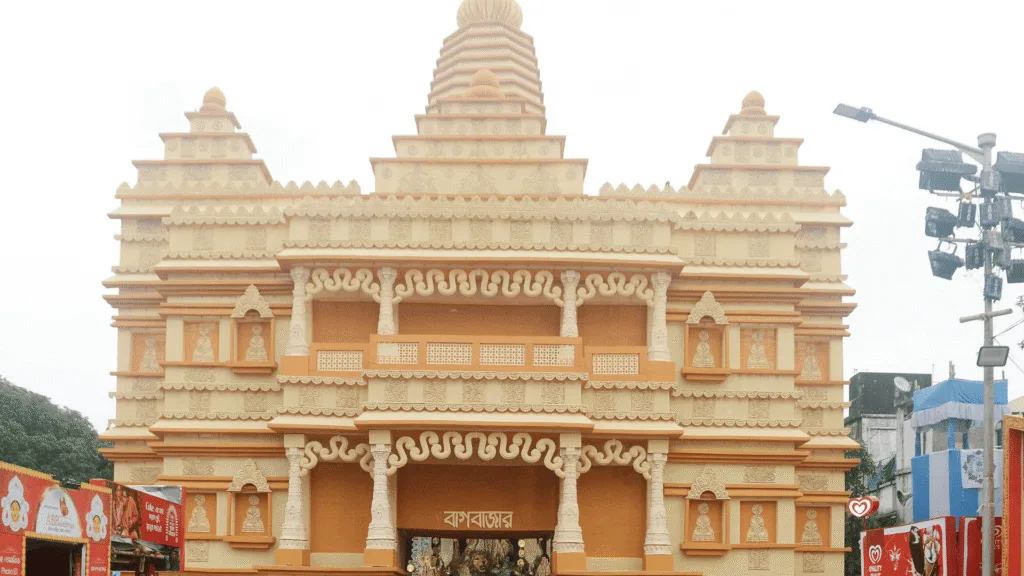
    The fate of Bagbazar Sarbojanin Durga Puja, Kolkata’s oldest community Durga Puja, now lies before the Calcutta High Court after an election for key managing committee posts ended without a clear winner.

    The puja, which is entering its 108th year, saw a deadlock on Sunday as both sides received 33 votes each for the posts of general secretary and four managing committee members. The High Court had earlier appointed two observers to oversee the election.

    Bagbazar Puja election ends in 33-33 tie

    A total of 66 members voted out of the 77 eligible voters. Eleven members, including several prominent members of the organising body, stayed away from the election.

    Goutam Neogi, who is tied for the general secretary’s post, said the committee president, Samar Kumar Pal, should have been allowed to use a casting vote under the organisation’s bylaws when the election ended in a stalemate.

    Also Read | Kolkata parking rules change from Sept 1: Here’s what drivers need to know

    “The observers did not allow the casting vote after an objection from one of the parties. We are now awaiting the court’s decision,” Times of India reported Neogi as saying.

    The observers were appointed by the High Court after a plea was filed by the rival camp.

    Legal wrangle puts preparations for Kolkata’s iconic Bagbazar Puja in focus
    Legal wrangle puts preparations for Kolkata’s iconic Bagbazar Puja in focus | ANI

    Woman alleges assault over voting

    The election was also followed by a police complaint alleging assault and intimidation. A woman resident of Bosepara Lane approached Shyampukur Police Station, alleging that she was heckled, abused and physically assaulted after voting against a particular group.

    Sukumar Mondal, who was named in the complaint, is reportedly aligned with former ward 7 councillor Bapi Ghosh. Ghosh has been seeking control of the puja’s organising committee since last year.

    The dispute has added uncertainty to preparations for one of Kolkata’s most prominent traditional Durga Pujas. Organisers are yet to begin preparations in full swing, raising concern in the locality as the festival approaches.

    Why Bagbazar Sarbojanin is significant

    Bagbazar Sarbojanin began in 1919 at 55 Bagbazar Street as Nebubagan Barowari Durga Puja. After shifting through locations including Pashupati Bose Lane and Bagbazar Kali temple, it eventually moved to its permanent grounds.

    Social worker Nagendra Nath Ghoshal helped formalise the committee and gave it the name Bagbazar Sarbojanin Durgotsav.

    Also Read | Why is Suvendu Adhikari pushing the Saffron Samman Yatra now?

    In 1930, Calcutta Municipal Corporation alderman Durgacharan Bandyopadhyay became president and introduced a Swadeshi exhibition to promote Indian-made products. The venue was also associated with freedom movement activities. Netaji Subhas Chandra Bose served as president in 1938-39, while Chittaranjan Das also used the venue to mobilise support and provide shelter to underground revolutionaries.

    The puja continues to draw lakhs of devotees every year and retains its traditional format, including its well-known ekchala Durga idol, rather than adopting theme-based presentations.

    Members seeking re-election have said they oppose a minister or councillor becoming the face of the puja. A panel backed by former minister Shashi Panja lost the 2022 election. Ghosh, who was then a councillor, allegedly attempted to take control of the puja last year but did not succeed.

  • Why is Suvendu Adhikari pushing the Saffron Samman Yatra now?

    Why is Suvendu Adhikari pushing the Saffron Samman Yatra now?

    West Bengal Chief Minister Suvendu Adhikari is set to lead the Saffron Samman Yatra, also referred to as the Gerua Samman Yatra, in Kolkata on Wednesday. The march will begin at Golpark, pass through Dhakuria and end at the 8B bus stand near Jadavpur University, covering roughly three kilometres.

    The BJP has presented the programme as a campaign to promote nationalist thought and highlight the values associated with the colour saffron. The timing, however, gives the march a wider political context.

    Also Read | Why Kolkata Police filed an FIR against Mamata Banerjee? Exploring

    It comes less than a fortnight after a large Vande Mataram mobilisation near Jadavpur University and amid an ongoing battle over political graffiti and slogans on the campus.

    Why is Suvendu Adhikari pushing the saffron theme now?

    The Saffron Samman Yatra follows Adhikari’s appearance at the “Vande Mataram in 10,000 voices” programme around Jadavpur University. At that event, he criticised what he described as anti-national influences on the campus and argued for a stronger emphasis on national and cultural traditions.

    The latest march takes that message further by placing saffron at the centre of the political narrative.

    Suvendu Adhikari's Saffron Samman Yatra puts nationalism, Hindutva and Bengal's cultural identity in focus.
    West Bengal Chief Minister Suvendu Adhikari / ANI

    Organisers have described saffron as a symbol of sacrifice, self-surrender, courage and Sanatan tradition. The BJP has urged people to participate in the procession, framing it as an expression of nationalist thought.

    The political backdrop is significant. Jadavpur University has been witnessing a continuing graffiti battle involving rival student groups, including Left-wing groups and the RSS-affiliated ABVP. Walls have repeatedly been painted over and rewritten with competing political messages.

    How does the march fit into Bengal’s cultural politics?

    The argument behind the Saffron Samman Yatra is broader than the colour saffron itself.

    According to the analysis, BJP leaders and party insiders believe Bengal’s traditional and nationalist cultural identity was weakened during the state’s long Left Front rule and subsequently affected by what they describe as a different form of cultural politics under the Trinamool Congress.

    Suvendu Adhikari's Saffron Samman Yatra from Golpark to the Jadavpur University area
    West Bengal Chief Minister Suvendu Adhikari / ANI

    Some RSS leaders have used the term “cultural Marxism” to describe what they see as the influence of Left-oriented ideas on Bengal’s cultural and political life. These are political and ideological characterisations made by BJP and RSS figures, rather than an established description of Bengal’s cultural history.

    The BJP’s current pitch is that Bengali pluralism and cultural diversity can coexist with a stronger emphasis on Indian nationalism and Hindu cultural traditions.

    What does this mean for Bengal’s pluralist identity?

    This is where the political debate becomes more complicated.

    Bengal has historically had a distinctive cultural mix in which religious traditions, food habits, literature, art and intellectual life have often existed alongside one another. The analysis points to figures such as Rabindranath Tagore, as well as scholars Kshitimohan Sen and Amartya Sen, in discussions around this heterogeneous cultural identity.

    The BJP’s emphasis on a return to traditional heritage is being viewed differently by its political opponents. Critics fear that an aggressive focus on nationalism and Hindutva could weaken Bengal’s pluralistic and inclusive character.

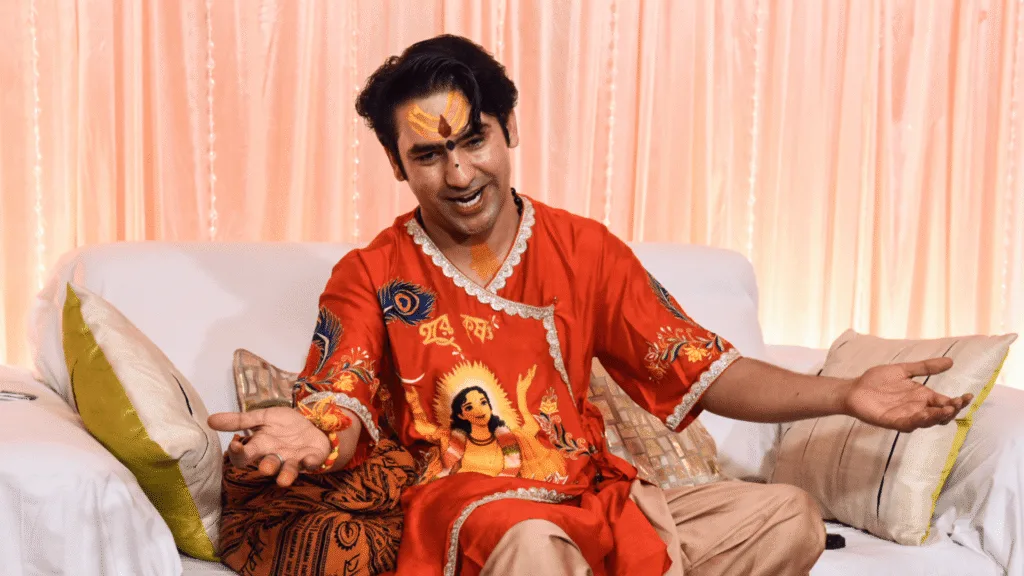
    The debate has also extended to food and religious practices. The recent appeal by self-styled godman Dhirendra Shastri, popularly known as Bageshwar Baba, asking Bengalis to give up non-vegetarian food during Durga Puja triggered discussion because Bengal’s religious and culinary traditions have historically not followed a uniformly vegetarian model.

    Dhirendra Shastri bageshwar baba.
    Dhirendra Shastri aka Bageshwar Baba/ ANI

    RSS chief Mohan Bhagwat, meanwhile, has stressed a less confrontational approach to food habits, saying there should not be negativity around what people eat.

    Is the Saffron Samman Yatra also an election strategy?

    The timing makes the political calculation difficult to ignore.

    West Bengal’s civic polls are expected after Diwali, with elections to the Kolkata Municipal Corporation, Howrah Municipal Corporation and several other municipalities potentially becoming important political battlegrounds.

    The Saffron Samman Yatra therefore gives the BJP a high-visibility platform to take its nationalism and cultural-identity message directly to voters.

    The march also keeps Jadavpur University at the centre of a wider political conversation. From the Vande Mataram event to the graffiti disputes, the campus has become a prominent site for competing arguments over nationalism, student politics and Bengal’s cultural identity.

    Also Read | Kolkata parking rules change from Sept 1: Here’s what drivers need to know

    For the BJP, the saffron campaign can serve as a way to consolidate its ideological message and reach voters beyond conventional party politics. For opponents, it raises questions about whether Bengal’s traditionally heterogeneous cultural identity is being recast through a more explicitly Hindutva-oriented political lens.

    The Saffron Samman Yatra, therefore, is not simply a march about a colour. It is part of a larger contest over nationalism, cultural identity and the political meaning of Bengal’s traditions.

  • Kolkata parking rules change from Sept 1: Here’s what drivers need to know

    Kolkata parking rules change from Sept 1: Here’s what drivers need to know

    Kolkata’s parking system is set for a major change from September 1, with the civic authorities introducing a new parking management system and an app that will provide real-time information on available parking spaces.

    The new arrangement will initially cover Kolkata, Howrah and Bidhannagar. Municipal authorities have also decided to introduce night parking charges in Howrah and Bidhannagar, similar to the existing system in Kolkata.

    New parking app to provide real-time updates

    Urban Development and Municipal Affairs Minister Agnimitra Paul said a dedicated app will soon be launched to make parking in the city more organised.

    Also Read | Why Kolkata Police filed an FIR against Mamata Banerjee? Exploring

    According to Paul, the app will be launched by Chief Minister Suvendu Adhikari. It will allow motorists to check parking availability in real time before reaching busy areas.

    New Kolkata parking app to show vacant spaces in real time from Sept 1.
    New Kolkata parking app to show vacant spaces in real time from Sept 1 | ANI

    Agnimitra said, “Our side will quickly launch an app through the Chief Minister. Real-time information will be available there. You may be going to the Park Street or Esplanade area, and you will be able to know in advance how many parking spaces are vacant or unavailable. Accordingly, you can plan ahead. No one will be allowed to park a car or motorcycle outside designated parking areas.”

    Parking outside designated areas to attract hefty fines

    The authorities have identified and finalised the areas where official parking facilities will be provided across the three municipal regions.

    Officials also discussed how many parking spaces should be available during peak hours and which locations face greater demand for parking.

    Kolkata drivers face new parking rules, app updates and hefty fines.
    Kolkata drivers face new parking rules, app updates and hefty fines | ANI

    Parking a car or motorcycle outside the designated areas will invite strict action. The meeting also decided that motorists could face heavy fines for violating the parking rules.

    The exact fine amount and the number of vehicles that can be accommodated at each parking facility will be announced soon.

    Howrah and Bidhannagar to introduce night parking charges

    The new system will not be limited to daytime parking. Howrah and Bidhannagar municipalities will also collect night parking charges from people who leave their vehicles on roads at night.

    Paul specifically warned motorists in Salt Lake against parking on roads despite having designated parking facilities.

    Roadside parking gets stricter in Kolkata, Howrah and Bidhannagar.
    Roadside parking gets stricter in Kolkata, Howrah and Bidhannagar | ANI

    She also said, “In Salt Lake, many people park their cars on the roads even when they have their own parking facilities. I want to say, do not do this. Do not block the roads. If anyone parks a car or motorcycle on the road, the municipality will collect night parking charges.”

    Nabanna meeting finalises parking arrangements

    A meeting on the new parking system was held at Nabanna on Saturday, chaired by Agnimitra Paul.

    Also Read | Bidhan Market eviction: What Calcutta High Court ordered

    The administrators and commissioners of the three municipal bodies attended the meeting, along with officials from the three police commissionerates.

    Night parking charges to begin in Howrah and Bidhannagar from Sept 1.
    Night parking charges to begin in Howrah and Bidhannagar from Sept 1 | ANI

    The discussions focused on finalising the locations for government-designated parking, the number of spaces required during busy periods and areas where parking demand is particularly high.

    The new measures are scheduled to take effect from Tuesday, September 1, marking a fresh attempt to bring parking in Kolkata, Howrah and Bidhannagar under a more structured system.

  • Why Kolkata Police filed an FIR against Mamata Banerjee? Exploring

    Why Kolkata Police filed an FIR against Mamata Banerjee? Exploring

    Kolkata Police has registered a suo motu FIR against former West Bengal Chief Minister Mamata Banerjee over allegations that a Trinamool Chhatra Parishad meeting near Birla Planetarium on Cathedral Road was held in violation of a Calcutta High Court order.

    The case was registered at Hastings Police Station and also names the organisers of the Trinamool Chhatra Parishad event. The meeting was held on Friday near Birla Planetarium.

    What is the FIR against Mamata Banerjee about?

    According to police sources, Sub-Inspector Apu Baidya submitted a written complaint on August 28. The complaint alleges that Mamata Banerjee and the event organisers violated the High Court’s directions and allegedly provoked supporters during the gathering.

    Former West Bengal Chief Minister Mamata Banerjee
    Cathedral Road meeting lands Mamata Banerjee in police FIR | ANI

    Police have also alleged that the situation became disorderly during the meeting. Some supporters reportedly moved police barricades and were involved in scuffles with personnel deployed to maintain law and order.

    Also Read | The Camac Street Citadel: Why Abhishek Banerjee’s Kolkata office has become Bengal’s most contested political address

    Police allege High Court directions were not followed

    The Calcutta High Court had directed that the meeting could be held on one lane of Cathedral Road, while the other lane was to remain open for vehicles.

    Police have alleged that the arrangement was not followed during Friday’s meeting. According to the complaint, the lane beside the meeting venue was eventually blocked, leading to significant traffic congestion in the area.

    Kolkata Police books Mamata Banerjee over Cathedral Road meeting.
    Kolkata Police books Mamata Banerjee over Cathedral Road meeting | File Image

    The police have also alleged that the meeting continued beyond the time permitted by the High Court. The court had fixed the meeting period from 12 pm to 3 pm.

    What charges are in the FIR against Mamata Banerjee?

    Police sources said the FIR invokes provisions of the Bharatiya Nyaya Sanhita (BNS) relating to criminal conspiracy, disobedience of an order issued by a public servant, acts endangering the life or personal safety of others, obstructing and using force against a public servant while on duty, and causing obstruction on public roads.

    Also Read | Bidhan Market eviction: What Calcutta High Court ordered

    The case has been filed against Mamata Banerjee as well as the organisers of the student body’s meeting.

    What did Chief Minister say?

    The FIR follows a statement by Chief Minister Suvendu Adhikary, who had said after Friday’s meeting that police had been instructed to register a case against Mamata Banerjee.

    CM Suvendu Adhikari says police were told to file FIR against Mamata Banerjee
    CM Suvendu Adhikari says police were told to file FIR against Mamata Banerjee | File Image

    Speaking after a Rakhi Bandhan celebration in Jadavpur, Suvendu said, “Did you see how the former chief minister violated the High Court order? She was asked to hold the meeting leaving one flank of the road. What did she do by calling people who were under the trees and getting the road blocked? I have told the police to register an FIR and move the High Court against her. She will not be spared.”

    The police case now places the alleged violation of the High Court’s directions and the events surrounding the Cathedral Road meeting at the centre of the matter.

  • The Camac Street Citadel: Why Abhishek Banerjee’s Kolkata office has become Bengal’s most contested political address

    The Camac Street Citadel: Why Abhishek Banerjee’s Kolkata office has become Bengal’s most contested political address

    What appeared on Thursday as a routine attempt by Kolkata Police and KMC officials to remove an allegedly unauthorised billboard from Abhishek Banerjee’s Camac Street office rapidly transformed into a political flashpoint.

    But the real story lies beyond the scuffle. This address is no ordinary party office—it is the nerve centre of Abhishek Banerjee’s political empire, the war room of Trinamool Congress’s new generation, and perhaps the most symbolically charged building in Bengal’s post-2024 politics.

    Also Read | Why do the survivors describe the Kolkata hotel fire as ‘a scene from a horror movie’?

    Why does Camac Street matter so much in Bengal politics?

    On Camac Street, amid the polished façades of corporate towers and luxury boutiques, stands a building that has quietly rewritten the grammar of Bengal politics. It bears no overt grandeur, no monumental architecture, and yet it has acquired the aura of a fortress. This is Abhishek Banerjee’s office—less an office than the command headquarters of Trinamool Congress’s most influential strategist after Mamata Banerjee.

    Thursday’s confrontation was ostensibly about a billboard. Kolkata Police, accompanied by officials from the Kolkata Municipal Corporation, arrived to remove a Trinamool hoarding that authorities described as unauthorised. Within minutes, the routine municipal exercise spiralled into a dramatic face-off, with Abhishek demanding written orders and accusing officials of attempting an illegal entry. The officials eventually withdrew, and the episode instantly became the day’s defining political spectacle.

    A view of TMC MP Abhishek Banerjee's closed office in Camac Street
    A view of TMC MP Abhishek Banerjee’s office in Camac Street / ANI

    Yet, to understand why a billboard became a battle, one must understand what Camac Street represents.

    For nearly a decade, this office has evolved into Abhishek Banerjee’s independent political ecosystem. Candidate selection, campaign planning, organisational restructuring, digital outreach, grievance redressal and welfare initiatives have all flowed through this address. It is here that the Diamond Harbour MP cultivated an image distinct from the traditional Kalighat establishment—modern, data-driven and relentlessly organisational.

    If Kalighat is the emotional capital of Trinamool Congress, Camac Street is its operational capital.

    The symbolism has only intensified since the political upheavals following the 2026 Assembly election. The Trinamool Congress entered one of the most turbulent chapters in its history, confronting electoral setbacks, internal dissension and a series of criminal investigations. The alleged signature-forgery controversy brought investigators repeatedly to Abhishek Banerjee’s doorstep, making Camac Street a recurring destination for CID teams and police officers.

    This was not even the first search operation at the premises. In June, CID officials entered the Camac Street office as part of the investigation into the alleged forgery of legislators’ signatures on Assembly documents, even as simultaneous searches were conducted at the Kalighat party headquarters adjoining Mamata Banerjee’s residence.

    That parallelism was politically telling.

    For decades, Harish Chatterjee Street in Kalighat symbolised unquestioned authority within Trinamool Congress. Camac Street’s emergence reflects a generational transition—an institutional shift from charisma to machinery. It is the space where Abhishek Banerjee built his own network of political managers, researchers, lawyers, social media professionals and constituency coordinators.

    This is precisely why every visit by investigators acquires disproportionate significance.

    What makes Thursday’s confrontation politically significant?

    Thursday’s episode also unfolded against a sensitive legal backdrop. Only days earlier, the Calcutta High Court granted Abhishek Banerjee interim protection from coercive action in three criminal cases, restraining police from arresting or subjecting him to custodial interrogation while the matters remain under judicial consideration.

    That judicial shield has inevitably heightened the political optics surrounding every police action involving him.

    A billboard dispute at Abhishek Banerjee’s Camac Street office has revived attention on the address’s growing political significance.
    Abhishek Banerjee / ANI

    The Trinamool Congress has framed Thursday’s development as selective targeting, arguing that numerous commercial establishments in the vicinity display similar billboards without municipal intervention. Abhishek himself alleged political vendetta and announced plans to challenge the action before the High Court.

    Also Read | Who was Asish Banerjee? Close Mamata Banerjee aide found dead at TMC party office in Birbhum

    The administration, meanwhile, maintains that the exercise concerned an allegedly illegal advertisement structure rather than the office itself. That distinction may be administrative, but in Bengal’s charged political climate, symbolism often overwhelms procedure.

    Camac Street is no longer merely an address on Kolkata’s map. It has become a metaphor for the contest over Trinamool’s future—between state power and political resistance, between institutional investigation and allegations of vendetta, between an inherited legacy and an emerging leadership.

    In Bengal, political geography has always mattered. Writers had College Street, revolutionaries had Alipore, the Left had Alimuddin Street, and Mamata Banerjee had Kalighat. Today, Abhishek Banerjee has Camac Street.

    And that is why when police knock on its doors, Bengal does not see a municipal inspection. It sees a struggle over the state’s evolving political centre of gravity.

  • Bidhan Market eviction: What Calcutta High Court ordered

    Bidhan Market eviction: What Calcutta High Court ordered

    On Monday, the Calcutta High Court directed the authorities to begin work on the Joka-B.B.D. Bagh Metro project in the Dharmatala’s Bidhan Market area within seven days. To make that possible, the shopkeepers of Bidhan Market will have to be temporarily relocated.

    However, the court has made one thing clear: the traders cannot simply be asked to leave without proper arrangements being made at the alternative site.

    ALSO READ| Kolkata rain alert: Will thunderstorms continue despite low pressure moving west?

    A bench headed by Justice Partha Sarathi Chatterjee passed the directions on Monday while hearing a plea related to the proposed relocation of the market’s traders.

    Why does Bidhan Market have to be cleared?

    The iconic Bidhan Chandra Roy Market area stands in the way of a major part of the Joka-B.B.D. Bagh Metro project.

    The planned Esplanade Metro station is to be constructed underneath the market. As a result, the area needs to be cleared before construction can move forward.

    Calcutta High Court gives 7 days to start Joka-B.B.D. Bagh Metro work, and vacate Bidhan Market.

    The High Court has now directed that work in the market area should begin within seven days. But before the traders are moved, the authorities have also been asked to make adequate security arrangements.

    Where will the traders go?

    Reports noted that the shopkeepers could be temporarily relocated to the Mounted Police Parade Ground area.

    The traders had earlier moved the Calcutta High Court after alleging that they were being asked to vacate Bidhan Market without receiving sufficient assurances about their temporary relocation and future rehabilitation.

    ALSO READ| Can you buy a gun for self-defence in West Bengal? Know the rules

    The court directed the authorities to ensure that the temporary relocation is carried out only after the alternative site has adequate water, electricity and other essential civic facilities.

    The court has also directed the agency responsible for the project to ensure that the traders are allowed to return to their original location once the construction work is over.

    The project authority has also been asked to provide the traders with a written assurance regarding their return.