Category: Kolkata

  • Kolkata road safety row: Paint removed after Chingrighata bike skid incident

    Kolkata road safety row: Paint removed after Chingrighata bike skid incident

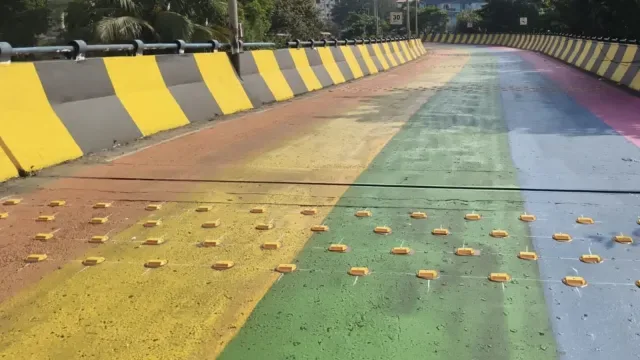
    The controversy over painted roads and flyovers in West Bengal has intensified after a video purportedly showing motorcycles skidding on a freshly coloured surface at Kolkata’s Chingrighata flyover went viral on social media. The state government has begun removing paint from several locations, including Gariahat, while reflective cat’s-eye road studs have been installed at Chingrighata as part of measures to address safety concerns.

    On Wednesday night, mechanised road-cleaning machines and labourers were seen washing away the coloured surface at Gariahat. The development has raised questions about the safety of the pre-Durga Puja beautification drive, under which roads, bridges and flyovers across West Bengal have received colourful makeovers.

    The controversy has also reached Asansol, where paint applied to a road at Shahid Bhagat Singh More was reportedly removed overnight. By Thursday morning, the stretch had returned to its earlier appearance.

    Chingrighata Flyover Video Sparks Road Safety Concerns

    The issue came into focus after a video circulated on social media on Wednesday, apparently showing three motorcycles skidding and falling one after another on a newly painted flyover surface in Kolkata.

    The footage, posted by Sayandip Lahiri, appeared to have been recorded using a vehicle’s dashboard camera. However, its authenticity could not be independently verified.

    The incident triggered concerns among road users about whether the coloured surfaces could affect tyre grip, particularly during wet weather. The possibility of glare from brightly painted stretches has also become a point of discussion.

    Following the incident, reflective cat’s-eye studs were installed at regular intervals on the Chingrighata flyover. The road studs are intended as a road-safety measure as the authorities examine the circumstances surrounding the reported skids.

    Gariahat Road Paint Removed, Asansol Also Takes Action

    The removal of paint at Gariahat marks another development in the growing debate over the state’s road beautification initiative.

    Road-cleaning machines and manual labour were used to wash off the coloured surface late on Wednesday. The work followed concerns about the safety of painted roads, particularly on stretches where two-wheelers make frequent use of the carriageway.

    In Asansol, the painted road at Shahid Bhagat Singh More was also reportedly stripped of its colour overnight. Officials have considered anti-skid treatment amid concerns that the surface could become slippery in wet conditions.

    The bright colours have also prompted complaints about glare, raising questions about their suitability for roads used by motorists throughout the day and night.

    Agnimitra Paul Says Anti-Skid Paint Is Being Examined

    Urban Development and Municipal Affairs Minister Agnimitra Paul, whose department is overseeing the initiative, has maintained that the paint being used is anti-skid. She also said the police and administration were examining the circumstances surrounding the Chingrighata incident.

    “One bike fell down and hit another bike in front of it. We do not know why it fell. The police and administration have been informed about the matter. They are looking into it,” Paul said.

    Addressing the removal of paint and the installation of reflective road studs, the minister said that steps were being taken to prevent injuries despite the use of anti-skid colours.

    Asked about the colours being washed away Paul said that even though the colours were “anti-skid” they were being washed and cat’s eyes were being installed to ensure that “nobody gets hurt.”

    Paul also acknowledged that the bright surfaces had caused concerns among some road users.
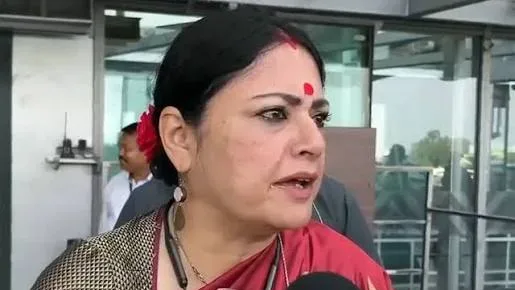
    Agnimitra Paul, Minister of Urban Development and Municipal Affairs of West Bengal.
    Agnimitra Paul, Minister of Urban Development and Municipal Affairs of West Bengal. Credit: X/ANI

    “I have heard that the colours are dazzling for many people. We are looking into that. If people are facing difficulties, an alternative arrangement will also be made,” she said.

    Also Read | Developments of fresh violence erupts at the SRFTI: Bricks and bottles hurled at students

    Suvendu Adhikari Questions Link Between Paint and Accidents

    Chief Minister Suvendu Adhikari questioned whether there was sufficient evidence to establish a connection between the painted roads and the reported accidents.

    “Do accidents happen because of painting? On how many flyovers have accidents occurred?” he asked, adding that he would not comment further without complete information.
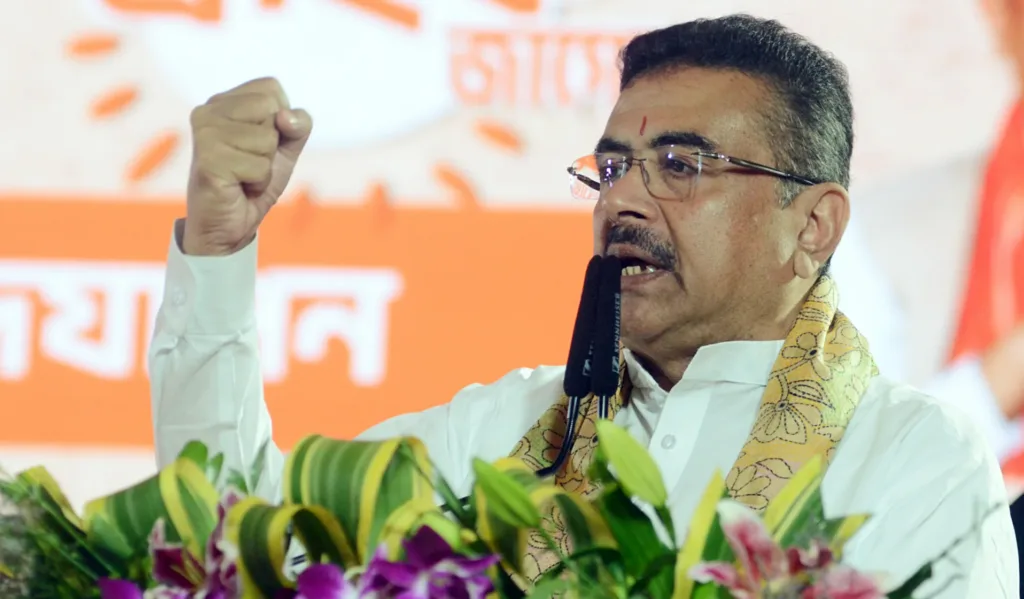
    West Bengal CM Suvendu Adhikari
    West Bengal Chief Minister Suvendu Adhikari / Credit: X/ANI

    His remarks came as the authorities faced growing scrutiny over the implementation of the road-colouring project and its implications for public safety.

    Durga Puja Road Beautification Faces Safety Questions

    The colourful makeover of roads, bridges and flyovers across West Bengal was introduced as part of a broader beautification programme ahead of Durga Puja. The initiative has received a positive response in several areas, bringing a different appearance to stretches that traditionally feature black asphalt.

    However, the Chingrighata incident and the subsequent removal of paint at Gariahat and Asansol have shifted the focus towards road safety.

    The key concerns include tyre grip on painted surfaces, the potential effects of wet weather and glare caused by bright colours. These issues are particularly relevant on flyovers and busy roads used by two-wheelers.

    Also Read | 31-foot Kolkata landmark disappears, reappears after 12 years

    With reflective studs installed at Chingrighata and painted surfaces removed at other locations, these developments have placed road safety at the centre of the debate over West Bengal’s pre-Durga Puja beautification drive. The authorities’ examination of the incident and their response to motorists’ complaints will remain important as the initiative comes under greater scrutiny.
  • 31-foot Kolkata landmark disappears, reappears after 12 years

    31-foot Kolkata landmark disappears, reappears after 12 years

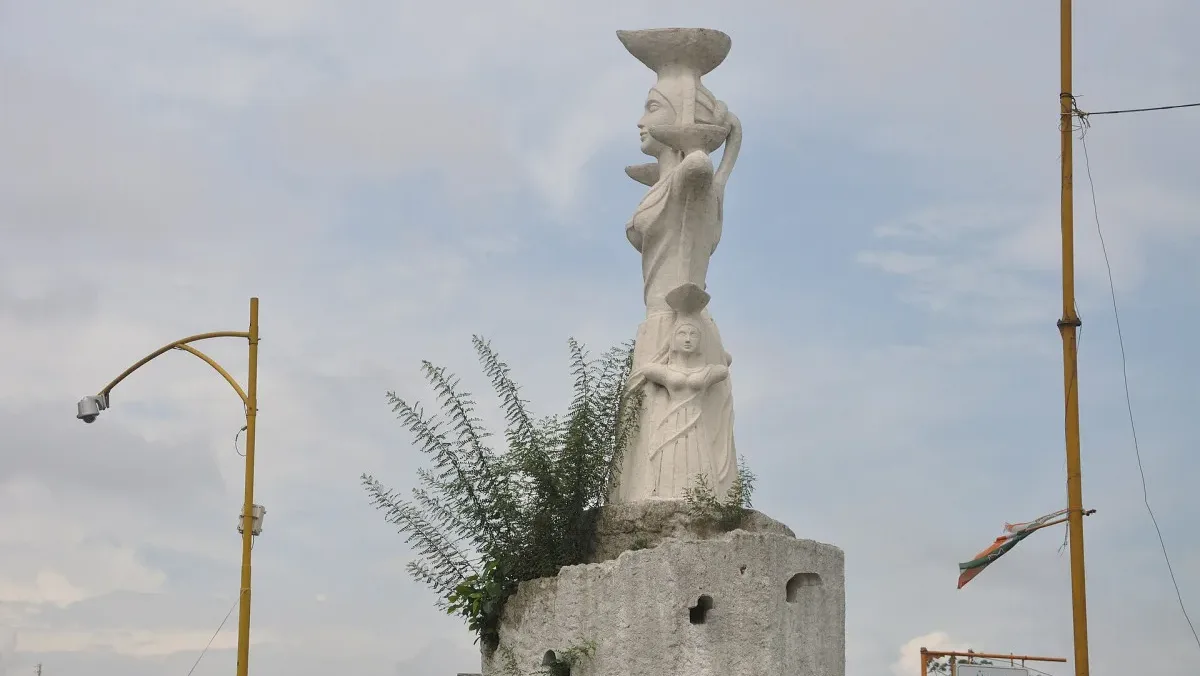
    A piece of Kolkata’s artistic history has resurfaced after remaining hidden for nearly 12 years. Paroma, the 31-foot public sculpture conceptualised by artist Shanu Lahiri, was thought to have vanished after it was dismantled and removed from an Eastern Metropolitan Bypass roundabout in 2014. Now, the sculpture has been found in a private home in Tangra.

    Paroma had become a familiar part of Kolkata’s landscape after it was installed in 1987. Its sudden disappearance on the night of November 24, 2014, had left the city with little more than rubble and several unanswered questions.

    The sculpture survived, however, and was quietly preserved by Kolkata resident Hui Hao Howard Lee.

    How Paroma Disappeared From Kolkata

    Paroma stood on an important roundabout along the EM Bypass and was designed as a work of public art. Lahiri created the concept with other artists, including Manik Talukdar and Debojit Chakraborty, as well as young art graduates she had taught.

    The sculpture was removed overnight in 2014. The Kolkata Metropolitan Development Authority, or KMDA, carried out the removal following an order from Firhad Hakim, who was then a minister in the West Bengal government and later became Kolkata’s mayor.

    Hakim had said at the time that the sculpture was supposed to be relocated and that it had been broken down by mistake.

    What happened next added another chapter to the story. A 200-kg metal globe carrying the Bengali letter “ব” was installed at the location after Paroma’s removal. For years, the fate of the original sculpture remained unclear.
    Kolkata Man Found Paroma in the East Kolkata Wetlands

    Paroma was not destroyed completely. A few days after it disappeared, Lee learned from his mother-in-law that a large sculpture resembling Paroma had been dumped in the Chowbaga area of the East Kolkata Wetlands.

    Lee went to the location and discovered that it was indeed the missing artwork. “I saw some boys playing,” says Lee. He eventually brought the sculpture to his home in Tangra after paying the boys who had been looking after it.

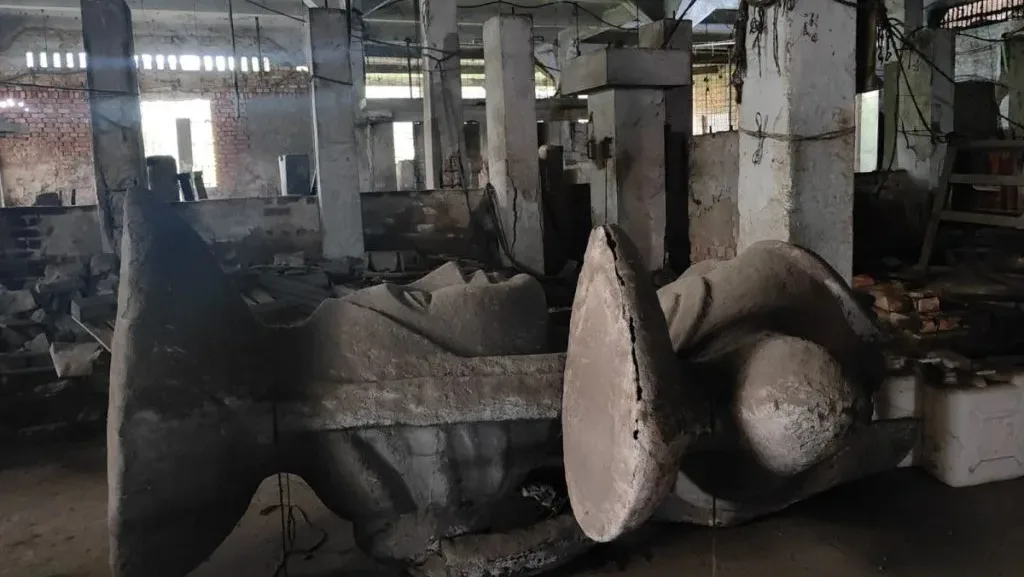
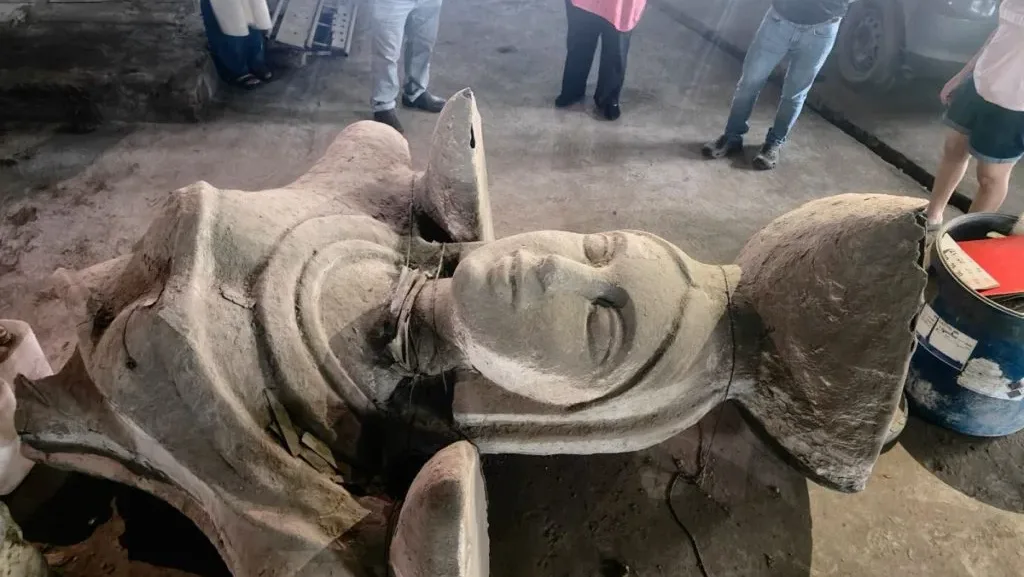
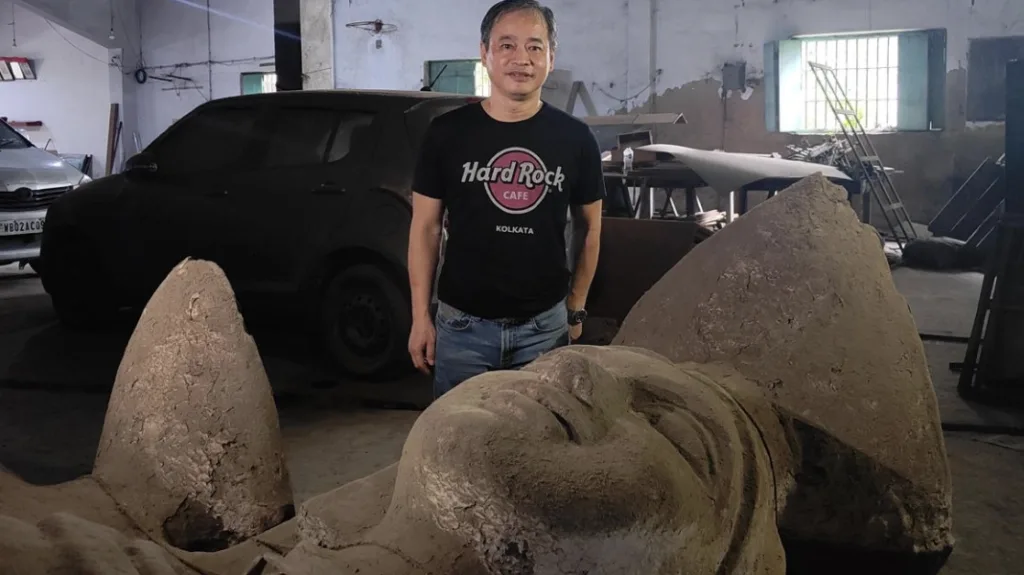
    The recovered Paroma statue, broken at the base, at the former tannery of Hui Hao Howard Lee, who found the landmark.
    The recovered Paroma statue, broken at the base, at the former tannery of Hui Hao Howard Lee, who found the landmark. Credit: X/aparnabhattacharya

    The recovered structure was considerably smaller than the original. The sculpture itself had been around 17 feet high and had lost roughly five feet. Its 14-foot brick-and-mortar base did not survive, but the fibreglass sculpture remained largely intact.

    Lee kept it on the expansive floor of what was once his family’s tannery. He and his family continue to live in another part of the same building.

    “I was overjoyed and relieved to find the sculpture,” says Lee. “I thanked God that I could salvage whatever was left of it. I even asked the boys to find the remaining parts,” he adds.

    Paroma Was Part of Lee’s Childhood

    For Lee, preserving Paroma was not simply about saving a work of art. The sculpture was part of his childhood in Tangra.

    Lee grew up in the area when it had a much larger Chinese community. As children, he and his brother would climb the spiral base of Paroma.

    “We had photographs of us on the statue,” says Lee.

    He later developed an interest in Bengal’s art and became an avid collector. That connection helped him understand the significance of the sculpture he had rescued.

    The story also reflects changes in Tangra and the East Kolkata Wetlands, both of which have undergone significant transformation over the years.

    The recovered Paroma statue at Lee’s former tannery in Kolkata.
    The recovered Paroma statue at Lee’s former tannery in Kolkata. Credit: X/ayanabhattacharya

    What Did Shanu Lahiri Create With Paroma?

    Lahiri’s idea of public art went beyond simply placing a sculpture in an open space. Her works were intended to become part of everyday city life.

    Paroma drew inspiration from the Bengali folk-art figure known as the Diwali putul, a form that combines the image of a woman or mother with a lamp and represents light and protection.

    The sculpture was created with the involvement of several artists. Its large scale also made collaboration necessary. Private company GD Pharmaceuticals, known for Boroline, funded the project.

    Paroma was therefore not a government-funded monument. It was created as a public artwork during the Left Front era in West Bengal and became part of Kolkata’s visual identity.

    Children climbed its base, birds nested on it and passing motorists saw its silhouette against the city’s skyline.

    Artists React to Paroma’s Recovery

    Artist Chittrovanu Mazumdar, who is Shanu Lahiri’s nephew, recalled the shock surrounding its removal. “I had been shocked by its removal,” says Mazumdar.

    But he believes the recovered sculpture cannot simply be treated as the same object that once stood beside the EM Bypass. “It is a fragment,” he reminds.

    Mazumdar also spoke about the vulnerability of artworks and the damage caused when they are dismantled without care.

    “Art has a natural difficulty to survive. Its materials are not durable,” says Mazumdar. “Taking a work of art down is a very violent act,” he says.

    He noted that Paroma was a mother figure based on the Diwali putul, transformed into a large public sculpture. “It was something we were used to seeing every day,” he says Mazumdar.

    Questions Over Kolkata’s Public Art

    Art historian Tapati Guha-Thakurta believes Paroma’s recovery raises a larger question about how cities preserve public art.

    “Another remarkable piece of art disappeared after Paroma’s removal. A Meera Mukherjee sculpture that was installed in Rabindra Sadan complex is not there any more,” Guha-Thakurta points out.

    She also noted that the Somnath Hore sculptures at the Rabindra Sadan-Nandan complex do not appear to be well cared for.

    Guha-Thakurta further pointed out that Paroma’s surroundings had already changed dramatically before the sculpture was removed. The open skyline that once surrounded it had given way to highrises and construction.

    “So in a way, it was already not what it was previously,” says Guha-Thakurta.

    That raises an important question for Kolkata: how should public art be protected, and who should take responsibility for preserving it?

    Paroma’s Future Remains Uncertain

    Nabina Gupta, artist, co-curator of the Shanu Lahiri exhibition and founder-director of Disappearing Dialogues, sees something fitting in the fact that a citizen and art collector rescued Paroma.

    “It is so right that a citizen and an art lover, who has a personal connection with the piece of art, finds it and looks after it. It shows how art functions in society and how citizens shape the city’s thought process,” says Gupta.

    Also Read | Calm restored at SRFTI campus after clash between students and ABGP

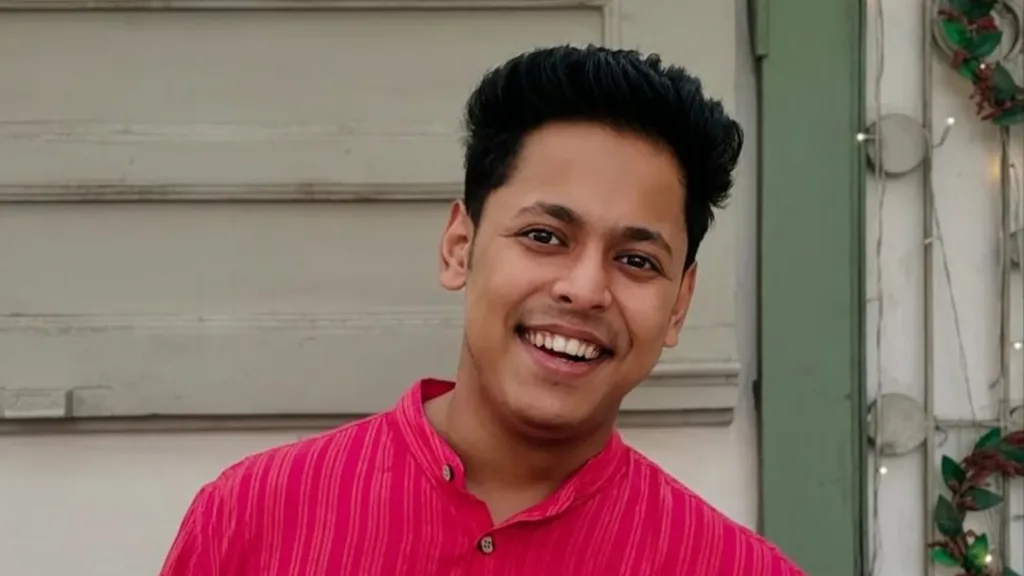
    Ayana Bhattacharya, a PhD researcher associated with The Shanu Lahiri Archives, also stressed the need to preserve public art.

    “But as a city we have not done a great job of preserving public art, irrespective of regime changes. Or of making space for enough public art engagements,” says Bhattacharya.

    The question of what happens to the original site also remains open.

    “The Biswa Bangla globe that replaced Parama has been altered already. What will finally come up in that place?” asks Bhattacharya.

    She believes Paroma’s story should be preserved even if the sculpture itself cannot return to its original form.

    “Paroma deserves to be archived and reframed as a practice. But it is a fragment,” she says.

    The recovered Paroma statue.
    The recovered Paroma statue. Credit:X/ayanabhattacharya

    A Paroma Replica Will Return During Durga Puja

    While the original Paroma remains in Lee’s care, the artwork will once again appear in Kolkata in another form.

    Damayanti Lahiri, Shanu Lahiri’s daughter, said that the Abasar Sarbajain Durga Puja pandal in Bhawanipore will feature a large replica of Paroma this year.

    Damayanti had only recently learned that the original sculpture had survived. She was informed by a friend who is also acquainted with Lee’s family.

    Also Read | Developments of fresh violence erupts at the SRFTI: Bricks and bottles hurled at students

    Shanu Lahiri died in 2013, a year before Paroma disappeared. Asked how her mother might have responded to everything that happened to the sculpture, Damayanti offered a simple answer.

    “She would not have been sentimental about it at all,” laughs Damayanti.

    For Kolkata, however, Paroma’s survival carries a different significance. The sculpture that once stood in plain sight, disappeared without warning and remained hidden for more than a decade has now returned to the city’s cultural conversation. Its damaged form is a reminder of what was lost, but its survival also shows that a city’s memories can sometimes endure in unexpected places.

  • Kolkata weather update: Will rain disrupt Durga Puja 2026? Check the latest forecast

    Kolkata weather update: Will rain disrupt Durga Puja 2026? Check the latest forecast

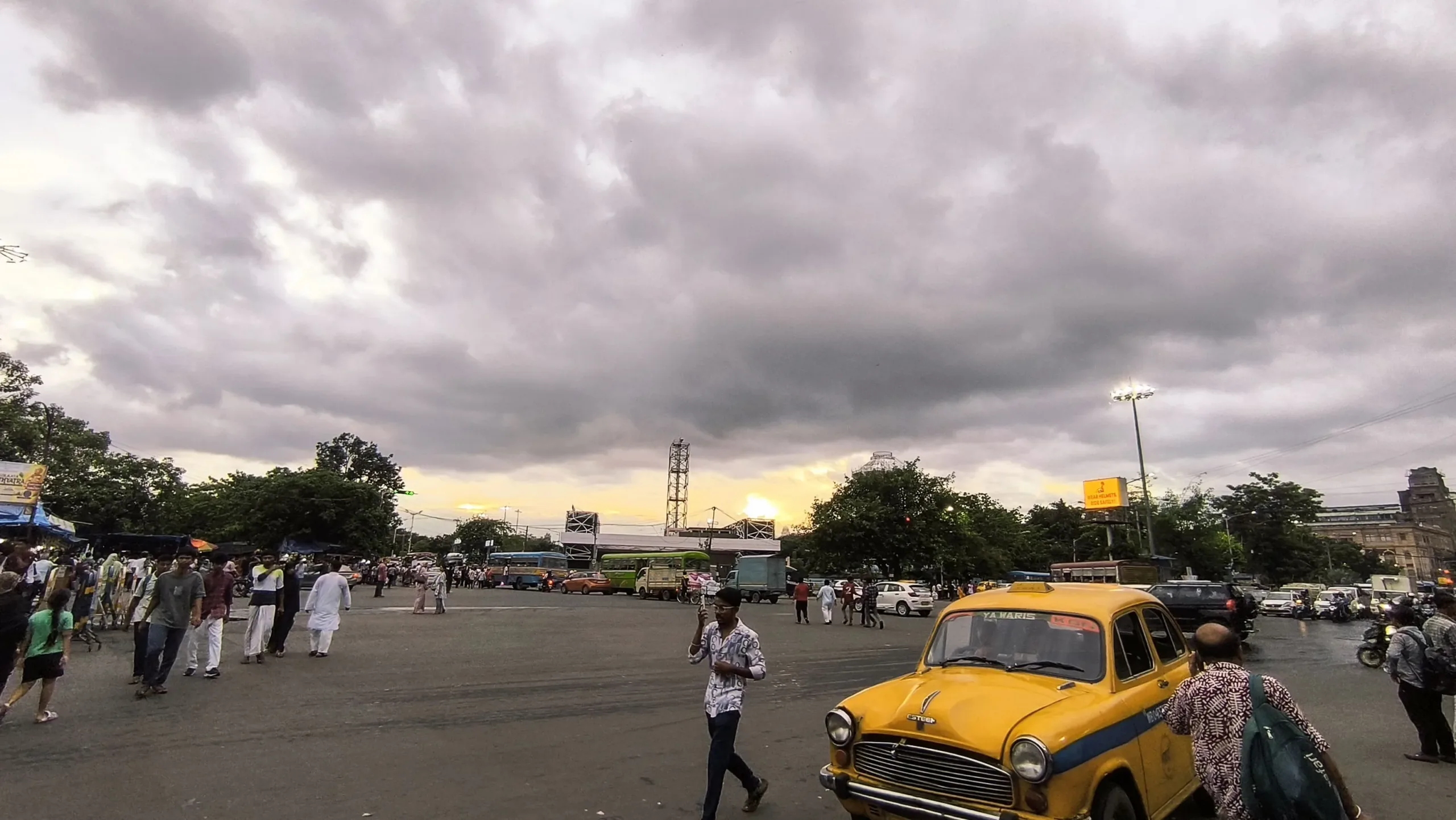
    There may not be any major weather disturbance, but scattered rain is likely in parts of West Bengal over the next few days. With Durga Puja approaching, the weather in Kolkata and across South Bengal is expected to remain a mix of sunshine, clouds and occasional showers.

    Early mornings may see a thin layer of fog in some areas. As the day progresses, bright sunshine could give way to sudden cloud cover, followed by light to moderate rain. The Alipore Meteorological Office has indicated that broadly similar conditions are likely to continue over the next few days.

    Also Read | Why is CPM Bengal struggling to attract young members?

    At present, no heavy rainfall is expected anywhere in the state. However, isolated areas may receive one or two spells of light to moderate rain.

    Monsoon withdrawal from Bengal

    According to the weather office, the monsoon is expected to gradually begin withdrawing from Bengal from the first week of October. As a result, no heavy rainfall is expected anywhere in West Bengal until October 7. Isolated light to moderate showers may occur in some places.

    Bengal May See Rain as Low-Pressure System Looms
    Bengal May See Rain as Low-Pressure Looms / ANI

    After October 7, the influence of the monsoon is likely to reduce further, potentially bringing down rainfall activity. During this period, night temperatures in the western districts of the state may remain slightly below normal. However, no major change is expected in daytime temperatures.

    Low-pressure system may affect Puja weather

    The weather could change again in the second week of October, when a low-pressure area may develop over the Bay of Bengal. According to the weather office, the system could increase rainfall over South Bengal.

    During the first three days of Durga Puja, coastal and western districts may receive rain accompanied by thunderstorms. Gusty winds of around 30–45 kmph may also occur in these areas.

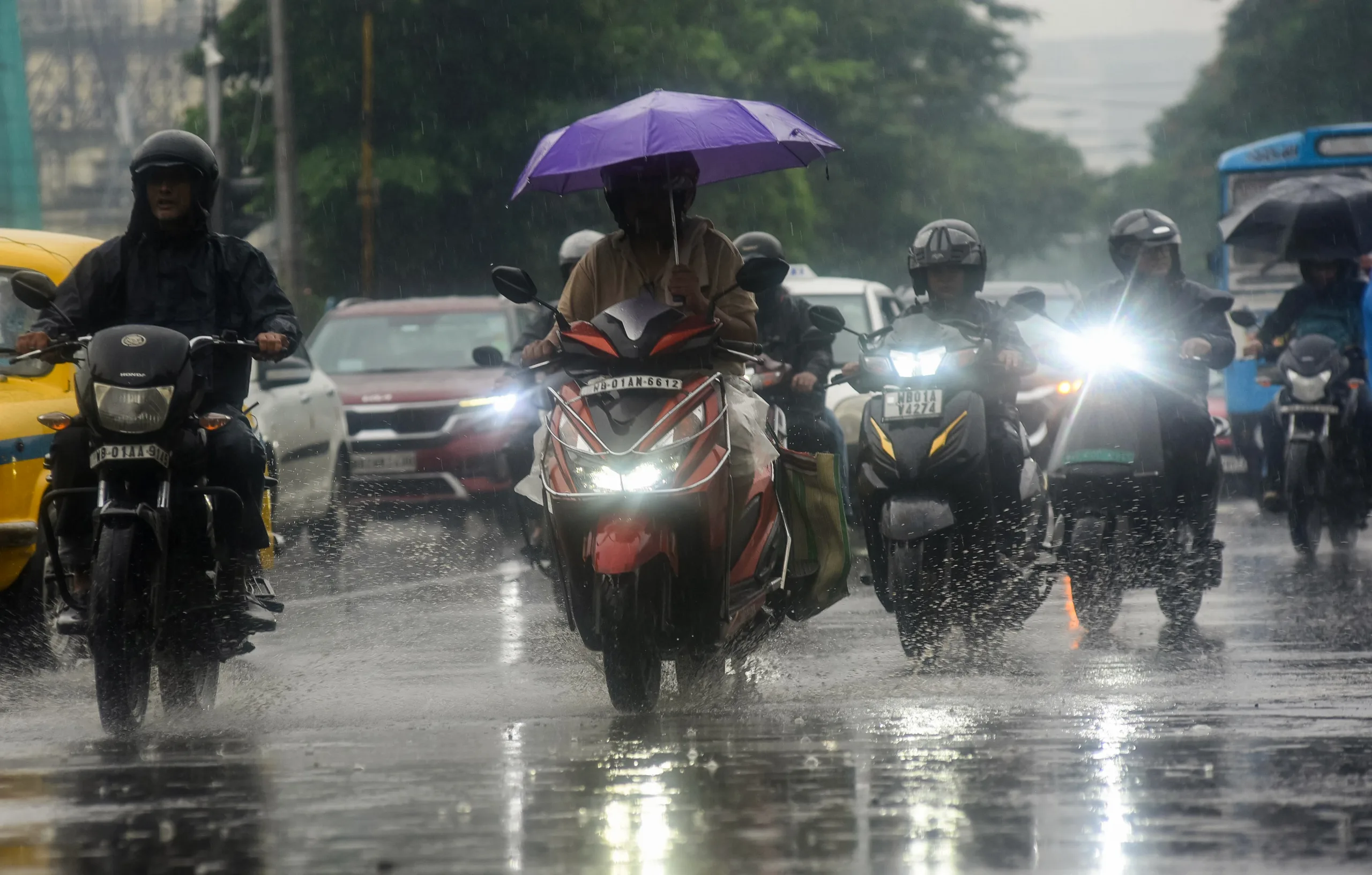
    Kolkata rain
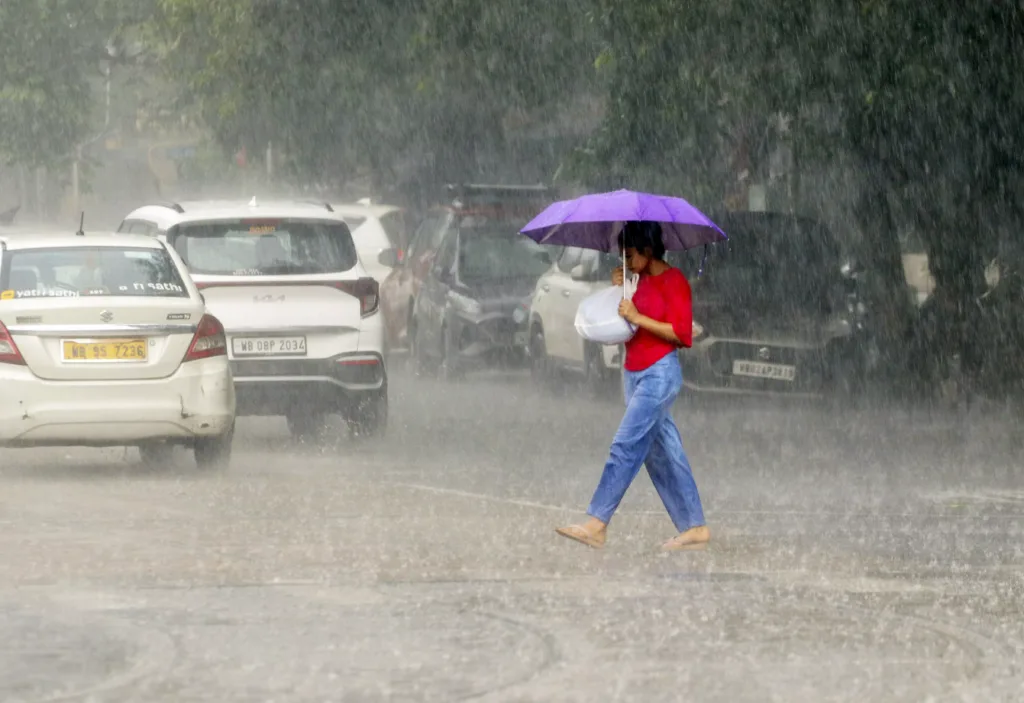
    A pedestrian holds an umbrella as she crosses the rain-slicked road amid heavy rainfall, in Kolkata. Credit: ANI

    However, the long-range forecast may change. The eventual weather situation in South Bengal will depend largely on where the potential system develops over the Andaman Sea and the direction in which it moves.

    Kolkata weather today

    According to the latest update from the Alipore Meteorological Office, Kolkata is likely to have partly cloudy skies today.

    Also Read | 7 major changes Bengal’s new school curriculum may bring in 2027

    With relative humidity hovering around 96%, humidity-related discomfort is expected to remain high. On Sunday, Kolkata recorded a maximum temperature of 33°C and a minimum temperature of 26.8°C.

    There is unlikely to be any significant change in temperatures today. However, the high humidity is expected to make the weather feel uncomfortable, particularly during the day.

  • Developments of fresh violence erupts at the SRFTI: Bricks and bottles hurled at students

    Developments of fresh violence erupts at the SRFTI: Bricks and bottles hurled at students

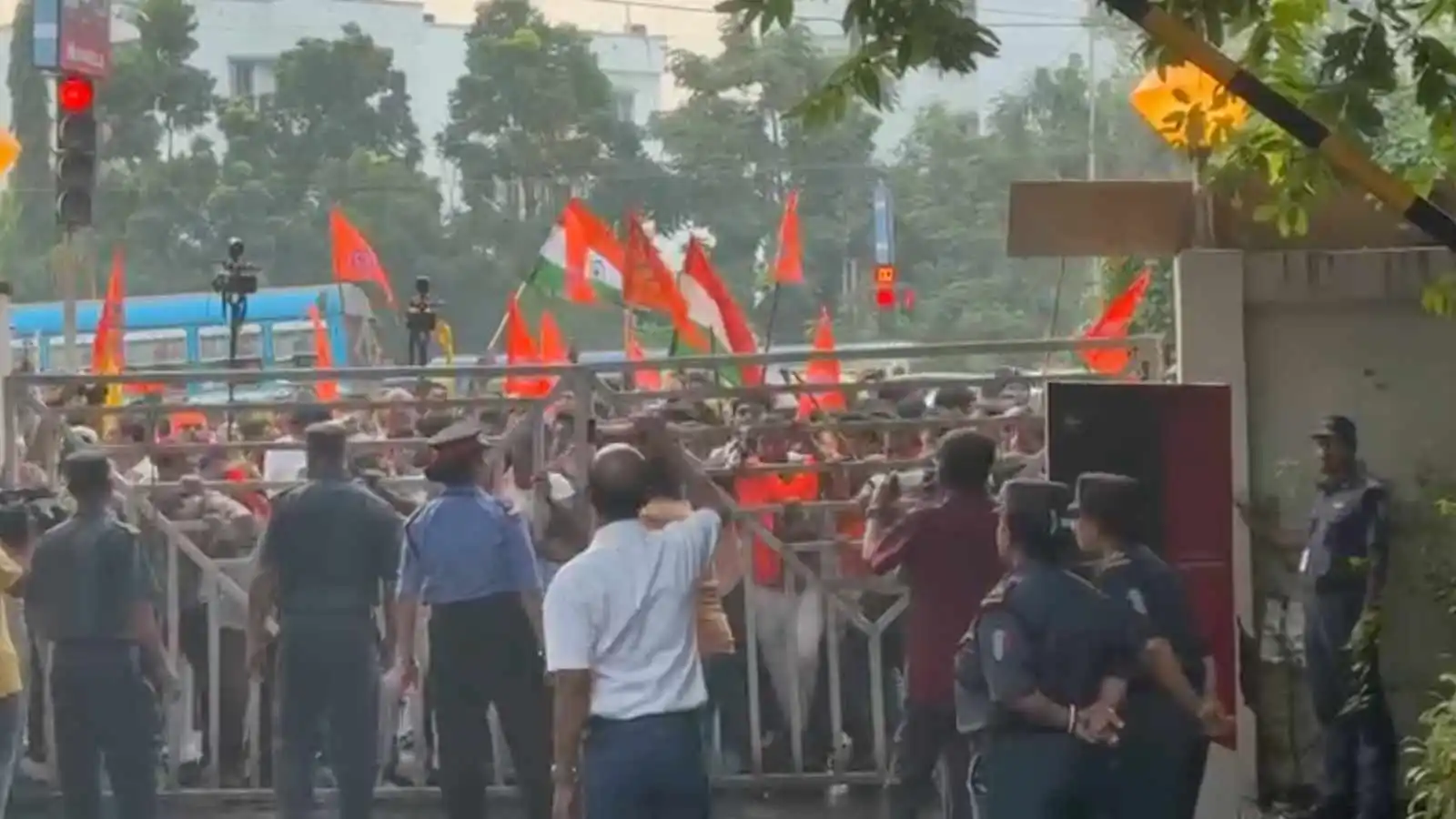
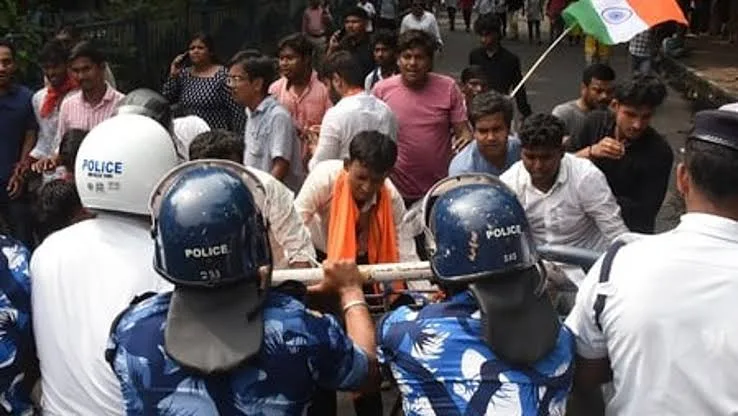
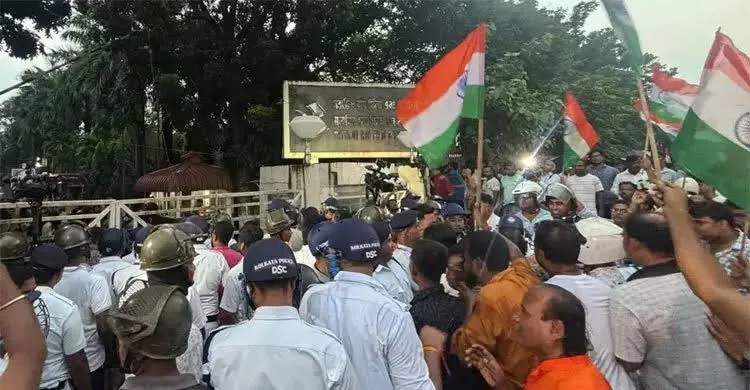
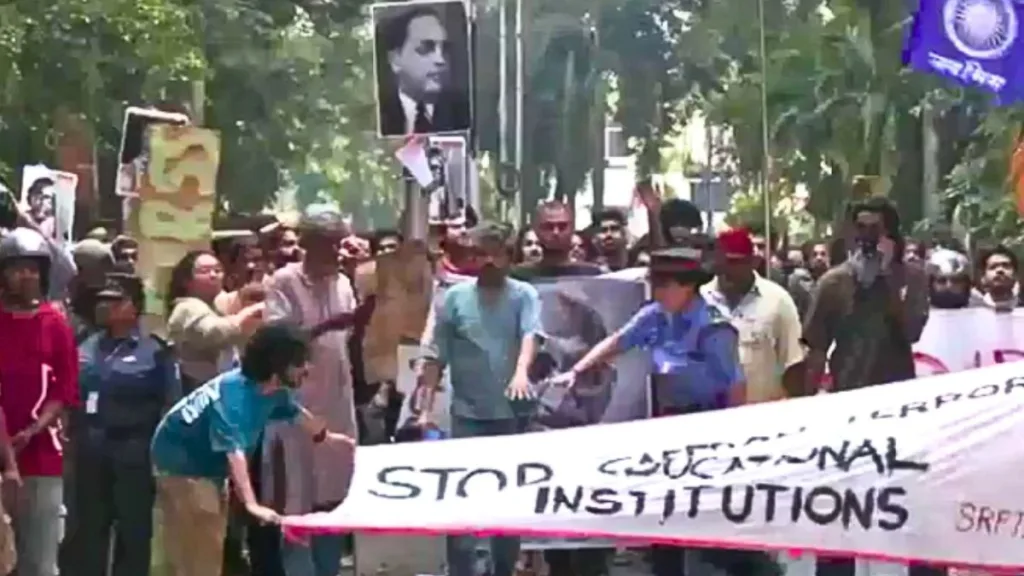
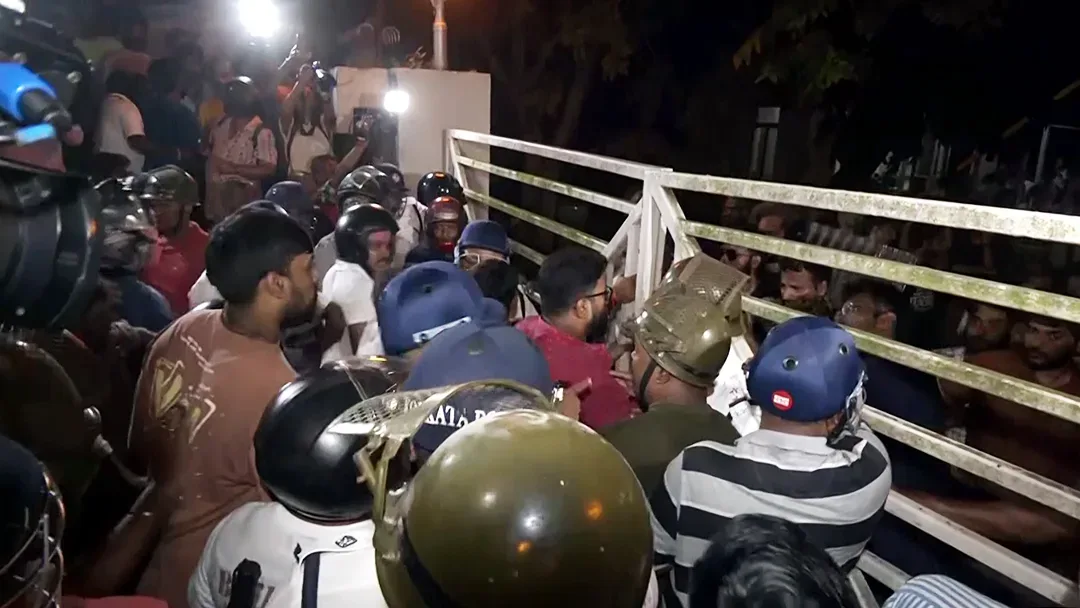
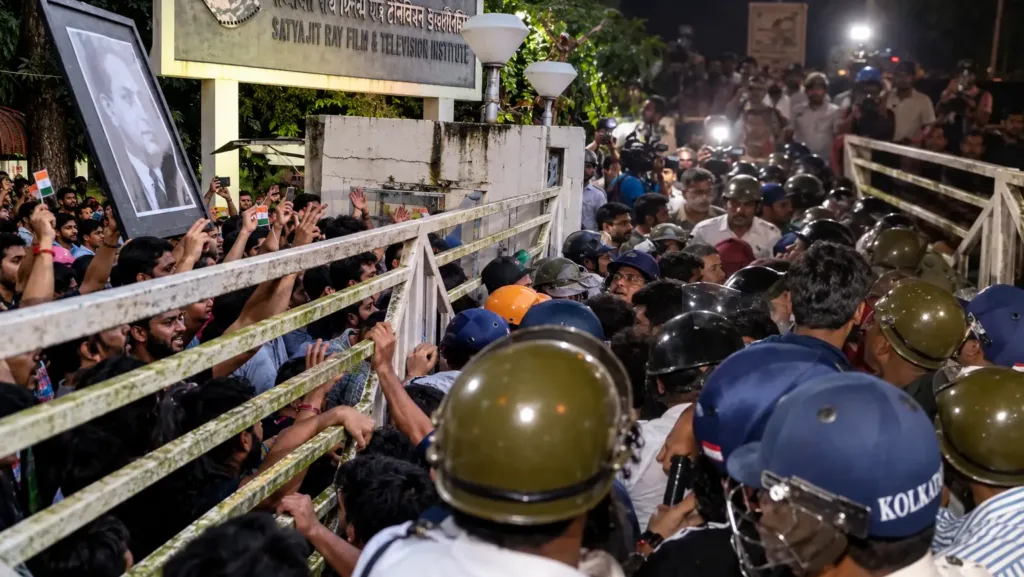
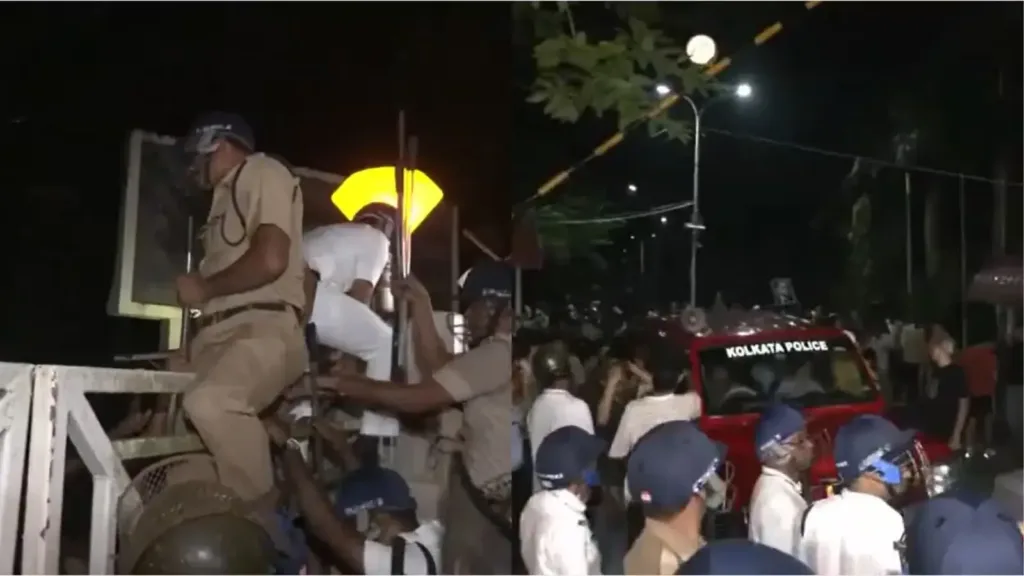
    The SRFTI protest turned tense on Sunday evening as members of the Bangiyo Hindu Jagaran Manch reached the gates of the Satyajit Ray Film and Television Institute in Kolkata and allegedly hurled bricks and bottles at students inside the campus. The protesters were also involved in a confrontation with police personnel while attempting to enter the institute.

    The incident comes barely a week after violence broke out at the film institute following an event organised by the Akhil Bharatiya Grahak Panchayat, an RSS-linked organisation. The latest confrontation has renewed concerns over the safety of students and faculty members at the campus.

    SRFTI protest turned tense on Sunday evening as members of the Bangiyo Hindu Jagaran Manch reached the gates of the Satyajit Ray Film and Television Institute in Kolkata and allegedly hurled bricks and bottles at students inside the campus. (ANI)
    SRFTI protest turned tense on Sunday evening as members of the Bangiyo Hindu Jagaran Manch reached the gates of the Satyajit Ray Film and Television Institute in Kolkata and allegedly hurled bricks and bottles at students inside the campus. (ANI)

    Why the SRFTI protest raised security concerns

    Members of the Bangiyo Hindu Jagaran Manch marched towards the institute on Sunday, alleging that students had insulted Swami Vivekananda and Bharat Mata. Protesters shouted slogans against the institute and accused students of being “Naxalites”.

    According to students, protesters attempted to breach the campus gates and subsequently threw bottles and bricks towards those inside. Students and teachers were seen trying to avoid the projectiles while raising slogans opposing the demonstrators’ entry.

    One student alleged that photographs of Dr BR Ambedkar and Mahatma Gandhi displayed at the institute gates were removed and replaced with pictures of Bharat Mata. The allegation could not be independently verified from the information available.

    Students had reportedly approached the Kolkata Police and the West Bengal government a day before the march, requesting that permission for the protest be withheld and that sufficient security be deployed around the institute.

    Also Read | India vs Brazil: Why did AIFF leave hundreds of journalists confused over accreditation? Exploring

    Members of the Bangiyo Hindu Jagaran Manch marched towards the institute on Sunday, alleging that students had insulted Swami Vivekananda and Bharat Mata. (ANI)
    Members of the Bangiyo Hindu Jagaran Manch marched towards the institute on Sunday, alleging that students had insulted Swami Vivekananda and Bharat Mata. (ANI)

    Students had warned authorities before the march

    The latest SRFTI protest had been a source of concern for students even before the demonstrators arrived at the campus. Students from SRFTI Kolkata, the Film and Television Institute of India in Pune and FTII Itanagar had also written to Union Information and Broadcasting Minister Ashwini Vaishnaw, raising concerns about security following the earlier campus violence.

    In their communication, students pointed out that the proposed rally was scheduled to take place close to the institute’s main gate. They argued that holding a protest in the vicinity of the campus so soon after the earlier confrontation could heighten security risks.

    The concerns came after the September campus clash, when students had objected to the ABGP event. The SRFTI students’ union alleged that members of the organisation assaulted students and teachers and described them as anti-national, urban Naxals and terrorists.

    Following that incident, three FIRs were registered. Two cases were based on complaints involving unidentified students, while another was registered against unidentified persons following a complaint by SRFTI Dean (Film) Sukanta Majumder.

    The cases include provisions of the Bharatiya Nyaya Sanhita relating to wrongful restraint, assault on public servants, causing hurt and criminal intimidation. Allegations were also made that members of the visiting organisation restrained students and faculty members and threatened them.

    Also Read | Brazil arrives in Kolkata for India clash as security tightens

    The repeated confrontations have also brought renewed attention to the security arrangements around educational institutions, particularly when political or ideological groups organise demonstrations nearby. (ANI)
    The repeated confrontations have also brought renewed attention to the security arrangements around educational institutions, particularly when political or ideological groups organise demonstrations nearby. (ANI)

    Probe into earlier clash remains underway

    The latest SRFTI protest has added another layer to an already tense situation at the Kolkata institute. Police personnel were reportedly injured during Sunday’s confrontation as protesters attempted to move towards the campus.

    The September violence had already prompted the state government to constitute a six-member Special Investigation Team to examine the circumstances surrounding the clash. The investigation is expected to look into the sequence of events and allegations made by both sides.

    The repeated confrontations have also brought renewed attention to the security arrangements around educational institutions, particularly when political or ideological groups organise demonstrations nearby.

    As authorities investigate the earlier violence, the fresh confrontation has intensified questions over whether adequate safeguards are being put in place to prevent further escalation at SRFTI.

  • India vs Brazil: Why did AIFF leave hundreds of journalists confused over accreditation? Exploring

    India vs Brazil: Why did AIFF leave hundreds of journalists confused over accreditation? Exploring

    The India vs Brazil international friendly in Kolkata faced an unexpected media accreditation problem on Friday, with hundreds of journalists waiting at the Salt Lake Stadium for their passes just a day before the much-anticipated match.

    The accreditation process for the India vs Brazil and India vs Uruguay fixtures opened on September 19, with journalists given a week to submit their applications. Reporters whose applications were approved were initially informed that their accreditation cards could be collected from the press conference room at Salt Lake Stadium at 4:30 pm on Friday.

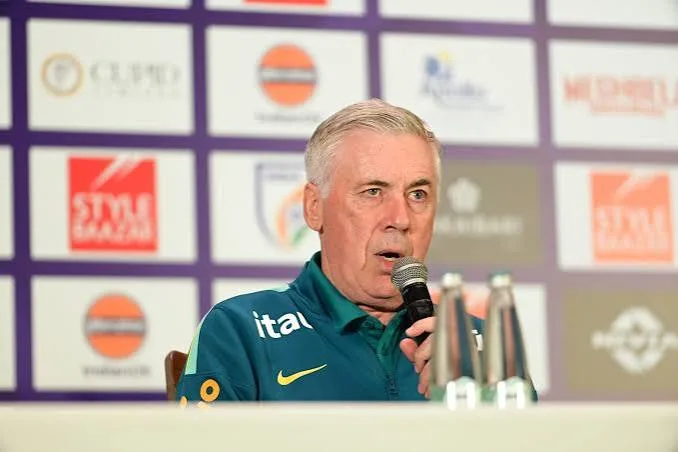
    Brazil head coach Carlo Ancelotti
    Brazil head coach Carlo Ancelotti. Credit: X/ANI

    Journalists wait for India vs Brazil accreditation cards

    The process became confusing on Friday morning after several journalists received an email around 8 am stating that the accreditation cards could be collected at 9 am from the same venue.

    However, staff at the stadium later told reporters that the cards would only be distributed in the evening. The passes were still unavailable by 5 pm, leaving a large group of journalists waiting at the venue.

    The situation became increasingly tense as reporters waited for clarity on when they would receive their accreditation. Some journalists attempted to surround members of the local organising committee, while international media personnel, including reporters from Brazil, watched the developments.

    British influencer Davina Pindoria, who travelled from London to cover the match, described her experience at the stadium.

    “I usually cover cricket, and this is one of the first times I am covering a football match this big. It has been utterly chaotic,” British influencer Davina Pindoria, who has travelled to India from London, told Sportstar.

    AIFF explains delay in media passes

    The All India Football Federation (AIFF) later explained that the accreditation cards had been printed in Mumbai but could not be transported to Kolkata on the planned flight.

    “There has not been a major issue. The accreditation cards were printed in Mumbai but could not be put on a flight on Friday morning. As a result, they could not reach Kolkata in time, but we have been assured that it will reach by 11 pm or midnight,” an AIFF official confirmed.

    The delay meant approved journalists had to wait until the eve of the match to receive confirmation.

    AIFF, however, later issued a statement, noting, “We sincerely apologise for the inconvenience and miscommunication caused by the delay in delivering your accreditation cards. Due to unforeseen logistical challenges, the issuance process was briefly delayed; however, our team is working swiftly to resolve this.”

    “You may collect your accreditation cards tomorrow at Hotel Hyatt Regency (adjacent to VYBK). Collection Venue: Hotel Lobby, Hotel Hyatt Regency. Collection Timings: 11:00 AM – 5:00 PM,” they added.

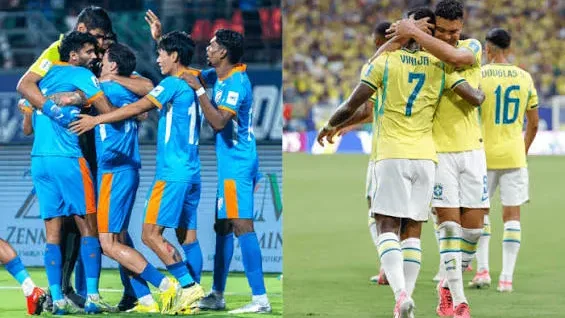
    India and Brazil football team
    India and Brazil football team | Representational Image

    Earlier accreditation concerns among journalists

    The accreditation process had also faced questions earlier in the week after several veteran local journalists reportedly had their accreditation cancelled because of limited space.

    Also Read | Brazil arrives in Kolkata for India clash as security tightens

    However, several ‘so-called’ social media influencers who never even covered a single Indian grassroots football match, rather busy doing Barca-Madrid-Liverpool, somehow secured their seats in the Press box.

    Security deployed for India vs Brazil

    The accreditation confusion came against the backdrop of tight security arrangements in Kolkata ahead of the Brazil team’s visit.

    Also Read | West Bengal Durga puja 2026: What is changing this year with Bengal’s regime change?

    A significant police presence has been deployed around Salt Lake Stadium as well as the hotel where the Brazilian squad is staying. Vehicles entering the stadium complex are being checked, while the Brazil team bus is also undergoing security checks involving sniffer dogs.

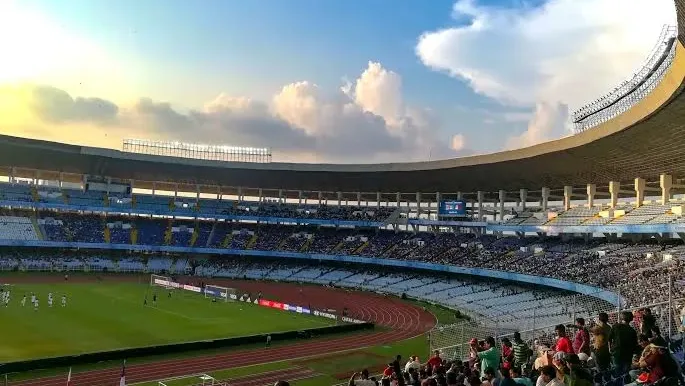
    Salt Lake Yuva Bharati Krirangan
    Salt Lake Yuva Bharati Krirangan. Credit: X/ANI

    With India set to face Brazil in front of a packed Kolkata crowd, security agencies have maintained strict surveillance around the stadium and the Brazilian team’s accommodation ahead of Saturday’s international friendly.

  • Brazil arrives in Kolkata for India clash as security tightens

    Brazil arrives in Kolkata for India clash as security tightens

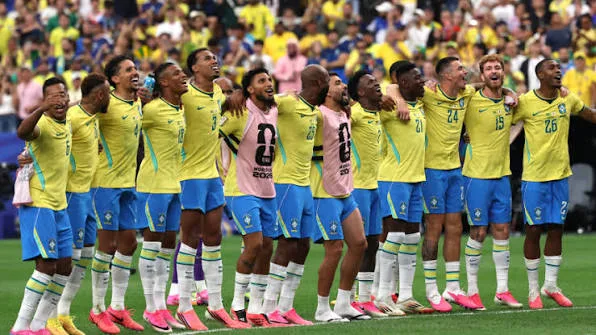
    Five-time world champions Brazil have arrived in Kolkata ahead of their much-anticipated friendly against India on October 3. The Brazilian football team’s arrival in Kolkata on Thursday night was accompanied by tight security, with police preventing supporters from gathering near the airport or lining the route to the team hotel. The Selecao were escorted directly to their accommodation amid heightened security arrangements.

    Despite the restrictions around the airport, the Brazilian squad received a warm reception at the hotel. Vinicius Jr and head coach Carlo Ancelotti were among the biggest attractions, while players including Marquinhos, Endrick and Gabriel were also seen entering the hotel. The arrival has added to the excitement surrounding a rare India-Brazil football meeting in Kolkata.

    Five-time world champions Brazil have arrived in Kolkata ahead of their much-anticipated friendly against India on October 3. (AFP)
    Five-time world champions Brazil have arrived in Kolkata ahead of their much-anticipated friendly against India on October 3. (AFP)

    Brazil football team’s Kolkata arrival draws loud cheers

    The Brazilian squad’s arrival in Kolkata took place late on Thursday, with the squad travelling under heavy police protection from the airport. Authorities did not allow fans to gather along the route, a measure aimed at managing crowds and maintaining security around the visiting team.

    The restrictions, however, did little to dampen the excitement surrounding Brazil’s visit. Once the players reached their hotel, supporters welcomed them with loud cheers. Vinicius Jr, one of the biggest names in the squad, attracted considerable attention, while Ancelotti also received a strong response from those waiting outside.

    The Indian Football social media account welcomed the Selecao to Kolkata with messages in Portuguese, Bengali and English. The visit has generated significant interest among football fans in a city known for its strong following of the sport.

    Ancelotti and one player from the squad will attend the pre-match press conference at the team hotel on Friday morning. Brazil are scheduled to train at the Salt Lake Stadium from 4pm.

    Also Read | Durga Puja 2026: From Tant to Baluchari, 7 Bengali sarees to flaunt this puja

    The Brazil football team's stay in Kolkata has involved detailed arrangements to meet the squad’s food and hygiene requirements. (AFP)
    The Brazil football team’s stay in Kolkata has involved detailed arrangements to meet the squad’s food and hygiene requirements. (AFP)

    Special arrangements made for Brazil squad

    The Brazilian squad’s stay in Kolkata has involved detailed arrangements to meet the squad’s food and hygiene requirements. According to PTI, Brazil have brought their own chef and hygiene manager to the city.

    The team has also made special arrangements involving food and essential supplies. Meat, cheese and water have reportedly been brought in for the squad, while the hotel has made provisions for preparing and storing food according to the team’s requirements.

    Such arrangements are common for international teams travelling for matches, particularly when squads have specific dietary and hygiene protocols. Brazil’s support staff will oversee these requirements during the team’s stay in Kolkata.

    There is also considerable attention on the squad because Barcelona winger Raphinha is not part of the travelling group. The 29-year-old left the national team on Wednesday after a scan detected what the Brazilian Football Confederation described as a small muscle oedema in his right thigh.

    Raphinha had been substituted at half-time during Brazil’s 4-2 friendly win over Australia on Tuesday. His withdrawal means Indian football fans will not get to see one of Brazil’s prominent attacking players during the Kolkata fixture.

    Also Read | West Bengal Durga puja 2026: What is changing this year with Bengal’s regime change?

    Ancelotti and one player from the squad will attend the pre-match press conference at the team hotel on Friday morning. Brazil are scheduled to train at the Salt Lake Stadium from 4pm. (AFP)
    Ancelotti and one player from the squad will attend the pre-match press conference at the team hotel on Friday morning. Brazil are scheduled to train at the Salt Lake Stadium from 4pm. (AFP)

    India prepares for major football test

    The arrival of the Brazilian squad’s Kolkata contingent sets the stage for Saturday’s encounter at the Salt Lake Stadium. The match is part of India’s series of fixtures against teams that have qualified as major forces in international football.

    India began the series with a September 25 fixture against Panama in Bengaluru. The national side will then face Uruguay on October 6, before travelling to New Zealand for two more friendlies in November.

    For India, the Brazil match represents an opportunity to face a side with an extensive World Cup pedigree and a squad featuring several established international names. For Brazil, the fixture forms part of their preparation and international schedule.

    The Salt Lake Stadium is expected to be the centre of attention when the two sides meet on Saturday. With Ancelotti leading Brazil and Vinicius Jr among the headline names, anticipation has been building across Kolkata ahead of the match.

    The Brazilian squad’s Kolkata visit has also brought renewed focus to the city’s football culture, with supporters eager to see the five-time world champions in action. The final training session and Friday’s press conference will provide the first major opportunities to hear from the Brazilian camp before the much-awaited India clash.

  • Durga Puja 2026: From Tant to Baluchari, 7 Bengali sarees to flaunt this puja

    Durga Puja 2026: From Tant to Baluchari, 7 Bengali sarees to flaunt this puja

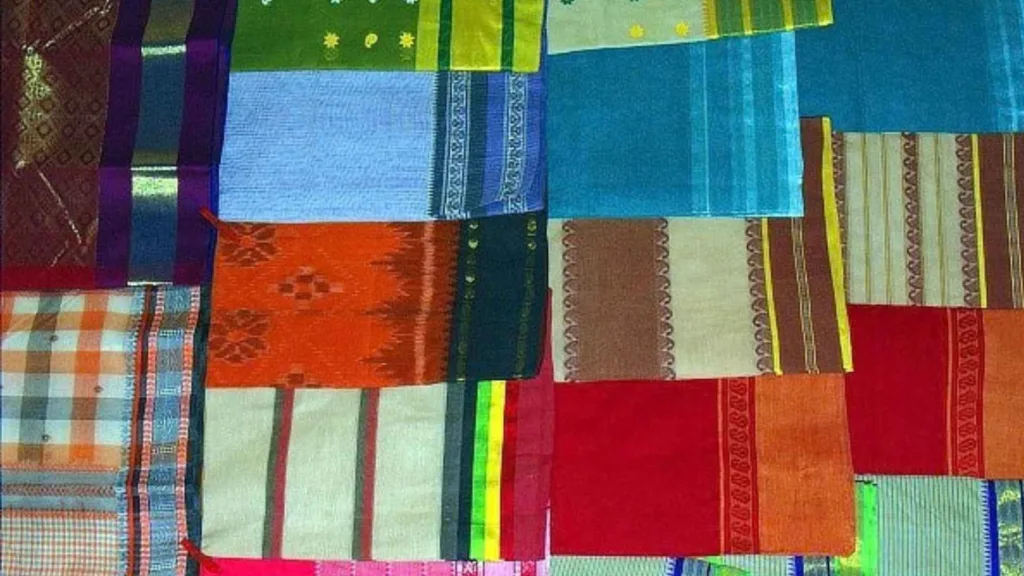
    Durga Puja and sarees are almost inseparable in Bengal. But if your festive wardrobe begins and ends with a white-and-red saree, there is a whole world of Bengali handloom waiting to be explored. From the easy elegance of Tant to the intricate storytelling of Baluchari, Bengal has a rich variety of sarees that can bring a traditional touch to your Puja look.

    Whether you are dressing up for Anjali, getting ready for a festive evening or heading out for pandal-hopping, these seven Bengal saree varieties are worth knowing.

    Tant Saree

    Durga Puja 2026: 7 Bengali sarees to flaunt this season
    Tant Saree | Wikipedia

    Tant is among the most recognisable Bengali handloom sarees. Traditionally made with cotton, it is lightweight and breathable, making it comfortable for long festive days. The white Tant with a red border remains closely associated with Bengali festive dressing, while modern versions come in different colours and patterns.

    Also Read | West Bengal Durga puja 2026: What is changing this year with Bengal’s regime change?

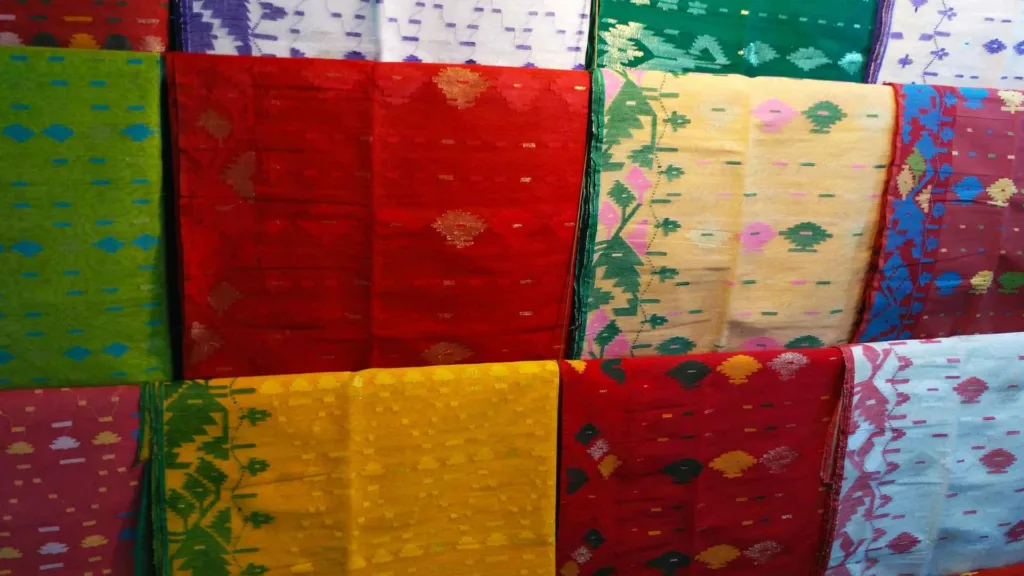
    Jamdani Saree

    Durga Puja 2026: 7 Bengali sarees to flaunt this season
    Jamdani Saree | Wikipedia

    Jamdani is known for its intricate motifs, which are woven into the fabric rather than simply printed onto it. Floral designs, geometric patterns and butis are commonly seen. The detailed weaving process can be slow and intricate, making finely crafted Jamdani sarees particularly prized.

    Baluchari Saree

    Baluchari Saree
    Baluchari Saree | Wikipedia

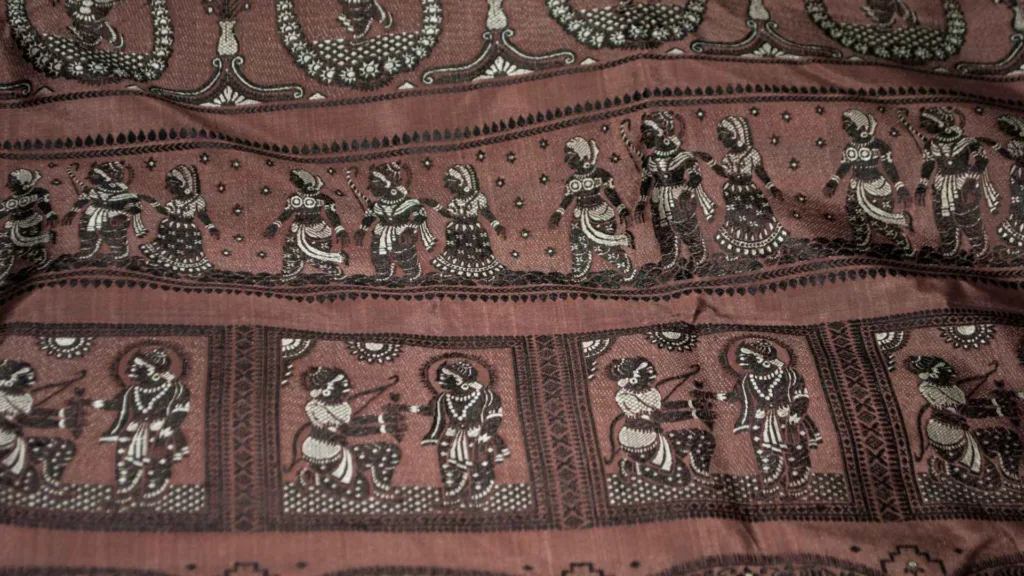
    Want your saree to carry a story? Baluchari is one to look out for. Traditionally associated with Bishnupur in West Bengal, these sarees feature elaborate pallu and border designs inspired by mythology, epics and scenes from everyday life. The detailed motifs give Baluchari a distinctive festive appeal.

    Garad and Korial Sarees

    bengali saree (1)
    Garad and Korial Sarees | AI Generated

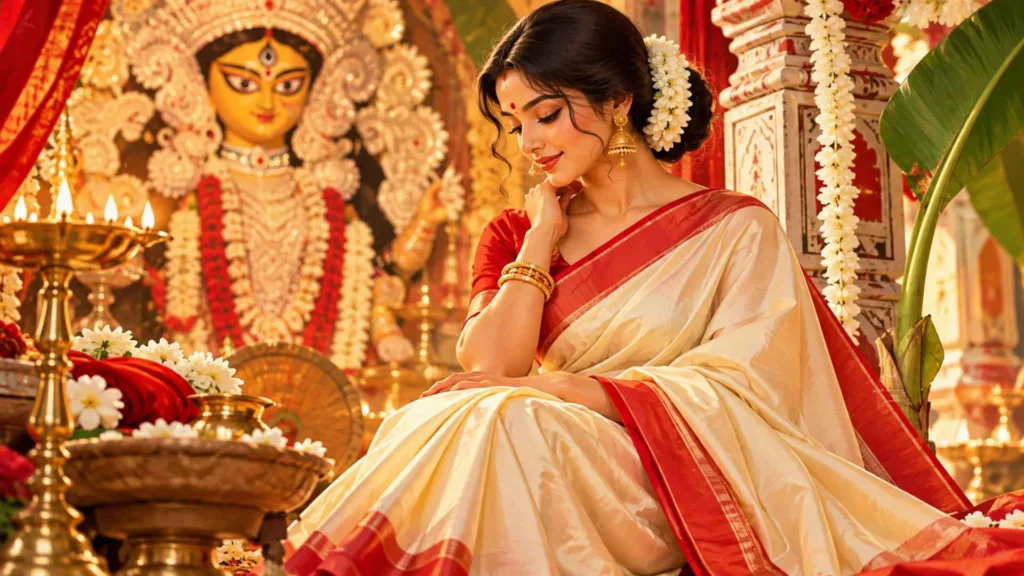
    Garad and Korial sarees are traditionally associated with Bengali religious and festive occasions. They generally feature a light-coloured, often off-white or cream body with a red border. Their understated appearance makes them a familiar choice for Puja rituals and traditional celebrations.

    Matka Silk Saree

    bengali saree (2)
    Matka Silk Saree | AI Generated

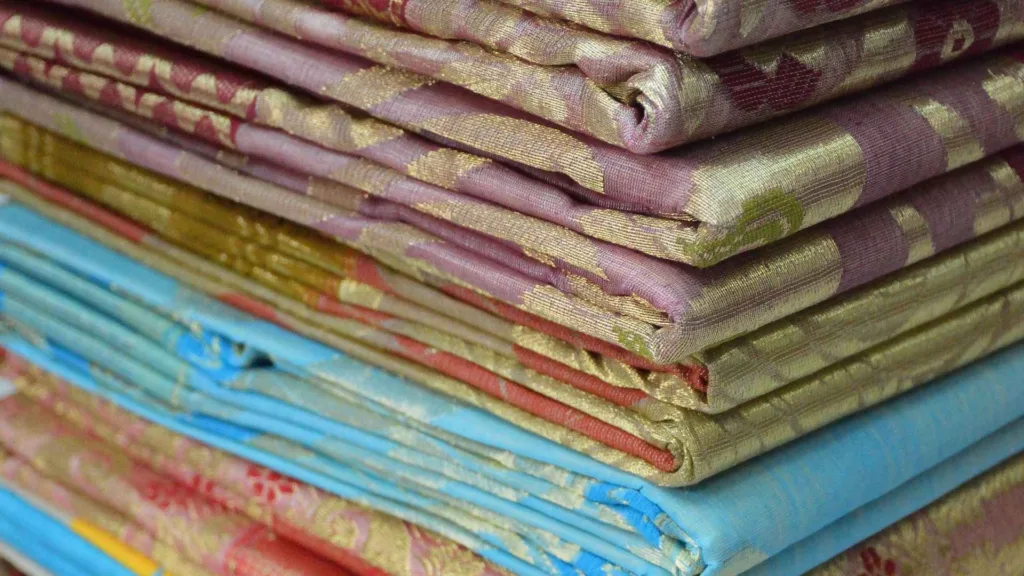
    Matka silk has a distinct textured appearance and is made using yarn produced from silk waste. Its slightly irregular texture gives the fabric a characteristic handcrafted look, making it an option for those seeking a festive saree with a handloom feel.

    Also Read | Kumartuli: The 300-year-old Kolkata neighbourhood where Maa Durga comes to life before Puja

    Tussar Silk Saree

    bengali saree (4)
    Tussar Silk Saree | Wikipedia

    Tussar silk is valued for its natural texture, earthy sheen and rich appearance. West Bengal has a strong tradition of silk weaving, and Tussar sarees are available in various regional designs and motifs. For Durga Puja, they can be suited to evening celebrations when a more substantial fabric is preferred.

    Bengal’s handloom heritage

    These sarees showcase the range of Bengal’s textile traditions. From the lightweight Tant and detailed Jamdani to the storytelling motifs of Baluchari and the textured appeal of Matka and Tussar silk, there is much more to Bengali festive dressing than the classic white-and-red combination.

  • West Bengal Durga puja 2026: What is changing this year with Bengal’s regime change?

    West Bengal Durga puja 2026: What is changing this year with Bengal’s regime change?

    Durga Puja in West Bengal is entering a new political chapter in 2026. With a new government in office, several familiar features of Kolkata’s biggest annual festival are changing, from the Red Road carnival and puja patronage to government grants, food practices and the way pandals are inaugurated.

    The biggest change is perhaps the end of the Durga Puja carnival on Red Road, a much-remembered feature of the Mamata Banerjee years. Instead, the new government is preparing a major Mahalaya programme at Eden Gardens on October 10, which Prime Minister Narendra Modi is expected to attend.

    But the changes go beyond the calendar. Several well-known pujas have seen changes in their organising committees, while questions around food, themes, political stalls and the religious character of the festival have also emerged.

    At the same time, the number of Durga Pujas across Bengal continues to rise. As of September 24, 2,318 pujas had registered on Kolkata’s Sahaj single-window permission portal. The figure included 270 new applicants. In 2025, the final number of applications reached 2,936, the highest recorded till then.

    Across West Bengal, the state power department expects the number of community pujas to cross 65,000 this year, based partly on demand for temporary electricity connections.

    Durga Puja’s long tradition of change

    The community Durga Puja, or barowari puja, is generally associated with late-18th-century Guptipara. Historians, however, differ over the exact year and even over whether the earliest community festival there was Durga Puja or Jagaddhatri Puja.

    The term barowari is commonly linked to baro yaar, meaning “twelve friends”.

    Bengal’s Puja traditions have evolved repeatedly. Zamindars once played a major role in patronage, while political leaders later became closely associated with prominent community celebrations.

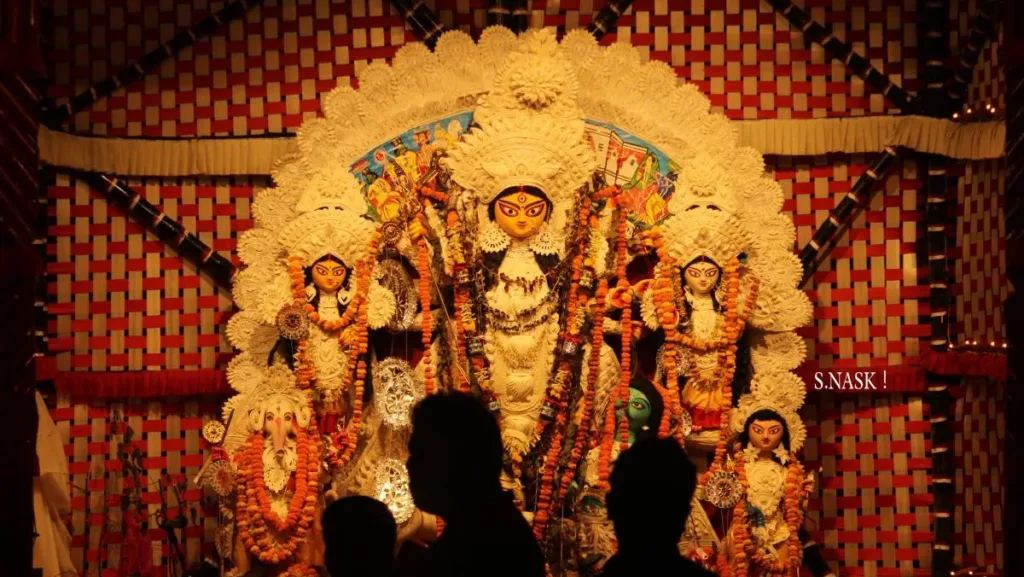
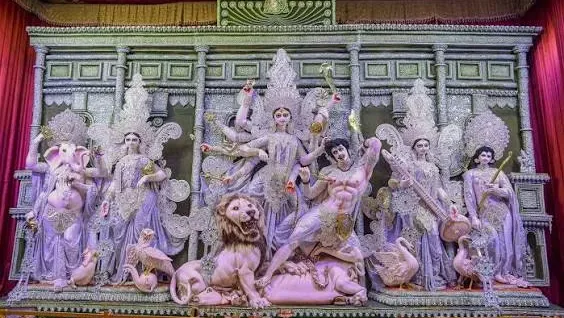
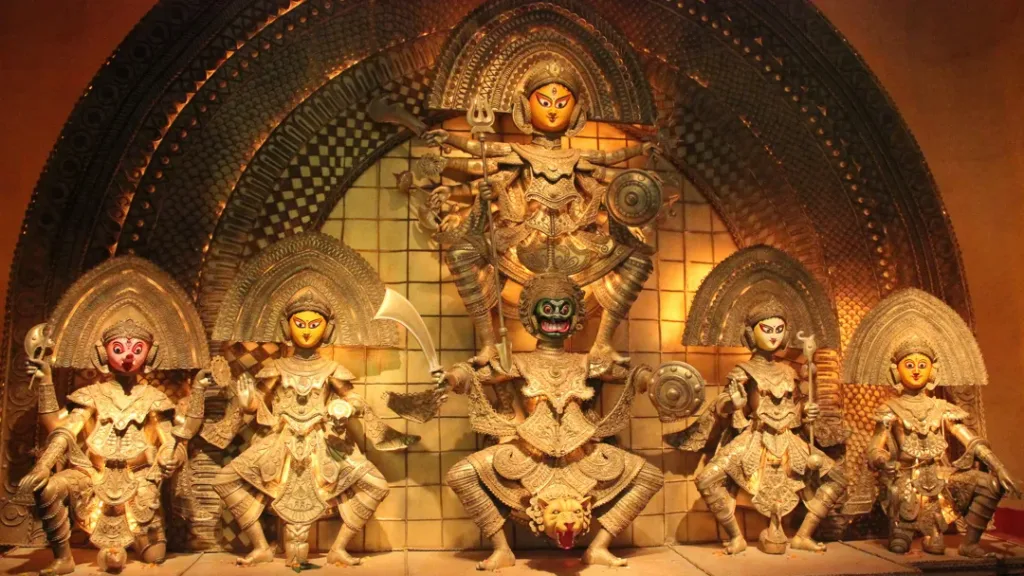
    The visual language of Puja has changed too. Traditional ek-chalar thakur, where Durga and her family are presented together within one frame, now exists alongside elaborate multi-part installations. Sabeki pratima, or traditional idols, stand alongside theme-based creations made with unusual materials.

    A look at traditional Durga puja in Bengal
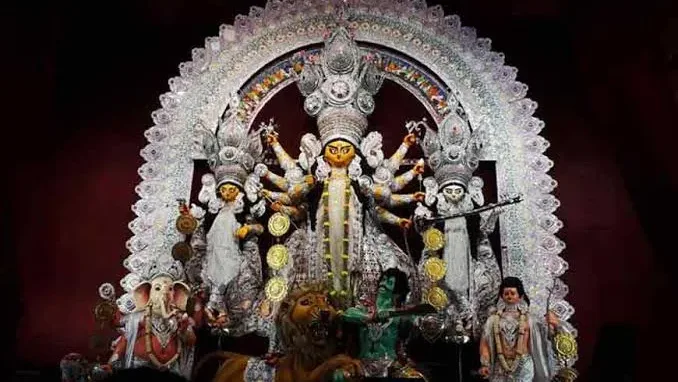
    A look at traditional Durga puja in Bengal. Credit: X/asutoshhalder

    Kumartuli remains at the centre of Kolkata’s idol-making tradition. As Mahalaya approaches, its narrow lanes become increasingly busy with visitors, photographers and people looking for a glimpse of the idols before they leave for the city’s pandals.

    The nearby Kumartuli Ghat is also being developed. A Rs 10-crore project covers a 300-metre stretch of the Hooghly riverfront and includes viewing areas, walkways and improved public facilities.

    Political patronage of Kolkata’s big pujas changes

    One of the most noticeable developments in Durga Puja 2026 is the change in leadership at several prominent pujas.

    During the Trinamool Congress years, several major celebrations became closely identified with influential party leaders. Sreebhumi was associated with Sujit Bose, Suruchi Sangha with Arup Biswas and his brother Swarup, Chetla Agrani with Firhad Hakim, and Naktala Udayan Sangha with Partha Chatterjee. That pattern is now changing.

    At Sreebhumi Sporting Club, a new committee is overseeing this year’s Puja. BJP leader Kanak Debnath is its president. Organisers have said the scale of the celebration will remain while efforts will be made to reduce prolonged road blockades.

    A look at Sreebhumi Durga Puja
    A look at Sreebhumi Durga Puja. IG/sreebhumisportingclub

    Suruchi Sangha has also undergone a leadership change. BJP MLA Sourav Sikdar is now secretary, with the new committee replacing the earlier arrangement associated with the Biswas brothers. The transition, however, was met with protests from some residents.

    At Tala Prattoy, known in recent years for its striking themes, much of the previous organising structure has changed. Sushanta Shibani Pal is handling this year’s theme.

    The changes are not limited to individual puja committees. A new statewide organisation called the Paschim Banga Durga Puja Samannay Samiti, or West Bengal Durga Puja Coordination Committee, is taking shape. Kartik Maharaj is its chairman, while BJP MLA Rudranil Ghosh is chief adviser.

    The organisation could provide another coordination platform alongside the established Forum for Durgotsab, which represents hundreds of Puja committees.

    New pujas and disputes add to the churn

    Some familiar Kolkata locations are also entering new territory. Allen Park on Park Street, better known for its Christmas and New Year celebrations, will host a Durga Puja for the first time. The celebration is being organised by Kolkata Sanatani Sangha, fronted by BJP leader Shankudeb Panda.

    Mohammad Ali Park has also seen a dispute, with competing committees putting up banners under different names after BJP councillor Meena Devi Purohit proposed changing the venue’s name to Mahabali Park.

    Bagbazar’s historic Puja faced a separate problem after a committee election became deadlocked. The matter eventually went to court.

    Durga Puja grants and free electricity

    The financial system supporting community Durga Puja is also being altered. The Mamata Banerjee government began providing annual assistance of Rs 10,000 to Puja committees in 2018. The amount was gradually increased and stood at Rs 1.1 lakh in 2025.

    For 2026, the new BJP government has announced Rs 1 lakh per committee. Chief minister Suvendu Adhikari has also appealed to larger pujas to leave the assistance for smaller celebrations that require financial support. Several prominent committees have agreed to forgo the grant.

    The government has also asked electricity suppliers to provide free power to Puja organisers. In 2025, the electricity waiver under the previous government stood at 80%.

    There was also a controversy in Birbhum after BJP district president Uday Shankar Banerjee reportedly told committees that those accepting the 2026 government grant would have to display the chief minister’s photograph or face action. Minister Dilip Ghosh rejected the claim.

    Will Bengal’s Durga Puja food traditions change?

    Food has emerged as another important point of discussion ahead of Durga Puja.

    In August, VHP central advisory council member Swami Nirgunananda suggested that non-vegetarian food should be kept away from the immediate Puja area. He also acknowledged that Bengal’s Durga Puja has never been entirely vegetarian.

    VHP leaders later clarified that no official or binding instruction was prohibiting non-vegetarian food during Durga Puja.

    Religious preacher Dhirendra Krishna Shastri, popularly known as Bageshwar Baba, subsequently criticised the consumption of non-vegetarian food during Puja and described those who did so as “pakhandis”, or hypocrites.

    The remarks drew criticism, including from within the BJP. State party president Samik Bhattacharya defended Bengal’s food traditions. Adhikari later visited Kalighat temple and ate traditional prasad that included fried fish, fish head and basanti pulao.

    At Suruchi Sangha, organisers have said mutton and hilsa will continue to be served during the Maha Navami feast.

    Some housing societies have similarly said their Puja feasts will retain their existing traditions and remain largely non-vegetarian, except on Maha Ashtami.

    However, some organisers are creating clearer boundaries around the sacred space. Thakurpukur SB Park and Chaltabagan have restricted visitors from entering while eating. The new Allen Park Puja will not have food stalls inside the park.

    Theme pujas continue, but with a different emphasis

    Theme-based Durga Puja remains part of Kolkata’s festival landscape in 2026. There is no official census dividing theme pujas from traditional celebrations.

    Organisers have been asked to ensure that idols and themes do not hurt religious sentiments or undermine what the new government describes as Sanatani traditions.

    A theme-based Durga puja in Kolkata in 2025
    Idols conceptualised as Purulia ‘Chhau’ dancers, Ajeya Sanghati club, Kolkata, 2025.

    Yet experimental themes have not disappeared. Subjects linked to care workers, gender identity and ecology continue to feature in this year’s celebrations.

    Alongside them, some major pujas are placing greater emphasis on patriotism, nationalism and Hindu cultural identity.

    Santosh Mitra Square, headed by BJP MLA Sajal Ghosh, has selected Vande Mataram as its theme. New Town Sanatani Durga Puja is exploring what its organisers describe as the connection between ancient Indian traditions and modern science.

    The association between Durga and political or nationalist ideas, however, has a much longer history.

    Bankimchandra Chattopadhyay used the image of Durga as a symbol of Bengal in Amar Durgotsav, included in Kamalakanter Daptar. Later, Kazi Nazrul Islam invoked Durga as Shakti in his poems and Agomani compositions. His 1922 poem Anandamoyeer Agamane used the Goddess’s arrival as an anti-colonial metaphor, leading to his prosecution for sedition by the British.

    Why ‘Sharadotsav’ has become a political issue

    Another debate concerns the word “Sharadotsav”, a term widely associated with Bengal’s autumn festivities and Durga Puja.

    Suvendu Adhikari has asked Puja committees not to accommodate CPI(M) bookstalls using the term “Sharadotsav” instead of “Durga Puja”. The argument is that the terminology dilutes the festival’s religious identity.

    The Left has pointed out that Rabindranath Tagore wrote Sharadotsav, a play celebrating autumn, in 1908.

    A Puja committee at Kamardanga in Tangra has gone further, announcing that CPI(M), DYFI, SUCI and other Left-wing organisations would not be allowed to operate stalls at its celebration. The committee has urged other organisers to take a similar position, while the CPI(M) has criticised the move.

    Mahalaya replaces the Red Road carnival

    The Red Road immersion carnival, introduced in 2016 during the Mamata Banerjee government’s tenure, has been discontinued.

    Durga puja carnival in Red Road in 2024
    Durga puja carnival in Red Road in 2024. Credit: X/ANI

    Its replacement is a large Mahalaya programme at Eden Gardens on October 10, 2026. Maha Shashthi falls on October 17 this year.

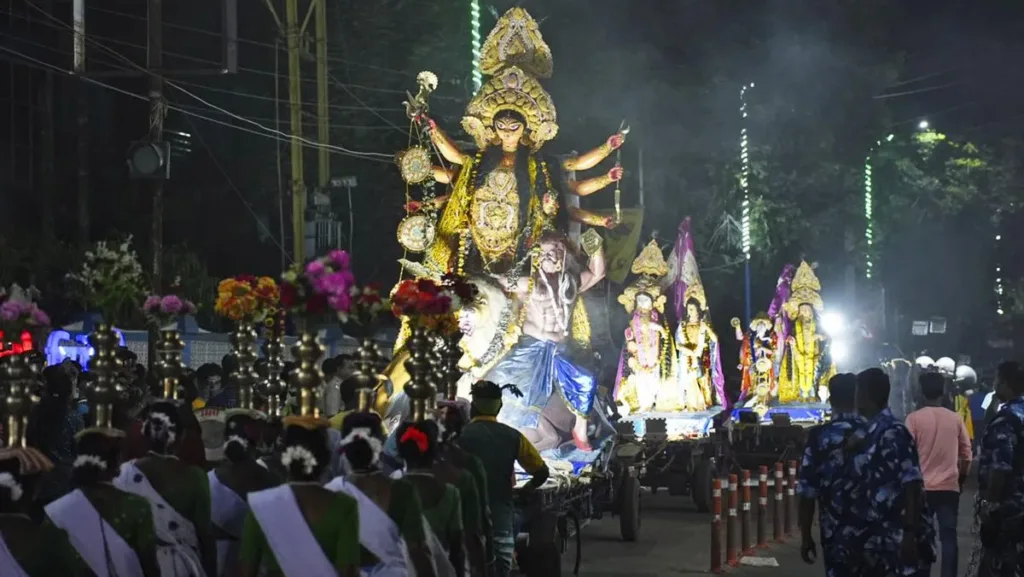
    The event is expected to feature traditional performers, thousands of dhakis, fireworks and a drone show. Narendra Modi is expected to attend and virtually inaugurate prominent Kolkata pujas associated with the programme.

    Also Read | Kumartuli: The 300-year-old Kolkata neighbourhood where Maa Durga comes to life before Puja

    Mahalaya carries a special place in Bengal’s cultural calendar. Along with the tradition of tarpan, the day is strongly associated with Birendra Krishna Bhadra’s recitation of Mahishasuramardini, which has been linked with Mahalaya since the 1930s.

    People performing Tarpan at Babughaat in Kolkata in 2025
    People performing Tarpan at Babughaat in Kolkata in 2025. Credit: X/ANI

    The Eden Gardens event therefore places the new government at the centre of the ceremonial beginning of the Puja season.

    More changes for Kolkata pandal-hoppers

    The rules for Puja celebrations are changing in several other ways. Puja pandals will not be allowed to hold inaugurations before Mahalaya, according to the new government.

    Maha Ashtami will be observed as a dry day, with liquor sales prohibited. DJs have also been banned during Puja celebrations and immersion processions.

    Organisers have been asked to prevent prolonged road blockades and complete immersions within the prescribed period.

    Even the look of Kolkata Police’s crowd-management volunteers is expected to change. A police tender has proposed orange T-shirts and caps in place of the familiar white-and-blue attire.

    Bengal’s Durga Puja has never had one fixed identity

    Despite the changes around politics, patronage, food and presentation, Bengal’s Durga Puja tradition has always contained considerable variation.

    Historical accounts show that there was never a single rule governing the appearance of idols or the food served during Puja.

    Mahendranath Datta, Swami Vivekananda’s younger brother, recorded differences between Shakta and Vaishnava households. He noted that the lion accompanying Durga could have a conventional lion’s face in Shakta homes, while Gosain or Vaishnava households sometimes depicted it with a horse-like face.

    Food customs differed as well. Brahmin households could serve rice, vegetables, curd and payesh, while Shakta Brahmin homes permitted fish. Kayastha households served luchi.

    Old family pujas continue to reflect that diversity. The Sabarna Roy Chowdhury family offers katla as Nabami bhog, while fish is offered during Puja at Chorbagan Chatterjee Bari. At the Janbazar home of Rani Rashmoni’s descendants, the Goddess receives vegetarian bhog even though non-vegetarian food is served to guests.

    That history makes Bengal’s Durga Puja difficult to fit into a single cultural or dietary template.

    Also Read | Calm restored at SRFTI campus after clash between students and ABGP

    The committees may change, political associations may shift and new rules may shape the festival’s public face. But the traditions of Durga Puja in Bengal have developed over centuries through different communities, families, artists and organisers.

    For 2026, the most visible changes are already clear. The Red Road carnival is gone, Eden Gardens will host the Mahalaya celebration, several prominent pujas have new leadership, and debates over food, themes and political participation have entered the festival conversation.

  • Calm restored at SRFTI campus after clash between students and ABGP

    Calm restored at SRFTI campus after clash between students and ABGP

    Police maintained a presence outside the main gate of the Satyajit Ray Film and Television Institute (SRFTI) in Kolkata on Monday, a day after a clash between a section of students and members of the Akhil Bharatiya Grahak Panchayat (ABGP) left several people injured.

    The situation remained calm on Monday as students returned to their classes and no gathering of outsiders was seen outside the institute. A senior police officer was present near the main gate as authorities continued to look into the violence reported on Sunday. An SRFTI official said, “Today the situation is normal. Outsiders have dispersed, while students have resumed classes.”

    Cases Filed Over SRFTI Campus Clash

    A senior police officer said cases had been registered by both sides, along with a suo motu case, at the nearby Panchasayar police station in connection with Sunday’s incident. The clash involved students and members of ABGP, with both sides accusing each other of assault.

    A clash broke out between members of the SFI and the Akhil Bharatiya Grahak Panchayat during an event organised by the Akhil Bharatiya Grahak Panchayat at the SRFTI auditorium, in Kolkata on Sunday.
    A clash broke out between members of the SFI and the Akhil Bharatiya Grahak Panchayat during an event organised by the Akhil Bharatiya Grahak Panchayat at the SRFTI auditorium, in Kolkata on Sunday. Credit: X/ANI

    The dispute began during an ABGP programme that was being held at the institute’s auditorium. According to ABGP state leaders, the organisation had obtained permission from the authorities and paid to use the venue for the event. The programme started at around 10 am on Sunday.

    Students Object To Outside Programme

    According to the accounts provided by the students, the trouble began after some students noticed people from outside the institute attending the programme.

    A section of students questioned the authorities about allowing a private organisation with right-wing links to hold an event on the SRFTI campus. The students then put up posters near the auditorium to register their protest.

    The situation reportedly escalated when students and members of the organising group entered into a heated exchange.

    The students’ association later alleged that speakers at the event delivered “highly provocative speeches”. It further claimed that members of the organisation used terms such as “anti-national”, “urban Naxals” and “terrorists” while referring to students.

    The students’ body also alleged that female students were manhandled during the confrontation.

    Students Allege Assault With Knives

    The confrontation later turned violent, according to the students’ account. The students’ association alleged that some ABGP members assaulted students with knives.

    The students claimed four students suffered serious injuries, while several others were also hurt.

    A student, speaking to a news channel on Sunday, described how the confrontation unfolded.

    “We were having our practical classes in the auditorium. When we saw people from outside holding a programme there, some of us protested and put up posters on the wall. The members of the organisation then came towards us and started beating us up. We somehow managed to escape towards the hostel,” the student said. An institute teacher also alleged that he and some of his colleagues were assaulted after they intervened in the confrontation.

    Following the clash, protests took place inside the campus. Students subsequently locked the main gate and staged a sit-in, demanding action against those they alleged had attacked them.

    The students’ body claimed that around 150 students remained inside the campus and alleged that they had been “surrounded by goons”.

    It also claimed that six policemen had detained the main accused inside a police vehicle, while a crowd outside the campus was demanding their release.

    ABGP Rejects Allegations

    ABGP rejected the students’ allegations and presented a different account of the incident.

    Also Read | BJP Bengal poll spend: Influencers named in ECI filings

    The organisation claimed that its programme had been disrupted after students objected to the event and tore posters and banners, including images of Bharat Mata and Swami Vivekananda.

    An ABGP member told reporters, “We had paid ₹15,000 to hire the auditorium and had obtained permission from the authorities. Our organisation works mainly for consumer protection and awareness. But an attempt was made to disrupt our programme, and posters were torn.”

    The ABGP member also alleged that several members of the organisation were injured during the confrontation and said four of them had been admitted to hospital.

    SRFTI campus unrest continues as outsiders gather at the gate at night; students and professors remain inside.
    SRFTI campus unrest continues as outsiders gather at the gate at night; students and professors remain inside. Credit: X/ANI

    ABGP Calls Event A Consumer Rights Programme

    ABGP state president Pankaj Roy described the programme as an event focused on consumer rights with a “nationalist vision”.

    He alleged that some students objected to a picture of Bharat Mata displayed at the venue. Roy also claimed that people attending the programme, including women, were harassed.

    Also Read | Kolkata Police cracks down on civic volunteers with new SOP

    With cases filed by both sides, the incident is now being examined by the police. On Monday, however, the situation at SRFTI remained normal, with students attending classes and no fresh disturbance reported outside the institute.

  • BJP Bengal poll spend: Influencers named in ECI filings

    BJP Bengal poll spend: Influencers named in ECI filings

    The Bharatiya Janata Party’s expenditure statements filed with the Election Commission for the 2026 West Bengal Assembly elections have brought payments to several YouTubers and social media personalities into focus.

    According to an analysis of the filings, the BJP spent ₹286.99 crore during the West Bengal polls. The documents show that ₹55.76 crore was paid to 36 social media personalities by the party’s central unit in New Delhi between March 15 and May 6.

    The payments were made for content and advertising-related activities during the election period. The Election Commission had required political parties to submit details of expenditure on internet and social media campaigning, including content development and related operational costs.

    Sayak Chakraborty Received ₹2.5 Lakh

    Actor and YouTuber Sayak Chakraborty was listed as receiving ₹2.5 lakh from the BJP for content linked to “general party propaganda”.

    Chakraborty had made headlines in January after an altercation at a restaurant in Kolkata’s Park Street. He alleged that a Muslim waiter had served him a beef preparation instead of the mutton dish he had ordered. The incident was recorded on video and the waiter was subsequently arrested on allegations of hurting religious sentiments.

    Sayak Chakraborty
    Sayak Chakraborty. IG/withlovesayak

    The 31-year-old actor runs the YouTube channel @withlovesayak, which has more than 88,000 subscribers. Chakraborty said he agreed to create content for the BJP because the party had supported him following the restaurant incident.

    “The incident at the restaurant was on January 30 and was an instant reaction. There was no politics. Many parties approached me to make content after the incident, but I only agreed to BJP as they supported me during the incident,” he said in a social media post.

    Shamik Adhikary Paid ₹13 Lakh

    Popular vlogger Shamik Adhikary, known online as @Nonsane, received ₹13 lakh, according to the expenditure details. His YouTube channel has more than 3.5 lakh subscribers. Before the election, Adhikary posted a series titled ‘Button’, which criticised the Trinamool Congress government over issues including the RG Kar rape and murder case and unemployment.

    Shamik Adhikary
    Shamik Adhikary. IG/yournonsanee

    The series was widely circulated on social media, including by BJP leaders. Adhikary was also arrested over allegations of sexual assault, an incident that prompted allegations of political retribution from the TMC.

    Other Influencers in BJP’s Payee List

    Bangladeshi singer Sangit Sarkar received ₹2 lakh, according to the filings. Known for protest music and socio-political commentary, Sarkar had also released songs concerning issues in West Bengal, including the teachers’ recruitment controversy and alleged corruption.

    Also Read | Kolkata Police cracks down on civic volunteers with new SOP

    Former journalist Pinakpani Ghosh, who runs the YouTube channel Pinak Ki Bolche, received ₹5.25 lakh. His channel has more than 2.4 lakh subscribers and frequently discusses Bengal politics and social issues.

    Former radio jockey Priyanka Sarkar, also known as RJ Priyanka, received ₹15 lakh. She has more than 10.4 lakh Instagram followers.

    Sarkar said she had produced two pieces of content for the BJP, one concerning the launch of a sleeper Vande Bharat train and another about initiatives announced in the Union Budget.

    “It was a normal promotion. Neither have I harmed anyone’s sentiment nor reputation. I am not a supporter of any party. I have made videos during the RG Kar incident. But I have also made videos on the NEET paper leak case,” Ms. Sarkar said.

    Political Reactions to Influencer Payments

    The payments have drawn competing responses from the BJP and Trinamool Congress.

    TMC MLA Kunal Ghosh accused the BJP of using payments to YouTubers and influencers to shape a narrative around religious polarisation during the election campaign.

    BJP state spokesperson Debjit Sarkar defended the payments and said the party had followed the rules. “Yes. We have paid influencers. So what? We will do it again. We have absolutely played by the book.” he said.

    Also Read | Who is Sumit Roy? Abhishek Banerjee’s PA arrested in Shalbani land scam case

    The Election Commission’s 2026 election guidelines stated that political parties were required to report campaign expenditure on internet platforms and social media, including spending on content development.