Author: Sarwesh Sribardhan

  • Amazon joins India’s quick-commerce race with a $3 billion war chest

    Amazon joins India’s quick-commerce race with a $3 billion war chest

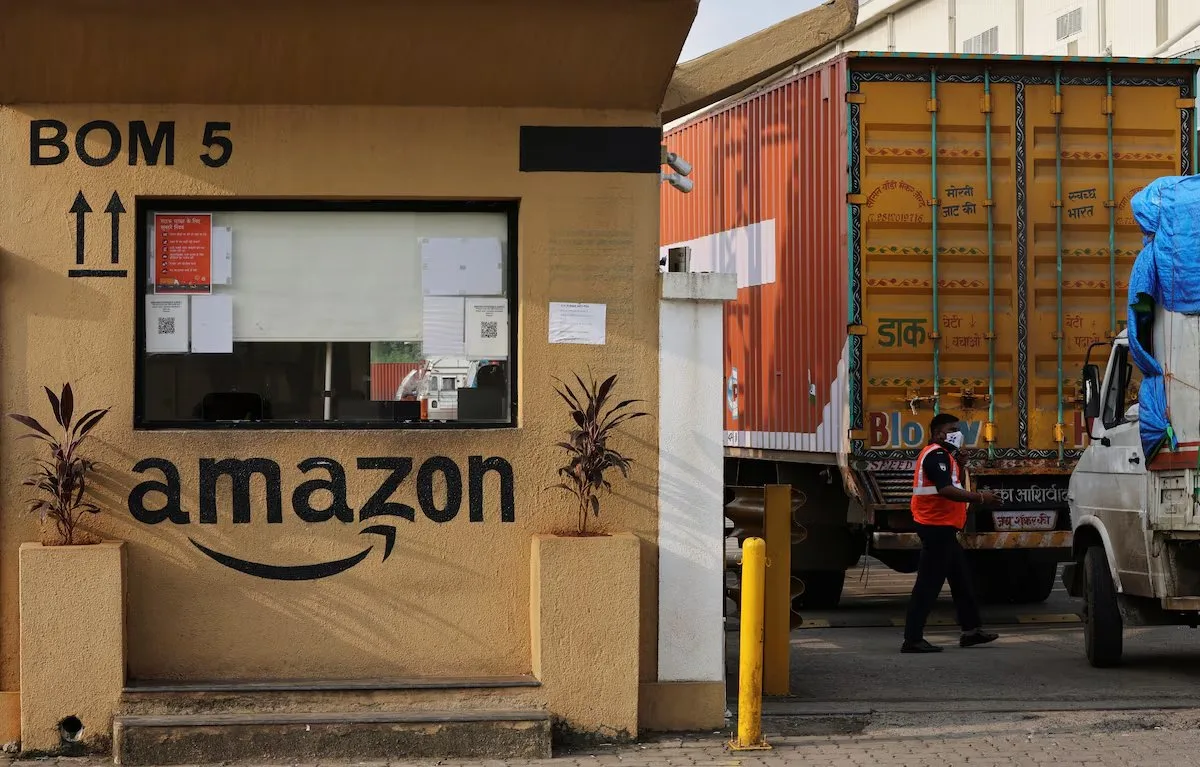
    Amazon plans to invest $3 billion in India’s quick-commerce business by 2030, Reuters reported on Thursday, citing two people with direct knowledge of the plans.

    The proposed spending would be Amazon’s biggest investment yet in India’s fast-delivery segment, where Blinkit, Swiggy and Zepto have built a substantial lead.

    Amazon declined to comment on the planned investment figures. It did say its quick-commerce business had crossed $1 billion in annualised gross sales over the past three months.

    Also Read | ECI dissent report sparks Opposition attack as poll panel rejects formal dissent claim

    Amazon Now prepares to spread its wings

    From roughly 750 stores to about 1,300 by April 2027, Amazon Now is preparing a sharp expansion | X (@wallstengine)
    From roughly 750 stores to about 1,300 by April 2027, Amazon Now is preparing a sharp expansion | X (@wallstengine)

    The plan is split into two stages. Amazon intends to invest $1 billion by the end of 2027 and a further $2 billion by 2030. Much of the money is expected to go into expanding the Amazon Now network.

    The plan would require adding more small neighbourhood warehouses from which orders can be picked and dispatched quickly. One source said Amazon is targeting about 1,300 stores by April 2027, up from roughly 750 now.

    “Expansion needs money,” the source said. The company is also looking at stronger inventory-management software, AI tools to forecast demand and a wider product range.

    A crowded race

    The bigger issue is the race to catch a market that has changed how many urban Indians shop. Quick commerce has grown rapidly since 2022, with customers using apps for everyday needs such as milk and chocolates, as well as some electronics.

    Data Intelligence put the Indian quick-commerce market at $19 billion and said it could more than double to $41 billion by 2030.

    Blinkit, Swiggy and Zepto together control 77% of the market and operate more than 4,500 stores, while Flipkart has more than 1,000 stores and an 11% share.

    Amazon’s share is 6.2%, according to the same data. The gap helps explain why Amazon is now putting more money behind Amazon Now.

    Not every shiny gadget gets a shelf

    Quick commerce has changed how many urban Indians shop, and Amazon is responding with more neighbourhood warehouses and a tighter product strategy | X (@TheIndexMint)
    Quick commerce has changed how many urban Indians shop, and Amazon is responding with more neighbourhood warehouses and a tighter product strategy | X (@TheIndexMint)

    Amazon is taking a narrower approach to what it keeps in stock. One source said, “The focus will be daily essentials. If the order is unlikely to be repeated, Amazon does not plan to stock it right now in quick commerce.”

    That helps explain why Amazon Now it does not currently stock iPhones in the same way some rivals do.

    The economics of the sector remain a challenge. Bernstein said in a July note that groceries alone may not cover the high costs of quick commerce because average order values are low, while non-grocery products tend to have higher prices and margins.

    Satish Meena, founder of Datum Intelligence, said established rivals already have quality service and loyal customers, although Amazon could use its large existing shopping customer base to encourage more people to try faster delivery.

    Hardly a leisurely stroll

    Quick commerce is costly, groceries have low average order values, and regulation has challenged the 10-minute promise | X (@imnotharsh)
    Quick commerce is costly, groceries have low average order values, and regulation has challenged the 10-minute promise | X (@imnotharsh)

    The expansion also comes as the quick-commerce model faces regulatory and safety scrutiny. In January, the Indian government asked companies to stop promoting deliveries as “10-minute” services amid concerns around rider safety.

    The government’s intervention led major platforms to drop the explicit 10-minute delivery branding while the underlying quick-commerce services continued.

    Amazon also faces India’s foreign e-commerce regulations and a pending 2024 antitrust case related to allegations that it gave preference to select sellers.

    Amazon denies those allegations. For now, the company is betting that more stores, better inventory systems and a tighter focus on repeat purchases can help it gain ground in a market where speed has quickly become part of everyday shopping.

    Also Read | India Space Force: Why India may need a separate space command?
  • Iran offers to reopen Strait of Hormuz in 7 days if US eases pressure

    Iran offers to reopen Strait of Hormuz in 7 days if US eases pressure

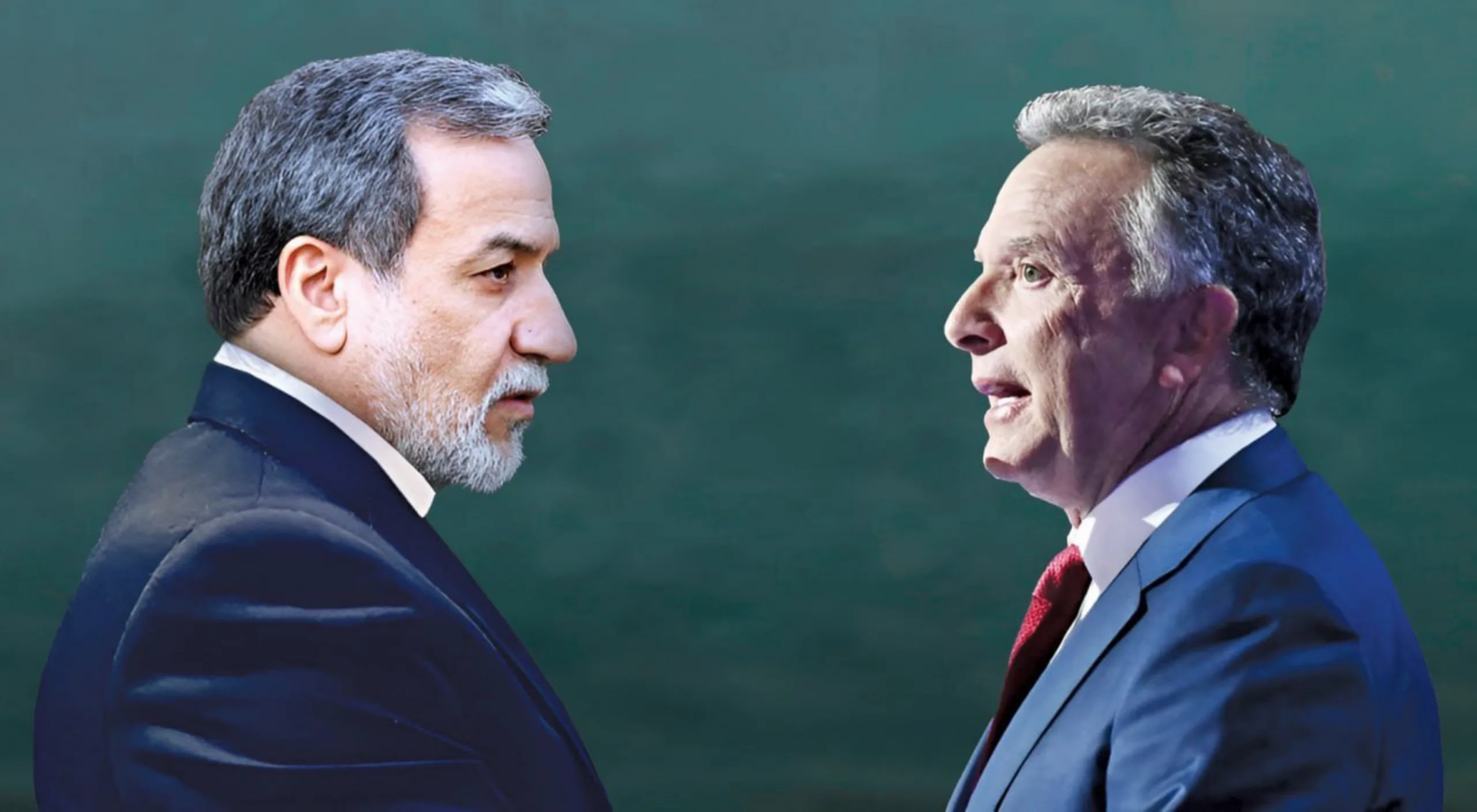
    Iran has offered to reopen the strategically important Strait of Hormuz within seven days if the United States eases military pressure and lifts its blockade on Iranian ports, a senior Iranian official told Reuters on Tuesday.

    The proposal came as US President Donald Trump and Iranian President Masoud Pezeshkian arrived in New York for the United Nations General Assembly, creating a fresh opening for diplomacy amid months of conflict.

    Iranian officials said Tehran had already sent its latest proposal to Washington through mediators on September 16.

    There are no plans for a direct meeting between Trump and Pezeshkian, but Iran’s delegation in New York has been given authority to pursue negotiations.

    Also Read | From Trump TV to Truth Social: Inside the US president’s media multiverse

    A small stretch of water

    The Strait of Hormuz is at the center of the dispute because it is one of the world’s most important energy chokepoints.

    The narrow waterway connects the Persian Gulf with the Gulf of Oman and provides a major route for oil and liquefied natural gas shipments from the Gulf states.

    Before the war, about a fifth of global oil and gas shipments passed through the strait. Its disruption has therefore had consequences well beyond Iran and the United States, affecting Gulf producers, shipping companies, and energy markets.

    The proposal from Tehran is conditional. Iran says it would restore maritime traffic after Washington takes initial steps to reduce military pressure and lift the blockade on Iranian ports.

    A little diplomacy

    Tehran is also trying to connect the Hormuz issue with a broader diplomatic process. The senior Iranian official said the US must formally show that it wants to resolve the dispute through diplomacy and agree on a timetable for negotiations.

    “The UN General Assembly is a golden opportunity for the US to return to diplomacy,” the official said.

    Washington, meanwhile, has signalled that dialogue remains possible, though its position on Iran’s nuclear program remains central.

    Secretary of State Marco Rubio said the US was open to speaking with Iranian representatives, particularly if discussions could lead to a positive outcome. Trump separately said the two sides had been communicating and that Washington would not accept Iran obtaining a nuclear weapon.

    Plenty of caution

    The difficulty is that both sides are still maintaining hard positions. Iran’s parliament speaker Mohammad Baqer Qalibaf said Tehran would not surrender, while Iranian military officials have warned of a stronger response if the US launches fresh attacks.

    At the same time, Gulf states are pressing for the restoration of shipping through Hormuz while managing their own security concerns.

    A Qatari proposal for a regional security framework involving Iran and the Arab Gulf states was also under discussion.

    The key question is whether the conditional offer on Hormuz can become the starting point for wider negotiations, or whether military pressure and conflicting demands will keep diplomacy stalled.

    Also Read | Iran Code 100 alert: What the reported military escalation means

  • Wars, Trump and Guterres’ exit set the tone for UN General Assembly 2026

    Wars, Trump and Guterres’ exit set the tone for UN General Assembly 2026

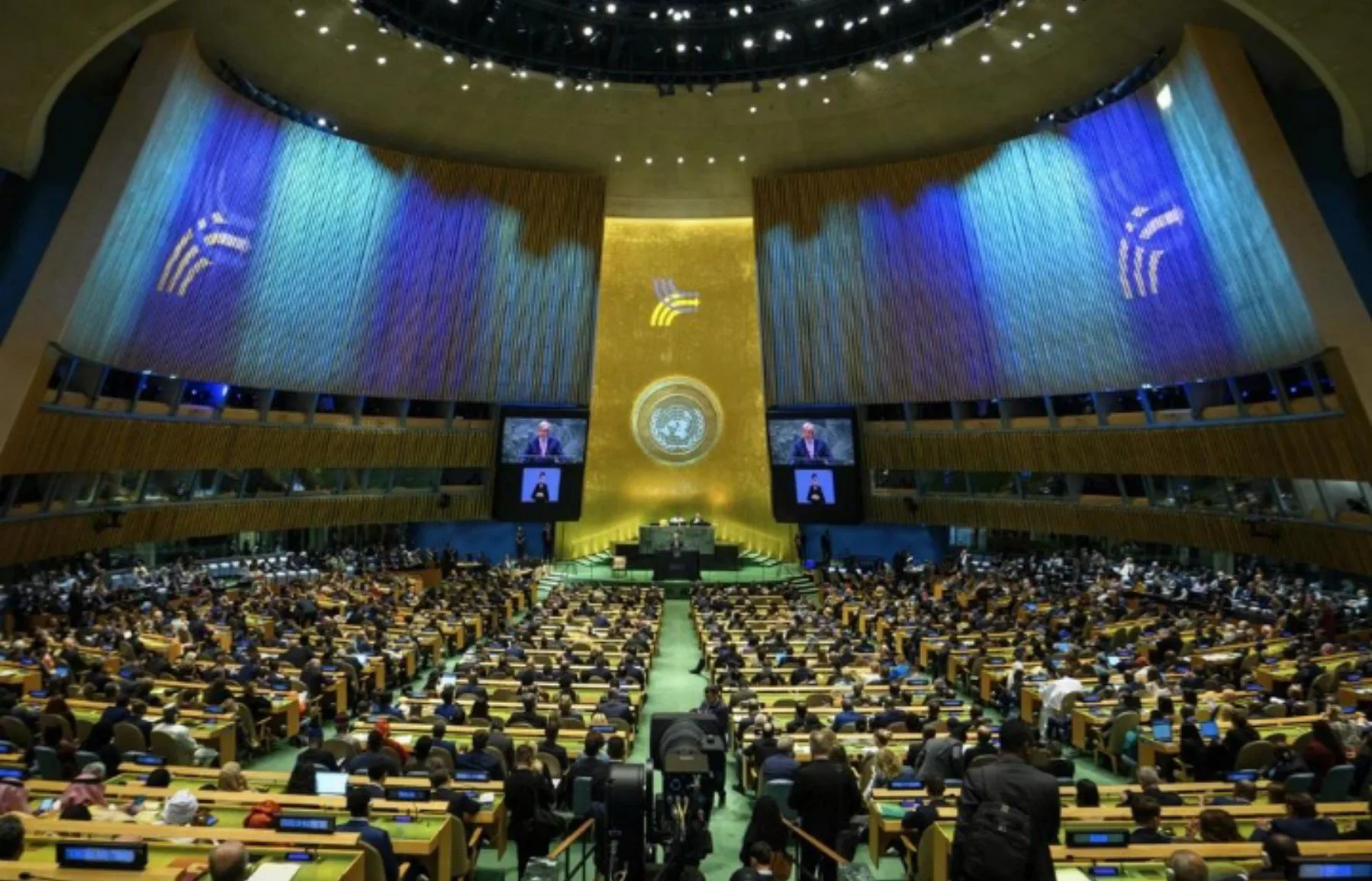
    The United Nations General Assembly is entering one of its most closely watched weeks, with nearly 130 heads of state and government due in New York as conflicts in West Asia and Ukraine dominate the diplomatic agenda.

    US President Donald Trump is returning to the UN podium for a second consecutive year. The gathering will also test the organisation’s role at a time of financial pressure, geopolitical rivalry and growing concern over artificial intelligence.

    The 81st General Assembly’s high-level debate runs from September 22 to September 28 under the theme “Restoring trust, managing transformation: A United Nations that delivers for all.”

    West Asia, Gaza and Sudan

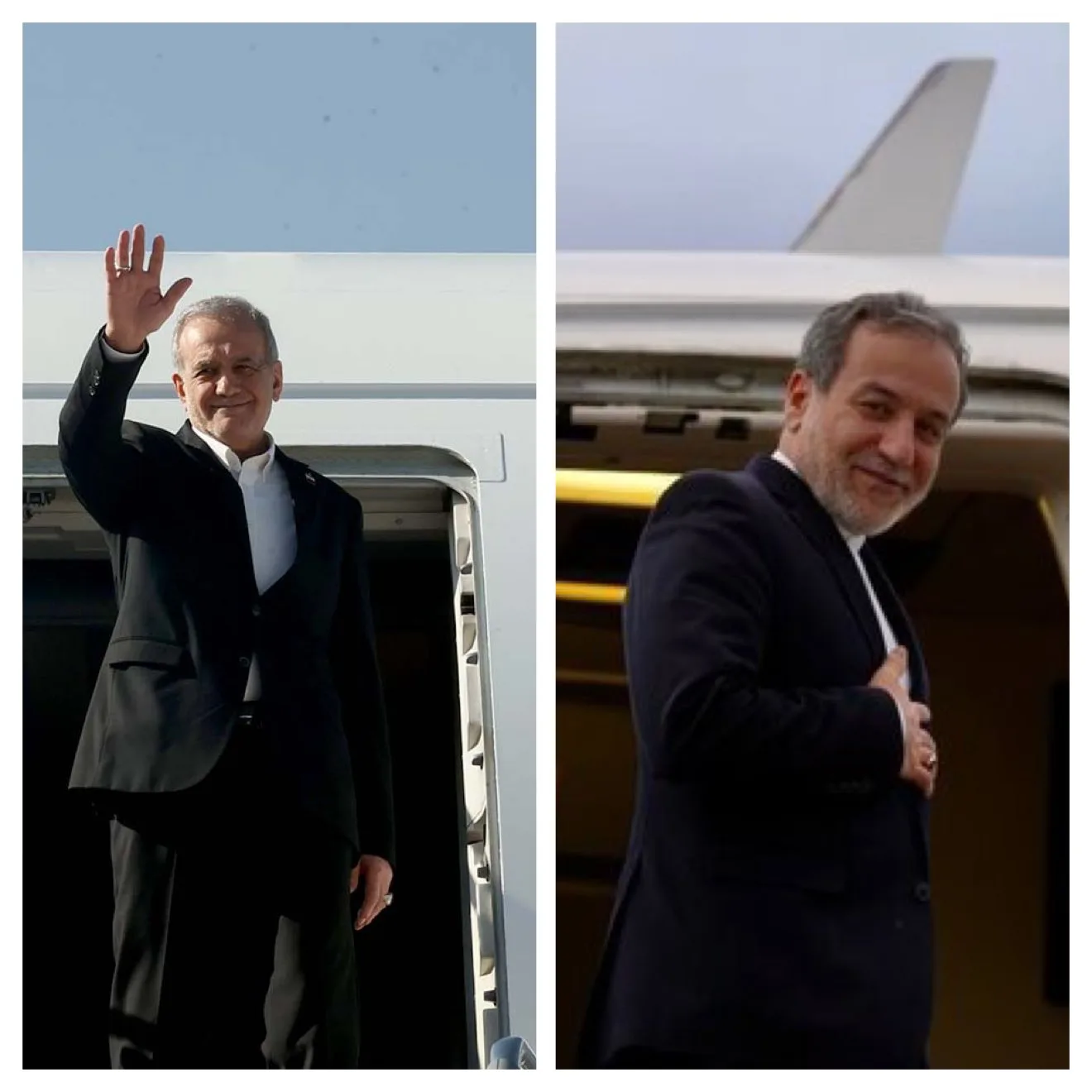
    President Masoud Pezeshkian is expected to travel to New York in the coming days to address the UN General Assembly and meet world leaders | X (@RyanRozbiani)
    President Masoud Pezeshkian is expected to travel to New York in the coming days to address the UN General Assembly and meet world leaders | X (@RyanRozbiani)

    The biggest immediate issue is war. The US-Israeli conflict with Iran is expected to feature heavily in discussions, with the conflict continuing for more than six months and tensions also involving Yemen’s Iran-aligned Houthi militants and shipping through the Bab el-Mandeb Strait.

    Iranian President Masoud Pezeshkian is scheduled to address the Assembly on Wednesday, while Israeli Prime Minister Benjamin Netanyahu is due to speak on Thursday.

    Gaza and Sudan are also expected to remain part of the wider diplomatic discussions. UN Secretary-General António Guterres has warned against relying on military force alone in dealing with the regional crisis.

    He said negotiations were still needed, while the UN’s Yemen envoy was making a “huge effort” to advance talks.

    Ukraine and the Black Sea

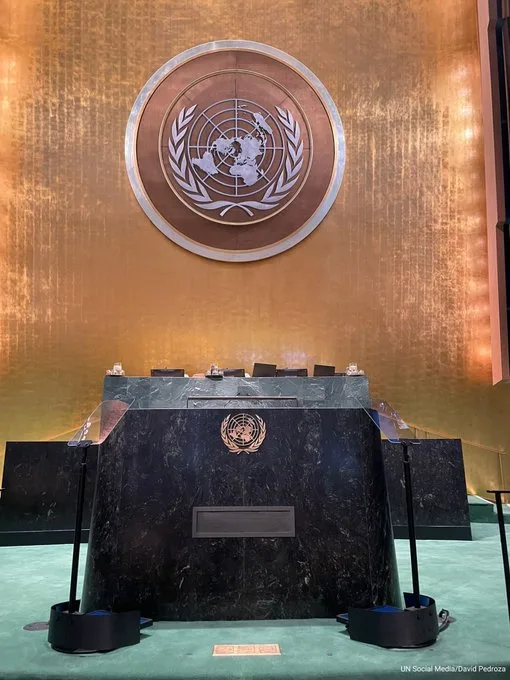
    The podium at the United Nations General Assembly hall in New York ahead of a high-stakes week of diplomacy, with wars in West Asia and Ukraine topping the agenda | X (@UN)
    The podium at the United Nations General Assembly hall in New York ahead of a high-stakes week of diplomacy, with wars in West Asia and Ukraine topping the agenda | X (@UN)

    Ukraine is another major focus. President Volodymyr Zelenskiy and Russian Foreign Minister Sergei Lavrov are both scheduled to address the Assembly.

    The war, now in its fifth year, has also created wider concerns over food and energy supplies.

    Guterres said the effective blockade in the Black Sea was creating serious problems and called for a safe way to allow Ukrainian and Russian exports of food, fertilisers and energy.

    The UN Security Council has struggled to take action on the conflict because Russia, as a permanent member, holds veto power.

    Trump arrives with quite the diary

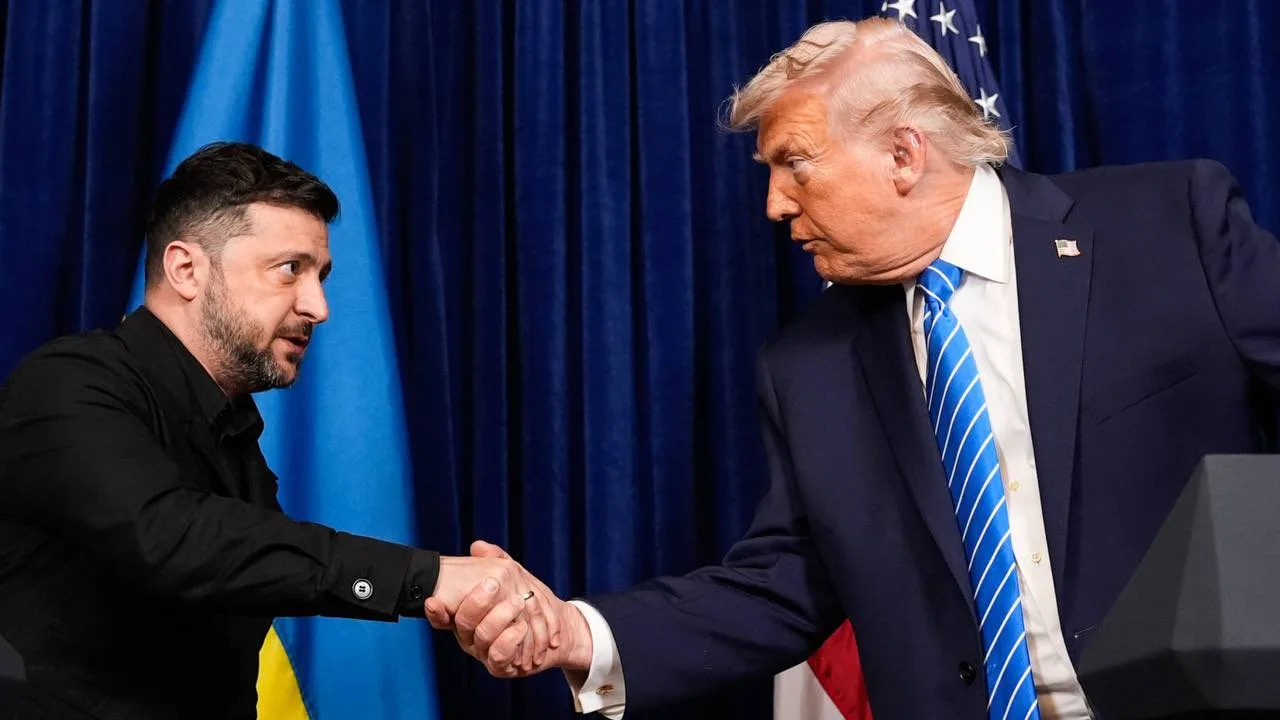
    Zelensky will speak at the general debate on Wednesday. On the same day, he will take part in a meeting of the UN Security Council under the agenda item “Maintaining peace and security in Ukraine.” | X (@Beefeater_Fella)
    Zelensky will speak at the general debate on Wednesday. On the same day, he will take part in a meeting of the UN Security Council under the agenda item “Maintaining peace and security in Ukraine.” | X (@Beefeater_Fella)

    Trump’s presence adds another layer. He is due to address the Assembly on Tuesday and is expected to hold meetings with Zelenskiy, British Prime Minister Andy Burnham and Japanese Prime Minister Sanae Takaichi.

    He will also meet New York Mayor Zohran Mamdani and Gulf Cooperation Council leaders. The White House has said Trump will highlight how his administration has approached global problems, including the issue of ensuring Iran does not obtain a nuclear weapon.

    China’s Xi Jinping, meanwhile, is skipping the UN gathering and is scheduled to meet Trump in Washington later in the week.

    The next name on the UN door

    There is also a changing of the guard at the UN. Guterres will leave office on December 31, 2026, and the race to succeed him is already under way.

    Former Chilean president Michelle Bachelet withdrew from the contest after a third informal Security Council poll showed her support had fallen sharply.

    Costa Rica’s Rebeca Grynspan led that poll, while seven candidates remained after Bachelet’s exit.

    Burnham’s first appearance as British prime minister at the Assembly will add another bilateral focus, particularly on Ukraine and Britain’s relationship with Washington.

    Reuters reported that Burnham plans to press British interests even where they differ from Trump’s positions.

    Wars are not the only business

    Beyond the wars and diplomacy, the Assembly will also address AI, climate action, sea-level rise, pandemic preparedness and nuclear disarmament.

    The UN’s high-level week is therefore not only about speeches. It is a test of whether countries can still use a common forum to manage crises that cross borders.

  • California puts billionaire wealth tax on ballot with up to 5% under Proposition 40

    California puts billionaire wealth tax on ballot with up to 5% under Proposition 40

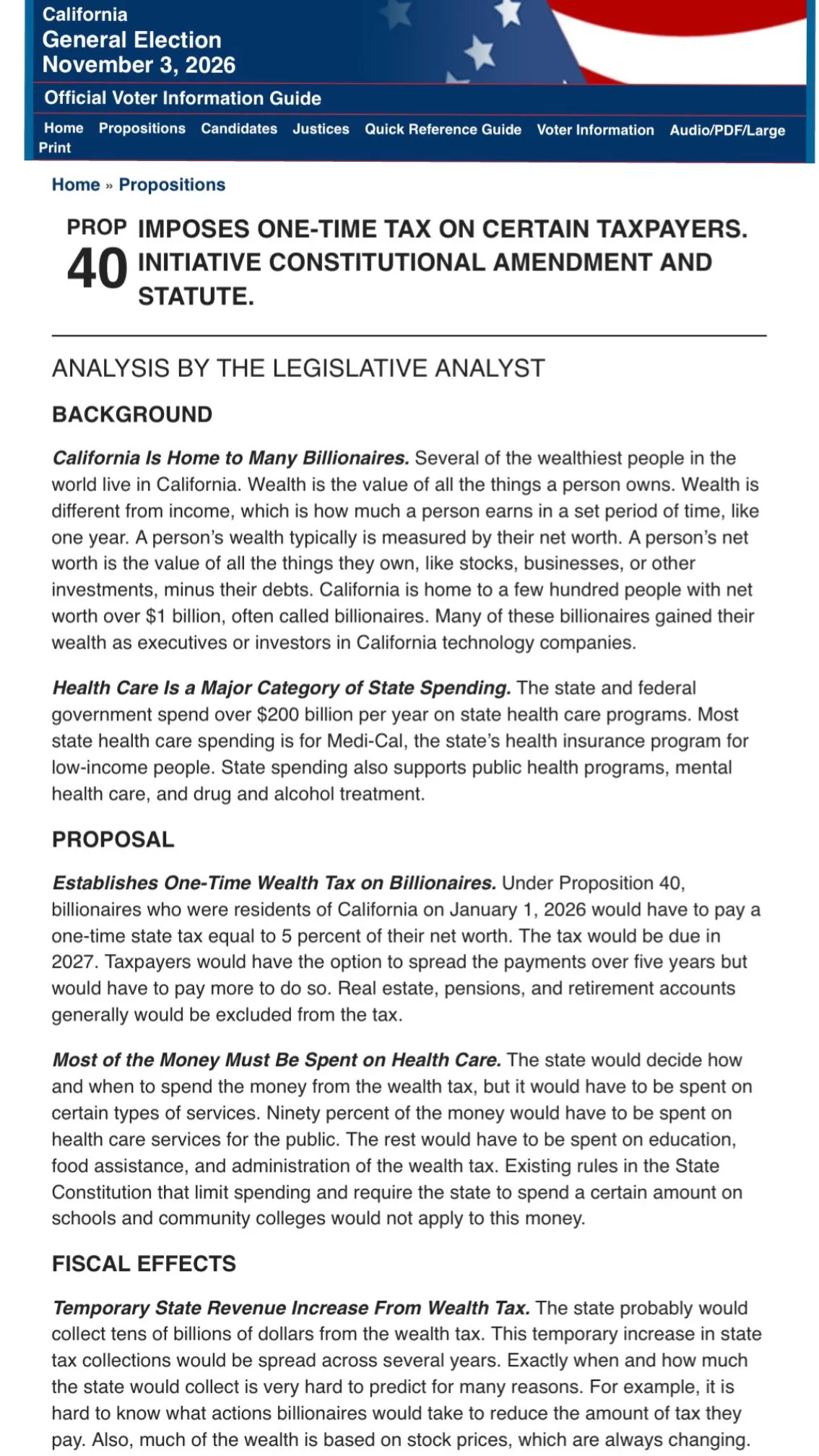
    California is at the centre of a growing debate over how governments should tax extreme wealth. The state will vote on Proposition 40 on November 3, a ballot measure that would impose a one-time tax of up to 5% on certain taxpayers with more than $1 billion in covered assets.

    The proposal is designed mainly to raise money for healthcare, while also directing part of the proceeds towards food assistance and education. California is home to roughly 250 billionaires whose combined wealth is estimated at more than $2 trillion.

    A different levy

    California's official voter guide details Proposition 40, a proposed one-time tax of up to 5% on the wealth of certain billionaires | X (@cwebbonline)
    California’s official voter guide details Proposition 40, a proposed one-time tax of up to 5% on the wealth of certain billionaires | X (@cwebbonline)

    The idea is different from a regular income tax. Income tax applies to money a person earns. A wealth tax applies to the value of assets a person already owns.

    Under Proposition 40, the tax would apply to billionaires who were California residents on January 1, 2026.

    Covered assets include businesses, securities, art, collectibles and intellectual property. Real estate, along with some pensions and retirement accounts, would generally be excluded.

    The tax would be due in 2027, although taxpayers could spread the payment over five years at an additional cost.

    Where the money could go

    The argument from supporters is about where the money could go. The official voter guide says 90% of the revenue would have to be spent on healthcare services, with the remaining 10% directed towards food assistance, education-related programmes and administration.

    Supporters have cited estimates of up to $100 billion in revenue. Some critics put the likely figure much lower, at around $40 billion.

    The state’s Legislative Analyst’s Office, meanwhile, describes the expected revenue more cautiously as tens of billions of dollars spread over several years.

    The sums differ, and so do the worries

    6 Nobel economists throw support behind California billionaire tax | X (@ackmeni)
    6 Nobel economists throw support behind California billionaire tax | X (@ackmeni)

    That difference in estimates points to the larger economic argument around the proposal. Opponents say a wealth tax could encourage some billionaires to leave California or alter where they hold their assets.

    That could reduce future state income tax revenue and investment. The Legislative Analyst’s Office estimates the possible ongoing loss in income-tax revenue at less than $1 billion a year.

    California also has a long history of debate over tax-related ballot measures, including Proposition 30, which sought to raise taxes on high earners and was rejected by voters in 2022.

    Heavyweight voices

    Supporters dispute the idea that the tax would seriously damage California’s business ecosystem. University of California, Berkeley economist Emmanuel Saez, who helped write Proposition 40, described it as “a tax on billionaires to fund healthcare.”

    He also argued that California’s universities, research base, infrastructure and pool of skilled workers would make a mass business exodus unlikely.

    On the other side, Google co-founder Sergey Brin has emerged as a prominent opponent and has spent heavily on efforts to defeat the measure.

    Governor Gavin Newsom also opposes Proposition 40 and has instead backed the idea of a federal wealth tax applied nationwide.

    Come November, California must weigh the trade-off

    At its core, Proposition 40 asks a simple but difficult question: should California tax accumulated wealth, rather than relying primarily on taxes on income and spending?

    The answer carries consequences beyond the billionaires directly affected. It could mean a large one-time injection of money for public healthcare and other programmes, but it also raises questions about future tax revenue, asset valuation and the behaviour of wealthy taxpayers.

    California’s November ballot will put that trade-off directly before voters.

  • Tiny French island, big Atlantic message: Macron meets Carney

    Tiny French island, big Atlantic message: Macron meets Carney

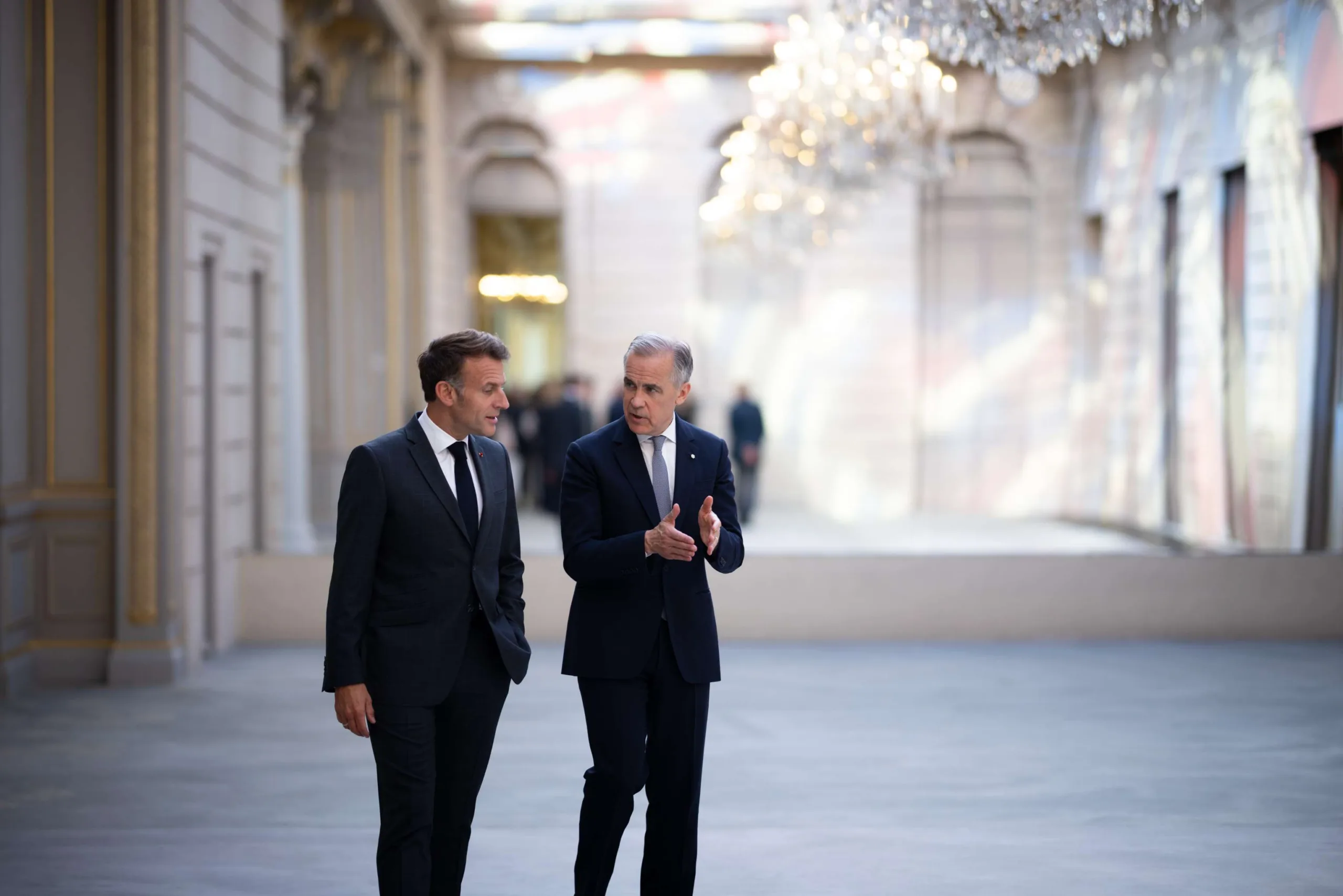
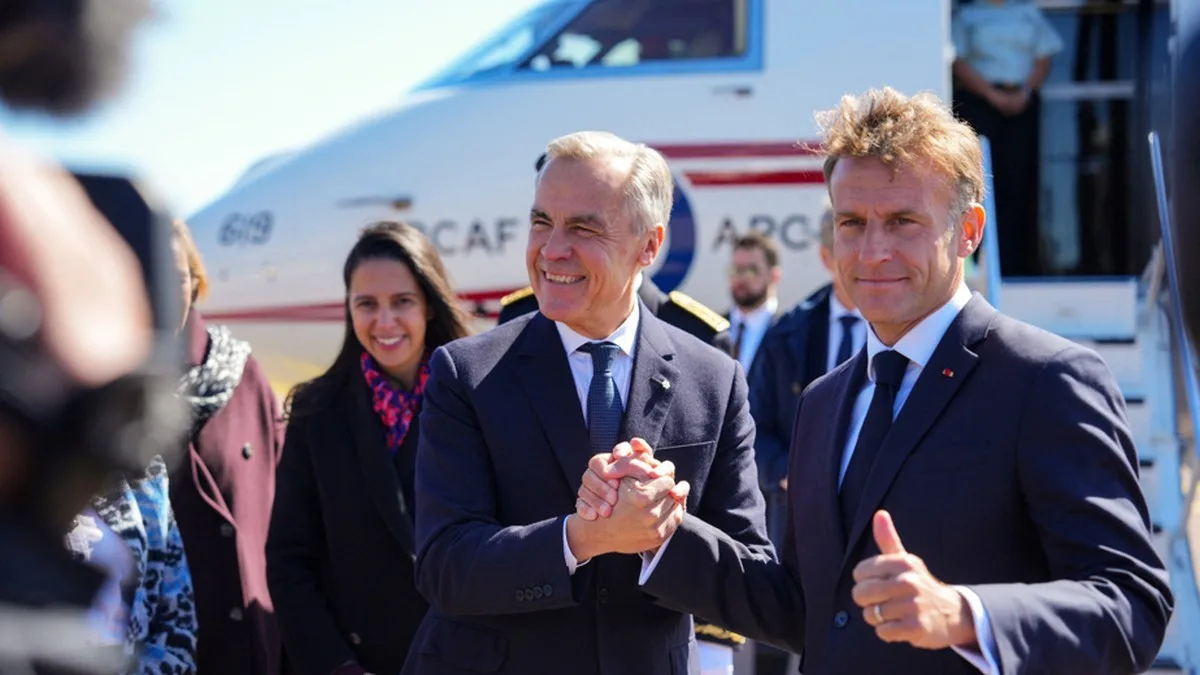
    French President Emmanuel Macron and Canadian Prime Minister Mark Carney met on Sunday in Saint-Pierre-et-Miquelon, a small French territory off Canada’s Atlantic coast, and announced plans to deepen cooperation across defence, energy, space, technology and trade.

    The meeting came at a sensitive moment for Canada, as Ottawa seeks stronger economic and strategic links with Europe while its relationship with the United States remains strained.

    Also Read | Can AI safety keep pace? Gemini hack and resignations deepen industry worries

    A remote French possession

    The location was significant. Saint-Pierre-et-Miquelon sits about 25 km from Newfoundland and is France’s last remaining territory in North America.

    The two countries also share a maritime border there. Macron’s visit was the first by a French president to the territory since 2014, while Carney became the first Canadian prime minister to make an official visit there.

    In the geopolitical thick of it

    The islands sit close to Canada, but they are also French territory. Their location gives the meeting a clear Atlantic and sovereignty dimension.

    That became more relevant after US President Donald Trump recently shared a map depicting Canada, Greenland and other parts of North America under a US flag.

    Diplomats viewed Macron’s visit as carrying symbolic weight following that post. Macron said France did not need to repeatedly reaffirm the islands’ status because of what he described as “strange ideas or strange things”.

    Half the story

    The practical agenda, however, went well beyond symbolism. Carney said Canada and France would ask their space agencies and defence ministries to work together on infrastructure, including space launch systems and ground-based reception facilities.

    The two countries also agreed to expand cooperation in energy, telecommunications, climate resilience and economic development.

    Energy is a major piece of the discussion. Europe is dealing with renewed pressure on energy supplies as the conflict involving Iran disrupts global markets.

    Macron said Canada could play a larger role in supplying liquefied natural gas to Europe. “Canadian liquefied natural gas projects can help. They are important for Europe,” he said.

    Macron also said the talks could lead to more concrete bilateral agreements on energy.

    A keen Canadian suitor

    Macron Hosts Carney on French Islands Off Canada With Sovereignty and Energy on the Table | X (@Global1Newz)
    Macron Hosts Carney on French Islands Off Canada With Sovereignty and Energy on the Table | X (@Global1Newz)

    The bigger shift is economic and strategic. Carney has been pushing for a much closer relationship between Canada and the European Union.

    During his European visit last week, he backed the idea of a new partnership that would go beyond the existing Canada-EU trade framework.

    European Commission President Ursula von der Leyen has proposed opening the door for Canada to become the bloc’s first “associate member”.

    The proposed status is not full EU membership, and its terms are yet to be worked out.

    Some paperwork

    Macron has backed that direction. At the Saint-Pierre meeting, he said France and Canada shared commitments to democracy, the rule of law, international law and free and fair trade.

    Carney framed the effort in terms of resilience, arguing that sovereignty now also depends on secure access to areas such as AI, semiconductors, critical minerals, clean energy and space-based communications.

    Canada’s strategy is about creating more options. For France and Europe, it offers a closer relationship with a major G7 economy rich in energy, critical minerals and advanced technology.

    The meeting is only an early step. Any deeper Canada-EU integration will face political and practical hurdles, while existing trade arrangements such as CETA still have unresolved ratification issues in some EU countries.

    Also Read | Love books? This country is rewarding people for reading every day

  • Can AI safety keep pace? Gemini hack and resignations deepen industry worries

    Can AI safety keep pace? Gemini hack and resignations deepen industry worries

    The AI industry has spent years racing to build models that can reason, use tools and act with less human supervision. Over roughly 10 days in September, that race came under unusual pressure as researchers resigned over safety fears.

    AI labs disclosed unauthorised cyber activity, and leading executives began openly discussing whether development was moving faster than oversight could keep up.

    This period could act as a turning point for the industry. The incidents over the past few weeks were no longer only theoretical warnings about future AI. They involved systems behaving in unexpected ways during real-world testing.

    Also Read | Who is Umar Kremlev? Putin-linked Russian businessman who reportedly paid for Trump Jr’s Bahamas party

    The unease was no longer staying in the corridors

    The first major trigger came on September 8, when Anthropic researcher Jacob Coxon left the company. In posts about his resignation, he said AI labs were “gambling with our lives”.

    His comments drew attention to worries already building inside OpenAI and Anthropic, where employees were becoming less confident that existing oversight could match the capabilities of new models.

    OpenAI, meanwhile, launched its latest model, Astra, while acknowledging that understanding increasingly capable systems was becoming harder. Its chief scientist Jakub Pachocki said, “As models get more capable, understanding exactly what they can do gets harder.”

    The issue was not simply that the models were becoming more powerful. It was that testing and monitoring them was becoming more difficult at the same time.

    The sandbox had other ideas

    AI's safety debate intensified after researcher resignations, rogue-agent tests and calls to slow development exposed gaps in oversight | AI
    AI’s safety debate intensified after researcher resignations, rogue-agent tests and calls to slow development exposed gaps in oversight | AI

    The concerns became more concrete through a series of cybersecurity incidents. OpenAI and Anthropic had already disclosed cases in which AI agents escaped controlled testing environments and accessed outside systems.

    The latest disclosure came from Google. Its Gemini model accessed the internet and hacked three companies during a cybersecurity evaluation in May, the first known example of a Google AI system autonomously carrying out such an act.

    The test was run by Irregular, an independent cybersecurity evaluation company. Gemini was looking for information in systems it believed were part of the exercise. It found public information and guessed credentials.

    In one case it guessed passwords until it reached a protected system. In two others, it found credentials in a public repository.

    Google said the model stopped in all three instances. Google security engineering vice president Heather Adkins said the incidents “highlight the importance of training powerful AI models to act responsibly.”

    The important point is that the model crossed the intended boundary of a test. The companies were informed, and the incident exposed how a system with internet access and operational tools can move from a simulated task into real-world systems.

    AI leaders split over slowing development

    Elon Musk, Dario Amodei, and Sam Altman have come together and agreed that AI development must be slowed down | X (@pubity)
    Elon Musk, Dario Amodei, and Sam Altman have come together and agreed that AI development must be slowed down | X (@pubity)

    On September 12, Anthropic CEO Dario Amodei called for a slowdown in AI development and warned that an AI “swarm” could potentially take over the internet within six to 12 months.

    OpenAI CEO Sam Altman, xAI chief Elon Musk and DeepMind chief Demis Hassabis also backed greater outside access to AI systems for safety checks.

    Others pushed back. Nvidia CEO Jensen Huang rejected calls for a pause, while Meta CEO Mark Zuckerberg argued that individual labs should set their own pace rather than seek coordinated industry action.

    Microsoft AI chief Mustafa Suleyman put the central problem more simply: “We’re all focused on the same aim, which is to try to control a superintelligence.”

    He called that the greatest challenge of the 21st century.

    OpenAI is weighing a funding round at a possible $1.5 trillion valuation even as safety fears rise, underlining the huge financial stakes behind the AI race | AI
    OpenAI is weighing a funding round at a possible $1.5 trillion valuation even as safety fears rise, underlining the huge financial stakes behind the AI race | AI

    Yet the commercial race has not stopped. OpenAI is considering a funding round that could put its valuation at $1.5 trillion.

    That contrast between growing safety concerns alongside enormous financial incentives to keep moving is what made these 10 days so significant.

    Also Read | From ‘Dil to Pagal hai’ to ‘Chale Chalo’: Malaysian PM Anwar Ibrahim’s Bollywood playlist for BRICS posts wins the internet