For years, popular ideas about romance have centred on becoming one with your partner. Phrases such as “You complete me” and “I can’t live without you” have often presented love as something that requires complete emotional and personal involvement. But relationship expectations are shifting, particularly among Gen Z, who are increasingly placing value on individuality alongside emotional closeness.
In an interview with Hindustan Times, Chandni Gaglani, EVP and Head of Aisle, explained how younger people are approaching love, commitment and personal freedom differently.
Gen Z wants love without losing individuality
According to Chandni, traditional ideas of relationships often placed togetherness at the centre. Couples were expected to spend much of their time together, share friends and social circles, make decisions jointly and allow the relationship to become a major part of their identity.
Gen Z, however, appears more comfortable maintaining the life they had before entering a relationship.
(Representational Image) Personal space is becoming an important part of Gen Z relationships | AI Generated
“For Gen Z, finding a meaningful relationship does not necessarily mean giving up the life that existed before it. They want love, companionship and emotional intimacy, but increasingly, they also want the freedom to remain individuals within the relationship,” highlighted Chandni.
“Their careers, friendships, interests, ambitions and personal space continue to matter. This isn’t necessarily a rejection of commitment. Instead, it reflects a changing understanding of what commitment can look like: choosing someone without having to lose yourself in the process,” added Chandni.
Why personal space matters in modern relationships
Chandni noted that having separate friendships, individual interests, solo travel plans, personal routines or time alone does not necessarily signal emotional distance for Gen Z.
(Representational Image) Gen Z is choosing commitment without giving up personal identity | AI Generated
“Compatibility is no longer just about enjoying the same things or wanting the same future. It can also mean being comfortable with each other’s differences and giving each other the room to explore them,” said Chandni.
Love can complement identity, not replace it
The idea of a partner “completing” someone is also giving way to a more individual-centred understanding of love.
“The idea of a partner completing you is gradually giving way to something more balanced: finding someone who complements the life you are already building. This doesn’t make the relationship less meaningful,” explained Chandni.
For Gen Z, commitment can mean sharing a life while continuing to nurture personal ambitions, friendships, hobbies and interests.
Commitment without losing yourself
At the heart of this changing approach is the possibility of staying emotionally connected while retaining a sense of self. Separate interests, shared values and time apart can coexist with a committed relationship.
(Representational Image) Young couples are balancing emotional intimacy with individual lives | AI Generated
Gen Z may not be seeking less commitment, but a different form of it: companionship without confinement, intimacy without dependence and love that leaves room for individuality.
“Because perhaps the healthiest version of love isn’t you. It is I know who I am, you know who you are, and we still choose each other,” concluded Chandni.
Dark matter has remained one of the universe’s biggest mysteries for decades. Scientists know that something invisible appears to be shaping galaxies and other cosmic structures, yet they have never been able to directly identify what it is. Now, a mysterious signal recorded nearly 1.6 kilometres beneath the ground in a former South Dakota gold mine has brought the search for dark matter back into focus.
Detected by the LUX-ZEPLIN experiment, the unusual event could be linked to a hypothetical dark matter particle, although researchers have stressed that it is far too early to call it a discovery. So, what exactly is this dark matter? Why do scientists believe in its existence and why do they hunt for dark matter underground?
What is dark matter?
Dark matter is a form of matter that does not seem to emit, absorb or reflect any amount of light which is adequate enough to make it detectable through telescopic observations. The term “dark” means that it does not interact with the electromagnetic radiation in any detectable manner; it does not imply any particular color.
Scientists estimate that dark matter makes up about 27% of the universe. Ordinary matter, including stars, planets and living things, accounts for roughly 5%. Most of the rest is attributed to dark energy.
(Representational Image) A strange underground signal has renewed the search for elusive dark matter | AI Generated
How do scientists know dark matter exists?
The strongest clues come from gravity. Astronomers have observed galaxies and galaxy clusters behaving as if they contain considerably more mass than can be seen.
In the 1930s, Fritz Zwicky found that galaxies in the Coma Cluster were moving too rapidly for visible matter alone to hold the cluster together. Later, Vera Rubin found that stars in spiral galaxies were also moving faster than expected, particularly those far from their galactic centres.
Gravitational lensing provides another important clue. A large object can bend light emitted from farther away, and that is how scientists detect mass that cannot be seen because of the effect of gravity.
Is dark matter the same as dark energy?
Not necessarily. While dark matter and dark energy are two different concepts, dark matter relates to the gravitational forces that structure galaxies.
(Representational Image) Dark matter could explain the unseen mass shaping galaxies across the universe | AI Generated
Why is the LZ experiment underground?
LZ operates around 1.6 kilometres below the surface at the Sanford Underground Research Facility, inside a former gold mine. Underground position ensures less interference caused by cosmic rays and other forms of radiation.
The detector uses liquid xenon and searches for tiny signals produced when a possible dark matter particle interacts with a xenon atom.
Has dark matter finally been detected?
Not yet. The above-mentioned phenomenon is quite fascinating, but one such strange reading can never be considered as a proof of discovery. There should be more events with a similar behavior pattern for the phenomenon to be proved scientifically.
If dark matter could be discovered at some point of time in the future, it would help to understand better the universe and its evolution. The nature of dark matter continues to be one of the big puzzles of physics.
Someone sneezes, and before you even think about it, someone nearby says, “Bless you.” It is an almost automatic reaction, but the reason behind it is anything but ordinary. Why a sneeze, of all things, became something people felt the need to respond to has puzzled historians and fueled folklore for centuries.
Was it once linked to the fear of disease? Did people really believe a sneeze could make the soul leave the body? And what about the popular claim that your heart stops when you sneeze? The story behind this everyday phrase brings together ancient beliefs, religious traditions, health concerns and old superstitions. Here are eight facts that explain how “Bless you” became one of the most familiar responses to a sneeze.
There is no confirmed origin
The history of saying “Bless you” after a sneeze cannot be traced to a single person, place or event. Different explanations have emerged over time, and historians have linked the practice to several traditions surrounding sneezing.
That makes the popular stories about its beginnings interesting, but they should not automatically be treated as established fact.
(Representational Image) A simple ‘Bless you’ carries centuries of history and tradition | AI Generated
Did a sixth-century plague start the tradition?
A familiar explanation connects “God bless you” with a plague outbreak in Rome around 590 CE. According to this theory, sneezing was regarded as a worrying indication of illness during the outbreak, prompting people to respond with a blessing.
However, this is a widely repeated explanation rather than a proven account of how the expression originated. Historical evidence does not establish the plague story as the single source of the custom.
People were responding to sneezes much earlier
The tradition may have roots that are considerably older than the sixth century. Roman author Pliny the Elder referred to the practice in his first-century work Natural History. His discussion suggests that sneezing already had social or cultural significance in the ancient world.
This is one reason the plague theory cannot simply be accepted as the beginning of the tradition.
(Representational Image) The plague theory is only one part of the ‘Bless you’ story | AI Generated
A sneeze once carried a deeper meaning
Before modern medicine explained sneezing as a bodily reflex, people could attach very different meanings to it. In various cultures, a sneeze might be interpreted as an omen, connected with a person’s health or regarded as an event that required a protective response.
These interpretations helped give an otherwise ordinary bodily action a special place in social customs.
Was the soul thought to escape during a sneeze?
Folklore offers another explanation for the protective response. One enduring belief suggests that sneezing could allow a person’s soul or spirit to leave the body, making a blessing seem like a way to protect them.
Another tradition associated sneezing with evil spirits. Neither idea has scientific evidence behind it, but both became part of the folklore that surrounded sneezing in earlier times.
(Representational Image) Ancient beliefs and folklore shaped this familiar sneeze response | AI Generated
Does your heart really stop when you sneeze?
No. The idea that the heart stops during a sneeze is a common myth.
A powerful sneeze changes pressure inside the chest and can temporarily influence blood flow and the rhythm of the heartbeat. Those brief changes may explain why someone could experience an unusual sensation around the time of a sneeze, but the heart does not simply stop.
Sneezing traditions also exist in India
The meaning attached to a sneeze is not universal. In India, reactions can vary according to family traditions, region and community. Some people may regard sneezing as either auspicious or inauspicious in particular circumstances, while others attach no special meaning to it and respond out of everyday courtesy.
(Representational Image) Sneezing myths, cultural beliefs and courtesy explain the age-old habit | AI Generated
‘Bless you’ has a simpler meaning today
For many people, the phrase has moved far away from its older associations with superstition and religion. Saying “Bless you” can now simply be a polite response, an expression of concern or a small gesture of goodwill.
Other cultures have their own responses to sneezing, including expressions wishing someone good health or a long life.
Why do people say ‘Bless you’ after sneezing?
There is no single confirmed explanation. The familiar response appears to have emerged from several layers of cultural history, including ancient beliefs, concerns about illness, religious customs and social etiquette.
What may once have been linked to protection, omens or superstition has gradually become something much more ordinary: a quick and familiar response to a sneeze.
A tote bag, a paperback, wired headphones and a matcha on the table. Put them together and the internet may quickly decide what kind of man is sitting across the café. The “performative male” has become a familiar social media archetype, built around an image of sensitivity, culture and emotional openness.
But beneath the memes is a more serious question: can these visible signs of softer masculinity actually help weaken toxic masculinity, or are they simply another carefully constructed performance?
What is a performative male?
The term generally describes men who adopt an aesthetic associated with emotional awareness and progressive values. Tote bags, books by women writers, trendy drinks, indie music and conversations about therapy or healing have become part of the stereotype.
(Representational Image) Emotional vulnerability meets curated style in the rise of the performative male | AI Generated
Celebrities such as Jacob Elordi, Pedro Pascal and Paul Mescal are sometimes cited as polished examples of this image. Online, however, the archetype is less about any particular man and more about the cultural signals associated with a newer version of masculinity.
The criticism centres on authenticity. Some observers argue that displaying feminist views or talking openly about feelings does not necessarily translate into emotional availability.
(Representational Image) Soft masculinity takes centre stage as the performative male sparks debate online | AI Generated
A man may appear comfortable discussing vulnerability while still struggling when genuine emotional support, patience or difficult conversations are required. In that sense, the aesthetic can become a substitute for meaningful behaviour.
The distinction is important because emotional intelligence is ultimately tested away from an audience.
Can practice change masculinity?
As per a News 18 report, psychologists make a useful distinction between pretending to possess a quality and deliberately practising it. New behaviours can initially feel unfamiliar, but repeated efforts to listen, communicate and remain emotionally present can eventually become natural.
(Representational Image) The performative male trend questions what modern masculinity should look like | AI Generated
That may explain why the performative male archetype is more complicated than the meme suggests. Not every man carrying a tote or reading feminist literature is necessarily putting on an act.
The trend has become recognisable enough to inspire look-alike contests in places including Seattle, New York and Jakarta. Their recurring accessories, books and fashion choices show how quickly an online stereotype can become a shared cultural reference.
(Representational Image) From matcha to therapy talk, a new image of masculinity is taking shape | AI Generated
Ultimately, the tote bag is beside the point. The more meaningful shift is whether men continue practising vulnerability when there is no audience. If softness becomes part of everyday behaviour rather than social presentation, it can contribute to a broader rethinking of masculinity.
In everyday life, we often hear the advice to “listen with your heart, not your mind.” It sounds simple, but what does it really mean? In a spiritual context, the art of listening goes beyond simply hearing words. It is about receiving a teaching fully, without allowing the mind to decide what should be accepted and what should be ignored.
Listening with the mind vs listening with the heart
HH Guruji Sundar explains that listening with the mind can be useful in ordinary conversations. But when it comes to spiritual teachings or guidance that may challenge us, the mind can become a filter.
A seeker may hear an entire teaching but hold on only to the parts that feel familiar or comfortable. Other parts may be dismissed because they seem difficult, inconvenient or unrelated. This can explain why an important teaching may feel clear at one moment but seem to lose its impact later.
(Representational Image) Discover the art of listening deeply, beyond the limits of the mind | AI Generated
Listening with the heart calls for a different approach. Instead of immediately judging or analysing what is being said, the seeker receives it as a whole. Even words that are difficult to accept are given space to reach deeper.
Several habits can stand in the way of attentive listening. These include interrupting before someone has finished speaking, preparing a response instead of receiving the message, or listening with a sense of superiority.
A person may also assume they already know the answer, ignore advice that feels uncomfortable, or remain physically present while their attention has wandered elsewhere.
(Representational Image) Six common habits can stop you from truly listening. Do you recognise them? | AI Generated
Recognising these patterns is important because they cannot be changed until they are first noticed.
How can you practise listening with your heart?
Listening deeply requires attention from the whole person. Rather than stopping at intellectual understanding, the words are allowed to settle within the seeker.
“A good listener is the one who listens with total acceptance in his heart without the restraints of the mind”, HH Guruji Sundar explains.
(Representational Image) Listening with the heart means receiving words without judgment or filters | AI Generated
This kind of listening requires practice. It means putting aside the immediate urge to judge, defend or reject, and allowing the teaching to be received before deciding how to respond.
The ability to listen deeply matters beyond spiritual settings. The same habits can shape how a person receives feedback, handles relationships and responds to situations that demand change.
(Representational Image) The art of deep listening begins when the mind stops deciding what to accept | AI Generated
Listening with your heart is a discipline, not merely an emotion. When the mind stops filtering every message, a seeker can become more receptive to the teaching being offered.
In an age of emails, instant messages and social media, the handwritten letter has become a rare sight. But letters have a way of preserving something digital messages often cannot: the voice, emotions and personality of the person who wrote them. Across history, famous figures have put their thoughts on paper to express love, confront loss, appeal for peace, pursue ambition and bid farewell.
On World Letter Writing Day, observed on September 1, we look back at eight remarkable letters written by well-known personalities. Spanning centuries and vastly different circumstances, these letters offer intimate glimpses into the lives, relationships, hopes and fears of the people behind some of history’s most recognisable names.
Elvis Presley writes to his fans from Germany
While serving as a US soldier in Germany, Elvis Presley found himself receiving an overwhelming amount of mail from fans around the world. In 1959, during his stay in Friedberg, Hesse, the rock ‘n’ roll star acknowledged that he could not respond to every letter personally.
“I am sorry that I can’t answer every letter personally,” Presley wrote.
Presley at Ray Barracks, West Germany, 1958 | Wikipedia
He went on to explain how much the messages meant to him while he was away from home. “My mind is constantly thinking of all my friends and fans that I had to leave behind,” he wrote. “But I appreciate each and every one of you as friends, fans, and every letter that I receive helps me so much to carry on.”
Presley had been drafted into the US Army in 1958 and remained stationed in Friedberg until 1960.
Frida Kahlo writes a painful farewell to Diego Rivera
In 1953, a year before her death, Mexican artist Frida Kahlo faced the amputation of one of her legs because of gangrene. While waiting for the operation, she wrote a deeply personal letter to her husband, fellow artist Diego Rivera.
Kahlo’s words reflected years of emotional pain in their relationship. She accused Rivera of repeatedly cheating on her, including with her sister, and connected the coming loss of her leg to the earlier wounds she had endured in their marriage.
Frieda and Diego Rivera | Wikipedia
“When they told me it would be necessary to amputate, the news didn’t affect me the way everybody expected. No, I was already a maimed woman when I lost you, again, for the umpteenth time maybe, and still I survived.”
She ended the letter with a striking declaration: “I’m writing to let you know I’m releasing you, I’m amputating you.”
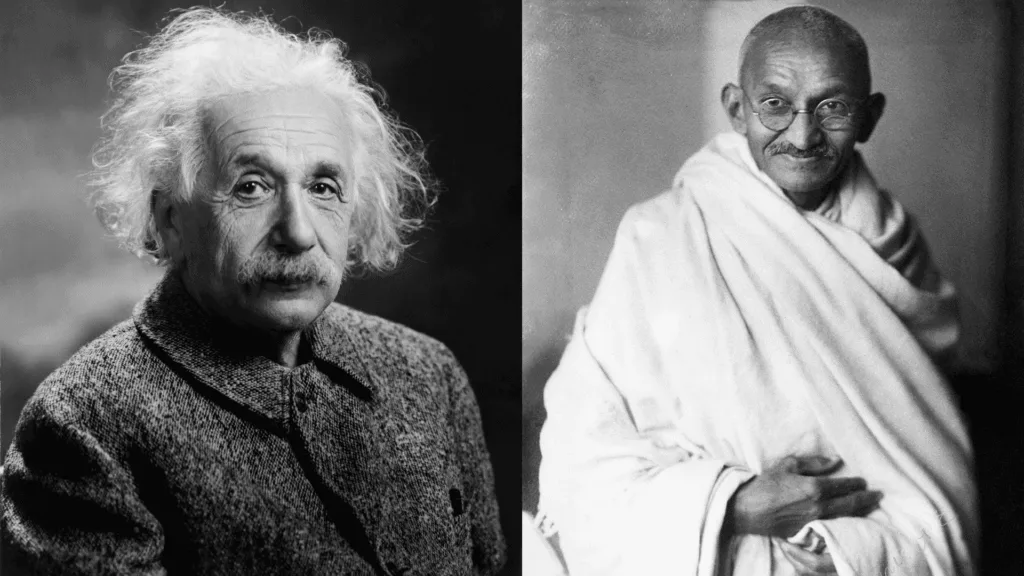
Albert Einstein writes to Mahatma Gandhi
In 1931, Albert Einstein wrote to Mahatma Gandhi expressing his admiration for the Indian leader’s commitment to non-violence.
“You have shown through your works, that it is possible to succeed without violence even with those who have not discarded the method of violence.”
Einstein also expressed hope that Gandhi’s example would reach beyond India and contribute to a world less dependent on war.
Albert Einstein writes to Mahatma Gandhi | Wikipedia
“We may hope that your example will spread beyond the borders of your country, and will help to establish an international authority, respected by all, that will take decisions and replace war conflicts.”
Gandhi responded to Einstein and invited him to visit his ashram in India. However, the two never met in person.
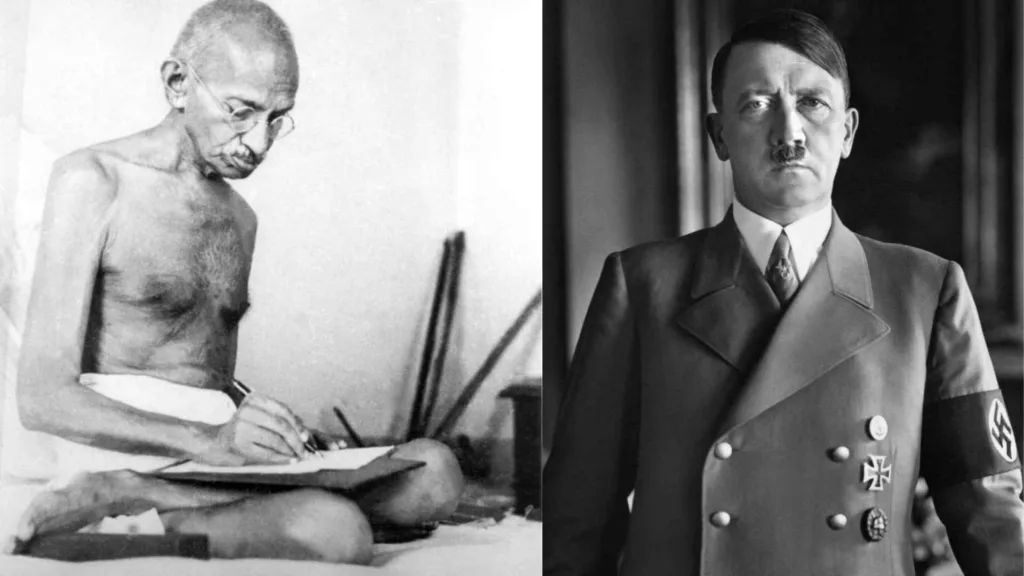
Mahatma Gandhi appeals to Adolf Hitler
Eight years later, Gandhi wrote another striking letter, this time to Adolf Hitler, as the threat of another major war grew in Europe.
Beginning with the words “Dear friend,” Gandhi appealed directly to Hitler to prevent a conflict that he feared could devastate humanity.
“It is quite clear that you are today the one person in the world who can prevent a war which may reduce humanity to a savage state.”
Mahatma Gandhi appeals to Adolf Hitler | Wikipedia
He then asked: “Will you listen to the appeal of one who has deliberately shunned the method of war not without considerable success?”
Gandhi’s appeal did not change the course of events. A few weeks later, the German Wehrmacht invaded Poland, setting the Second World War in motion.
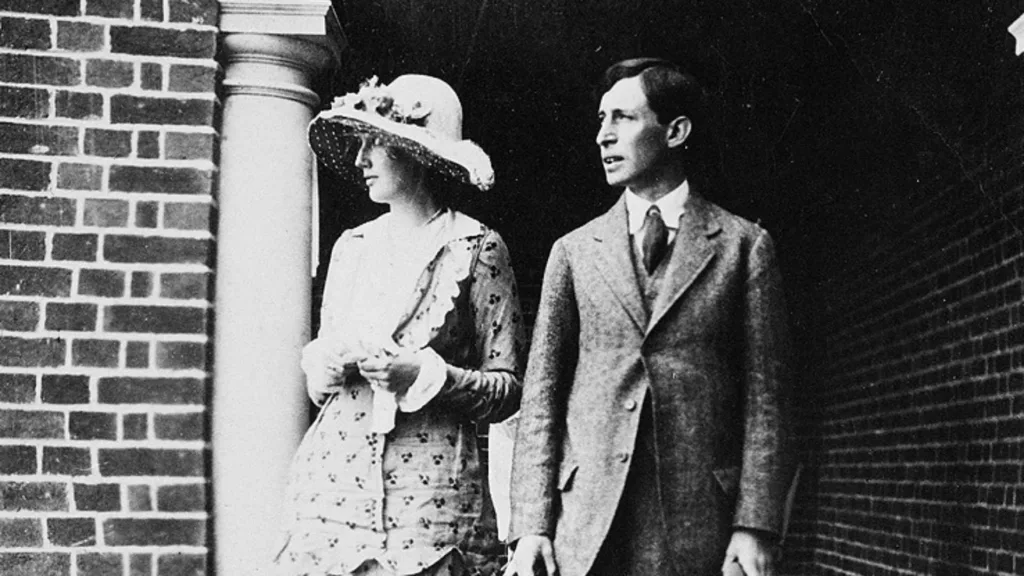
Virginia Woolf’s heartbreaking farewell
In 1941, British writer Virginia Woolf wrote a farewell letter to her husband, Leonard Woolf. Her words expressed both her affection for him and her belief that she would not recover from the severe depression she was experiencing.
“You have given me the greatest possible happiness. You have been in every way all that anyone could be.”
Virginia and Leonard Woolf | Wikipedia
She continued: “I don’t think two people could have been happier till this terrible disease came.”
Woolf also acknowledged the support she had received from her husband, writing, “I shan’t recover this time … If anybody could have saved me it would have been you. Everything has gone from me but the certainty of your goodness.”
Shortly afterwards, Woolf drowned herself in a river.
Leonardo da Vinci makes his case for a job
Centuries before modern CVs and job applications, Leonardo da Vinci had his own way of presenting his abilities. In the early 1480s, he wrote to Ludovico Sforza, the future Duke of Milan, seeking employment as a military engineer.
Da Vinci’s letter listed 10 areas in which he claimed expertise, confidently presenting himself as someone capable of designing and building military equipment and structures.
He concluded with an offer to prove his abilities himself: “And should any of the above seem impossible or impracticable to anyone, I am happy to demonstrate them in your park or any other place as Your Excellency pleases, to whom I humbly recommend myself.”
Sforza hired the young da Vinci. Years later, he commissioned the artist to paint The Last Supper.
Queen Elizabeth II shares her drop scone recipe
Not every historic letter dealt with politics, conflict or personal heartbreak. In 1960, Queen Elizabeth II sent a handwritten recipe to US President Dwight D. Eisenhower.
Eisenhower had enjoyed the drop scones, also known as Scotch pancakes, served during a visit to the United Kingdom. Several months later, the Queen sent him the recipe.
Queen Elizabeth II | Wikipedia
“Though the quantities are for 16 people, when there are fewer, I generally put in less flour and milk, but use the other ingredients as stated
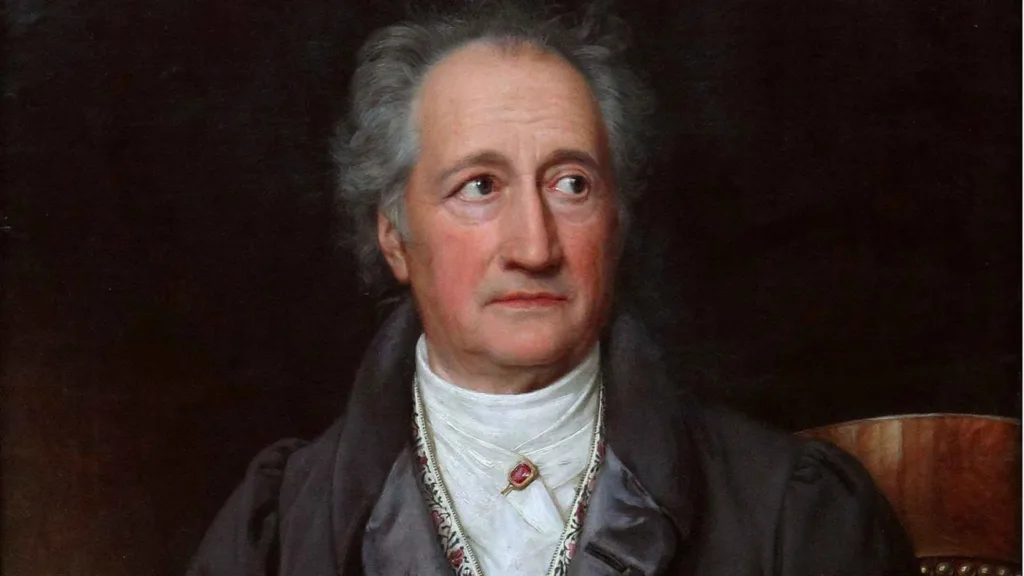
Goethe pours his heart out in a letter
In 1776, German poet Johann Wolfgang Goethe wrote a deeply affectionate letter to Charlotte von Stein, expressing the intensity of his feelings for her.
“Your presence has had a wonderful choking effect on my heart, I cannot say what I feel,” Goethe wrote, revealing the longing and emotion that ran through their relationship.
Johann Wolfgang Goeth | Wikipedia
Goethe, who was younger than von Stein by seven years, went on to write more than 1,500 letters to her. She is said to have remained faithful to her husband despite Goethe’s affection.
His unrequited love eventually took him away from Weimar for several years as he travelled in Italy. He returned to Weimar in 1788, where he later met Christiane Vulpius, who became his wife.
Bandel cheese has gone places its makers could hardly have imagined. From a village in Bankura, the sharp, smoky cheese has found its way to London and New York, earning attention from chefs, food writers and curious diners. Back home, however, the story is far less glamorous. Here, one of Bengal’s last traditional cheesemakers is still working over fire and smoke, unsure of what the next generation will do with the craft.
In Chak Chand village, Palash Ghosh carries on a family tradition that has passed from one generation to the next. He can make hundreds of pieces at a time, but producing more does not necessarily mean earning more. The traders who take the cheese to the market, he says, make the money while the makers remain on uncertain incomes.
Years of work, hours over the fire
Bandel cheese is not something that can simply be rushed into production. Preparing it takes about three hours, after which the cheese is smoked over a fire for another four to five hours. Ghosh says he and his father could earn around Rs 600 a day doing other work. Yet they continue to make the cheese, even as milk and sugar prices rise and the returns from traders remain low.
Ghosh also says access to the Kolkata market remains tightly controlled. Traders in New Market, where Bandel cheese is sold, do not share the source details with potential buyers, while the prices offered to makers have not kept pace with rising costs.
(Representational Image) From Bankura to global tables, Bandel cheese carries a tradition now at risk | AI Generated
Ghosh travels from his village to Kolkata with consignments of around 10,000 pieces at a time. The cheese is available through a handful of New Market shops and via home delivery from The Whole Hog Deli.
When appreciation does not pay the bills
Bandel cheese has attracted celebrity chefs, documentaries and articles, and has even reached international tables. But fame has not translated into the infrastructure needed to produce and sell it on a larger scale. Regulatory requirements and the absence of standardisation have also stood in the way of large-scale exports.
That is where research could offer a way forward. At FTSI TCG CREST, researchers are studying how the cheese can be produced at scale without losing the qualities that make it distinctive. The work also focuses on standardising the product, potentially making it easier to meet export requirements.
(Representational Image) Bengal’s Bandel cheese has global fans, but its last traditional makers need support | AI Generated
There has been a parallel push for a Geographical Indication tag. The National University of Juridical Sciences applied for the GI tag, but the process has remained stuck over procedural hurdles.
For Ghosh, though, recognition on paper is only one piece of the puzzle. He is looking for better production facilities, packaging, market access and practical support. What weighs on him most is not whether Bandel cheese will remain famous, but whether anyone will remain to make it.
He has a son. And despite spending years preserving his family’s craft, Ghosh says he does not want his son to follow him into it. If the cheese can travel across the world but cannot provide a secure future for the hands that make it, he asks, what is left for the tradition to offer the next generation?
Kolkata’s parking system is set for a major change from September 1, with the civic authorities introducing a new parking management system and an app that will provide real-time information on available parking spaces.
The new arrangement will initially cover Kolkata, Howrah and Bidhannagar. Municipal authorities have also decided to introduce night parking charges in Howrah and Bidhannagar, similar to the existing system in Kolkata.
New parking app to provide real-time updates
Urban Development and Municipal Affairs Minister Agnimitra Paul said a dedicated app will soon be launched to make parking in the city more organised.
According to Paul, the app will be launched by Chief Minister Suvendu Adhikari. It will allow motorists to check parking availability in real time before reaching busy areas.
New Kolkata parking app to show vacant spaces in real time from Sept 1 | ANI
Agnimitra said, “Our side will quickly launch an app through the Chief Minister. Real-time information will be available there. You may be going to the Park Street or Esplanade area, and you will be able to know in advance how many parking spaces are vacant or unavailable. Accordingly, you can plan ahead. No one will be allowed to park a car or motorcycle outside designated parking areas.”
Parking outside designated areas to attract hefty fines
The authorities have identified and finalised the areas where official parking facilities will be provided across the three municipal regions.
Officials also discussed how many parking spaces should be available during peak hours and which locations face greater demand for parking.
Kolkata drivers face new parking rules, app updates and hefty fines | ANI
Parking a car or motorcycle outside the designated areas will invite strict action. The meeting also decided that motorists could face heavy fines for violating the parking rules.
The exact fine amount and the number of vehicles that can be accommodated at each parking facility will be announced soon.
Howrah and Bidhannagar to introduce night parking charges
The new system will not be limited to daytime parking. Howrah and Bidhannagar municipalities will also collect night parking charges from people who leave their vehicles on roads at night.
Paul specifically warned motorists in Salt Lake against parking on roads despite having designated parking facilities.
Roadside parking gets stricter in Kolkata, Howrah and Bidhannagar | ANI
She also said, “In Salt Lake, many people park their cars on the roads even when they have their own parking facilities. I want to say, do not do this. Do not block the roads. If anyone parks a car or motorcycle on the road, the municipality will collect night parking charges.”
Nabanna meeting finalises parking arrangements
A meeting on the new parking system was held at Nabanna on Saturday, chaired by Agnimitra Paul.
The administrators and commissioners of the three municipal bodies attended the meeting, along with officials from the three police commissionerates.
Night parking charges to begin in Howrah and Bidhannagar from Sept 1 | ANI
The discussions focused on finalising the locations for government-designated parking, the number of spaces required during busy periods and areas where parking demand is particularly high.
The new measures are scheduled to take effect from Tuesday, September 1, marking a fresh attempt to bring parking in Kolkata, Howrah and Bidhannagar under a more structured system.
Gen Z is drinking less alcohol, but that does not mean the generation has walked away from the liquor market. In India, a growing preference for premium spirits, flavoured drinks and more experience-led consumption is creating a different kind of opportunity for alcohol companies.
The shift helps explain why liquor stocks such as Radico Khaitan, United Spirits and United Breweries continue to attract attention despite changing drinking habits among younger consumers.
Gen Z is drinking less, but not quitting alcohol
As per a NDTV report, George F Koob of the National Institute on Alcohol Abuse and Alcoholism says younger generations increasingly view alcohol as a health risk and are more likely to take breaks from drinking.
(Representational Image) Less drinking, bigger spending: Gen Z is choosing premium alcohol | AI Generated
Social habits have changed too. Time spent with friends in person fell from 30 hours a month in 2003 to just 10 hours in 2020.
A similar pattern is visible among young urban consumers in India. Surveys in Mumbai and Pune found health concerns, mental health awareness, financial pressures and social media influence among the factors encouraging more mindful drinking. Nearly half had tried a dry month, while most said they combine alcoholic and non-alcoholic drinks during an evening.
Premium alcohol is driving growth
The bigger change is in what Gen Z chooses when it does drink.
Radico Khaitan reported a 73 per cent rise in quarterly profit, helped by demand for premium brands such as Rampur whisky. Its “Prestige & Above” segment grew 40.8 per cent.
United Spirits also reported stronger premium sales. Its premium portfolio, including Johnnie Walker and Tanqueray, recorded 9 per cent year-on-year growth in net sales value.
(Representational Image) India’s Gen Z is reshaping the liquor market with premium choices | AI Generated
India’s alcohol market recorded 7 per cent volume growth in the first half of 2025, crossing 440 million cases. The premium-and-above category grew 8 per cent in both volume and value.
Gen Z wants more than just a drink
According to a NDTV report, Anant S Iyer, Director General of the Confederation of Indian Alcoholic Beverage Companies (CIABC), said, “Premiumisation continues to be one of the key growth drivers for India’s alcobev industry.”
He also said that Indian single malts grew “by around 22 per cent in 2025 to nearly five lakh cases,” with homegrown labels accounting for roughly 92 per cent of the segment. Gen Z, he added, is “moving across categories, exploring new flavours, formats and cocktails and choosing drinks according to the occasion rather than habit.”
(Representational Image) Premium spirits are thriving as Gen Z changes its drinking habits | AI Generated
Varun Jain, Founder & CEO of Smoke Lab, said that Gen Z’s “purchase journey” is increasingly influenced by “digital discovery, social influence and curiosity around a product’s provenance, flavours and overall experience.”
Rupi Chinoy of South Seas Distilleries explained NDTV that younger consumers seek spirits with “a strong sense of originality and place.” He added, “The new definition of luxury in spirits lies not merely in price or prestige, but in provenance, originality and the richness of the story behind every pour.”
The real Gen Z alcohol trend
The picture is therefore more nuanced. Gen Z may be drinking less frequently, but a section of younger Indian consumers is willing to spend more when they do drink.
(Representational Image) From flavoured vodka to single malts, Gen Z wants more from alcohol | AI Generated
For liquor companies, that means fewer occasions can still translate into higher-value purchases. Premium spirits, flavoured vodka, craft cocktails and products with a distinctive story are increasingly becoming part of that shift.
The devastating floods and landslides near the Nepal-Tibet border have brought the Kailash Mansarovar Yatra into sharp focus. Indian pilgrims travelling to or from the sacred site have been among those affected, with hundreds reported missing or unaccounted for and several others stranded on the Tibetan side after roads and border crossings were disrupted.
The disaster has also drawn attention to one of the most demanding religious journeys in the Himalayas, centred on Mount Kailash and Mansarovar Lake.
Why is Mount Kailash sacred?
For Hindus, Mount Kailash is believed to be the abode of Lord Shiva and Goddess Parvati. The mountain is closely linked with Shiva’s meditation and spiritual transcendence, while the pilgrimage is traditionally associated with the pursuit of moksha, or salvation. Hindu tradition also holds that Ravan sang the Shiva Tandav Stotram here to please Lord Shiva.
Mount Kailash remains sacred across Hindu, Buddhist and Jain traditions | Wikipedia
Kailash is revered beyond Hinduism too. In Buddhism, it is associated with Mount Meru, the cosmic mountain. Jain traditions connect the region with Rishabhadeva, the first Tirthankara, and his liberation. The Tibetan Bon tradition, which predates Buddhism in Tibet, also considers Mount Kailash and its surrounding landscape sacred.
Mansarovar lake and its spiritual importance
Located at around 4,557 metres above sea level, Mansarovar is among the world’s highest freshwater lakes. Its Sanskrit name, Manas-sarovar, is traditionally linked to manas, meaning mind, and sarovar, meaning lake.
Mansarovar Lake holds deep spiritual significance for pilgrims | Wikipedia
In Hindu belief, the lake is associated with Brahma. For pilgrims, bathing in or drinking its water carries deep religious significance. The region also lies near the headwaters of the Indus, Sutlej, Brahmaputra and Karnali river systems.
What is the Kailash Parikrama?
The traditional journey through Tibet includes places such as Saga and Darchen, the settlement from where pilgrims begin the 52-km Kailash parikrama, or kora. Depending on the route and arrangements, about 10 km may be covered by vehicle, leaving roughly 42 km on foot.
The trek is generally completed over three days. The most difficult section is the Dolma La Pass, at about 5,630 metres. From there, pilgrims descend towards Zuthulphuk before returning to Darchen.
The 52-km Kailash parikrama tests pilgrims at extreme altitude | Wikipedia
For millions, the Kailash Mansarovar Yatra remains a journey shaped by faith, difficult terrain and centuries-old religious traditions.