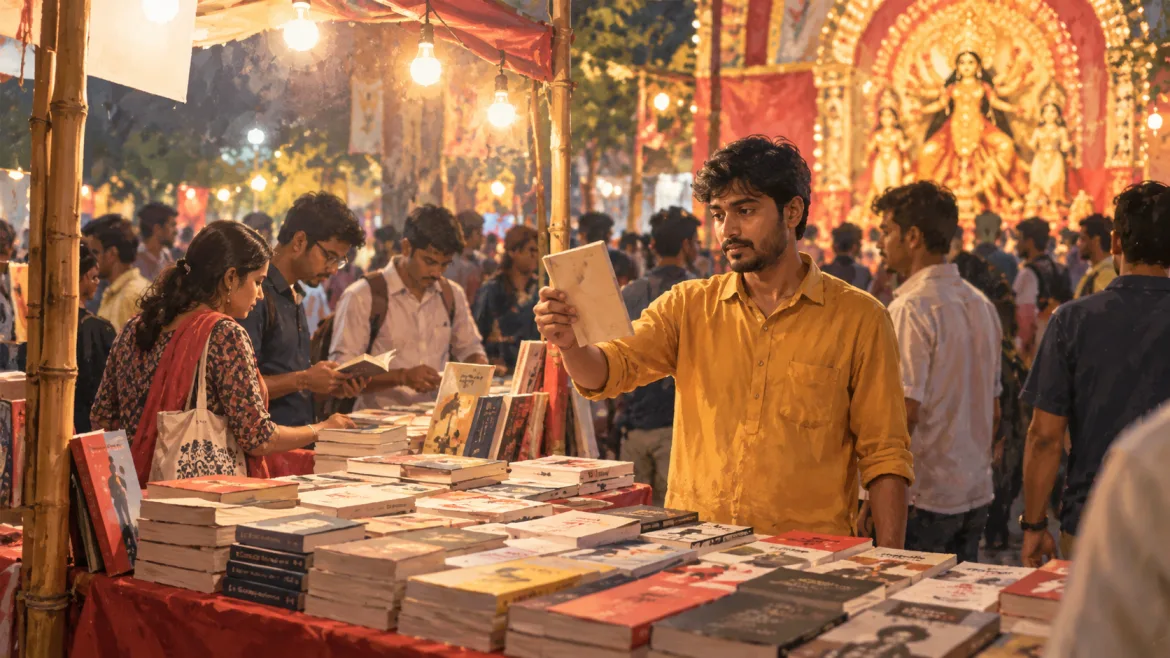
West Bengal’s Durga Puja celebrations have become the centre of a political controversy after Left parties alleged that their temporary bookstalls near puja pandals were vandalised at several locations.
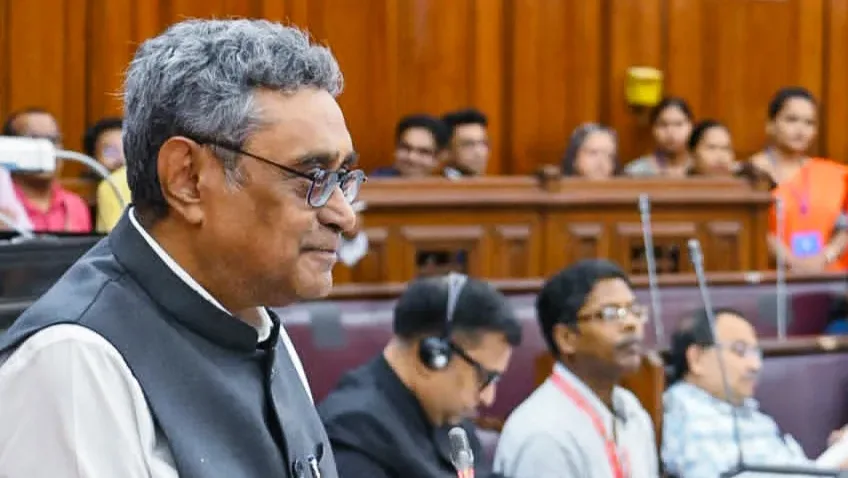
The allegations have drawn criticism from unexpected quarters, including West Bengal Finance Minister Swapan Dasgupta, a senior BJP leader, and Rashtriya Swayamsevak Sangh (RSS) leader Jishnu Basu.
Both have defended the Left’s right to display and sell books, arguing that political and ideological differences cannot justify attacks on freedom of expression.
Meanwhile, Chief Minister Suvendu Adhikari has continued to criticise the Communists, exposing a difference in approach within the broader BJP camp.
Bengal govt bulldozing @CPIM_WESTBENGAL book stalls & BJP junglees vandalising them during Durga Puja. While 19 people die in a stampede due to govt’s lack of oversight & management. What a fall, Bengal . https://t.co/Iscuq6GAMd
— Mahua Moitra (@MahuaMoitra) October 18, 2026
Also Read | Who is Birendra Krishna Bhadra? The voice that awakens an entire civilization on Mahalaya every year
Claims of damage
The CPI(M), the Socialist Unity Centre of India (SUCI) and other Left parties have alleged that their bookstalls were damaged at several places across West Bengal.
The locations reported include Jadavpur, Haridevpur, Rashbehari, Nagerbazar and Dhakuria in and around Kolkata, as well as Dinhata in Cooch Behar district and Shibpur in Howrah.
There have been allegations that some stalls were demolished or set on fire.
The Left has accused people allegedly aligned with the BJP and the saffron camp of targeting the stalls. However, these allegations should not be treated as proof of responsibility.
BJP state president Samik Bhattacharya has denied that the party was involved, saying he did not believe a genuine BJP worker would destroy bookstalls. He also said the government would take necessary steps.
Kolkata, West Bengal: On Book Stalls set up near Durga Puja pandals, CPI(M) State Secretary Md. Salim says, "This situation highlights the government’s priorities, showing that instead of addressing essential needs like road repairs, drinking water, food, and basic ration supplies, the entire administration is focused on a single book stall in Naihati, shifting its arguments daily. In High Court proceedings regarding jurisdiction, the government lawyer shifted the issue from a police matter to a PWD matter…"
— Supti kanjilal (@KanjilalSupti10) October 16, 2026
The tradition of Left bookstalls
For decades, left parties have set up temporary bookstalls near Durga Puja pandals. These stalls sell political publications, Marxist literature, progressive writing and other books.
They also give party workers an opportunity to interact with visitors during Bengal’s biggest annual festival.
Their presence reflects a distinctive part of the state’s political and cultural life. Durga Puja is primarily a religious and community celebration, but it is also a major public gathering.
Political groups have used that space to share their ideas and publications. The Left argues that its bookstalls are part of this longstanding tradition and should not be excluded simply because its ideology differs from that of the ruling party.
A war of words over the words for Puja
The controversy predates the latest vandalism allegations. On September 10, Adhikari had urged Durga Puja committees not to allow CPI(M) bookstalls outside pandals if the party used the term Sharodotsav, meaning autumn festival, instead of Durga Puja.
He argued that the alternative term diluted the festival’s religious significance and accused sections of the Left of selectively targeting Hindu traditions.
The dispute has become a clash over how Durga Puja should be described, who should be allowed to participate in its public spaces, and whether political or religious differences should influence access to those spaces.
Disagree with the book, not its right to exist
Swapan Dasgupta has said that his ideological opposition to the Left does not mean its members should be prevented from selling books.
“Yes, they are atheists, ideologically. But so what? I cannot support hooliganism on that excuse,” he said.
He also expressed shame over the incidents while stating that he did not know who was responsible or what their political affiliations were.
Jishnu Basu took a similar position. He said the CPI(M), CPI and SUCI had the right to set up bookstalls, provided their activities did not endanger anyone’s life.
He also argued that vandalism undermined the principles of tolerance and freedom of expression associated with the broader Hindutva ideology.
Also Read | West Bengal government plans Madrasah Service Commission merger with WBSSC
Dispute heads to court
The dispute has reached the courts. The CPI(M) has moved the Calcutta High Court over an alleged attempt by the Kolkata Municipal Corporation and police to remove its temporary bookstall in Jadavpur.
The party has claimed that its application for permission had not been considered.
Its lawyer said the matter was scheduled to be mentioned before the court’s vacation bench on October 22, seeking an urgent hearing.