Tag: Suvendu Adhikari

  • ‘Safety is the most important thing’: Kolkata gears up for Chhath Puja with 3,700 cops

    ‘Safety is the most important thing’: Kolkata gears up for Chhath Puja with 3,700 cops

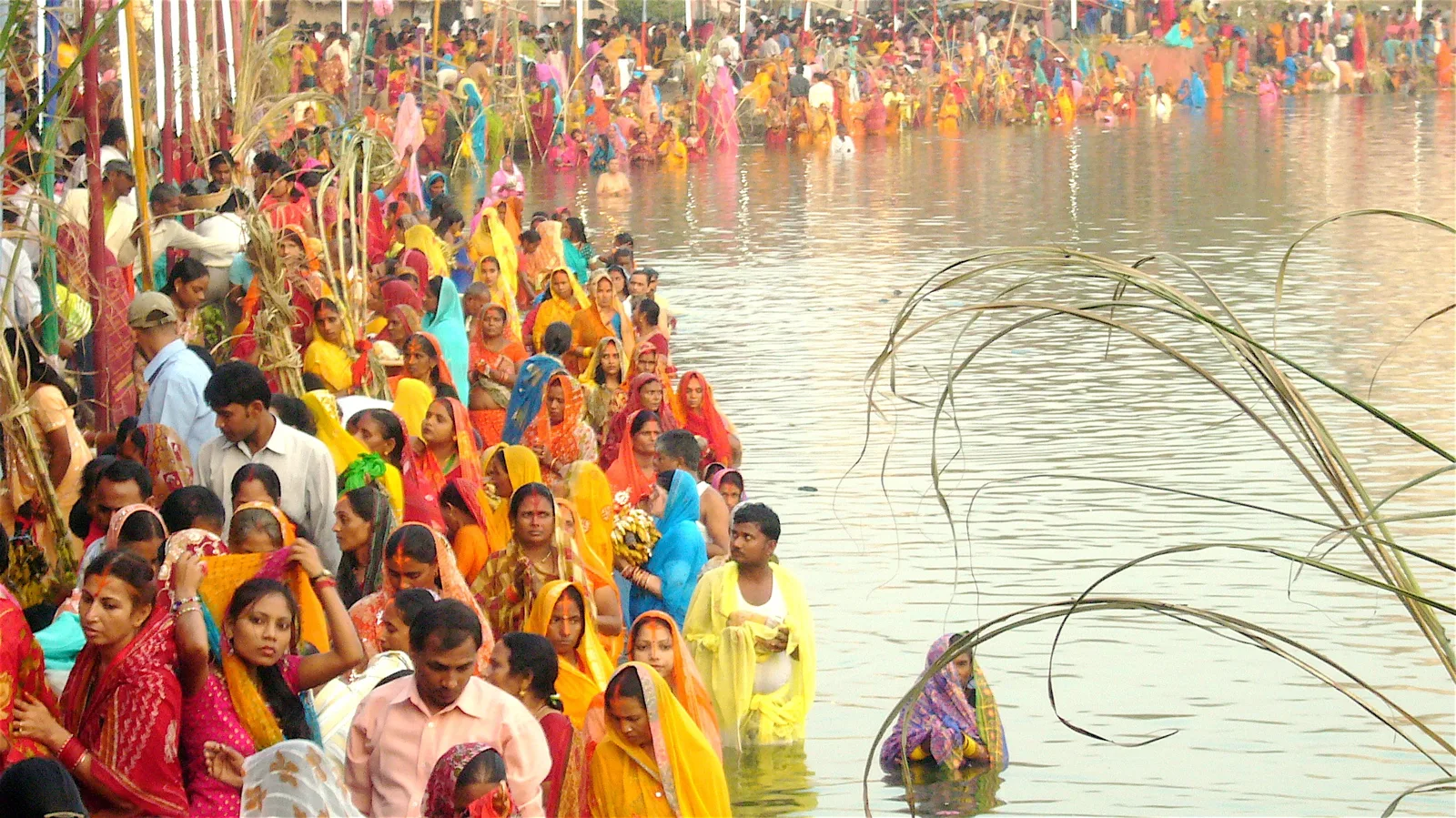
    Chhath Puja celebrations in Kolkata will centre on the evening of Sunday, November 15, and early Monday, November 16.

    Authorities have readied 163 ritual locations and police are deploying more than 3,700 personnel. The plan covers crowd control, medical support, QR-code guidance and traffic restrictions around bathing ghats.

    The focus is on the two busiest periods, when devotees gather beside rivers and ponds to offer prayers to the setting and rising Sun.

    Also Read | TMC MLA Paresh Ram Das arrested at Kolkata airport in rape, extortion case

    A date with the Sun, twice over
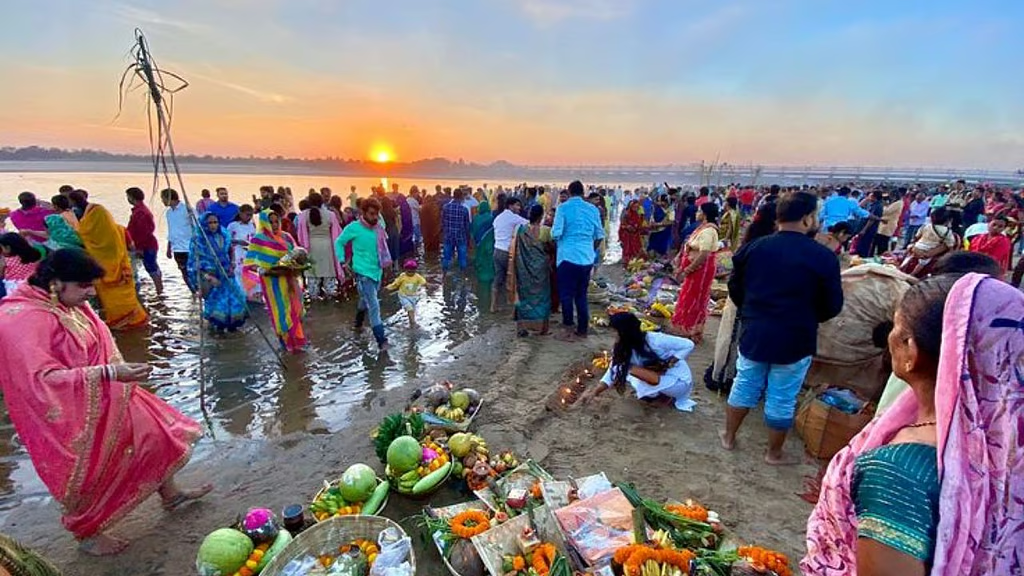
    Of Kolkata's 163 ritual sites, the civic body is managing 124 and KMDA 39, spreading Chhath Puja arrangements across river ghats and neighbourhood ponds | X/File Photo
    Of Kolkata’s 163 ritual sites, the civic body is managing 124 and KMDA 39, spreading Chhath Puja arrangements across river ghats and neighbourhood ponds | X/File Photo

    Chhath is a four-day Hindu observance dedicated to the Sun. Its best-known rituals are Sandhya Arghya, the offering to the setting Sun, and Usha Arghya, the offering at sunrise.

    Devotees gather at rivers and ponds with baskets of fruits and prasad. Many also observe strict fasts. The Bihar government’s tourism department describes it as a four-day observance involving bathing, fasting and offerings to the Sun.

    In Kolkata, the main public gatherings this year will take place on November 15 evening and November 16 morning.

    A citywide spread of places to worship

    Of the 163 ritual locations, 124 are being managed by the Kolkata Municipal Corporation (KMC) and 39 by the Kolkata Metropolitan Development Authority (KMDA).

    The KMC’s list includes 30 ghats along the Hooghly, two on the Adi Ganga, 86 ponds and other water bodies, and six artificial ponds. The KMDA has prepared 24 permanent and 15 temporary ghats.

    The spread gives devotees designated options along the river as well as in neighbourhoods.

    A cautious eye on the water’s edge

    Some familiar sites will remain out of bounds. Entry to Rabindra Sarobar and Subhas Sarobar is prohibited in keeping with National Green Tribunal directions.

    The two lakes were closed for 48 hours from 2pm on Saturday, November 14, with police deployment around them. Mayer Ghat in Bagbazar has also been closed for Chhath.

    Police said renovation work and iron rods had narrowed the assembly area, raising concerns about crowd movement. The decision followed safety concerns after the recent Chorbagan stampede.

    Kashi Mitra Ghat has been identified as an alternative.

    Kolkata Police will deploy more than 3,700 personnel, with 35 senior officers monitoring the arrangements. 300 additional police personnel would be deployed at the two lake sites.

    State minister Indranil Khan said medical teams, lighting, bio-toilets and security personnel were being arranged near major ghats. “Safety is the most important thing,” he said.

    KMC has planned doctors, ambulances and first-aid facilities at six major ghats, along with divers, civil-defence volunteers, drinking-water tankers, women’s changing rooms and public announcements.

    The civic body has also planned to remove flowers and puja material from the water after the rituals.

    Directions and emergency details, one scan away

    A new QR-code facility is meant to help devotees plan their visits. According to Sangbad Pratidin, scanning a code on a mobile phone will provide ghat locations, access routes and emergency-service information.

    The facility is intended to make it easier to identify a suitable site before leaving home, especially when a familiar ghat is closed or roads are restricted.

    Also Read | KMC, KMDA preparing 50 ghats for Chhath Puja celebrations

    A carefully choreographed passage through the city

    The traffic plan will affect roads leading to bathing ghats. Restrictions will operate from noon to 8pm on November 15 and again from 3am to 10am on November 16.

    Carts, trams and non-motorised vehicles will be barred from specified arterial roads, including stretches around Strand Road, Nimtala Ghat Street, Bagbazar Street, Beadon Street and Bidhan Sarani.

    Parking, passenger pick-up and drop-off, and loading and unloading will be prohibited on 53 roads. Goods vehicles not connected with Chhath will be barred from the city from noon to 10pm on November 15 and from 3am to 10am on November 16.

    Ambulances, fire services, police and other essential-service vehicles are exempt.

    Chief Minister Suvendu Adhikari met Governor R N Ravi at Lok Bhavan on Saturday evening, when the governor inaugurated Kharna, a Chhath ritual.

    Adhikari is scheduled to inspect preparations at ghats in Kolkata and Howrah on Sunday.
  • Got Banglar Bari money? Bengal wants 11,000 beneficiaries to return it by November 30

    Got Banglar Bari money? Bengal wants 11,000 beneficiaries to return it by November 30

    West Bengal Chief Minister Suvendu Adhikari has set November 30 as the deadline for around 11,000 people who allegedly received housing assistance despite being ineligible to return the money.

    The state government has also announced a Criminal Investigation Department (CID) probe into suspected irregularities in the rural housing scheme introduced under the previous Trinamool Congress (TMC) government.

    Adhikari warned that those who fail to repay the funds could face legal action.

    Also Read | 79 years after Independence, electricity rollout begins in Bengal’s Chakdah village

    How the numbers stack up

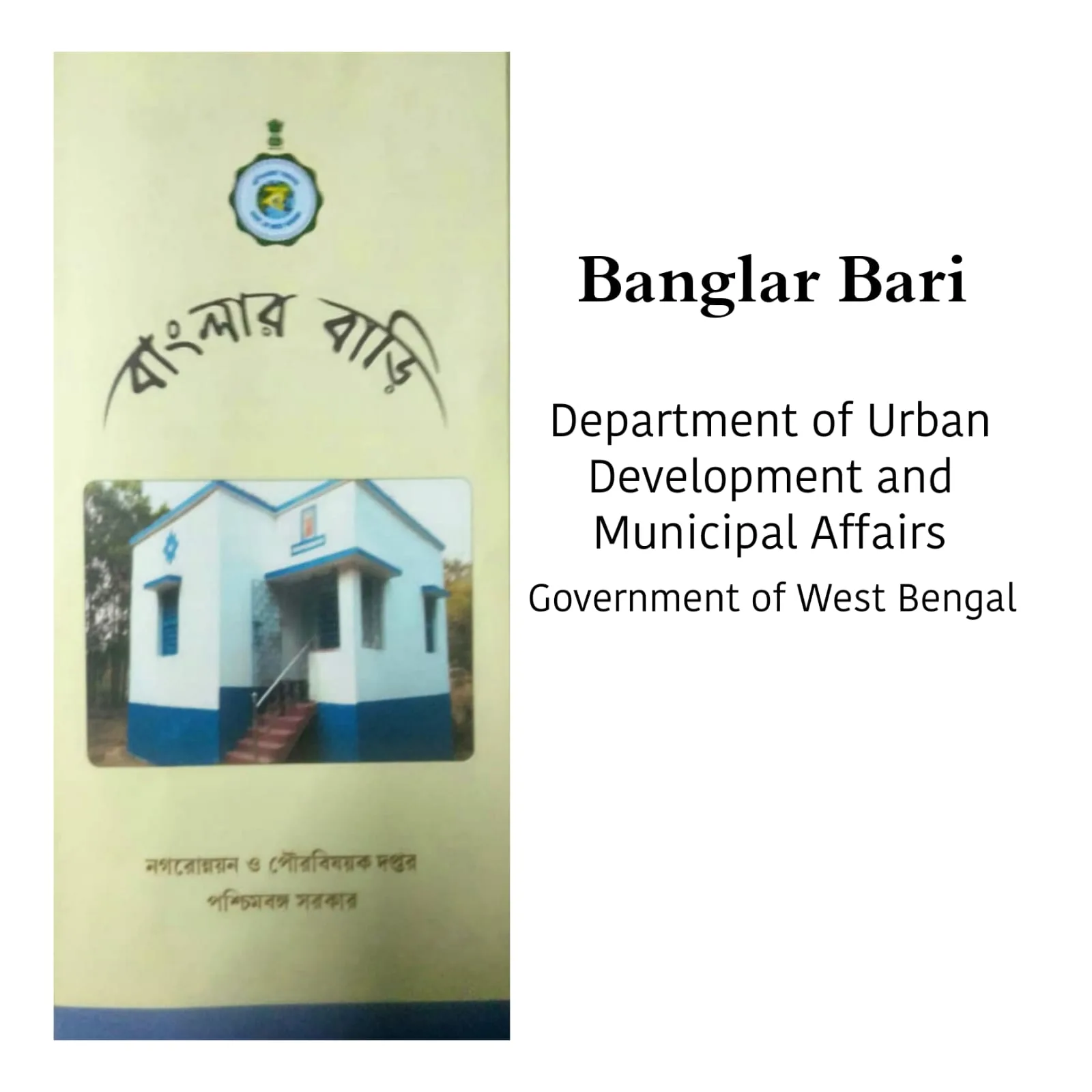
    Banglar Bari was meant to put pucca roofs over eligible families | X (@SuvenduWB)
    Banglar Bari was meant to put pucca roofs over eligible families | X (@SuvenduWB)

    The announcement came during a press conference at the state secretariat, Nabanna, on Friday, November 13.

    According to the chief minister, the administration identified around 57,000 people who had allegedly been included illegally in the beneficiary list. Their names were subsequently removed.

    Of these, 12,000 had already received financial assistance. Around 1,000 have returned the money so far, leaving approximately 11,000 yet to comply with the government’s directive.

    A roof, with a two-part payment plan

    Suvendu Adhikari has ordered a CID probe into alleged housing scheme irregularities under the previous TMC government. The findings are still awaited | X (@TheBengalIndex)
    Suvendu Adhikari has ordered a CID probe into alleged housing scheme irregularities under the previous TMC government. The findings are still awaited | X (@TheBengalIndex)

    Banglar Bari was a rural housing assistance programme aimed at helping eligible families build permanent, or pucca, houses.

    The scheme provided financial support of ₹1.2 lakh to each eligible household, disbursed in two instalments of ₹60,000.

    The first phase of fund distribution began on December 17, 2024, under the then chief minister Mamata Banerjee. The programme continued through subsequent phases.

    Following the change in government, the rural housing scheme was renamed Paschim Banga Awas Yojana, also referred to in official announcements as West Bengal Awas.

    The assistance is intended to help eligible households complete house construction. The second instalment is released after the initial payment, as part of the government’s support for the construction process.

    Why are 57,000 names under scrutiny?

    The controversy centres on the eligibility and verification process. According to Adhikari, a field verification exercise found that around 57,000 applicants had been illegally included in the beneficiary list during the previous administration. Their names were removed after the verification process.

    The chief minister has also raised concerns about how public money reached some of these accounts. He said investigators would examine cases involving suspected fictitious beneficiaries whose existence could not be established during field verification.

    There were also allegations that bank accounts had been opened in the names of people who had died or shifted elsewhere to receive housing assistance.

    The 57,000 figure does not mean that all those people received financial assistance. Adhikari said the administration had identified 12,000 people from this larger group who had actually received money. The government is now seeking to recover those payments.

    The allegations are yet to be established through the proposed investigation.

    The CID investigation and accountability

    The CID investigation is expected to examine how the allegedly ineligible names entered the beneficiary database and who recommended their inclusion.

    The government will also look into whether officials at the panchayat, block and district levels facilitated the disbursement or failed to carry out proper checks.

    Adhikari said a Special Investigation Team (SIT) would oversee the investigation. He also warned that officials found to have helped secure payments for ineligible applicants could face departmental proceedings.

    Separately, the chief minister announced a committee headed by retired judge Biswajit Basu to examine alleged corruption and misuse of public funds across different levels of the state administration.

    Also Read | Swasthya Sathi under scanner as Ayushman Bharat drive finds 20 lakh beneficiaries untraceable

    Money going out, money coming back

    While eligible families receive fresh housing aid, Bengal is chasing 11,000 recipients for refunds, raising questions about who actually received the money | X (@TheBengalIndex)
    While eligible families receive fresh housing aid, Bengal is chasing 11,000 recipients for refunds, raising questions about who actually received the money | X (@TheBengalIndex)

    The recovery drive comes as the state government continues to release housing assistance to eligible households. On Friday, the administration transferred around ₹4,201 crore as the second instalment to approximately 7 lakh beneficiaries.

    With this latest release, the government said it had disbursed a total of ₹10,323 crore as the second instalment to around 17.21 lakh eligible beneficiaries during the current phase.

    The November 30 deadline will be the immediate test of the state’s fund-recovery exercise, while the CID probe will examine how the alleged irregularities took place.

  • Chief Minister Suvendu Adhikari promises major investments in Bengal; Adani hospital project set to begin 

    Chief Minister Suvendu Adhikari promises major investments in Bengal; Adani hospital project set to begin 

    West Bengal Chief Minister Suvendu Adhikari on Tuesday said the state could see major investments from leading industrial groups, while indicating that the government was working to bring more big businesses to Bengal.

    Speaking to reporters in Cooch Behar, Adhikari referred to Prime Minister Narendra Modi’s message of “talk less and work more” while discussing his government’s efforts to attract investment. His remarks came a day after he met industrialist Mukesh Ambani and his son Anant Ambani in Mumbai. Recent reports said investment opportunities and the expansion of Reliance’s presence in West Bengal were discussed during the meeting. 

    Suvendu Adhikari hints at Ambani development

    Adhikari suggested that his meeting with the Ambanis could lead to a development in Bengal, although he did not disclose details.

    “I received an invitation from Anant Ambani to attend their Ganpati festival. I couldn’t make it last week, but yesterday I visited their home, performed Aarti at their temple, and had dinner with Mukesh ji and Anant ji. You will have to wait and watch what happens,” Adhikari told reporters in Cooch Behar.

    The meeting was part of the state government’s efforts to attract fresh industrial investment. Reports said discussions included opportunities for Reliance to expand its business activities in Bengal. 

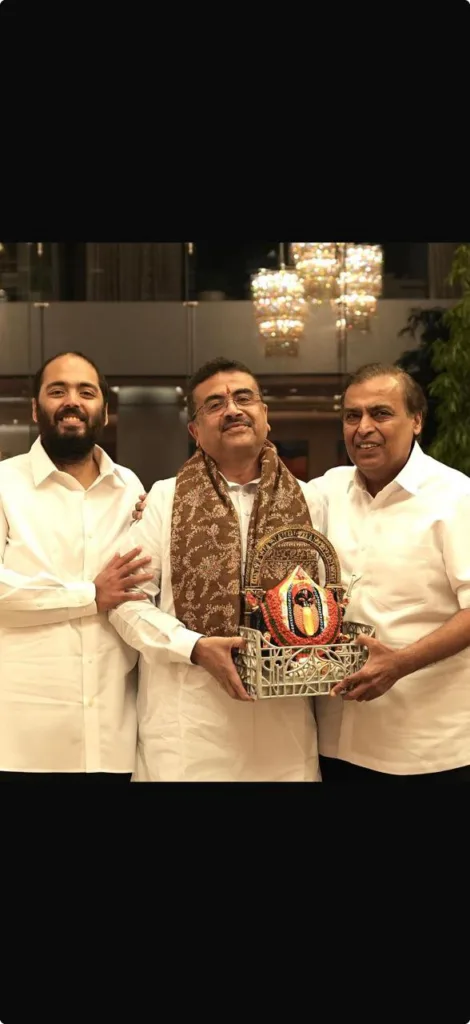
    West Bengal Cm Suvendu Adhikari with Mukhesh and Anant Ambani
    West Bengal Cm Suvendu Adhikari with Mukhesh and Anant Ambani. Credit: X/Suvendu Adhikari

    ‘There will be huge investments in Bengal’

    Adhikari said major investors would be brought to the state and claimed that Bengal would receive substantial investment.

    “There will be huge investments in Bengal. All major investors will be here. The Communists and previous chief minister Mamata (Banerjee) have caused massive damage to the state. The entire country is ready to support the BJP government to get Bengal back on its feet. I have got this commitment from everybody,” Adhikari said.

    Also Read | Will West Bengal’s new land reforms make it easier to set up businesses? Exploring

    His comments form part of the state government’s broader push to attract large industrial projects and position West Bengal as an investment destination. The government has also announced plans to provide land to 33 industries before Durga Puja. 

    Adani hospital project in New Town

    Adhikari also said the groundbreaking ceremony for the Adani Group’s proposed hospital in Kolkata’s New Town would take place soon, with Gautam Adani expected to attend.

    The proposed facility is a 2,000-bed hospital, with the foundation stone ceremony scheduled for September 24, according to recent reports. 

    Also Read | West Bengal 933 schools with no students under government review; might hand buildings to other depts

    The developments involving the Ambani and Adani groups come as the Bengal government steps up its outreach to major corporate groups. The focus remains on attracting investment and expanding industrial activity across the state.

    This version targets Suvendu Adhikari, Bengal investment, Mukesh Ambani, Anant Ambani, Adani Group and New Town hospital as the main SEO keywords while keeping the political claims clearly attributed.

  • Why is Suvendu Adhikari pushing the Saffron Samman Yatra now?

    Why is Suvendu Adhikari pushing the Saffron Samman Yatra now?

    West Bengal Chief Minister Suvendu Adhikari is set to lead the Saffron Samman Yatra, also referred to as the Gerua Samman Yatra, in Kolkata on Wednesday. The march will begin at Golpark, pass through Dhakuria and end at the 8B bus stand near Jadavpur University, covering roughly three kilometres.

    The BJP has presented the programme as a campaign to promote nationalist thought and highlight the values associated with the colour saffron. The timing, however, gives the march a wider political context.

    Also Read | Why Kolkata Police filed an FIR against Mamata Banerjee? Exploring

    It comes less than a fortnight after a large Vande Mataram mobilisation near Jadavpur University and amid an ongoing battle over political graffiti and slogans on the campus.

    Why is Suvendu Adhikari pushing the saffron theme now?

    The Saffron Samman Yatra follows Adhikari’s appearance at the “Vande Mataram in 10,000 voices” programme around Jadavpur University. At that event, he criticised what he described as anti-national influences on the campus and argued for a stronger emphasis on national and cultural traditions.

    The latest march takes that message further by placing saffron at the centre of the political narrative.

    Suvendu Adhikari's Saffron Samman Yatra puts nationalism, Hindutva and Bengal's cultural identity in focus.
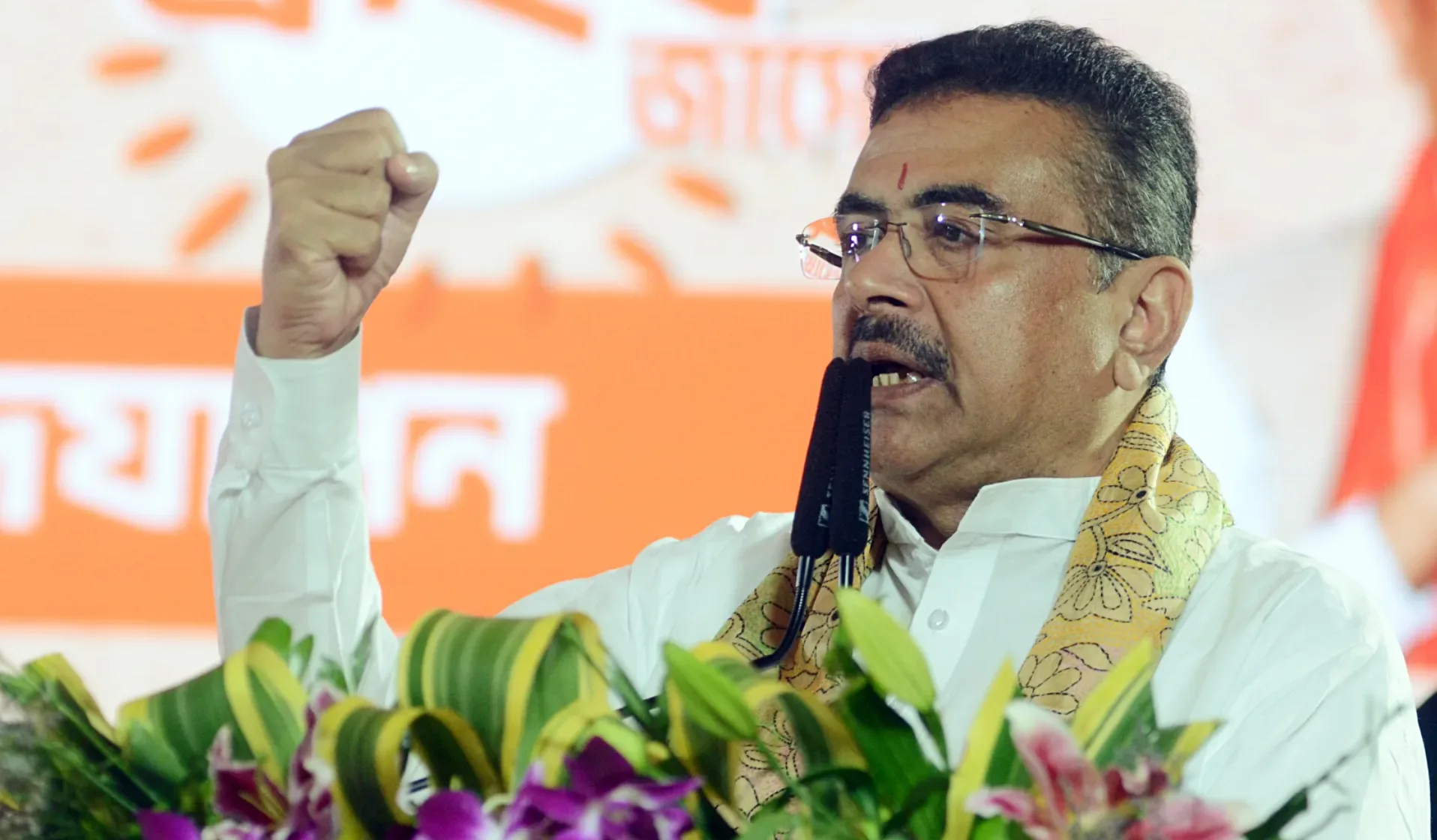
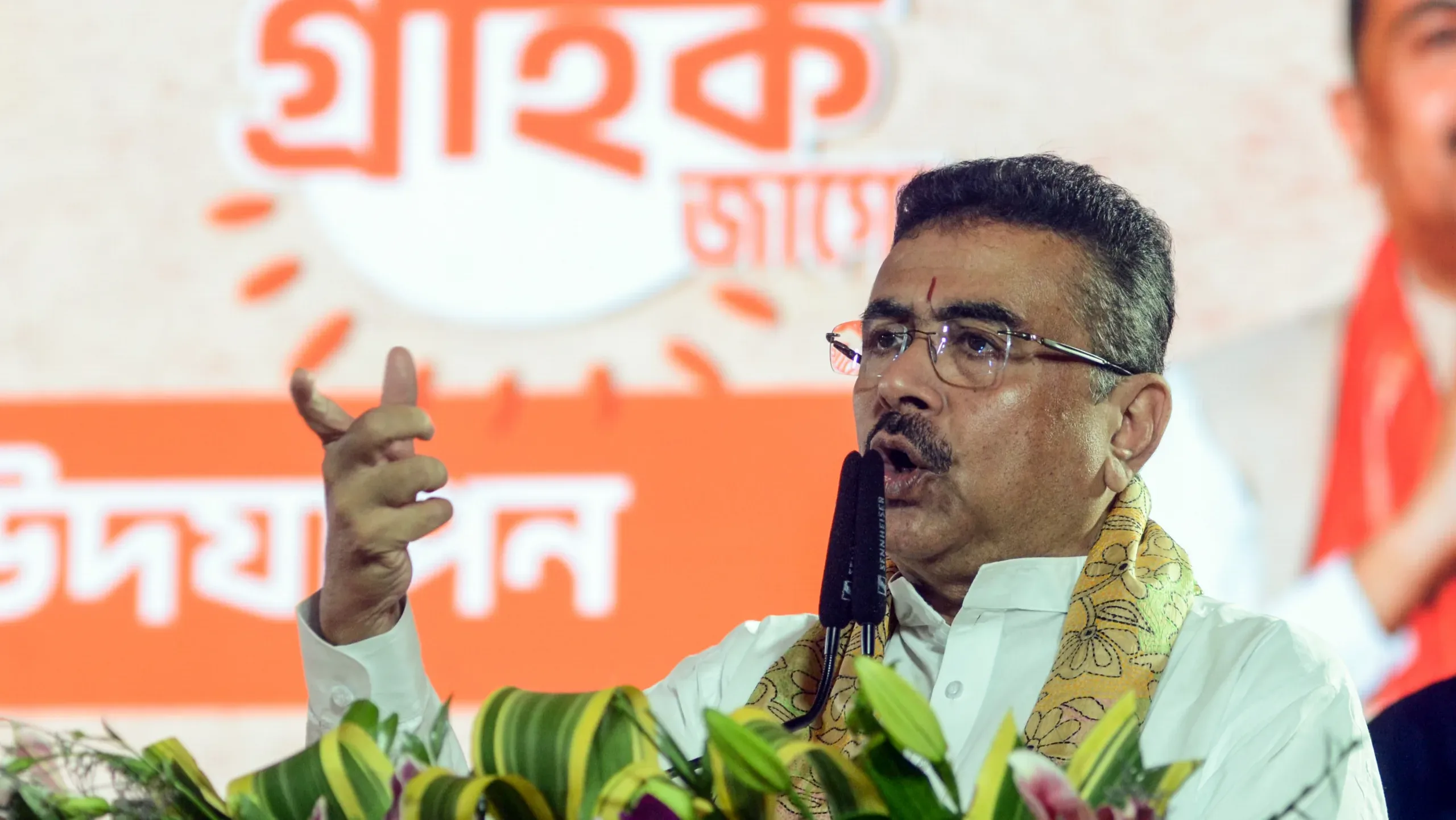
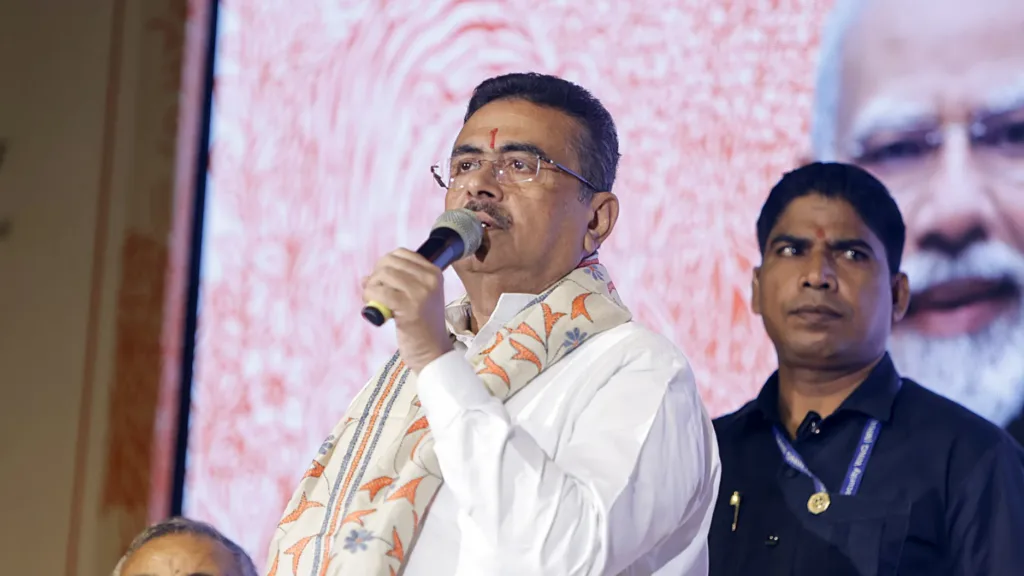
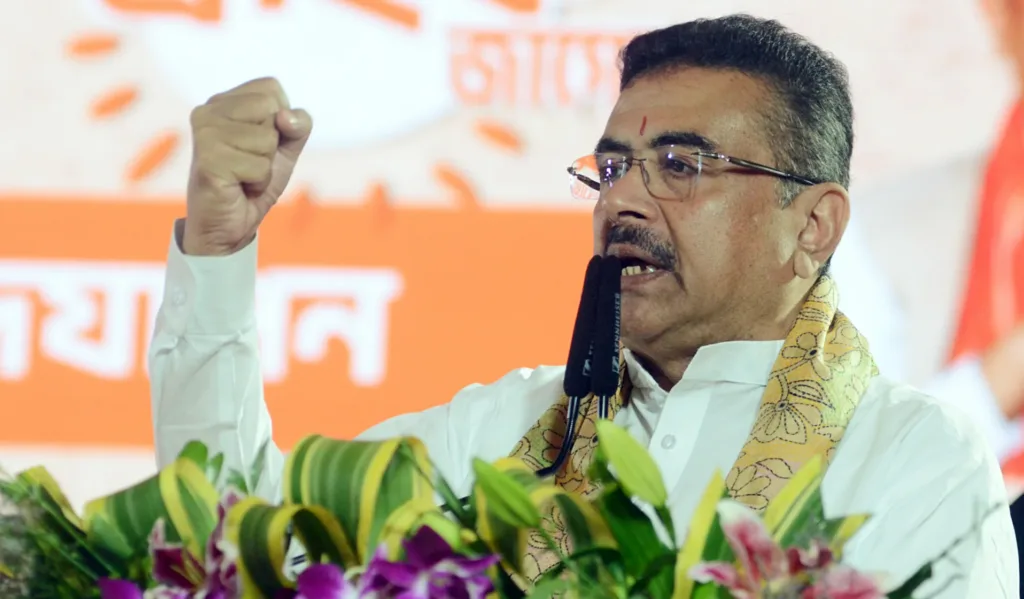
    West Bengal Chief Minister Suvendu Adhikari / ANI

    Organisers have described saffron as a symbol of sacrifice, self-surrender, courage and Sanatan tradition. The BJP has urged people to participate in the procession, framing it as an expression of nationalist thought.

    The political backdrop is significant. Jadavpur University has been witnessing a continuing graffiti battle involving rival student groups, including Left-wing groups and the RSS-affiliated ABVP. Walls have repeatedly been painted over and rewritten with competing political messages.

    How does the march fit into Bengal’s cultural politics?

    The argument behind the Saffron Samman Yatra is broader than the colour saffron itself.

    According to the analysis, BJP leaders and party insiders believe Bengal’s traditional and nationalist cultural identity was weakened during the state’s long Left Front rule and subsequently affected by what they describe as a different form of cultural politics under the Trinamool Congress.

    Suvendu Adhikari's Saffron Samman Yatra from Golpark to the Jadavpur University area
    West Bengal Chief Minister Suvendu Adhikari / ANI

    Some RSS leaders have used the term “cultural Marxism” to describe what they see as the influence of Left-oriented ideas on Bengal’s cultural and political life. These are political and ideological characterisations made by BJP and RSS figures, rather than an established description of Bengal’s cultural history.

    The BJP’s current pitch is that Bengali pluralism and cultural diversity can coexist with a stronger emphasis on Indian nationalism and Hindu cultural traditions.

    What does this mean for Bengal’s pluralist identity?

    This is where the political debate becomes more complicated.

    Bengal has historically had a distinctive cultural mix in which religious traditions, food habits, literature, art and intellectual life have often existed alongside one another. The analysis points to figures such as Rabindranath Tagore, as well as scholars Kshitimohan Sen and Amartya Sen, in discussions around this heterogeneous cultural identity.

    The BJP’s emphasis on a return to traditional heritage is being viewed differently by its political opponents. Critics fear that an aggressive focus on nationalism and Hindutva could weaken Bengal’s pluralistic and inclusive character.

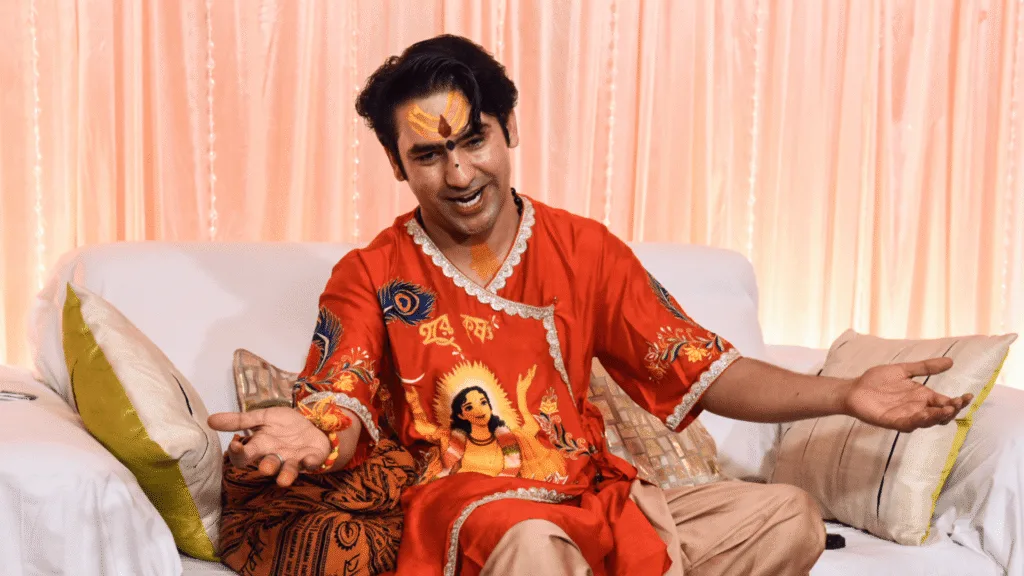
    The debate has also extended to food and religious practices. The recent appeal by self-styled godman Dhirendra Shastri, popularly known as Bageshwar Baba, asking Bengalis to give up non-vegetarian food during Durga Puja triggered discussion because Bengal’s religious and culinary traditions have historically not followed a uniformly vegetarian model.

    Dhirendra Shastri bageshwar baba.
    Dhirendra Shastri aka Bageshwar Baba/ ANI

    RSS chief Mohan Bhagwat, meanwhile, has stressed a less confrontational approach to food habits, saying there should not be negativity around what people eat.

    Is the Saffron Samman Yatra also an election strategy?

    The timing makes the political calculation difficult to ignore.

    West Bengal’s civic polls are expected after Diwali, with elections to the Kolkata Municipal Corporation, Howrah Municipal Corporation and several other municipalities potentially becoming important political battlegrounds.

    The Saffron Samman Yatra therefore gives the BJP a high-visibility platform to take its nationalism and cultural-identity message directly to voters.

    The march also keeps Jadavpur University at the centre of a wider political conversation. From the Vande Mataram event to the graffiti disputes, the campus has become a prominent site for competing arguments over nationalism, student politics and Bengal’s cultural identity.

    Also Read | Kolkata parking rules change from Sept 1: Here’s what drivers need to know

    For the BJP, the saffron campaign can serve as a way to consolidate its ideological message and reach voters beyond conventional party politics. For opponents, it raises questions about whether Bengal’s traditionally heterogeneous cultural identity is being recast through a more explicitly Hindutva-oriented political lens.

    The Saffron Samman Yatra, therefore, is not simply a march about a colour. It is part of a larger contest over nationalism, cultural identity and the political meaning of Bengal’s traditions.