Tag: SIR

  • West Bengal SIR appeals: Aadhaar authentication delays tribunal orders

    West Bengal SIR appeals: Aadhaar authentication delays tribunal orders

    Judges appointed by the Supreme Court to hear appeals linked to the Special Intensive Revision (SIR) of electoral rolls in West Bengal have repeatedly raised concerns over an Aadhaar authentication requirement on the Election Commission’s digital portal. According to official records accessed by The Indian Express, the additional verification step has prevented appellate tribunals from uploading final orders, affecting the disposal process for voters challenging decisions taken during the revision of electoral rolls.

    The issue was first formally flagged on September 24, just three days after the Election Commission introduced the Aadhaar authentication screen on September 21. The judges raised the matter again in October, with the tribunals’ venue-in-charge requesting the Chief Electoral Officer (CEO) of West Bengal to resolve the technical problem on October 13.

    The portal-related difficulties have emerged alongside concerns about inadequate infrastructure, poor working conditions and the honorarium paid to retired judges serving on the appellate tribunals.

    Judges seek removal of Aadhaar authentication

    The Election Commission’s IT division developed a dedicated online portal for the appellate tribunals established to hear challenges arising from the West Bengal SIR process. However, the introduction of Aadhaar authentication created another hurdle for judges attempting to upload their final decisions.
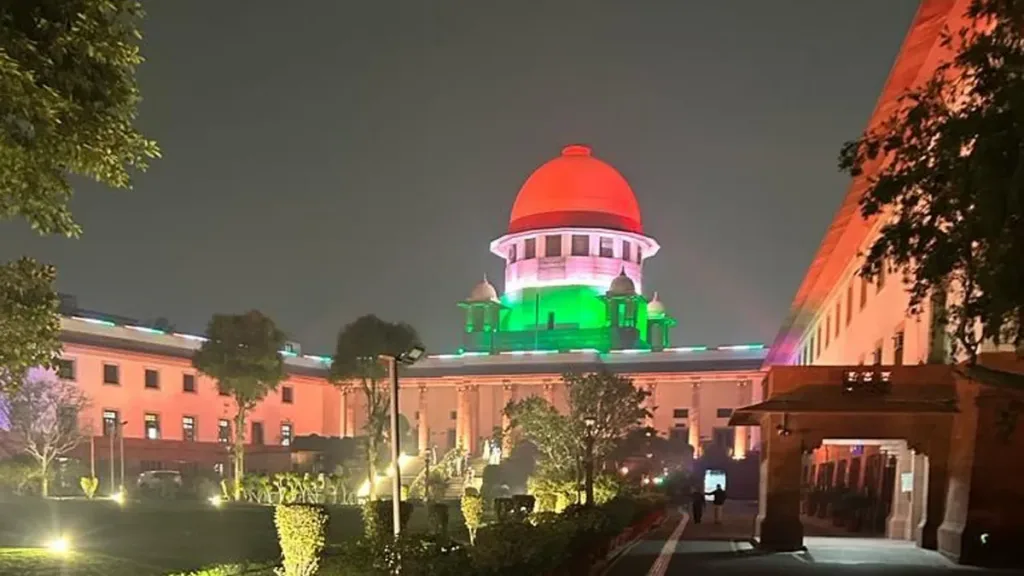
    Supreme Court of India
    Supreme Court of India. Credit: X/ANI

    During a virtual meeting on September 21, conducted by Election Commission Director General of IT Seema Khanna, judges were familiarised with the updated portal. However, they were not informed that the revised system required them to authenticate using their personal Aadhaar numbers before uploading final orders.

    In a letter dated September 24 to the Additional Chief Electoral Officer and the nodal officer for the tribunals, the venue-in-charge conveyed the judges’ demand for the authentication requirement to be removed.

    “The Honourable Judges at the Appellate Tribunal require the Aadhaar authentication screen removed from the AT portal for the purpose of disposal of appeals.”

    Although the tribunals have been disposing of appeals through physical proceedings, the inability to upload final decisions on the portal has created a gap between the judicial process and the digital record of those decisions.

    The problem remained unresolved in October. On October 12, the CEO’s office forwarded a request from an appellant seeking disposal of his appeal. The tribunal’s in-charge responded the following day, pointing out that the technical issue had already been reported.

    “Since the system at present does not allow the tribunals to upload the final order and in this regard, CEO has already been apprised of vide letter dt. 24.09.2026. CEO, WB be once again requested to fix the issue to ensure proper functioning of the Tribunals.”

    EC portal gaps affect SIR appeal proceedings

    The Aadhaar authentication issue is not the first technical problem reported by the judges. At a meeting on August 11, members of more than a dozen tribunals highlighted several shortcomings in the portal, according to the minutes shared with the Election Commission and the Chief Justice of the Calcutta High Court.
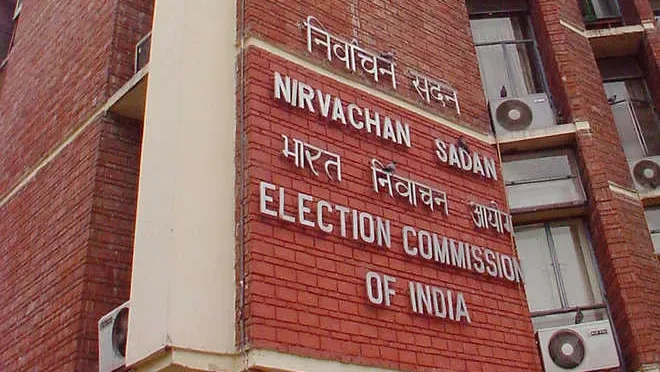
    Election Commission of India office
    Election Commission of India office. Credit: X/ANI

    The judges said the system did not allow them to serve notices to parties, upload additional documents submitted by appellants or conduct virtual hearings. They also flagged the inability to restore a deleted voter and the lack of an option for appellants to download tribunal orders.

    Although the Election Commission subsequently updated the portal, restrictions remained on the types of documents that could be accepted from appellants. The system limited submissions to the 13 documents specified by the commission during the SIR exercise.

    These limitations have added to the difficulties faced by tribunals dealing with appeals from voters whose names were deleted from the electoral rolls, as well as challenges against the inclusion of names.

    Retired judges flag poor working conditions at Joka

    Apart from the digital problems, 10 retired judges serving on the appellate tribunals wrote to the authorities on October 1, raising concerns about their working environment at Joka, on the outskirts of Kolkata.

    They called for the tribunals to be shifted to a more centrally located area and sought better facilities for judges and staff. Their letter described the existing premises as a temporary arrangement created in haste following the deletion of around 27 lakh voters after the adjudication process.

    The judges wrote that the tribunals had been established to address public dissatisfaction after the electoral roll revision, with the facilities initially intended to serve as a short-term arrangement.

    “…in order to assuage the public discontents, venue and court rooms were selected and constructed in a jiffy. In such emergent situation, taking it as a stop gap measure for a short period and in fact, it was given to understand as such that is was a matter of few months, 19 Appellate Tribunals, along with court rooms, were given shape in a vacant building of the Central government in Joka purely as a make-shift arrangement,” they wrote.

    The letter also highlighted the distance from Kolkata and New Town, the condition of the roads and the long journeys required to reach the workplace. According to the judges, the commute could take between two and three hours.

    “Judges are to work in a melee within a room of about 12×10 sq. ft. along with 7/8 members of staff working on computers whole day long in inconceivable conditions having no scope for recess. Judges have no separate chambers or washroom,” they wrote.

    The judges also pointed to the lack of stationery and access to washrooms, describing the facilities as inadequate for the work expected of the tribunals.

    Judges demand higher honorarium and better facilities

    The retired judges questioned whether the compensation offered for their work reflected the responsibilities involved. They said a request to increase the honorarium had already been pending with the Chief Justice since June.

    “Last, not the least, the honorarium provided to the Retired Judges does not appear either to be hon’ble or befitting to the dignity of the judges…”

    The judges sought an increase from Rs 25,000 to Rs 50,000 per week. They also recommended relocating the tribunals to a more accessible part of the city, improving workplace facilities and providing additional compensation to staff members handling the appeals.

    Some of these concerns had been raised as early as the second week of August, indicating that the problems were not limited to the portal’s latest update.

    Background to the appellate tribunals

    The tribunals were established following the Election Commission’s SIR exercise and subsequent Supreme Court directions. While the revision was underway in nine states and three Union Territories from October of the previous year, West Bengal followed a distinct process after the Supreme Court intervened in the matter.

    On February 20, the Supreme Court invoked its extraordinary powers under Article 142 and directed judicial officers to adjudicate the eligibility of electors. The intervention came amid a trust deficit between the Election Commission and the then Trinamool Congress-led state government.
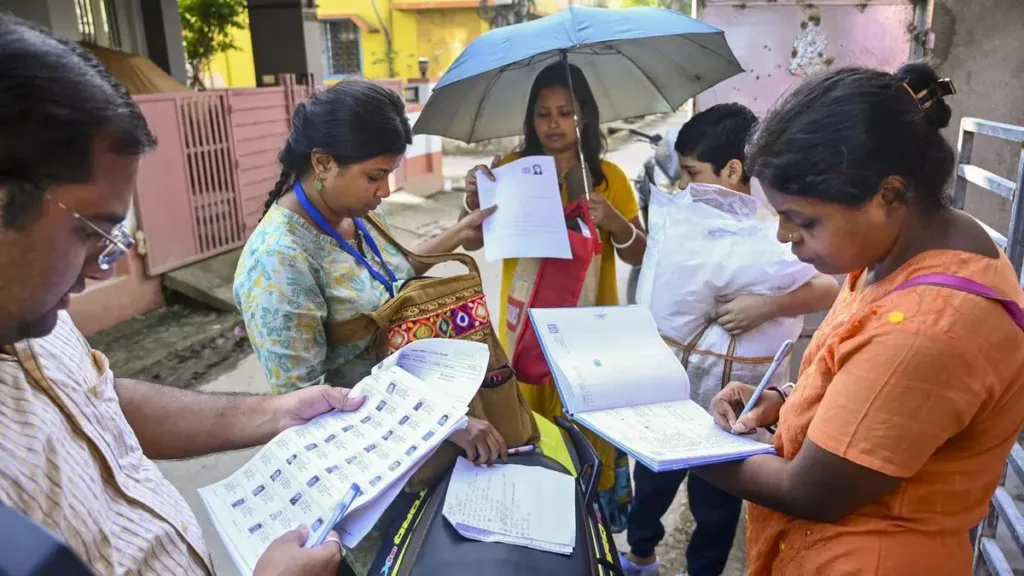
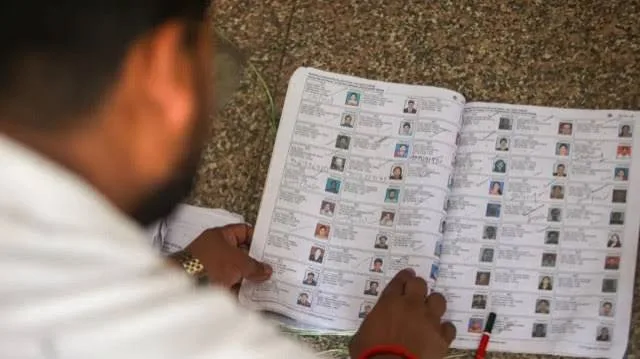
    Booth level officers distributing enumeration forms to voters at West Bengal.
    Booth level officers distributing enumeration forms to voters at West Bengal. Credit: X/ANI

    Hundreds of judicial officers subsequently examined 60.06 lakh electors flagged by the commission’s centralised software for what it described as “logical discrepancies”. Following the adjudication, 27.16 lakh electors were ordered to be deleted from the rolls.

    On March 20, the Supreme Court directed the establishment of appellate tribunals comprising retired High Court judges to provide those affected with an opportunity to challenge the decisions. The Election Commission appointed 19 former judges to serve on the tribunals.

    Also Read | RSF raises alarm over press freedom concerns in West Bengal

    The scale of the appeals has been substantial. According to figures submitted by the Election Commission to the Supreme Court, 38.31 lakh appeals had been filed as of September 18. Of these, 22.21 lakh came from voters whose names had been deleted, while 16.10 lakh challenged inclusions in the electoral rolls.

    The commission told the court that only 1.26 lakh appeals had been disposed of by September 10.

    Portal issues raise questions over disposal of SIR appeals

    The repeated complaints from the tribunals have brought the Election Commission’s digital infrastructure and the working arrangements for retired judges into focus. The judges have sought a resolution to the Aadhaar authentication problem so that final orders can be uploaded, while also asking for improved facilities and a more suitable location.

    Also Read | ECINET audit flags possible restriction on voter roll tools in Bengal

    With millions of appeals filed in connection with the West Bengal SIR, the tribunals have a substantial workload. Resolving the technical difficulties and addressing the judges’ concerns remain important issues for the effective functioning of the appellate mechanism.
  • Keep your friends close, but your enemies closer? The implications of TMC-CPI(M) dialogue amid EC row

    Keep your friends close, but your enemies closer? The implications of TMC-CPI(M) dialogue amid EC row

    Mamata Banerjee’s reported outreach to the CPI(M) has opened an unusual political channel in West Bengal, where the Trinamool Congress and the Left party have remained bitter rivals for decades. The Mamata CPI(M) outreach comes amid an escalating Opposition campaign over the Election Commission’s Special Intensive Revision (SIR) of electoral rolls and reports of disagreements within the poll panel.

    Banerjee and CPI(M) general secretary MA Baby spoke over the phone on September 25 after the Left leader wrote to Opposition parties seeking a joint response to developments concerning the Election Commission. According to reports, the two leaders discussed the need for Opposition parties to work together on the issue. Banerjee also spoke to Congress leader Rahul Gandhi and urged an early meeting of INDIA bloc parties.

    The development has attracted attention because TMC and CPI(M) have historically been fierce opponents in Bengal. However, CPI(M) leader MA Baby has described the current initiative as issue-based and said it was too early to say whether it would lead to any wider political understanding.

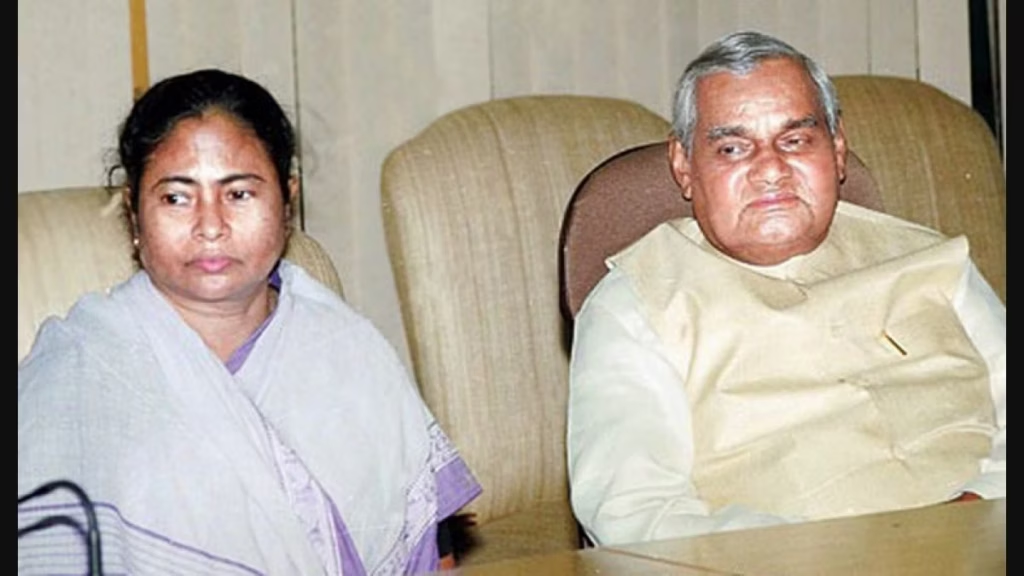
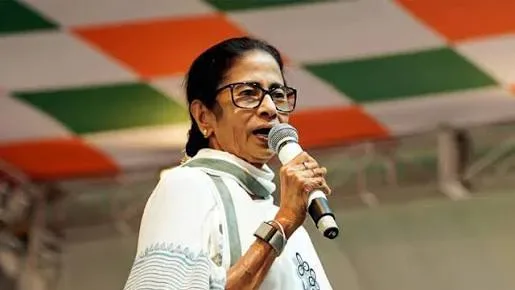
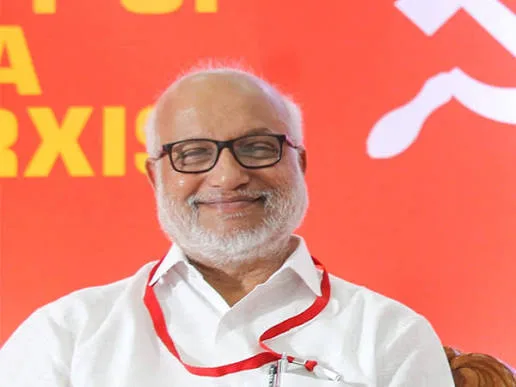
    Mamata Banerjee and CPI(M) General Secretary MA Baby spoke over the phone on September 25 after the Left leader wrote to Opposition parties seeking a joint response to developments concerning the Election Commission. (ANI)
    Mamata Banerjee and CPI(M) General Secretary MA Baby spoke over the phone on September 25 after the Left leader wrote to Opposition parties seeking a joint response to developments concerning the Election Commission. (ANI)

    Mamata CPI(M) outreach begins with the Election Commission row

    The immediate reason for the Mamata CPI(M) outreach is the controversy surrounding the SIR exercise and concerns raised by Opposition parties about the functioning of the Election Commission.

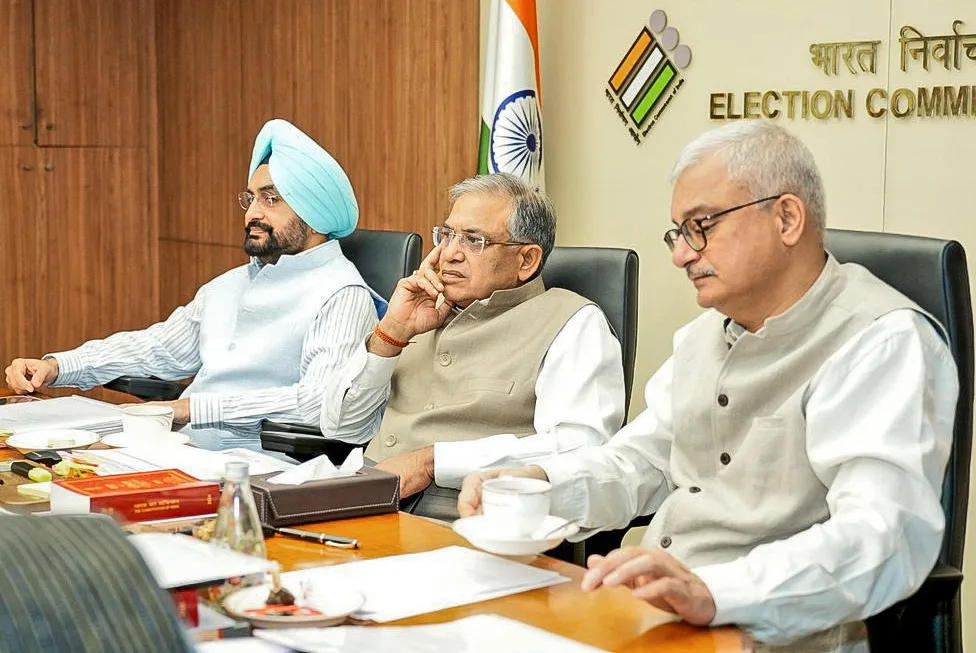
    The Indian Express reported that Election Commissioners Sukhbir Singh Sandhu and Vivek Joshi had recorded objections on multiple occasions over decisions related to the SIR process. The Election Commission acknowledged the existence of the written notes but described them as part of its decision-making process.

    Against this backdrop, Baby wrote to Banerjee and other Opposition leaders, calling for a meeting. Banerjee subsequently responded positively and spoke to Baby by phone.

    The CPI(M) has sought broader Opposition participation rather than limiting the initiative to its own party or the INDIA bloc. Baby told The Federal that the Left was looking for the widest possible cooperation among non-NDA parties on the issue.

    This explains why the present Mamata CPI(M) outreach is being viewed primarily through the lens of the Election Commission dispute rather than as a formal alliance announcement.

    Also Read | TMC rebel MLAs: Supreme Court sets October 8 timeline from Bengal Speaker

    The outreach between CPI(M) and the TMC is creating the fuss because the TMC took the help of the BJP to counter the very same Left Front government led by the CPI(M). (ANI)
    The outreach between CPI(M) and the TMC is creating the fuss because the TMC took the help of the BJP to counter the very same Left Front government led by the CPI(M). (ANI)

    Mamata-CPI(M) outreach revives an old political contradiction

    The latest contact between the two parties is notable because TMC and CPI(M) have spent years attacking each other in Bengal politics. Mamata Banerjee built the TMC as the principal political force challenging the Left’s long rule in the state, eventually defeating the CPM-led Left Front in 2011.

    The outreach between CPI(M) and the TMC is creating the fuss because the TMC took the help of the BJP to counter the very same Left Front government led by the CPI(M). The TMC-BJP alliance began shortly after Mamata Banerjee founded the Trinamool Congress (TMC) in 1998. Seeking to challenge West Bengal’s dominant Left Front, the TMC joined the BJP-led National Democratic Alliance (NDA).

    Between 1999 and 2006, the TMC remained a key NDA partner. Banerjee served as the Union Railway Minister and later the Coal and Mines Minister under Prime Minister Atal Bihari Vajpayee.

    The parties TMC and BJP jointly contested the 1998, 1999, and 2004 Lok Sabha elections, alongside the 2006 state assembly polls. Following electoral setbacks, the TMC exited the NDA in 2006. The former allies later became fierce regional rivals

    The political relationship remained adversarial with the CPI(M) after the TMC came to power. Even though both parties are part of the broader INDIA bloc at the national level, they have maintained separate political strategies in West Bengal.

    The present Mamata CPI(M) outreach therefore represents a tactical convergence on a specific issue rather than confirmation of a new electoral alliance.

    Political analyst Sumantra Bose, speaking to Open Magazine, argued that the SIR controversy and state-level electoral politics should be treated as separate questions. He said the developments concerning the Election Commission could provide grounds for cooperation between the two parties, while their interests in West Bengal remained substantially different.

    Bose also described both the CPM and Congress as parties that have been trying to rebuild their organisational presence in Bengal. His comments are an assessment of the state’s political situation, rather than evidence of a formal arrangement between the parties.

    Also Read | Mamata Banerjee sharpens attack on SIR, backs key Opposition moves

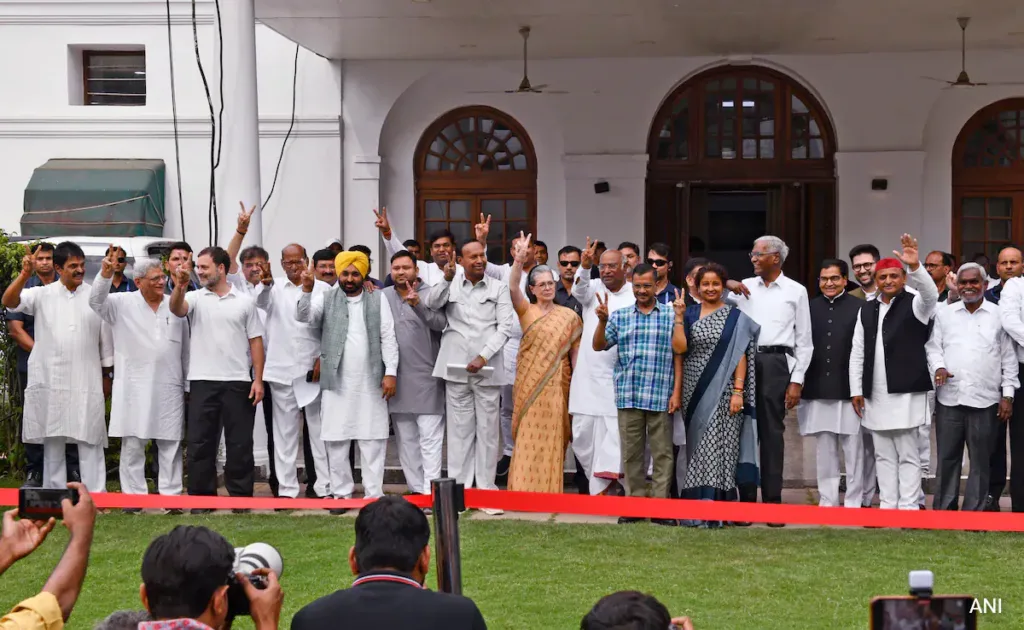
    The immediate political test for the Mamata CPI(M) outreach is likely to be the wider Opposition meeting scheduled in Delhi on September 30. (ANI)
    The immediate political test for the Mamata CPI(M) outreach is likely to be the wider Opposition meeting scheduled in Delhi on September 30. (ANI)

    What the Mamata CPI(M) outreach means for the INDIA bloc

    The immediate political test for the Mamata CPI(M) outreach is likely to be the wider Opposition meeting scheduled in Delhi on September 30. Banerjee and TMC MP Abhishek Banerjee are expected to attend the meeting, which is set to discuss the Election Commission and SIR.

    The CPI(M) has also reached out beyond the INDIA bloc. Baby said the Left had contacted several non-NDA parties as part of its effort to build a broader response to the Election Commission issue.

    For Banerjee, the immediate focus remains opposition to the Election Commission’s actions and the SIR process. She has publicly criticised Chief Election Commissioner Gyanesh Kumar and alleged large-scale deletions from electoral rolls, claims that remain part of the ongoing political dispute.

    The BJP, meanwhile, has criticised Banerjee’s engagement with the CPI(M). West Bengal minister Dilip Ghosh said the political circumstances had changed and accused Banerjee of seeking a larger role within the Opposition camp. Those remarks represent the BJP’s political interpretation of the development.

    It is not yet clear whether the Mamata-CPI(M) outreach remains confined to the Election Commission issue or develops into broader coordination in Bengal. For now, the evidence points to communication and issue-based cooperation, rather than a declared electoral alliance.

    The September 30 INDIA bloc meeting and subsequent protests are likely to provide a clearer indication of whether the current contact produces sustained coordination between the two long-time rivals.

  • What is ERONET? The ECI software at the centre of the SIR row

    What is ERONET? The ECI software at the centre of the SIR row

    The Election Commission of India (ECI)’s Special Intensive Revision (SIR) of electoral rolls has brought its voter-matching software, ERONET, under scrutiny. Around 17.6 million voters across Telangana, Karnataka, Maharashtra and Delhi have received notices under the “logical discrepancy” category during the third phase of SIR. 

    What is ERONET?

    ERONET, short for Electoral Roll Officers’ Network, processes enumeration forms and matches present voter records with entries in older electoral rolls. The software now operates within ECINET, the ECI’s unified technology platform launched in January 2026. 

    Why are voters being flagged? 

    A major issue involves differences between old and current voter records. The base rolls used for comparison were maintained in regional languages, including Telugu, Kannada and Marathi. Converting these records into English has resulted in spelling and transcription differences. 

    Also Read | India asks Pakistan to back anti-terror claims with action as tensions rise

    As per a Hindustan Times report, in Hyderabad, Qamer Fatima was served a notice because her name appeared as “Qemar Fatima” in the older roll. She said, “All my current documents have the same spelling of my name as my voter ID. I don’t know how to prove that the person on the 2002 rolls is me.” 

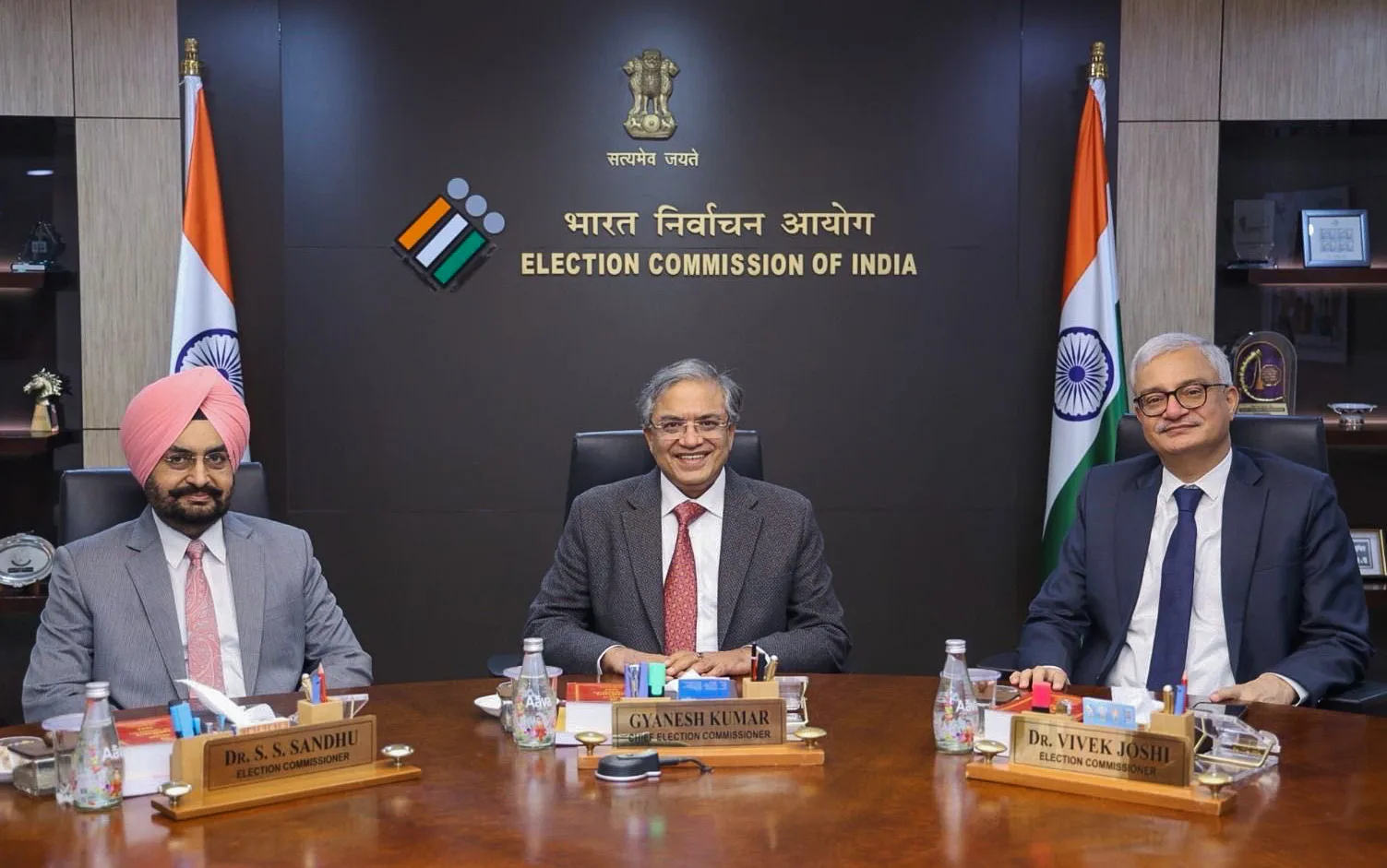
    Chief Election Commissioner Gyanesh Kumar and Election Commissioners Sukhbir Singh Sandhu and Vivek Joshi
    Chief Election Commissioner Gyanesh Kumar and Election Commissioners Sukhbir Singh Sandhu and Vivek Joshi | ANI

    An official at the Telangana CEO office said, “The 2002 base roll was a mess. Names and surnames were inconsistent. When they were translated to English and matched with the current list, several errors came up.” 

    Age-related mismatches have also triggered notices. In Bengaluru, Joan Fathima was flagged over an alleged gap of less than 15 years between her and her father’s ages in 2002, despite her saying the actual gap was 27 years. 

    What is the controversy over ERONET?

    This is not only an error in software, as Election Commissioners Vivek Joshi and Sukhbir Sandhu are quoted as being worried about access to the electoral roll database. “It is a gradual centralisation of the electoral roll database,” states Joshi, whereas Sandhu says that state officials “don’t have proper and complete access” to ERONET.

    ERONET? The ECI software at the centre of the SIR row
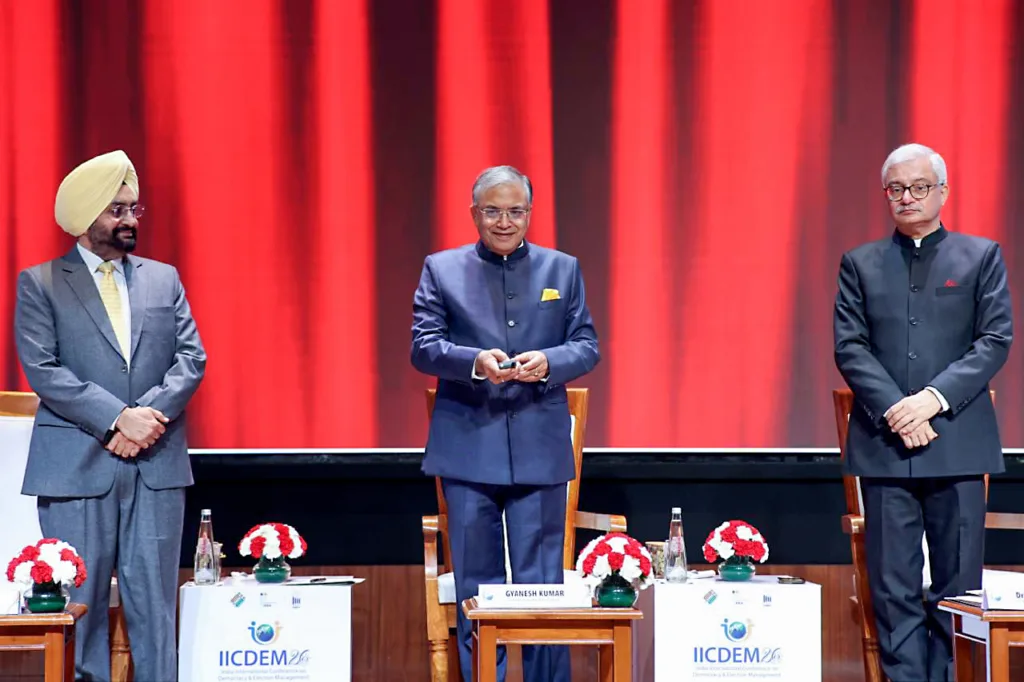
    Chief Election Commissioner Gyanesh Kumar, along with Election Commissioners Vivek Joshi and Sukhbir Singh Sandhu | ANI

    The problem also appeared in Goa, where EROs approved 97 voters but were unable to update the database due to the absence of rollback feature.

    Is software capable of determining who qualifies to vote? 

    According to the Representation of the People Act and electoral law, Electoral Registration Officers are tasked with maintaining registers and determining applications and appeals. ERONET is a technology used for that purpose. 

    Also Read | President Droupadi Murmu urges film stars to avoid harmful products; calls for more women on award juries

    Reportedly, an ECI official defended its use, saying, “It is impossible to carry out an exercise of this scale manually without technology. Checking duplication and mapping progeny manually will take years. We fix all problems with the software in real time.” 

    This is, however, a question about how ERONET detects problems, how corrections can be made, and who decides legally during SIR.