Tag: Kolkata Durga Puja

  • How Kolkata’s Durga Puja became a celebration of public history

    How Kolkata’s Durga Puja became a celebration of public history

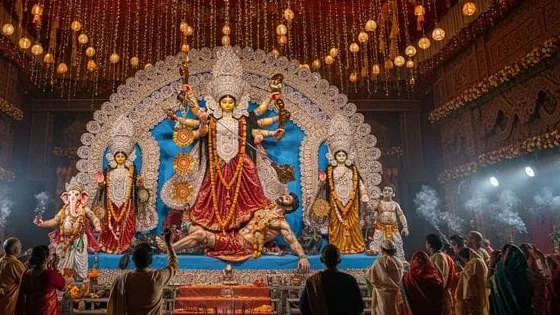
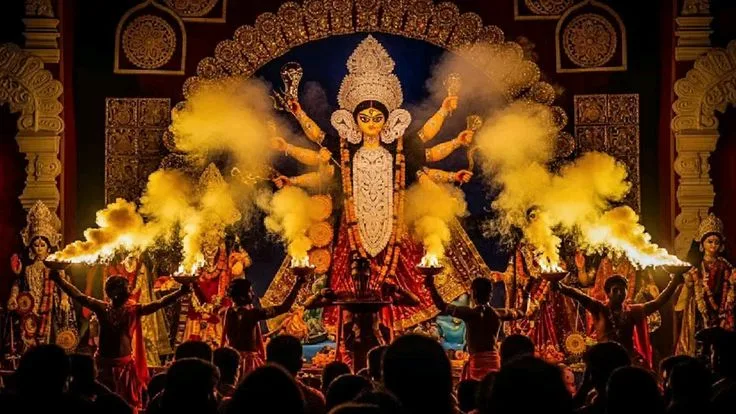
    For Kolkata, Durga Puja is much more than a five-day religious festival. Every autumn, the city transforms into a vast cultural space where neighbourhoods, streets and public squares become places of worship, art and storytelling. Behind the lights, elaborate pandals and crowds of visitors lies a history that stretches across centuries.

    The festival has changed considerably over time. What was once largely associated with the homes of wealthy families gradually moved into public spaces, allowing communities to participate in celebrations that were once largely private affairs. Today, Kolkata’s Durga Puja reflects not only religious traditions but also the city’s social history, artistic imagination and collective memory.

    From aristocratic homes to public celebrations

    For a long period, grand Durga Puja celebrations in Bengal were associated with zamindar and aristocratic households. These family pujas were closely connected with wealth, social status and tradition, with elaborate rituals taking place within the boundaries of private residences.

    The emergence of community-based celebrations changed that structure. The Barowari and later Sarbojanin formats brought the festival into public spaces and opened participation to a much wider section of society.

    The origins of the Barowari tradition are commonly associated with Guptipara in Hooghly, where a group of twelve friends is believed to have organised a community Puja in the 18th century. The idea gradually spread, eventually influencing the way Durga Puja was celebrated across Bengal.

    The shift was significant because it transformed Durga Puja from a largely household-centred celebration into a collective public event.

    Kolkata turns Puja into a cultural canvas

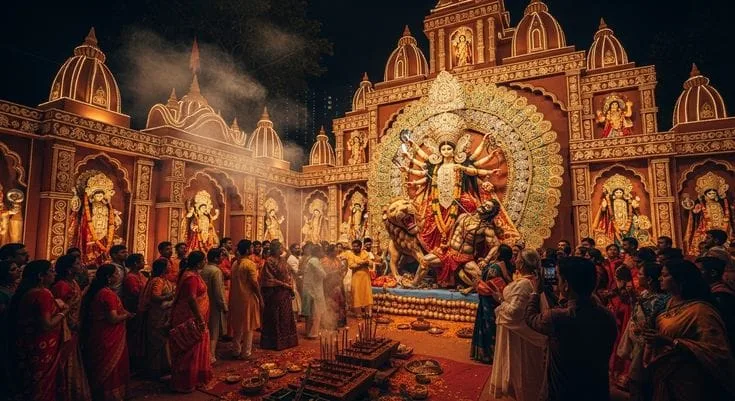
    As community Pujas became increasingly popular, the pandal itself evolved. It was no longer simply a temporary structure created to house the idol. It became a space for artistic expression.

    Kolkata’s puja committees began experimenting with architecture, sculpture, painting, craft and design. Traditional materials were combined with modern artistic techniques, while themes began drawing inspiration from Bengal’s history, literature, cinema, folk culture and social life.

    This transformation has made pandal-hopping an important part of the city’s festive culture. Visitors do not simply move from one shrine to another; they travel through different stories and visual interpretations of Bengal and the wider world.
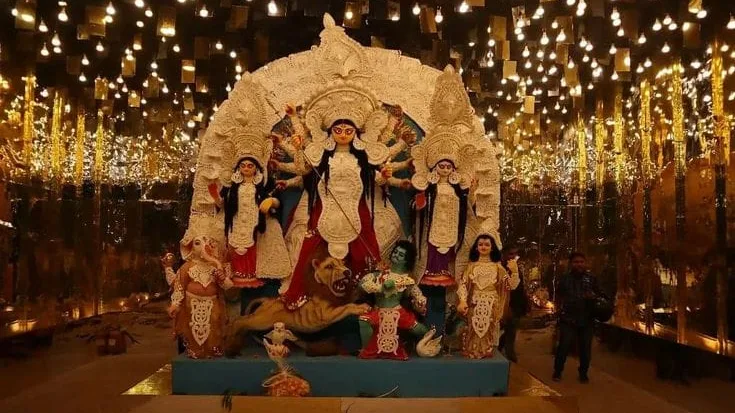
    (Representational image), Durga puja | Ai generated

    Also Read | Why Goddess Lakshmi entered the ocean after Durvasa’s curse

    The city’s history lives inside its Puja

    One of the most interesting aspects of Kolkata’s Durga Puja is the way historical memory appears within contemporary celebrations.

    Themes often bring forgotten people, artistic traditions, old neighbourhoods and historical events back into public attention. A pandal can recreate an architectural tradition, showcase an old craft or use an installation to tell visitors about a chapter of Bengal’s past.

    Recent exhibitions and cultural projects have similarly traced the evolution of Durga Puja through manuscripts, old printed material, artwork and archival records. The Asiatic Society’s 2026 exhibition, for instance, explores the festival’s development from early religious traditions and household celebrations to Barowari and Sarbojanin Pujas.

    Pandal-making becomes public storytelling

    The contemporary pandal has therefore become a form of public storytelling. Unlike a museum, it does not require visitors to enter a formal cultural institution to encounter history or art. The stories appear in the middle of neighbourhoods, alongside roads and within spaces that people pass through every day.

    This accessibility is an important part of Kolkata’s Puja culture. A visitor who comes to see an idol may also encounter a story about a forgotten community, an artist, a historical tradition or an environmental concern.

    In this sense, Durga Puja allows history to be experienced rather than simply read.

    A festival that continues to evolve
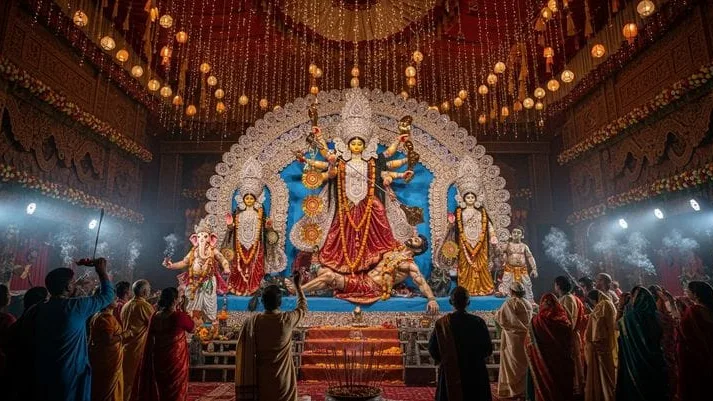
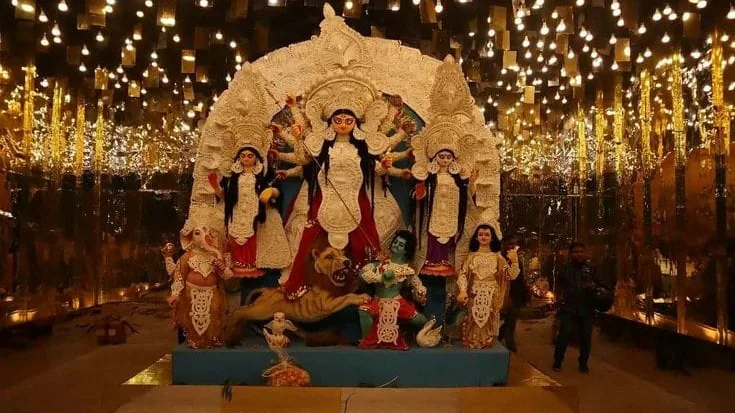
    (Representational image), Durga puja | Ai generated

    Kolkata’s Durga Puja has continued to change with the city itself. The festival has retained its religious core while becoming increasingly connected with art, design, heritage and public participation.

    The journey from private household celebrations to large community Pujas also explains why the festival occupies such a distinctive place in Kolkata’s cultural life. It belongs to the city as much as it belongs to individual neighbourhoods and families.

    Every year, new themes and new artistic interpretations add another layer to that history. The pandals may disappear after the festival, but the stories they tell become part of Kolkata’s collective memory.

    That is perhaps what makes Durga Puja in Kolkata so distinctive: the festival does not simply preserve history. It continually creates new ways for the public to encounter, interpret and remember it.
  • Kolkata Durga Puja: Meet the invisible heroes who build the pandals

    Kolkata Durga Puja: Meet the invisible heroes who build the pandals

    Every year, as Kolkata lights up for Durga Puja, millions of visitors stop to admire the city’s spectacular pandals. Cameras capture their intricate structures, dramatic lighting and elaborate artwork, while crowds gather to experience the themes that have been months in the making.

    But behind every striking pandal are artists and artisans whose names often remain unknown to the visitors admiring their work.

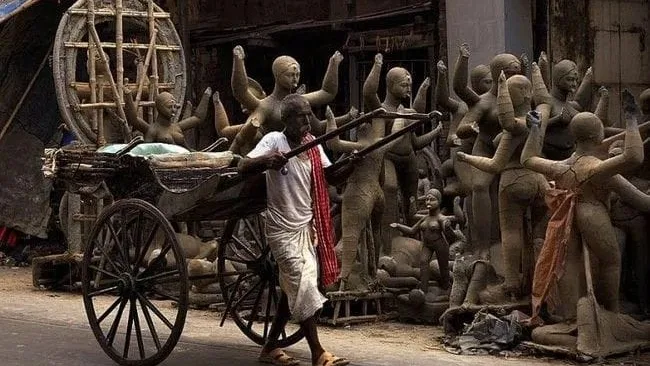
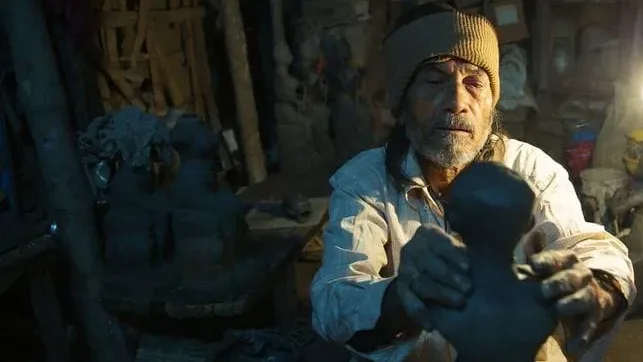
    For them, Durga Puja is not simply a five-day celebration. It is the culmination of months of physical labour, creativity and dedication. Artists travel from different parts of Bengal, temporarily moving into pandal sites and working for nearly three months to turn an idea on paper into a full-scale installation.

    The hands behind Kolkata’s biggest attractions

    The work begins long before the first visitor enters a pandal. Once a Puja committee finalises its theme and budget, artists begin translating the concept into a physical structure.

    At Rajdanga Naba Uday Sangha, artist Debashish Barui created a pandal around the theme Sodhon, which explores ecological balance between humans and nature. The installation brings together natural elements, handmade structures, light and sound projections.

    For artists such as Barui, the creative process also involves working within financial limitations. A fixed budget can sometimes mean abandoning certain design ideas. Additional support this year allowed him to realise more of the structure he had originally envisioned.

    Artisans work for months to create the elaborate pandals that define Kolkata’s Durga Puja.| ig

    Three months of work for a few days of glory

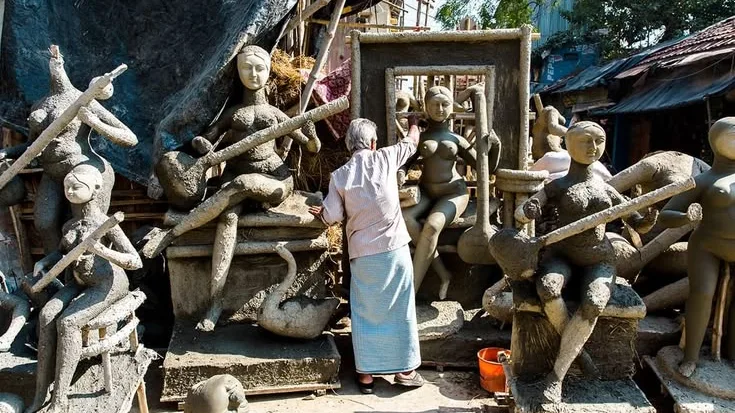
    The spectacular installations visitors see during Puja are temporary. Artists and workers may spend close to three months living and working at the pandal site, often through long hours, to complete structures that will remain standing only for the duration of the festival.

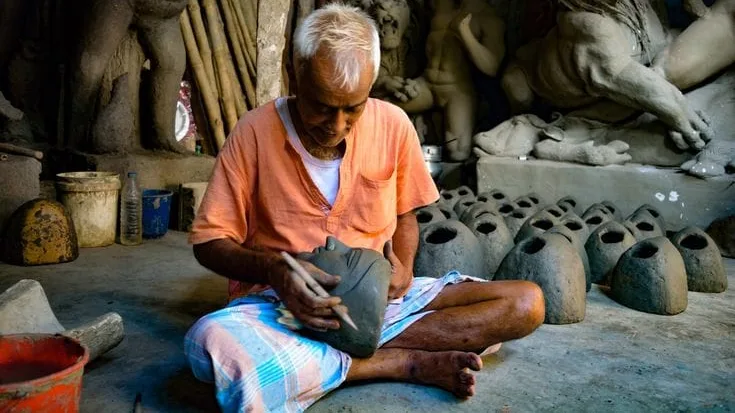
    Much of the work is done by hand, from creating individual elements to painting, assembling and finishing the installation.

    For these artists, the temporary nature of their work is part of the profession. Once the festival ends, the elaborate structures are dismantled and disappear, even though they may have taken weeks or months to create.

    Artist Dipankar Das, who has worked behind Durga Puja pandals for nearly 13 years, described the joy of seeing people appreciate his creations as one of the biggest rewards of the profession.

    From everyday painters to Puja artists

    Artisans work for months to create the elaborate pandals that define Kolkata’s Durga Puja.|ig

    For some artisans, pandal-making is an extension of the artistic skills they use throughout the year.

    Artist Somnath Chakraborty, who comes from Burdwan district, paints houses when he is not working on Puja installations. During Durga Puja, however, the pandal becomes a different kind of artistic space for him.

    The process is deeply personal. Artists create the structures with their own hands, knowing that they will eventually have to dismantle what they have built.

    That fleeting nature can make the experience emotional. The structure may survive for only a few days, but the memory it creates among visitors can last much longer.

    Also Read | Kolkata Durga Puja pandals 2026: Stunning Puja themes to explore this year

    Making Puja more accessible

    The effort behind this year’s Puja experience has also extended to making the pandals more accessible. At eight shortlisted pandals, QR codes have been placed at the entrances so visitors can listen to audio descriptions of the themes in eight Indian and international languages.

    Videos in sign language have also been made available for visitors who are deaf or hard of hearing, while the initiative aims to make the pandal experience more inclusive for people with visual and hearing disabilities.

    Artisans | IG

    Their work may be temporary, but their art remains

    When the lights come on and the crowds arrive, the artists who spent months building the pandals often disappear into the background. Their names may not be as familiar as the Puja committees or the themes they create, but their work is impossible to miss.

    Every handmade structure, painted surface and carefully constructed installation carries their labour.

    Also Read | Why jack-o-lanterns were once made from turnips, not pumpkins

    Kolkata’s Durga Puja may last only a few days, but the creativity behind it takes months. The pandals eventually come down, yet the artists leave behind something more lasting: a piece of their imagination that becomes part of the city’s festive memories.

  • Kolkata Durga Puja pandals 2026: Stunning Puja themes to explore this year

    Kolkata Durga Puja pandals 2026: Stunning Puja themes to explore this year

    Kolkata’s Durga Puja is no longer limited to traditional worship and decoration. Every year, the city’s puja committees turn their neighbourhoods into large public art spaces, using pandals to tell stories about Bengal’s culture, history, cinema, environment and everyday life.

    In 2026, the variety of themes is particularly striking. Some pujas have chosen to celebrate familiar cultural icons, while others have turned to Bengal’s history, folk traditions and relationship with nature. There are also pandals that experiment with architecture, recycled materials and immersive installations.

    From Dum Dum Park Tarun Sangha and Samaj Sebi Sangha to Kumartuli Park and Hindustan Park, here are some of the Kolkata pandals worth exploring this Puja.

    Samaj Sebi Sangha celebrates Uttam Kumar

    At Samaj Sebi Sangha, the life and legacy of Uttam Kumar take centre stage. The theme looks at the Bengali superstar and his lasting contribution to the world of cinema.

    (Representational image), Durga puja | Ai generated

    Uttam Kumar remains one of the most recognisable cultural figures in Bengal, and his films continue to hold a special place in the public imagination. Bringing his story into a Durga Puja pandal creates a nostalgic journey through an important chapter of Bengali popular culture.

    Dum Dum Park Tarun Sangha looks at Kolkata’s merchant history

    Dum Dum Park Tarun Sangha has turned to the history of Kolkata’s merchant communities for its 2026 theme. The pandal explores the lives of merchant-class settlers and their contribution to the development of the city.

    The concept offers visitors an opportunity to look beyond the familiar landmarks of Kolkata and understand how different communities and occupations helped shape the city over the years.

    Kumartuli Park brings the Ganga into focus

    Kumartuli Park has chosen a theme centred on the Ganga and the relationship between the river and Bengal. The installation explores the cultural and historical importance of the river while drawing attention to the need for its preservation.

    For a city whose identity has long been connected with the Hooghly and the Ganga, the theme adds an environmental dimension to the festivities.

    (Representational image), Durga puja | Ai generated

    Hindustan Park tells an unusual story through matchsticks

    Hindustan Park has taken inspiration from the 1888 Matchgirls’ Strike in London. The pandal uses matchsticks as a central visual element while bringing attention to the struggles of child workers in the match industry.

    The theme, titled ‘Sphulinga’, uses the idea of a spark as a metaphor for resistance and change. The unusual choice of material also makes the installation visually distinctive.

    Chetla Agrani explores the cosmic form

    Chetla Agrani Club has chosen an expansive spiritual and artistic theme, bringing together the cosmic form of Goddess Durga with the Vishwaroop of Lord Krishna.

    The concept explores the idea of the universe, creation and infinite energy through an elaborate visual presentation. It offers visitors an experience that moves beyond conventional pandal decoration and into the realm of mythology and cosmic imagination.

    Ekdalia Evergreen recreates Somnath’s architectural grandeur

    Ekdalia Evergreen has taken inspiration from the Somnath Temple in Gujarat for its 2026 pandal. The structure incorporates elements of the temple’s architecture, while representations of Shiva surround the space.

    At the centre is Goddess Durga, creating a visual combination of temple architecture and traditional devotional imagery.

    Rajdanga Naba Uday Sangha focuses on nature

    Rajdanga Naba Uday Sangha has chosen an environmental theme titled ‘Shodhon’. The pandal uses its artistic presentation to draw attention to the consequences of environmental degradation.

    The theme gives the Puja a contemporary relevance while retaining the visual spectacle associated with Kolkata’s famous community celebrations.

    Also Read | World Mental Health Day 2026: ‘I’m so OCD’, ‘Are you bipolar’, ‘I’m depressed’ – are we turning mental health disorders into punchlines?

    Santoshpur Trikon Park celebrates nature

    Santoshpur Trikon Park has also turned to nature for inspiration. Its 2026 theme, ‘Prakriti’, explores the relationship between human beings and the natural world.

    The installation uses natural elements to create its visual language and reflects on how seemingly ordinary materials can have wider social and economic significance.

    New Town Sarbojanin brings Bengali culture into a modern setting

    New Town Sarbojanin has chosen the theme ‘Padma-Bhushan’, drawing on the cultural symbolism of the lotus in Bengal. The pandal combines contemporary presentation with references to the region’s artistic and cultural heritage.

    The relatively new Puja has been steadily establishing itself on Kolkata’s festive map, and its 2026 installation adds another modern stop to the city’s pandal-hopping circuit.

    Thakurpukur SB Park turns to the world of coal mines

    Thakurpukur SB Park Sarbojanin has chosen ‘Colliery’ as its 2026 theme. The pandal explores the harsh realities of life inside coal mines, including the difficult working conditions faced by miners.

    (Representational image), Durga puja | Ai generated

    The installation also touches upon the darker aspects surrounding coal mining, making it both a visual attraction and a reflection on the lives of people working in difficult environments.

    Also Read | Why jack-o-lanterns were once made from turnips, not pumpkins

    Kolkata’s Puja becomes a canvas for storytelling

    The range of themes across Kolkata this year shows how dramatically the city’s Durga Puja has evolved. A visitor can move from the golden era of Bengali cinema to the history of Kolkata’s merchant communities, from the Ganga and environmental concerns to global history, mythology and architecture.

    This variety is what makes pandal-hopping such an integral part of the Puja experience. The goddess remains at the heart of the festival, but the pandals around her have become spaces where artists and organisers can preserve memories, explore history and present new ideas.

    For those planning their Durga Puja itinerary in 2026, these pandals offer a glimpse of the many sides of Kolkata and Bengal, making the festival as much a journey through culture and art as it is a celebration.