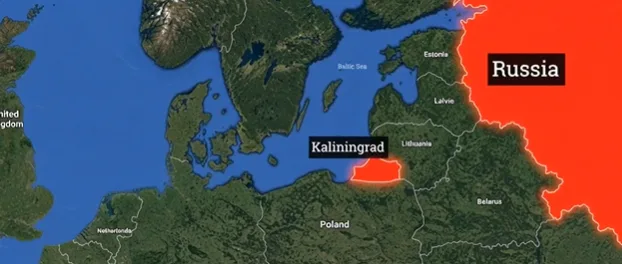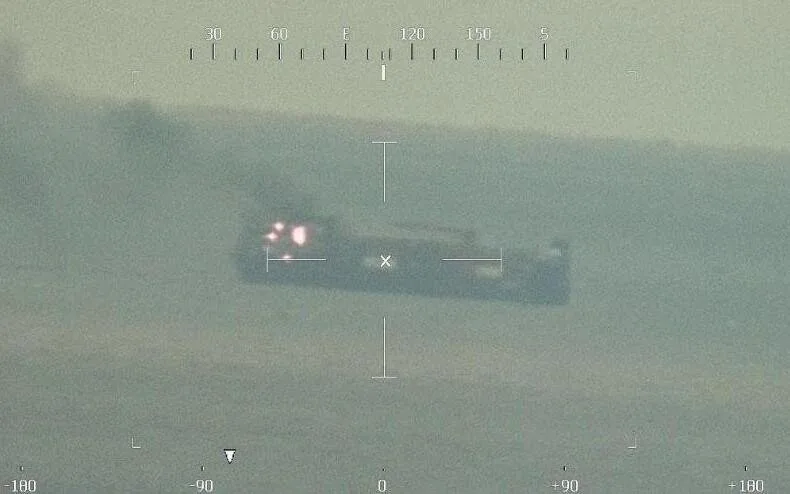
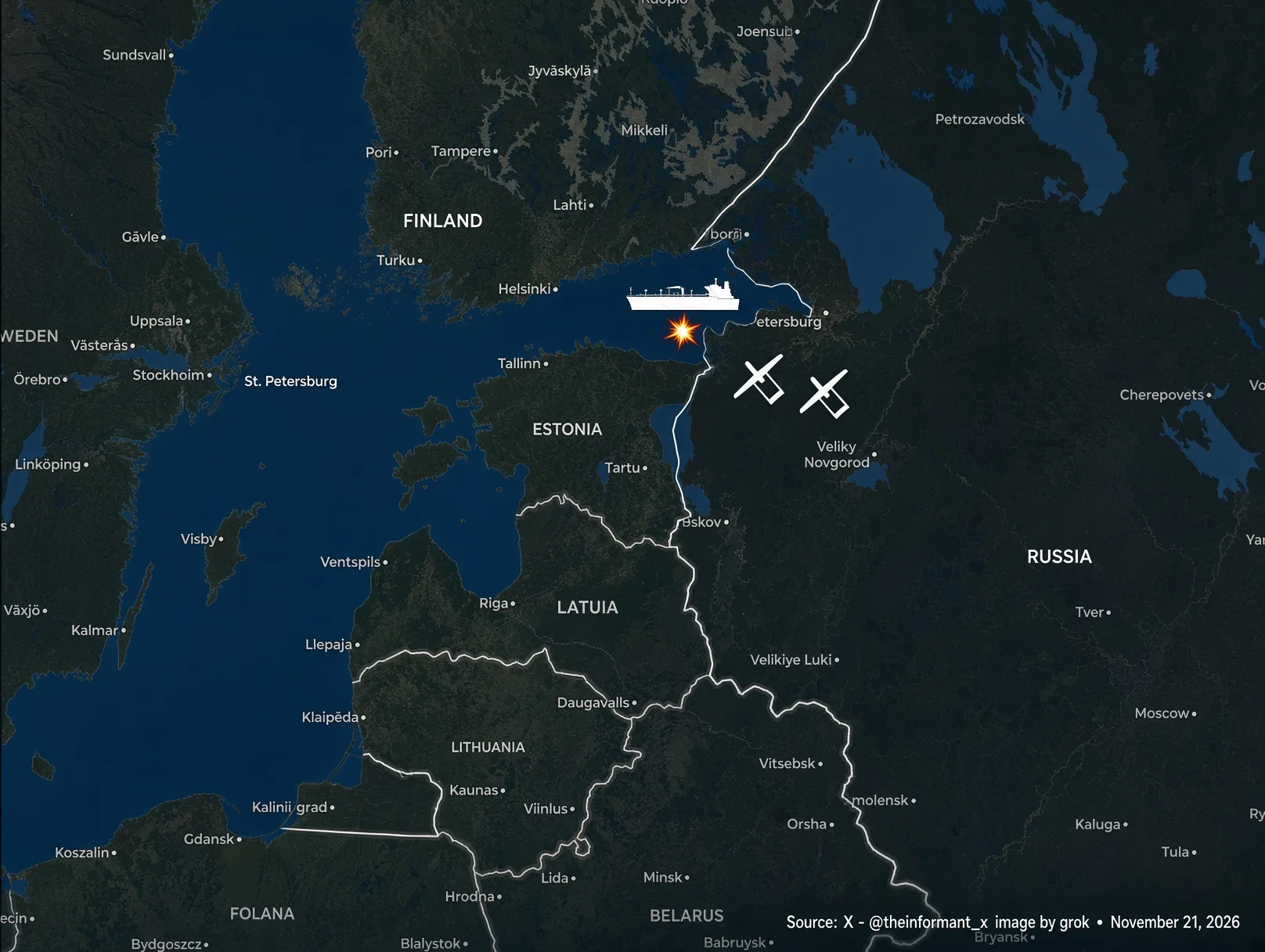
A Russian cargo ship heading towards the Baltic Sea region of Kaliningrad was struck by two drones in international waters in the Gulf of Finland on Saturday, November 21.
The vessel, identified as Sparta II, caught fire and later drifted into Finnish territorial waters. The incident prompted Finland to impose temporary restrictions on air and maritime traffic in the area as rescue and firefighting preparations began.
⚡️❗️BREAKING: A Russian cargo ship bound for Kaliningrad has been attacked by two drones in the Gulf of Finland, according to the Russian Leningrad Oblast Governor. The attack reportedly occurred in international waters, approximately three nautical miles from Russia’s maritime border. The crew is being evacuated, and the extent of the damage remains unknown.
— Special Kherson Cat 🐈🇺🇦 (@bayraktar_1love) November 21, 2026
Also Read | Anthropic shares jump 34% on debut, taking AI giant’s valuation to $2 trillion
A narrow sea
Russian and Finnish authorities confirmed the damage to the ship, but the circumstances surrounding the attack remain unclear.
No country has claimed responsibility. Ukraine has not immediately commented on the incident, and Finnish authorities have not publicly identified who launched the drones.
The location is important. The Gulf of Finland is a narrow arm of the Baltic Sea, bordered by Finland to the north and Estonia to the south. It connects the Russian port city of St Petersburg with the wider Baltic Sea.
The attack took place west of Gogland Island, also known as Suursaari, in the eastern part of the gulf.
The island lies around 40 km from Finland’s coast. Although the attack happened in international waters, the damaged ship subsequently drifted into Finnish territorial waters.
A ship with more baggage than most
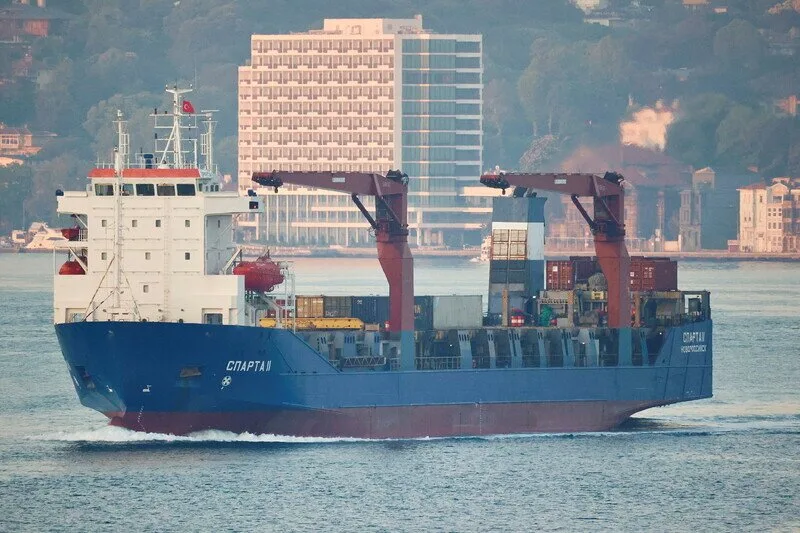
The Sparta II is not just an ordinary commercial cargo ship. According to information published by Ukraine’s military intelligence, the vessel has previously been involved in transporting weapons and military equipment for Russia.
Its records include the transportation of S-300 air defence systems from Syria to the Russian port of Novorossiysk in August 2022.
The ship is associated with Oboronlogistics, a Russian shipping company linked to the country’s Defence Ministry. The United States imposed sanctions on the vessel in May 2022, while Ukraine added it to its own sanctions list in May 2026.
These details explain why the vessel has attracted attention beyond the immediate fire incident. However, there is no confirmed information about the cargo it was carrying when it was attacked on Saturday.
No claim, and no clear answer
Russian officials said two drones struck the vessel close to Russia’s maritime border. Alexander Drozdenko, governor of Russia’s Leningrad region, said the ship was attacked about three nautical miles from the Russian border. He also said the damage was being assessed.
Neither Ukraine nor any other country has claimed responsibility. Ukraine’s Foreign Ministry had not immediately responded. Finnish Prime Minister Petteri Orpo acknowledged the incident but stopped short of identifying those responsible. He said, “The war is spilling over into our neighbouring areas. Finnish authorities are handling the situation in the Gulf of Finland, where a drone strike has hit a Russian merchant vessel.”
He also said Ukraine had the right to fight against the aggressor.
The condition of the crew has also drawn attention. Drozdenko said the crew was being evacuated. However, Finland’s Border Guard subsequently said the crew had not been forced to abandon the ship and that preparations were under way to evacuate personnel and assist with firefighting.
Finnish authorities also reported no environmental damage so far and said the incident posed no danger to other maritime traffic.
Helsinki keeps a weather eye on the gulf
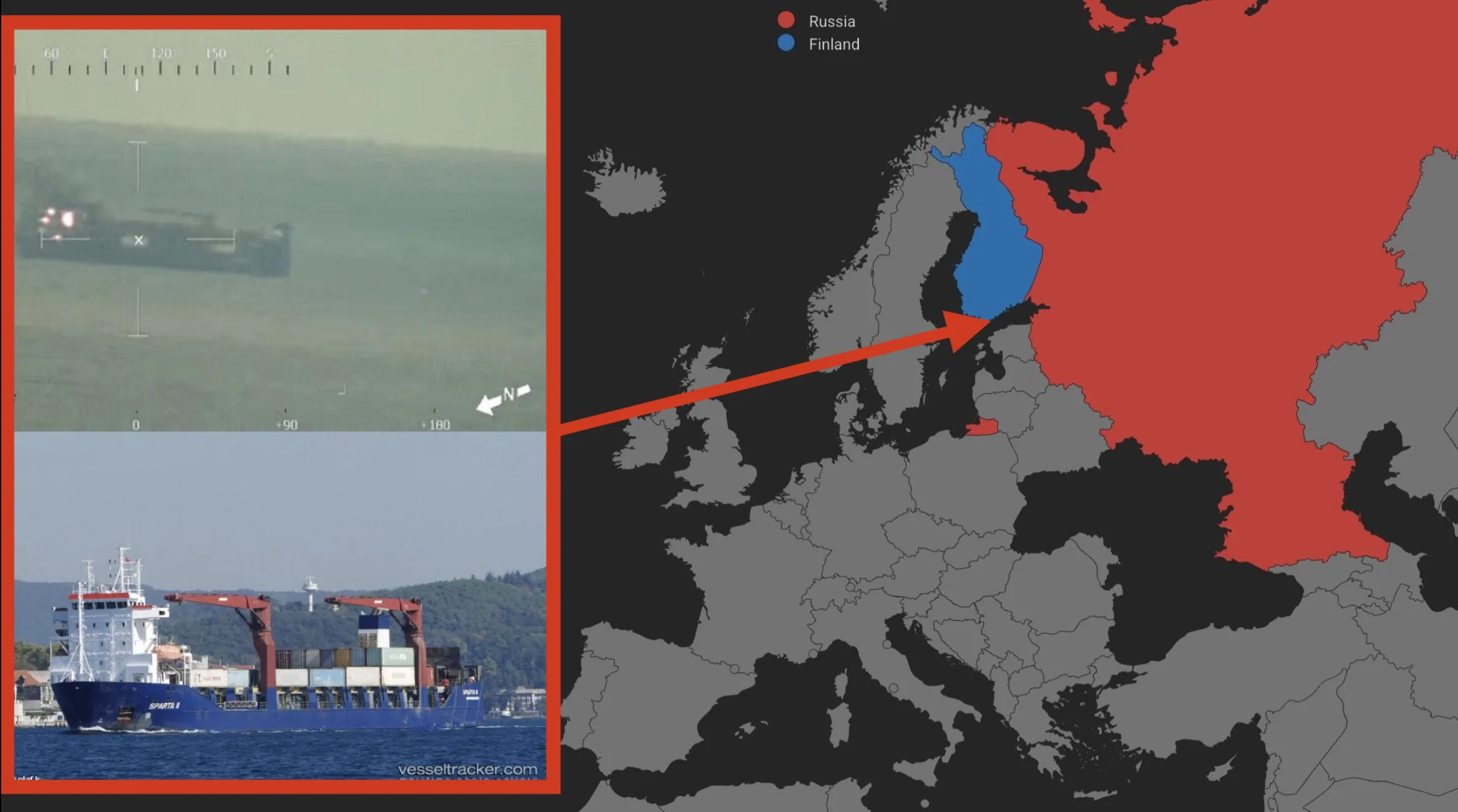
Finland’s response reflects the sensitivity of the region. The country is a NATO member and shares a long land border with Russia.
The Gulf of Finland is also an important maritime corridor for Russian shipping. Following the incident, Finland temporarily restricted air and sea traffic in the eastern part of the gulf.
The restrictions were intended to protect civilians and allow authorities to respond if further drones needed to be intercepted. Helsinki also informed its allies about the incident. Sweden offered assistance to Finland.
There is some recent history behind these concerns. Earlier in November, Finland reported a strike on a Russian warship in the Gulf of Finland. Ukraine subsequently claimed responsibility for that incident.
Helsinki had raised concerns with Kyiv about attacks taking place in the region. The latest strike therefore comes amid growing attention to the risks of the Russia-Ukraine war extending into the Baltic maritime region.
Also Read | NASA’s Voyager 1 is a light-day away from Earth, but how long can it last?
Estonia’s move is another story
Another development underlining regional tensions is Estonia’s decision to close all five of its road border crossing points with Russia from December 1 for at least six months.
The Estonian government announced the measure on November 20, citing national security concerns and alleged hostile activities by Russian security services.
These included attacks targeting defence industry companies in Estonia. Moscow denied involvement in the alleged arson attack and criticised the proposed closure, describing it as an attempt to create a new Iron Curtain.
The border decision is separate from the attack on the Sparta II. It was not announced as a direct response to the ship incident. Rail freight between Estonia and Russia will also continue under existing customs restrictions.
For now, the immediate priority remains the damaged vessel, the safety of its crew and the prevention of any environmental consequences. The attack also raises broader questions about the security of commercial shipping in the Baltic Sea.
With the identity of the attackers still unknown, the incident adds another layer of uncertainty to an already tense region.