Tag: Indian mythology

  • Can Indian mythology become the next global storytelling universe?

    Can Indian mythology become the next global storytelling universe?

    Indian mythology, folklore and cultural history have long provided filmmakers with stories, characters and worlds that are deeply rooted in the country’s collective imagination. Now, as Indian cinema looks increasingly towards global audiences, filmmakers and producers are asking whether this vast storytelling heritage can become the foundation for franchises with the reach of Marvel and DC.

    The question came up at a recent gathering of filmmakers, producers, animators and technology experts in Hyderabad, where discussions focused on the changing nature of filmmaking and the possibilities offered by artificial intelligence. Alongside conversations about technology, participants also explored the potential of taking Indian stories to audiences around the world.

    AI could make filmmaking more accessible

    Producer and Telangana Film Development Corporation Chairman Dil Raju believes artificial intelligence could significantly change how films are made. He pointed to the evolution of visual effects in Indian cinema and said the rapid development of AI could eventually allow aspiring filmmakers to create ambitious projects using little more than their phones.

    According to Raju, creators may no longer need large offices or studios to bring their ideas to life. AI could give independent filmmakers greater freedom to experiment and produce sophisticated visual experiences.

    He also pointed to the response to films such as HanuMan as evidence that audiences are interested in fresh cinematic experiences driven by technology.
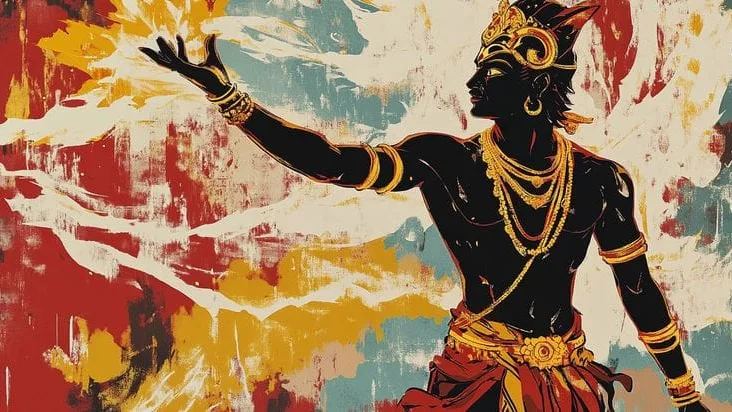
    (Representational image), Indian mythology | Ai generated

    Technology cannot replace the human storyteller

    Director Rajesh Mapuskar, who spoke about his upcoming global AI film Chiranjeevi Hanuman, offered a more cautious view of the technology.

    For him, AI should remain a filmmaking tool rather than become a replacement for human creativity. He argued that consistency, continuity and other technical aspects can benefit from AI, but the emotional core of a story comes from the filmmaker.

    Also Read | 7 European places steeped in legends of giants, devils and dragons

    Mapuskar pointed to personal experiences, memories and observations as the elements that give his work authenticity. He believes those human experiences are difficult for technology to reproduce.

    He also highlighted Hyderabad’s importance to Indian cinema, noting that filmmakers such as SS Rajamouli have helped take Indian storytelling to international audiences.

    India has a vast mythology to explore

    The larger opportunity, according to producer and pop culture executive Vijay Subramaniam, lies in the sheer depth of Indian mythology, folklore and history.

    Subramaniam argued that these stories remain underexplored when compared with the global prominence of franchises built around Western mythology and superheroes. He questioned why discussions about India’s equivalent of Marvel, DC or Disney rarely begin with the country’s own folklore and cultural heritage.

    For him, taking Indian stories to the world is not simply a commercial opportunity but a personal mission. He believes the country has a vast collection of characters, legends and cultural narratives that could be developed for international audiences.
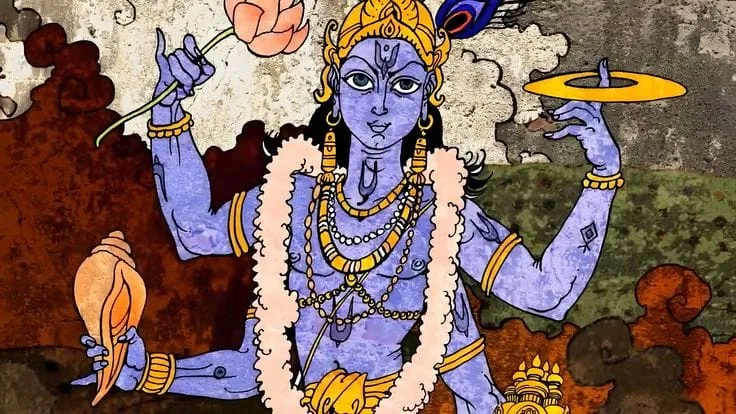
    (Representational image), Indian mythology | Ai generated

    Can mythology become a global franchise?

    The idea is not entirely new. Indian cinema has already experimented with mythology-inspired superheroes, fantasy worlds and interconnected storytelling. Films such as HanuMan have demonstrated that mythological ideas can be reimagined through contemporary cinematic language, while other Indian filmmakers have explored folklore and traditional narratives through different genres.

    What remains to be seen is whether these individual successes can develop into larger, interconnected entertainment properties that extend beyond films into animation, games and other formats.

    Also Read | How Muslims became part of South India’s Hindu traditions

    The combination of India’s deep storytelling traditions and rapidly developing technology could create new possibilities. But as the filmmakers at the Hyderabad gathering suggested, technology alone will not determine whether Indian mythology travels successfully across borders. The stories will still need strong characters, emotional depth and a distinctive creative vision.

    If Indian filmmakers can combine those elements with modern world-building and production tools, the country’s mythology and folklore could have the potential to become part of a much larger global storytelling landscape.
  • 5 Indian animals steeped in mythology, folklore and tradition

    5 Indian animals steeped in mythology, folklore and tradition

    In India, animals have long occupied a place beyond the natural world. They appear in stories about gods and goddesses, are associated with particular festivals and rituals, and often represent qualities such as strength, wisdom, fertility and protection.

    Indian mythology has created a close connection between wildlife and the sacred. Some animals are described as divine companions or vehicles of gods, while others appear as powerful beings in their own right. These stories have also influenced the way generations of people have viewed animals in everyday life.

    Here are five animals that have particularly strong links with Indian mythology.

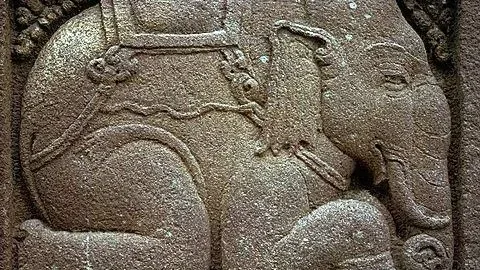
    Elephants are associated with Ganesha and Airavata

    The elephant has one of the strongest mythological identities in India. The most familiar association is with Lord Ganesha, the elephant-headed deity worshipped as the remover of obstacles and the god of wisdom, beginnings and prosperity.

    According to the popular story, Ganesha was beheaded by Shiva after a confrontation. Shiva later restored his life by replacing his head with that of an elephant. The story has made the elephant an enduring symbol of intelligence, strength and renewal.

    Illustration of animals | X

    Elephants also appear in the mythology surrounding Indra, the king of the gods. His celestial mount, Airavata, is described as a magnificent white elephant that emerged during the churning of the cosmic ocean.

    Because of these associations, elephants have traditionally been linked with royalty, power, rain and prosperity. Their presence in temple processions and religious festivals continues to reflect this cultural importance.

    The tiger represents Durga’s power

    The tiger is another animal closely connected with Hindu religious imagery. Goddess Durga is commonly depicted riding a tiger as she battles evil forces.

    The animal represents physical strength, courage and uncontrolled power, while Durga’s command over it suggests that strength can be guided by wisdom and purpose.

    The association has also contributed to the tiger’s special place in Indian culture. The animal may be feared as a predator, but it has simultaneously been treated with a degree of reverence because of its connection with the goddess.

    This mixture of fear, respect and religious symbolism has helped make the tiger one of the most recognisable animals in Indian cultural traditions.

    Illustration of animals | X

    Snakes are linked with Shiva and Vishnu

    Few animals have a more complicated place in Indian mythology than the snake. While snakes can inspire fear, Hindu traditions also associate them with divine power, protection and the forces of nature.

    The Nagas, often described as serpent-like or semi-divine beings, appear throughout Indian mythology. They are associated with water, fertility, protection and subterranean realms.

    One of the best-known images is that of Lord Vishnu reclining upon Shesha, the cosmic serpent. Shiva is also frequently depicted wearing snakes around his neck and body.

    Snakes are especially prominent during Nag Panchami, when they are worshipped in several parts of India. The festival reflects a broader cultural idea of respecting creatures that people may otherwise regard as dangerous.

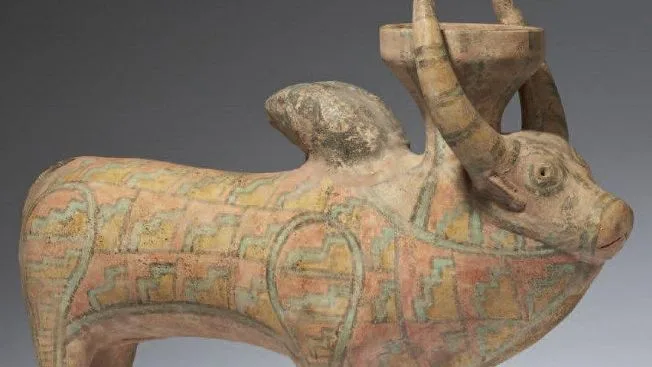
    The cow represents abundance and motherhood

    Illustration of animals | X

    The cow has a particularly important place in Indian religious and cultural traditions. In mythology, it is often associated with nourishment, motherhood, abundance and generosity.

    One of the best-known divine cows is Kamadhenu, described in Hindu mythology as a wish-fulfilling cow capable of providing what is needed. She is therefore associated with prosperity and abundance.

    Lord Krishna’s childhood and youth also strengthened the cultural connection between cows and pastoral life. Krishna is traditionally portrayed as a cowherd, with cows forming an important part of stories surrounding his life in Vrindavan.

    Also Read | Dragon Ball and the ancient Chinese mythology that inspired Akira Toriyama

    These associations have contributed to the cow’s revered status in many Hindu communities and have also influenced customs and debates surrounding the treatment of the animal in modern India.

    The peacock carries several divine associations

    India’s national bird, the peacock, also appears prominently in Hindu mythology.

    The bird is associated with Lord Kartikeya, also known as Murugan, whose mount is traditionally depicted as a peacock. In this context, the bird is connected with victory and the overcoming of negative qualities such as pride and desire.

    Peacock feathers have another famous association with Lord Krishna. He is frequently shown wearing a peacock feather in his crown, linking the bird with beauty, playfulness and divine love.

    Illustration of animals | X

    The peacock’s striking appearance has made it a natural subject for symbolism and religious art. Its presence in mythology gives the bird a significance that goes beyond its distinctive plumage, turning it into an enduring symbol of beauty and transformation.

    When mythology and wildlife meet

    These five animals show how closely India’s ideas about nature have been tied to mythology for centuries. Elephants, tigers, snakes, cows and peacocks are not simply recurring figures in old stories. Their associations with gods, festivals and religious traditions have helped shape the cultural identities attached to them.

    Also Read | Mythology of white Hindus and the Western gaze on Hinduism

    Mythology does not replace the biological reality of these animals, but it adds another layer to the way they are understood. A tiger becomes more than a predator when it is seen beside Durga; an elephant becomes more than a large mammal when its image is connected with Ganesha and Airavata.

    That relationship between belief, storytelling and the natural world continues to influence how these animals are represented and remembered in India today.

  • Sita, Draupadi and the forgotten voices being reclaimed through mythology

    Sita, Draupadi and the forgotten voices being reclaimed through mythology

    Indian mythology texts like Ramayana, Mahabharata always have had powerful women at their centre of attraction. But the most interesting part lies here that most of their stories have traditionally been told from a male perspective. A new generation of women writers has been revisiting these familiar narratives, giving greater attention to the choices, struggles and agency of women who were often pushed to the margins.

    The trend can be seen in retellings of Sita, Draupadi, Urmila, Surpanakha, Satyavati, Amba and several historical figures. These books do not simply repeat old stories or tradition. They ask what these women might have thought, felt and wanted.

    Sita beyond the idea of the ideal wife

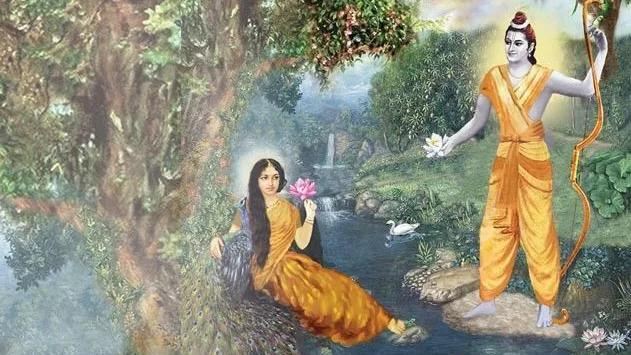
    ram and sita
    (representational image) ram and sita | Ai image

    Indian mythology texts like Ramayana, Mahabharata always have had powerful women at their centre of attraction. But the most interesting part lies here that most of their stories have traditionally been told from a male perspective. A new generation of women writers has been revisiting these familiar narratives, giving greater attention to the choices, struggles and agency of women who were often pushed to the margins.

    The trend can be seen in retellings of Sita, Draupadi, Urmila, Surpanakha, Satyavati, Amba and several historical figures. These books do not simply repeat old stories or tradition. They ask what these women might have thought, felt and wanted.

    Sita beyond the idea of the ideal wife

    In the ancient ages where most of the mythical stories were filed up by men, from a very manly perspective, prioritising Ram over sita, showing the heroism led by him. Chandrabati Bhattacharya’s ‘Chandrabati Ramayana’ was as utter exception showcasing the whole Ramayana from Sita’s perspective. The text also brings women such as Kaikeyi, Ahalya, Surpanakha, Mandodari and Urmila into the narrative.

    Sita’s story, in this interpretation, is not limited to her identity as Ram’s wife. Here in her text Sita has been described as a strong woman who was courageous enough to give the ‘agniparikhsha’ to prove her loyalty towards Ram. Though it has been always a point of controversy.

    The shift is significant because women in mythology have often been presented as ideals rather than complete human beings.

    Ira Mukhoty a scholar from the modern age, who has written about women in Indian history and mythology, has argued that these figures are frequently either turned into goddesses or forgotten altogether.

    Draupadi finds her voice

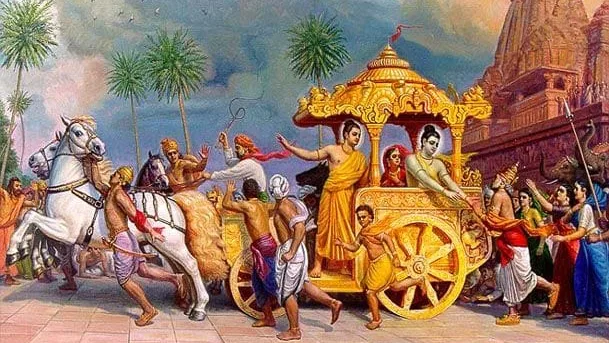
    ram leaving ayodhya for exile
    (representational image) ram leaving ayodhya for exile| Ai image

    Draupadi has also become one of the most frequently reinterpreted women of the Mahabharata.

    Divakaruni’s The Palace of Illusions, published in 2008, was an important example of the Mahabharata being retold through Draupadi’s eyes. In these retellings, Draupadi’s humiliation in the Kuru court is not treated merely as another episode leading to war. Her refusal to remain silent becomes central to her character.

    Also Read | Was Ravana evil? The Ramayana’s complicated story of power and consent

    The forgotten women of the epics

    Kavita Kane has similarly focused on women whose stories received less attention. Her books include Sita’s Sister, which explores Urmila, and Lanka’s Princess, which looks at Surpanakha beyond the conventional image of a villain.

    Her work on Satyavati in The Fisher Queen’s Dynasty also presents her as a politically powerful woman whose decisions shaped the events that followed in the Mahabharata.

    Meenakshi Reddy Madhavan’s Girls from the Mahabharata series takes another route, examining women whose lives remain underwritten in the epic. Her work on Amba and Shikhandi explores questions around identity, rebirth and the circumstances that turned Amba into a warrior figure.

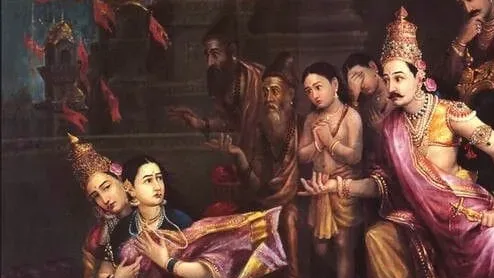
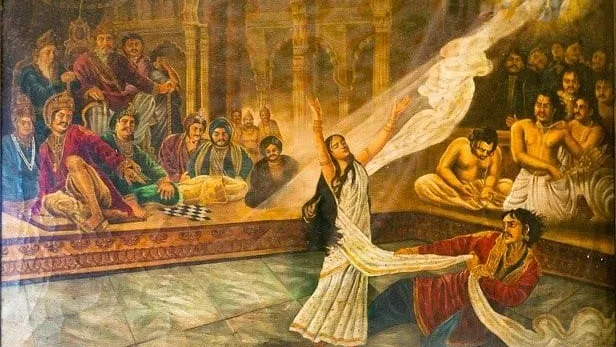
    draupadi in the court of kuru
    (representational image) draupadi in the court of kuru | Ai image

    Why these retellings matter

    These texts show how an old story can change when the narrator changes. Sita can be viewed through motherhood and exile, Draupadi through anger and resistance, while figures such as Urmila, Surpanakha, Satyavati and Amba receive space beyond the roles assigned to them in traditional accounts.

    Also Read | 3 Hindu mythology stories that go beyond good vs evil

    The larger shift is about seeing these women as people rather than simply as symbols or as any spiritual power, these exercised stories show that how these female characters build themselves through resistance power and motherhood .

    Their stories contain power, grief, ambition, conflict and difficult choices. Contemporary retellings are bringing those elements back into focus and, in doing so, changing how younger readers encounter women from India’s mythology and history.