Independence Day is the perfect time to bring a touch of festive warmth into your home without transforming every corner into a sea of saffron, white and green. A few thoughtful additions like flowers, handloom textiles, candles and handcrafted accents can capture the spirit of August 15 while blending seamlessly with your everyday décor.
The key is to allow the tricolour to enhance your surroundings instead of dominating them.
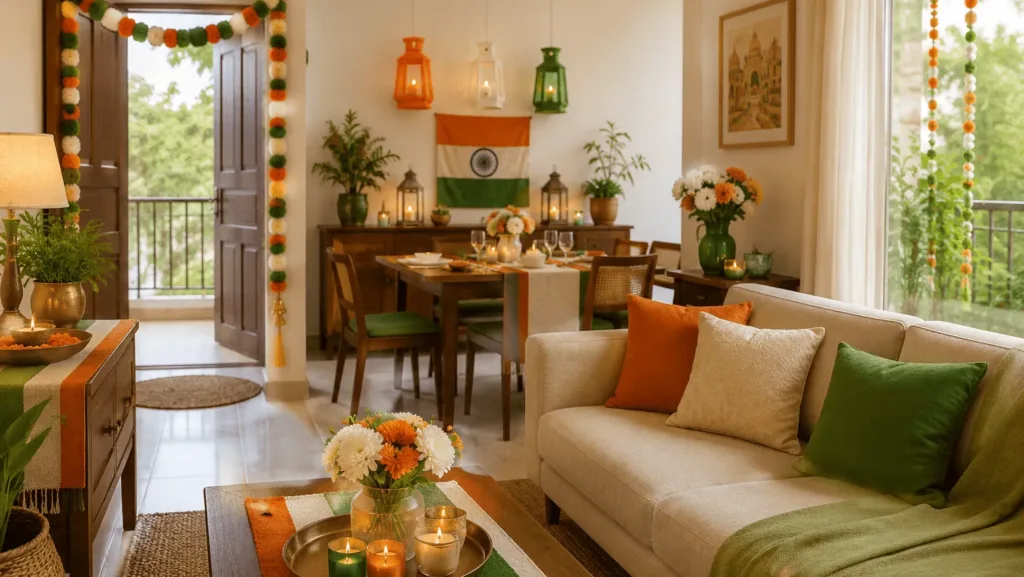
Since the door makes a strong first impression, do not clutter it up. A bouquet of marigolds in white immediately adds festive appeal, while a fabric strip or a homemade toran made using recycled paper, cloth or dried flowers will subtly bring in the tricolor.
(Representational Image) Easy Independence Day décor ideas using flowers, diyas, textiles and Indian crafts | AI-generated
What can you do to refresh your living room without going overboard?
Rather than decorating every nook and corner with themed decorations, concentrate on one or two items that can jazz up the surroundings. Change the cushion covers to shades of saffron, ivory and green colours, or team up your usual throw with cushion covers in contrasting colours.
A ceramic green vase full of orange and white flowers will be a beautiful tribute to the Indian flag without seeming too much. If you are into DIYs, a wall decor displaying pictures, postcards or sketches highlighting the cultural wealth of India would be great.
Set a festive dining table
The dining table is one of the easiest places to introduce the theme. Use white crockery as a clean base and add colour through saffron and green napkins, floral centrepieces or serving accessories.
Seasonal fruits can double as natural décor, while handmade place cards with Indian-inspired motifs can make a family meal feel even more special.
(Representational Image) Refresh your home this Independence Day with simple and elegant tricolour accents | AI Generated
Light up the evening
As the sun sets, warm lighting can transform the atmosphere. Arrange candles or diyas around your living room, balcony or entrance for a cosy glow. Small lanterns in tricolour-inspired tones can also work beautifully outdoors when used safely.
Independence Day also offers a great opportunity to bring Indian craftsmanship into one’s home through the use of handloom table runner, terracotta accessories, cane baskets, Madhubani paintings and Indian pottery.
The best way to celebrate Independence Day through decor is not by stuffing your room with three colours but by appreciating the warmth and craft of India in the rooms you call your own.
India celebrates its 80th Independence Day today, on August 15, 2026, commemorating 79 years since the country attained freedom from British rule in 1947. The national occasion, observed every year with flag-hoisting ceremonies, cultural programmes, patriotic events, and public gatherings, is also a moment for citizens to reflect on the long and arduous journey that transformed India from a colonial possession into a sovereign democratic republic.
Independence Day carries a significance that extends well beyond the ceremonial unfurling of the Tricolour. It recalls the generations of freedom fighters who challenged colonial authority through constitutional politics, mass movements, revolutionary action, social reform and acts of extraordinary personal sacrifice. From Mahatma Gandhi’s mass mobilisation and Jawaharlal Nehru’s political leadership to Subhas Chandra Bose’s uncompromising nationalism and the countless lesser-known men and women who participated in the freedom struggle, India’s independence was the culmination of a movement whose social breadth remains difficult to fully capture.
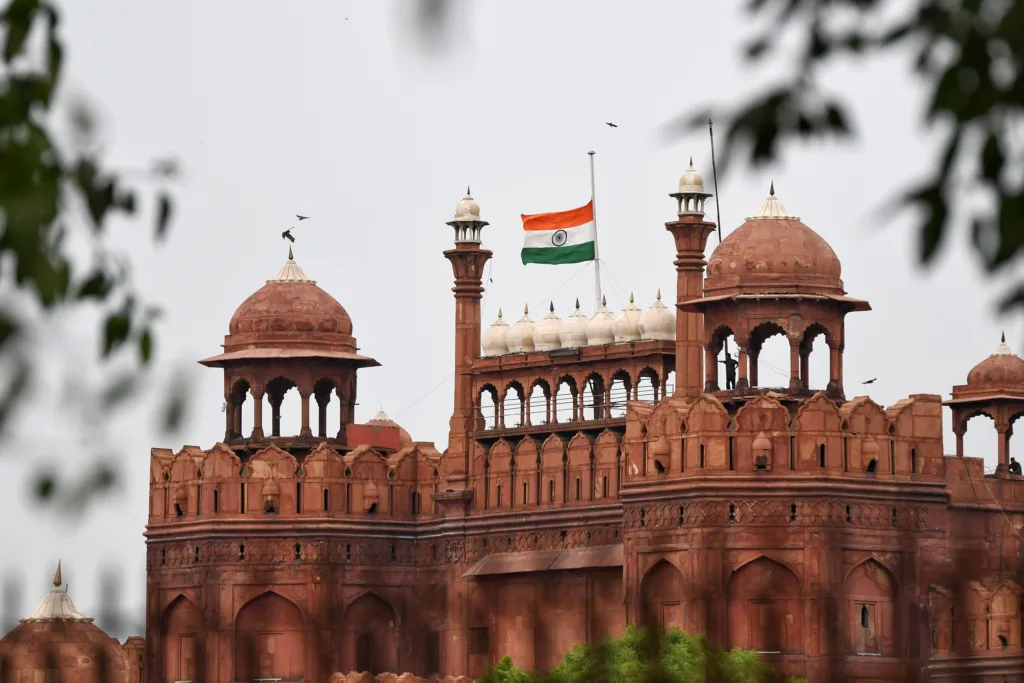
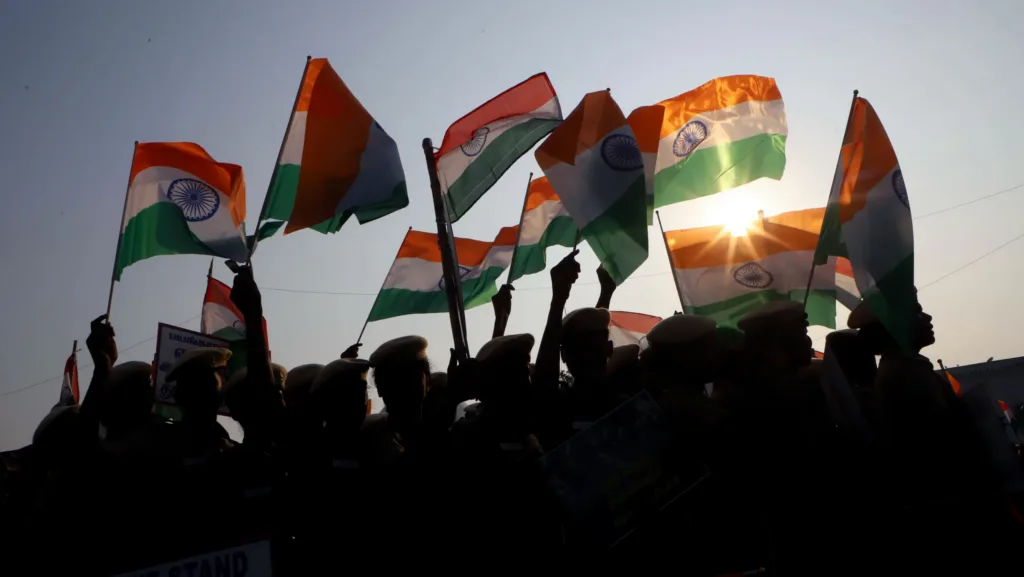
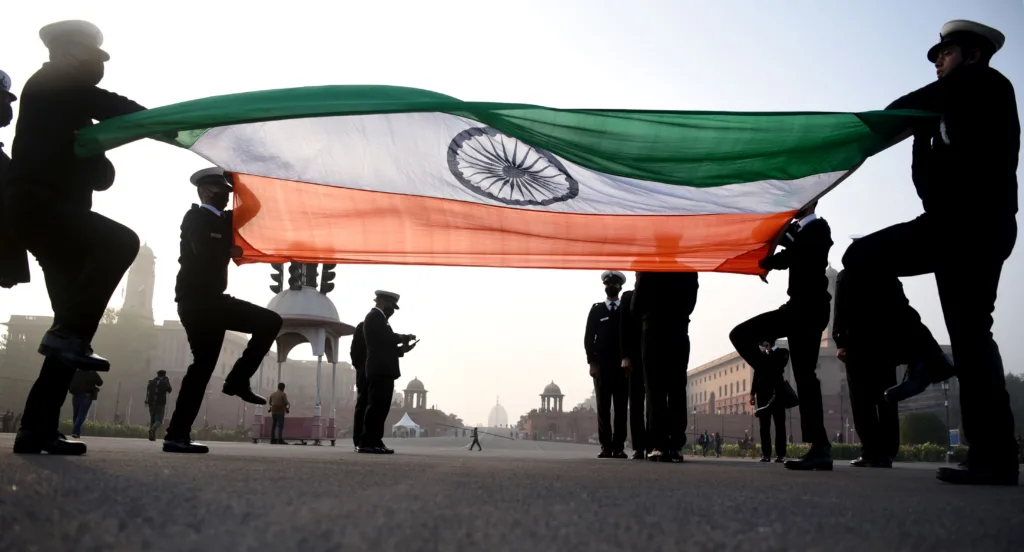
India marks its 80th Independence Day in 2026 after completing 79 years of freedom | ANI
The occasion is consequently marked by messages of patriotism, fraternity, constitutional values and national unity, with families, institutions, schools, workplaces and community organisations exchanging Independence Day greetings and organising programmes to commemorate the historic date.
For those looking for messages to share with family, friends, colleagues or on social media, a simple and meaningful greeting can carry the spirit of the occasion.
“Happy Independence Day 2026! May we always cherish the freedom won through the sacrifices of those who came before us and work together to build an India that is more prosperous, inclusive and resilient.”
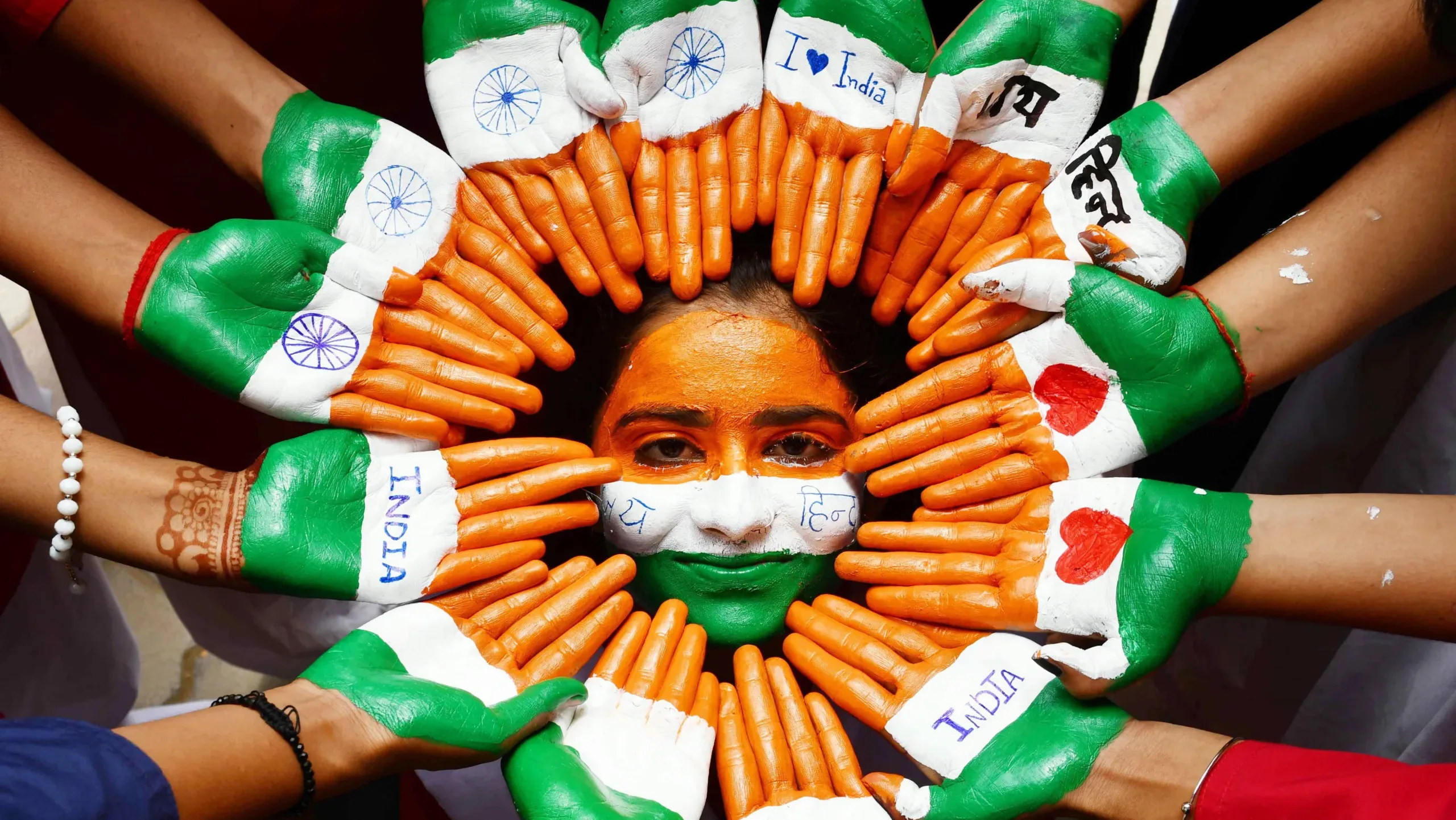
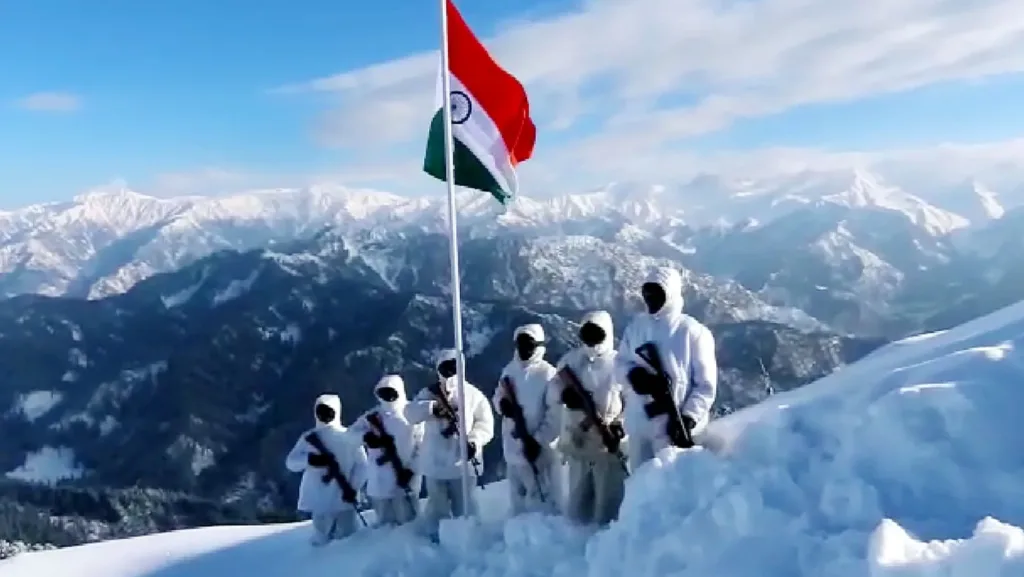
India Independence Day 2026: Best wishes, greetings and messages to celebrate August 15 | ANI
Another message could read:
“On this Independence Day, let us honour the courage of our freedom fighters and celebrate the remarkable journey of India. May our nation continue to rise with unity, confidence and hope. Happy 80th Independence Day!”
For a more formal greeting:
“Warm wishes on the 80th Independence Day of India. May this historic occasion inspire us to uphold the values of liberty, democracy, equality and fraternity, while contributing to the nation’s continued progress.”
For social media, a shorter message may be more appropriate:
“79 years of freedom, 80th Independence Day, and a future still being written. Jai Hind.”
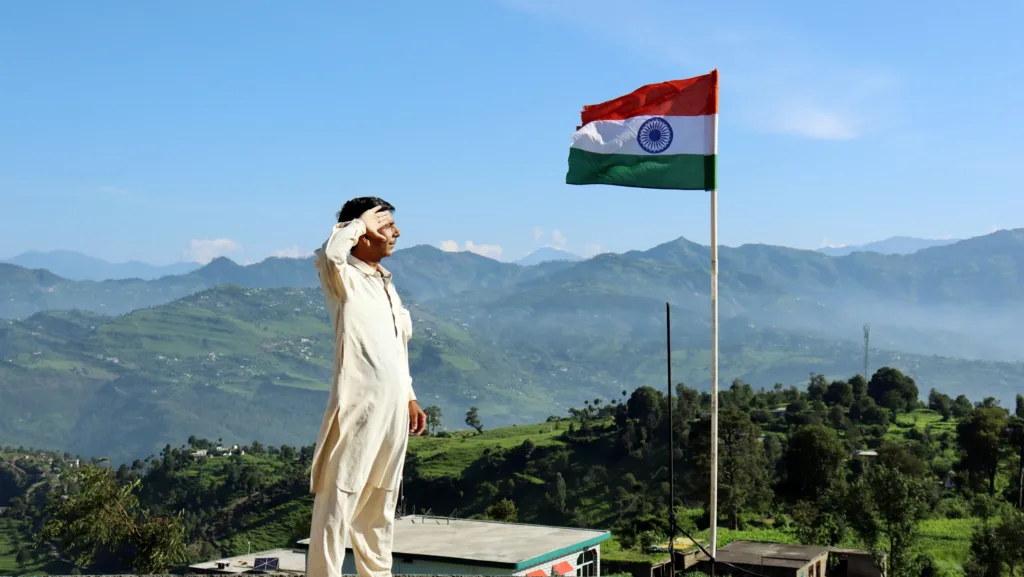
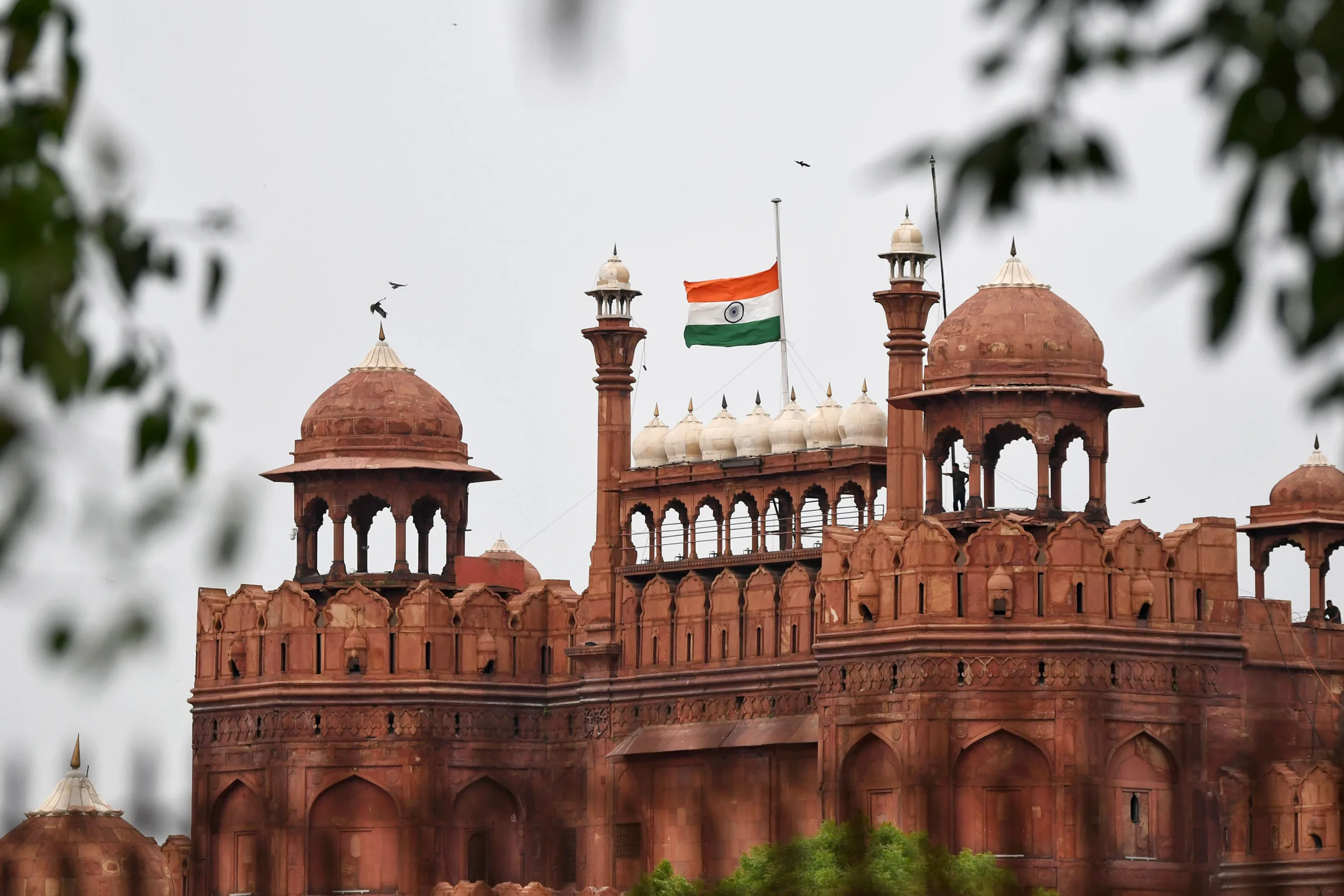
15 August 2026: Best Independence Day wishes, greetings, quotes and messages to share | ANI
Why is Independence Day 2026 significant?
The 2026 celebration comes at an important point in India’s journey towards 2047, when the country will mark 100 years of independence. The intervening two decades are increasingly being viewed through the prism of the national ambition of building a Viksit Bharat, or developed India, by the centenary of independence.
That makes the 80th Independence Day more than an anniversary. It is a point of reflection between the India that emerged from colonial rule in 1947 and the India that seeks to emerge as a developed, technologically capable and globally influential nation by 2047.
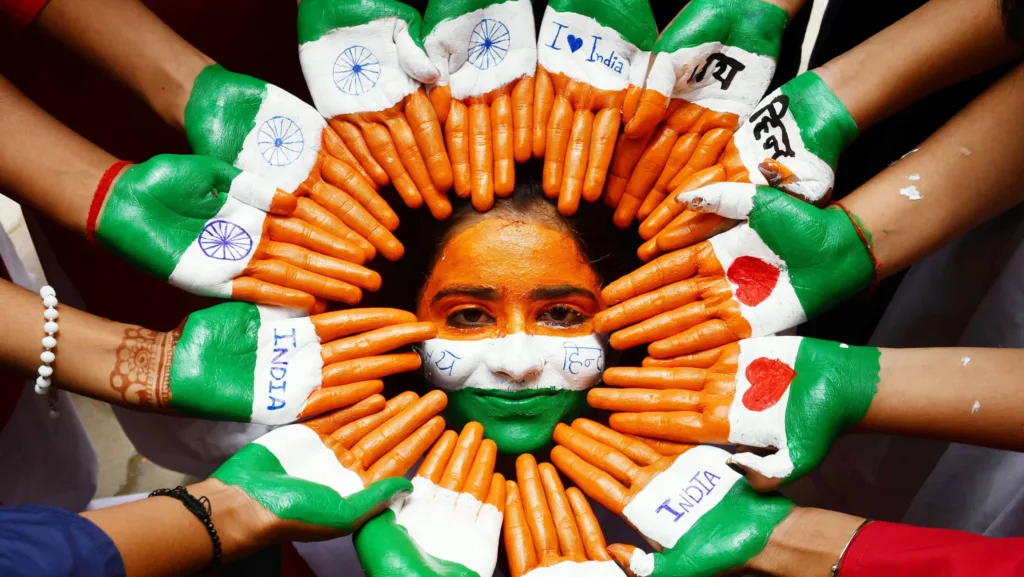
India Independence Day 2026: Celebrate 79 years of freedom with heartfelt wishes and greetings | ANI
The story of independence, after all, did not conclude with the lowering of the Union Jack in 1947. It entered a different chapter. The responsibility of subsequent generations has been to translate political freedom into opportunity, education, economic security, dignity and social mobility.
As the Tricolour rises on August 15, 2026, the most meaningful tribute may therefore be neither a slogan nor a ceremonial gesture, but a renewed commitment to the democratic and constitutional ideals that give independence its enduring meaning.
India completes 79 years of independence in 2026 and celebrates its 80th Independence Day on August 15. The distinction often causes confusion because the number of completed years and the ordinal number of the Independence Day are not the same.
India became independent from British rule on August 15, 1947. Therefore, by August 15, 2026, exactly 79 years will have elapsed since that historic transfer of power. The country will consequently enter its 80th year of independence, while the national celebration itself will be the 80th Independence Day.
The arithmetic is straightforward: 2026 minus 1947 equals 79. However, because August 15, 1947, was the first Independence Day, August 15, 1948, was the second, and so on, August 15, 2026, becomes the 80th such observance. The Government of India referred to August 15, 2025, as the 79th Independence Day, thereby establishing the corresponding numbering for 2026.
India turns 79 years independent in 2026 as it celebrates its 80th Independence Day, marking a historic step towards 2047 | ANI
The distinction becomes particularly relevant this year because the 80th Independence Day places India only 21 years away from the centenary of independence in 2047. The approaching milestone has acquired significance alongside the national aspiration of building a Viksit Bharat by the centenary year.
India’s journey since 1947 has encompassed some of the most consequential transformations in its modern history. The country inherited a deeply impoverished economy, widespread illiteracy, limited industrial capacity and the immense human consequences of Partition. It subsequently established a constitutional democracy, built institutions, expanded education and infrastructure, developed an industrial and technological base, and emerged as one of the world’s major economies.
Yet Independence Day is ultimately less about arithmetic than about inheritance. The generation that secured freedom fought primarily for political sovereignty; subsequent generations have been entrusted with converting that sovereignty into opportunity, prosperity and dignity.
August 15, 2026, marks India’s 80th Independence Day and 79 completed years of freedom since independence from British rule in 1947 | ANI
Thus, August 15, 2026, marks 79 completed years of India’s independence, the beginning of its 80th year, and the celebration of its 80th Independence Day.
The numbers may appear deceptively similar, but together they mark a significant moment: India is no longer merely commemorating the freedom achieved in 1947; it is increasingly measuring the distance between that historic beginning and the India it hopes to become by 2047.
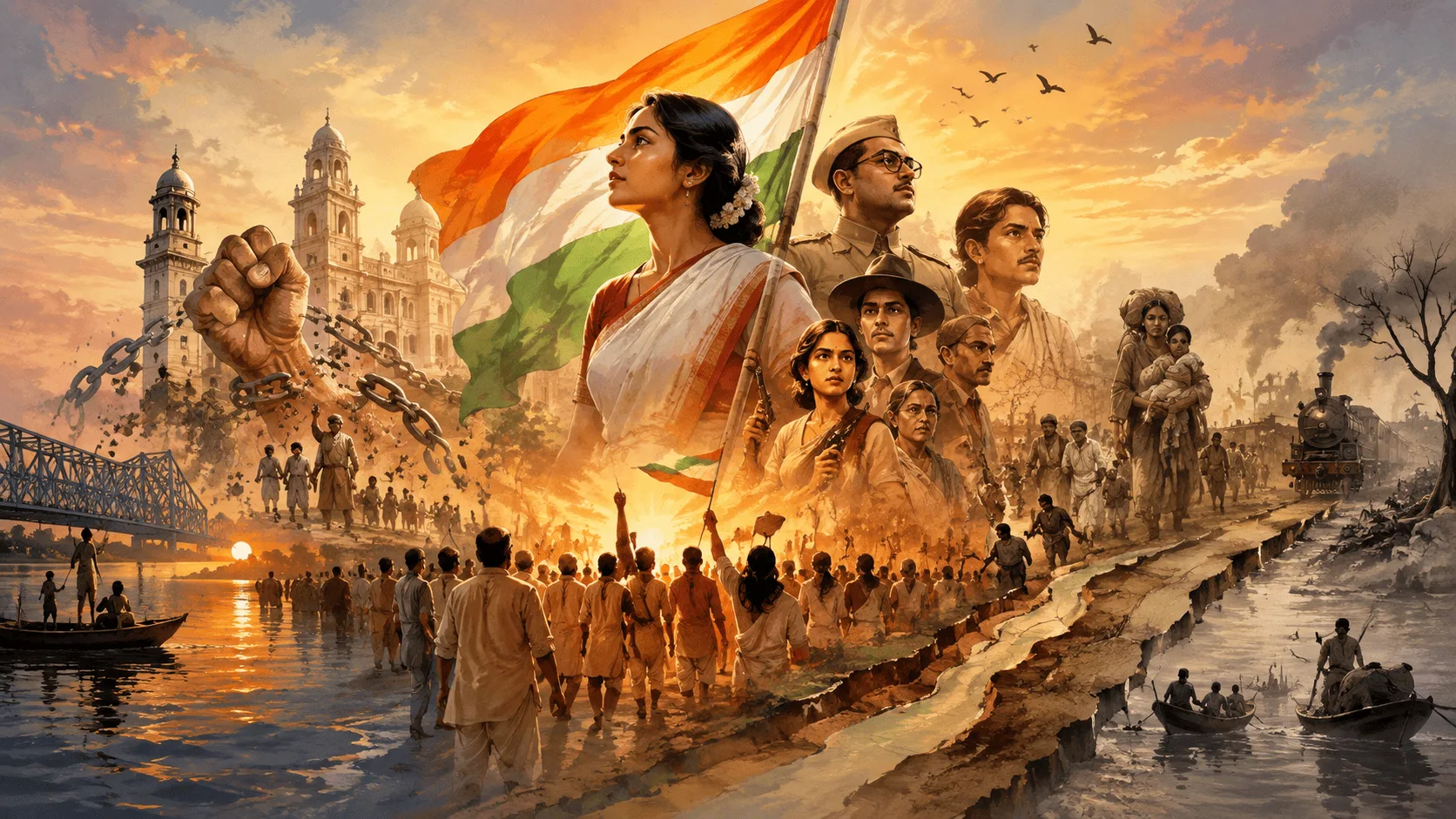
On the night India crossed the threshold of freedom, Bengal occupied a peculiar and almost tragic position in the national imagination: it was at once one of the principal nurseries of Indian nationalism, the birthplace of movements that had challenged the moral authority of the Raj long before independence became an attainable political proposition, and the province that would experience the arrival of freedom through the violence of Partition, with Calcutta itself suspended between jubilation and apprehension. While New Delhi prepared for the ceremonies that would accompany the transfer of power, Bengal confronted a more complicated dawn, for the liberation of a country had arrived alongside the division of a homeland that had for generations been imagined, inhabited and remembered as a cultural whole. Eight decades later, as India marks its 80th Independence Day, that contradiction remains indispensable to any serious understanding of what freedom meant to Bengal and what Bengal, in turn, meant to the making of India.
Long before 15 August became the ceremonial vocabulary through which an independent republic would annually remember itself, Bengal had already supplied much of the intellectual and emotional grammar of the freedom movement. The first Partition of Bengal in 1905, conceived by the colonial administration ostensibly for reasons of administrative convenience but widely perceived as an attempt to fracture an increasingly politically conscious population, produced the Swadeshi movement and transformed resistance from an abstract political sentiment into an everyday practice of boycott, indigenous enterprise, national education and cultural assertion. The streets, classrooms, printing presses and drawing rooms of Bengal became laboratories of nationalism, while literature, music and theatre acquired a political potency that the colonial state found increasingly difficult to contain. Rabindranath Tagore’s songs, Bankim Chandra Chattopadhyay’s Vande Mataram and the writings of a generation of intellectuals did something that political resolutions alone could not accomplish: they gave the idea of India an emotional vocabulary.
Yet Bengal’s nationalism was never confined to the genteel world of intellectual debate. Beneath the public movement existed a subterranean republic of revolutionaries, whose names would eventually become inseparable from the mythology of India’s struggle for independence. Khudiram Bose, barely eighteen when he was executed in 1908, entered nationalist memory as the embodiment of a generation for whom colonial rule had ceased to appear merely unjust and had instead become intolerable; the organisations associated with Anushilan Samiti and Jugantar subsequently cultivated networks of young men who regarded armed resistance as an alternative to petitions, negotiations and constitutional gradualism. Their methods remain historically contentious, and their violence cannot responsibly be romanticised, but their importance lies in what they revealed about the changing psychology of colonial India: the British Empire, once presented as an almost permanent fact of political life, had begun to appear vulnerable to challenge.
That transformation found one of its most formidable expressions in Subhas Chandra Bose, whose political imagination was perhaps too impatient to accommodate itself to the incrementalism of conventional nationalist politics. Netaji’s journey from Congress president to leader of the Indian National Army remains one of the most contested trajectories in the history of India’s freedom struggle, particularly because his wartime alliances with the Axis powers continue to invite legitimate historical scrutiny; yet reducing Bose either to a military romantic or to the controversies surrounding his wartime diplomacy would be to miss the larger significance of his politics. He understood freedom not merely as the legal transfer of sovereignty but as a psychological emancipation, requiring Indians to cease thinking of themselves as subjects awaiting political concessions and to imagine themselves instead as the authors of their own destiny. His famous call to sacrifice was consequently less a piece of rhetoric than an attempt to manufacture political agency among a colonised people.
Bengal’s contribution to the freedom movement was, moreover, never exclusively male, nor was it confined to the celebrated names that populate school textbooks. Pritilata Waddedar, Kalpana Dutta and Bina Das belonged to a generation of women who entered political resistance at considerable personal risk, while Matangini Hazra, the elderly Gandhian revolutionary from Tamluk, became one of the most enduring symbols of the Quit India Movement when she continued advancing with the national flag after being shot by the colonial police in 1942. In the parallel nationalist administration established in Tamluk during the Quit India period, Bengal demonstrated another dimension of resistance: the capacity not merely to oppose colonial authority but to experiment, however imperfectly and briefly, with alternative forms of political organisation.
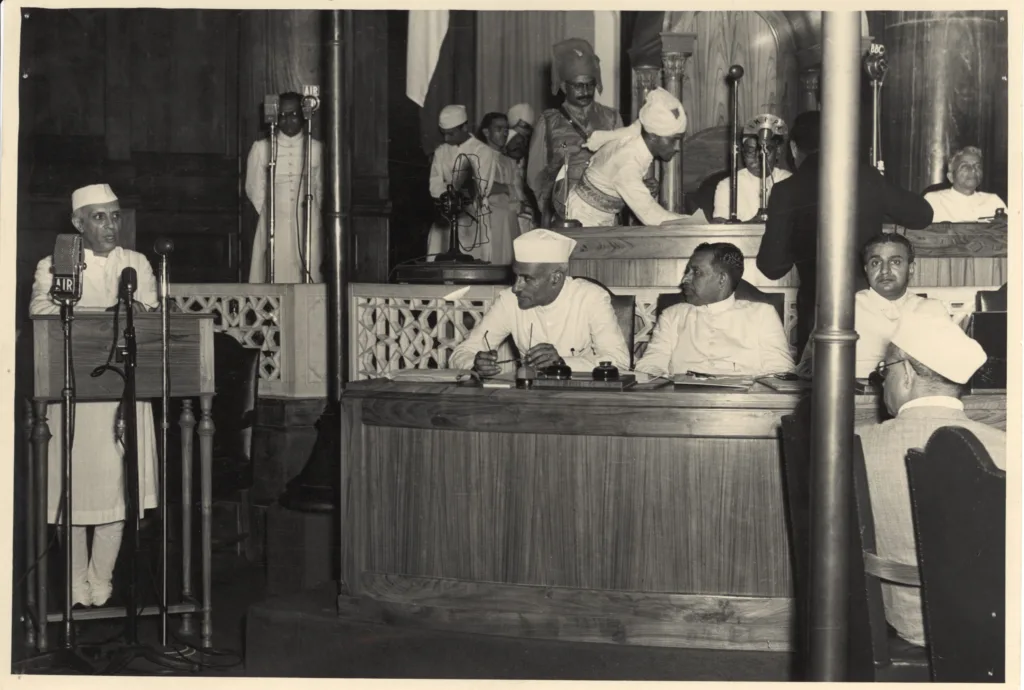
And then came 1947, carrying with it the strange cruelty that history sometimes reserves for places that have contributed most passionately to its making. Nehru’s celebrated Tryst with Destiny speech, delivered on the eve of independence, imagined India awakening to life and freedom after a long night of subjugation; Bengal entered that same dawn with the knowledge that freedom had also redrawn the map beneath its feet. The partition of Bengal divided families, disrupted economies, displaced millions and transformed the meaning of home for communities on both sides of the new border. Calcutta, which had once stood at the centre of an undivided Bengal and had served as the capital of British India until 1911, became a city negotiating the enormous human consequences of Partition even as the new republic attempted to celebrate its arrival.
Jawaharlal Nehru delivering his speech, Tryst with Destiny, on the eve of India’s first independence day | Wikipedia
This is why the Bengal story of Independence cannot be reduced to nostalgia, however seductive nostalgia may be. To remember Khudiram is to remember the ferocity of youthful conviction; to remember Surya Sen is to remember the audacity of organised rebellion; to remember Pritilata and Matangini is to recognise how extensively women participated in the making of freedom; to remember Netaji is to confront the complexity of nationalism itself; and to remember Partition is to understand that political liberation can coexist with profound human loss. The inheritance is therefore not a simple pantheon of heroes but a complicated archive of courage, disagreement, idealism, violence, sacrifice and grief.
For India in 2026, that archive acquires renewed significance because the meaning of freedom has inevitably changed. The generation that fought the Raj sought sovereignty; the generation that inherited sovereignty has had to confront poverty, illiteracy, inequality, communal tension, institutional weakness and the enormous challenge of converting political independence into substantive opportunity. The India that now speaks of becoming a developed nation by 2047 is consequently engaged in a second, very different kind of freedom struggle: not against an external sovereign, but against the internal constraints that prevent citizens from exercising the full possibilities of independence.
Bengal, which once supplied so much of the intellectual energy of India’s freedom movement, must find its place within that unfinished project. The challenge is no longer to overthrow an empire, but to build institutions capable of sustaining aspiration; no longer to demand Swaraj, but to translate political liberty into economic dynamism, educational excellence, technological confidence and social dignity. The Bengal that produced revolutionaries, poets, scientists, reformers and political thinkers cannot afford to treat its history as a museum of former greatness; its more demanding obligation is to convert that inheritance into a capacity for renewal.
Perhaps, then, the most appropriate way to observe Independence Day in Bengal is neither through triumphalism nor through melancholy, but through a more demanding act of remembrance. Eighty years after Nehru spoke of India’s tryst with destiny, the tryst remains unfinished, because freedom, once achieved, does not become self-sustaining merely by virtue of being inherited. Every generation must decide what it will do with the political inheritance placed in its hands.
The tricolour that rises over Bengal each August therefore carries within it more than the memory of 1947. It carries the unfinished arguments of 1905, the courage of the revolutionaries, the imagination of Tagore, the defiance of Netaji, the sacrifice of Matangini and Pritilata, the wounds of Partition and the aspirations of millions who inherited freedom without ever having witnessed its birth. The awakening of 1947 gave India its sovereignty; the responsibility of 2026 is to determine what that sovereignty can become.
And perhaps that is the most enduring lesson Bengal can offer a country approaching its centenary: that freedom is not a destination reached at midnight, but a promise whose meaning must be renewed at every dawn.