Tag: Hindu mythology

  • 3 Hindu mythology stories that go beyond good vs evil

    3 Hindu mythology stories that go beyond good vs evil

    Most of us grow up in an Indian household hearing mythological stories like Ramayana, Mahabharata as tales where good ultimately defeats evil.

    While the theme of Good vs Evil remains an important theme in the Ramayana, Mahabharata and Puranas. Many stories in the mythology also carry lessons that go far beyond a simple moral victory. They explore power, ethics, difficult choices and the consequences of human actions.

    Here are three stories that offer a different perspective.

    Bhasmasura teaches that power without wisdom is dangerous
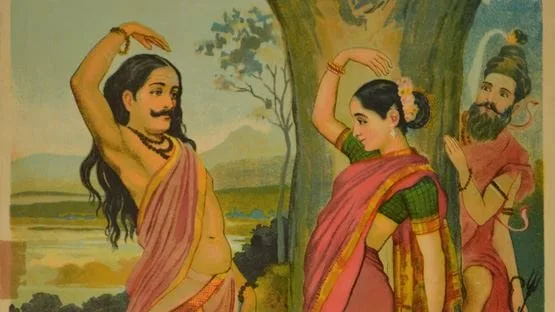
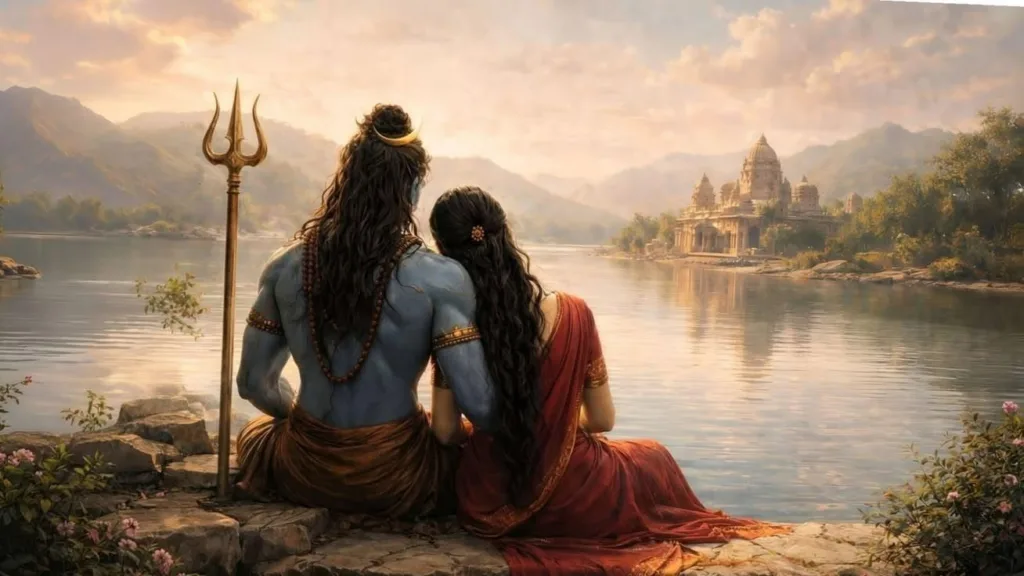
    Bhasmasura earned a powerful boon from Lord Shiva after intense penance. He gained the ability to reduce anyone to ashes by touching their head. Instead of using that power wisely, he tried to use it against Shiva himself. Lord Vishnu, in the form of Mohini, tricked Bhasmasura into placing his own hand on his head, leading to his destruction.

    The story is often seen as the defeat of evil, but it also warns that power without empathy or responsibility can become self-destructive. It reminds us that strength and authority require wisdom and restraint.

    Jaya and Vijaya show that challenges can become a path to growth
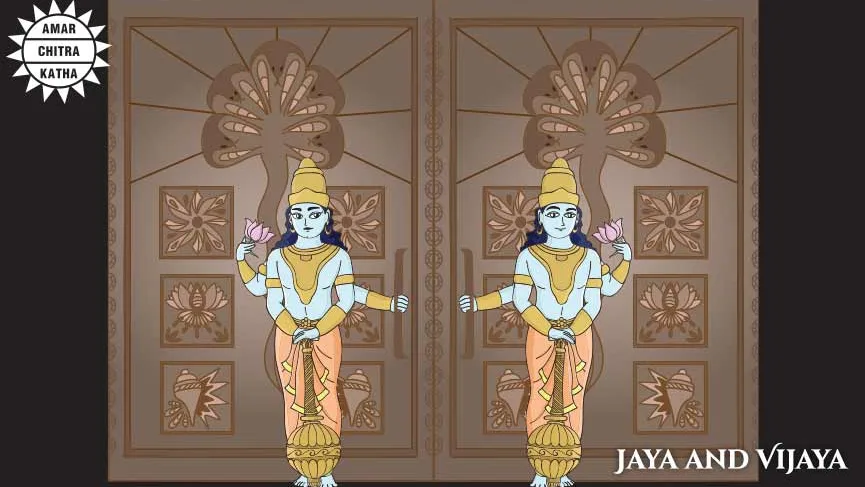
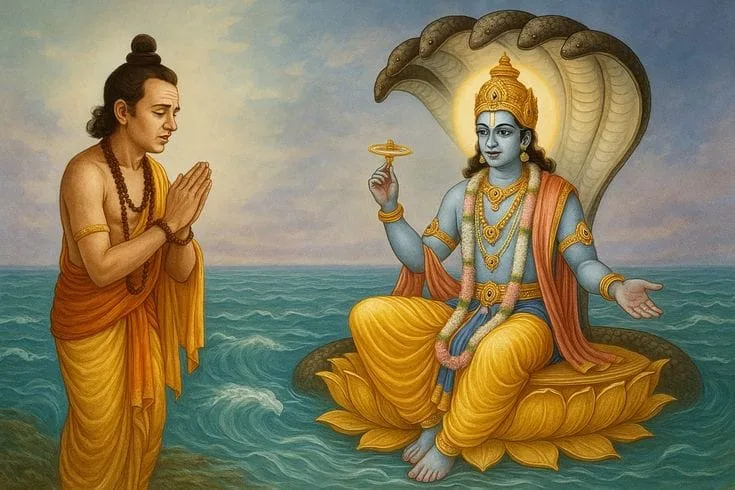
    Jaya and Vijaya were the gatekeepers of Vishnu’s abode, Vaikuntha. After being cursed by the four Kumaras, they had to choose between seven births as devotees or three births as Vishnu’s enemies. They chose the shorter but harder path and were born as Hiranyaksha and Hiranyakashipu, Ravana and Kumbhakarna, and finally Shishupala and Dantavakra before returning to Vaikuntha.

    Also Read | Why Hindus Should Read Islamic Mythology and What It Reveals About Shared Traditions

    The lesson is that hardships and setbacks are not always punishments. Sometimes difficult journeys become the fastest route to learning, transformation and spiritual growth.

    Also Read | Narad Muni the first cosmic journalist of Hindu mythology with 11 lesser-known facts

    Ashwatthama’s story explores the complexity of truth
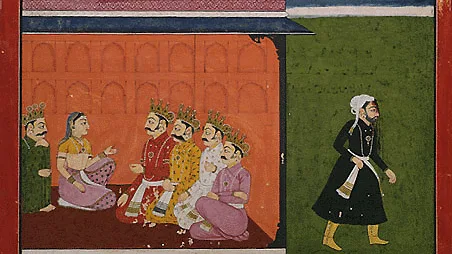
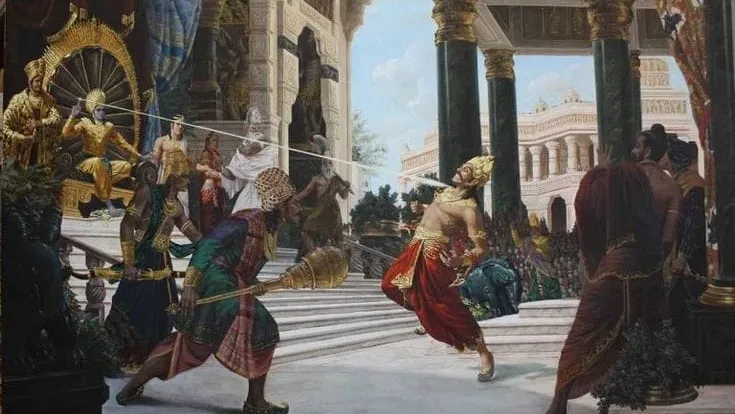
    During the Kurukshetra war, Krishna knew Dronacharya could not be defeated. Bhima killed an elephant named Ashwatthama, and Yudhishthira said, “Ashwatthama is dead,” while the rest of his sentence, “the elephant, not your son”, was drowned out by loud conches. Believing his son had died, Dronacharya laid down his weapons.

    This episode raises difficult ethical questions. It suggests that truth is not always simple and that moral decisions can involve painful dilemmas, especially when protecting a larger cause.

    Why these stories still matter today

    These three stories highlight that Hindu mythology is not only about heroes defeating villains. They encourage readers to think about responsible use of power, resilience during challenges and the moral complexity of truth. That is why these ancient stories continue to remain relevant in everyday life.
  • Why should Hindus read Islamic mythology and what it reveals about shared traditions?

    Why should Hindus read Islamic mythology and what it reveals about shared traditions?

    India is home to one of the world’s oldest and most diverse religious traditions, But here’s the surprising fact about Indians that they know little about Islamic stories, prophets and mythology.

    What does “Islamic mythology” mean?

    Experts explains that the word “mythology” is often misunderstood. In modern academic studies, mythology does not mean a false story. Instead, it refers to the collection of sacred stories,traditions, symbols and beliefs that creates a community’s worldview and identity. By that definition, Hinduism, Islam, Christianity, Judaism, Greek religion and Norse traditions all have mythologies.

    The older idea that mythology means fiction comes largely from 19th-century European thinking, where some religions were considered “true” while others were labelled myths. Contemporary religious studies use the term differently.

    Why should Hindus learn Islamic stories?

    Indians grow up hearing the Ramayana, Mahabharata and many Puranic tales. Many also become familiar with Biblical stories through schools, literature and films. However, stories from the Quran, Hadith and the lives of Islamic prophets remain unfamiliar to a large section of Indians.

    Also Read | Narad Muni the first cosmic journalist of Hindu mythology with 11 lesser-known facts

    He believes reading Islamic mythology helps people understand a worldview that has existed in India for nearly 1,400 years and has influenced the country’s culture, language, art and law.

    Similarities between Hindu and Islamic mythology

    Stories of rivalry between brothers, conflicts over inheritance and moral choices appear in Hindu mythology through characters described in the ancient mythology texts such as Ramayana and Mahabharata. Islamic traditions similarly include stories of Qabil and Habil (Cain and Abel), Ishmael and Isaac, and Jacob and Esau.

    Expert argues that these parallels show that while religions differ in theology, many myths reflect common human experiences such as family conflict, justice, loyalty and faith.

    A broader message about understanding religions

    The myths act as the “social glue” that helps communities make sense of the world and build shared identities.

    Also Read | Who was Mata Karma? The forgotten Krishna devotee

    Reading Islamic mythology, is not about accepting another religion’s beliefs but about understanding how another community thinks, remembers its past and imagines its relationship with the divine.

  • Narad Muni the first cosmic journalist of Hindu mythology with 11 lesser-known facts

    Narad Muni the first cosmic journalist of Hindu mythology with 11 lesser-known facts

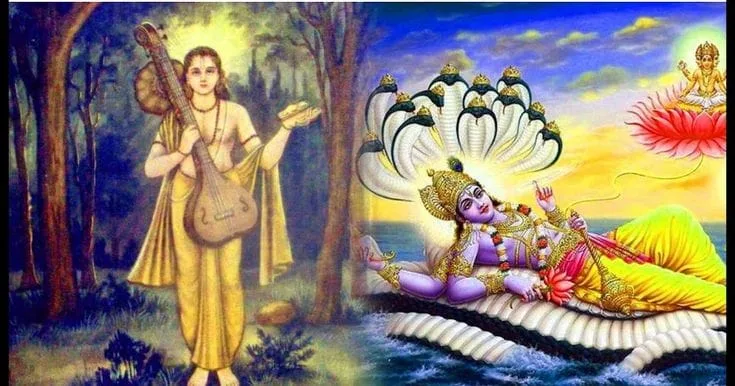
    Narad Muni is one of the most familiar figures in Hindu mythology. The moment people hear “Narayan, Narayan,” they instantly think of a being carrying a veena and travelling freely across the universe. While he is often portrayed as someone who carries news between gods, sages and humans. Beside being a messanger Narad Muni is a scholar, musician, teacher and one of Lord Vishnu’s greatest devotees. Narad Muni appears in the Ramayana, Mahabharata and several Puranas, where his presence often changes the course of important events.

    11 fascinating facts about Narad Muni

    Narad Muni is celebrated on Narad Jayanti His birth anniversary, known as Narad Jayanti, is observed every year and honours his contribution as a divine sage and messenger.

    He is considered the son of Lord Brahma According to Hindu traditions, Narad Muni is the mind-born son of Lord Brahma, symbolising wisdom and spiritual knowledge. Some traditions also associate him with Goddess Saraswati because of his deep connection with learning and music.

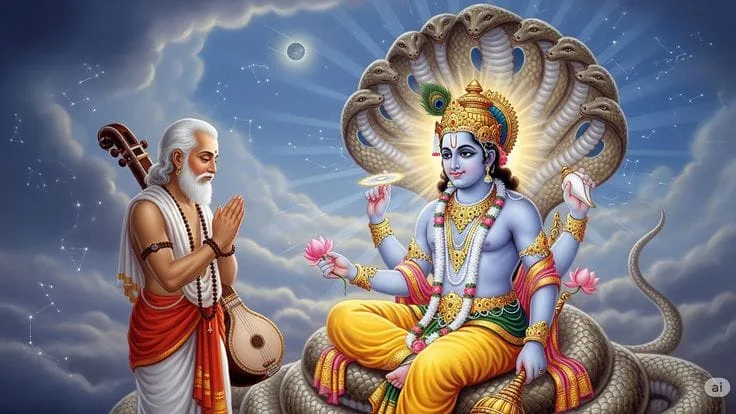
    He was Lord Vishnu’s greatest devotee Narad spent his life chanting Lord Vishnu’s name and spreading the message of devotion across the three worlds.

    Also Read | Who was Mata Karma? The forgotten Krishna devotee

    He travelled across heaven, earth and the netherworld Narad could move freely between Swarga, Prithvi and Patal, carrying messages and divine wisdom wherever needed.

    He is often called the first cosmic journalist Because he constantly gathered and shared information across different realms, many modern writers describe Narad Muni as Hindu mythology’s first “cosmic journalist.” This is a symbolic comparison rather than a historical title.

    Narad received Bhuma Vidya Sage Sanatkumara taught Narad the spiritual knowledge known as Bhuma Vidya, which is explained in the Chandogya Upanishad as the path to understanding the Infinite.

    He guided the Pandavas in the Mahabharata Narad advised Yudhishthira on dharma during the Pandavas’ exile and played the role of a spiritual guide in several episodes.

    Also Read | What is a Myth? The deeper meaning behind ancient stories explained

    He is believed to be one of the Chiranjeevis Many Hindu traditions regard Narad Muni as one of the immortal beings who continue to exist for the welfare of the world.

    He mastered 64 forms of knowledge Scriptures describe Narad as a master of 64 vidyas, including music, grammar, philosophy, astrology and the Vedas.

    Narad Bhakti Sutra is linked to his teachings The Narad Bhakti Sutra is one of the most respected texts on devotion and explains the essence of bhakti in simple yet profound terms.

    His words often changed the course of mythology Although Narad is sometimes shown creating conflict, scriptures say his actions ultimately helped restore dharma. One famous example is his role in the story of the demon king Jalandhar, which eventually led to Jalandhar’s downfall.

    Why Narad Muni remains relevant today

    Narad Muni’s stories continue to inspire devotees because they emphasise devotion, wisdom and the importance of speaking truth at the right time. Rather than being a mere messenger, he is remembered as a guide whose actions ultimately served the greater good and upheld dharma.