Extreme heat is no longer just about a city experiencing a few unusually hot days. It is becoming a much larger problem. Heatwaves can now stretch across vast areas, last for months and overlap with other extreme heat events.
A Reuters investigation describes these sprawling episodes as “heat storms”. The investigation analysed global temperature data dating back to 1960 and consulted two dozen meteorologists and climate researchers. It found that these events have become far more frequent and widespread over the decades.
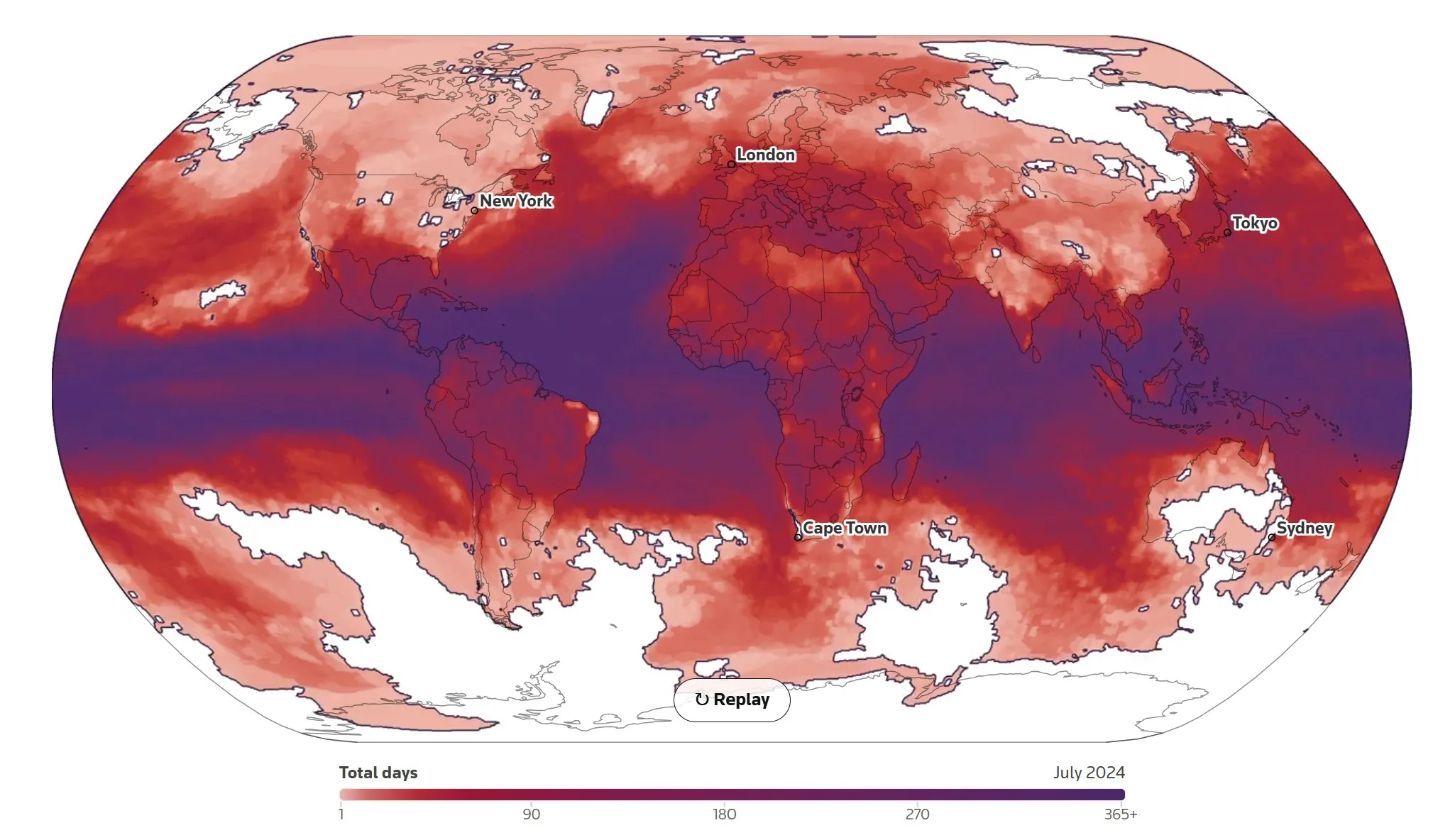
The largest heatwave recorded in the 1960s covered about 6% of the planet for 46 days. In comparison, the largest event identified in the current decade covered nearly 85% of Earth’s surface at some point during its 367-day lifetime.
The findings offer a way to understand climate change through something people experience directly; the heat around them.
Les vagues de chaleur géantes ne sont plus rares. Une analyse de données révèle l’émergence de « tempêtes de chaleur » (heat storms) qui se propagent désormais sur la planète. RT Reuters https://t.co/rWaXyiX2J5
— AsieNews (@AsiaNews_FR) October 21, 2026
Also Read | Brazil election: Can Lula stop Flávio Bolsonaro’s march towards power?
What exactly is a heat storm?
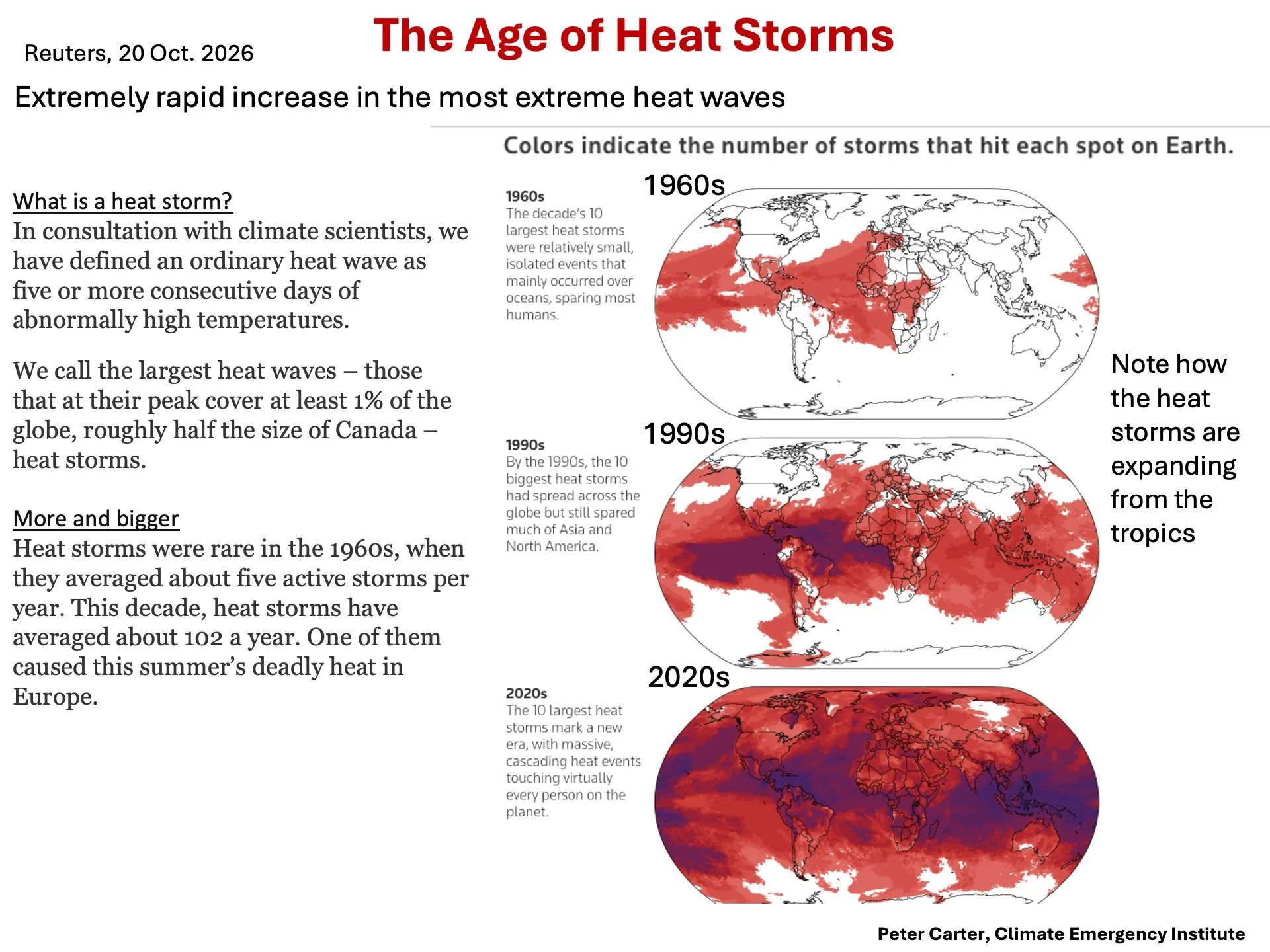
A heat storm is not a new type of weather system officially recognised by meteorological agencies. It is a category developed by Reuters to describe unusually large heatwaves.
The investigation defines a heatwave as five or more consecutive days of abnormally high temperatures. When one of these events covers at least 1% of Earth’s surface at its peak, we can classify it as a heat storm. That area is roughly half the size of Canada.
The distinction is about scale, not just how high the temperature rises in one location. A city might experience extreme heat while other regions experience similar conditions at the same time. When these events spread across continents or reach distant parts of the world, they can become part of a much larger pattern.
The category helps explain how extreme heat has changed and makes these vast events easier to track.
Deadliest (heatwave) summer on record in Europe. Almost no news about it. https://t.co/lQ42Cm2n0b
— Alexander Ač (@Lacertko) October 23, 2026
An atmospheric recipe for trouble
The investigation found a sharp rise in the frequency of these events. Heat storms averaged around five a year in the 1960s. In the current decade, the number has climbed to about 102 a year.
The change has occurred alongside rising greenhouse gas emissions. Atmospheric carbon dioxide levels have increased by more than 30% since the 1960s. Over the same period, the average area of the planet covered by heatwaves and heat storms has increased more than twelvefold.
Greenhouse gases trap heat in the atmosphere, pushing temperatures higher. Natural climate patterns also play a role.
El Niño, a periodic warming of the Pacific Ocean, can intensify heatwaves and make already hot conditions worse. The investigation does not suggest that every heatwave has the same cause.
Instead, it highlights how long-term global warming is creating conditions in which large-scale extreme heat events are more likely and more intense.
India finds itself in rather hot water
For India, the findings matter because extreme heat affects more than daily comfort. Severe heat can threaten human health, disrupt outdoor work and increase pressure on water supplies and agriculture.
The risk also depends on how long high temperatures persist and whether people have access to cooling, safe drinking water and other essential services.
The largest recorded heat storm, Vera, lasted 367 days between July 29, 2023, and July 29, 2024. It affected nearly 85% of the planet during its lifetime. The investigation linked this event to a range of impacts, including the deaths of Hajj pilgrims and damage to livelihoods in Ivory Coast.
Overlapping heat storms have formed a continuous global sequence since July 6, 2008, with at least one event active somewhere on Earth throughout that period.
These findings show the growing reach of extreme heat. However, the heat storm category measures the geographical scale of an event. It does not replace the India Meteorological Department’s local heatwave criteria or provide a standalone forecast for any Indian city.
Also Read | Tesla changes FSD name in Europe, but is it really self-driving?
One hot mess, on a planetary scale
The term “heat storm” is Reuters’ analytical framework, rather than an official weather classification. Its purpose is to make an increasingly complex climate pattern easier to recognise.
As Anthony Leiserowitz, director of the Yale Program on Climate Change Communication, said, naming events is “a powerful way for people to understand that something is happening”.
The central finding is clear: extreme heat is no longer only a series of isolated local emergencies. It is part of a wider, connected pattern that can affect people, ecosystems and economies across large parts of the world.
Understanding that pattern is an important step towards recognising the scale of the risk.