Tag: Gen Z

  • From ‘you complete me’ to ‘I need my space’: How Gen Z is redefining love and commitment

    From ‘you complete me’ to ‘I need my space’: How Gen Z is redefining love and commitment

    For years, popular ideas about romance have centred on becoming one with your partner. Phrases such as “You complete me” and “I can’t live without you” have often presented love as something that requires complete emotional and personal involvement. But relationship expectations are shifting, particularly among Gen Z, who are increasingly placing value on individuality alongside emotional closeness.

    In an interview with Hindustan Times, Chandni Gaglani, EVP and Head of Aisle, explained how younger people are approaching love, commitment and personal freedom differently.

    Gen Z wants love without losing individuality

    According to Chandni, traditional ideas of relationships often placed togetherness at the centre. Couples were expected to spend much of their time together, share friends and social circles, make decisions jointly and allow the relationship to become a major part of their identity.

    Also Read | Would you date someone with completely different political views?

    Gen Z, however, appears more comfortable maintaining the life they had before entering a relationship.

    Gen Z relationships
    (Representational Image) Personal space is becoming an important part of Gen Z relationships | AI Generated

    “For Gen Z, finding a meaningful relationship does not necessarily mean giving up the life that existed before it. They want love, companionship and emotional intimacy, but increasingly, they also want the freedom to remain individuals within the relationship,” highlighted Chandni.

    “Their careers, friendships, interests, ambitions and personal space continue to matter. This isn’t necessarily a rejection of commitment. Instead, it reflects a changing understanding of what commitment can look like: choosing someone without having to lose yourself in the process,” added Chandni.

    Why personal space matters in modern relationships

    Chandni noted that having separate friendships, individual interests, solo travel plans, personal routines or time alone does not necessarily signal emotional distance for Gen Z.

    Gen Z relationships
    (Representational Image) Gen Z is choosing commitment without giving up personal identity | AI Generated

    “Compatibility is no longer just about enjoying the same things or wanting the same future. It can also mean being comfortable with each other’s differences and giving each other the room to explore them,” said Chandni.

    Love can complement identity, not replace it

    The idea of a partner “completing” someone is also giving way to a more individual-centred understanding of love.

    “The idea of a partner completing you is gradually giving way to something more balanced: finding someone who complements the life you are already building. This doesn’t make the relationship less meaningful,” explained Chandni.

    Also Read | From tote bags to therapy talk: Is the ‘performative’ male changing men?

    For Gen Z, commitment can mean sharing a life while continuing to nurture personal ambitions, friendships, hobbies and interests.

    Commitment without losing yourself

    At the heart of this changing approach is the possibility of staying emotionally connected while retaining a sense of self. Separate interests, shared values and time apart can coexist with a committed relationship.

    GenZ relationships
    (Representational Image) Young couples are balancing emotional intimacy with individual lives | AI Generated

    Gen Z may not be seeking less commitment, but a different form of it: companionship without confinement, intimacy without dependence and love that leaves room for individuality.

    “Because perhaps the healthiest version of love isn’t you. It is I know who I am, you know who you are, and we still choose each other,” concluded Chandni.

  • The ‘Sober Gen Z’ paradox: How less drinking is driving premium alcohol sales

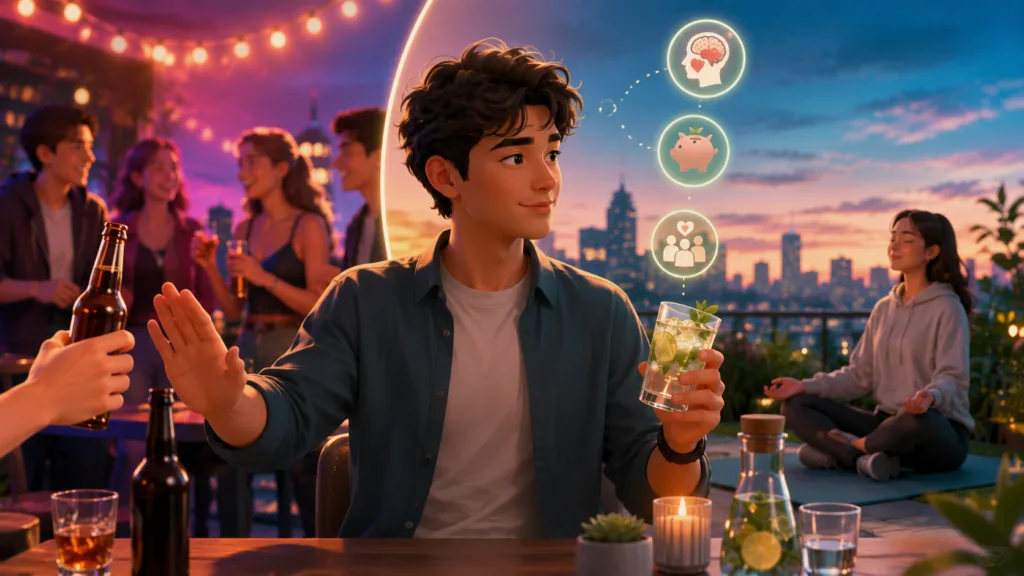
    The ‘Sober Gen Z’ paradox: How less drinking is driving premium alcohol sales

    Gen Z is drinking less alcohol, but that does not mean the generation has walked away from the liquor market. In India, a growing preference for premium spirits, flavoured drinks and more experience-led consumption is creating a different kind of opportunity for alcohol companies.

    The shift helps explain why liquor stocks such as Radico Khaitan, United Spirits and United Breweries continue to attract attention despite changing drinking habits among younger consumers.

    Gen Z is drinking less, but not quitting alcohol

    As per a NDTV report, George F Koob of the National Institute on Alcohol Abuse and Alcoholism says younger generations increasingly view alcohol as a health risk and are more likely to take breaks from drinking.

    Gen Z drinking
    (Representational Image) Less drinking, bigger spending: Gen Z is choosing premium alcohol | AI Generated

    Social habits have changed too. Time spent with friends in person fell from 30 hours a month in 2003 to just 10 hours in 2020.

    Also Read | What is the Sweatpants Theory? Uncovering one ‘Weird’ modern Gen-Z dating term

    A similar pattern is visible among young urban consumers in India. Surveys in Mumbai and Pune found health concerns, mental health awareness, financial pressures and social media influence among the factors encouraging more mindful drinking. Nearly half had tried a dry month, while most said they combine alcoholic and non-alcoholic drinks during an evening.

    Premium alcohol is driving growth

    The bigger change is in what Gen Z chooses when it does drink.

    Radico Khaitan reported a 73 per cent rise in quarterly profit, helped by demand for premium brands such as Rampur whisky. Its “Prestige & Above” segment grew 40.8 per cent.

    United Spirits also reported stronger premium sales. Its premium portfolio, including Johnnie Walker and Tanqueray, recorded 9 per cent year-on-year growth in net sales value.

    Gen Z drinking
    (Representational Image) India’s Gen Z is reshaping the liquor market with premium choices | AI Generated

    India’s alcohol market recorded 7 per cent volume growth in the first half of 2025, crossing 440 million cases. The premium-and-above category grew 8 per cent in both volume and value.

    Gen Z wants more than just a drink

    According to a NDTV report, Anant S Iyer, Director General of the Confederation of Indian Alcoholic Beverage Companies (CIABC), said, “Premiumisation continues to be one of the key growth drivers for India’s alcobev industry.”

    He also said that Indian single malts grew “by around 22 per cent in 2025 to nearly five lakh cases,” with homegrown labels accounting for roughly 92 per cent of the segment. Gen Z, he added, is “moving across categories, exploring new flavours, formats and cocktails and choosing drinks according to the occasion rather than habit.”

    Gen Z drinking
    (Representational Image) Premium spirits are thriving as Gen Z changes its drinking habits | AI Generated

    Varun Jain, Founder & CEO of Smoke Lab, said that Gen Z’s “purchase journey” is increasingly influenced by “digital discovery, social influence and curiosity around a product’s provenance, flavours and overall experience.”

    Also Read | What is digital jealousy? Online habit affecting modern couples

    Rupi Chinoy of South Seas Distilleries explained NDTV that younger consumers seek spirits with “a strong sense of originality and place.” He added, “The new definition of luxury in spirits lies not merely in price or prestige, but in provenance, originality and the richness of the story behind every pour.”

    The real Gen Z alcohol trend

    The picture is therefore more nuanced. Gen Z may be drinking less frequently, but a section of younger Indian consumers is willing to spend more when they do drink.

    Gen Z drinking
    (Representational Image) From flavoured vodka to single malts, Gen Z wants more from alcohol | AI Generated

    For liquor companies, that means fewer occasions can still translate into higher-value purchases. Premium spirits, flavoured vodka, craft cocktails and products with a distinctive story are increasingly becoming part of that shift.

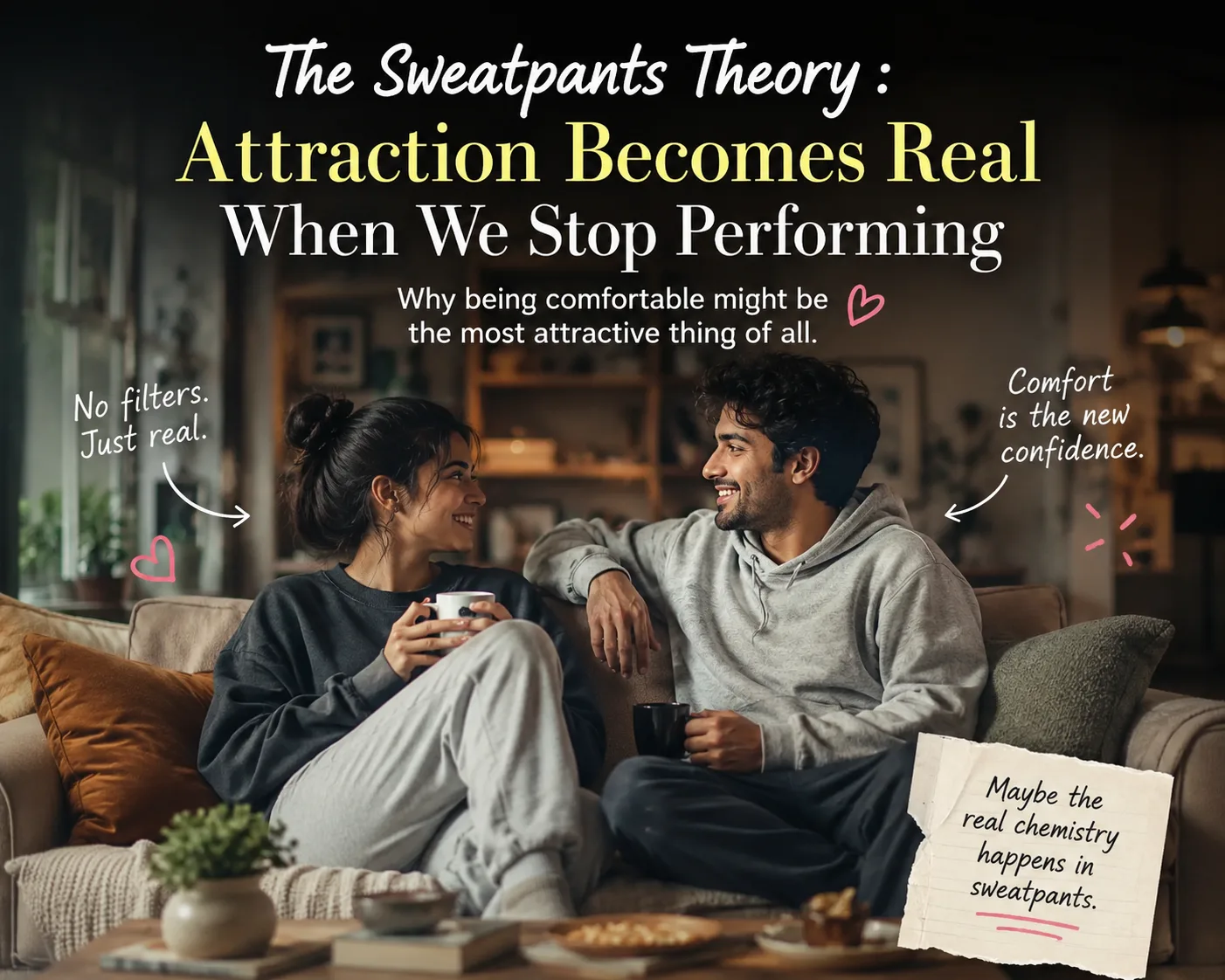
  • What is the Sweatpants Theory? Uncovering one ‘Weird’ modern Gen-Z dating term

    What is the Sweatpants Theory? Uncovering one ‘Weird’ modern Gen-Z dating term

    There is something faintly absurd about the modern dating vocabulary. We once had courtship, romance and heartbreak. We now have ghosting, breadcrumbing, situationships, love bombing and, apparently, the Sweatpants Theory.

    Yet beneath its deliberately ridiculous name lies a rather serious proposition: perhaps attraction becomes more authentic when performance is reduced.

    ALSO READ| What is digital jealousy? Online habit affecting modern couples

    What is the Sweatpants Theory about?

    The Sweatpants Theory has been circulating on TikTok and other social platforms as the idea that people can appear more attractive when they dress comfortably and behave without the elaborate self presentation traditionally associated with dating. In other words, the less one appears to be trying to impress, the more approachable and, paradoxically, attractive one may become.

    It sounds like an internet joke. It is, however, a revealing symptom of how profoundly dating has changed.

    For decades, a date was an exercise in presentation. Clothes were selected, hair arranged, perfume applied, conversation rehearsed and expectations carefully calibrated. The objective was to present the most desirable version of oneself before intimacy had earned access to the least curated one.

    Modern dating has begun to distrust that theatre

    The Sweatpants Theory essentially argues that comfort can become its own form of seduction. Someone who looks relaxed may appear more confident because they are not visibly negotiating the approval of the room. A person in ordinary clothes, laughing freely and behaving naturally, can communicate something that a meticulously assembled dating persona cannot: this is who I am when I am not trying to convince you to like me.

    ALSO READ| Feeling fear during meditation? The surprising reason may not be what you think

    That distinction matters in an age when dating apps have transformed romance into a marketplace of curated identities.

    Profiles are edited. Photographs are selected with forensic precision. Biographies are compressed into witty sentences. First dates can feel less like encounters and more like auditions. Even vulnerability can become performative, packaged as evidence of emotional intelligence.

    The Sweatpants Theory cuts against this economy of impression management. Its deeper appeal, therefore, may have little to do with sweatpants. It is about authenticity.

    But there is a caveat. Authenticity should not become an alibi for indifference. Turning up looking deliberately careless is not necessarily confidence; sometimes it is simply carelessness. The distinction between being comfortable and making no effort remains important, particularly because relationships require reciprocity.

    The theory becomes interesting precisely at that intersection. Modern daters increasingly appear exhausted by the elaborate rituals of romantic self marketing. They do not necessarily want someone flawless. They want someone recognisable. Someone whose dating persona does not collapse the moment the relationship moves from candlelit restaurants to grocery shopping, bad hair days, unfinished chores and Sunday afternoons spent doing absolutely nothing.

    Perhaps that is the real revolution concealed inside the Sweatpants Theory.

    ALSO READ| 25 years of Dil Chahta Hai: The friendship we grew up with

    Romance has historically been obsessed with discovering whether someone finds us attractive at our most polished. Modern relationships demand a more uncomfortable question: will they still find us compelling when there is nothing left to perform?

    The sweatpants, then, are merely sartorial shorthand and the real theory is about being seen without the costume.