Tag: Durga Puja 2026

  • Kolkata Durga Puja 2026 traffic guide: Which roads to avoid

    Kolkata Durga Puja 2026 traffic guide: Which roads to avoid

    Durga Puja means late-night pandal hopping for millions of people in Kolkata, but the festive rush also brings some of the city’s toughest traffic restrictions of the year. With crowds expected across north, central and south Kolkata, the police have prepared an extensive traffic plan covering road closures, diversions, one-way routes and restrictions on goods vehicles.

    The arrangements begin around Mahalaya and continue through the Puja days and immersion period. Several roads will become pedestrian-only zones during peak hours, while bus and auto routes will also change in parts of the city.

    Mahalaya brings the first major restrictions

    Special traffic arrangements will be in place on Mahalaya, October 10, particularly around the Ganga ghats as large numbers of people are expected to arrive for bathing and tarpan.

    Heavy goods vehicles will not be allowed within the Kolkata Police jurisdiction from 3am to 10pm. Vehicles carrying essential supplies such as LPG, oxygen, medicines, milk, vegetables, fruits and fish will be exempt from the restriction.

    There will also be restrictions around Strand Road and St George’s Gate Road. Auckland Road will be closed during the specified period, while traffic at several northern crossings will be regulated.

    Commuters heading towards central Kolkata should therefore expect diversions, especially around the riverfront and roads connecting the major ghats.

    Also Read | Yellowstone removes 20,000 items from hot springs: See the bizarre finds

    Puja days bring pedestrian zones and one-way roads
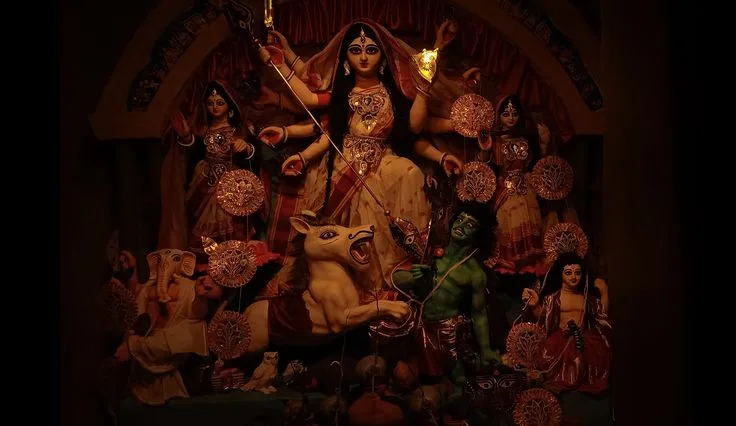
    Durga idol | IG

    From Tritiya on October 13 to Navami on October 19, traffic restrictions will become more extensive. Goods vehicles will face restrictions during different time windows on each Puja day, with the curbs extending into the early hours of the following morning. Essential-service vehicles will continue to receive exemptions.

    The biggest change for pandal hoppers will be the creation of pedestrian zones. From the afternoon onwards, several roads near major Puja destinations will be closed to regular vehicular traffic, allowing people to move on foot.

    In north Kolkata, restrictions will affect roads including B.K. Paul Avenue, Arvind Sarani, Garpar Road, Kailash Bose Street and North Sealdah Road. Central Kolkata will see restrictions around areas such as Akhuru Dutta Lane, Kalutola Street, Dixon Lane and Muktaram Babu Street.

    Also Read | This remote archipelago has 4,000 people and millions of wild neighbours

    Several roads in south and south-east Kolkata will also be affected, including stretches around Dover Lane, Ekdalia, Kalighat, Lake Road, Deshapriya Park and Tilak Road.

    One-way systems will also be introduced on several important roads. Rabindra Sarani, Bidhan Sarani and Raja Rammohan Roy Sarani are among the routes where traffic movement will be regulated in specific directions. Tram services on some stretches will also be curtailed.

    South Kolkata traffic and public transport changes
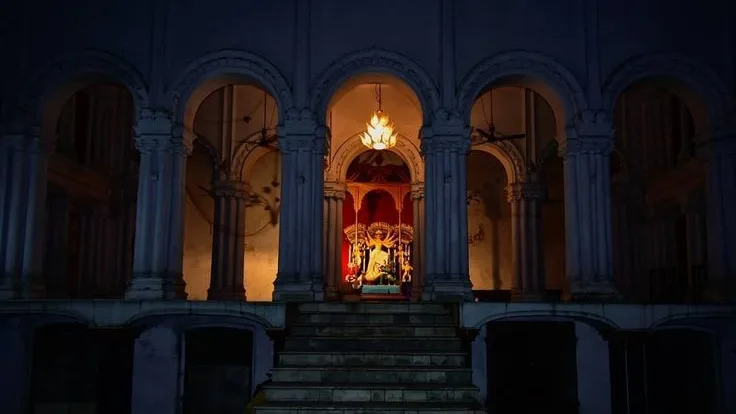
    Durga idol | IG

    Those planning to visit popular Puja destinations in south Kolkata will need to be particularly careful about route changes. Park Street and Shakespeare Sarani will have one-way arrangements during specified hours, while restrictions will also affect areas around Gariahat, Rashbehari and Kalighat.

    Traffic approaching Gariahat from Rashbehari Avenue will face restrictions, with vehicles directed towards the Gariahat flyover instead. Auto-rickshaw movement will also be restricted on parts of Rashbehari Avenue and connecting roads.

    The police have additionally planned diversions for several bus routes to keep vehicles away from the busiest pandal zones. Routes including 37, 47, 47A, 240, 13C, 234, 33 and 204/1 will be affected by changes.

    For those planning to spend the night pandal hopping, the safest option will be to check the route restrictions before leaving home and avoid taking a car into the busiest Puja neighbourhoods.
  • Durga Puja 2026: From Tant to Baluchari, 7 Bengali sarees to flaunt this puja

    Durga Puja 2026: From Tant to Baluchari, 7 Bengali sarees to flaunt this puja

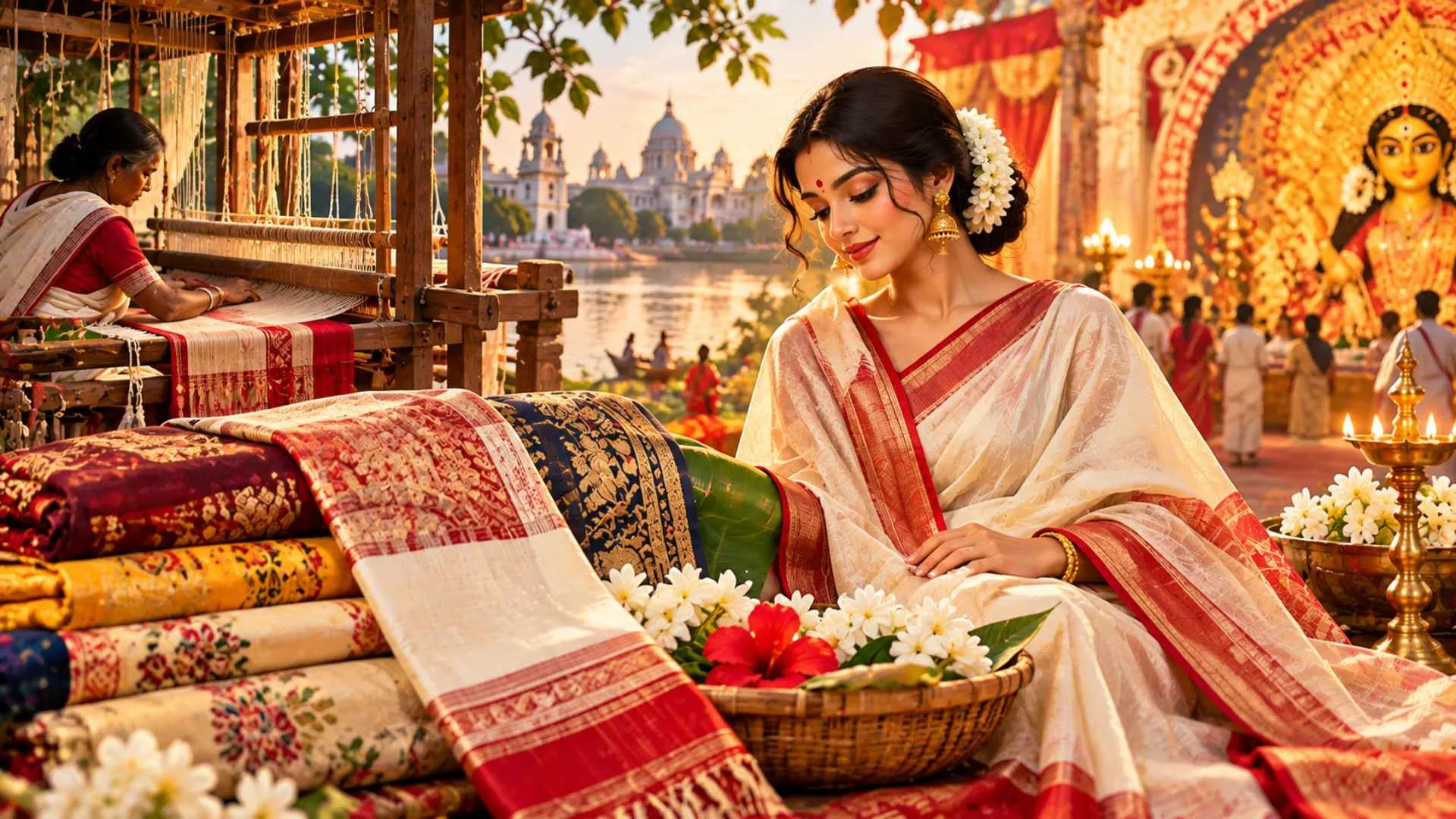
    Durga Puja and sarees are almost inseparable in Bengal. But if your festive wardrobe begins and ends with a white-and-red saree, there is a whole world of Bengali handloom waiting to be explored. From the easy elegance of Tant to the intricate storytelling of Baluchari, Bengal has a rich variety of sarees that can bring a traditional touch to your Puja look.

    Whether you are dressing up for Anjali, getting ready for a festive evening or heading out for pandal-hopping, these seven Bengal saree varieties are worth knowing.

    Tant Saree

    Durga Puja 2026: 7 Bengali sarees to flaunt this season
    Tant Saree | Wikipedia

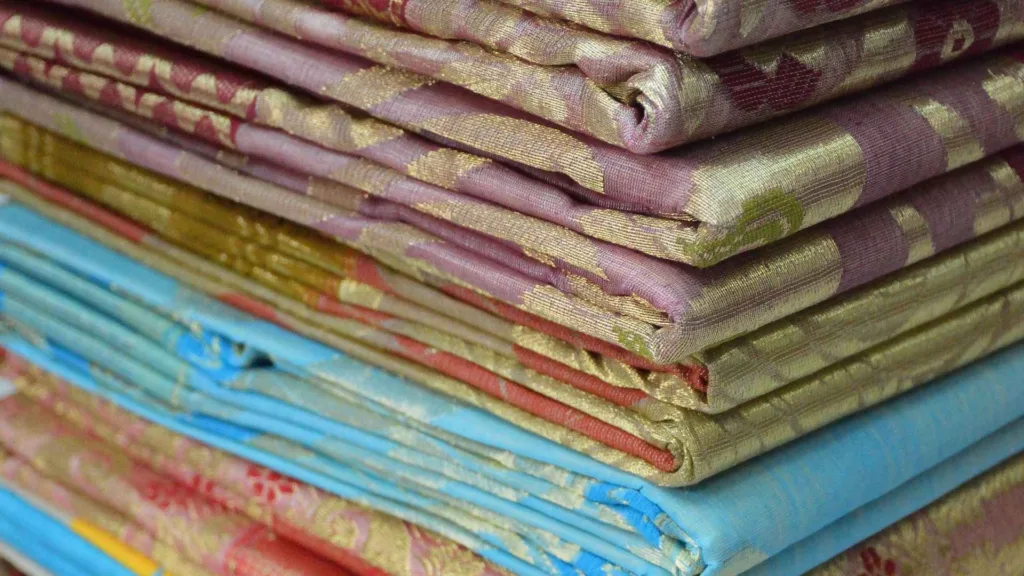
    Tant is among the most recognisable Bengali handloom sarees. Traditionally made with cotton, it is lightweight and breathable, making it comfortable for long festive days. The white Tant with a red border remains closely associated with Bengali festive dressing, while modern versions come in different colours and patterns.

    Also Read | West Bengal Durga puja 2026: What is changing this year with Bengal’s regime change?

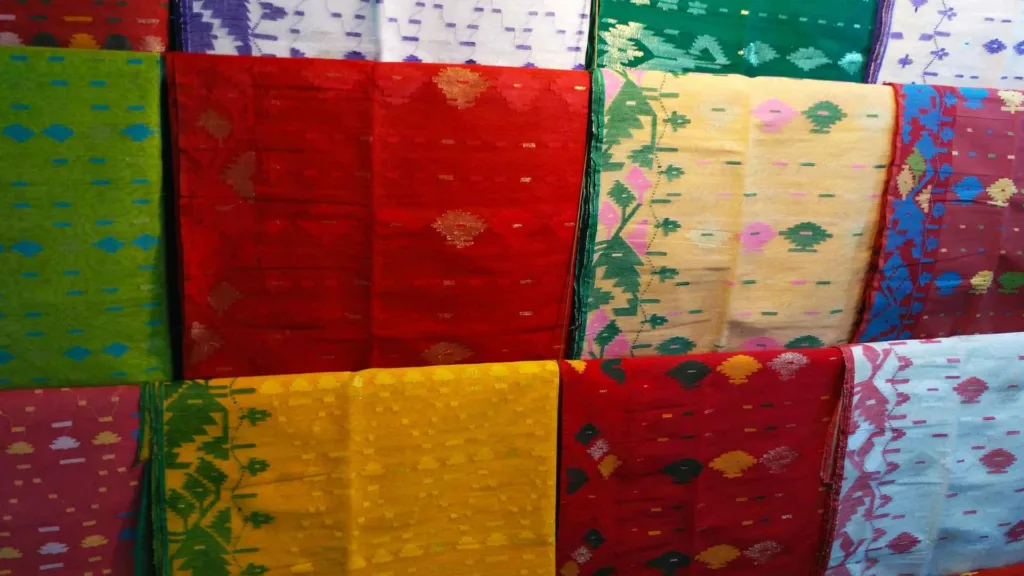
    Jamdani Saree

    Durga Puja 2026: 7 Bengali sarees to flaunt this season
    Jamdani Saree | Wikipedia

    Jamdani is known for its intricate motifs, which are woven into the fabric rather than simply printed onto it. Floral designs, geometric patterns and butis are commonly seen. The detailed weaving process can be slow and intricate, making finely crafted Jamdani sarees particularly prized.

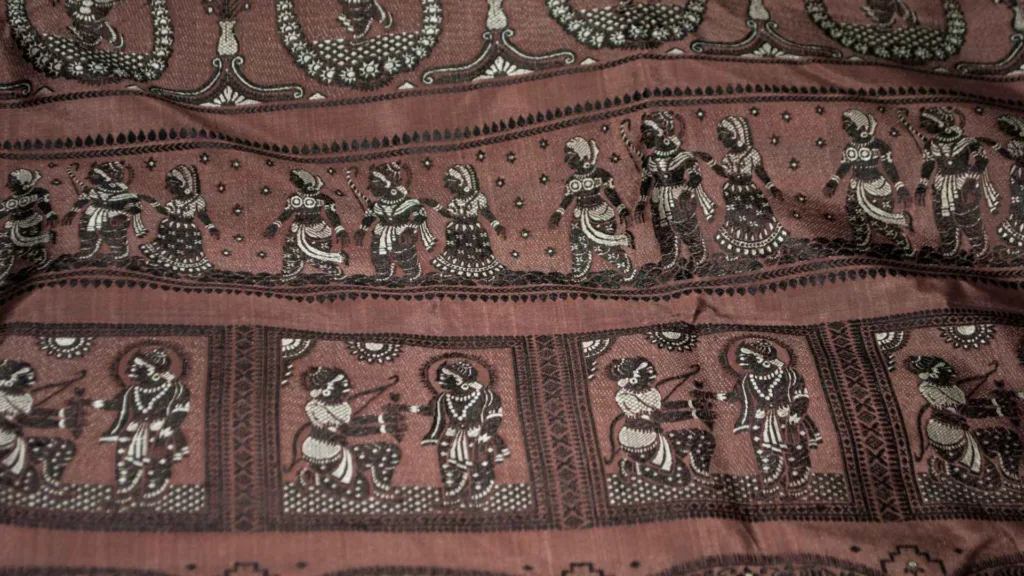
    Baluchari Saree

    Baluchari Saree
    Baluchari Saree | Wikipedia

    Want your saree to carry a story? Baluchari is one to look out for. Traditionally associated with Bishnupur in West Bengal, these sarees feature elaborate pallu and border designs inspired by mythology, epics and scenes from everyday life. The detailed motifs give Baluchari a distinctive festive appeal.

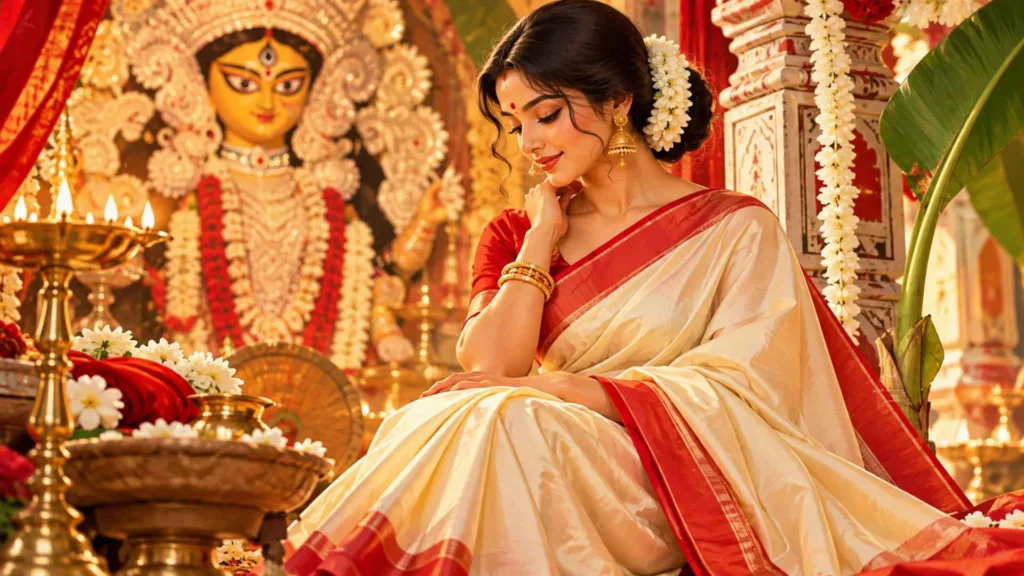
    Garad and Korial Sarees

    bengali saree (1)
    Garad and Korial Sarees | AI Generated

    Garad and Korial sarees are traditionally associated with Bengali religious and festive occasions. They generally feature a light-coloured, often off-white or cream body with a red border. Their understated appearance makes them a familiar choice for Puja rituals and traditional celebrations.

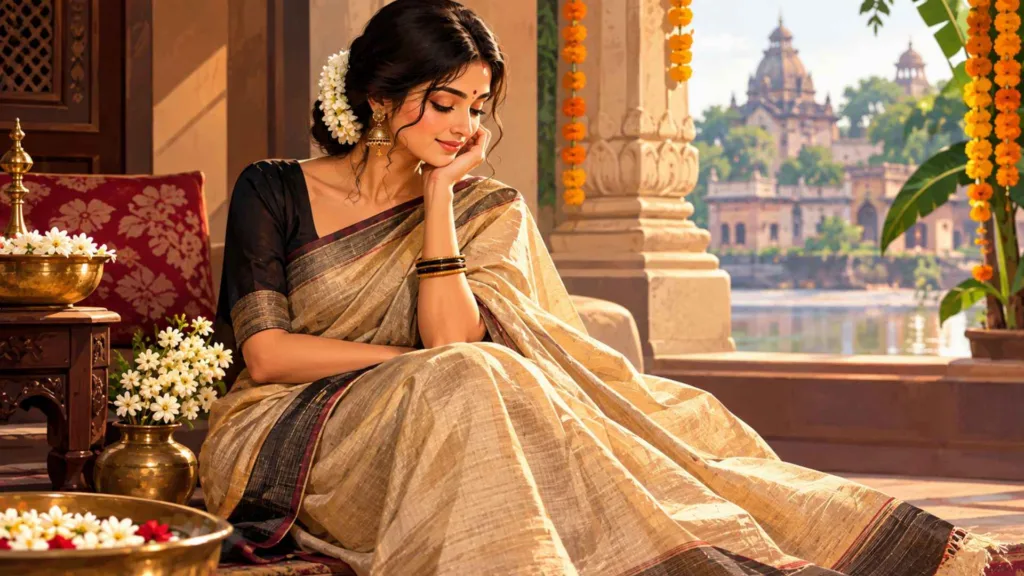
    Matka Silk Saree

    bengali saree (2)
    Matka Silk Saree | AI Generated

    Matka silk has a distinct textured appearance and is made using yarn produced from silk waste. Its slightly irregular texture gives the fabric a characteristic handcrafted look, making it an option for those seeking a festive saree with a handloom feel.

    Also Read | Kumartuli: The 300-year-old Kolkata neighbourhood where Maa Durga comes to life before Puja

    Tussar Silk Saree

    bengali saree (4)
    Tussar Silk Saree | Wikipedia

    Tussar silk is valued for its natural texture, earthy sheen and rich appearance. West Bengal has a strong tradition of silk weaving, and Tussar sarees are available in various regional designs and motifs. For Durga Puja, they can be suited to evening celebrations when a more substantial fabric is preferred.

    Bengal’s handloom heritage

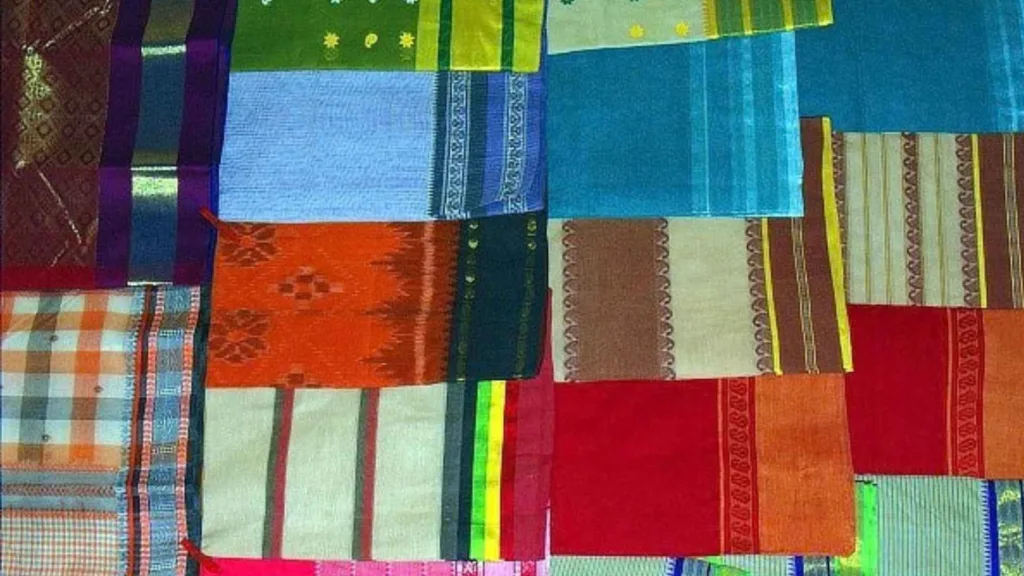
    These sarees showcase the range of Bengal’s textile traditions. From the lightweight Tant and detailed Jamdani to the storytelling motifs of Baluchari and the textured appeal of Matka and Tussar silk, there is much more to Bengali festive dressing than the classic white-and-red combination.

  • Kumartuli: The 300-year-old Kolkata neighbourhood where Maa Durga comes to life before Puja

    Kumartuli: The 300-year-old Kolkata neighbourhood where Maa Durga comes to life before Puja

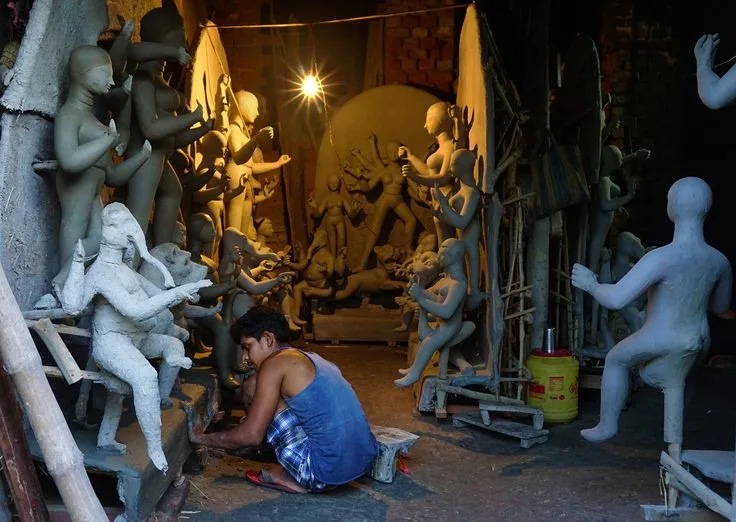
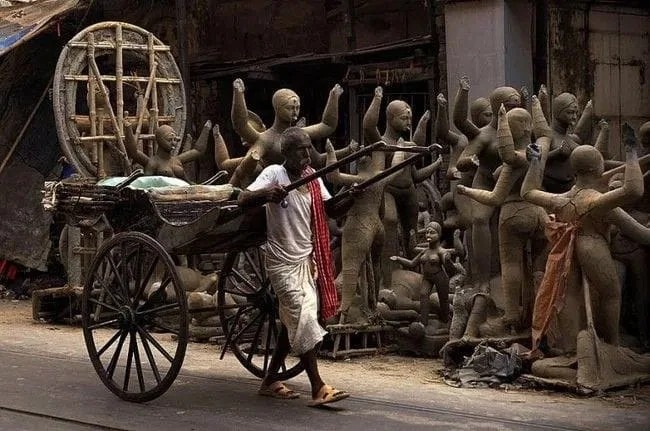
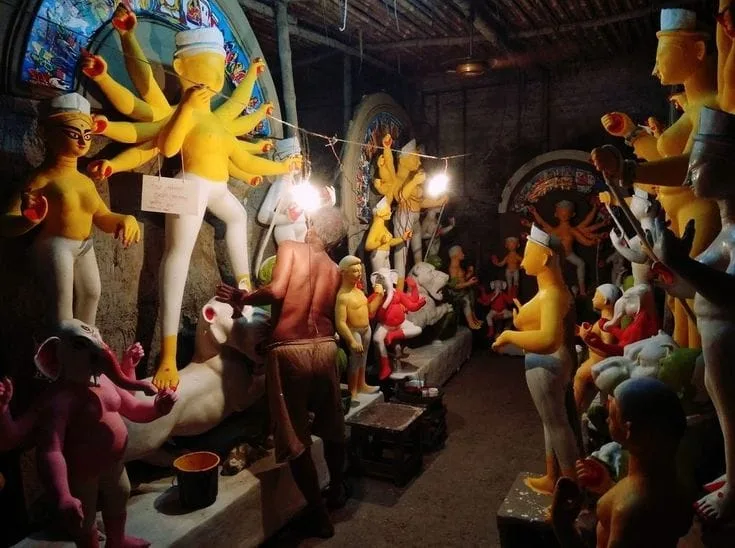
    For most Bengalis, Durga Puja begins with Mahalaya, the sound of Mahishasuramardini on the radio. But in Kolkata, the festival starts much earlier in the winding lanes of Kumartuli, where artisans spend months giving shape to Maa Durga. Long before the goddess reaches pandals across the city, she is born here through clay, straw, bamboo and generations of craftsmanship.

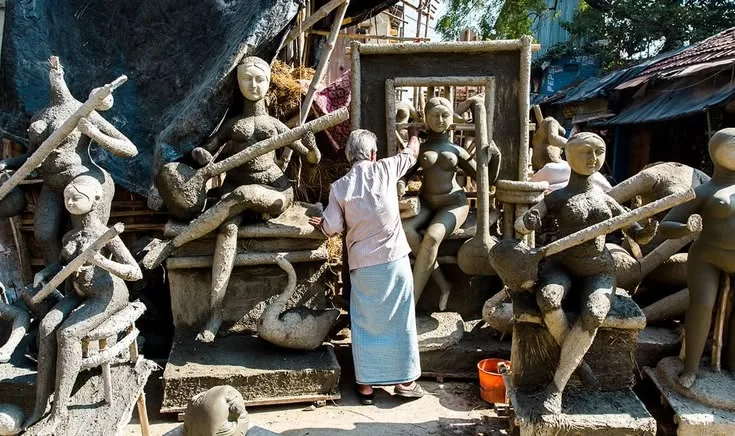
    Located in North Kolkata, Kumartuli is nearly 300 years old and is considered the heart of Bengal’s idol-making tradition. Every year, hundreds of sculptors work in small workshops to create thousands of idols of Maa Durga, Lakshmi, Saraswati, Kartik and Ganesha for Pujas across India and in many countries abroad.

    A tradition that has survived for centuries

    The name Kumartuli comes from the Bengali words Kumar (potter) and Tuli (locality). The neighbourhood was established in the early 18th century when potter families settled in the area and began making clay idols. Over time, the place grew into Kolkata’s most famous artisan hub, with skills passed down from one generation to other generations.

    Also Read | Is Arsalan’s food safe to eat? Restaurant clarifies Achari Kebab aroma after West Bengal food safety inspection

    Today, idols of Devi Durga made in Kumartuli are transported not only across West Bengal but also to cities like Delhi, Mumbai and Bengaluru, as well as countries including the US, UK, Canada and Australia, wherever Bengali communities celebrate Durga Puja.

    How Maa Durga takes shape

    The making of a Durga idol still follows a traditional gateway that has been followed over the decades. It begins with a bamboo framework that forms the structure of the idol. Straw is tied around it to create the body, followed by layers of clay collected from riverbanks. Once the clay dries, artisans sculpt the face, hands and finer details with remarkable precision.

    Also Read | Who is Sumit Roy? Abhishek Banerjee’s PA arrested in Shalbani land scam case

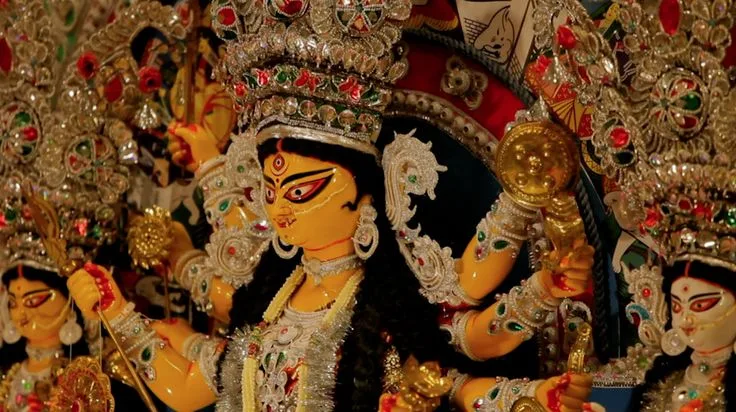
    After the sculpture is complete, the idol is painted and decorated with clothes, ornaments and weapons. One of the most significant tradition of all is Chokkhu Daan, the ritual of painting Maa Durga’s eyes, which traditionally takes place around Mahalaya and is seen as giving life to the idol.

    The busiest weeks before Durga Puja

    The weeks before Durga Puja are the busiest time in Kumartuli. Workshops remain open from early morning until late at night as artisans rush to complete orders before the festival begins. Despite challenges such as heavy rainfall, rising raw material costs and labour shortages this year, work continues at full pace to ensure idols reach pandals on time.

    Kumartuli is more than a place where idols are made. It is a living reminder of Kolkata’s artistic heritage and one of the first places where the spirit of Durga Puja comes alive each year.

    This is the place where Ma Durga comes alive first and later into tha pandals.