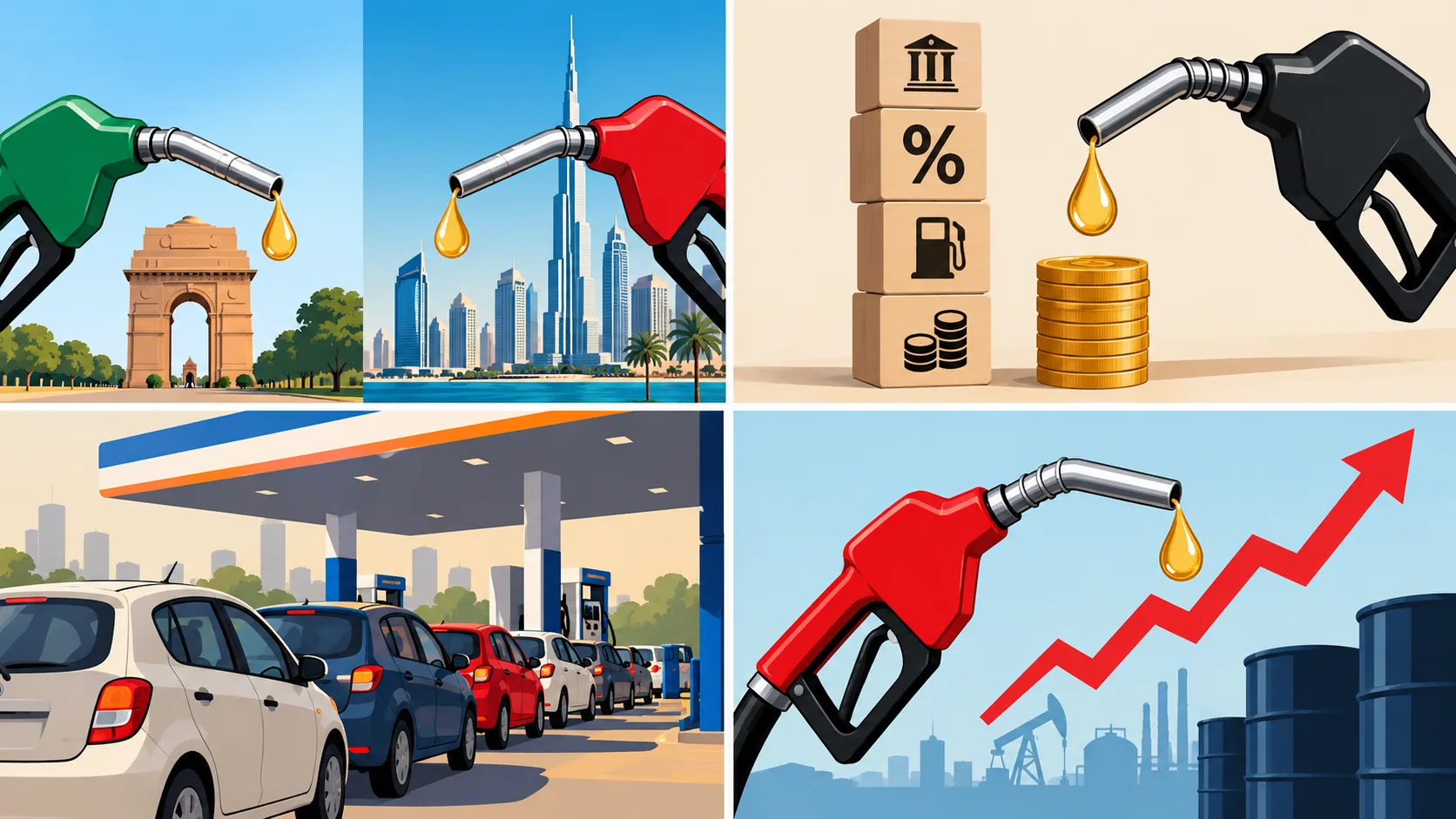
Petrol and diesel are now cheaper in several Indian cities than in Dubai, following a sharp increase in fuel prices across the United Arab Emirates (UAE) in October.
The difference is particularly clear for diesel. On October 22, diesel cost around Rs 123.31 per litre in the UAE, compared with Rs 95.20 in Delhi. That is a gap of more than Rs 28 per litre.
Petrol, however, tells a different story. It is cheaper in cities such as Delhi, Noida, Lucknow and Chandigarh than the UAE’s Special 95 grade. In Mumbai, Kolkata and Hyderabad, motorists pay more.
There is no single answer to whether fuel is more expensive in India or the UAE. The supplied October 2026 prices show that petrol costs vary by Indian city and UAE grade. UAE petrol is cheaper than rates in some Indian cities but more expensive than rates in others. Diesel is different: at ₹123.31 per litre after conversion, the UAE price is higher than all seven Indian city rates listed. [India fuel prices, UAE fuel prices, petrol prices, diesel prices, fuel comparison] #FuelPrices #India #UAE #Petrol #Diesel #OutlookBusiness
— @Sanatana Dharma 🙏🙏 (@dhananjaykaturi) October 23, 2026
Also Read | Undersea cable threats rise: Here’s why India needs a stronger repair network
A monthly adjustment with a hefty sting
The UAE’s latest price increase came into effect on October 1. The country’s fuel price committee raised petrol and diesel rates for the month.
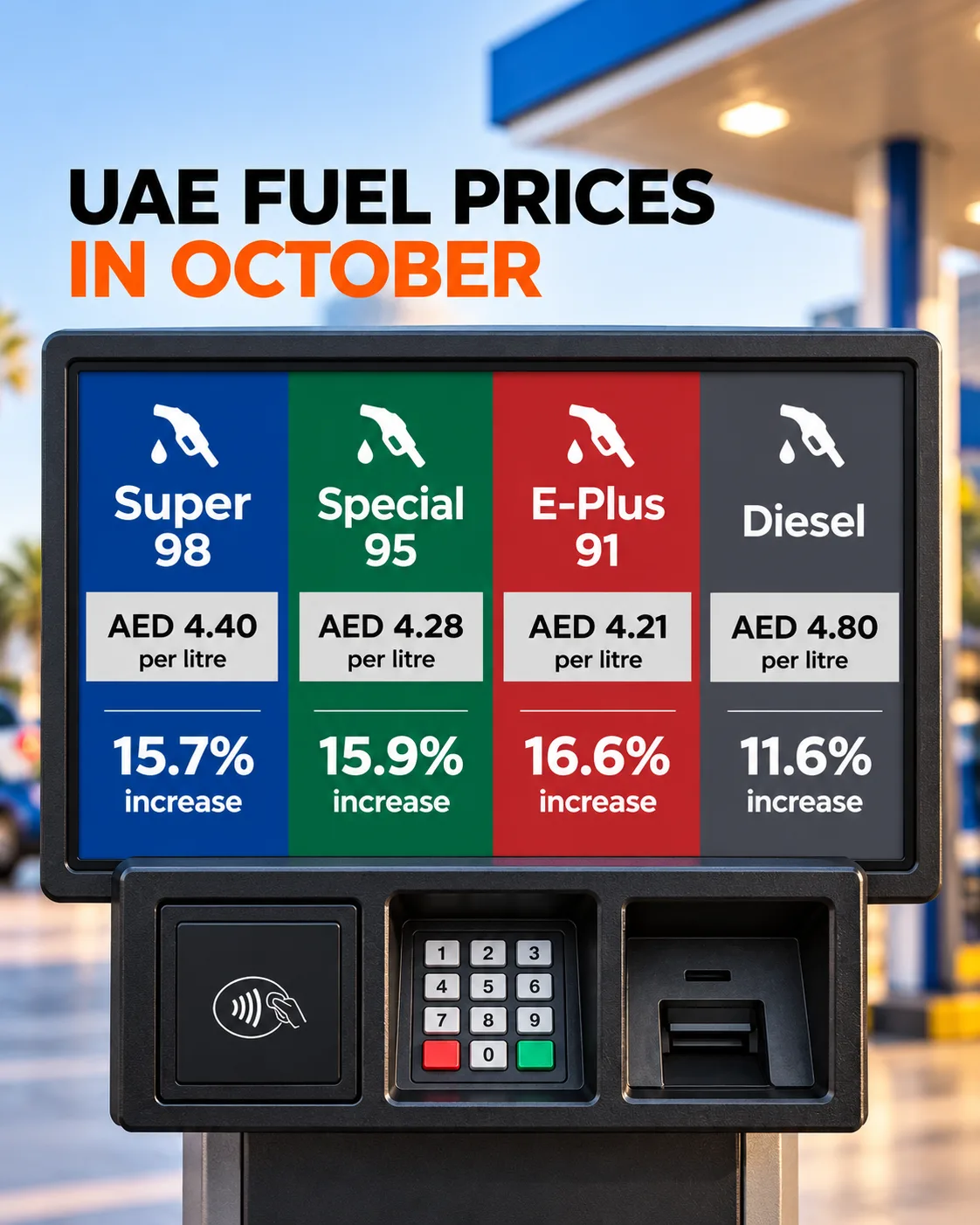
E-Plus 91 petrol rose to 4.21 dirhams per litre, while Special 95 reached 4.28 dirhams. Super 98 was priced at 4.40 dirhams per litre.
Diesel climbed to 4.80 dirhams. At an exchange rate of around Rs 25.69 to the dirham on October 22, these prices worked out to approximately Rs 108.17, Rs 109.95, Rs 113.03 and Rs 123.31 per litre, respectively.
The increase ranged from around 11.6% for diesel to 16.6% for E-Plus 91 petrol.
The UAE follows a monthly pricing mechanism that takes international energy market movements into account. The country’s official news agency, WAM, confirmed the revised October rates.
Due to sharp fuel price hikes in the UAE and varying state taxes in India, petrol and diesel in Dubai are now more expensive than in several major Indian cities. Petrol prices in Dubai range from 4.21 AED to 4.40 AED per litre (approx Rs 108.17 to Rs 113.03 pl in India).
— Anjani Putra (@bystanderever) October 23, 2026
City-wise fuel prices in India and Dubai
In India, the price at the pump varies considerably from one city to another. On October 22, petrol cost Rs 101.54 per litre in Chandigarh, Rs 102.12 in Delhi and Rs 101.96 in Noida.
In comparison, the UAE’s Special 95 petrol worked out to around Rs 109.95 per litre.
Delhi motorists therefore paid nearly Rs 8 less per litre than the equivalent UAE grade. But the situation changes further south and west.
Petrol cost Rs 111.21 per litre in Mumbai, Rs 113.51 in Kolkata and Rs 116.15 in Hyderabad. These prices were higher than the UAE’s Special 95 rate.
Diesel showed a more consistent pattern. It cost Rs 95.20 per litre in Delhi, Rs 97.83 in Mumbai and Rs 104.23 in Hyderabad, all below the UAE rate of approximately Rs 123.31.
Still, this is an indicative comparison. Petrol grades differ in octane rating, so the products are not perfectly equivalent.
The state’s cut changes the calculation
The main reason for India’s city-wise price differences is taxation. The final retail price includes central excise duty, state-level value-added tax (VAT), dealer commissions and other costs.
State taxes vary, which means motorists can pay different prices for the same fuel even within the same country.
The Petroleum Planning and Analysis Cell (PPAC), under the Union Petroleum Ministry, publishes state-wise tax rates. Its data shows that the tax structure in West Bengal differs from those in Delhi, Chandigarh and other states and Union territories.
India also uses a market-linked fuel pricing framework under which oil marketing companies determine retail prices.
The UAE, meanwhile, reviews fuel prices every month against international market conditions and domestic requirements. The two systems therefore respond to the same global energy environment through different pricing structures.
Also Read | From anti-Hindi protests to CJP: 9 Indian protest movements that reshaped India’s political landscape
An October snapshot, not a settled score

The latest comparison does not mean petrol is universally cheaper in India than in the UAE. It shows that the relationship has changed after the UAE’s October price hike.
International oil prices, supply concerns and geopolitical tensions have added pressure to fuel markets, while local taxes continue to shape what consumers pay in India.
The next UAE price revision was expected towards the end of October, with revised rates due to take effect in November.
Until those prices are announced, the October figures provide a snapshot of the gap, rather than a permanent ranking of which country offers cheaper fuel.