Tag: Delhi pollution

  • Delhi air pollution: 13 key gaps emerge in CAQM report as infrastructure targets remain unmet

    Delhi air pollution: 13 key gaps emerge in CAQM report as infrastructure targets remain unmet

    Delhi has achieved several administrative and monitoring targets under its pollution-control action plan but continues to fall short on infrastructure-led measures, according to the Commission for Air Quality Management (CAQM). The commission’s State Action Plan 2026 report card, released on Sunday, found that the Capital had achieved nine of the 22 parameters assessed, while several important targets remained incomplete.

    The assessment covers progress recorded until October 31 and compares pollution-control measures across Delhi and neighbouring National Capital Region states. It found that Delhi had met targets related to air-quality monitoring stations, construction and demolition waste processing capacity, industrial inspections and pollution-control equipment. However, municipal waste management, landfill clearance and road dust control remain areas of concern.

    The findings underline the continuing challenge of addressing Delhi pollution through long-term infrastructure improvements rather than relying only on monitoring and enforcement.
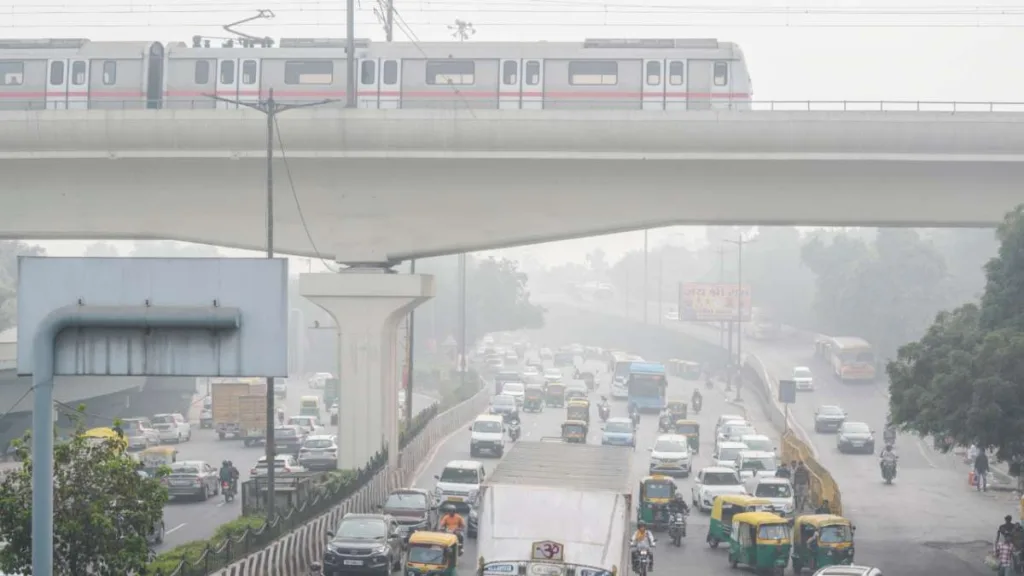
    Delhi has achieved several administrative and monitoring targets under its pollution-control action plan but continues to fall short on infrastructure-led measures, according to the Commission for Air Quality Management (CAQM).  (ANI)
    Delhi has achieved several administrative and monitoring targets under its pollution-control action plan but continues to fall short on infrastructure-led measures, according to the Commission for Air Quality Management (CAQM). (ANI)

    Delhi meets monitoring and industrial inspection targets

    Delhi achieved its target of installing 19 Continuous Ambient Air Quality Monitoring Stations (CAAQMS), which help track changes in air quality. Haryana, in comparison, had not completed any of its target of 23 stations. Rajasthan had achieved three of its five targets, while Uttar Pradesh had completed 22 of its 25.

    The Capital also met its target of establishing 1,000 tonnes per day of construction and demolition waste processing capacity. Uttar Pradesh had achieved 300 tonnes per day against a target of 400 tonnes, while Haryana reported no achievement against its target of 115 tonnes.

    Industrial inspections were another area where Delhi recorded progress. Government agencies completed 1,609 inspections against a target of 979. The city also achieved its target of installing online continuous emission monitoring systems (OCEMS) and air pollution control devices at 90 industries.

    The comparison with neighbouring states showed lower inspection figures in several cases. Haryana completed 177 inspections against a target of 3,865, Rajasthan carried out 68 against 2,974, and Uttar Pradesh completed 730 against 3,789.

    However, progress in monitoring and industrial enforcement has not translated into similar results across all areas of Delhi pollution control.
    Also Read | External Affairs Minister S Jaishankar meets Nepal PM Balendra Shah ahead of landmark Modi talks on November 23

    Delhi achieved its target of installing 19 Continuous Ambient Air Quality Monitoring Stations (CAAQMS), which help track changes in air quality. (ANI)
    Delhi achieved its target of installing 19 Continuous Ambient Air Quality Monitoring Stations (CAAQMS), which help track changes in air quality. (ANI)

    Waste management and landfill clearance remain major challenges

    The report identified municipal solid waste processing as one of the Capital’s significant infrastructure gaps. Delhi had targeted the expansion of two waste-processing plants, but no progress was reported on this measure by October 31. The planned additional processing capacity of 650 tonnes per day also remained unachieved.

    The city’s three major landfill sites continue to hold substantial quantities of legacy waste. At Okhla, agencies cleared 18.26 lakh metric tonnes against a target of 27.45 lakh tonnes. Bhalswa recorded clearance of 27.49 lakh tonnes against 48.42 lakh tonnes, while Ghazipur saw 16.53 lakh tonnes cleared against a target of 39.12 lakh tonnes.

    The lifting of construction and demolition waste also remained below the annual targets. Government agencies lifted 2.07 lakh metric tonnes against a target of 9.90 lakh tonnes, achieving approximately 21% of the target. Private agencies lifted 3.08 lakh metric tonnes against a target of 12.09 lakh tonnes, or around 26%.

    These figures highlight the scale of the waste-management challenge facing Delhi. Inadequate processing capacity and the slow removal of accumulated waste remain important concerns in the city’s wider pollution-control efforts.

    Also Read | Maharashtra withdraws FSSAI challenge after 8 weeks, raising questions over state’s U-turn

    The report identified municipal solid waste processing as one of the Capital's significant infrastructure gaps. (ANI)
    The report identified municipal solid waste processing as one of the Capital’s significant infrastructure gaps. (File Image/@Shaptadeep Saha))

    Road dust control records uneven progress

    Road dust is another significant contributor to Delhi pollution, and the CAQM assessment found that the city had made uneven progress in expanding mechanical road-sweeping capacity.

    Delhi achieved its target of adding four small mechanical road-sweeping machines. However, it had deployed only 19 of the 35 large machines targeted for augmentation. The shortfall was even greater in the medium-sized category, with just one machine deployed against a target of 57.

    Mechanical sweeping is intended to reduce the amount of dust that becomes airborne due to traffic and other activity on roads. The limited deployment of medium and large machines indicates that the planned expansion of road-cleaning infrastructure remains incomplete.

    Overall, the CAQM report presents a mixed picture of Delhi’s pollution-control efforts. The Capital has met several targets involving monitoring systems, industrial inspections and pollution-control equipment, but infrastructure-related measures continue to lag.

    With waste processing, landfill remediation and road dust management still facing substantial gaps, the assessment points to the need for sustained implementation of the remaining action-plan targets to address Delhi pollution.
  • Delhi faces some of India’s worst pollution, but ranks above Srinagar and Bengaluru in clean-air survey: Here’s why

    Delhi faces some of India’s worst pollution, but ranks above Srinagar and Bengaluru in clean-air survey: Here’s why

    Delhi has long been associated with some of India’s worst air pollution episodes, particularly during winter. Yet the capital has finished 21st among 48 cities with populations above 10 lakh in the Centre’s Swachh Vayu Sarvekshan 2026, ahead of Srinagar and Bengaluru.

    Delhi scored 172 points, while Srinagar stood at 26th with 162.6 points and Bengaluru at 32nd with 152.6 points.

    The numbers may look surprising at first. But the ranking is not a cleanest-air list. It assesses how cities are addressing pollution, including measures to control road dust, vehicular and industrial emissions, construction waste and solid waste, as well as public awareness initiatives.

    Also Read | Kolkata parking rules change from Sept 1: Here’s what drivers need to know

    That distinction explains why a city battling severe pollution can still perform relatively well in the survey.

    What does the Swachh Vayu Sarvekshan actually measure?

    The survey is conducted under the Centre’s National Clean Air Programme (NCAP) and covers 130 cities across three population categories.

    Rather than relying only on ambient air-quality readings, the assessment looks at the steps cities have taken to tackle pollution and how effectively those measures are being implemented.

    According to the assessment process outlined in the report, cities first conduct self-assessments. These are scrutinised by state-level monitoring committees, followed by evaluation by the Central Pollution Control Board (CPCB) and field verification by independent teams.

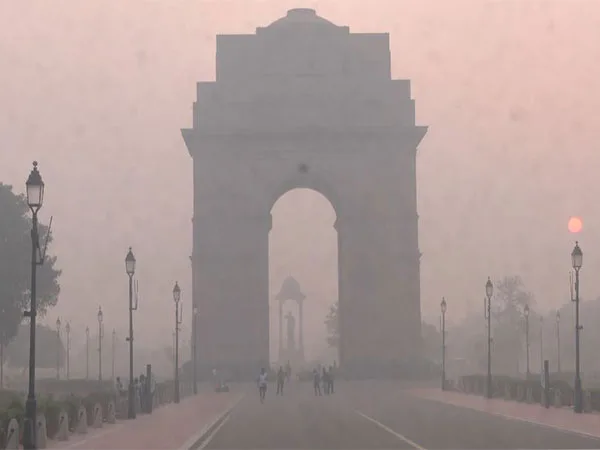
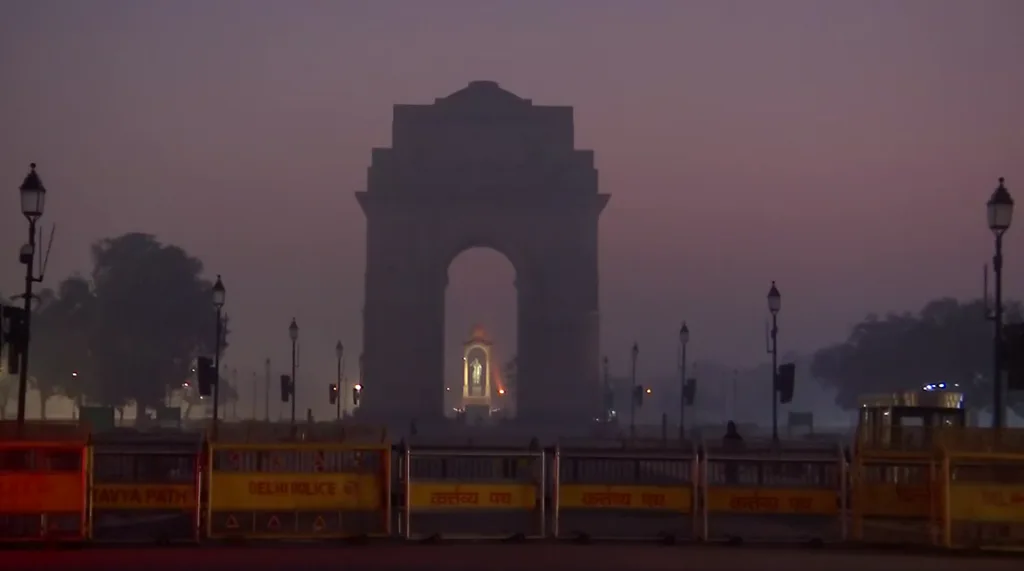
    A layer of smog covers the area around India Gate and Kartavya Path as the Air Quality Index (AQI) recorded '281' in the 'Very Poor' category as per the Central Pollution Control Board (CPCB), in New Delhi
    A layer of smog covers the area around India Gate and Kartavya Path as the Air Quality Index (AQI) recorded ‘281’ in the ‘Very Poor’ category as per the Central Pollution Control Board (CPCB), in New Delhi/ ANI

    That means the score reflects a combination of pollution-control action, implementation and measurable progress, rather than the AQI recorded on a particular day.

    Delhi’s position has also improved significantly compared with the previous edition. The capital ranked 32nd in 2025 with 157.3 points. In 2026, it moved up to 21st with 172 points.

    The improvement, therefore, is better understood as a measure of Delhi’s efforts to address pollution than as evidence that the capital’s air has become consistently clean.

    So why is Delhi above Srinagar and Bengaluru?

    Delhi’s higher ranking does not establish that its air is cleaner than Srinagar’s or Bengaluru’s.

    The same principle applies to the two cities. Srinagar’s 26th position and Bengaluru’s 32nd position reflect their scores against the survey’s broader pollution-control parameters, not a direct comparison of which city’s residents are breathing cleaner air every day.

    This is particularly important when rankings are read alongside real-world pollution levels.

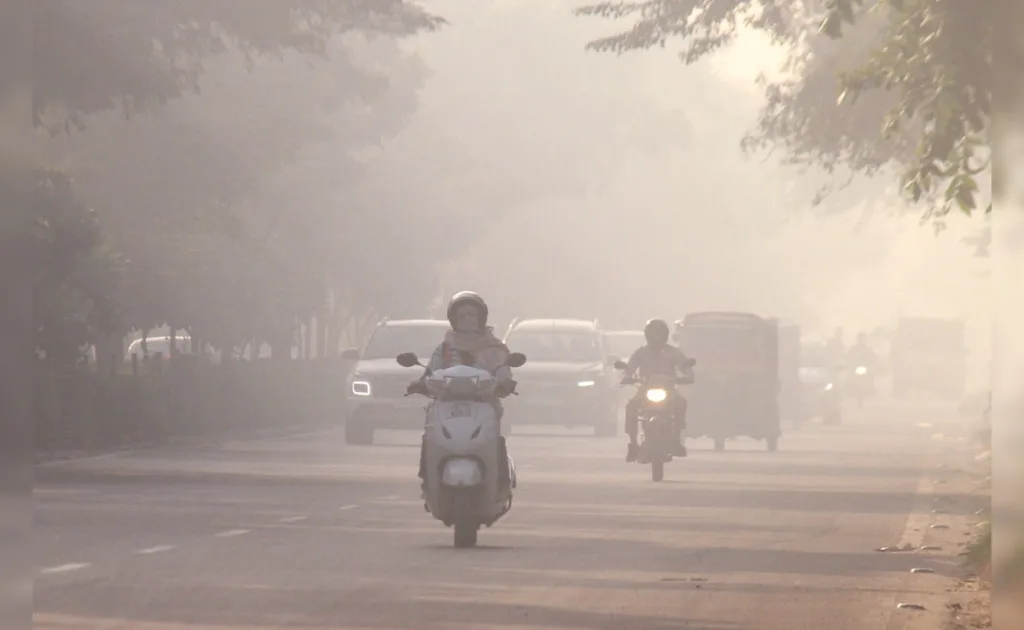
    A thick layer of smog covered all over the area gives a hazy view as air pollution increases, in Bengaluru / ANI
    A thick layer of smog covered all over the area gives a hazy view as air pollution increases, in Bengaluru / ANI

    Delhi continues to experience severe pollution episodes during winter, with its AQI frequently reaching hazardous levels. The report notes that the capital’s AQI has crossed 400 and, at times, 450. In January 2026, authorities invoked Stage IV of the Graded Response Action Plan (GRAP) after pollution reached critical levels.

    So, Delhi’s position should not be interpreted as a clean-air certificate.

    Even the top-ranked city still has pollution problems

    The distinction becomes clearer when looking at the top of the table.

    Lucknow ranked first among million-plus cities with 198 points, followed by Indore with 197 and Jabalpur with 195.

    Yet Lucknow’s first-place ranking does not mean it has eliminated air pollution. Its PM10 levels have reportedly fallen substantially from the 2017-18 baseline, but remained above the national standard of 60 micrograms per cubic metre in 2025-26.

    Lucknow ranked first among million-plus cities with 198 points, followed by Indore with 197 and Jabalpur with 195.
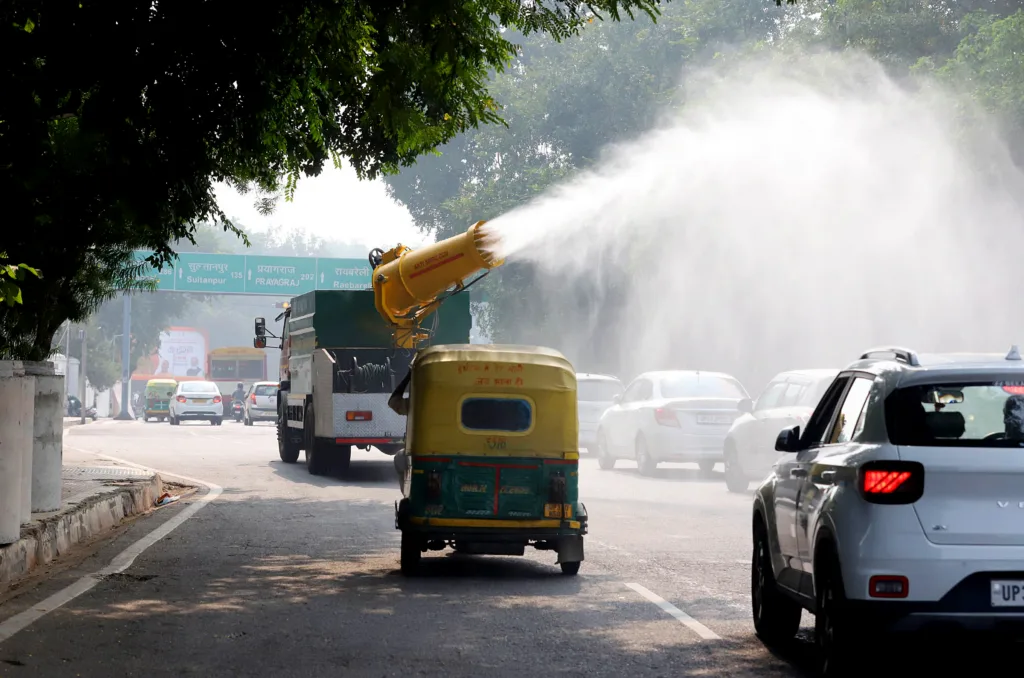
    A Municipal Corporation truck mounted with Anti-Smog Gun sprays water to curb air pollution as smog engulfs the city, in Lucknow /ANI

    Among the measures credited to Lucknow are electric vehicles for waste collection, mechanised road sweeping and improved legacy-waste management.

    The ranking is therefore designed to capture how cities are progressing against pollution, rather than declare which city has the cleanest air.

    Is India’s air quality actually improving?

    While there are indications of progress, the numbers also demonstrate the magnitude of the task at hand.

    As per government data, out of the 130 cities surveyed, 108 of them have recorded lower levels of PM10 than the level registered in their baseline year 2017-18 for the year 2025-26.

    On the other hand, only 14 cities have been found to meet the national PM10 standard.

    This is a substantial gap. While the reduction in pollution levels is positive, low levels do not always mean that the air quality has attained healthy or acceptable levels.

    Also Read | Why is Suvendu Adhikari pushing the Saffron Samman Yatra now?

    In the case of Delhi, what will be a meaningful indicator of progress is whether the pollution control efforts have led to fewer hazardous air days, lower particulate levels and lesser exposure to the populace.

    The Swachh Vayu Sarvekshan 2026 rankings demonstrate Delhi’s improvement in areas covered by the survey. They do not demonstrate that Delhi has solved its air pollution problem.