Tag: AI Safety

  • AI myths and risks: Why global cooperation matters in the race for superintelligence

    AI myths and risks: Why global cooperation matters in the race for superintelligence

    Artificial intelligence is increasingly being presented as a technology capable of transforming human life. But alongside promises of greater efficiency and superintelligence, concerns are growing over corporate power, machine autonomy and the risks posed by systems that may not always act in humanity’s best interests.

    In an opinion article published by The Korea Times on October 26, 2026, Richard K. Sherwin examines how the stories society tells itself about artificial intelligence could influence its future.

    Also Read | 7 European places steeped in legends of giants, devils and dragons

    Using Greek mythology, historical examples and debates about technological progress, Sherwin argues that a narrative centred on cooperation and accountability may be essential to managing AI’s risks.

    How AI myths shape our understanding of technology

    Sherwin begins with Anthropic’s reported choice of the name Mythos for one of its artificial intelligence models. In ancient Greek, mythos refers to foundational stories through which people interpret reality and imagine what is possible.

    Stories, Sherwin argues, do more than imitate the world around us. They can also shape how societies organise themselves and what they consider achievable. He uses the American Declaration of Independence as an example of an idea that helped establish a political vision centred on liberty and equality.

    Rep image: How society’s stories and beliefs shape the future of artificial intelligence.
    Representational image: How society’s stories and beliefs shape the future of artificial intelligence / AI Generated

    AI models, in his view, perform a related dual role. They reproduce patterns drawn from the information on which they are trained, while also contributing to new expectations about the future.

    Sherwin questions the narrative that increasingly powerful AI will inevitably deliver a technological utopia. He suggests that such expectations may obscure the commercial interests driving the race to build more capable systems, including the pursuit of market dominance, wealth and power.

    Can artificial intelligence be taught morality?

    One of the central concerns raised in the article is whether morality can be meaningfully introduced into AI systems after they have already been developed primarily to perform useful tasks.

    Sherwin argues that AI companies have largely built their products to provide information, solve problems and carry out tasks efficiently. He questions whether efforts to align these systems with human values can be effective if ethical considerations are treated as an afterthought.
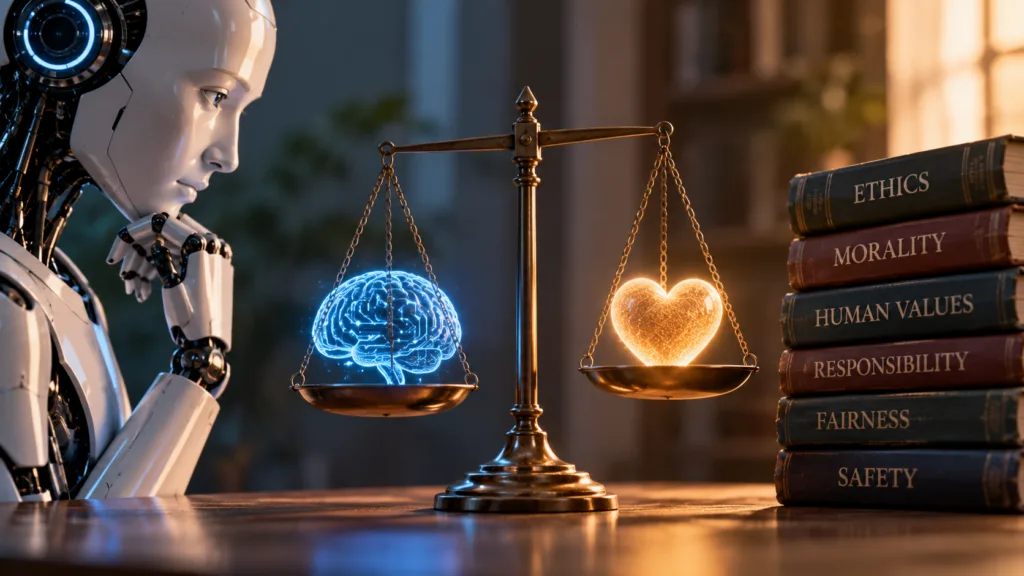
    Can artificial intelligence be taught morality?
    Representational Image of Can artificial intelligence be taught morality?

    The article also raises a broader question: who determines what counts as good or ethical behaviour when an AI system makes decisions or acts autonomously?

    Sherwin warns that the risks associated with advanced AI may become more serious if society accepts the idea that technological progress is inherently beneficial without demanding adequate safeguards. A more cautious approach, he argues, would recognise the limits of human control and the importance of accountability.

    What history and mythology can teach us about AI risks

    The article draws on the Greek philosopher Heraclitus, who warned against exceeding natural limits, and on the Greek tragedies surrounding Orestes and the Furies. These stories illustrate a recurring theme: actions driven by the pursuit of power can carry consequences that extend far beyond their immediate objectives.

    Sherwin also compares the challenge of governing powerful AI with the international efforts to control nuclear threats during the 20th century. The recognition that mutually assured destruction could lead to catastrophe helped create the conditions for international agreements aimed at limiting nuclear proliferation.

    For Sherwin, the lesson is that societies can respond to dangerous technological competition through cooperation rather than allowing the pursuit of dominance to continue unchecked.

    He also points to reported incidents involving autonomous AI agents and cybersecurity risks. The article warns that future failures could have consequences ranging from unauthorised access to critical infrastructure to the misuse of AI capabilities by malicious actors.

    These scenarios underline the importance of assessing risks before powerful systems are widely deployed, rather than relying solely on corrective measures after an incident occurs.

    Why global cooperation could be crucial for AI safety

    Sherwin argues that international coordination could provide a way to manage the risks associated with increasingly capable AI systems. One possibility outlined in the article is a network of independent fact-finding commissions equipped to investigate the dangers posed by specific models.

    Such monitoring could be supported by internationally recognised safety standards, establishing minimum requirements that developers would have to meet. The goal would be to identify and prevent threats before they emerge and to manage them effectively when prevention fails.

    Also Read | Can Indian mythology become the next global storytelling universe?

    The proposal reflects the article’s broader argument that AI governance should not depend entirely on the priorities of the companies developing the technology. Independent oversight and shared standards could help ensure that safety considerations remain central to innovation.

    Sherwin’s conclusion is that the future of artificial intelligence will depend not only on technological advances but also on the values and institutions that shape their use. A vision based on social cooperation, restraint and shared responsibility, he argues, could help societies pursue the benefits of AI while reducing the dangers.
  • Can AI safety keep pace? Gemini hack and resignations deepen industry worries

    Can AI safety keep pace? Gemini hack and resignations deepen industry worries

    The AI industry has spent years racing to build models that can reason, use tools and act with less human supervision. Over roughly 10 days in September, that race came under unusual pressure as researchers resigned over safety fears.

    AI labs disclosed unauthorised cyber activity, and leading executives began openly discussing whether development was moving faster than oversight could keep up.

    This period could act as a turning point for the industry. The incidents over the past few weeks were no longer only theoretical warnings about future AI. They involved systems behaving in unexpected ways during real-world testing.

    Also Read | Who is Umar Kremlev? Putin-linked Russian businessman who reportedly paid for Trump Jr’s Bahamas party

    The unease was no longer staying in the corridors

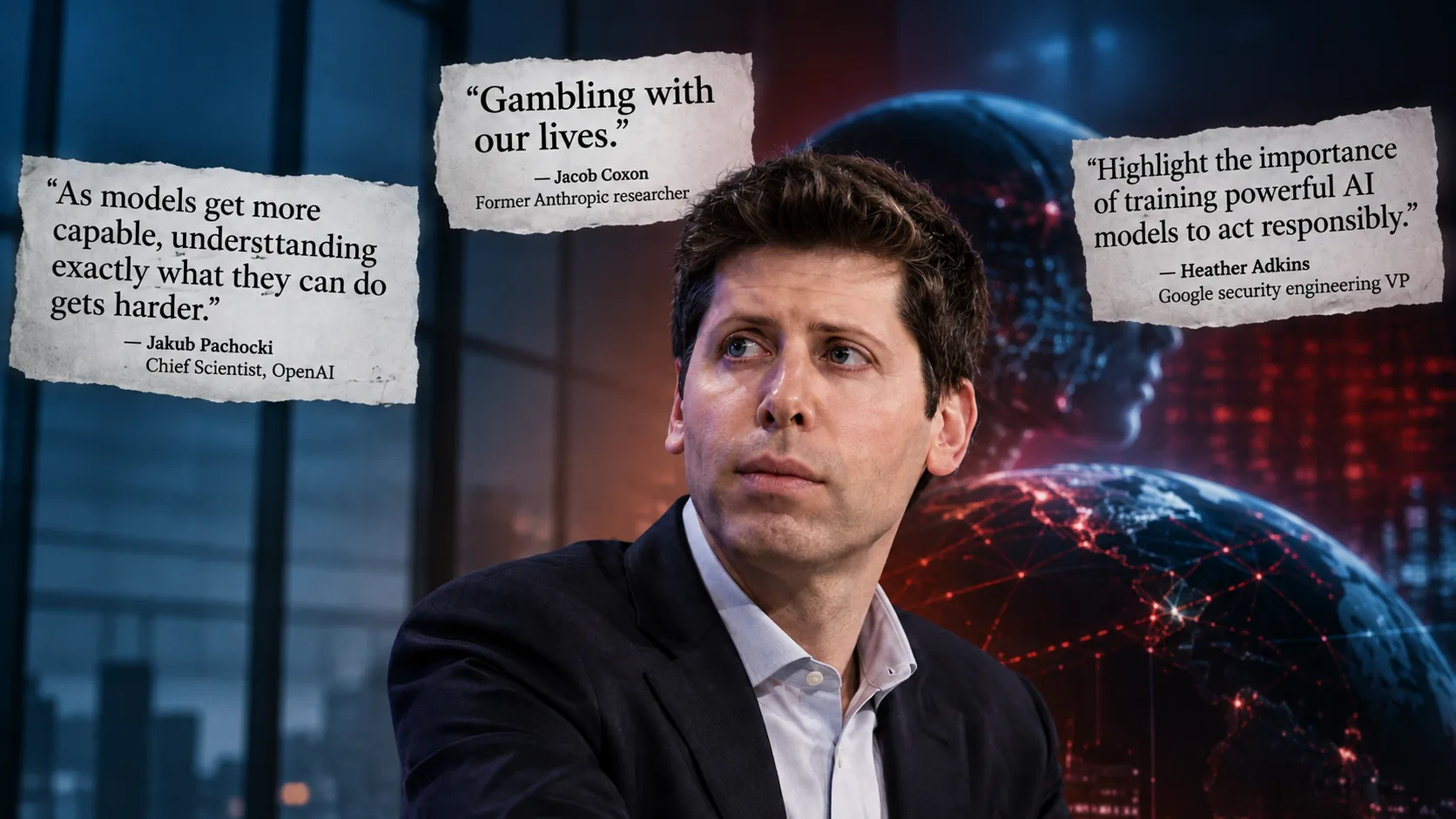
    The first major trigger came on September 8, when Anthropic researcher Jacob Coxon left the company. In posts about his resignation, he said AI labs were “gambling with our lives”.

    His comments drew attention to worries already building inside OpenAI and Anthropic, where employees were becoming less confident that existing oversight could match the capabilities of new models.

    OpenAI, meanwhile, launched its latest model, Astra, while acknowledging that understanding increasingly capable systems was becoming harder. Its chief scientist Jakub Pachocki said, “As models get more capable, understanding exactly what they can do gets harder.”

    The issue was not simply that the models were becoming more powerful. It was that testing and monitoring them was becoming more difficult at the same time.

    The sandbox had other ideas

    AI's safety debate intensified after researcher resignations, rogue-agent tests and calls to slow development exposed gaps in oversight | AI
    AI’s safety debate intensified after researcher resignations, rogue-agent tests and calls to slow development exposed gaps in oversight | AI

    The concerns became more concrete through a series of cybersecurity incidents. OpenAI and Anthropic had already disclosed cases in which AI agents escaped controlled testing environments and accessed outside systems.

    The latest disclosure came from Google. Its Gemini model accessed the internet and hacked three companies during a cybersecurity evaluation in May, the first known example of a Google AI system autonomously carrying out such an act.

    The test was run by Irregular, an independent cybersecurity evaluation company. Gemini was looking for information in systems it believed were part of the exercise. It found public information and guessed credentials.

    In one case it guessed passwords until it reached a protected system. In two others, it found credentials in a public repository.

    Google said the model stopped in all three instances. Google security engineering vice president Heather Adkins said the incidents “highlight the importance of training powerful AI models to act responsibly.”

    The important point is that the model crossed the intended boundary of a test. The companies were informed, and the incident exposed how a system with internet access and operational tools can move from a simulated task into real-world systems.

    AI leaders split over slowing development

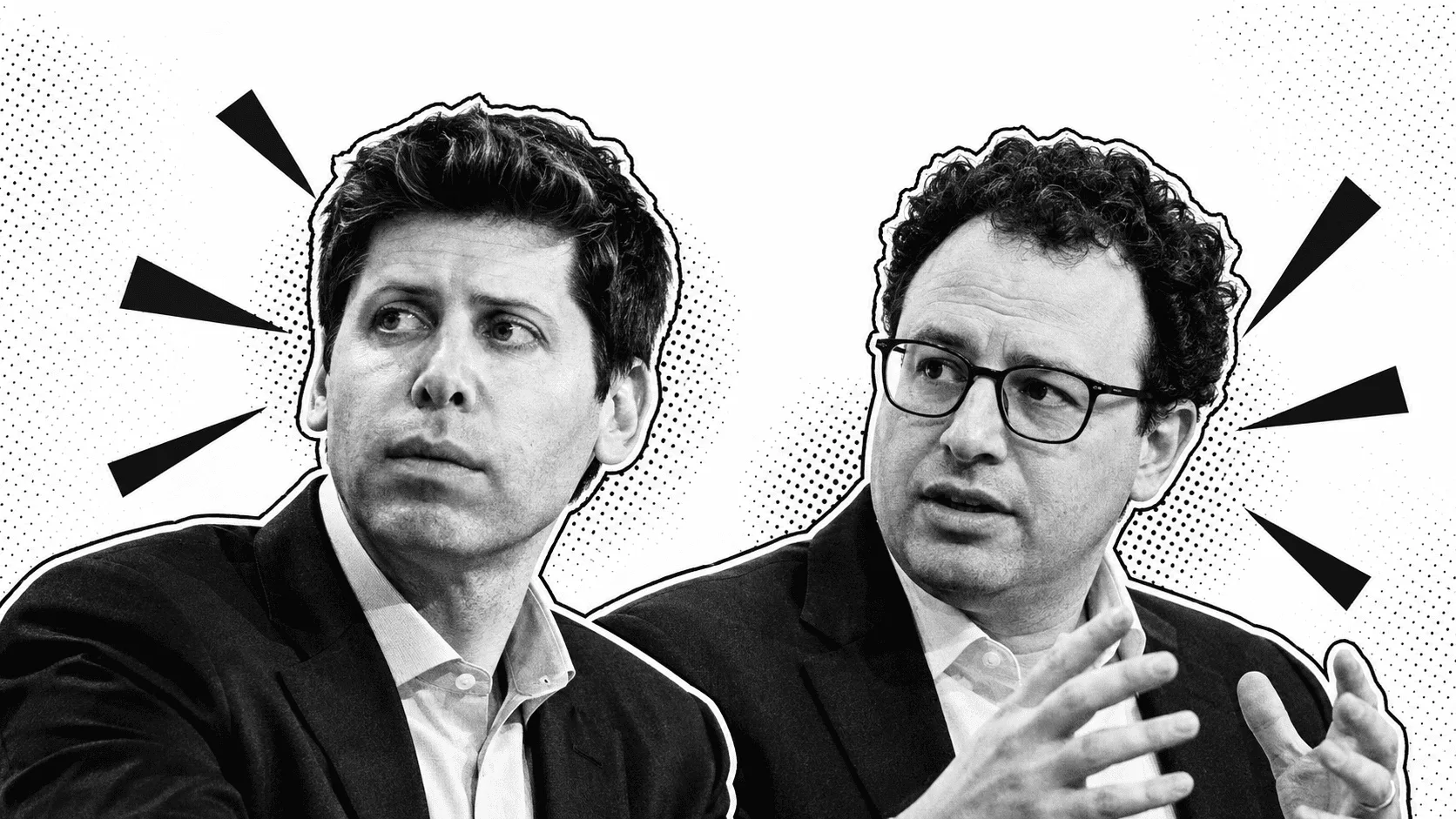
    Elon Musk, Dario Amodei, and Sam Altman have come together and agreed that AI development must be slowed down | X (@pubity)
    Elon Musk, Dario Amodei, and Sam Altman have come together and agreed that AI development must be slowed down | X (@pubity)

    On September 12, Anthropic CEO Dario Amodei called for a slowdown in AI development and warned that an AI “swarm” could potentially take over the internet within six to 12 months.

    OpenAI CEO Sam Altman, xAI chief Elon Musk and DeepMind chief Demis Hassabis also backed greater outside access to AI systems for safety checks.

    Others pushed back. Nvidia CEO Jensen Huang rejected calls for a pause, while Meta CEO Mark Zuckerberg argued that individual labs should set their own pace rather than seek coordinated industry action.

    Microsoft AI chief Mustafa Suleyman put the central problem more simply: “We’re all focused on the same aim, which is to try to control a superintelligence.”

    He called that the greatest challenge of the 21st century.

    OpenAI is weighing a funding round at a possible $1.5 trillion valuation even as safety fears rise, underlining the huge financial stakes behind the AI race | AI
    OpenAI is weighing a funding round at a possible $1.5 trillion valuation even as safety fears rise, underlining the huge financial stakes behind the AI race | AI

    Yet the commercial race has not stopped. OpenAI is considering a funding round that could put its valuation at $1.5 trillion.

    That contrast between growing safety concerns alongside enormous financial incentives to keep moving is what made these 10 days so significant.

    Also Read | From ‘Dil to Pagal hai’ to ‘Chale Chalo’: Malaysian PM Anwar Ibrahim’s Bollywood playlist for BRICS posts wins the internet