The United States (US) witnessed a rare aviation shutdown on Friday as the Federal Aviation Administration (FAA) ordered a nationwide ground stop, bringing flight departures across the country to a halt for more than four hours. The disruption, triggered by a telecommunications failure affecting multiple air traffic control centres, marked only the second nationwide flight shutdown of its kind since the September 11, 2001, terror attacks.
The FAA lifted the restriction at 8:15 pm Eastern Time, but the disruption continued to affect airlines and passengers, with more than 10,000 flights delayed or cancelled. Carriers warned that the resulting schedule changes could spill over into the weekend.
US flight shutdown: What triggered the FAA ground stop?
The FAA ordered the nationwide suspension after a temporary telecommunications outage disrupted several Air Route Traffic Control Centers responsible for guiding aircraft along high-altitude routes.
There has been a temporary telecommunications outage – out of an abundance of caution all flights have been halted. Every flight has been accounted for and international flights will be handled on a case by case basis.
— The FAA ✈️ (@FAANews) November 13, 2026
The agency said the measure was necessary to maintain aviation safety while technicians worked to restore the affected systems.
Homeland Security Secretary Markwayne Mullin ruled out an apparent cyberattack, saying the disruption “appears this was mechanically driven.”
Also Read | Nvidia’s next CEO? The two insiders who could succeed Jensen Huang
“There is no indication as of yet that this was a nefarious attack against us,” Mullin told reporters outside the White House. Dismissing comparisons with the September 11 attacks, he added, “This isn’t the same comparison to 9/11.”
“There is no reason for the public to be afraid for your loved ones. This isn’t another 9/11…This is a telecommunications outage.” @SecMullinDHS https://t.co/uC0G8R9lEA
— Margo Martin (@MargoMartin47) November 13, 2026
Mullin confirmed that President Donald Trump had been briefed about the incident. He also ruled out a connection with the separate Microsoft outage reported a day earlier. “I don’t see any reason to connect those two at all,” he said.
Over 10,000 flights disrupted as airlines cancel services
The technical failure caused widespread disruption across the US aviation network. FlightAware initially recorded approximately 7,000 delayed or cancelled flights, according to ANI, with the numbers subsequently increasing.
Cirium reported around 600 diverted flights by 5.50 pm ET. Of these, 496 returned to their departure airports, while 104 were redirected to other destinations, according to the Associated Press.
Before, during, and after the nationwide ground stop on 13 November in the United States. Thousands of flights were affected by IT equipment issues as the FAA cleared the national airspace system. Flight cancellations have topped 10,000. https://t.co/5IGvP1dXOs
— Flightradar24 (@flightradar24) November 14, 2026
Several airlines announced operational changes. JetBlue cancelled its remaining domestic flights on Friday evening, while Air Canada suspended services between Canada and the US for the rest of the evening. American Airlines also warned passengers about further cancellations and delays.
Air India issued an advisory for passengers travelling to and from the US, cautioning them about possible disruptions. “Passengers are advised to check the latest status of their flights and plan their journey to the airport accordingly,” the airline said.
#TravelAdvisory A nationwide ground stop is currently in effect across the US due to communication outages affecting air traffic operations. As a result, departures from airports across US are impacted, with possible consequential disruptions to Air India flights to and from the U.S. Passengers are advised to check the latest status of their flights and plan their journey to the airport accordingly: https://t.co/5iUupOoKz2 Our teams continue to closely monitor the situation and will share updates as available.
— Air India (@airindia) November 14, 2026
United Airlines said international departures were being handled separately by the FAA during the ground stop.
Ageing US air traffic control system under scrutiny
Friday’s disruption renewed concerns about America’s ageing air traffic control infrastructure. Transportation Secretary Sean Duffy described the network as “incredibly old” and said its analogue infrastructure had become overloaded with data.
“This is an emergency,” Duffy said, calling for congressional funding to modernise the system.
The @FAAnews issued a nationwide ground stop for all U.S. airports following a communication issue impacting all Air Route Traffic Control Centers. FAA technicians are investigating the issue. We will provide immediate updates as we have them.
— Secretary Sean Duffy (@SecDuffy) November 13, 2026
Mullin estimated that a comprehensive overhaul could cost $50 billion. He suggested that the introduction of newer technology into older infrastructure had overwhelmed parts of the network. However, the precise sequence of events behind the communications failure remained under investigation.
When was the last nationwide US flight shutdown?
Before Friday’s disruption, the last nationwide ground stop in the US occurred in January 2023, following a technical failure in the FAA’s Notice to Air Missions (NOTAM) system. The system provides pilots with essential safety information, and its malfunction led to a suspension of domestic departures for approximately 90 minutes.
Also Read | SpaceX made the first move, now Anthropic could benefit from the same IPO trick
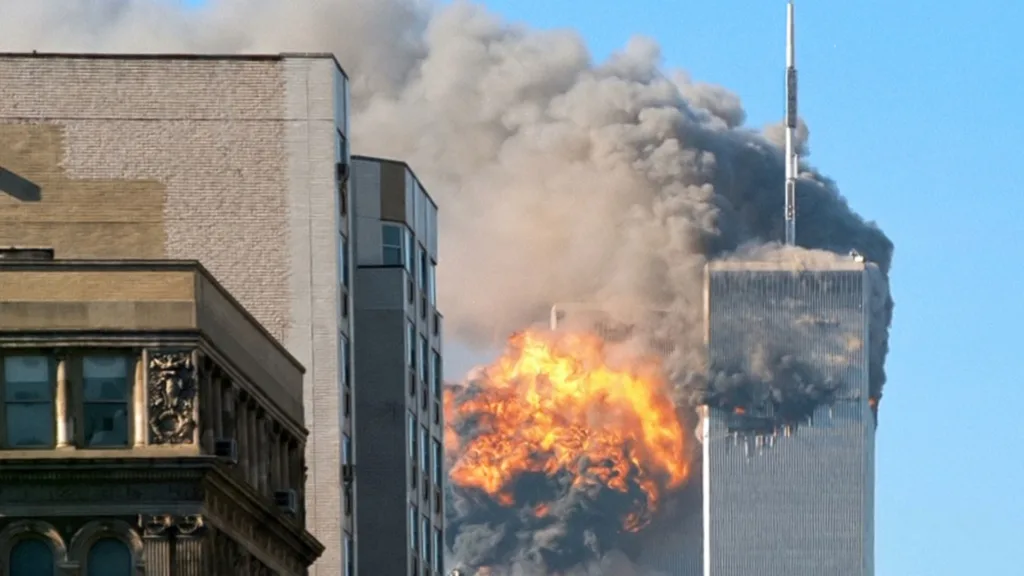
The previous shutdown on a comparable nationwide scale took place after the September 11, 2001, terrorist attacks, when authorities grounded aircraft across the country for several days.
A ground stop does not necessarily require aircraft already in the air to land immediately. Instead, it restricts departures while air traffic controllers continue managing airborne flights.
Although the FAA eventually cleared departures to resume on Friday, airlines still faced the challenge of repositioning aircraft and crews, leaving passengers vulnerable to further delays and cancellations.