Category: Mythology

  • Pancha Kedar-Part 3: Tungnath, the highest Shiva temple in the world

    Pancha Kedar-Part 3: Tungnath, the highest Shiva temple in the world

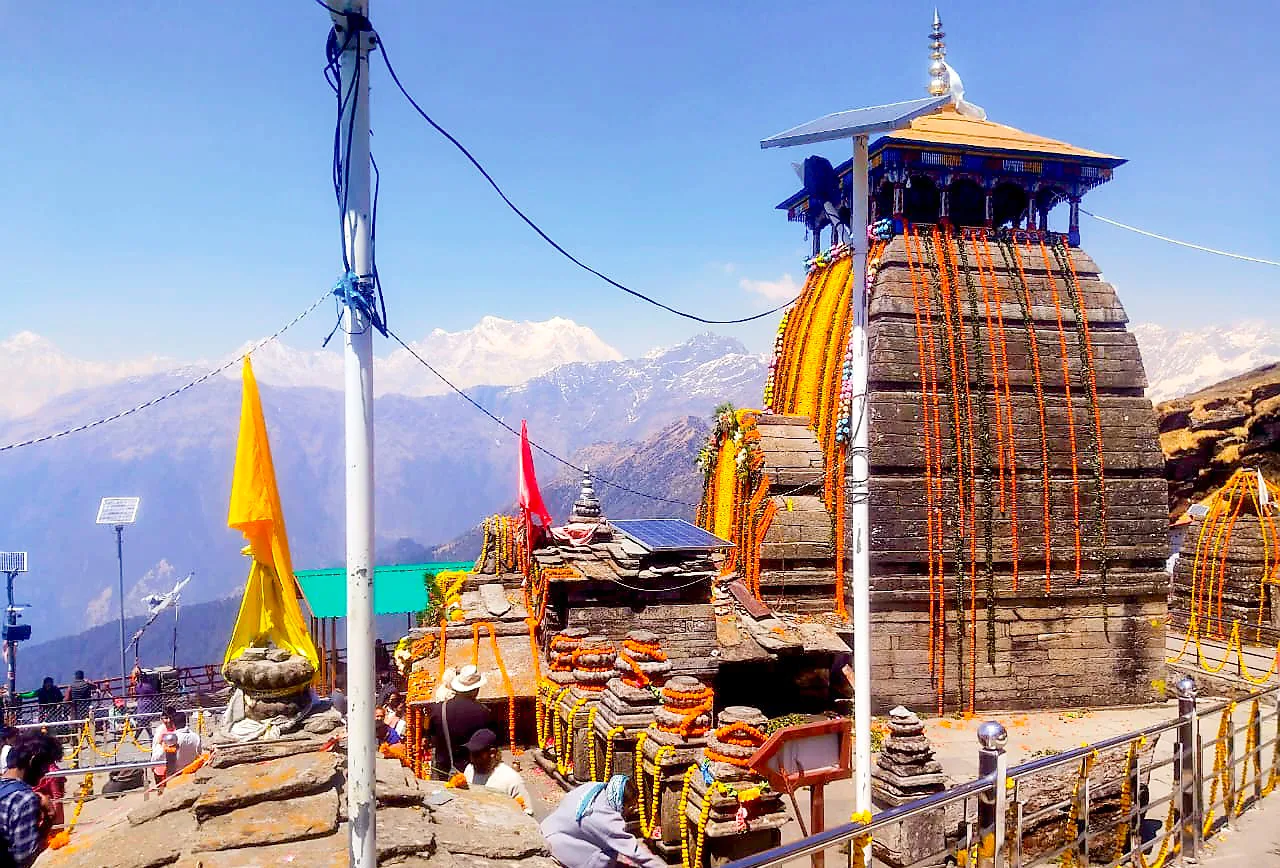
    Located at a height of 3,680 metres (12,073 feet) in the Garhwal Himalayas, Tungnath is known as the highest Shiva temple in the world.
    This alone brings visitors from all over the world, be it for trekking, photography or pilgrimage. However, giving it the status of a geographical superlative does not reflect its true importance.
    If you do Pancha Kedar, then Tungnath is not just a cloud-sculpted temple. It is a sacred place where Lord Shiva’s arms are thought to have emerged after he left the earth when he was running away from the Pandavas.

    Kedarnath is the burden that one should carry, and Tungnath is the responsibility of action.

    ALSO READ| Pancha Kedar–Part 1: Why did Lord Shiva hide from the Pandavas?

    The story begins where the legend of Kedarnath leaves off. The Pandavas went on a pilgrimage to the Himalayas to find Lord Shiva to get forgiveness for the tremendous destruction they had seen and also caused during the Kurukshetra war. Until they learned humility, Shiva could not grant forgiveness; He disguised Himself as a magnificent bull. When Bhima saw that the deity was disguised in the form of a bull, he tried to grab the deity, but the bull disappeared below the ground. Then, the various parts of Shiva appeared at five places in the Garhwal Himalayas.

    Then, at Kedarnath, emerged the hump. At Tungnath, the arms manifested from the mountainside. Why the arms?

    Ancient Indian mythology rarely chooses body parts at random. All symbols have a message. The arms are the instruments of action. They construct, defend, love, work and when needed, they fight. All of man’s actions are initiated by his will and translated by his hands. The word “Karma” does not just mean “destiny” in Sanskrit. It literally means action. The arms then are the fruit of one’s work or action and are thus visible.

    Maybe the figure of Shiva at the Tungnath serves as a reminder to the human race of one of the main teachings of the Bhagavad Gita: it is not action that binds humans, but attachment to action’s results.

    It was because Dharma called for it that the Pandavas fought. But they were still under the burden of the effects of war, as all actions, even if they are justified, impact the heart. Shiva shows His arms at Tungnath and seems to be saying here that the redemption is not to cease action but to cleanse the motive of action.

    Why is it called Tungnath?

    The name Tungnath itself offers another clue. Derived from two Sanskrit words, Tunga, meaning ‘lofty’ or ‘elevated,’ and Nath, meaning ‘Lord’, the name may be translated as ‘The Lord of the Highest Peaks.’ Standing amidst alpine meadows with uninterrupted views of the Chaukhamba, Nanda Devi, Trishul and Kedarnath mountain ranges.
    Unlike many Himalayan pilgrimages requiring days of difficult trekking, Tungnath can be reached by a relatively short but steep trail beginning at Chopta, often called the ‘Mini
    Switzerland of India.’ The walk covers barely four kilometres, and dense forests of oak, deodar and rhododendron gradually give way to rolling alpine grasslands known as bugyals.
    Himalayan birds fill the air with song.
    Only mountains.
    Only silence.
    Only the rhythmic sound of footsteps against ancient stone pathways.

    ALSO READ| Pancha Kedar–Part 2: Kedarnath, where Lord Shiva’s hump emerged and time stands still

    For centuries, sages have regarded such silence as one of the Himalayas’ greatest teachers. In cities, the mind constantly reacts to noise, movement and distraction, but in the mountains, thought itself begins to slow. Perhaps that is why Shiva chose these heights.

    How old is Tungnath?

    The present temple is believed to be over a thousand years old, though local traditions attribute its earliest foundation to the Pandavas themselves.

    Like Kedarnath, the existing stone structure is often associated with the revival of Himalayan pilgrimage routes during the time of Adi Shankaracharya in the eighth century.

    Beyond Tungnath lies another sacred destination, Chandrashila, a summit rising to nearly 4,000 metres. The short climb from the temple rewards pilgrims with one of the most breathtaking panoramic views in the Indian Himalayas.

    Yet Chandrashila is more than a viewpoint. According to tradition, Lord Rama meditated here after defeating Ravana, seeking purification for the act of killing a Brahmin king. Another legend associates the peak with Chandra, the Moon God, who performed penance after being cursed by Sage Daksha.

    These stories reveal an intriguing pattern. Even the greatest among the Indian epics’ heroes, like the Pandavas after Kurukshetra or Rama after Lanka, perform penance after performing their duty. Victory is never deemed good enough. All good deeds require contemplation.

    This is a common theme that is missed by modern readers.
    Indian mythology celebrates courage, but it also celebrates introspection. Power without humility is incomplete. Action without self-examination is dangerous.

    Throughout Indian philosophy, the hand occupies a sacred place. The ancient morning prayer ‘Karagre Vasate Lakshmi’ begins by reminding us that prosperity, knowledge and divine power reside within our own hands.

    ALSO READ| Why is Shiva worshipped as a Lingam while other gods have idols?

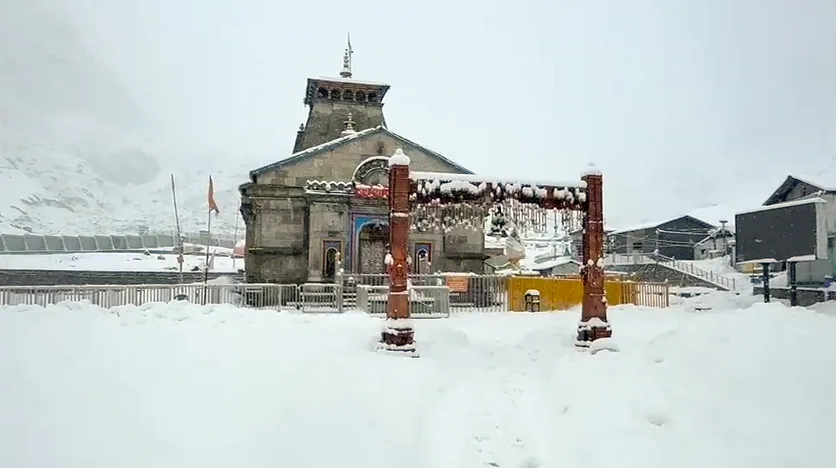
    Tungnath is also the time of the seasons, as in the other Pancha Kedar temples. The temple is shut in winter when the snow is heavy, and the worship of the deity is symbolic at Makku Math.
    These days, a lot of people visit Tungnath because they’ve seen snow-covered paths or some enchanting sunrise images from Chandrashila on social media. Some go for trekking, and others are for adventure.

    However, nearly everyone walks away with a surprise. Tungnath seems serene and does not invite the hasty tourist. The mountains have their rhythms, and slowly, almost imperceptibly, the visitor starts on a more gentle pace to walk, breathe, and think.

    Maybe this is the advantage that Shiva has bestowed upon us.
  • Pancha Kedar–Part 2: Kedarnath, where Lord Shiva’s hump emerged and time stands still

    Pancha Kedar–Part 2: Kedarnath, where Lord Shiva’s hump emerged and time stands still

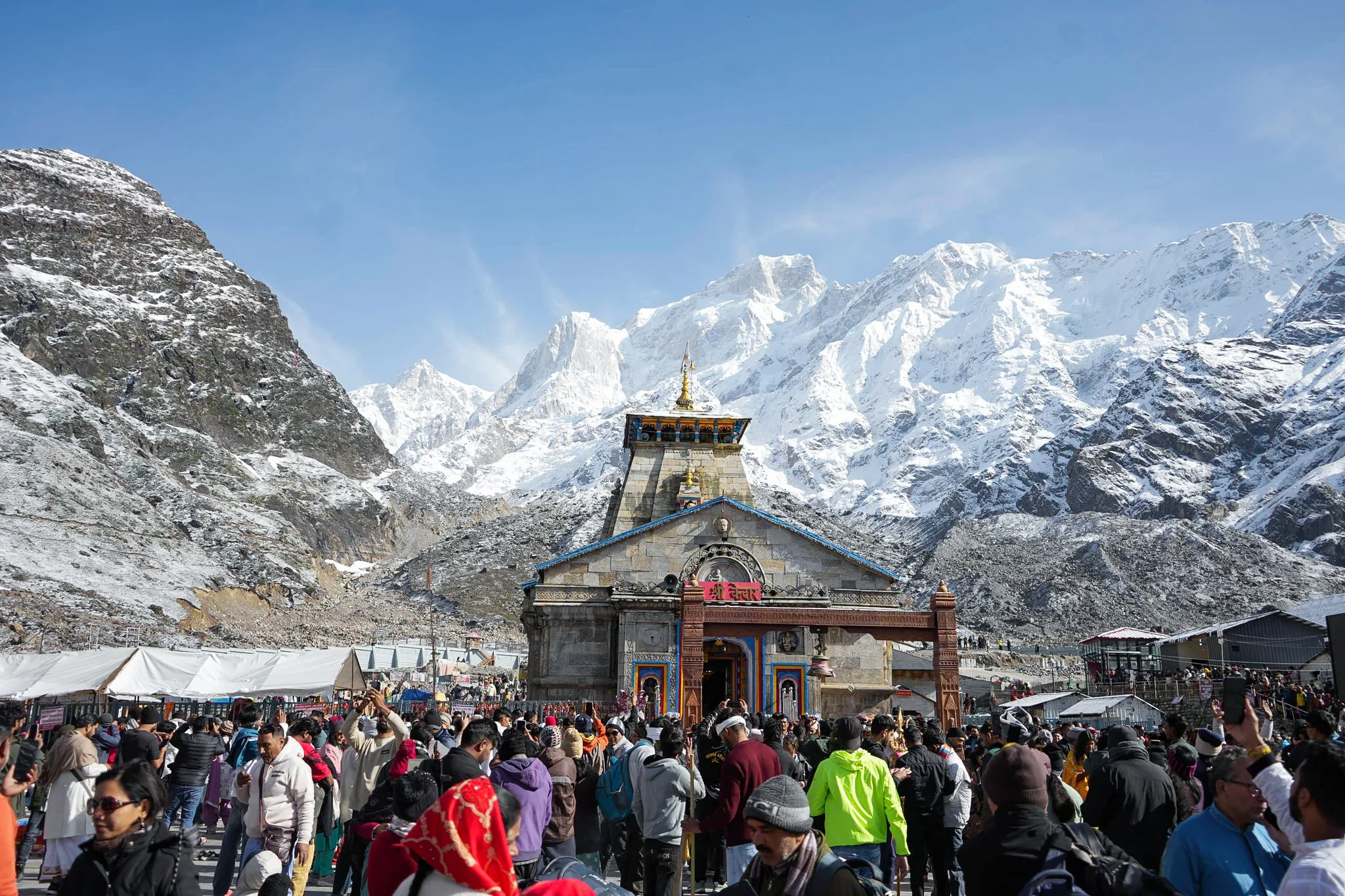
    Then, at an altitude of nearly 3,583 metres (11,755 feet), surrounded by snow-clad Himalayan peaks and nourished by the icy waters of the Mandakini River, stands one of India’s most revered temples, Kedarnath. Every year, for barely six months, thousands of pilgrims undertake the arduous journey to this sacred shrine, walking through steep mountain trails, unpredictable weather and thin mountain air.


    However, not many people know that Kedarnath is not just one of the 12 Jyotirlingas of Lord Shiva. It is also the first out of the sacred abodes of the Pancha Kedar, where it is believed that Lord Shiva appeared to the Pandavas after the Mahabharata war.
    The story starts not at Kedarnath, but on the blood-stained plains of Kurukshetra. The Pandavas won the battle after eighteen days with a test of their might, but their victory did not bring them any respite. Their own family members, teachers, friends and many innocent soldiers had been lost in the war. They were in a state of guilt and wanted to rid themselves of the sin of war by seeking blessings from Lord Shiva.

    ALSO READ| Pancha Kedar–Part 1: Why did Lord Shiva hide from the Pandavas?

    However, Shiva was not ready to meet them straight away, so he went to the Garhwal Himalayas and took the shape of a great bull. Bhima then saw that he had been deceived by a god and tried to capture him, and the bull went underground.
    According to the legend, different parts of Shiva’s body emerged at five separate locations. At Kedarnath, the hump of the divine bull surfaced from the ground, making it the most important shrine of the Pancha Kedar pilgrimage.


    Another miraculous episode from Indian mythology?


    Like most legends, there are deeper symbolic meanings, and this is no exception. The hump of a bull is more than a physical attribute. It symbolises strength, endurance and the ability to carry great loads. In whole Indian civilisation, the bull is a symbol of Dharma, steadfastness, patience and responsibility. By showing His hump at Kedarnath,
    Shiva appears to be teaching the human race that spiritual development starts when one learns to bear the weight of our lives without rancour and hostility. Perhaps that’s why Kedarnath has always been a place of atonement and never a place of celebration.


    Whereas the temples in the city require little effort, Kedarnath requires effort. As is still the case today, the trek to the shrine is a difficult journey up the mountain from Gaurikund. A pilgrim climbs through thick forests, waterfalls, rocky roads and high-altitude valleys until finally he reaches the temple.
    Each step is an integral part of the worship. The Himalayas are unique in their ability to take away earthly identities. A rich man, a scholar, a labourer and a saint go on the same road, inhale the same air of the mountains, and are equally exhausted from the physical effort.

    Before Shiva, everyone becomes simply a pilgrim


    The location of Kedarnath is itself extraordinary. The temple stands against the dramatic backdrop of the towering Kedarnath Peak, which rises to nearly 6,940 metres. Glaciers surround the valley, and the Mandakini River flows nearby, carrying icy waters born from Himalayan snowfields. Ancient Indian sages did not choose such places by accident.


    Mountains have always symbolised stability and transcendence. They rise above the noise of ordinary life.
    For Shiva, the eternal yogi immersed in meditation, the Himalayas were not merely a residence but an extension of His own consciousness.


    Notably, tradition attributes the earliest shrine to the Pandavas themselves, who are believed to have built a simple temple after receiving Shiva’s blessings.


    Historians suggest that the present stone structure was probably constructed between the 8th and 12th centuries CE, with many associating its revival and restoration with Adi Shankaracharya, the great philosopher who travelled across India re-establishing centres of Hindu learning and pilgrimage.
    Near the temple lies a memorial traditionally believed to mark the place where Shankaracharya attained Mahasamadhi at the remarkably young age of thirty-two.

    How Kedarnath survived the 2013 floods

    Architecturally, Kedarnath is a masterpiece of Himalayan engineering. Massive grey stone blocks, some weighing several tonnes, have been assembled without modern cement or steel reinforcement. Standing in one of the most seismically active and climatically harsh regions of the world, the temple has endured centuries of earthquakes, heavy snowfall and glacial weather.
    Kedarnath temple’s resilience became evident to the entire world during the devastating Himalayan floods of June 2013.


    Relentless rainfall triggered landslides, flash floods and the sudden outburst of glacial waters that devastated large parts of Uttarakhand. Entire villages disappeared. Roads, bridges and buildings were swept away. Thousands of lives were lost. Kedarnath town suffered unimaginable destruction as torrents of water and debris rushed through the valley.


    Yet when the floodwaters receded, an astonishing sight awaited rescuers. The temple itself remained standing. Behind the shrine rested an enormous boulder, later affectionately named Bhim Shila. The massive rock had rolled down from the mountains and stopped directly behind the temple, diverting much of the destructive flow around the structure before continuing downstream.

    ALSO READ| Did you know there’s a secret trail between Kedarnath and Badrinath? Discover the lost Himalayan path of the gods

    To devotees, this was nothing short of Lord Shiva’s divine intervention. To geologists, the boulder altered the direction and velocity of the debris flow, acting as a natural barrier that reduced the direct impact on the temple walls.


    Faith called it a miracle. Science recognised the role of geology and landscape dynamics.


    Then another fascinating aspect of Kedarnath is its seasonal rhythm. Unlike most temples in India, Kedarnath remains open only for about six months each year. As winter approaches and heavy snowfall begins, the temple doors are ceremonially closed. The symbolic worship of Lord Kedarnath then shifts to Ukhimath, where the deity is venerated until spring returns.


    This reflects an important principle of Himalayan life: rather than attempting to dominate nature, ancient traditions learned to adapt to it.


    Unlike many Shiva temples where devotees offer prayers from a distance, pilgrims at Kedarnath have traditionally been allowed to touch and embrace the naturally formed stone worshipped as the divine hump of Shiva.


    Beyond mythology and architecture, Kedarnath also occupies a unique position in Indian philosophy. The shrine represents not only forgiveness but endurance. Just as the hump bears the weight of the bull, every human being carries invisible burdens, memories, regrets, responsibilities and hopes.


    The Pandavas arrived at Kedarnath burdened by the consequences of war. They left not because history had been erased but because they had learned to carry it differently.
    Perhaps that is why millions continue to undertake this difficult pilgrimage even in an age of modern transportation and convenience.

  • Pancha Kedar–Part 1: Why did Lord Shiva hide from the Pandavas? 

    Pancha Kedar–Part 1: Why did Lord Shiva hide from the Pandavas? 

    The Kurukshetra war was over. The shells of conches had fallen silent, the dust of battle had settled, and the throne of Hastinapura had returned to the Pandavas. Adharma had been conquered, justice had been re-established, and the rightful rulers had been found. But the Mahabharata differs from most epics in this way: it will not culminate in a celebration. Rather, it poses the question: Can success overcome the tragedy of war?


    Yudhishthira’s response was NO.

    ALSO READ| Why is Shiva worshipped as a Lingam while other gods have idols?

    The eldest of the Pandavas was chosen as king, but it was a crown that was too heavy to bear. Upon it was a jewel for every one of those who had died. Not strangers but relatives, teachers, friends and cousins had been drained from the battlefield of Kurukshetra. The grandsire Bhishma, who used to carry the princes on his shoulder, lay pierced by countless arrows.
    Their great guru Dronacharya was dead. Their own elder brother, Karna, whom they had known too late, had been killed. Even the sons of Pandavas were killed at the end of the war. Victory had been won at a price no king could ever return.


    Krishna repeatedly reminded Yudhishthira that the war had become inevitable. It was fought not for ambition but to restore justice after years of deceit and humiliation. Yet even Krishna never suggested that righteousness erased sorrow.
    Dharma may require difficult choices, but those choices still leave scars upon the human heart.

    Why were the Pandavas looking for Lord Shiva?


    The Pandavas were in remorse and went to the sage for advice. What possible way could they make up for the huge destruction they had witnessed? They were stunned by the response they got. They were informed that Lord Shiva, the great ascetic and destroyer of ignorance, alone had the power to release them from the shackles of their Karmas. Mahadeva Himself is the one who could grant forgiveness for the bloodshed of Kurukshetra.


    However, Shiva is not like any other god in Hindu mythology. He’s very compassionate, but not predictable. Whereas Vishnu comes down to Earth again and again when there is no righteousness in the world, Shiva withdraws from the affairs of men.


    The Adi Yogi is the god of silence, meditation and detachment. He watches the rise and fall of kingdoms with the same calm gaze. He blesses kings and beggars alike, yet He remains untouched by power, wealth or ambition.

    Then, as the Pandavas were looking for Shiva, he made an unusual move. He decided to go away. But why would the Lord deny devout believers who earnestly came to him asking for forgiveness? The solution is in Shiva’s very nature.

    ALSO READ| Did you know there’s a secret trail between Kedarnath and Badrinath? Discover the lost Himalayan path of the gods


    Forgiveness is not just God’s gift to us. It’s a culmination of inner transformation. The Pandavas had strived for justice, but they were still full of pride, sadness and the silent burden of violence. They were not yet humble enough to be blessed by Shiva.


    So, leaving behind the holy city of Kashi, Shiva started his journey northward into the Himalayas, which had always been His favourite place to reside as it was the land of snow. The mountains were his refuge: long before there were kingdoms, long before human beings named rivers and valleys. The Pandavas relentlessly chased Him, going through forests, rivers and steep paths in the mountains. Their tour was a journey without parallel to that of any royal enterprise. There were no armies with them; there were no trumpets that would announce their coming. The once powerful kings strolled as common pilgrims along precipices soaring high beyond all human accomplishment.


    Perhaps that was Shiva’s first lesson.


    The Himalayas have always possessed a unique place in Indian spirituality. They are not merely mountains but symbols of permanence in a world of constant change. Empires rise and disappear, rivers alter their courses, generations come and go, yet the Himalayas continue to stand in silent meditation. For sages, the mountains represented the ideal state of consciousness, still, unwavering and detached from worldly turmoil.

    What is Guptkashi?


    It was here, according to ancient tradition, that Shiva decided to conceal Himself. As the Pandavas approached the region known today as Guptkashi, literally, the ‘Hidden Kashi ’, Shiva assumed the form of a magnificent bull and quietly mingled among a herd grazing peacefully in the alpine meadows. The choice of a bull was no accident. Nandi, Shiva’s divine vehicle, has always symbolised righteousness, patience and disciplined strength. By taking the form of a bull, Shiva was reminding the Pandavas that true Dharma cannot be established merely through victory in battle. It must also be sustained through humility and compassion.


    The Pandavas searched desperately among the herd, sensing that the Lord was somewhere nearby. It was Bhima, the strongest of the five brothers, who devised an ingenious plan. Stretching his enormous frame across a narrow mountain pass, he allowed the cattle to pass beneath him one by one. Every ordinary bull quietly crossed the path. Only one animal behaved strangely. The mysterious bull suddenly began to sink into the earth as though the mountain itself had opened to receive Him. Realising that this was no ordinary creature, Bhima leapt forward and seized the bull by its hindquarters. But before he could hold on, Shiva vanished beneath the ground.


    This wasn’t the end of the encounter because Shiva just vanished. Rather, it gave rise to one of the holiest pilgrimages in the Himalayas. The legend goes that the various parts of Shiva’s divinely endowed body appeared at five different places in the Garhwal Himalayas. The hump of a bull was seen at Kedarnath. The arms were found at Tungnath. God appeared in Rudranath as God’s face. Madhyamaheshwar was the place where the navel and body of Shiva appeared, and Kalpeshwar was the spot where Shiva’s matted locks appeared. All these five sacred shrines were known together as the Pancha.


    Kedar, the five holy manifestations of Lord Shiva. To read this merely as a miraculous event is to miss the deeper beauty of the story. Indian mythology rarely speaks only through literal events. It speaks through symbols.
    Why did Shiva appear in fragments rather than revealing His complete form?
    Perhaps because no human being ever comprehends the infinite in a single moment.
    Spiritual understanding arrives gradually. One seeker discovers strength. Another discovers compassion. Someone else discovers silence. Each glimpse reveals only one aspect of an immeasurable reality.

    What do these five Kedars symbolise?

    The five Kedars may therefore be understood as five stages in the journey towards self-realisation.
    Kedarnath, where the hump appeared, symbolises endurance, the ability to carry the burdens of life without surrendering to despair.
    Tungnath, associated with Shiva’s arms, reminds us that action must always serve righteousness rather than ego.
    Rudranath, where His face manifested, represents truth, urging the seeker to confront the deepest realities of one’s own mind.
    Madhyamaheshwar, linked with the navel, signifies the source of life and the balance that sustains creation.
    Kalpeshwar, where the divine locks emerged, points towards renunciation, meditation and the infinite flow of consciousness.
    The Pandavas were able to get the blessings of Shiva after sincerely visiting all the five sacred places. Even then, there was more to the blessing than forgiveness. It was transformation. By the time they arrived at its end, the pilgrimage had already transformed them.
    Perhaps the most deep-rooted message that is embedded in the legend of the Pancha Kedars.

  • Why is Shiva worshipped as a Lingam while other gods have idols?

    Why is Shiva worshipped as a Lingam while other gods have idols?

    Walk into almost any ancient Hindu temple and a fascinating pattern begins to emerge. Vishnu appears in majestic human form holding the conch, discus, mace and lotus. Krishna stands gracefully with the flute. Rama carries the bow. Durga rides the lion, Lakshmi sits upon the lotus, and Ganesha is instantly recognisable by his elephant head. Yet when one enters the sanctum of a Shiva temple, the experience changes completely. Instead of an elaborate human figure, one usually encounters a smooth, cylindrical stone rising from a circular base: the Shiva Lingam. 

    Why is Shiva worshipped as a Lingam?

    This raises an enduring question: Why is Shiva primarily worshipped as a Lingam while most other Hindu deities are worshipped through anthropomorphic idols? 

    The answer is more of a process of Indian philosophy rather than a single story. Shiva holds a special place in the Hindu mind. Vishnu is regarded as the preserver who keeps coming into the world in various avatars like Rama and Krishna, and Devi appears in individual forms to save creation, but Shiva is the one who is beyond creation and will remain after destruction. 

    He is the Adi Yogi, the one outside society, the Ascetic who has nothing, the dancer who dances cosmic rhythm, creating and destroying worlds, the one who is without form, the one from which all forms emerge. It is not easy to represent such a creature in a single humanised image.

    ALSO READ| Did you know there’s a secret trail between Kedarnath and Badrinath? Discover the lost Himalayan path of the gods

    The Sanskrit word Lingam itself provides the first clue. Contrary to popular misunderstanding, linga does not simply mean an object of worship. In classical Sanskrit it primarily means ‘mark,’ ‘symbol,’ ‘sign’ or ‘characteristic.’ A Lingam is therefore not intended to be a portrait of Shiva but a sign pointing towards His presence. Just as smoke is the linga of fire because it indicates the existence of flames, the Shiva Lingam is the visible sign of an invisible reality, the Supreme One.

    Shiva Lingam
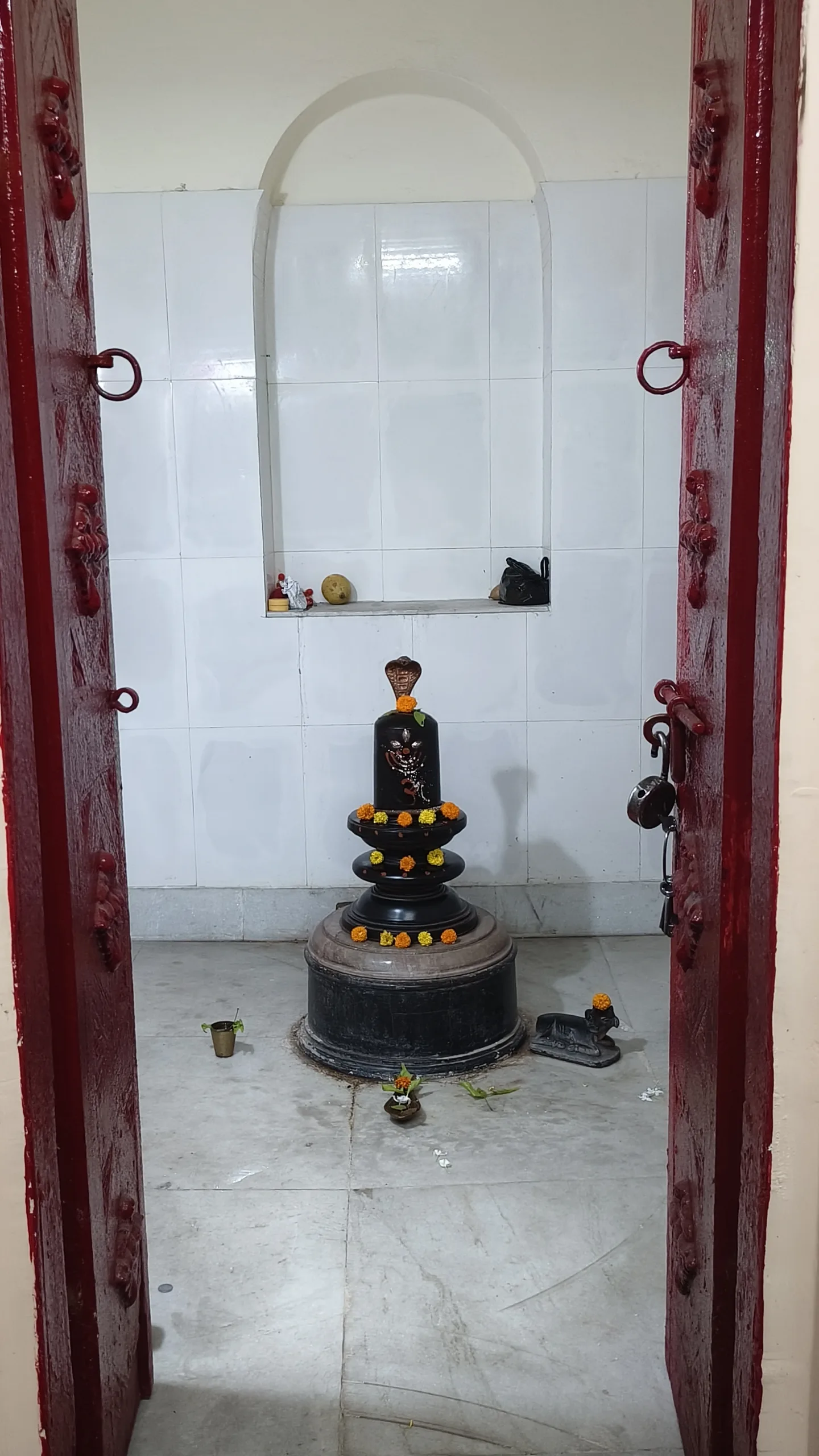
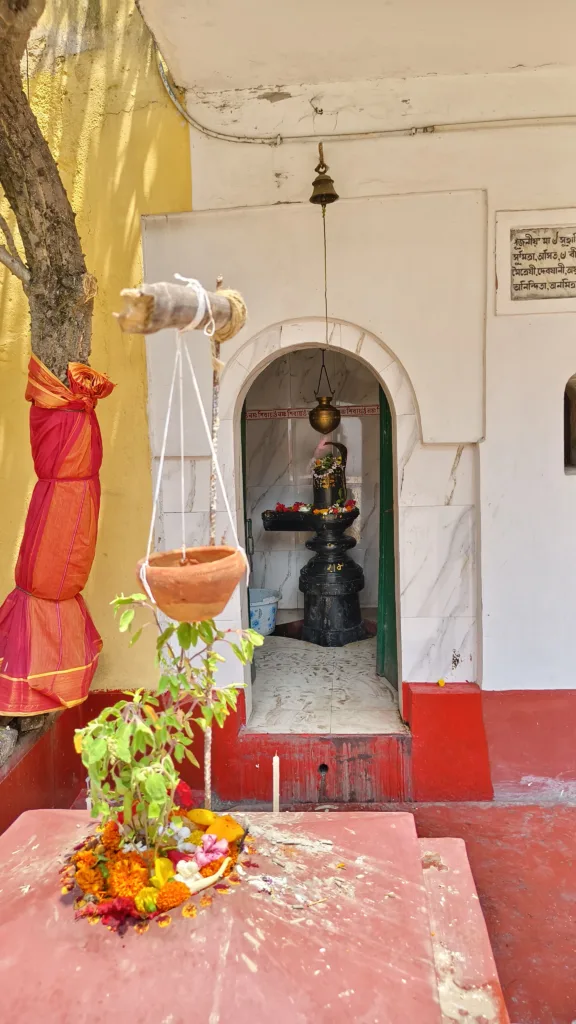
    Shiva Lingam can be seen in a Hindu Temple. Credit: Rikta Das Mahapatra.

    This knowledge is beautifully expressed in the Linga Purana. Once Brahma and Vishnu had an argument about who was superior. Just then, a column of unending light radiated in front of them, taller than the sky and deeper than the earth. Vishnu was amazed and went downward in the form of a boar, while Brahma went up in the shape of a swan, and both tried to find out the beginning or the end of the column. Neither succeeded. After countless ages, they came back, stating that the pillar was without origin and had no end. Then Shiva emerged from the infinite light and showed that the infinite is not measurable by finite minds. The Jyotirlinga, or the pillar of divine light, was established as the theology of the Shiva Lingam. In the temples, the stone worshipped by the Lingam is interpreted as being a symbol of that limitless cosmic axis

    Unlike the idols of Vishnu or Krishna, which recall particular episodes in Hindu mythology, the Lingam points beyond history altogether. It represents Shiva before He assumes form and after every form has disappeared. In philosophical language, it symbolises Nirguna Brahman, the Divine beyond qualities, while anthropomorphic images generally express Saguna Brahman, the Divine with qualities accessible to human devotion. 

    Why the Shiva lingam is central to Hindu worship

    Both these ways are adopted by Hinduism. Some are more comfortable with a personal form. Some are more comfortable with a form that is filled with compassion and familiar attributes. Others look for the transcendental reality, which cannot be portrayed with the normal imagination. Shiva is the unique one that connects the two worlds. He is revered as Mahadeva, the compassionate Lord with matted hair and crescent moon and as the formless Lingam (embodiment of infinite consciousness). 

    The worship of sacred stones is suggested by archaeology to be older than the actual building of temples in India. Long before the advent of elaborate sculptures, natural rocks, mountains, rivers and trees were regarded as the presence of the Divine. This ancient tradition is believed to be refined and carried on through the Shiva Lingam. This notion is continued by many of the twelve Jyotirlingas.

    ALSO READ| Did you know Bengal once had its own airline? Here’s why it never took flight

    The other major component of the Lingam is the circular base called the Yoni or Pitha, which is on which the upright stone stands. The symbolism of these elements is usually interpreted only in a biological sense, but classical philosophy is much broader. The Lingam symbolises the pure consciousness or Purusha and the Yoni symbolises the creative energy or nature, Prakriti. Their marriage is an allegory for the fact that consciousness and creation are one.

    The universe exists because stillness and energy, Shiva and Shakti, remain eternally united. Without consciousness, energy becomes directionless.