Author: Shubham Ganguly

  • Who is Suryanarayana Doolla? IIT Bombay professor suspended after student’s death

    Who is Suryanarayana Doolla? IIT Bombay professor suspended after student’s death

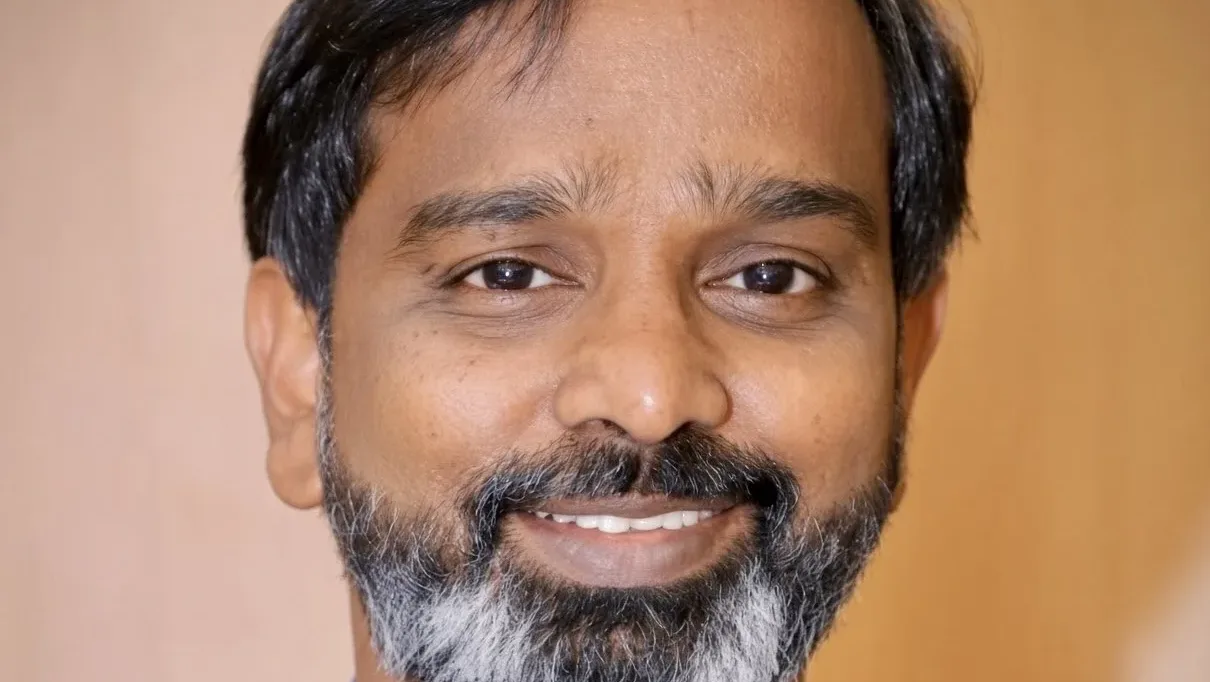
    Suryanarayana Doolla, a professor at the Indian Institute of Technology Bombay, was suspended as Dean (Student Affairs) on Monday amid an investigation into the death of a 20-year-old student. The Mumbai Police have registered an FIR naming Doolla and other officials following the student’s death on September 18.

    The professor came under scrutiny after he was invigilating a mid-semester examination held from 11 AM to 1 PM that day. During the examination, Doolla allegedly found the student using a mobile phone and uploading the question paper to an artificial intelligence platform to seek answers. The student, who was from IIT Bombay’s Department of Energy Science and Engineering, died by suicide later that day.

    Who is Suryanarayana Doolla?

    Suryanarayana Doolla is a professor in the Department of Energy Science and Engineering at IIT Bombay. He has also served as the institute’s Dean (Student Affairs), a position he took up in March 2023, according to information available on IIT Bombay’s official website.

    Doolla’s academic work focuses on power electronics and power systems. His work includes teaching and research in the field of energy systems.

    Before joining IIT Bombay, Doolla worked at Machine 2 Machine in Hyderabad from 2006 to 2008. He later joined Power Research and Development Consultants in Bengaluru in 2009.

    Doolla completed his B.Tech in Electrical Engineering from Nagarjuna University in 2000. He then earned an MTech in Energy Systems Engineering from IIT Bombay. He completed his PhD in Power Systems from IIT Delhi in 2007.

    Also Read | Sangrur man consumes poison over alleged drug inaction, political row follows

    Suryanarayana Doolla’s roles and awards at IIT Bombay

    Doolla has held several administrative positions at IIT Bombay during his academic career. His responsibilities have included student affairs, hostel management and national-level entrance examinations.

    He served as the organising chairman for JEE Advanced, CEED and UCEED in 2022. He was also the warden of Hostel 6 from 2012 to 2021 and had earlier served as its associate warden in 2011.

    Doolla has also received recognition for his teaching and research. His awards include the Prof S P Sukhatme Excellence in Teaching Award from IIT Bombay in September 2021 and the Excellence in Teaching Award from the Department of Energy Science and Engineering in 2017.

    He received the Young Faculty Award from IIT Bombay in 2009 and the Bhaskara Advanced Solar Energy Fellowship in 2017.

    Also Read | India’s semiconductor push faces sabotage risk, Union Minister Ashwini Vaishnaw warns

    FAQs

    Q: Who is Suryanarayana Doolla?
    Suryanarayana Doolla is a professor in IIT Bombay’s Department of Energy Science and Engineering. His academic work focuses on power electronics and power systems.

    Q: Why was Suryanarayana Doolla suspended?
    IIT Bombay suspended Doolla from his deanship amid an investigation into the death of a student who died by suicide on September 18.
  • Why India wants a permanent seat at the UN Security Council

    Why India wants a permanent seat at the UN Security Council

    The United Nations Security Council was created in 1945 after World War II, but its five permanent seats have remained unchanged for more than eight decades. China, France, Russia, the United Kingdom and the United States hold those seats and have veto powers.

    India, which has repeatedly called for reform of the Council, wants a permanent place at the table. New Delhi argues that the body should reflect today’s global balance, particularly the role of Asia, Africa, and Latin America. The Security Council currently has 15 members, including 10 countries elected for two-year terms.

    Why India wants a permanent seat at the UNSC

    India’s argument begins with a simple question: can a Council created in the aftermath of World War II fully represent the world of today? New Delhi has called for expansion in both permanent and non-permanent categories, saying that merely adding elected seats would not change the permanent members’ special position in decision-making. The Council was expanded only once, in 1965, when four non-permanent seats were added. The five permanent seats remained untouched.

    India says developing countries and under-represented regions need a stronger voice in decisions on international peace and security. It points to its large population, democratic system, growing economic and geopolitical role and long contribution to UN peacekeeping as part of its case. India has also maintained that Security Council reform should make the institution more representative and effective.

    The demand is not new. India formally put forward its candidature for permanent membership in 1994 and has continued to raise the issue at successive UN General Assembly sessions. At the Millennium Summit in 2000, then Prime Minister Atal Bihari Vajpayee again said India considered itself qualified for the responsibilities of permanent membership.

    Also Read | Wars, Trump and Guterres’ exit set the tone for UN General Assembly 2026

    India’s history at the UNSC

    India has already spent several terms inside the Security Council, although always as a non-permanent member. Its first term was in 1950-51. It subsequently served in 1967-68, 1972-73, 1977-78, 1984-85, 1991-92, 2011-12 and most recently in 2021-22.

    During these terms, India has taken part in discussions and decisions on conflicts, peacekeeping, sanctions and international security. India’s latest campaign is for another non-permanent term in 2028-29, even as it continues its longer-term push for permanent membership.

    The question of reform has also gained wider international attention. India has received support from several countries for a greater role in the UN, while different groups continue to disagree over how the Council should be expanded. The debate therefore remains open, with India seeking a permanent role in a body whose basic structure has changed little since 1945.

    Also Read | California puts billionaire wealth tax on ballot with up to 5% under Proposition 40

    FAQs

    Q: Why does India want a permanent seat on the UNSC?

    India argues that the Security Council should better reflect the contemporary global balance and give greater representation to developing countries and under-represented regions.

    Q: Who are the five permanent members of the UNSC?

    China, France, Russia, the United Kingdom and the United States are the five permanent members. They have veto power over substantive Security Council decisions.

  • Kolkata Police cracks down on civic volunteers with new SOP

    Kolkata Police cracks down on civic volunteers with new SOP

    Kolkata Police Commissioner Ajay Nand has issued a new standard operating procedure (SOP) for civic volunteers. The new guidelines set out stricter rules on attendance, conduct, and performance. The guidelines, issued on Friday, come amid criticism over alleged lapses in duty by civic volunteers and the recent arrest of a Kolkata Police civic volunteer in connection with a murder case in Jharkhand.

    The new SOP has been circulated to police units across the city and aims to strengthen supervision and accountability among the auxiliary force.

    Strict action over unauthorised absence

    Under the new rules, officers-in-charge and unit heads have been asked to maintain strict discipline and take action against unauthorised absence and misconduct. They will have to send daily reports to the Deputy Commissioner of the Home Guard Organisation (DC, HGO) about civic volunteers who remain absent without permission.

    The SOP sets out a two-stage notice system. If a civic volunteer remains absent without authorisation for seven consecutive days, the person will receive a first notice either electronically via WhatsApp or directly. If the absence continues, a second and final notice will be issued seven days later. The volunteer will then be allowed to explain the reason for the absence.

    If the explanation is not found satisfactory, the volunteer will be permanently demobilised. The process will be initiated by the unit-in-charge and completed with the approval of the DC, HGO.

    The guidelines state that absence will be accepted only in certain circumstances, including verified personal illness or the death of a family member or close relative.

    Performance reports and training made mandatory

    The new SOP also puts greater emphasis on regular assessment of civic volunteers. Unit heads will now have to submit performance and assessment reports twice a year for every volunteer under their jurisdiction. The reports will be used to assess whether their conduct and performance remain satisfactory.

    Attendance at prescribed training programmes will also be monitored strictly. Police orders issued earlier had already made such training mandatory, and the latest guidelines reiterate that requirement.

    Commanding officers of all divisions, traffic guards and specialised units have been directed to circulate the SOP widely and ensure immediate compliance. Both English and Bengali versions of the guidelines have been issued.

    FAQs

    Q: What is the new Kolkata Police SOP for civic volunteers?


    It is a set of guidelines covering civic volunteers’ attendance, conduct, performance, discipline, and training.

    Q: What happens if a civic volunteer is absent without permission?


    A first notice is issued after seven consecutive days of unauthorised absence. If the absence continues, a second and final notice is issued seven days later.